
Trust
What KnownAlcohol is, and what it refuses to be
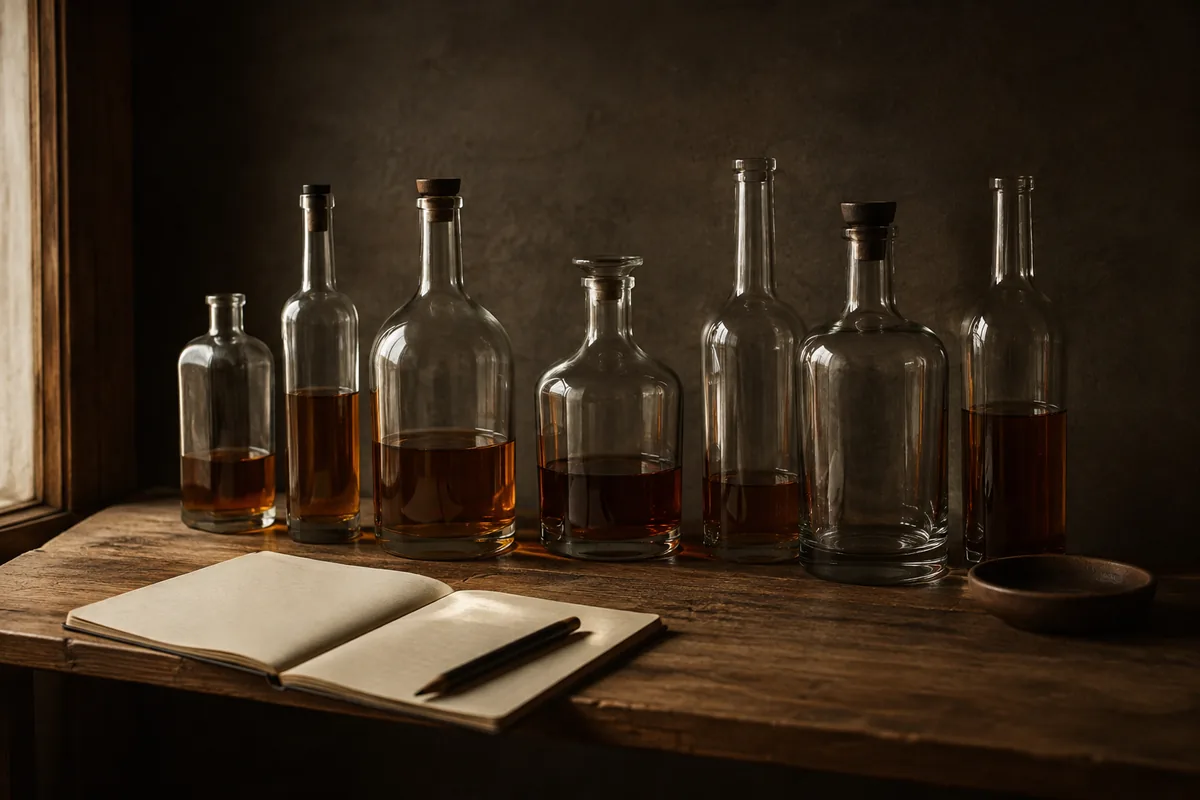
What this is
KnownAlcohol is a reference for adults about what is actually in a drink. It covers spirits, liqueurs, beer, wine, cider, sake, mead, cocktails, ingredients, production, tasting, service, storage, pairings, substitutions, regions, history, law, and responsible use.
It is written to be used in two ways, which is why it is built the way it is. Some readers arrive with a specific question, what is the difference between cognac and armagnac, how long does an opened bottle of vermouth last, what is the actual measure in an Old Fashioned, and want an answer and then to leave. Others read a section through to understand a subject. An entry here has to work for both: a plain answer near the top, and enough underneath it to be worth staying for.
The rule that shapes everything
Each question is answered in one place, and only one. What bourbon is, how it is made, how to taste it, how to serve it, the measured recipe for an Old Fashioned, what to reach for when you have none: six questions, six addresses, and not one of them repeating another.
That separation is not a filing preference. It is the difference between a reference and a content farm. When five pages each half-explain the same thing, they drift: one gets corrected and four do not, and a reader has no way to tell which is current. One page per subject means a correction lands in one place and is true everywhere, and it means a question has one address rather than six partial answers.
The visible consequence is that we link out constantly instead of repeating ourselves. If you find the same explanation given twice here in two slightly different forms, that is a defect, and we want to hear about it.
What is actually in here
Categories and styles, with what the law fixes about each. How drinks are made, served and stored. What the words on a label are allowed to mean, and what they are not. Measured recipes where a recipe is what you need.
Some sections have more in them than others, and where a section has nothing in it yet we say so rather than pretending otherwise. The sitemap lists everything that exists today.
How to read a page
You will find the same furniture in the same places, so you can get to what you need without reading around it.
- The short answer sits at the top of a guide. If that is all you needed, you are done.
- Measures are always numeric. Millilitres and fluid ounces, never "a splash" or "to taste" where a number is possible.
- A legal statement names its jurisdiction, its authority, its reference, and the date it was last checked. If we state a rule without those, that is a bug.
- Estimates are labelled as estimates and show their inputs, assumptions, and uncertainty.
- A review badge means a named specialist with a stated qualification approved the page in a defined scope. Most pages do not have one, and say so.
- Sources are listed at the foot with the class of each one, so you can see what kind of authority is carrying which claim.
What we will not publish
The refusals matter more than the coverage, because they are what you are trusting when you read something here that you cannot independently check.
- A recipe without measures. If we cannot document a drink with a yield, numbered ingredients, a method, and a strength estimate, we publish an article about the drink and say plainly that there is no recipe.
- A legal statement without a jurisdiction, an authority, a reference, and a verification date. Alcohol law is local and it changes. A page missing any of those says so instead of guessing.
- Any calculator result that tells you whether you can drive. No tool can measure your impairment, and one that implies it can is worse than no tool, because it produces confidence in exactly the situation where confidence is dangerous.
- A brand score, ranking, award, or price without retained evidence of actual bottle access and a disclosed method. We cover categories, styles, and verified product facts.
- Alcohol framed as a health product. Current public health guidance treats it as a risk to reduce, and we follow that rather than the older stories about red wine.
- Anything aimed at people under the legal drinking age, and anything that helps someone get drunk faster, hide their drinking, or get around a service limit.
- Instructions for distilling spirits outside a licensed facility. It is a criminal offence in many places and a real fire, pressure, and poisoning risk.
- Retail listings, live prices, deals, delivery, and affiliate rankings. A page that earns more when you buy something is not a reference page.
Who it is for
Adults over the legal drinking age where they live who want a straight answer: someone building a home bar, a bartender checking a specification, a cook working out a substitution, a reader trying to understand what a label claim means, a host working out how much to buy, or someone who wants to know how much alcohol is actually in a glass.
It is equally for people drinking less or not at all. Where a substitution or a pairing works without alcohol, we say so. Nothing here is trying to talk anyone into a drink.
Where we are most likely to be wrong
Every reference has weak spots, and a reader is better served by knowing ours than by a claim of completeness.
- Jurisdictional coverage is uneven. Some countries and states are covered in detail and many are not covered at all.
- A verified rule can go stale between checks. The date shown with it tells you when it was last read, not that it is true today.
- History is contested more often than it looks. Cocktail origin stories in particular are mostly repetition. Where the record does not settle it, the page says so instead of picking the better story.
- Sensory description is interpretation, not measurement.
- Most pages have not been through specialist review. Where a page needs one and has not had it, we do not publish the page.
What to use this for, and what not to
This is a reference, so it is built to be arrived at with a question and left once the question is answered. Looking up what a word on a bottle has to mean, what a category is required to be, or how long an open bottle stays worth pouring are all things it does well.
It is not a buying guide and it will not tell you which bottle to get. That needs somebody to have bought and tasted the bottles, kept a record of doing so, and published the method they used, and none of that exists here.
It is also not a substitute for a professional, because a rule stated here with its jurisdiction and date is a starting point for a conversation with a lawyer, not a replacement for one, and the same goes for anything touching health.
Why the same question has one page
Drinks writing repeats itself. The same explanation of what makes a bourbon a bourbon appears in a hundred articles, most of them slightly different, and a reader has no way to tell which is current or which is right.
Here a subject is explained once and linked to from everywhere it comes up. The practical effect for a reader is that a correction lands in one place, and that following a link gets you the full explanation rather than another partial one.
What is genuinely hard about this subject
Alcohol rules are local and they move. A category defined one way in the United States is defined differently in Scotland, and the same word can be protected in one place and free to use in another.
Flavour is harder still. Almost nothing about how a drink tastes is fixed by a rule, so a category definition tells you what a producer had to do and not what you will find in the glass. Where a page can only tell you the first of those, it says so.
How to check our work
The methodology page sets out the source hierarchy, the verification windows, and the checks a page passes before it goes out, taken from the same record those checks use, so it cannot drift from what actually happens. The editorial policy covers how pages are commissioned, written, corrected, and retired. The responsible use policy covers the adult audience boundary and the rules on impairment. The reviewer standard sets out what a review badge requires.
If you find an error, tell us. We will correct it and the page will say that it changed.