
Trust
Responsible use and adult audience policy
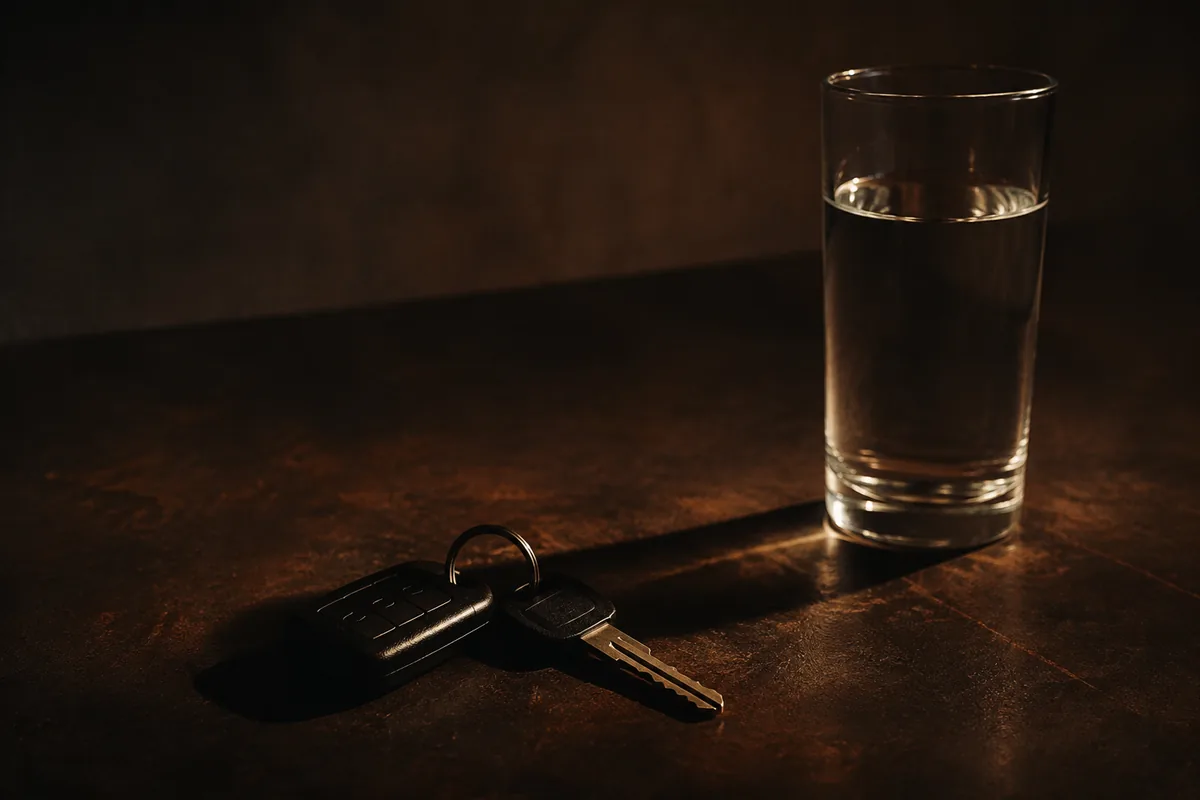
This site is for adults
KnownAlcohol is written for adults who are over the legal drinking age where they live. That is a structural commitment, not a checkbox. It governs the language, the imagery, the advertising, the analytics, and every destination we link to.
What that means in the writing
- No drinking games, chugging, or high volume drinking presented as fun or aspirational.
- No content that helps someone under the legal age get served, and none that helps anyone get around a service limit or conceal their drinking.
- No framing where intoxication is the reward the page is offering.
- No audience targeted advertising, and no advertising at all unless it can satisfy the rules of every jurisdiction it reaches.
What that means in the images
These are the rules every illustration on the site is checked against:
- No people who appear to be under 25.
- No school, campus, or youth culture setting.
- No cartoon mascot, candy styling, or toy like packaging.
- No drinking game, chugging, or high volume consumption framing.
- No image that presents intoxication as the reward.
Why there is no age gate popup
A popup asking whether you are over 21 verifies nothing. Anyone can click yes, and everyone does, including the readers the popup is nominally there to stop. Treating one as compliance is precisely the mistake this policy exists to avoid: it moves the obligation from what a publisher publishes onto a click the publisher knows is meaningless.
We would rather apply the policy to what we actually publish. We do not collect your date of birth, because we have no use for it and storing it would create a real risk for you in exchange for nothing.
Where a specific jurisdiction legally requires an age gate for a service like ours, we will implement one there, keyboard accessible and without dark patterns, and it will be in addition to this policy rather than a substitute for it.
The no clearance rule
This is the firmest rule on the site. Nothing here will ever tell you that you are sober, unimpaired, below a legal limit, or able to drive, operate machinery, swim, work at height, supervise a child or a dependent adult, or make any other safety critical decision.
The reason is simple. Blood alcohol and impairment vary enormously between people, and in the same person on different days. Body composition, sex, age, liver function, medication, food, illness, hydration, sleep, and pace all move the result, and a web page can measure none of them. Impairment also begins well below every legal driving limit, so even a correct blood alcohol figure would not answer the question people actually want answered.
A calculator that implies otherwise is not a helpful tool with a caveat attached. It is a device for producing false confidence in exactly the situation where false confidence kills people, and the caveat is read by nobody who has already got the number they wanted.
How this is actually enforced
This is not an editorial promise. The words on every page are checked before it goes out, and a sentence that clears a reader to drive, or that declares them sober or under a limit, stops the page from going out at all. The same check runs over what a calculator answers. A page that breaks the rule is not published with a warning attached; it is not published. The check is deliberately blunt about its worst phrases: a handful of them are refused even inside a sentence that denies them, because a negation is a fragile thing to stake this on. This page was itself rewritten to get past it. If you have been drinking, do not drive.
What every estimate must show
Strength, standard drink, dilution, and blending figures are estimates about drinks, never measurements of people. Each one must carry all of the following before it is allowed on the page:
| Requirement | What it means on the page |
|---|---|
| Labelled estimate | The result is called an estimate on the page, not a measurement. |
| Inputs echoed | The numbers you entered are shown back with their units, so a mistyped input is visible. |
| Assumptions shown | The assumptions baked into the formula are printed, not left out of sight. |
| Uncertainty shown | How far the answer can be out, and what moves it, is stated. |
| No clearance | The result never states or implies that a person is unimpaired or able to drive. |
| Responsible links | The result links to the pages that cover impairment and emergencies. |
Standard drinks are not one thing
A "standard drink" is a unit of public health measurement, and different countries set it at different sizes. That matters whenever guidance is quoted across borders: the same weekly number means substantially different amounts of alcohol depending on whose unit it is written in.
| Jurisdiction | Pure alcohol | Roughly equal to | Authority |
|---|---|---|---|
| United States | 14 g | 12 fl oz of regular beer at about 5 percent ABV; 5 fl oz of table wine at about 12 percent ABV; 1.5 fl oz of 80 proof spirit at 40 percent ABV | NIAAA |
| United Kingdom | 8 g | 25 ml of 40 percent ABV spirit is one unit; A 175 ml glass of 12 percent ABV wine is about 2.1 units | UK Chief Medical Officers |
| Australia | 10 g | 100 ml of 13 percent ABV wine; 30 ml of 40 percent ABV spirit | Australian NHMRC |
A US standard drink is 1.75times a UK unit. Any tool here that reports standard drinks says which definition it used.
Health
We follow current public health guidance. That guidance treats alcohol as a risk to be reduced rather than a benefit to be optimised, and the risk of several cancers rises from low levels of drinking. We do not present alcohol as heart healthy, as antioxidant therapy, as a sleep aid, as a stress treatment, or as disease prevention.
This is a change from how drinks writing sounded for thirty years, and it is worth saying why rather than just asserting it. The older studies that appeared to show a benefit at low intake mostly compared drinkers against a group of non drinkers that included people who had stopped because they were ill. Once that is corrected for, the apparent benefit largely disappears. We follow the corrected reading.
Pages covering standard drinks, poisoning, withdrawal, pregnancy, medication interactions, organ damage, mental health, and safety critical activity carry enhanced requirements and specialist review.
Situations we always flag
Some circumstances change the answer enough that a page which ignored them would be misleading even if everything on it were correct. These are surfaced wherever they are relevant rather than buried in a footer.
- Pregnancy. No amount of alcohol has been shown to be safe during pregnancy. Public health authorities including the CDC and WHO advise not drinking while pregnant or while trying to conceive. Talk to a clinician about any drinking during pregnancy.
- Medication. Alcohol interacts with many medicines, including some painkillers, sedatives, antibiotics, antidepressants, blood thinners, and diabetes drugs. Some of those interactions are dangerous at one drink. Check the label and ask a pharmacist or prescriber about your own medicines.
- Driving and safety critical tasks. Alcohol impairs judgement, reaction time, and balance before a drinker notices it. Do not drive, operate machinery, swim, work at height, or take sole care of a child or a dependent adult after drinking. Impairment starts below every legal driving limit.
- Existing conditions. Liver disease, pancreatitis, some heart rhythm disorders, epilepsy, and a history of alcohol use disorder all change what drinking does to a person. Individual guidance comes from a clinician who knows the case.
- Alcohol is not a health product. KnownAlcohol does not present alcohol as heart healthy, as antioxidant therapy, as a sleep aid, as a stress treatment, or as disease prevention. Current public health guidance from bodies including WHO treats alcohol as a risk to be reduced, and the risk of several cancers rises from low levels of drinking.
- Legal drinking age. The legal purchase and drinking age is set by jurisdiction, and this site is written for adults who are over it. See the laws and labels section for the rule where you are.
Emergencies
Pages about alcohol poisoning and withdrawal lead with the emergency signs and the first safe action, above the introduction. A page that makes someone read three paragraphs of background before it says "call for help" is badly built for the moment it will actually be read in.
They never recommend coffee, a cold shower, walking someone around, making them vomit, or letting them sleep it off. None of those clears alcohol, and the last one is how people die: an unconscious person can stop breathing or choke on vomit while the people around them wait to see whether they improve.
We do not publish a withdrawal taper schedule. Whether someone can reduce safely, and how fast, is a clinical assessment of that person. A schedule applied to the wrong person is dangerous, and severe withdrawal can be fatal.
If someone may have alcohol poisoning, call emergency services. In the US that is 911. The signs and the first actions.
Production safety
A page about how something is made states the fire, pressure, contamination, chemical, ventilation, material, legal hazards involved. If it cannot cover all 7, we do not publish it.
We do not publish instructions for distilling spirits outside a licensed facility. That is a criminal offence in many jurisdictions, and the physical risk is not theoretical: a still is a heated pressure vessel full of flammable vapour, and a badly made cut concentrates methanol. Describing how an industry does something safely at scale, with the hazards named, is a different thing from telling a reader to attempt it in a kitchen, and this site does the first and refuses the second.
Drinking less, and not at all
Where a substitution or a pairing genuinely works without alcohol, we say so, and where a low or no alcohol version is good rather than merely available, the page says which and why. Reducing or avoiding alcohol is a legitimate goal and this site is not here to talk anyone out of it.
Equally, we do not pretend a zero alcohol substitute tastes like the original when it does not. Telling someone a swap is seamless when it is not is its own kind of disrespect.
Related: how claims are sourced and verified, what we will and will not publish, what this site is not.