
Liqueurs
Cherry Liqueur Is a Family, Not One Sweet Red Style
Cherry liqueur is a sweetened alcoholic drink whose defining flavour comes from cherries. The category includes deep red, fruit-led bottles as well as clear, distilled maraschino, so the most useful buying question is which cherry material and production route made the flavour.
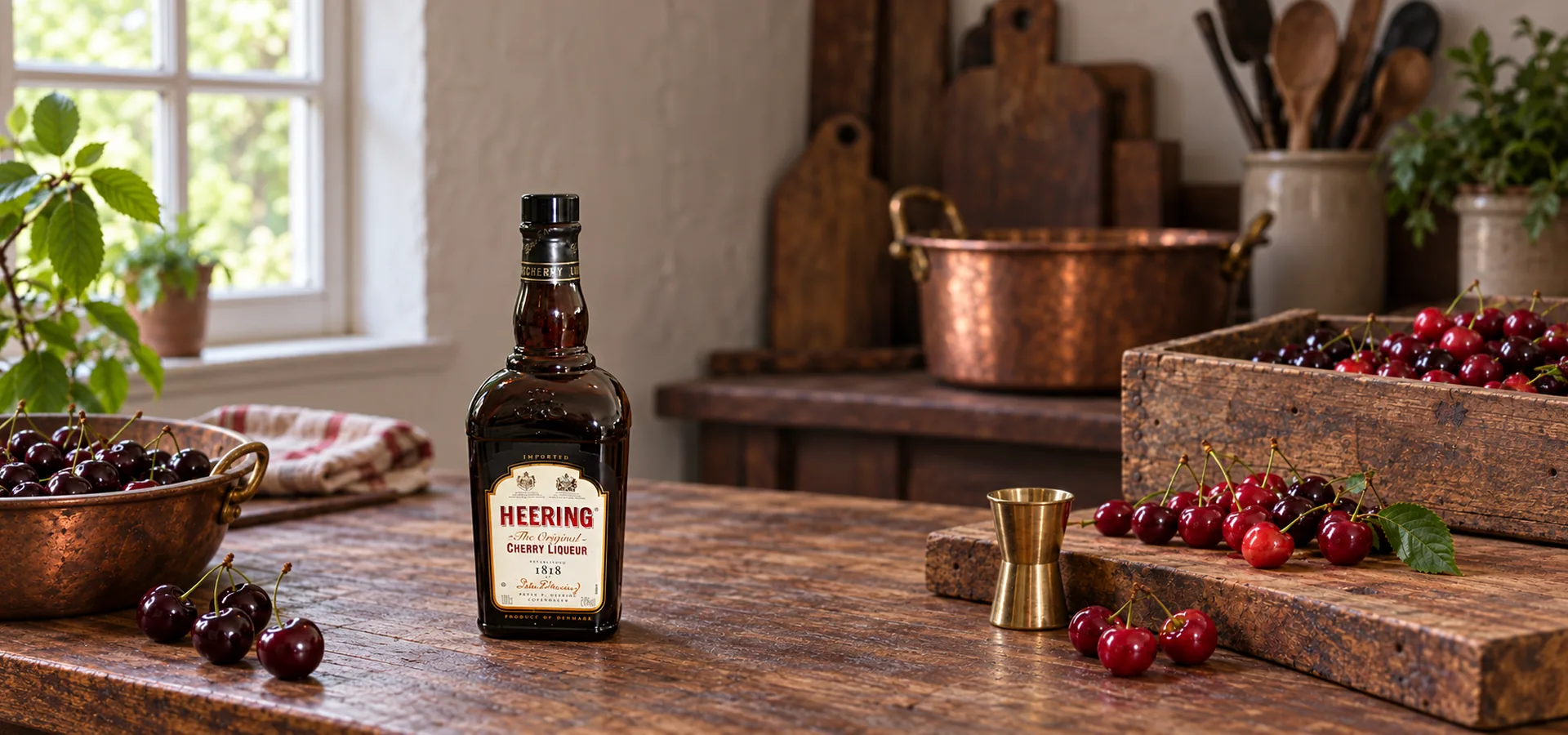
At a glance
- Legal category
- In the United States, cherry liqueur falls under the cordial and liqueur standard, which requires at least 2.5% sugar by finished weight. In the European Union, liqueur has a 15% minimum ABV and normally at least 100 g/L of sweetening, with a 70 g/L exception for cherry liqueur whose alcohol comes exclusively from cherry spirit.
- Typical strength
- 24 to 30 percent ABV
- Range basis
- The 24% to 30% ABV span records current Heering, Giffard, and Luxardo fruit-forward examples. It is not a legal or complete market range, and maraschino may sit outside it.
What is cherry liqueur, and why is it a family?
Cherry liqueur is a sweetened alcoholic drink whose predominant flavour comes from cherries. That definition covers more variation than the familiar image of a thick, dark red liquid suggests.
Some bottles emphasize ripe fruit, tart juice, jam, or spice and carry a ruby to mahogany colour. Maraschino is also a cherry liqueur, yet European rules define it as colourless and its flavour can lean toward distillate, roasted nuttiness, herbs, and cherry stone rather than fresh red fruit.
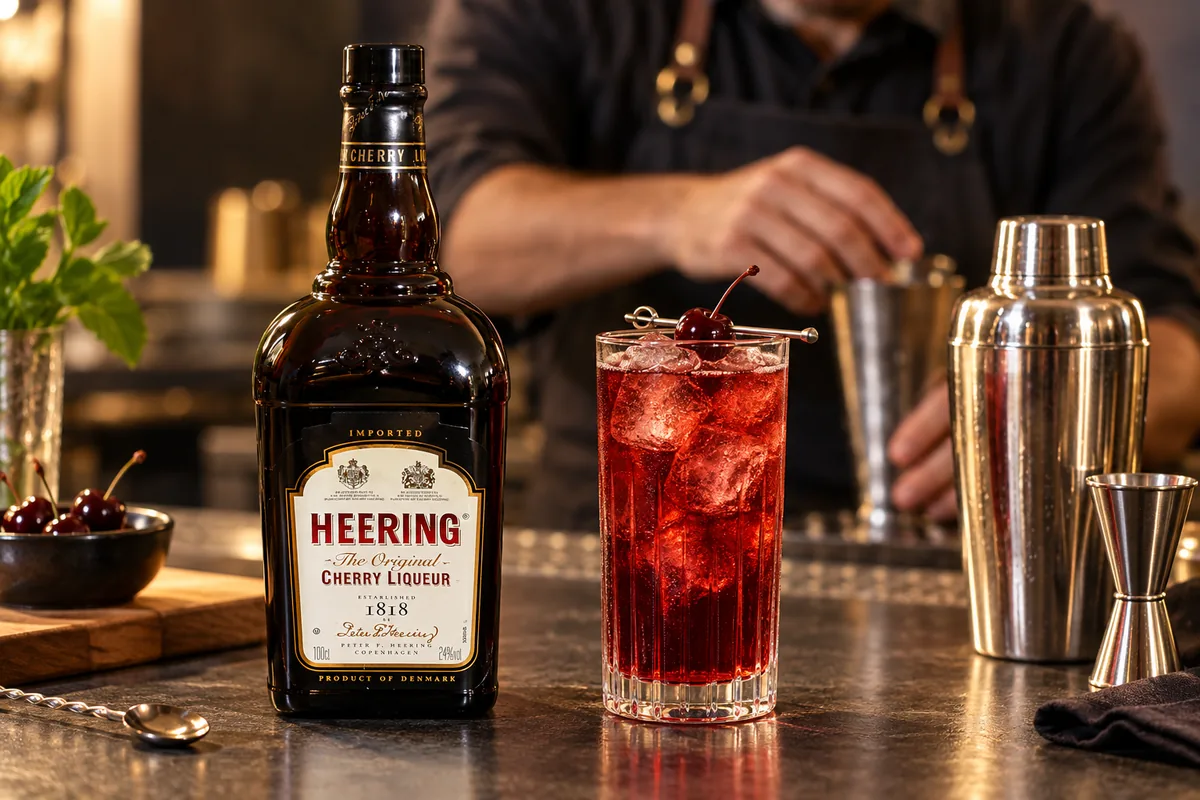
- Stable identity
- Sweetened alcoholic drink with predominant cherry flavour
- Common forms
- Fruit-forward red liqueur, colourless maraschino, named regional styles
- Check on the label
- Legal name, ABV, cherry type, base alcohol, colour, allergens, storage directions
The United States groups cordials and liqueurs as flavoured distilled spirits made by mixing or redistilling spirits with fruit, juice, plants, natural flavouring materials, or extracts from infusion, percolation, or maceration.
The finished product must contain at least 2.5% sugar by weight, but the rule does not impose one cherry variety, colour, texture, or strength on every bottle.
European Union category 33 starts from a sweetened spirit drink and allows agricultural alcohol, agricultural distillate, other spirit drinks, flavouring materials, and food ingredients. Cherry and sour cherry liqueurs are among the fruit liqueurs for which the cherry character must come through the permitted fruit-derived and natural flavouring routes.
The practical consequence is that colour alone cannot identify the style. A clear liquid can be cherry liqueur, and a red liquid may owe part of its appearance or aroma to ingredients beyond cherries.
For choosing and substituting, treat fruit expression, sweetness, alcohol, and stone character as separate variables. The words on the label and the producer's description reveal more than the generic category name.
When does cherry brandy mean liqueur rather than brandy?
The phrase cherry brandy can identify different liquids depending on the market and the rest of the label. This is the category's most consequential naming trap because one interpretation is sweetened liqueur while another is dry fruit spirit.
Under current United States standards, fruit brandy is distilled from fermented fruit juice, mash, or wine and is bottled at no less than 40% ABV.
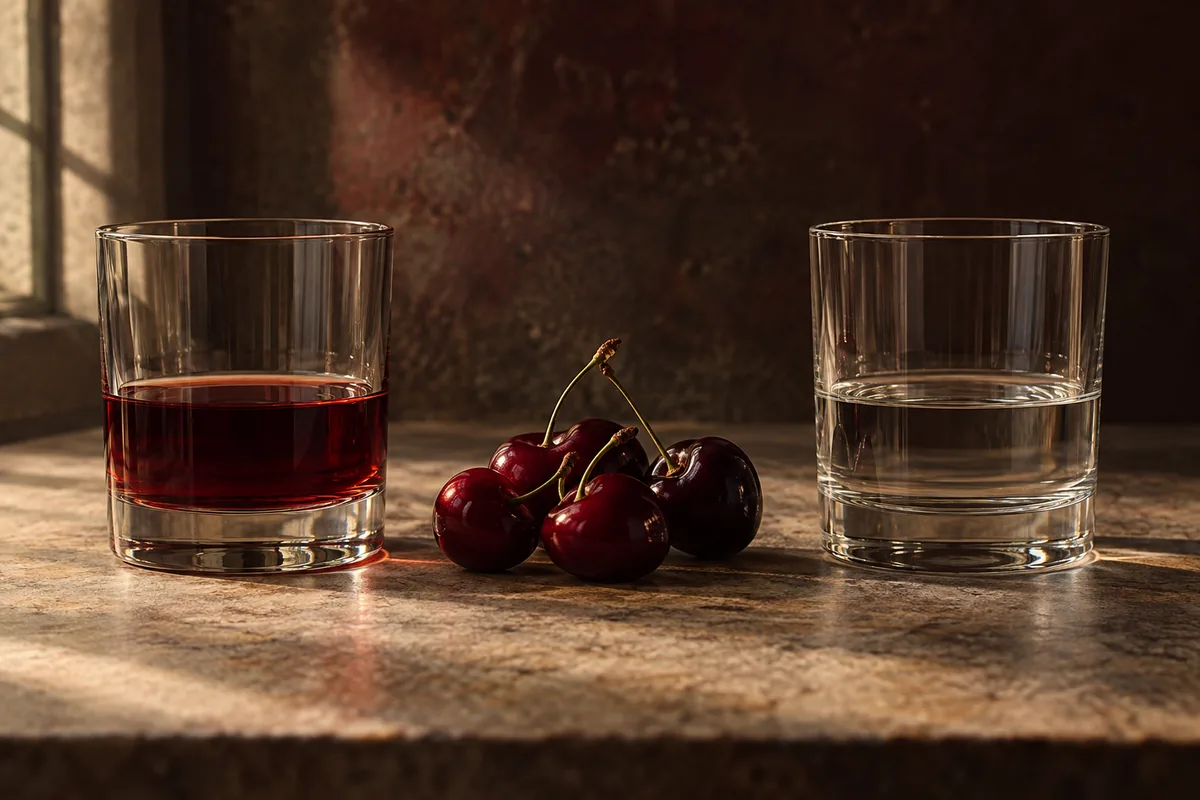
Brandy derived from cherries may be labelled cherry brandy, and the regulation also permits the name Kirschwasser.
A US cherry liqueur follows the separate cordial and liqueur rule. If brandy supplies all of its distilled-spirit base and its characteristic flavour, the more specific designation can be a brandy liqueur, but that still describes a sweetened liqueur rather than unsweetened cherry brandy.
European Union rules add another legitimate use of the phrase. They allow the compound term cherry brandy in the presentation of certain liqueurs, while requiring the legal name liqueur nearby and requiring the origin of the alcohol to be disclosed when it does not come from the named spirit.
A recipe, dessert, or drink specification can change sharply when these meanings cross.
Replacing a fruit-rich liqueur with kirsch removes sugar and changes both texture and aroma, while replacing kirsch with liqueur adds sweetness and usually lowers the alcohol contribution.
Read the full legal name. When a bottle says cherry brandy, look for liqueur, cordial, fruit brandy, cherry spirit, kirsch, or Kirschwasser elsewhere on the label before treating it as a substitute.
Country of sale matters because the legal vocabulary is jurisdictional. The safest practical reading comes from the complete label, actual ABV, ingredient information where provided, and a producer description tied to that exact bottle.
Which production choices shape the cherry flavour?
Cherry liqueur can begin with whole fruit, juice, concentrated fruit material, an alcoholic infusion, cherry distillate, or a combination. The producer then decides which alcoholic base, sweetening level, maturation vessel, and finishing treatment support that material.
Fruit and juice tend to retain recognizable flesh, skin, acidity, and cooked-fruit notes when those parts remain in the blend.
- Select the cherry material. Whole cherries, sour-cherry juice, fruit infusions, distillate, and permitted flavouring preparations preserve different parts of the fruit.
- Extract or ferment the flavour. Maceration keeps non-volatile colour and body, while fermentation and distillation can produce a clearer, more spirit-led result.
- Build the final balance. The base alcohol, water, sugar, blending, and any maturation set ABV, viscosity, acidity, and warmth.
- Finish and bottle. Filtration and permitted colour adjustments can change appearance without proving how much fruit flavour the liquid carries.
Distillation carries volatile aroma into a clear spirit while leaving pigment and most non-volatile material behind, which helps explain why maraschino can be colourless without losing its cherry origin.
Current producer descriptions show how far the routes can diverge. Giffard says its 25% cherry liqueur uses infusions of cherries and raspberry, while Luxardo says the marasca juice for its 30% Sangue Morlacco begins natural fermentation, receives neutral alcohol, and matures in oak before becoming liqueur.
Other formulas introduce stone or kernel character. Bols describes crushed cherry kernels, fresh cherry juice, and brandy in its cherry brandy liqueur, while Luxardo's maraschino process infuses marasca cherries with other parts of the tree before distillation and later sweetening.
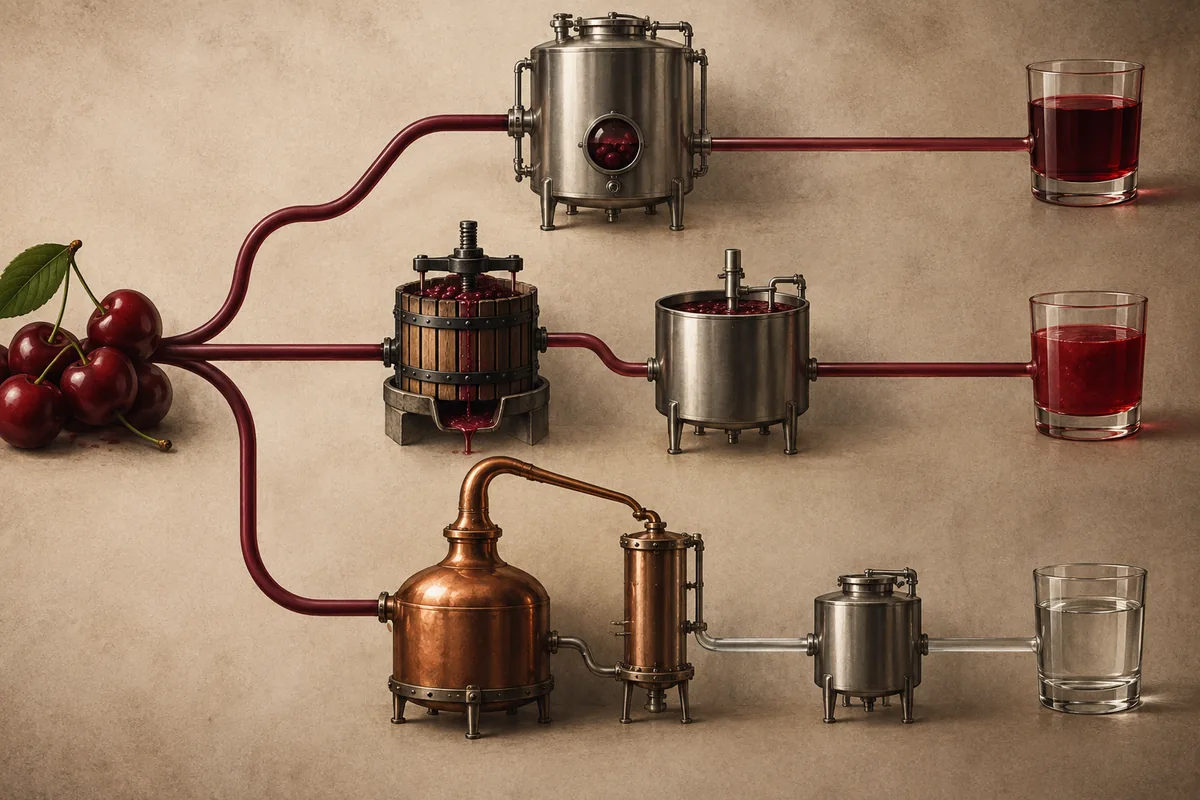
These stages describe commercial possibilities rather than a home formula. Cherry stones and distillation both carry safety concerns, so a finished bottle or professionally controlled production context is the appropriate source of this flavour rather than improvised processing.
The process tells you what to expect more reliably than colour. A juice-led, oak-rested liqueur and a distilled maraschino can share the same broad category while serving completely different sensory and mixing roles.
What does cherry liqueur taste like?
Cherry liqueur can move from bright, tart fruit to concentrated jam, candied cherry, spice, wood, or a dry-seeming kernel note.
Sugar is part of the category, but acidity, bitterness, alcohol, and aroma concentration determine whether that sweetness feels lively, rounded, or heavy.
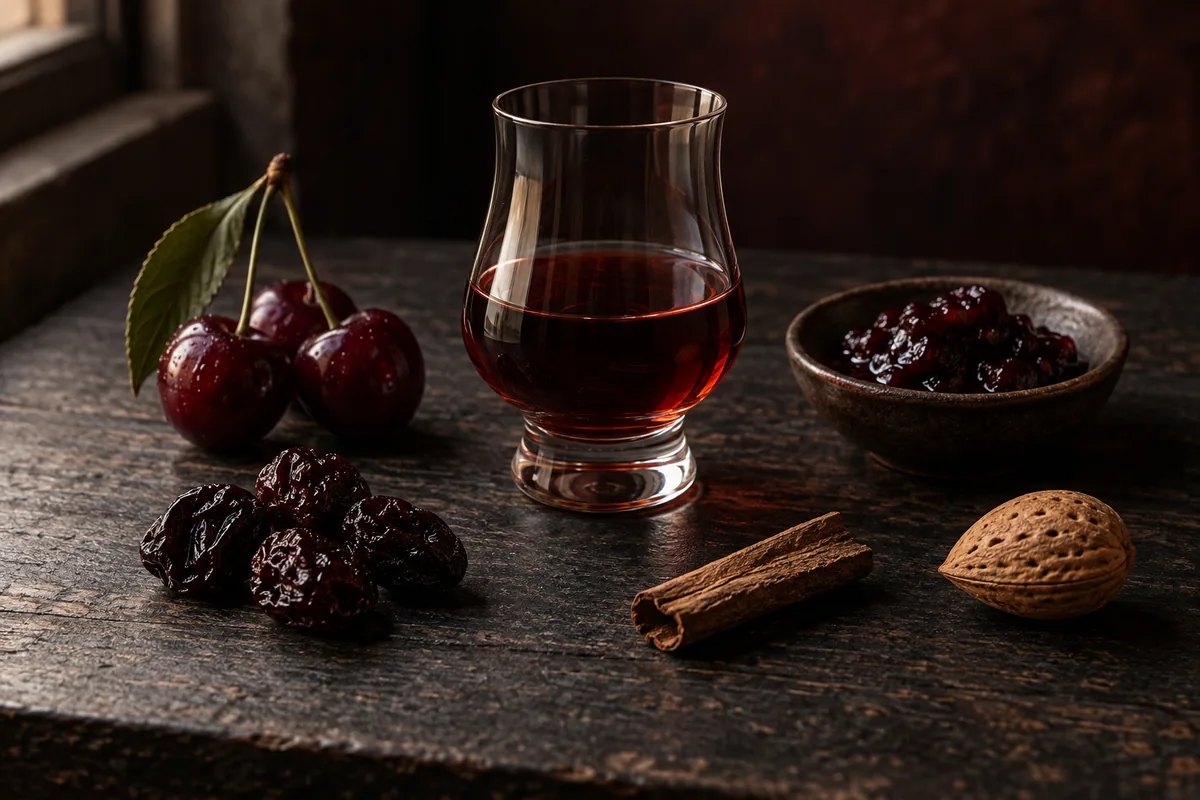
Giffard describes its current cherry liqueur as ruby coloured, ripe-fruited, fresh, and lifted by acidity. Luxardo describes Sangue Morlacco as deep red, thick, and concentrated, with fresh juice, jam, pepper, and marzipan directions supported by its own production method.
Those notes belong to the named products, not to every cherry liqueur. Heering's published 24% specification establishes another current fruit-forward example, but a category description cannot turn producer language into a universal tasting note.
A clean evaluation begins before ice, soda, citrus, or cream changes the liquid. Use a small measured sample in a clean glass, smell first, then taste enough to separate fruit aroma from sweetness and alcohol warmth.
- Find the fruit register. Decide whether it resembles fresh sweet cherry, tart sour cherry, cooked fruit, dried fruit, or confectionery.
- Separate sugar from acidity. A bright finish can make substantial sugar seem less heavy, while low acidity can leave a syrupy impression.
- Notice stone, spice, and wood. Almond-like, peppery, herbal, or oak notes can be central in some formulas and absent in others.
- Watch the finish. Length, bitterness, heat, and viscosity often matter more for use than the intensity of the first cherry aroma.
Colour remains weak sensory evidence. A dark liquid does not guarantee deeper fruit, and a clear maraschino can carry a concentrated distillate and roasted-nut profile even though it looks nothing like cherry juice.
How strong and sweet is cherry liqueur?
Cherry liqueur has no single ABV, and its sweetness rule depends on the jurisdiction and construction.
European Union liqueur has a minimum strength of 15% ABV, while the United States cordial definition sets a sugar floor but no single category-wide ABV in section 5.150.
- Heering
- 24% ABV
- Giffard Liqueur de Cherry
- 25% ABV
- Luxardo Sangue Morlacco
- 30% ABV
The EU normally requires at least 100 grams of sweetening products per litre for liqueur. A narrower 70 grams per litre threshold applies only when a cherry or sour cherry liqueur receives all of its alcohol from cherry or sour cherry spirit, so it should not be quoted as the baseline for every cherry bottle.
These current producer figures describe three fruit-forward products, not a complete market range. Luxardo's colourless Maraschino Originale is 32% ABV, which shows why even closely related cherry liqueurs can sit outside the red-style examples.
For a measured comparison, 30 millilitres of liquid contains 7.2 millilitres of ethanol at 24% ABV and 9 millilitres at 30% ABV. That difference exists before counting any other alcoholic ingredient in the glass or dish.
The US definition of a standard drink is 14 grams of pure alcohol, and NIAAA notes that actual drink sizes and strengths vary.
A label-based calculation can estimate ethanol, but it cannot tell whether a person is unimpaired or safe to drive, operate machinery, swim, or make another safety-critical decision.
ABV also does not rank sweetness. A higher-strength bottle may taste less sweet because acid, bitterness, and spirit structure change perception, while a lower-strength syrupy product can dominate a mixture with less alcohol.
Cherry liqueur, maraschino, kirsch, or cherry syrup?
These four products share cherry language but contribute different combinations of fruit, sugar, alcohol, texture, and stone character. Substitution works only when you identify which of those functions the original specification needs.
| Product | What defines it | Usual sensory direction | Practical consequence |
|---|---|---|---|
| Fruit-forward cherry liqueur | Sweetened spirit drink built around cherry fruit, juice, infusion, or related material | Red fruit, tart juice, jam, spice, sometimes oak or kernel | Adds cherry flavour, sugar, alcohol, body, and often colour together |
| Maraschino | EU-defined colourless liqueur based mainly on marasca distillate or macerated cherry material, at least 24% ABV and 250 g/L sweetening | Distillate, roasted nuttiness, herbal or stone notes, restrained fresh-fruit impression | Can sharpen and perfume a mixture rather than make it taste like red cherry syrup |
| Kirsch or Kirschwasser | Dry cherry fruit brandy or cherry spirit distilled from fermented fruit | Clear, spirit-led cherry, often dry with stone-fruit character | Supplies alcohol and aroma without the liqueur's sugar or red-fruit body |
| Cherry syrup | Non-spirit syrup whose label may list sugar, water, cherry juice or flavour, acid, and colour | Sweet cherry, confectionery, tartness depending on formula | Adds sweetness and flavour without supplying the alcohol of a liqueur |
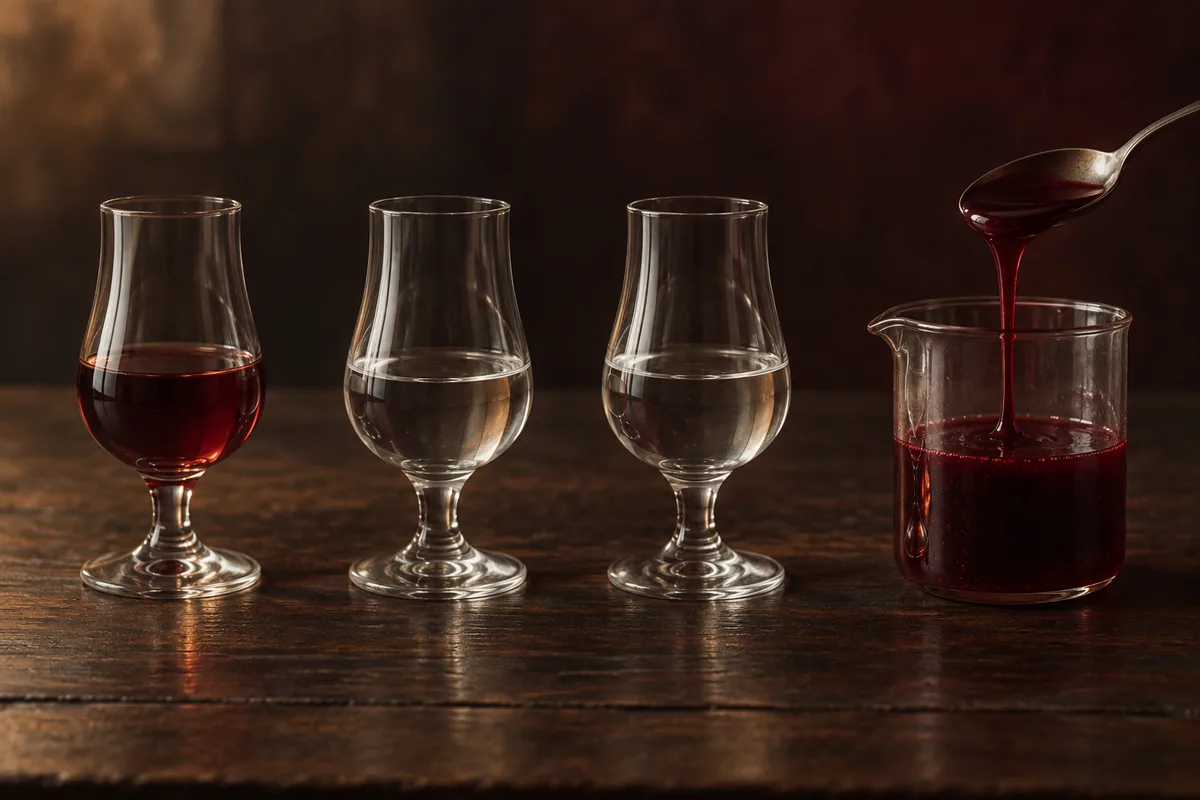
Current EU rules make maraschino especially distinct. It must be colourless, contain at least 250 grams per litre of sweetening, reach at least 24% ABV, and derive its main flavour from marasca distillate or specified macerated cherry material.
Kirsch takes the opposite path on sweetness.
Under the US fruit-brandy standard, cherry brandy or Kirschwasser is distilled from fermented cherry material and bottled at no less than 40% ABV, so swapping it measure for measure with a 24% fruit liqueur changes both sugar and ethanol.
A commercial cherry syrup is a separate ingredient rather than a low-strength cherry liqueur. Giffard's current cherry syrup lists sugar, water, natural flavouring, concentrated cherry juice, acid, stabilizer, and colouring, and its producer describes it for dilution and alcohol-free applications.
If the needed role is red fruit and sweetness, begin with a fruit-forward liqueur or adjust those functions separately. If the needed role is dry cherry spirit, clear nutty maraschino, or alcohol-free syrup, choose that category directly instead of relying on the shared word cherry.
Which cherry liqueur fits the job?
A useful choice begins with the missing flavour in the drink or food, not with a brand ranking.
Cherry liqueur can act as fruit, sweetener, aromatic seasoning, alcohol, colour, and texture at the same time, but each style weights those jobs differently.
- Fresh and tart partners: citrus, sour berries, and restrained carbonation can sharpen ripe or cooked cherry notes.
- Roasted and bitter partners: dark chocolate, coffee, cocoa, and some herbs can counter confectionery sweetness.
- Rich partners: vanilla desserts, ice cream, creamy cheeses, and nut desserts can carry concentrated cherry aroma in a small measured portion.
- Savoury partners: duck, pork, aged cheese, and peppery sauces can work when acidity and salt keep the fruit from reading like dessert sauce.
For a drink that needs ripe red fruit and body, a juice-led or infusion-led bottle is the direct route. For a drink that needs a clear, sharper cherry-stone accent without red colour, maraschino is the more precise category.
Acidic ingredients can brighten dense fruit and reduce the impression of syrupiness, while bitter, herbal, roasted, or cocoa flavours can give a sweet cherry center more structure. Carbonation can lift aroma and lighten texture, but it does not remove alcohol or sugar.
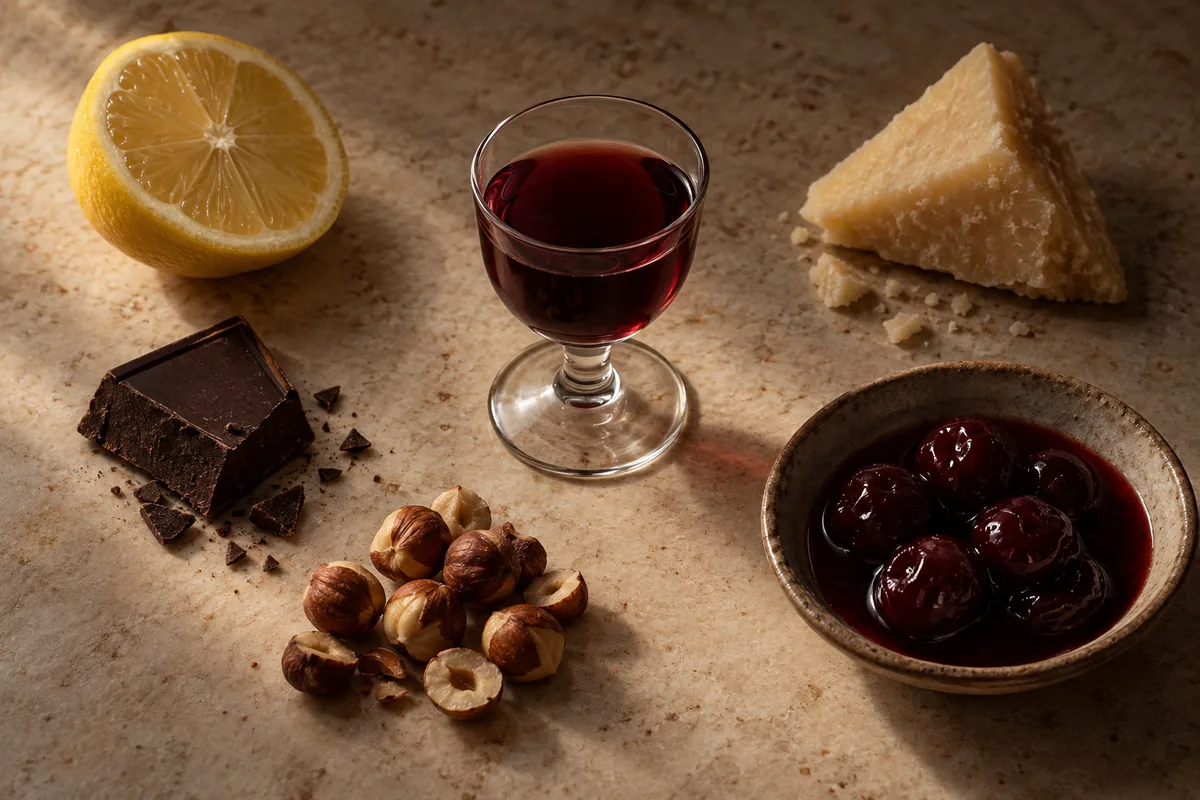
Measure before adjusting. Adding more cherry liqueur intensifies several variables together, so the cleaner correction may be acid for balance, syrup for sweetness, spirit for alcohol, or a cherry garnish for aroma rather than another pour of liqueur.
Complete cocktail formulas belong with their named drinks, and a food pairing still depends on the exact bottle. Use the liqueur's ABV, sweetness, acidity, colour, and dominant fruit or stone note to test whether the proposed role matches.
How should you store an opened bottle?
Keep cherry liqueur upright, tightly closed, cool, dry, and away from direct light unless the producer states otherwise.
Giffard publishes that guidance for its cherry liqueur, and the same conditions reduce avoidable heat, light, and air exposure for many shelf-stable liqueurs.
Formula details still matter. A bottle containing unusual fruit solids, cream, or another perishable ingredient may carry specific refrigeration or use-by instructions that take priority over general category advice.
Oxygen can gradually flatten fresh-fruit aroma, and strong light can alter colour. Those quality changes do not create a universal open-bottle deadline, so record when the bottle was opened and compare it with the producer's directions and its previous condition.
- Check the closure. Look for leakage, a damaged cap, sticky residue from a failed seal, or unexpected pressure.
- Inspect the liquid. New haze, particles, gas, or a colour shift deserves attention, especially when the formula was previously clear and still.
- Smell before serving. A distinctly sour, fermented, musty, or otherwise unfamiliar odour is a reason to stop and investigate rather than disguise it in a drink.
- Read formula-specific directions. Follow refrigeration, shelf-life, allergen, and discard guidance printed for that bottle.
When buying a replacement, start with the complete legal name and actual ABV. Then use the ingredient statement or producer description to identify cherry variety, fruit or distillate route, added colour, base alcohol, maturation, sweetness clues, and storage requirements.
Choose the role before the shade. A dark red bottle may suit fruit and body, while a clear maraschino may suit aromatic seasoning, and neither can be selected reliably from the generic words cherry liqueur alone.
The category becomes manageable once the bottle is read as a set of functions. Fruit source and production route explain the style, while ABV, sugar, condition, and intended use decide whether it belongs in your glass or dish.
Sources
-
27 CFR 5.150, Liqueur or cordial
Published 9 February 2022. Accessed 13 September 2026.
-
Regulation (EU) 2019/787
Accessed 12 September 2026.
-
Electronic Code of Federal Regulations, 27 CFR 5.145
Published 17 August 2026. Accessed 13 September 2026.
-
NIAAA, What Is a Standard Drink?
Accessed 13 September 2026.
-
Bols Cherry Brandy Liqueur
Accessed 13 September 2026.
-
Giffard Cherry Syrup
Accessed 13 September 2026.
More in Liqueurs
-
 Almond liqueur
01
What is almond liqueur, and does it always contain almonds?
-
 Amaretto
02
What is amaretto, and what gives it an almond-like flavour?
-
 Apple liqueur
03
What is apple liqueur, and how does it differ from apple brandy?
-
 Apricot liqueur
04
What is apricot liqueur, and when does apricot brandy mean something else?
-
 Banana liqueur
05
What is banana liqueur, and how do fresh and ripe styles differ?
-
 Blackberry liqueur
06
What is blackberry liqueur, and is it the same as crème de mûre?