
Liqueurs
What is almond liqueur, and does it always contain almonds?
Almond liqueur is a sweetened alcoholic drink with an almond-like aroma, but the name does not prove that every bottle contains almonds. Its flavour may come from almonds, apricot or other stone kernels, natural flavouring preparations, or a producer-specific combination.
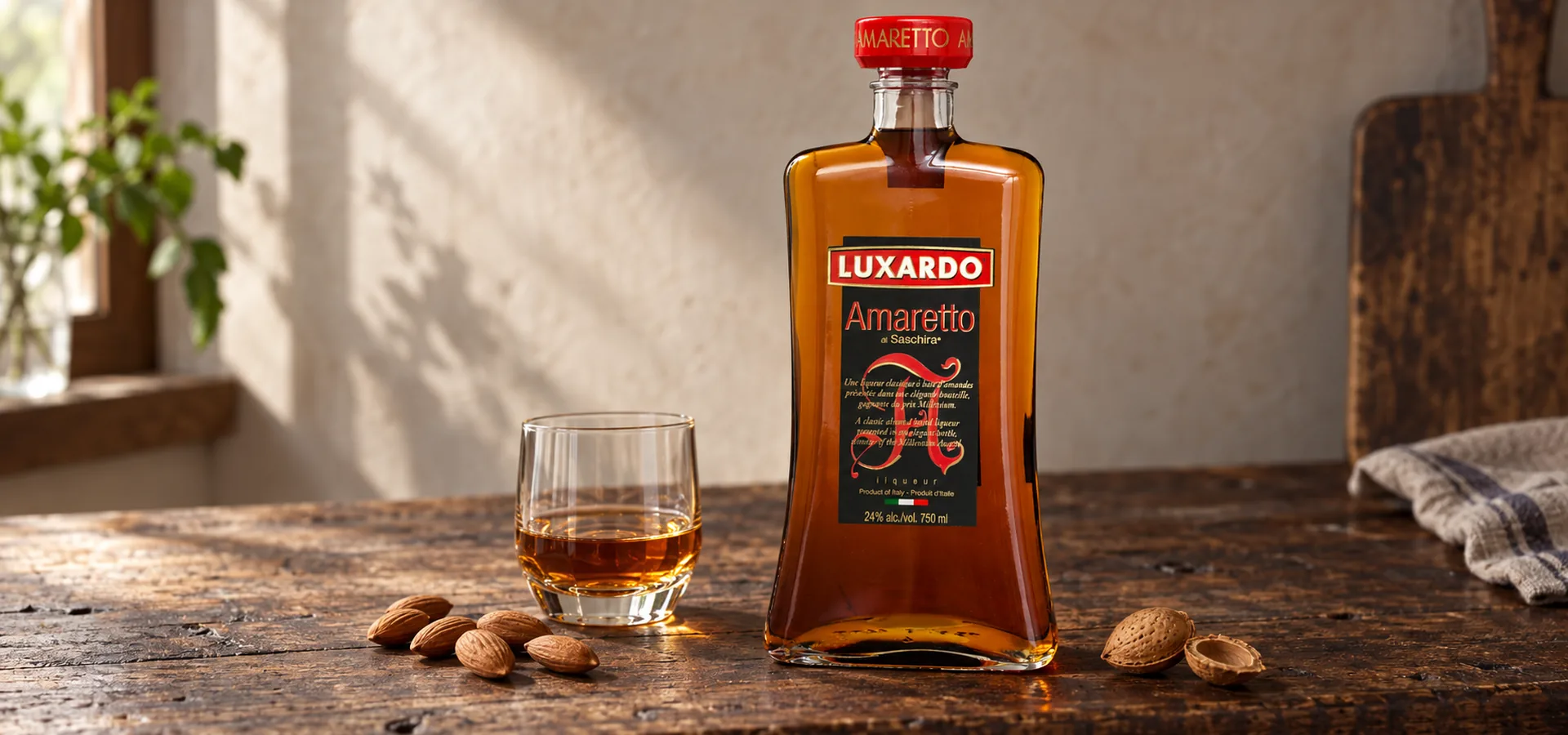
At a glance
- Legal category
- In the European Union, liqueur is a defined spirit-drink category with a minimum strength of 15% ABV and generally at least 100 grams of sweetening products per litre, expressed as invert sugar; other jurisdictions define and label the category differently.
- Typical strength
- 15 to 28 percent ABV
What is almond liqueur, exactly?
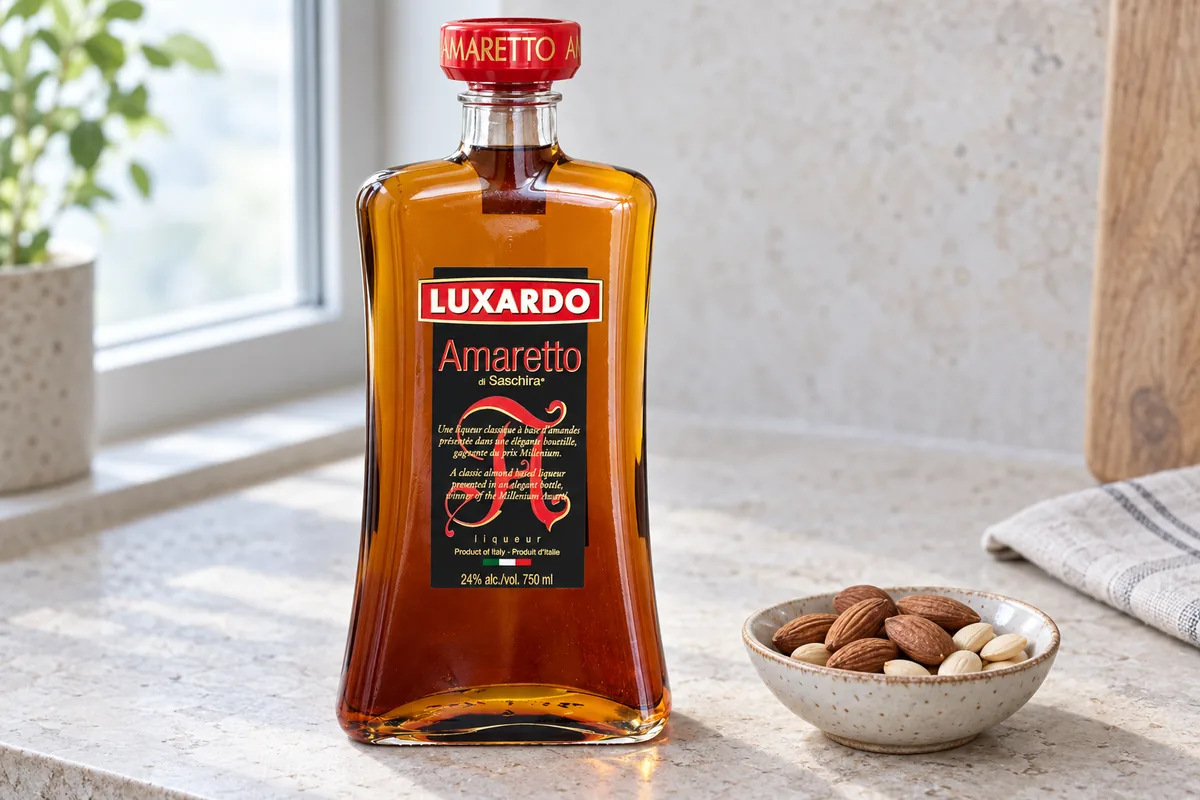
Almond liqueur is a sweetened spirit drink built around an almond-like aroma. That definition identifies the flavour family and the liqueur structure, but it does not identify one mandatory raw material or one universal recipe.
In the European Union, the general liqueur category must contain at least 100 grams of sweetening products per litre, expressed as invert sugar, except for named categories with their own thresholds. It must also contain at least 15% alcohol by volume.
The United States uses a different standard.
The TTB Beverage Alcohol Manual describes a liqueur or cordial as a flavoured spirits product containing at least 2.5% sugar by weight, made by mixing or redistilling spirits with fruit, plants, juices, natural flavouring materials, or extracts obtained by methods such as infusion or maceration.
- What the name tells you
- Expect a sweetened alcoholic drink with an almond-like predominant flavour.
- What it does not tell you
- The precise flavour source, sugar content, allergen status, base spirit, or production method.
- EU category floor
- 15% ABV and generally 100 grams of sweetening products per litre, expressed as invert sugar.
- U.S. category baseline
- At least 2.5% sugar by weight under the TTB liqueur or cordial description.
Those definitions explain why two bottles can both be legitimate almond liqueurs while tasting and behaving very differently. The front name is a useful first classification, while the class or type, ABV, ingredient information, and producer description answer the bottle-specific questions.
The range shown at the top of this entry is a reference range built from the 15% EU floor and reviewed producer examples at 25% and 28% ABV. It is not a legal ceiling or a promise that most bottles fall at one point within it.
Why can almonds and stone kernels smell so similar?
The overlap begins with aroma chemistry. Benzaldehyde is an aromatic compound that PubChem describes as having a bitter-almond odour, and it is also associated with cherry-like and marzipan-like flavour cues.
That shared aromatic signal helps explain why an apricot kernel can suggest almond even though it comes from a stone fruit. Your nose recognises a related compound family before it identifies the botanical source.
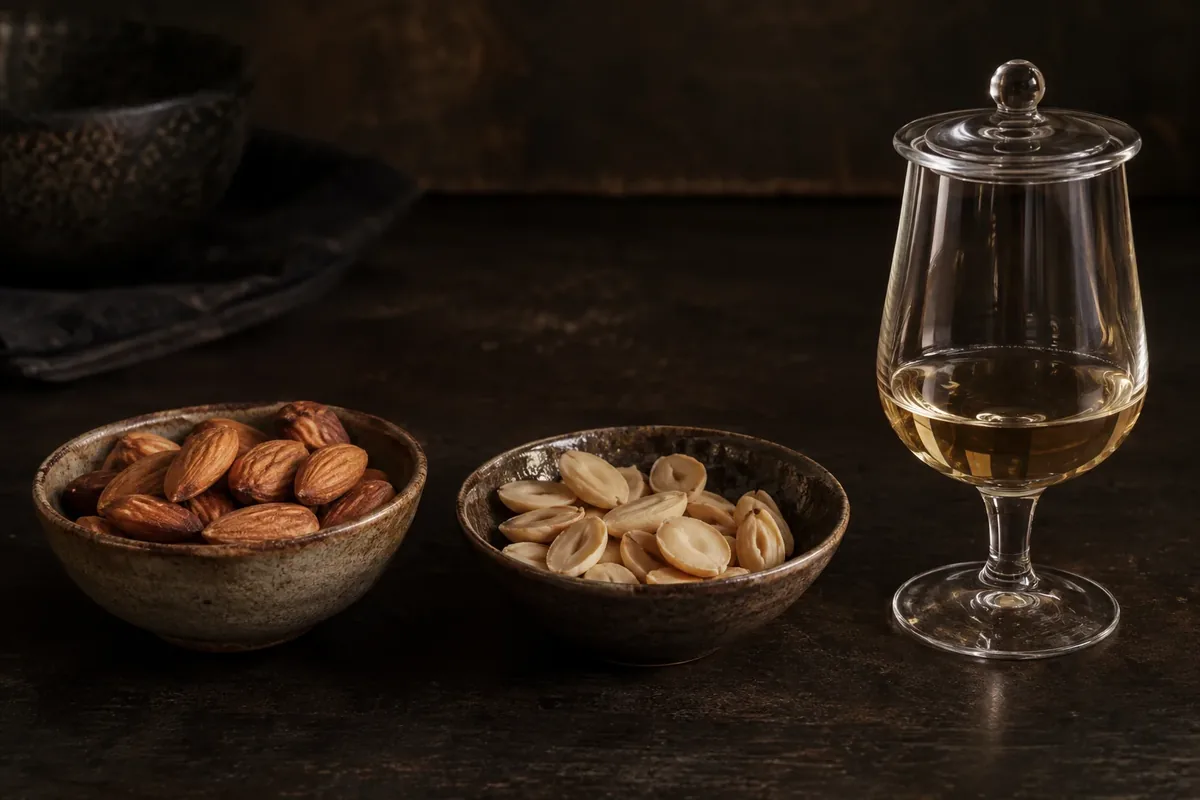
Whole sweet almonds can bring a broader impression that includes toasted nut, pastry, and marzipan. Stone-kernel character often feels narrower and brighter, with cherry-stone perfume and a more obvious bitter edge.
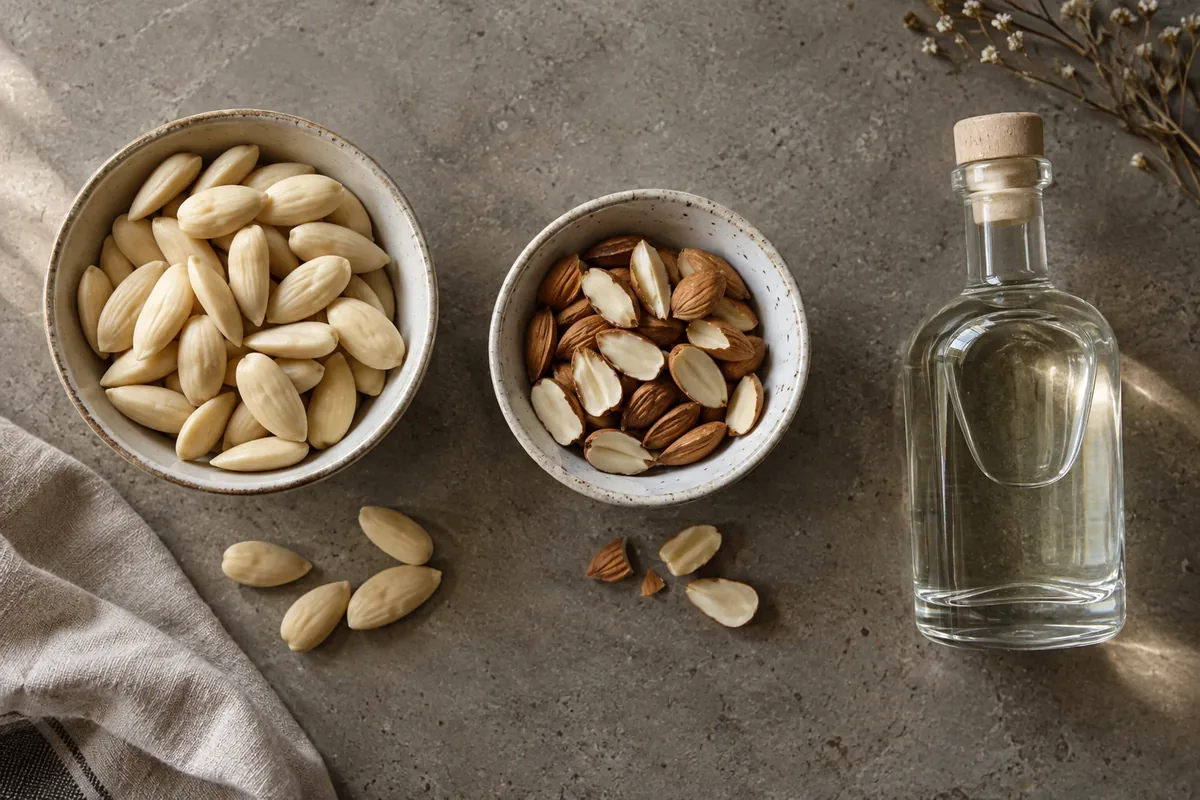
A flavouring preparation can focus that recognizable aroma without reproducing every note found in a raw nut or kernel. This is one reason an intense almond smell cannot, by itself, identify what went into a bottle.
The sensory difference becomes clearer when you compare aroma with texture. A rounded nut impression can make a liqueur seem creamy even without dairy, while a high, kernel-led aroma may remain vivid in a smaller measure and finish with more apparent bitterness.
Raw-kernel warning: Do not copy a commercial kernel process at home. EFSA notes that raw apricot kernels contain amygdalin, which can release cyanide after consumption. Commercial formula review and food-safety controls are not reproduced by putting raw kernels into alcohol in a home kitchen.
How do producers build the flavour?
A commercial producer first chooses the alcoholic base and the material that will carry the predominant flavour. The base may be relatively neutral, or it may contribute character of its own, but the finished drink still has to meet the applicable liqueur standard and label rules.
Flavour can be collected through maceration, infusion, percolation, distillation, prepared extracts, or a combination. The U.S. category description expressly allows mixing or redistilling with natural flavour materials and extracts, so the word liqueur does not identify one process.
- Build the aromatic base. A producer extracts or blends the chosen almond, kernel, food, or approved flavouring materials.
- Separate unwanted solids. Filtration or another professional clarification step controls haze and texture.
- Blend alcohol, flavour, and sweetness. Sugar changes body and aroma perception as well as meeting a category requirement.
- Adjust and verify the finished liquid. The producer checks strength, stability, formula compliance, and the wording required for the selling market.
Casoni describes cold hydroalcoholic extraction for its amaretto, while Giffard describes an amaretto using almonds and stone-fruit kernels. These are useful examples of how named products are constructed, not category-wide instructions.
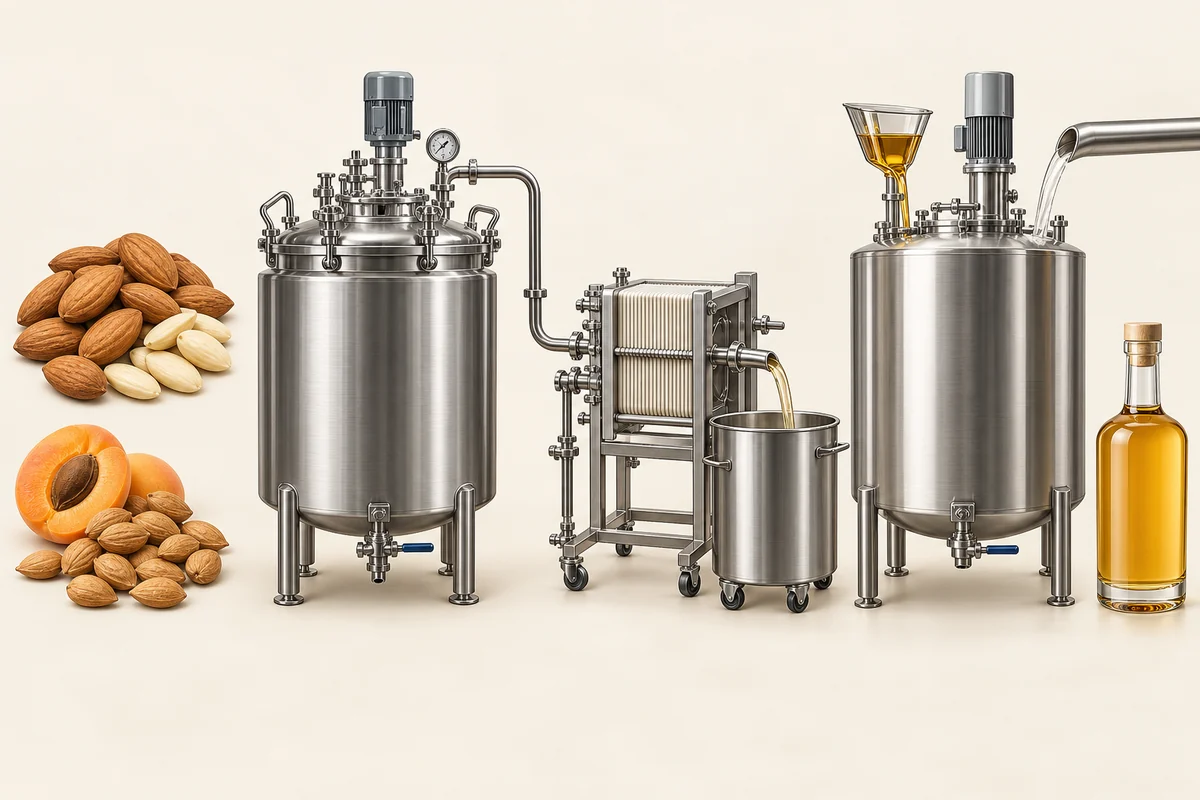
The timing and temperature of extraction influence which aromas and bitter compounds enter the liquid. Filtration changes clarity, while the amount and form of sugar affect viscosity and the way the aroma persists after swallowing.
Colour is a weak guide to this process.
A pale liqueur can still be intensely aromatic, and a dark amber bottle may owe part of its appearance to caramel colour, roasted ingredients, ageing, or another producer choice disclosed under the rules that apply to it.
Is almond liqueur the same as amaretto or almond syrup?
Almond liqueur is the broad flavour description. Amaretto is a recognized almond-flavoured liqueur or cordial type in the TTB manual, commonly associated with an almond, marzipan, and gently bitter profile.
That makes amaretto part of the same practical flavour family, but it does not make every almond liqueur an amaretto. A producer can make a more directly nut-led almond liqueur, while an amaretto may gain much of its characteristic aroma from stone kernels or a blend.
| Ingredient | Alcohol and sweetness | Typical job | Main substitution risk |
|---|---|---|---|
| Almond liqueur | Alcoholic and sweetened | Broad almond-like aroma, body, and sweetness | Flavour source and sugar level vary widely |
| Amaretto | Alcoholic and sweetened | Marzipan-like aroma with a restrained bitter-kernel edge | May be sharper, darker, or sweeter than the intended almond liqueur |
| Almond syrup | Nonalcoholic and usually concentrated | Sweet almond flavour and viscosity | Removes alcohol while often adding more sugar and less bitter structure |
| Almond extract | Highly concentrated flavouring ingredient | Aroma in very small culinary quantities | Far too concentrated for a one-for-one pour |
Crème de noyaux is another neighbouring term, traditionally associated with stone-fruit kernels and a pronounced kernel or marzipan character. Its colour and sweetness can differ substantially, so the name is not a neutral substitute instruction.
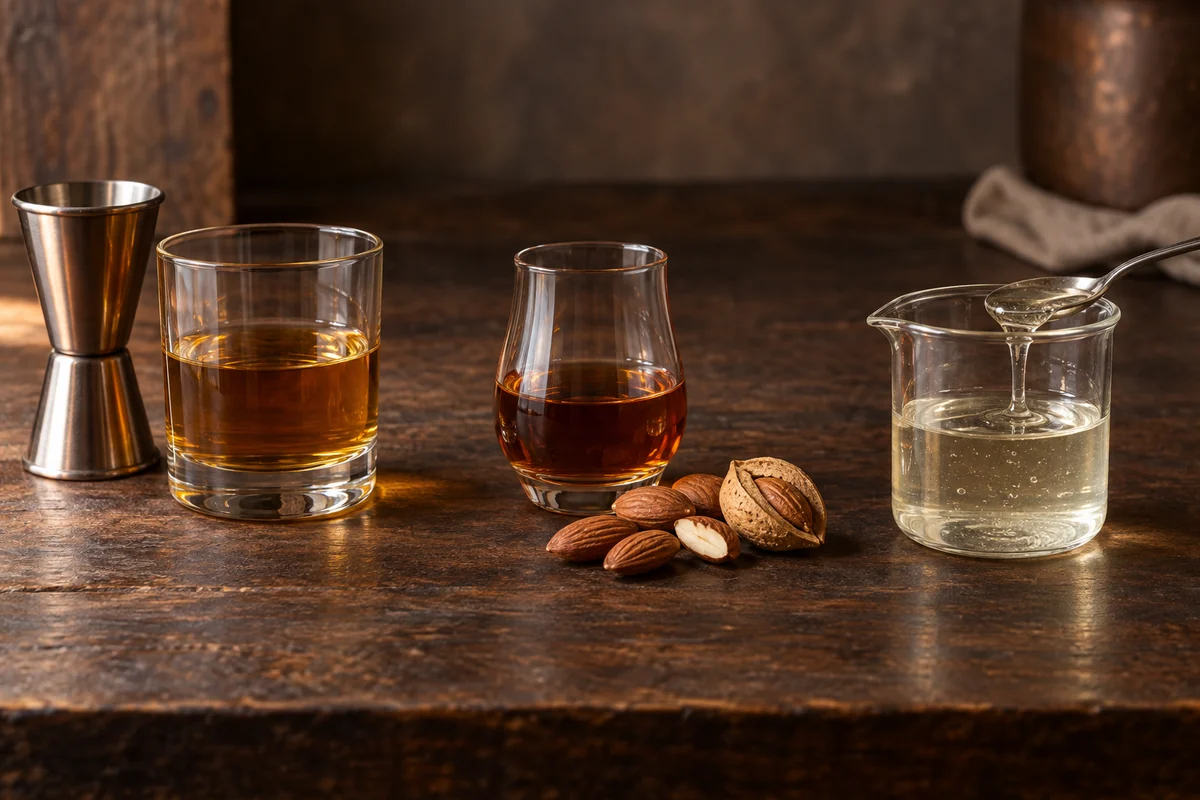
If a preparation depends on measured balance, treat each change as a functional substitution. Check the ABV, begin below the stated liqueur measure when the replacement is especially sweet or concentrated, and reassess the other sugar and dilution in the recipe.
A complete cocktail specification belongs with its named drink. This profile can explain why the ingredients differ, but it cannot supply a universal conversion that works across every bottle and every recipe.
How do sweetness and ABV change its role?
Alcohol carries volatile aroma and gives structure, while sugar increases body and can soften bitterness. Together they make almond liqueur useful as a modifier: one measured addition can supply aroma, sweetness, and texture at the same time.
The EU thresholds put useful reference points around that structure. General liqueur usually starts at 100 grams of sweetening products per litre, while crème de followed by a named raw material starts at 250 grams per litre; both have a 15% ABV minimum.
- 15% ABV
- Minimum strength for liqueur and crème de categories in the EU.
- 100 g/L
- General EU liqueur sugar floor in most cases, expressed as invert sugar.
- 250 g/L
- EU minimum for crème de followed by a fruit or other named raw material.
Those numbers are legal thresholds, not tasting notes. A 25% ABV bottle can still feel sweeter than a 15% bottle, and two products at the same strength can differ sharply in sugar, acidity, bitterness, and aromatic concentration.
Bottle-specific balance: Read the bottle before adjusting a recipe. The category name cannot tell you how much syrup, sweet vermouth, juice, or cream the surrounding preparation can tolerate.
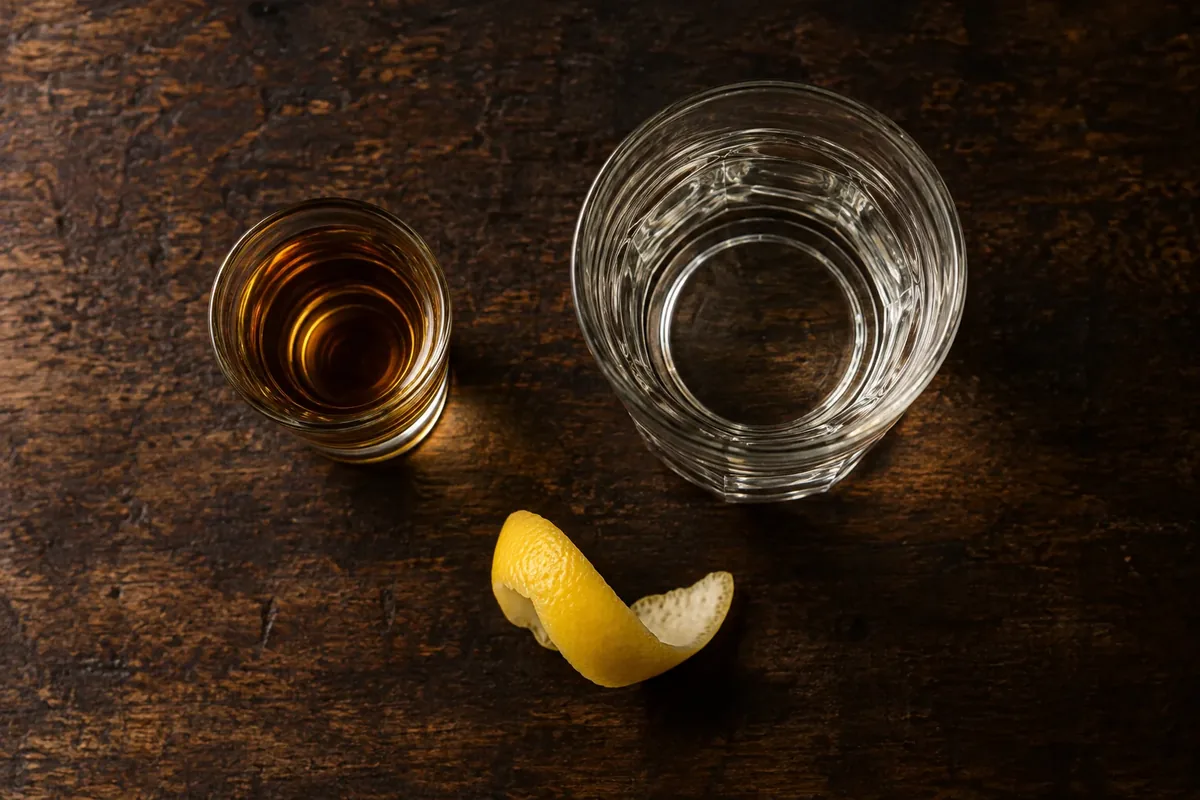
In a spirit-forward drink, almond liqueur usually works beside a drier base rather than replacing it. Scotch whisky can add malt, smoke, and oak contrast; rum can bring molasses or cane character; brandy can reinforce fruit and warm spice.
Coffee and cocoa supply bitterness, while lemon or another acidic ingredient makes the sweetness feel more defined. Carbonation lightens the perception of body, and dilution can open aroma while reducing the intensity of both sweetness and alcohol.
Does an almond-flavoured label prove it contains almonds?
No. A flavour name tells you the intended predominant character, while the formula may use almonds, other kernels, natural flavouring preparations, or combinations allowed by the relevant jurisdiction.
The front panel also cannot prove that a product is suitable for someone with an almond allergy. In the United States, TTB's current major-allergen page says allergen disclosure for wine, distilled spirits, and malt beverages is voluntary under the 2006 interim rule.
If a producer chooses to make a voluntary allergen declaration, the disclosure has formatting and completeness requirements. The absence of a declaration is therefore not the same thing as a verified absence of almond-derived material.
- Find the class or type designation. This identifies how the product is legally presented in that market.
- Read the ABV. Use the number on the bottle rather than a category assumption.
- Look for an ingredient or allergen statement. Availability and legal requirements differ by jurisdiction.
- Check the producer's current product information. Contact the producer when the label leaves a material question unanswered.
- Choose another product when uncertainty remains. A flavour resemblance is not evidence for an allergy decision.
This distinction also matters outside the United States because ingredient and allergen rules are not identical across markets. Use the packaging sold where you live, not a photograph of a foreign-market label or a menu description.
The narrow answer is the honest one: the words almond liqueur do not establish the ingredient list. That is a label-reading boundary, not a medical diagnosis or a claim about a bottle that has not been inspected.
How do you choose a bottle for a particular job?
Begin with the flavour direction, then check sweetness and strength. A bottle described as roasted, creamy, or pastry-like will fill a different space from one described as bright, cherry-stone, or bitter-almond.
| Use case | Useful flavour direction | What provides balance | What to avoid |
|---|---|---|---|
| Support coffee or cocoa | Rounded, toasted, persistent almond | Coffee bitterness and a restrained measure | Stacking several sweet cream-style modifiers |
| Work beside citrus | Bright marzipan or kernel-led aroma | Acidity and dilution | A heavy liqueur that buries fresh aroma |
| Flavour a dessert | Broad nut, pastry, or stone-fruit character | Salt, dark chocolate, tart fruit, or unsweetened dairy | Assuming the alcohol disappears in a no-cook preparation |
| Serve a small chilled pour | Enough bitterness or aroma to remain distinct when cold | Moderate chill and a small vessel | Using temperature to hide an unbalanced bottle |
For food, almond liqueur naturally echoes pastry, chocolate, coffee, vanilla, cherry, apricot, and other stone fruit. A pairing works best when another element supplies contrast, because adding a sweet almond note to an already sweet dish can flatten both.
For mixed drinks, measure the first addition instead of free-pouring. Taste after the intended dilution, since ice and water change the apparent sweetness and can expose a bitter edge that was hidden at room temperature.
If the liqueur is meant to replace amaretto, compare aroma and sugar rather than relying on the family name. If it replaces almond syrup, remember that the alcoholic liqueur adds ABV and may contribute less viscosity or more bitterness.
How should almond liqueur be served and stored?
There is no single correct service temperature. Light chilling can tighten sweetness and make the texture feel denser, while a measured pour over ice introduces dilution that may reveal more aroma as the glass warms.
Use a small clean glass for a neat sample so residue from coffee, citrus, or another liqueur does not distort the assessment. In a mixed drink, the recipe's measured method, ice, and dilution matter more than a category-wide serving ritual.
Keep the bottle tightly closed, upright, and away from direct light and heat unless its producer gives different instructions. Giffard advises cool, dry storage away from light for its amaretto, which supports those conditions for that product but does not establish a universal shelf life.
Discard decisions depend on the actual bottle and any perishable ingredients added after opening or mixing. A change in colour, aroma, clarity, or closure condition can justify checking the producer's guidance, while a calendar estimate alone cannot prove that every almond liqueur has failed.
Alcohol remains alcohol when served with dessert, coffee, or ice. The ABV and measured serving determine how much alcohol is present; sweetness and flavour do not make the drink lower-risk or provide any basis for deciding that someone can drive.
Common questions
- Does almond liqueur always contain almonds?
- No. The flavour can come from almonds, stone kernels, natural flavouring preparations, or a combination. Check the current product label and producer information for an ingredient or allergen decision.
- Is almond liqueur the same as amaretto?
- Amaretto is a recognized almond-flavoured liqueur type, but almond liqueur is the broader flavour description. Bottles can differ in raw materials, sweetness, bitterness, colour, and ABV.
- Can almond syrup replace almond liqueur?
- It can provide almond flavour and sweetness, but it removes alcohol and may add more sugar and viscosity. It is not a universal one-for-one substitution.
- What balances almond liqueur?
- Dry spirits, coffee, cocoa, citrus, tart fruit, bitterness, carbonation, and dilution can all provide contrast. The best choice depends on the bottle's sweetness and flavour direction.
Sources
-
Regulation (EU) 2019/787
Published 17 May 2019. Accessed 12 September 2026.
-
TTB Distilled Spirits Beverage Alcohol Manual, Chapter 4
Accessed 12 September 2026.
-
TTB Major Food Allergen Labeling for Alcohol Beverages
Updated 7 January 2020. Accessed 12 September 2026.
-
EFSA: Apricot kernels pose risk of cyanide poisoning
Published 27 April 2016. Accessed 12 September 2026.
-
PubChem Benzaldehyde, CID 240
Accessed 12 September 2026.
-
Casoni Amaretto
Accessed 12 September 2026.
More in Liqueurs
-
 Amaretto
01
What is amaretto, and what gives it an almond-like flavour?
-
 Apple liqueur
02
What is apple liqueur, and how does it differ from apple brandy?
-
 Apricot liqueur
03
What is apricot liqueur, and when does apricot brandy mean something else?
-
 Banana liqueur
04
What is banana liqueur, and how do fresh and ripe styles differ?
-
 Blackberry liqueur
05
What is blackberry liqueur, and is it the same as crème de mûre?
-
 Blue curaçao
06
Blue Curaçao: What Does the Name Actually Tell You?