
Spirits
What Is Scotch Whisky, and What Does Its Label Tell You?
Scotch whisky is whisky mashed, fermented, distilled, and matured in Scotland under a protected standard. It includes five malt, grain, and blended categories, so Scotch does not mean single malt or smoky whisky.
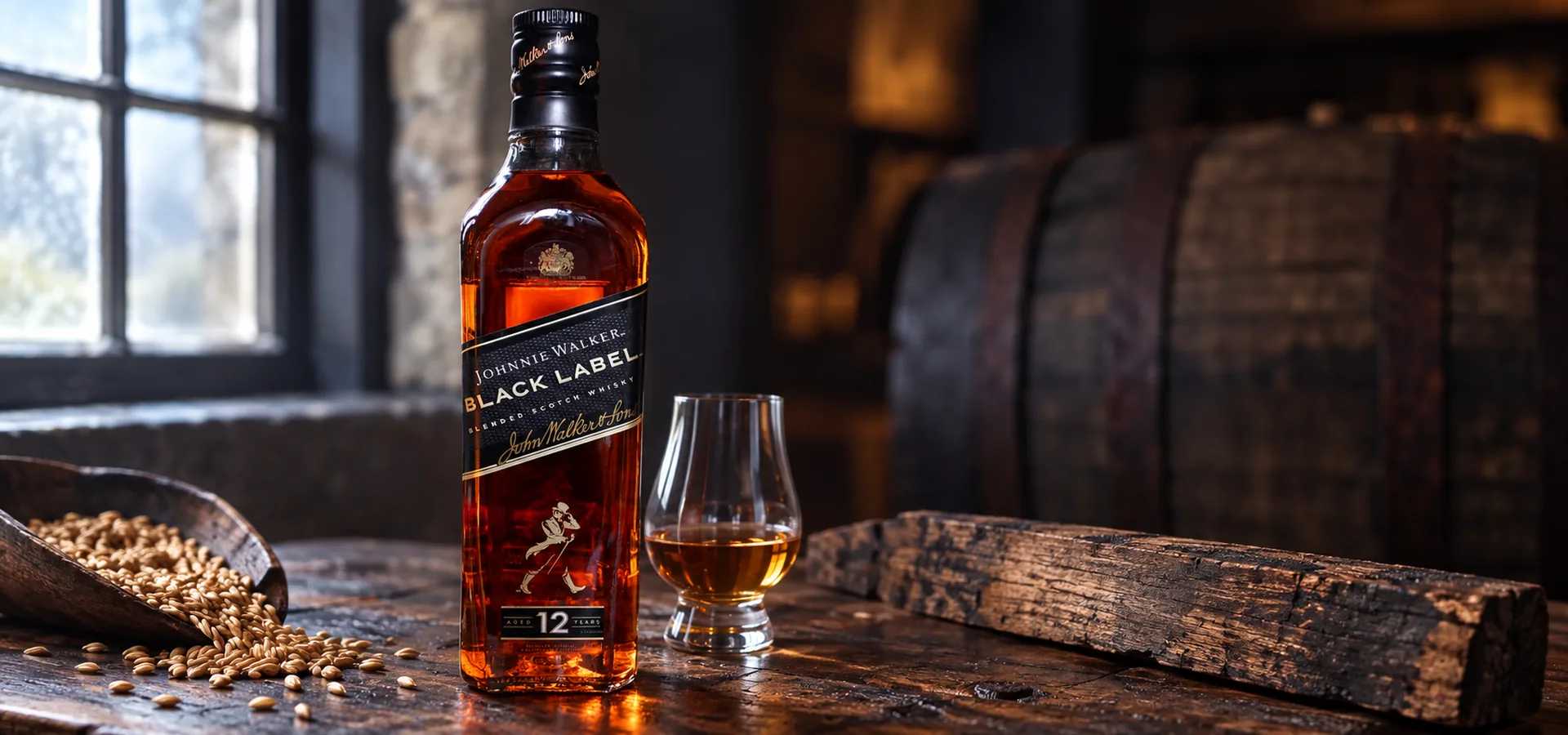
At a glance
- Legal category
- Scotch Whisky geographical indication under UK law, with category-specific production and description requirements.
- Minimum strength
- 40 percent ABV
- Also called
- Scotch, Scotch whiskey
- Protected origin
- Produced and matured in Scotland
- Legal categories
- Five malt, grain, and blended categories
- Minimum maturation
- 3 years in oak in Scotland
- Cask limit
- No more than 700 litres
- Flavour boundary
- Scotch need not be smoky or single malt
What is Scotch whisky?
Scotch whisky is a protected geographical indication for whisky made in Scotland under defined rules. The name covers five legal categories, from single malt to blends, rather than one recipe or flavour.
The core production work happens in Scotland: cereal starch is converted to sugar, yeast ferments that sugar, the fermented liquid is distilled below 94.8% alcohol by volume, and the spirit matures there in oak casks. Maturation must last at least three years, and each cask can hold no more than 700 litres.
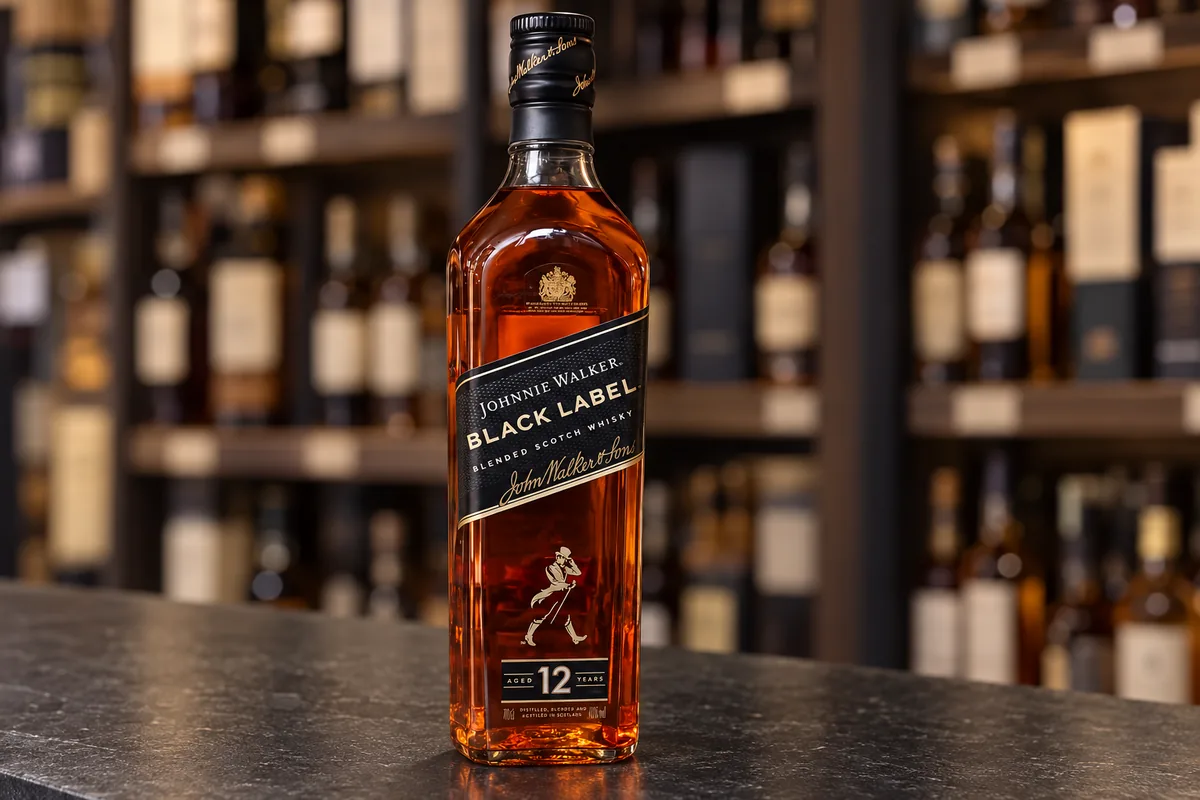
- Origin
- Mashed, fermented, distilled, and matured in Scotland
- Minimum maturation
- 3 years in oak casks in Scotland
- Maximum cask capacity
- 700 litres
- Minimum bottling strength
- 40% ABV
- Permitted additions
- Water and plain caramel colouring only
The basic definition allows water and malted barley, with whole grains of other cereals where the category permits them.
The enzymes used to release fermentable sugar must come from the malt itself, and fermentation uses yeast.
These rules create a shared baseline, but they leave meaningful choices open. Barley variety, other cereals, fermentation, still design, cut points, peat use, cask history, age, vatting, dilution, and bottling strength can all change the result.
That is why Scotch does not mean smoky, and it does not automatically mean single malt. The label category gives the first reliable clue about how the whisky was constructed.
The UK government currently requires producers seeking verification to submit process and site information to HM Revenue and Customs.
Registered geographical-indication status protects the name, while the Scotch Whisky Regulations provide the detailed production and description rules.
What are the five Scotch whisky categories?
The five categories separate whisky made at one distillery from whisky combined across distilleries, and malt whisky from grain whisky. They describe composition and origin more precisely than colour, bottle shape, or a regional story.
| Category | What the category establishes | What it does not establish |
|---|---|---|
| Single Malt Scotch Whisky | Made at one distillery from water and malted barley in batches, using pot stills | Region, peat level, cask type, age beyond the label, or flavour |
| Single Grain Scotch Whisky | Made at one distillery and does not meet the single malt or single grain rules for Scotch malt; other whole cereals may be used | That it is made from only one grain, or that it has a light flavour |
| Blended Malt Scotch Whisky | A blend of two or more single malt Scotch whiskies from more than one distillery | Grain whisky content, because none is permitted in this category |
| Blended Grain Scotch Whisky | A blend of two or more single grain Scotch whiskies from more than one distillery | Malt-whisky content or one shared production method |
| Blended Scotch Whisky | A blend of one or more single malt Scotch whiskies with one or more single grain Scotch whiskies | A fixed malt-to-grain ratio, age, region, or flavour |
Single describes one distillery, not one cask, one batch, or one grain. A single malt can combine many casks and ages from the same distillery, while a single grain may contain several cereals.
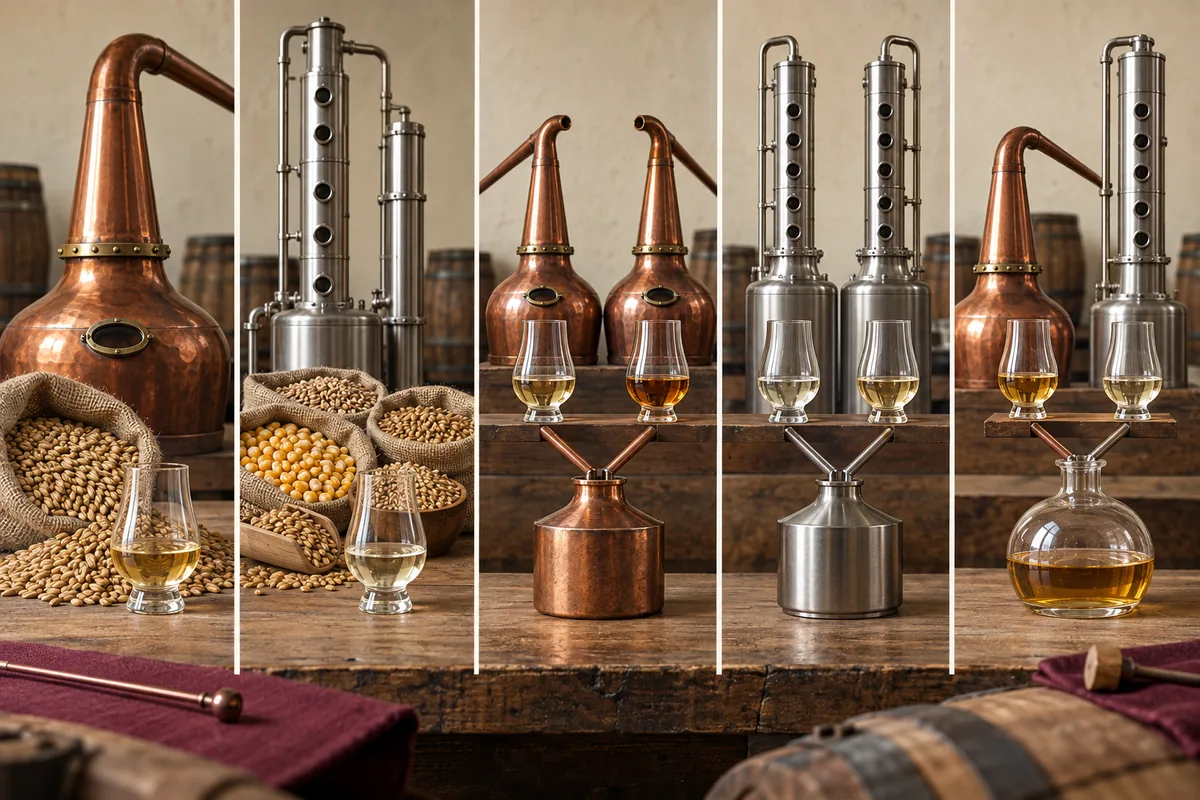
A bottle labelled blended malt therefore contains malt whisky from multiple distilleries but no grain whisky. A bottle labelled blended Scotch combines at least one single malt with at least one single grain, which gives the blender a wider set of structures and flavours to work with.
None of the five categories ranks above another. Category tells you what is in the composition; quality depends on the actual spirit, casks, maturation, blending, bottling, and the evidence available for that bottle.
How does cereal become Scotch whisky?
Scotch production turns cereal starch into fermentable sugar, then into alcohol and flavour compounds, before concentrating and maturing the spirit. The legal sequence is shared, but the choices inside each stage account for much of the diversity in the glass.
- Mash the cereals. Malt enzymes convert starch into sugars in Scotland. Single malt uses malted barley, while grain whisky can include other whole cereals.
- Ferment with yeast. Yeast turns the sugary liquid into alcohol and creates acids, esters, and other compounds that can survive into the new spirit.
- Distil below 94.8% ABV. Distillation concentrates alcohol and aroma while still retaining character from the raw materials and production method.
- Mature in Scotland. The spirit spends at least three years in oak casks no larger than 700 litres before it can be sold as Scotch whisky.
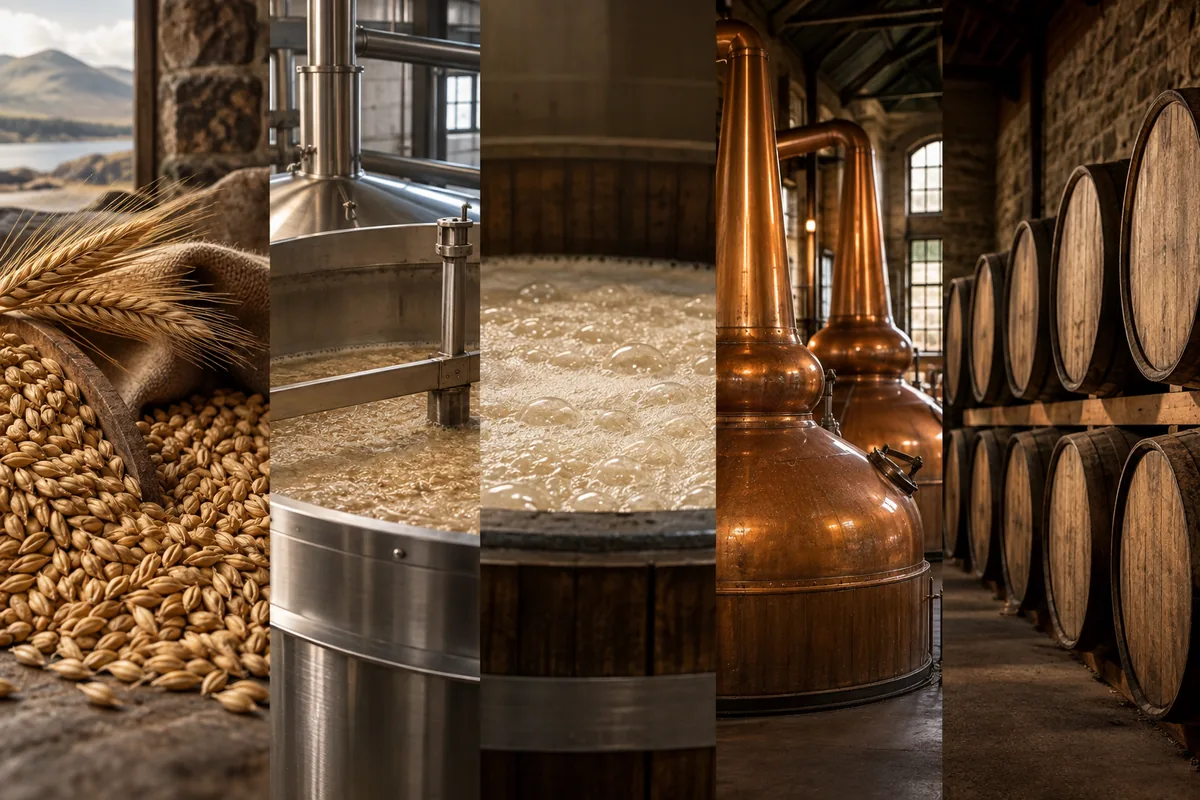
Malt whisky is normally distilled in batches in copper pot stills. Still shape, heating, reflux, and the points where the distiller separates the usable middle cut from early and late fractions influence which compounds reach the cask.
Grain whisky commonly uses continuous distillation and may draw fermentable material from wheat, maize, or other cereals alongside malted barley. Its legal ceiling still sits below 94.8% ABV because Scotch must retain character derived from its ingredients and process.
Peat is optional, and when used during malt drying its smoke can contribute phenolic aromas. An unpeated Scotch remains fully Scotch, and a coastal distillery does not acquire smoke from sea air.
Oak then changes the spirit through extraction, oxidation, evaporation, and reactions among wood and spirit compounds. Previous cask contents, refill history, warehouse conditions, time, and the producer's decision to combine casks all affect the final profile.
The three-year rule is only a legal minimum. An older number can describe time in wood, but it cannot by itself prove better balance, stronger flavour, or a more active cask.
Why can Scotch whiskies taste so different?
Scotch can show cereal, fruit, floral, waxy, grassy, nutty, spicy, smoky, savoury, or dried-fruit notes because its production variables interact.
A useful tasting description links an observation to plausible causes without pretending the glass reveals one certain cause.
| Observation | Plausible contributors | What the observation cannot prove |
|---|---|---|
| Smoke, ash, earth, or medicinal notes | Peat smoke used while drying malt, plus fermentation, distillation, and cask interaction | A particular island, peat level, age, or quality |
| Vanilla, coconut, or sweet spice | Oak compounds, especially from active casks, with spirit and maturation effects | That a named previous fill was used unless the producer states it |
| Dried fruit, nuts, or baking spice | Some wine-seasoned casks, oxidation, spirit character, and blending choices | A precise cask history from colour or aroma alone |
| Fresh apple, pear, citrus, or flowers | Fermentation compounds, still behaviour, cut selection, cask restraint, and dilution | One region or a young age |
| Dark amber colour | Wood extraction, previous cask use, time, vatting, or permitted plain caramel colouring | Older age, stronger flavour, or higher quality |
Peated whisky is the clearest example of a method being mistaken for a place. Islay is famous for many smoky malts, but Islay can produce unpeated spirit and producers elsewhere can use heavily peated malt.
Colour is especially weak evidence because oak, prior cask use, time, vatting, and permitted caramel colouring can all change it.
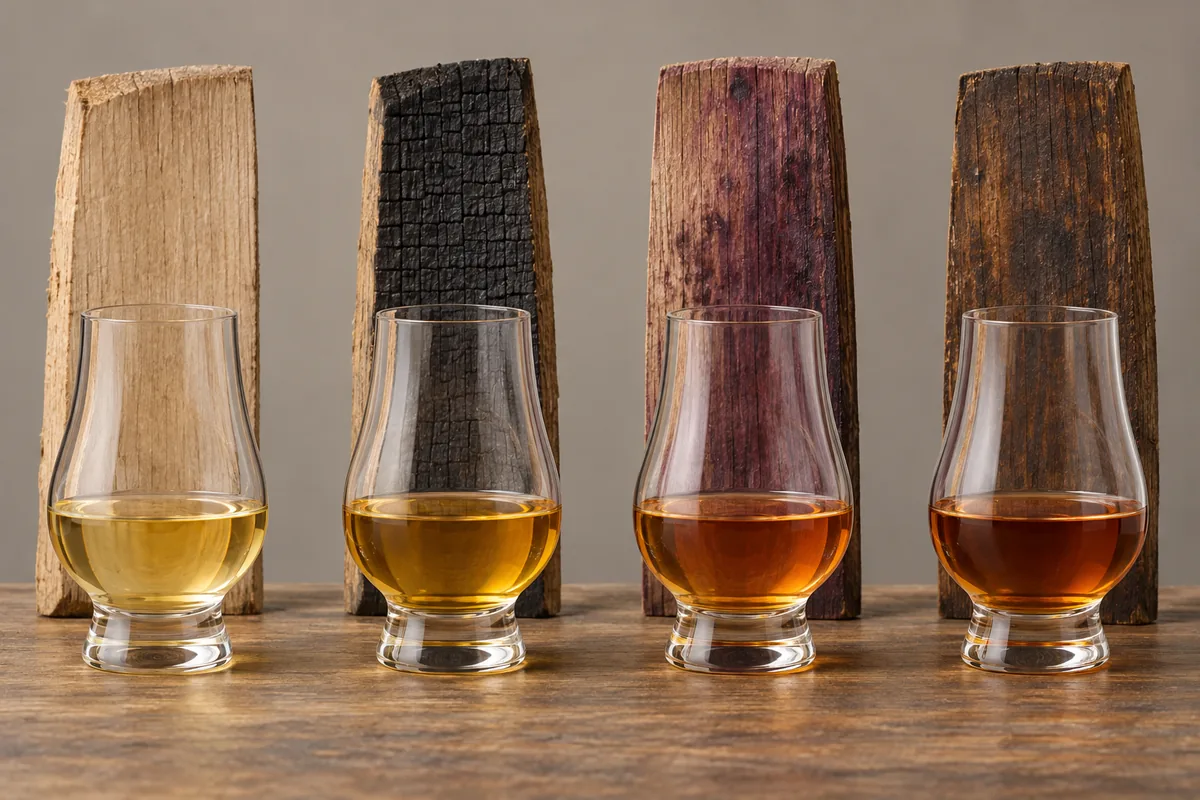
A Port cask finish can add a layer of fruit and spice, but the result also depends on the base spirit, the cask's condition, and how long the finish lasts. The finish wording does not disclose the whisky's complete maturation history unless the producer supplies those details.
Bottling strength changes perception too. Higher ABV can carry more aroma compounds and more alcohol heat, while measured water may reveal some aromas and suppress others without removing the alcohol already poured.
The most defensible conclusion is specific to what you can verify. Use the category, declared production facts, age or cask statements, ABV, and your own observations as separate pieces of evidence.
What does a Scotch region tell you?
Scotch rules protect three regions and two localities for geographic description. Those names establish where the whisky was distilled when used lawfully, but they do not prescribe peat, still shape, cask, age, or one flavour.
- Highland covers a large and varied area north of the statutory Highland line, so the name supports origin more strongly than one tasting profile.
- Lowland covers the area south of that line. Production choices still vary among its distilleries.
- Speyside is a protected region within the wider Highland area and may be used under its own geographic rules.
- Islay is a protected locality. Peat is common in its reputation but is not compulsory for every Islay whisky.
- Campbeltown is a protected locality centred on the burgh and defined surrounding area.
The frequently used Islands grouping is not a sixth protected region.
Distilleries on Orkney, Skye, Mull, Jura, Arran, Harris, Raasay, and other islands can truthfully describe their actual origin, while the plural Islands label remains informal.
Regional tasting shorthand can help form a hypothesis, but it should not replace bottle evidence. Origin is a boundary, not a flavour recipe, especially in a large region with many distilleries and cask programmes.
A more reliable reading order starts with category and distillery or blend identity, then checks age, cask wording, peat disclosure, colour statement, and ABV. Region gives geographic context after those facts rather than predicting the entire glass.
For protected boundaries and local history, consult the relevant region entry; use this Scotch overview to understand how regional wording fits into the bottle as a whole.
How should you read a Scotch whisky label?
Start with the legal category because it states the composition more clearly than decorative language. Then work through origin, age, maturation claims, colour disclosure, and alcoholic strength in that order.
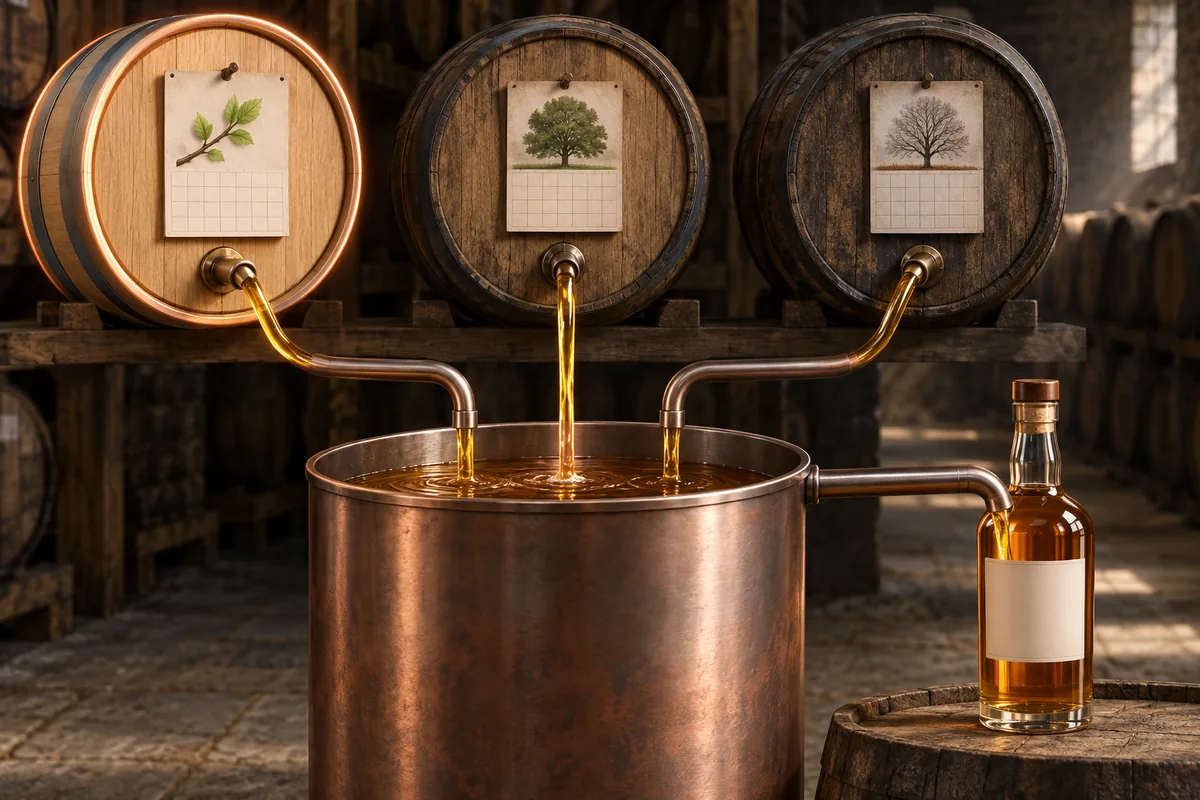
- Read the category. Single malt, single grain, blended malt, blended grain, and blended Scotch describe different combinations of distillery and whisky type.
- Check the named place. A protected region or locality establishes distillation origin when the whisky qualifies; it does not guarantee flavour.
- Interpret age correctly. An age statement gives the age of the youngest whisky in the bottle, not an average.
- Read cask language literally. Terms such as matured, finished, or cask type can communicate different amounts of information, so look for dates, durations, and complete histories where available.
- Use the printed ABV. Scotch starts at 40% ABV, while higher-strength releases put more alcohol into the same measured volume.
Distillation year, bottling year, and age should agree. Scotch age counts only the years matured in oak, and the whisky does not become older after it enters the bottle.
Natural colour, non-chill-filtered, small batch, limited release, and similar wording can describe production or presentation choices. They do not replace the category, prove sensory superiority, or show that a bottle suits your preference.
Colour needs particular care because plain caramel colouring is permitted. A producer statement may clarify whether colouring was used, but visual darkness alone cannot tell you the age or previous contents of the cask.
Look for what the label and producer actually disclose, then mark the unknowns as unknowns. That approach yields a firmer picture than filling gaps with regional stereotypes or price.
How do you taste and serve Scotch whisky?
There is no single correct serve for every Scotch. A small measured pour in a clean glass at a comfortable indoor temperature gives a useful baseline, after which water, ice, or a mixed drink can suit the whisky and the occasion.
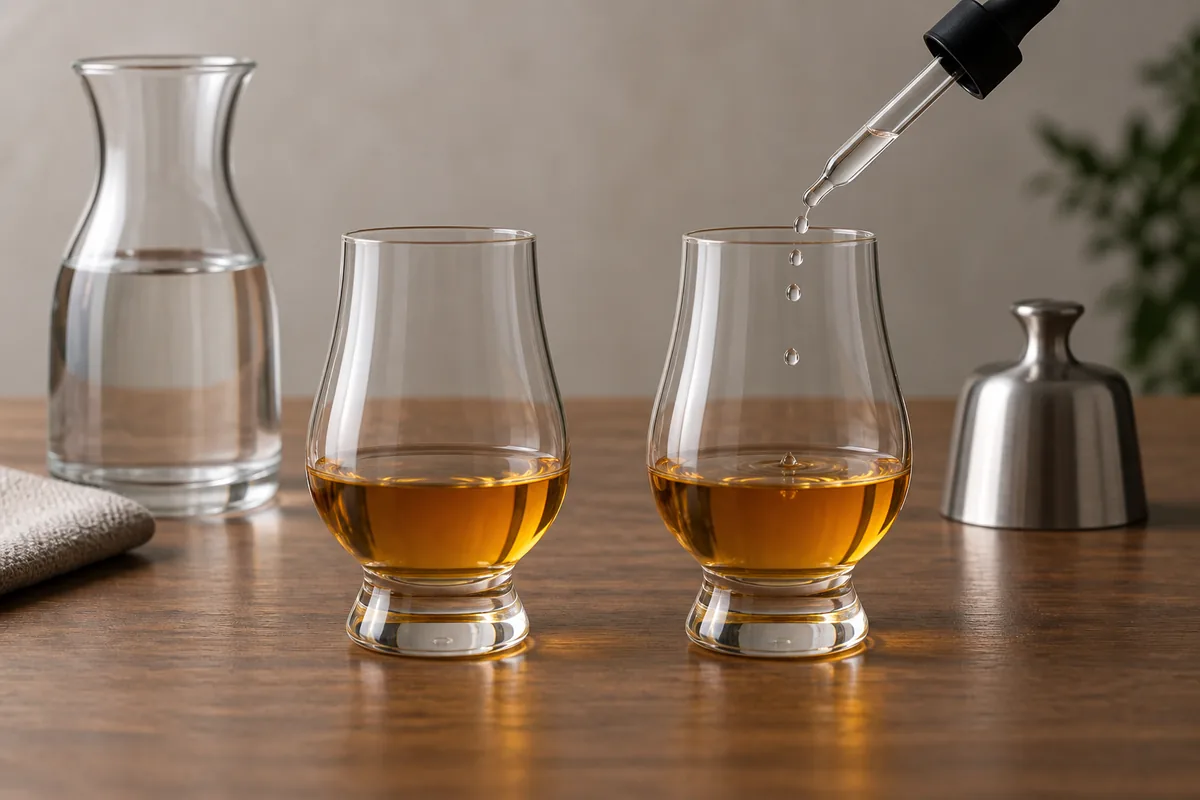
For a focused comparison, use the same glass shape and pour size for each sample. Look at the liquid without assigning quality to colour, smell with your mouth slightly open, take a small sip, and note texture, flavour development, and finish.
The full whisky tasting method helps separate observation from expectation. Writing plain notes such as lemon peel, cereal, smoke, vanilla, or drying oak is more useful than trying to guess a region before checking the label.
A few drops of water can change which aromas reach you, especially at higher ABV. Add it gradually and retaste because a large addition cannot be reversed in the glass.
Ice lowers temperature and slows aroma release while adding dilution as it melts. That can soften alcohol heat and suit a relaxed serve, though it makes controlled comparison harder because the drink changes over time.
Scotch also works in measured cocktails when the spirit's smoke, fruit, cereal, or oak has a clear role. The recipe should state the pour, other ingredients, dilution, ice, and yield so the total strength is visible.
Food pairing follows the tasted profile rather than the map. Lighter cereal and citrus notes can suit mild cheese or simply cooked seafood, while smoke, roasted flavours, dried fruit, or stronger oak can stand beside richer foods.
Measure before choosing the serve. Water, ice, food, and glass shape alter perception, but none changes how much alcohol went into the glass.
How should you store Scotch and count the pour?
Keep an opened Scotch bottle upright, tightly closed, away from direct sunlight, and at a reasonably stable room temperature. Upright storage limits prolonged contact between high-strength spirit and the closure, while a sound seal slows evaporation and aroma loss.
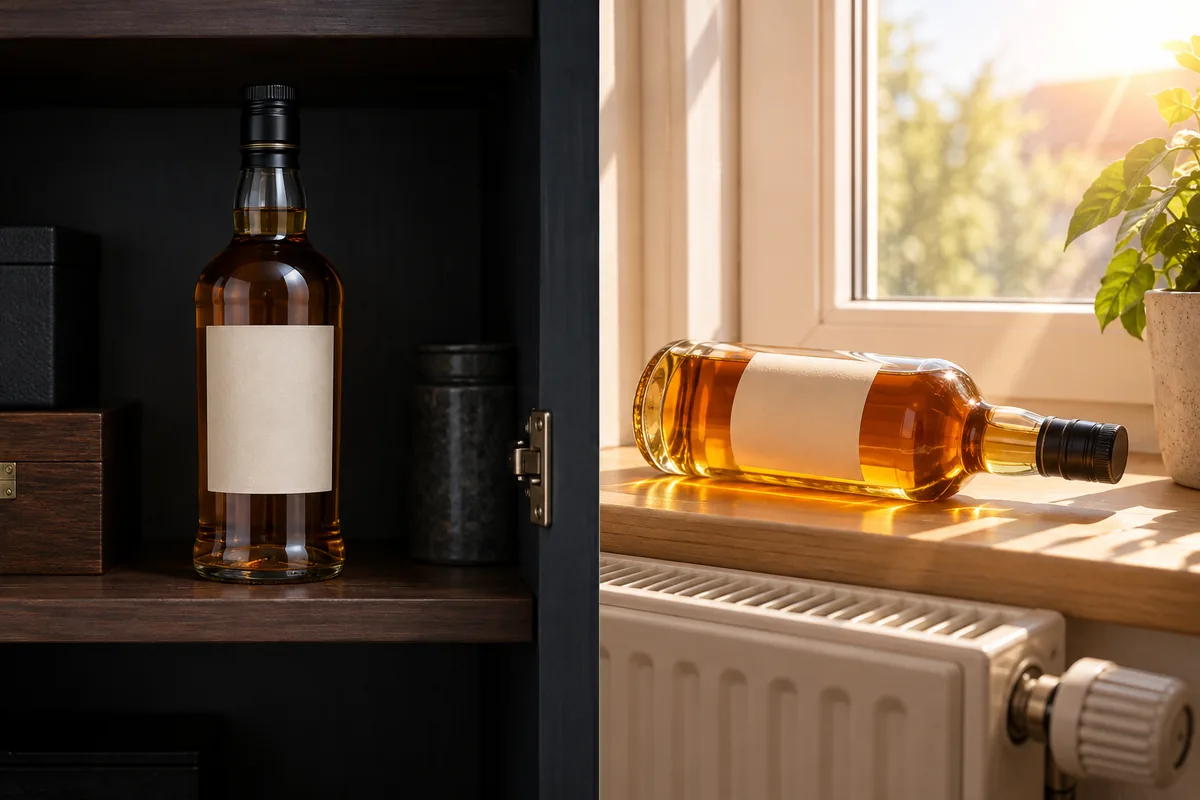
Whisky does not continue cask maturation in glass.
Over long periods, a poor seal or large headspace may flatten aromas, but an opened date and occasional seal check give you more useful evidence than a universal discard deadline.
Cloudiness after chilling or adding water can occur in whisky that has not been chill filtered. It does not automatically show spoilage, though an unexpected damaged seal, foreign material, or clearly abnormal smell deserves inspection before serving.
Count the pour and the ABV. In the United States, about 45 mL of 40% spirits contains roughly one 14-gram standard drink; the same volume of stronger Scotch contains more alcohol. No calculation can tell an individual that they are unimpaired or safe to drive.
Scotch must be at least 40% ABV, and many bottles are stronger. A 30 mL pour at 60% contains half again as much pure alcohol as 30 mL at 40%, even when both occupy the same glass.
Adding water increases total liquid volume and lowers concentration, but it does not remove any alcohol from the measured pour. Smooth texture, expensive packaging, age, food, or drinking slowly also cannot establish a safe blood alcohol level.
Use responsible-drinking guidance for standard-drink context, interactions, impairment, and situations where avoiding alcohol is the appropriate choice. If driving, operating machinery, swimming, supervising children, or making another safety-critical decision is involved, do not use a serving estimate as clearance.
The practical reading is simple: store the bottle to protect its condition, and use volume plus printed ABV to understand the alcohol amount. Those are separate decisions, and both depend on facts you can verify.
Sources
-
HM Revenue and Customs, Producing Scotch Whisky
Updated 29 May 2026. Accessed 8 September 2026.
-
NIAAA, What Is a Standard Drink?
Accessed 13 September 2026.
-
Scotch Whisky Association, Scotch Whisky Categories
Accessed 8 September 2026.
-
Scotch Whisky Association, Scotch Whisky FAQs
Accessed 7 September 2026.
-
The Scotch Whisky Regulations 2009
Published 2009. Accessed 6 September 2026.
-
UK Geographical Indication, Scotch Whisky
Accessed 7 September 2026.
More in Spirits
-
 American single malt whisky
01
What is American single malt whisky, and what does it guarantee?
-
 Australian whisky
02
How is Australian whisky defined, and by which law?
-
 Black rum
03
What is black rum, and does the colour mean anything?
-
 Blended American whiskey
04
What is blended American whiskey, and how much of it is whiskey?
-
 Blended Irish whiskey
05
Blended Irish whiskey: which word counts the distilleries?
-
 Blended Scotch
06
Blended Scotch: what is in it, and why does the recipe change?