
Spirits
What is American single malt whisky, and what does it guarantee?
American single malt whisky has had a federal definition since January 2025. It fixes the grain, the distillery and the proof, and it deliberately says nothing about the still, the age, or the strength the spirit enters the barrel at.
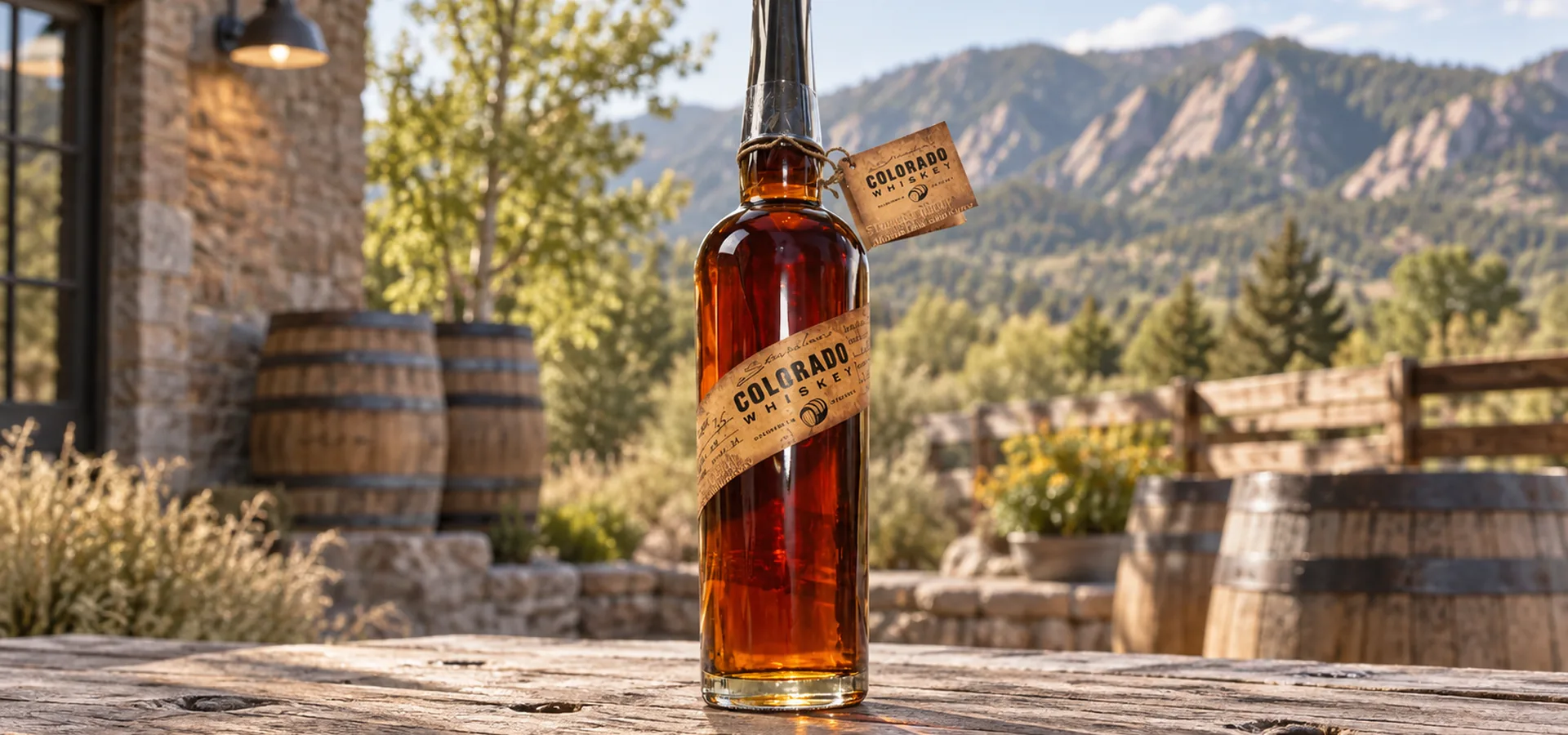
At a glance
- Legal category
- American single malt whisky, 27 CFR 5.143
- Minimum strength
- 40 percent ABV
- Also called
- American single malt whiskey, American single malt, US single malt
What does American single malt whisky have to be to carry that name?
27 CFR 5.143 is the rule behind the phrase, and it began binding labels on 19 January 2025.
Before that date American single malt was a term producers had agreed on among themselves. After it, the words carry conditions a bottler has to meet.
The seven conditions
The mash must be 100 percent malted barley. The whisky has to be mashed, distilled and matured in the United States, and all of the distilling has to happen at one distillery, which is what the word single refers to.
Distillation is capped at 160 proof, and the barrel it goes into may hold no more than 700 litres. If proof and alcohol by volume are not interchangeable in your head, 160 proof is 80 percent.
| Requirement | American single malt whisky | United States malt whisky, the older type |
|---|---|---|
| Malted barley in the mash | 100 percent | Not less than 51 percent |
| Distillery | All distilling at one distillery | Not specified |
| Where it is mashed, distilled and matured | All three in the United States | Produced in the United States |
| Maximum distillation strength | 160 proof | 160 proof |
| Barrel condition permitted | Used, charred new, or uncharred new oak | Charred new oak only |
| Strength entering the barrel | Not specified | Not more than 125 proof |
| Maximum barrel capacity | 700 litres | Not specified |
Which two rows did the work
The older type would take a mash that was almost half something other than barley, and it would only accept a fresh charred barrel.
The new standard closes the first door and opens the second one much wider. Everything else in that table carried over unchanged.
Not every whisky category is built this way. Australian whisky has no compositional standard at all, which is worth holding in mind as a measure of how much this table actually settles.
Why the shelf is still inconsistent
One practical wrinkle survives the change, because a label meeting the pre-2025 rules may still be used on anything bottled before 19 January 2030.
So for a few more years, two bottles sharing the same three words on the front are not necessarily making the same promise. Which other rules a label must follow depends on where the bottle is sold.
What does a mash of 100 percent malted barley put in the glass?
A mash of nothing but malted barley sounds like a flavour guarantee. It is not one.
Malting is a process the distiller wants for a mechanical reason before a sensory one.
What germination is actually for
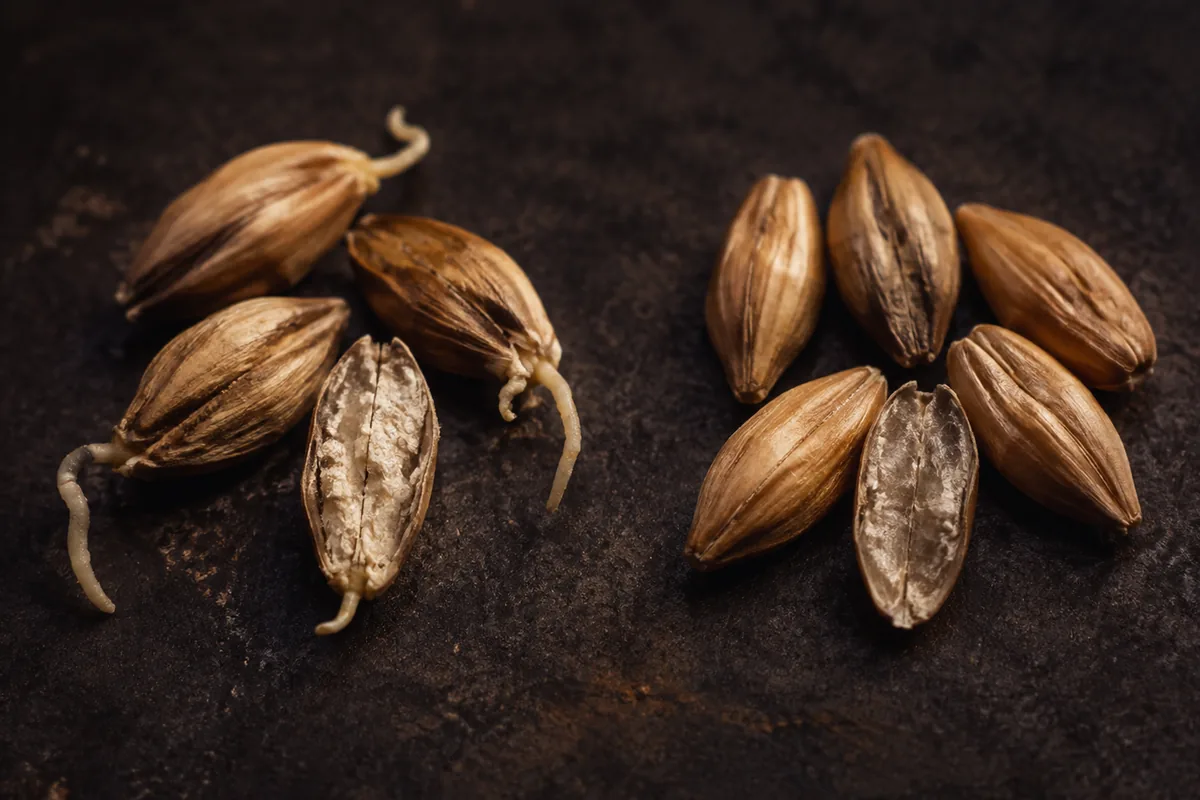
Letting the grain begin to germinate develops alpha amylase, beta amylase, limit dextrinase, beta glucanases and proteases inside it.
Those enzymes break the barley starch into sugar a yeast can eat, and free up the amino nitrogen the yeast needs to work. The all malt requirement is about fermentable material, not taste.
Where the kiln decides
Kilning is where taste could enter, and it is where distillers deliberately hold back. The kiln stops germination by drying the grain, and how hot it runs decides whether the enzymes survive or the flavour arrives.
- Roughly 45 to 55 degrees Celsius
- Early drying. Most of the enzyme activity survives, which is why distilling malt is kilned in this band.
- Roughly 80 to 85 degrees Celsius
- Maillard reactions begin generating the melanoidins that carry colour and roasted flavour.
- Roughly 100 to 220 degrees Celsius
- The curing range for dark malts, far beyond anything a distiller working for yield would use.
A distiller kilning gently keeps the yield and gives up the aroma. That is why so much of the character in the glass turns out to have arrived from somewhere else entirely.
Nothing in the standard specifies a kilning treatment at all, so a peated malt is exactly as compliant as an unpeated one.
The barley need not be American
Only the mash has to be produced in the United States. Imported barley and imported malt both sit inside the rule.
How the grain then gets fermented and distilled is a separate set of decisions from what the standard fixes.
Why can two American single malts taste nothing like each other?
One clause permits used oak, charred new oak and uncharred new oak, and it is the single most consequential sentence in the standard.
Where the older malt whisky type accepted only a fresh charred barrel, this one hands the distiller three genuinely different starting surfaces. They are not variations on a theme.
What each surface gives
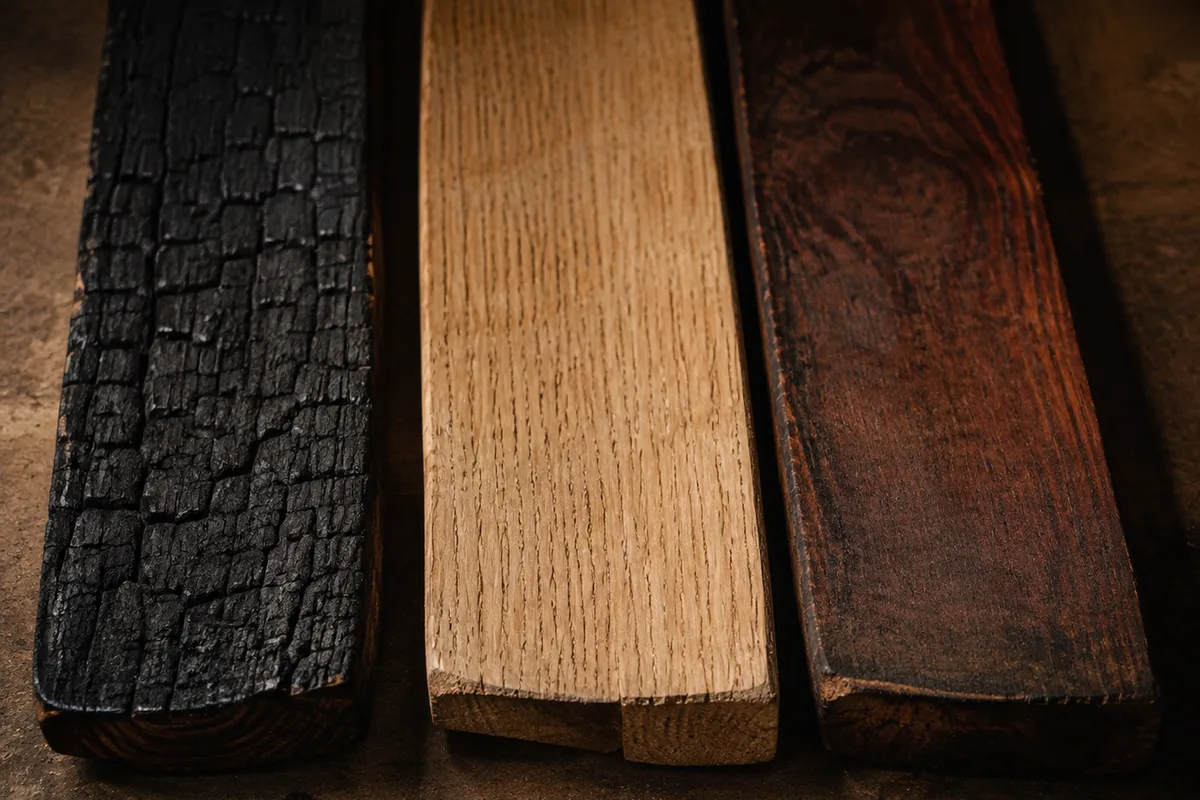
Charring thermally degrades the lignin in the stave into vanillin and syringaldehyde and converts the hemicellulose into furfural.
It also leaves a layer of active charcoal on the inner face that strips compounds out of the spirit rather than adding any.
An uncharred new stave has had none of that done to it and offers pale, unaltered oak. A used stave arrives already stained by whatever filled it before, and releases the typical oak compounds in a much smaller quantity than a new barrel does.
The permission hiding behind the first
The older malt whisky type required the spirit to enter the barrel at not more than 125 proof. The American single malt standard sets no entry strength whatsoever.
That matters because alcohol concentration decides what comes out of the wood, and lactones and vanillin extract far more strongly at distillate strength than they ever would at wine or beer strength.
Ellagitannins are among the readiest compounds to move out of oak during maturation at all. Whisky lactone alone shifts the result noticeably, giving coconut and earthy notes in its cis form and spicy ones in its trans form.
What the category name can predict
Put the two permissions together and the spread inside one legal category is very wide.
A whisky filled hot into fresh char and a whisky filled cooler into a fourth use barrel are both correctly labelled American single malt, and they will not taste like the same drink.
The category name tells you about the grain and the distillery, and almost nothing about the wood. The vocabulary for assessing a whisky is worth having before you try to compare two of them.
How old is a bottle that carries no age statement?
It could be any age at all, including a few months. The regulator considered a minimum and said plainly that it was not incorporating one into the standard.
There is exactly one word on a label that changes this answer, and it is not a marketing word.
- American single malt whisky guarantees no minimum time in the barrel.
- Straight American single malt whisky guarantees at least two years of storage.
- An age statement is the only thing that names a specific number of years.
Why the barrel size cap exists
The 700 litre capacity cap is the regulator reasoning about the same problem from the other end.
Its stated purpose was to give consumers greater certainty about how much barrel contact an age actually represents, while leaving producers the barrel sizes American whisky is normally made in.
A bigger cask gives the same volume of spirit less wood to work against. Without a ceiling on capacity a stated age could mean much less than it appears to.
What a missing age statement means
None of which makes an older whisky a better one. When a bottle says nothing about time, the honest reading is that nothing has been promised.
Is American single malt whisky the same thing as single malt Scotch?
Set the two definitions side by side and they overlap more than the argument about them suggests.
The Scotch Whisky Association describes single malt Scotch as whisky distilled at a single distillery from water and malted barley with no other cereals, matured for at least three years, and bottled at a minimum of 40 percent alcohol by volume.
Single distillery, all malt, 40 percent floor: the American standard asks for all three. Two requirements are where they part company, and both are things the American rule declines to say.
The still, and the clock
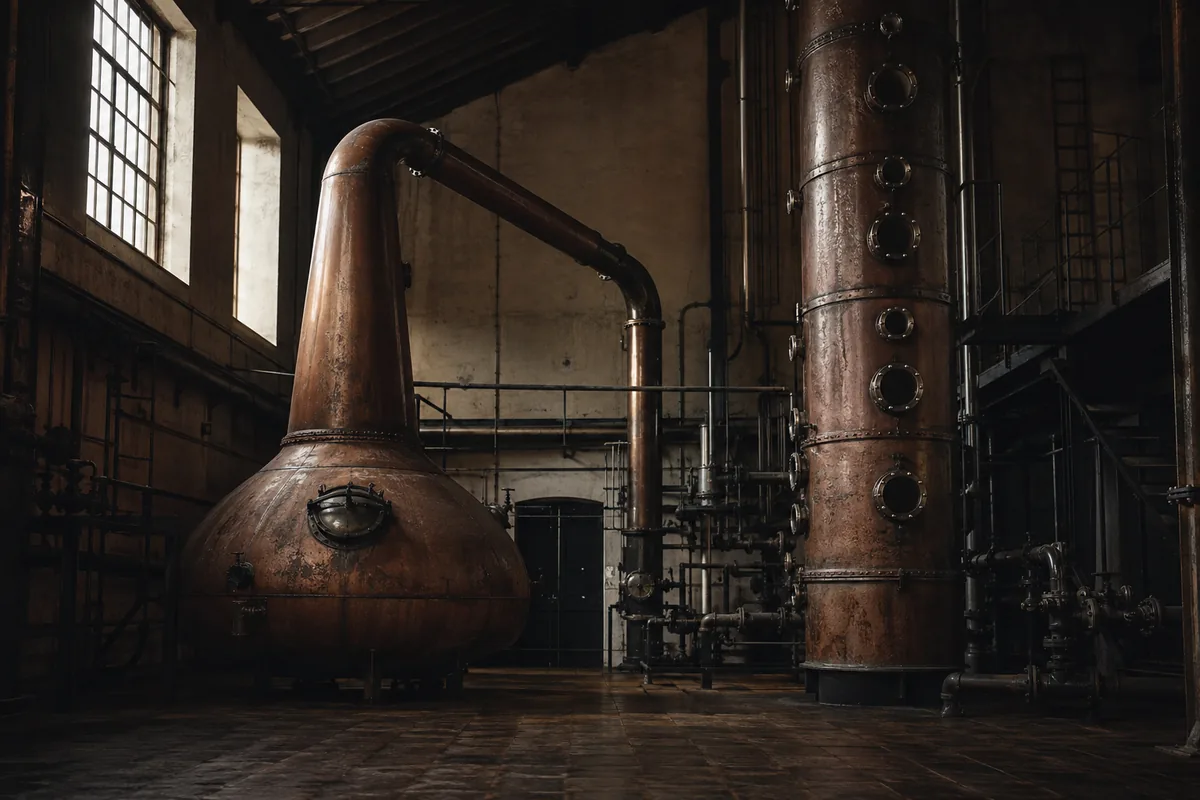
Scotch has to come off copper pot stills in batches, which constrains how much of the heavier aromatic material survives into the spirit.
The American standard names no vessel at all, so a column distilled American single malt is entirely legitimate.
The second divergence is time: three years in Scotland against no minimum in the United States. The Scottish requirement is also geographic, and a protected place name is what carries it.
Where the comparison stops
So the categories are cousins rather than twins, and the differences are in the rules rather than in a verdict about which glass is better.
Nothing in either rulebook settles that. Choosing between two categories is a different question from working out what each one is.
What does the strength tell you, and what does the label leave out?
One number is fixed and only one: bottling at not less than 80 proof, which is 40 percent alcohol by volume.
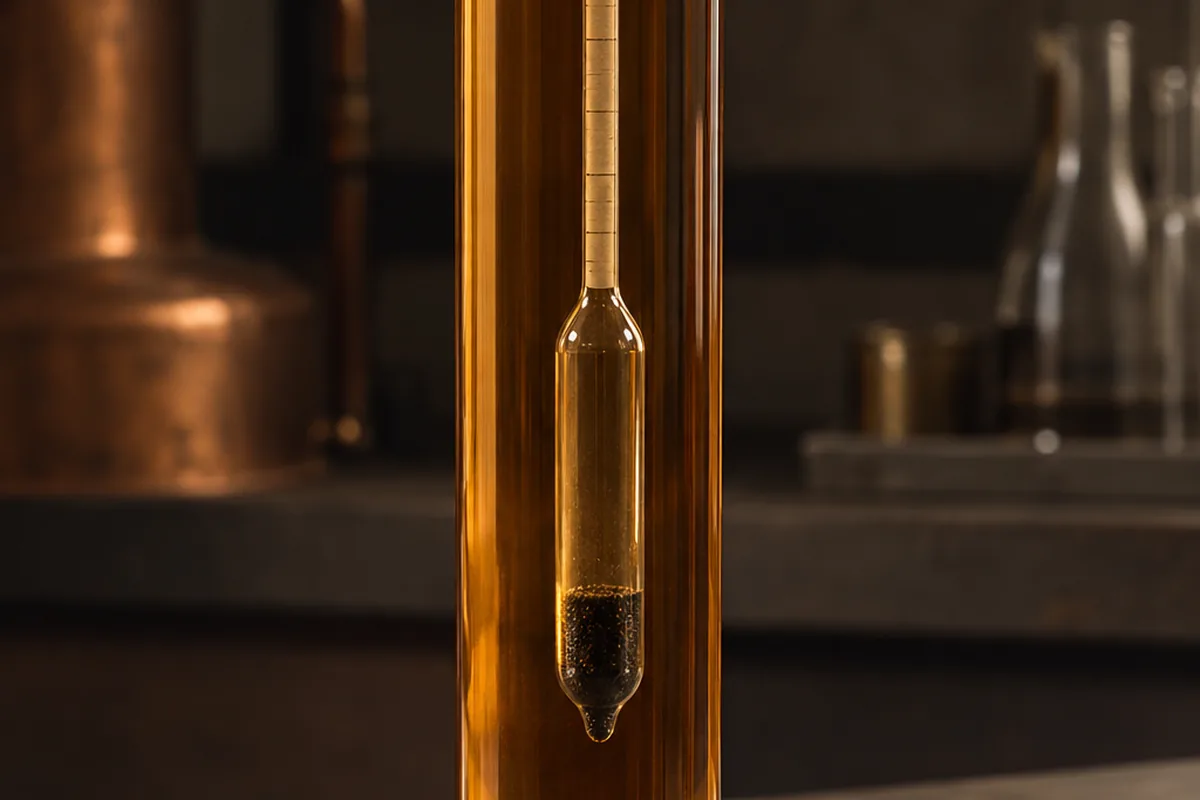
There is no ceiling, and there is no typical value written into the rule.
The 80 proof floor is a minimum, not a norm. Plenty of American single malt is bottled well above it, and how far above is a producer decision this page has no source to generalise about. Read the number on the bottle in front of you.
One addition is permitted and it comes with a condition. Caramel colouring may be used, and only where the label discloses it.
That makes the presence or absence of that disclosure a genuine piece of information rather than small print. A bottle that has been coloured and says so is telling you something a bottle that stays silent is not.
Strength is also the part of the label with consequences away from the tasting note. A whisky at 40 percent and a whisky at 58 percent pour the same and do not behave the same, and working out how much alcohol a serving carries starts from that number rather than from the size of the glass.
Common questions
- Can American single malt whisky be peated?
- Yes. The standard requires a mash of 100 percent malted barley but specifies nothing about how that barley is kilned, so peating the malt neither breaks the rule nor needs disclosing as an addition.
- Does the barley have to be grown or malted in the United States?
- No. The requirement is that the mash is produced in the United States, along with the distilling and the maturing. Imported barley and imported malt are both compatible with the standard.
- Is American single malt whisky a kind of bourbon?
- No, and the two definitions rule each other out. Bourbon is built on a mash of at least 51 percent corn and must go into charred new oak, while American single malt is all malted barley and may use used or uncharred barrels.
Sources
-
Addition of American Single Malt Whisky to the Standards of Identity for Distilled Spirits, 89 FR 102726
Published 18 December 2024. Accessed 4 September 2026.
-
Alcohol and Tobacco Tax and Trade Bureau, TTB Establishes American Single Malt Whisky Standard of Identity
Published 19 December 2024. Accessed 4 September 2026.
-
Luo, Cui, Li, Zhou, Duan, Lan, Wu (2023), Factors in Modulating the Potential Aromas of Oak Whisky Barrels: Origin, Toasting, and Charring
Published 2023. Accessed 10 September 2026.
-
Panahi, Hamid, Ghorbanzadeh, Golkari, Yildirim, Jacob (2026), Transcriptional networks shaping malting quality in barley: From grain development to brewing performance
Published 2025. Accessed 10 September 2026.
-
Scotch Whisky Association, Single Malt Scotch Whisky
Accessed 4 September 2026.
-
Tarko, Krankowski, Duda-Chodak (2023), The Impact of Compounds Extracted from Wood on the Quality of Alcoholic Beverages
Published 2023. Accessed 10 September 2026.
More in Spirits
-
 Australian whisky
01
How is Australian whisky defined, and by which law?
-
 Black rum
02
What is black rum, and does the colour mean anything?
-
 Blended American whiskey
03
What is blended American whiskey, and how much of it is whiskey?
-
 Blended Irish whiskey
04
Blended Irish whiskey: which word counts the distilleries?
-
 Blended Scotch
05
Blended Scotch: what is in it, and why does the recipe change?
-
 Blended grain Scotch
06
Blended grain Scotch: is the grain the cheap part of a blend?