
Spirits
Blended Scotch: what is in it, and why does the recipe change?
Blended Scotch whisky is a blend of one or more single malt Scotch whiskies with one or more single grain Scotch whiskies, and the definition fixes nothing else: no proportion, no number, no ages, no distilleries. What keeps a blend tasting the same from one year to the next is a moving recipe rather than a fixed one, because every cask is different and the same quantities cannot be used twice.
At a glance
- Legal category
- Blended Scotch Whisky, Scotch Whisky Technical File June 2019, quoting Scotch Whisky Regulations 2009 regulation 3(2)
- Minimum strength
- 40 percent ABV
- Also called
- Blended Scotch whisky
Which whiskies are in the bottle, and how many of them?
Malt whisky with grain whisky. Blended Scotch Whisky is a blend of one or more Single Malt Scotch Whiskies with one or more Single Grain Scotch Whiskies. Both components were already Scotch before any blending began, and nothing may be added to either except water and plain caramel colouring.
That is the whole composition. Two component categories, each of which had to clear the full Scotch standard on its own.
How many whiskies are actually in there
Most people picture two or three. The specification records something else.
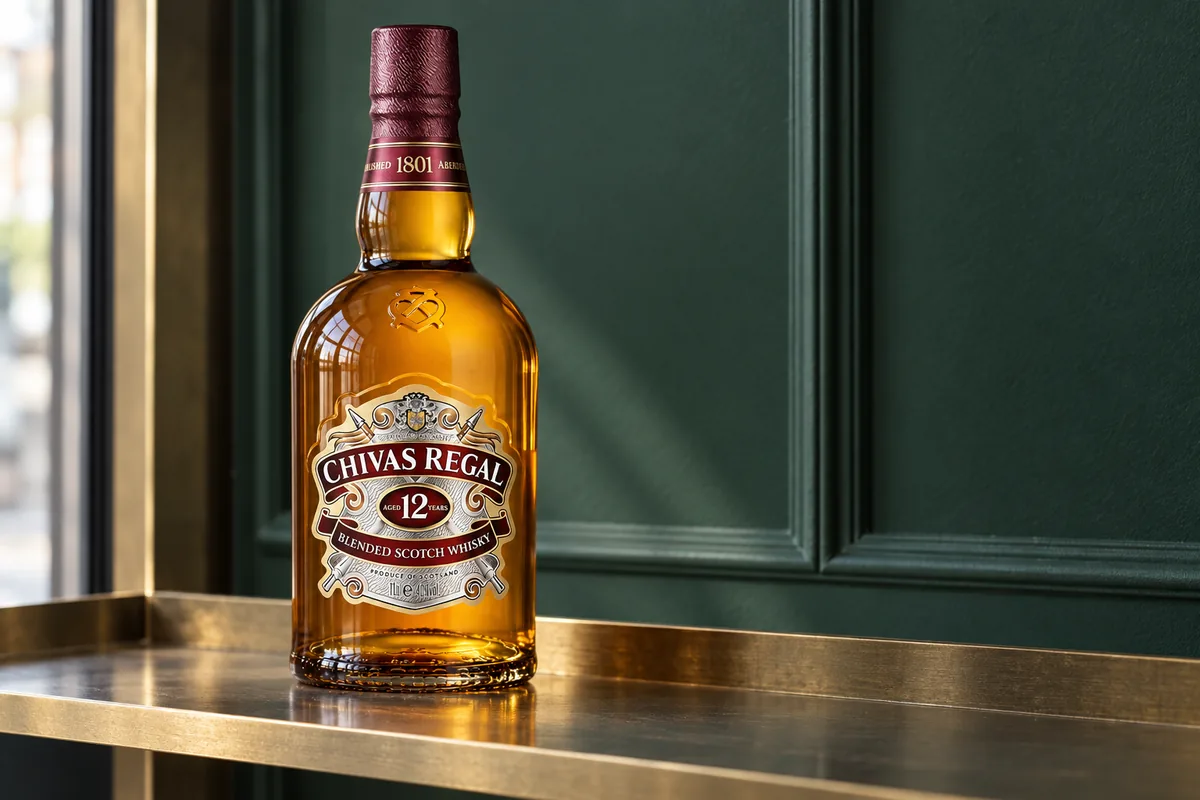
A blended Scotch may be a combination of fifty or more single malt and grain whiskies, of varying ages, which is not a rule about how many are allowed but a record of what a blend can run to.
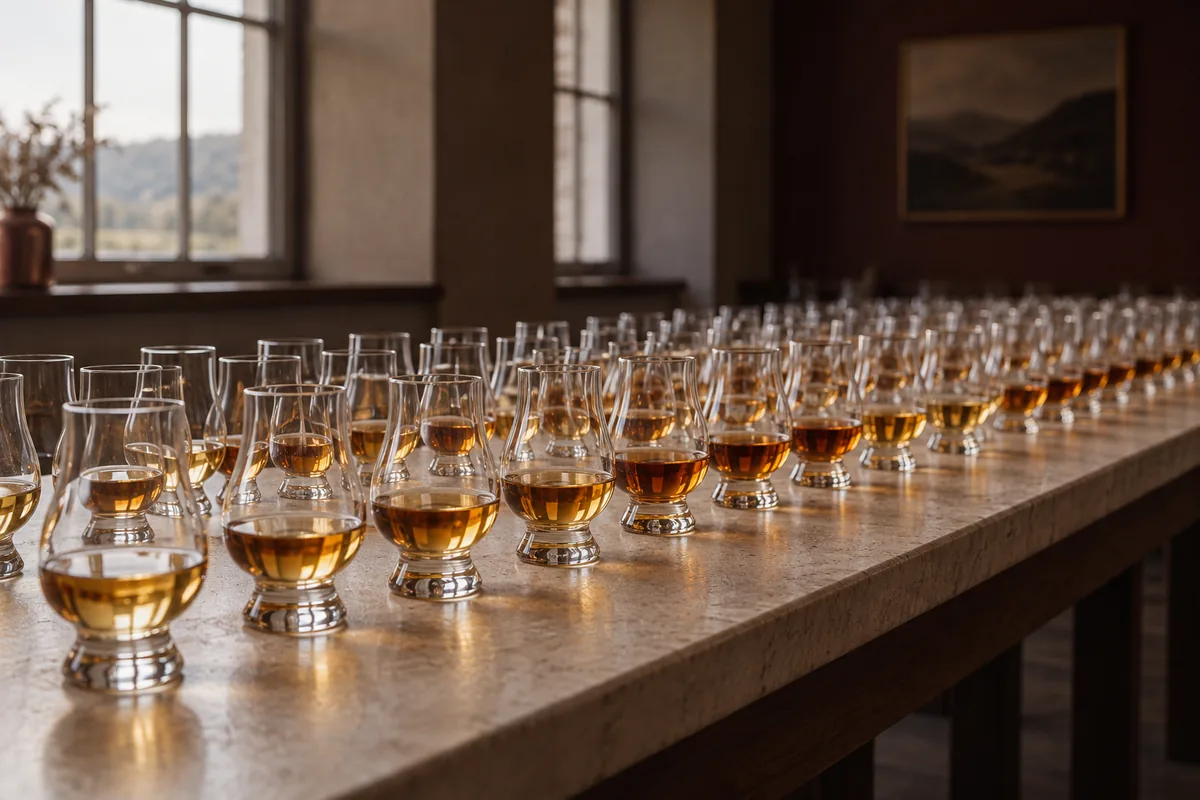
It is also the category most bottles belong to. The greatest proportion of Scotch whisky consumed anywhere is consumed as blended Scotch.
Neither of those numbers reaches the label. A bottle reports its category and nothing about the count behind it.
How much of a blended Scotch is malt whisky?
How much of the bottle is malt has no answer, because no rule supplies one.
The definition names the two components and stops. Everything a reader might expect it to settle is left to the producer.
| What a reader asks | Fixed or open | What the definition says |
|---|---|---|
| Which components | Fixed | Malt whisky with grain whisky, both already Scotch |
| The proportions | Open | No ratio is stated anywhere |
| How many whiskies | Open | Fifty or more is recorded as possible |
| The ages | Open | Components are of varying ages |
| The distilleries | Open | Not reported on the label |
| A region | Open | A blend drawn from across Scotland claims none |
The one thing that is fixed and easy to miss
Read the first row again. A blended Scotch must contain both malt and grain whisky, which is what separates it from the two other blended categories.
A blend of malts alone is its own category, with its own definition, and so is a blend of grains alone.
What is left open is the balance, never the standard. Every drop in the bottle met the Scotch Whisky definition in full before any blending began, and the grain side of that definition is the half most drinkers never read.
Two things that are not left open
Caramel colouring is permitted but not freely, because the resulting colour should not exceed the natural range that can be derived from maturation casks, so the adjustment may not take a whisky past a shade the wood could have given it.
Strength is fixed at one end too. Only potable water may be used to adjust it, purified if needed by distillation, demineralisation or reverse osmosis.
And a cask strength Scotch may not be adjusted at all after maturation. That is the one place the specification takes the option away rather than bounding it.
What does the malt bring, and what does the grain bring?
If the definition fixes only the components, then what those components bring is what the category is actually about.
The specification is careful here, and says one specific thing about the malt side.
Where the individuality comes from
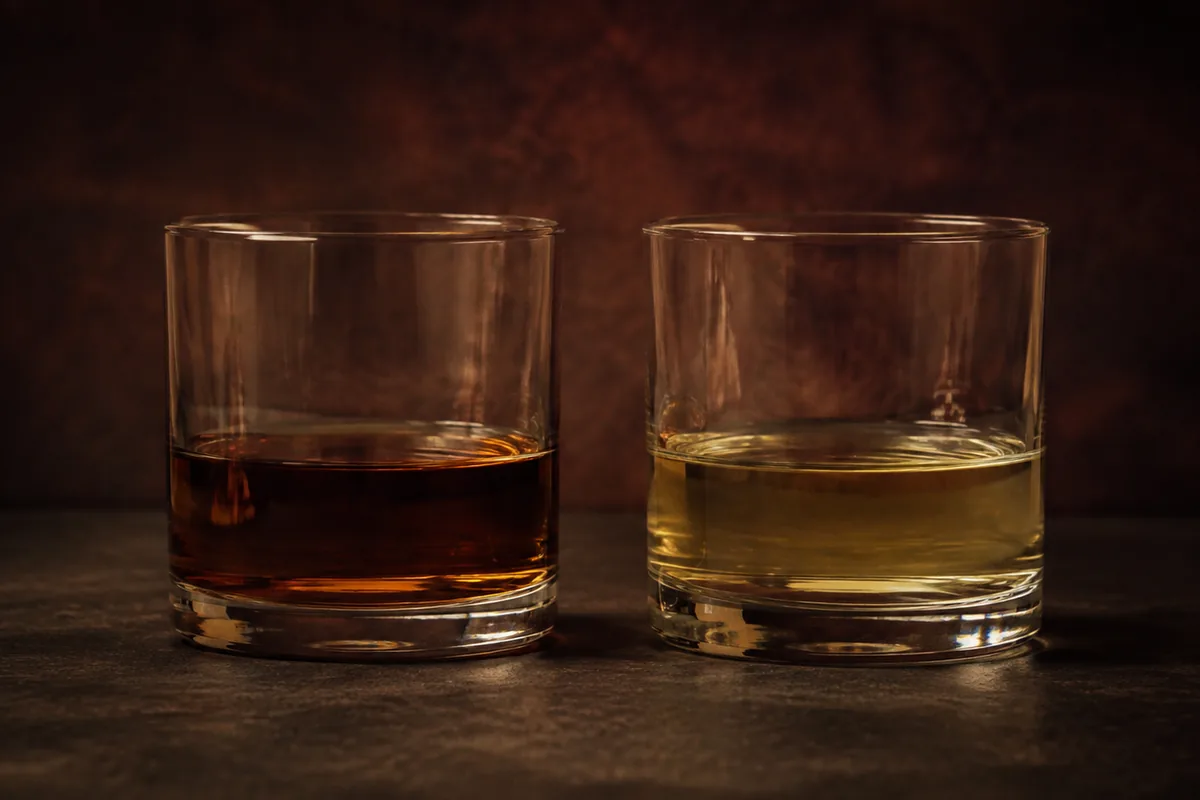
Single malts are described as highly individual, each with a recognisable flavour and aroma. The specification ties that to two things: the distillery it was distilled in, and the region of Scotland that distillery sits in.
So the malt side is where distillery character enters a blend. That is a statement about where character comes from, not a claim about how any particular bottle tastes.
What the grain side is doing
Grain whisky comes off column stills where malt whisky comes off pot stills, and that difference is written into the two component definitions rather than chosen batch by batch.
Calling the grain component filler misses what the definition requires of it. Every Scotch must retain the colour, aroma and taste derived from its raw materials and its method, and a grain whisky is no exception to that.
The specification does draw one comparison between the two, carefully. Grain Scotch whiskies are typically lighter in aroma and flavour than malt Scotch whiskies, and it gives a range running from the light, grainy, slightly pungent character of a relatively young grain whisky to the rich, fruity, smooth character of a well matured malt.
What the blend is, in the specification's own words
There is one sentence about what a blended Scotch actually is as a drink, rather than as a composition.
Blended Scotch whiskies derive their characteristics from the interaction of their single whisky components, which have been chosen to complement each other.
That is a claim about interaction, not addition. Which is why the balance the blender is holding matters more than any single component in it.
A variable the malt side can arrive with
There is one more thing a malt component may bring, and the specification names it.
Some companies choose to finish a Scotch, particularly a single malt, by maturing it further in a different cask. A whisky matured twelve years in barrels that had held American bourbon acquires a different character if it then spends a further period in a cask that held sherry or port.
Whether to finish a whisky depends on the character the blender wants to achieve. So the decision belongs to the same person deciding the blend, and it happens before the blending does.
None of that is reported on a blended Scotch label either. It is one more variable the category name is silent about.
No category name reports flavour, so describing a blend without leaning on its name is the only route to what is actually in the bottle.
How does a blended Scotch taste the same year after year?
Here is where the reader's model usually breaks. A brand that tastes the same year after year sounds like a brand with a fixed formula.
The specification says the opposite, in one sentence.
- The recipe
- Each blender has their own, it is a carefully guarded secret, and it is constantly monitored.
- Why it moves
- Every cask of Scotch whisky is different.
- What follows
- The blender cannot simply use the same quantity of specified whiskies for each batch.
- How it is judged
- By nosing the individual whiskies, which is to say by aroma rather than by measurement.
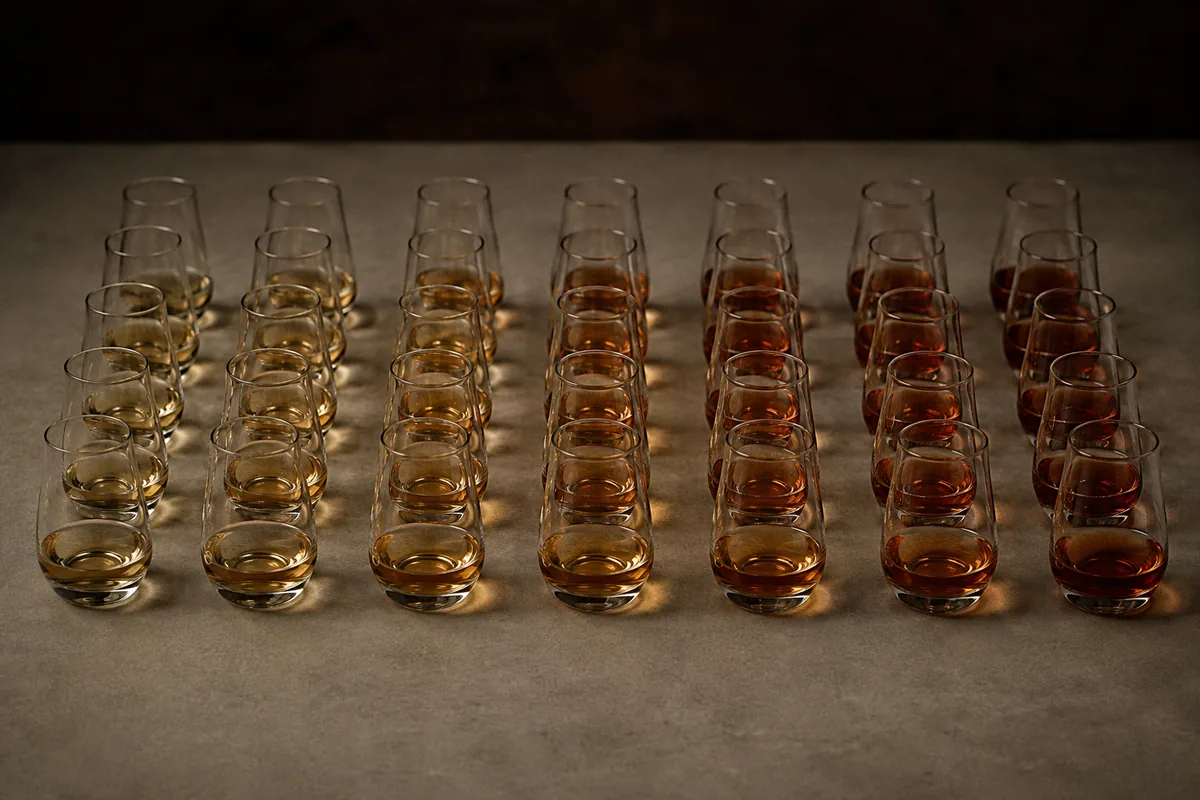
Consistency is a target the blend is steered toward, not a formula it is poured from. The quantities move so that the result does not.
What that means for a reader
Two practical things follow. The first is that a blend is a profile rather than a formula, so asking what is in it has no fixed answer even in principle.
The second is that the recipe is secret, so nothing about what changed between one batch and the next is checkable from outside.
Every component the blender is choosing between came from a cask. What happens inside those casks over the years is a subject of its own.
Is blended a step down from single malt?
This is the question most readers arrive with, and it can be answered from the definitions rather than from taste.
Every component of a blended Scotch is a Scotch whisky in its own right, and had already cleared the whole standard before the blender saw it.
Nothing about that standard is relaxed for a blend. The conditions each component met are the same ones a single malt meets.
What single is actually reporting
There is a detail in the specification that changes how the word single reads.
Where the product of an individual malt or grain distillery is not blended with another Scotch whisky, it must be marketed as a single malt or single grain. Single is what a whisky is called when nothing was blended into it.
That makes single a statement about composition in the same way blended is, and neither word is a grade.
- The proportions. No ratio between malt and grain is stated anywhere, on the label or in the rules.
- The distilleries. Which ones contributed is not reported, and a blend may draw on many.
- The component ages. They vary, and none of them is named.
- The recipe. Secret, and different between batches by design.
So the category name tells you the composition and stops. What it does not do is rank itself against anything, and neither does this page.
Every rule above is the Scotch specification itself. What a bottle must also print to be sold in a given country is a separate body of rule, and it is the one that changes without the whisky changing.
Common questions
- What is blended Scotch whisky?
- Blended Scotch Whisky is a blend of one or more Single Malt Scotch Whiskies with one or more Single Grain Scotch Whiskies. Both components are already Scotch whisky before any blending happens.
- How much of a blended Scotch is malt whisky?
- No rule states a proportion. The definition names the two components and fixes nothing about the balance between them, so two bottles carrying the category can be built very differently.
- How many whiskies are in a blended Scotch?
- The specification records that a blend may be a combination of fifty or more single malt and grain whiskies of varying ages. Nothing on the label reports the number.
- Why does a blended Scotch taste the same every year?
- Because the quantities change. Every cask of Scotch is different, so a blender cannot use the same quantity of specified whiskies for each batch, and the blend is assembled by nosing toward a target.
- Is blended Scotch lower quality than single malt?
- The words report composition, not grade. Every component of a blend already met the whole Scotch standard, and single is what a distillery product is called when it is not blended with another Scotch.
Sources
More in Spirits
-
 American single malt whisky
01
What is American single malt whisky, and what does it guarantee?
-
 Australian whisky
02
How is Australian whisky defined, and by which law?
-
 Black rum
03
What is black rum, and does the colour mean anything?
-
 Blended American whiskey
04
What is blended American whiskey, and how much of it is whiskey?
-
 Blended Irish whiskey
05
Blended Irish whiskey: which word counts the distilleries?
-
 Blended grain Scotch
06
Blended grain Scotch: is the grain the cheap part of a blend?