
Spirits
Blended malt Scotch: what is in it, and when was it blended?
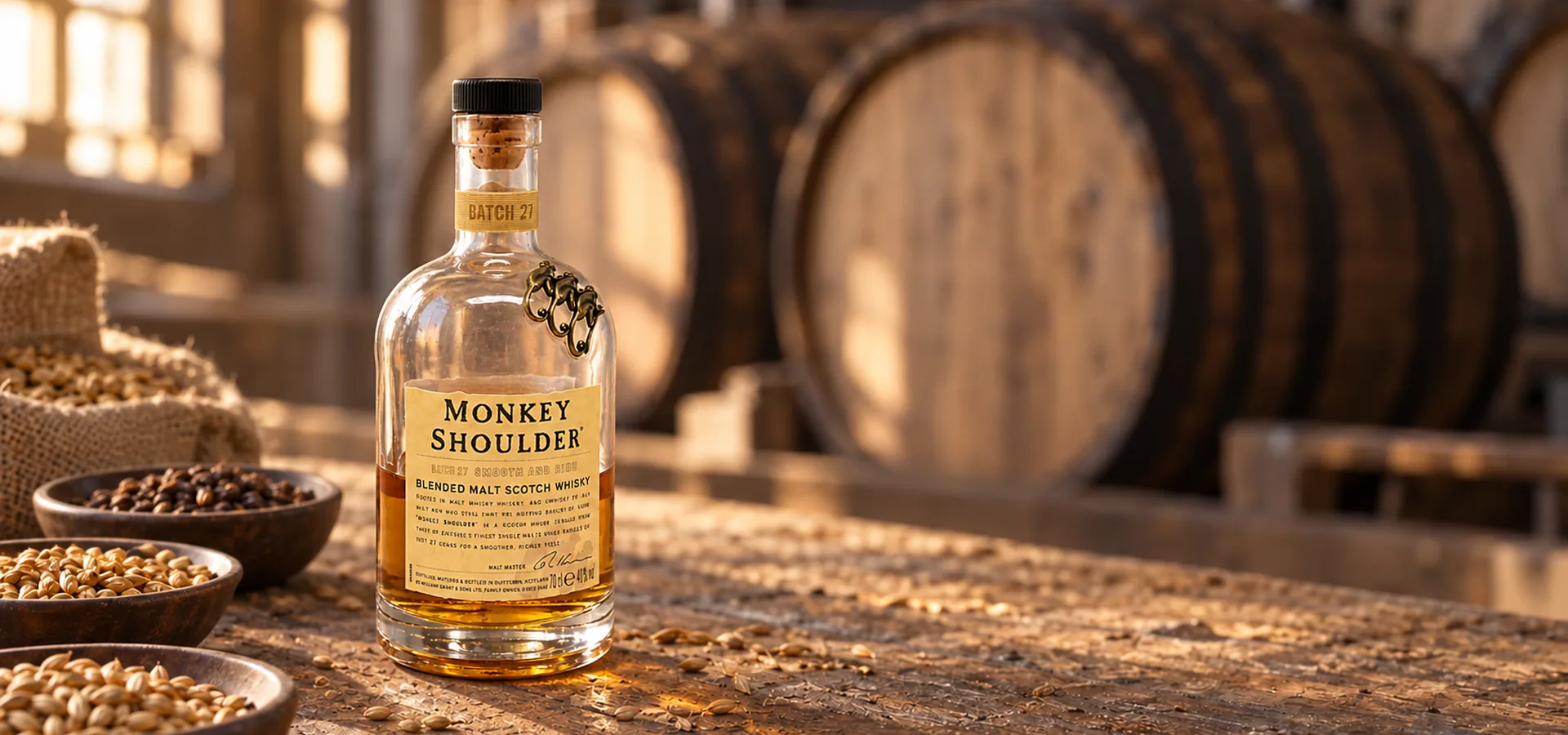
Blended malt Scotch is a blend of single malt Scotch whiskies from more than one distillery, with no grain whisky in it and nothing added but water and plain caramel colouring. The word blended counts distilleries, and the definition then does something no other Scotch category does: it lets the blend be made before the whisky is whisky.
At a glance
- Legal category
- Blended Malt Scotch Whisky, Scotch Whisky Technical File June 2019, quoting Scotch Whisky Regulations 2009 regulation 3(2)
- Minimum strength
- 40 percent ABV
- Also called
- Blended malt Scotch whisky, Blended malt whisky
Is a blended malt a weakened or cheapened single malt?
Every component is a single malt. A blended malt Scotch holds malt whisky and nothing else. There is no grain whisky in it, and no Scotch of any category may carry anything added except water and plain caramel colouring.
Most people meet this category while holding a bottle and feeling short changed. The word blended sits next to the word malt, and the reading arrives before the definition does.
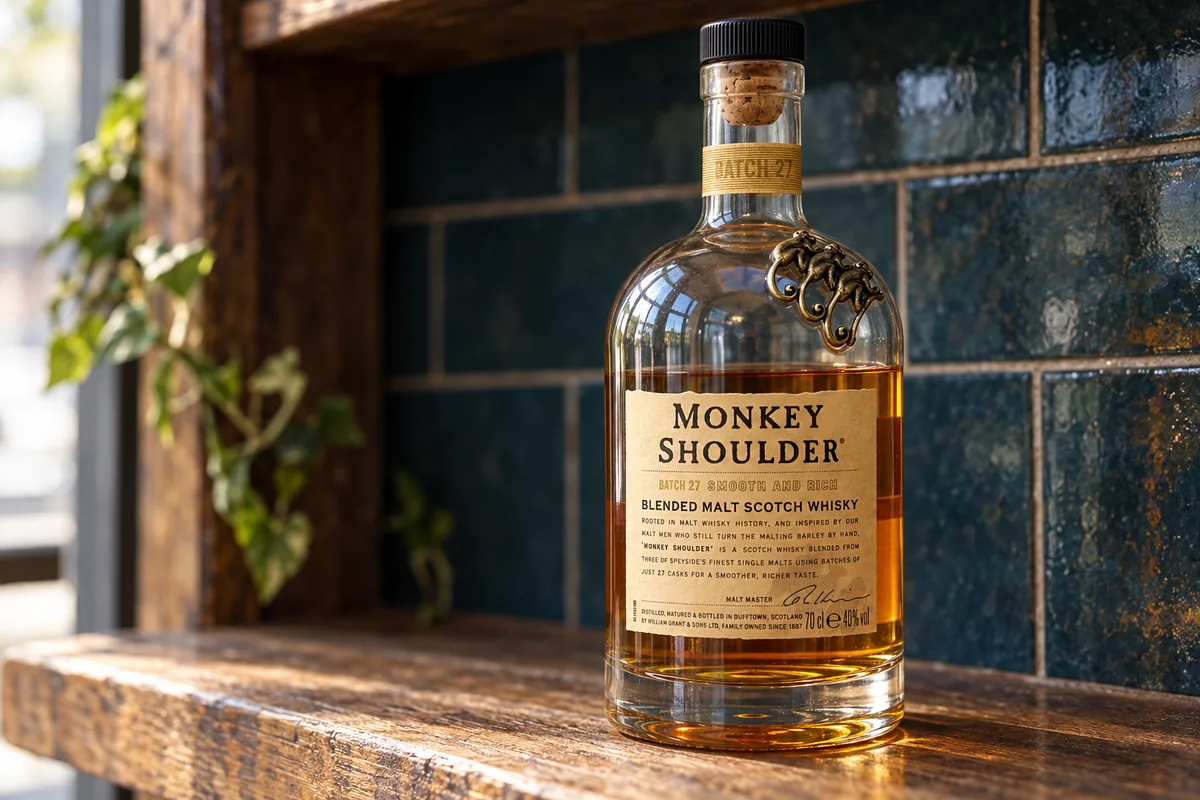
The definition counts distilleries.
Blended Malt Scotch Whisky means a blend of two or more single malt Scotch whiskies distilled at more than one distillery.
What each component already had to be
That definition is doing more work than it looks, because it is built out of another one. Every component had to be a Single Malt Scotch Whisky first.
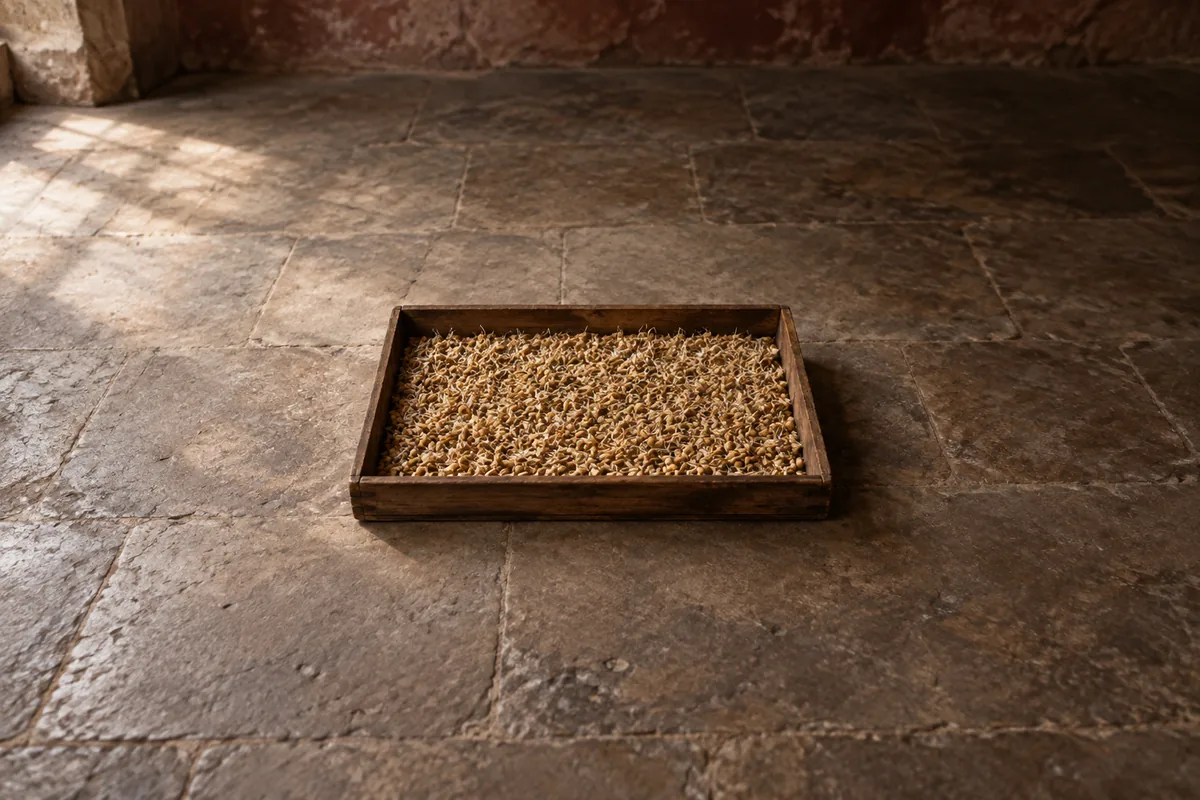
A single malt is distilled at a single distillery, from water and malted barley without the addition of any other cereals, and in pot stills. All three conditions, not one of them.
Ireland counts something else entirely with the same word, and a blend there can come from one distillery.
So the blend is malt, from pot stills, with no other cereal anywhere in it. What the word blended changed was the number of distilleries in the bottle, and nothing else about what is in it.
Single is a word other whisky countries also use, and they do not all use it the same way. The American single malt row puts a different set of conditions behind it.
Can a blended malt be blended before it is matured?
Half of that definition gets quoted everywhere. The other half almost never does, and it stops at two or more single malts from more than one distillery.
The definition continues.
It also covers a blend of single malt whisky distillates produced in accordance with paragraph (1)(a) and (b), to which paragraph (1)(c) to (i) will subsequently apply.
Which paragraphs those are
Those paragraph numbers are the whole point. They come from the definition of Scotch Whisky itself.
Paragraphs (a) and (b) are distillation: made at a distillery in Scotland from water and malted barley, mashed, converted and fermented at that same distillery, and distilled below 94.8 percent alcohol by volume.
Paragraphs (c) to (i) are everything after: the oak cask and its size, the place, the three years, the warehouse, the colour and taste it must retain, what may be added, and the bottling strength.
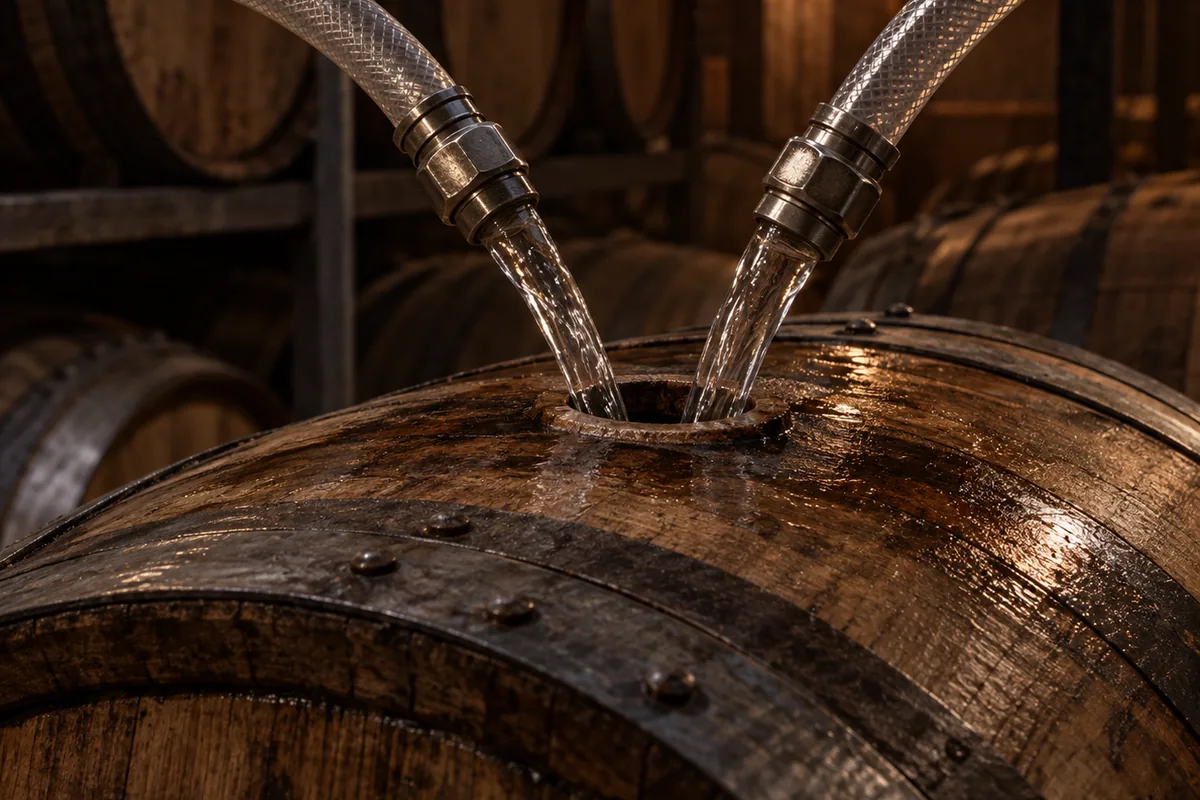
So the blend may be assembled while it is still distillate, and the maturation conditions then apply to the blend. Not to each component separately, and not beforehand.
How that separates it from the others
Set the five categories beside each other and one row behaves differently.
It is the only place in the five where the law describes blending something that is not yet whisky.
| Category | What is blended | At what stage |
|---|---|---|
| Single Malt Scotch Whisky | Nothing across distilleries | Not applicable |
| Single Grain Scotch Whisky | Nothing across distilleries | Not applicable |
| Blended Malt Scotch Whisky | Single malts, or malt distillates | After maturation, or before it |
| Blended Grain Scotch Whisky | Single grains only | After maturation |
| Blended Scotch Whisky | Single malt with single grain | After maturation |
Blended grain is drafted as a blend of two or more single grain Scotch whiskies distilled at more than one distillery, and it stops there. There is no distillate limb in it.
What that does not do is put anything on the label. A blend made at distillate stage and one made from finished casks read identically on the front of a bottle.
Where a spirit sits between light and heavy is a separate method, and no category name reports it.
Which whiskies go together, and why a blender reaches for one rather than another, is a craft with its own reasoning. The five categories themselves are laid out on the blended grain page.
What conditions had each component met before it was blended?
Deferring is not removing. Every condition that limb postpones still has to be met before the blend is whisky at all.
That distinction is the difference between a shortcut and a schedule.
That is worth stating plainly, because it is where a blended malt's guarantees actually come from. They are inherited from the Scotch Whisky definition rather than granted by the category name.
- Distilled in Scotland. At a distillery there, from water and malted barley, with the mash, the conversion and the fermentation all at that same distillery.
- Below 94.8 percent. So the distillate keeps an aroma and taste derived from its raw materials and its method.
- Oak, not exceeding 700 litres. A cask size ceiling, and oak rather than any wood the producer prefers.
- Only in Scotland, not less than three years. Place and time both fixed, and only in an excise warehouse or a permitted place.
- Water and plain caramel colouring. The complete list of what may be added, with nothing else on it.
- Minimum 40 percent. A floor on the strength it reaches the bottle at.
The two that most change a reading
Two of those repay a second look.
The first is the requirement that the whisky retains the colour, aroma and taste derived from its raw materials and its method of production and maturation.
That is a rule about what the liquid must still be, not about what was done to it. It is the reason the permitted additions list is as short as it is.
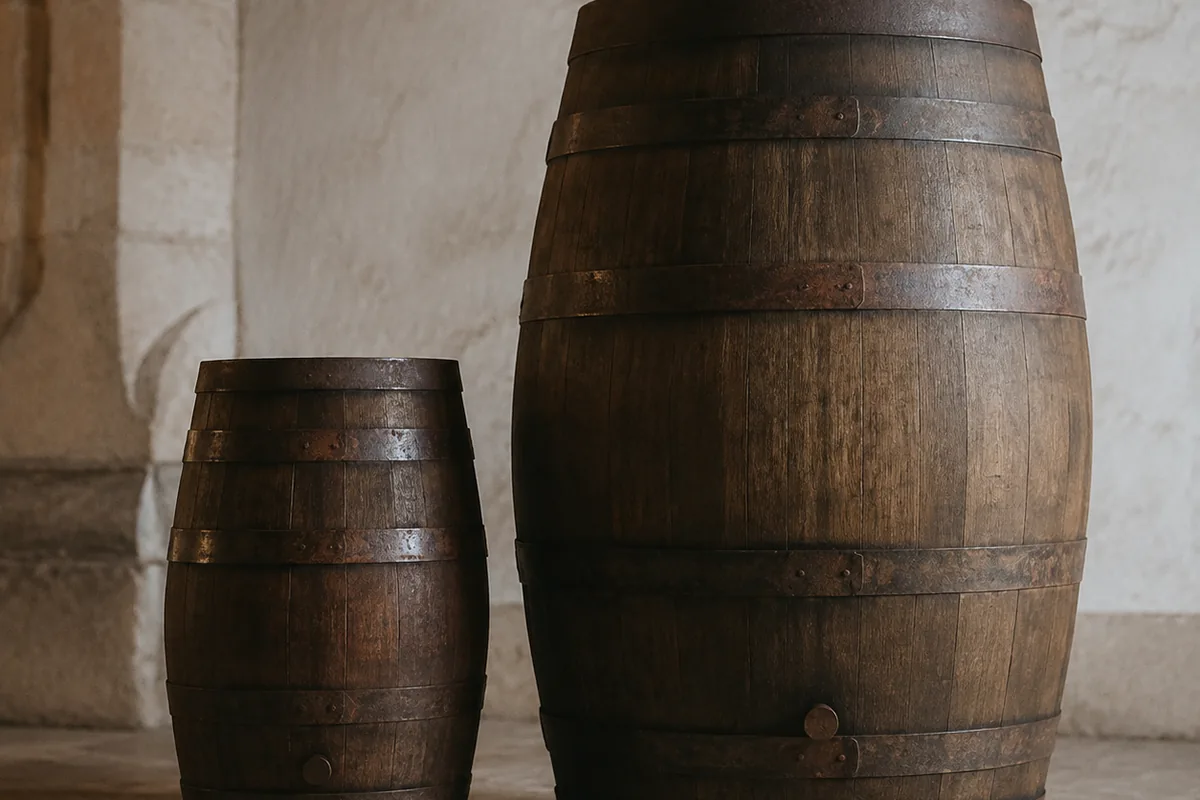
The second is the cask, where oak is fixed and 700 litres is a ceiling. That is the whole of what the definition says about the vessel.
Everything else about the wood is open, so two blended malts that both clear three years and 40 percent can be nothing alike, and the category name reports none of that difference.
Why does no Scotch label say pure malt, and may one say Speyside?
None of that is visible through glass. What the label is allowed to say is the only surface a reader gets, and it is regulated closely.
One phrase is banned outright.
A Scotch may not be labelled, packaged, sold, advertised or promoted using the phrase pure malt, or any derivation of it.
Why separating the words does not help
The prohibition anticipates the obvious workaround. It also covers the words pure and malt separated from each other, wherever pure or a derivation of it is used adjectivally in connection with malt.
So a label cannot put the two words at opposite ends and claim they are unrelated.
That is a drafting choice, and it tells you the phrase was a real problem rather than a theoretical one.
- Where the category goes
- The front of the container, and any individual packaging, unless the front is clearly visible through it.
- How it is printed
- Conspicuous, legible to the naked eye, indelible, with equal prominence to each word of the name.
- Against what
- At least as prominent as any other description of the whisky, apart from named exceptions such as the age.
- Never
- Overlaid or interrupted by other writing or pictures, and not used in conjunction with any other words.
The one word that may join it
There is a single exception to that last rule, and it is a useful one to know. A Scottish locality or region may be appended immediately before the category name.
It comes with a condition: the whisky must have been distilled in the locality or region named. A blended malt drawn from distilleries in different parts of Scotland therefore has no region to claim.
The 2009 Regulations are United Kingdom law, so a blended malt sold elsewhere meets them at import and then meets whatever the importing country asks on top, and those second rules are the ones that move.
If a blended malt says 12 years, what exactly is 12 years old?
One line on the front is compulsory and the other is not. That makes an age statement a choice rather than a disclosure.
When it is given, the rule is exact.
The age stated is the age of the youngest whisky in the blend, and it is not an average.
Twelve and sixty makes twelve. The specification works it through: a Scotch holding 12 year old and 60 year old whiskies may only be sold as 12 years old. No reference may be made to the ages of the older whiskies on the label, or in promotion.
What a bottle with no age is saying
Read that rule backwards and a bottle without a number looks different. It is declining to make a claim rather than concealing a young component.
That is a smaller statement than most shoppers read into it.
The rule also fixes only the number. How much of the older whisky a blend holds is never disclosed, so an age tells you the floor and nothing about the shape above it.
Common questions
- What is blended malt Scotch whisky?
- Blended Malt Scotch Whisky is a blend of two or more single malt Scotch whiskies distilled at more than one distillery. The word blended counts distilleries, not ingredients, and no grain whisky is in it.
- Is there grain whisky in a blended malt?
- No. Every component of a blended malt is a Single Malt Scotch Whisky, which is made from water and malted barley without the addition of any other cereals and distilled in pot stills.
- Can a blended malt be blended before it is matured?
- Yes. The definition also covers a blend of single malt whisky distillates, with the maturation conditions applying to the blend afterwards. No other Scotch category is drafted that way.
- Why do bottles no longer say pure malt?
- Scotch may not be labelled, sold, advertised or promoted using the phrase pure malt or any derivation of it. The ban also reaches the words pure and malt when separated, where pure qualifies malt.
- What does an age statement on a blended malt mean?
- It is the age of the youngest whisky in the blend rather than an average. A blend holding 12 year old and 60 year old whiskies may only be sold as 12 years old.
Sources
More in Spirits
-
 American single malt whisky
01
What is American single malt whisky, and what does it guarantee?
-
 Australian whisky
02
How is Australian whisky defined, and by which law?
-
 Black rum
03
What is black rum, and does the colour mean anything?
-
 Blended American whiskey
04
What is blended American whiskey, and how much of it is whiskey?
-
 Blended Irish whiskey
05
Blended Irish whiskey: which word counts the distilleries?
-
 Blended Scotch
06
Blended Scotch: what is in it, and why does the recipe change?