
Spirits
How is Australian whisky defined, and by which law?
Australian food law never defines whisky. The only statutory definition sits in customs legislation, it turns on how the spirit tastes, and the one hard requirement behind the name is two years in wood.
At a glance
- Legal category
- No compositional standard; whisky defined at Customs Act 1901 s.105A(2)
- Minimum strength
- 37 percent ABV
- Also called
- Australian whiskey, Aussie whisky
Is Australian whisky a defined category, or just a description?
Start where the definition ought to be. The Australia New Zealand Food Standards Code says what a food sold in Australia must be, and Standard 2.7.5 is the part that covers spirits.
It defines a spirit, and names whisky as one, alongside brandy, rum, gin, vodka and tequila. What it asks is that the distillate be produced by distilling fermented liquor derived from food sources, so as to have the taste, aroma and other characteristics generally attributable to that particular spirit.
That is the whole compositional test.
Search the rest of the Code and whisky appears twice more, once in that same definition repeated and once in a table of contaminant limits. It is never defined.
There is no Australian compositional standard for whisky. No grain proportion, no still type, no cask rule, no place of origin. The one statutory definition sits in customs law and turns on how the spirit tastes.
That definition is in the Customs Act 1901 at section 105A. The Australian Border Force quotes it as a spirit obtained by the distillation of a fermented liquor of a mash of cereal grain, in such a manner that the spirit possesses the taste, aroma and other characteristics generally attributed to whisky.
Read it slowly and it closes a circle, because whisky is a grain spirit that tastes like whisky.
The contrast with a category built the other way round is sharp. American single malt was given a seven part specification in 2025 covering grain, distillery, proof and barrel.
What cereal grain permits
Cereal grain is the only material the definition fixes, and it fixes no proportion. Barley, rye, wheat and corn all qualify, alone or in any mix.
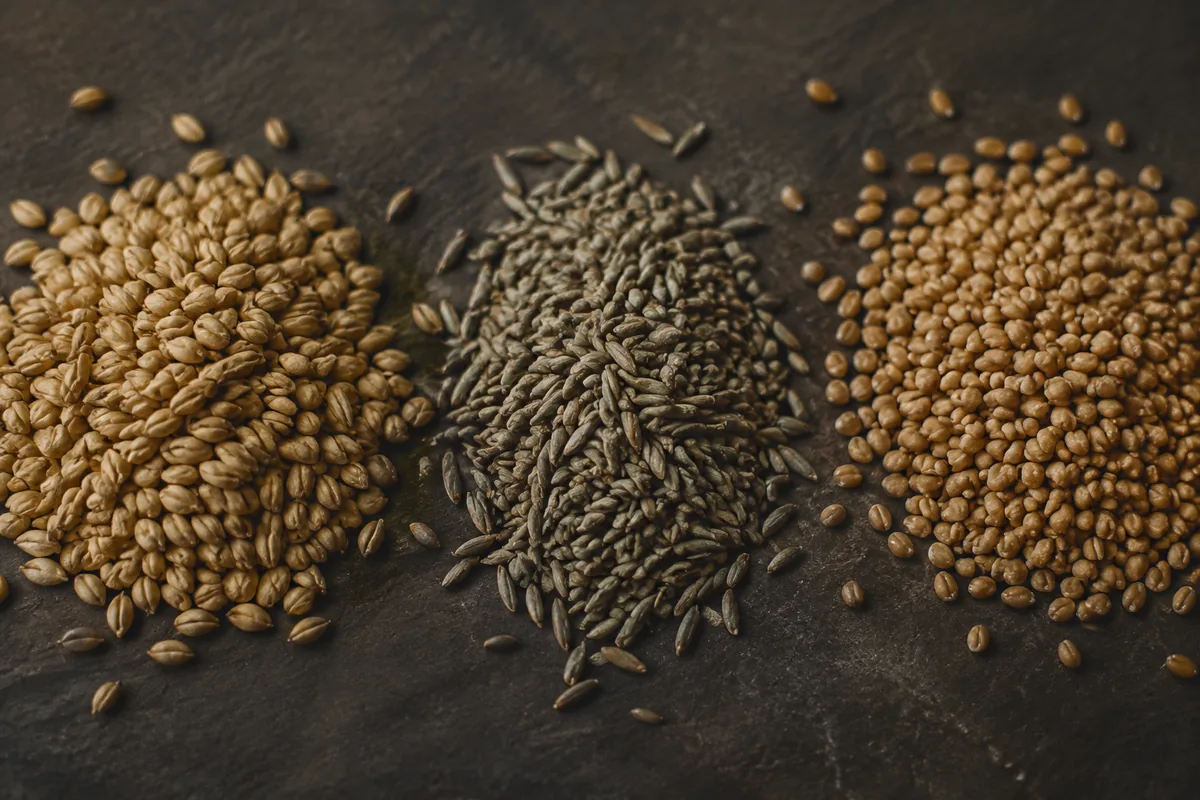
Malting matters more than the species, because letting grain germinate develops the amylase enzymes that turn its starch into sugar a yeast can eat, which is what makes a mash fermentable at all.
Beyond that, this page will not hand you a grain to flavour map. Australian law does not draw one, and no source acceptable here publishes one for the category.
The standard stops at the cereal and at the strength, and everything between those two points is left open, which is where one Australian distillery differs from the next.
What does the two year wood rule actually control?
The rule people quote is real, and it is not a food standard.
Subsection 105A(1) of the Customs Act stops imported brandy, whisky or rum leaving customs control unless a Collector is satisfied it has been matured by storage in wood for at least two years. It is a condition on release, enforced where duty is assessed.
Its subject is time, not method, not material, not place.
The import rule and its domestic twin
The Excise Act 1901 carries the matching control for spirit made in Australia, at section 77FI, headed delivery from the CEO's control of brandy, whisky or rum. We name that provision rather than paraphrasing it, because the operative wording is what decides borderline cases and it deserves to be read in the Act itself.
What can be said from the regulator's own account is that the two regimes run in parallel. The Border Force explained a 2024 change as aligning the administration of imported spirits with the administration of domestically manufactured spirits.
What changed in 2024
That change shows what the rule is for, because since 2024 an unmatured cereal grain spirit may enter Australia provided it is not labelled as, described as, or intended to enter the domestic economy as whisky.
The tariff line makes the same split, covering whiskies and other spirits obtained by distilling fermented mash of cereal grains, and the onus sits on the importer to declare which it is. The word whisky triggers the maturation requirement, not the liquid.
What the rule does not touch
Two years in wood is the whole of it. Everything that a drinker would recognise as style sits outside the rule:
- The grain. Any cereal, in any proportion, so two compliant whiskies need not share a raw material.
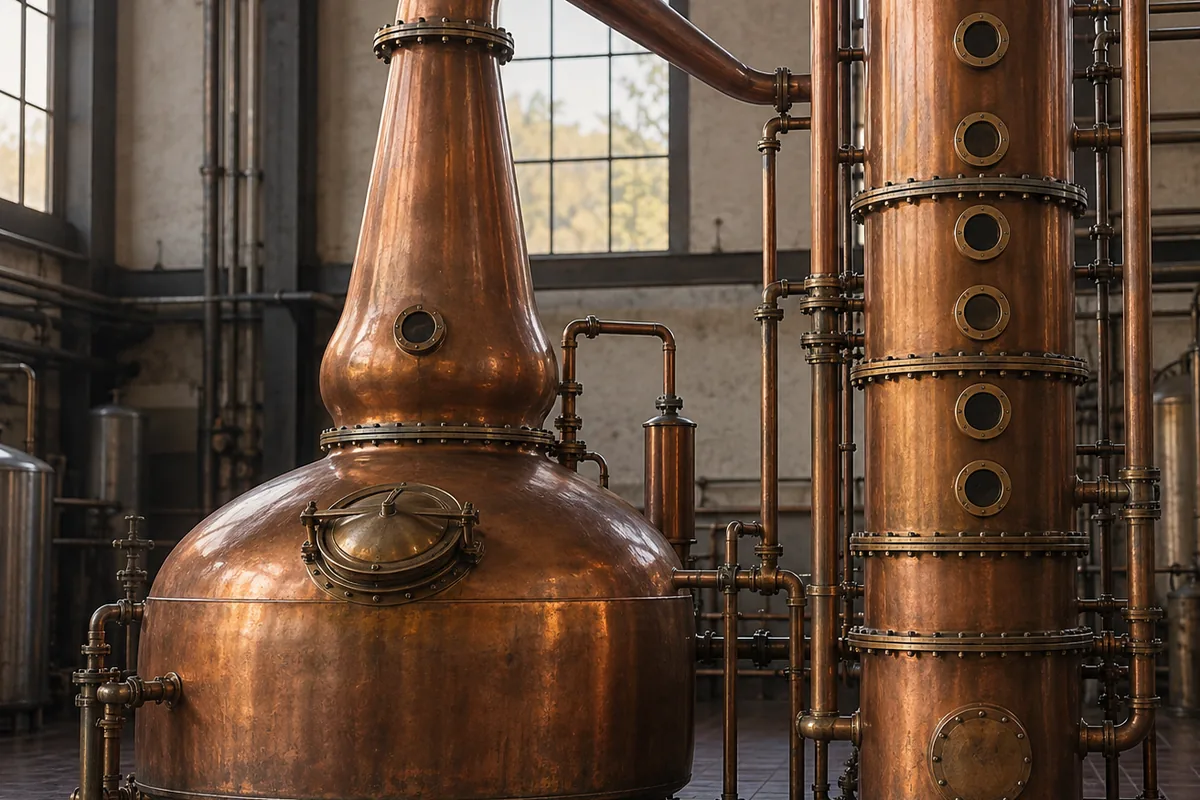
- The still. No type is named, so a copper pot still and a column still are equally compliant.
- The cask. No species, no size, no char level, no limit on previous fills.
- The place. Beyond the excise jurisdiction, no region inside Australia is named or protected.
Three of those four are decided at the distillery and never appear on a label unless the producer chooses to put them there.
What decides how an Australian whisky tastes?
Two years in wood says nothing about the wood. That silence is where most of the flavour of any matured spirit is decided.
Two variables move the result more than anything else: how big the cask is, and what was in it before.
Cask size
Size is the one with a number attached. A standard barrel of 52 to 60 gallons presents roughly 90 square centimetres of oak surface for every litre of spirit it holds.
Extraction rate is coupled to that surface to volume ratio. Shrink the cask and every litre meets more wood, so the same spirit takes on oak faster.
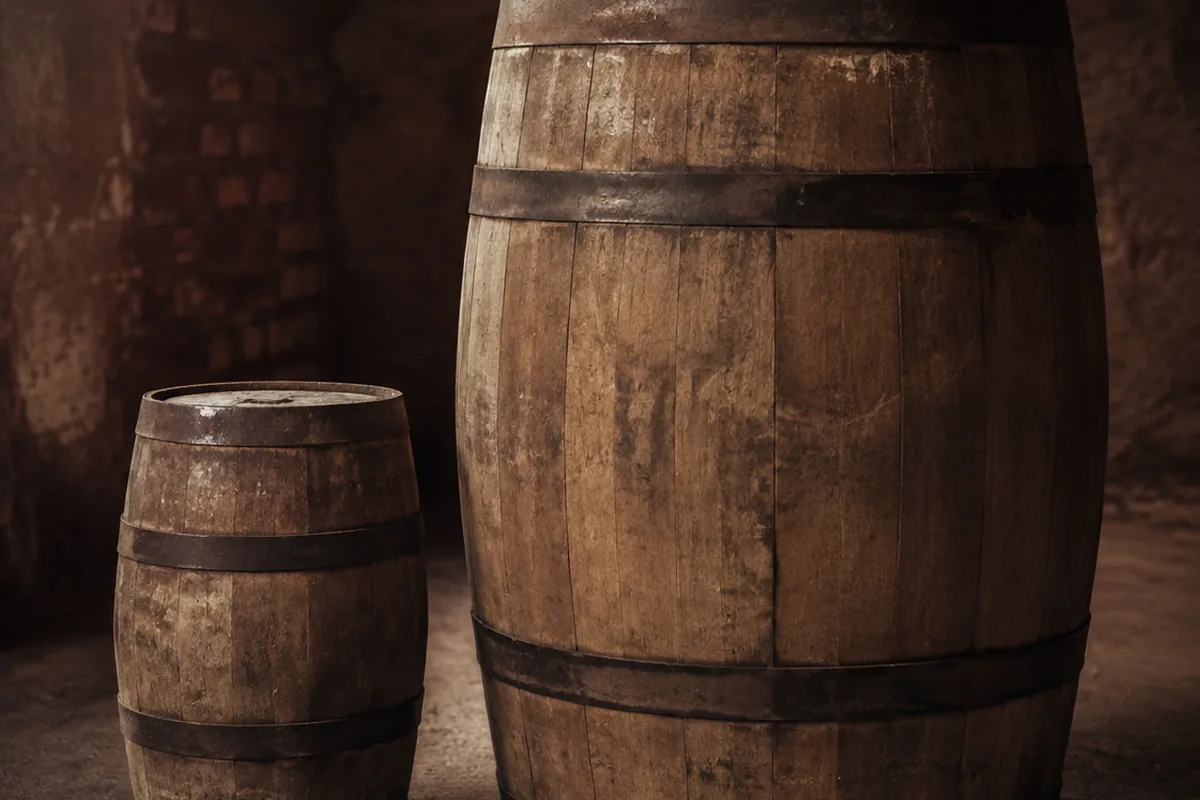
Faster is not automatically better, and in one trial casks of 2 and 3 gallons stayed quiet for around 40 days, then climbed steeply in phenolic concentration between days 40 and 60.
The authors described the result as over extracted, with the oak becoming overwhelming. They judged casks that small unfeasible for industry, because too much of the spirit left through the wood.
What the cask held before
A cask that has held something before releases the typical oak compounds in a much smaller quantity than a new one. A refill cask needs more time to reach the same place.
Alcohol strength changes the same equation again, because it decides how strongly the lactones and vanillin come across into the spirit.
Put those together and a two year whisky from a small first fill cask and a two year whisky from a large refill cask are not the same drink in any useful sense. They are equally legal, and the label is the only place the difference is ever declared.
What does an Australian whisky actually taste of?
There is no Australian house style to describe, because nothing in the rule creates one. The useful answer is what an oak cask can supply, and why two bottles land in different places.
What the oak supplies
Charring degrades the lignin in the oak into vanillin and syringaldehyde, and vanillin is the compound behind a vanilla note.
Whisky lactone splits two ways. Its cis form carries coconut and earthy notes, its trans form spicy ones.
Hemicellulose becomes furan compounds under the same heat, and those bring roasted almond, nut, caramel and bread. Alcohol strength decides how much of any of it arrives.
What the colour reports
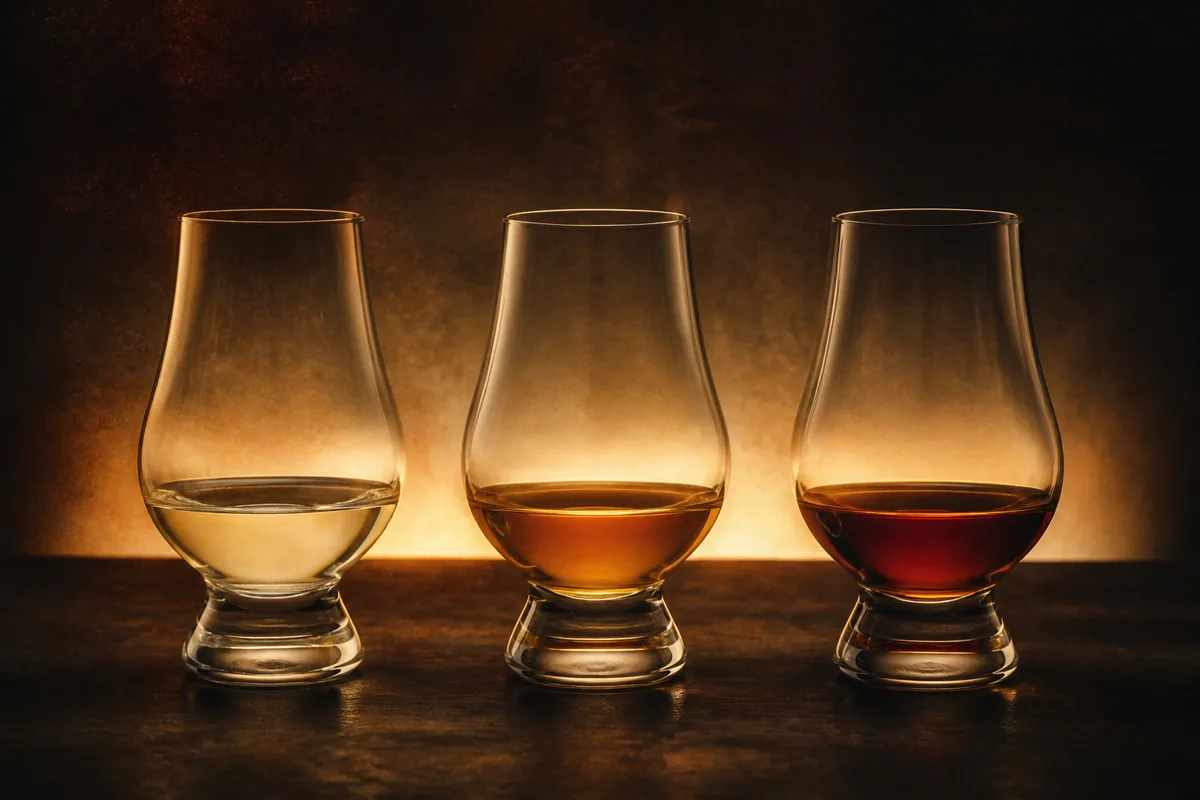
Colour tracks the same variables, because ellagitannins are among the readiest compounds to leave the oak and colour moves early in maturation rather than late.
So a pale Australian whisky and a deep one can both be correct. What the pair tells you is about the wood, not about the country.
Colour is the first thing anyone judges and the least reliable, which is why a working order for nose and palate puts it last.
What does an Australian whisky label have to tell you?
The compositional duties on an Australian spirit bottle are short enough to list.
The one number it fixes
A food sold as a spirit must be one, and must contain no less than 37 percent alcohol by volume, with tequila the single exception at 35 percent. If the difference between proof and alcohol by volume is not obvious, that is the number the rule fixes.
The one claim it forbids
One claim is forbidden outright. Standard 2.7.5 bars a label from using a geographical indication for a spirit unless the spirit was produced in that country, locality or region.
The bar holds even where the label shows the true origin, translates the indication, or hedges it with words like kind, type, style or imitation, which is why no Australian whisky may call itself Scotch or Irish, even hedged as a style, because those names are protected where they come from.
| On the label | What Australian law does about it |
|---|---|
| Alcohol by volume | Must be at least 37 percent for any spirit |
| A place name | Forbidden unless the spirit was made there |
| Methanol content | Capped for whisky at 0.4 grams per litre of ethanol |
| An age statement | Not required, and no minimum age is set |
| Cask type or size | No disclosure required at all |
| The words single malt | Undefined in the Code, so they carry no legal meaning |
The methanol ceiling is the compositional limit almost nobody mentions, and it is a real number. The Excise Act adds an offence provision about describing spirits as old or very old, so even loose age language is not entirely free.
What is missing from that table matters more than what is in it. Nothing obliges an Australian whisky to state an age, name its cask, or explain what single malt means, and the rest of the label rules by jurisdiction sit outside the compositional standard.
How do you judge a bottle when the category guarantees so little?
All of which turns the usual approach inside out, because there is no category specification to check a bottle against and what a producer chooses to print is the specification.
- The strength. The only number law guarantees will be there, and a proxy for how hard the spirit worked on the oak.
- The cask, if it is named. Size and previous fill are the variables the rule left open, so a stated cask predicts far more than the word Australian does.
- An age, if it is given. Voluntary, so printing one is a choice to be measured by it. Its absence means only that two years passed.
- Anything shaped like a place. The one claim the Code polices, so a place name has had to earn itself.
None of it is externally verified. A cask statement is the producer's own account.
What the strength does carry, whatever else the label says, is the arithmetic of the drink in front of you. Australia counts a standard drink in grams of alcohol, so the figure that matters is set by the strength and the pour together, not by the glass.
Common questions
- Does Australian whisky have to be made from malted barley?
- No. The only material the statutory definition fixes is cereal grain, and it fixes no proportion, so barley, rye, wheat, corn and mixtures of them all qualify.
- Can an Australian whisky be labelled single malt?
- The term appears nowhere in the Australia New Zealand Food Standards Code, so it carries no Australian legal meaning. That does not forbid it on a label; it means the words are the producer's own and are not measured against any Australian standard.
- Is the two year minimum the same rule as the three years Scotch requires?
- No. The Australian requirement is a condition on releasing spirit from customs or excise control, imposed where duty is assessed, rather than part of a definition of the drink.
Sources
-
Australia New Zealand Food Standards Code, compilation of June 2025 (Standard 2.7.5 Spirits and Schedule 19)
Published 1 June 2025. Accessed 4 September 2026.
-
Australian Border Force, Australian Customs Notice No. 2024/11, Maturation Requirement for Spirituous Beverages
Published 2024. Accessed 4 September 2026.
-
Excise Act 1901 (Cth), Federal Register of Legislation
Accessed 4 September 2026.
-
Jeffery and Berglund (2016), Extraction of wood constituents from non-conventional, small whiskey barrels, Journal of Food Processing and Beverages 4(1)
Published 2016. Accessed 4 September 2026.
-
Luo, Cui, Li, Zhou, Duan, Lan, Wu (2023), Factors in Modulating the Potential Aromas of Oak Whisky Barrels: Origin, Toasting, and Charring
Published 2023. Accessed 10 September 2026.
-
Tarko, Krankowski, Duda-Chodak (2023), The Impact of Compounds Extracted from Wood on the Quality of Alcoholic Beverages
Published 2023. Accessed 10 September 2026.
More in Spirits
-
 American single malt whisky
01
What is American single malt whisky, and what does it guarantee?
-
 Black rum
02
What is black rum, and does the colour mean anything?
-
 Blended American whiskey
03
What is blended American whiskey, and how much of it is whiskey?
-
 Blended Irish whiskey
04
Blended Irish whiskey: which word counts the distilleries?
-
 Blended Scotch
05
Blended Scotch: what is in it, and why does the recipe change?
-
 Blended grain Scotch
06
Blended grain Scotch: is the grain the cheap part of a blend?