
Spirits
Blended Irish whiskey: which word counts the distilleries?
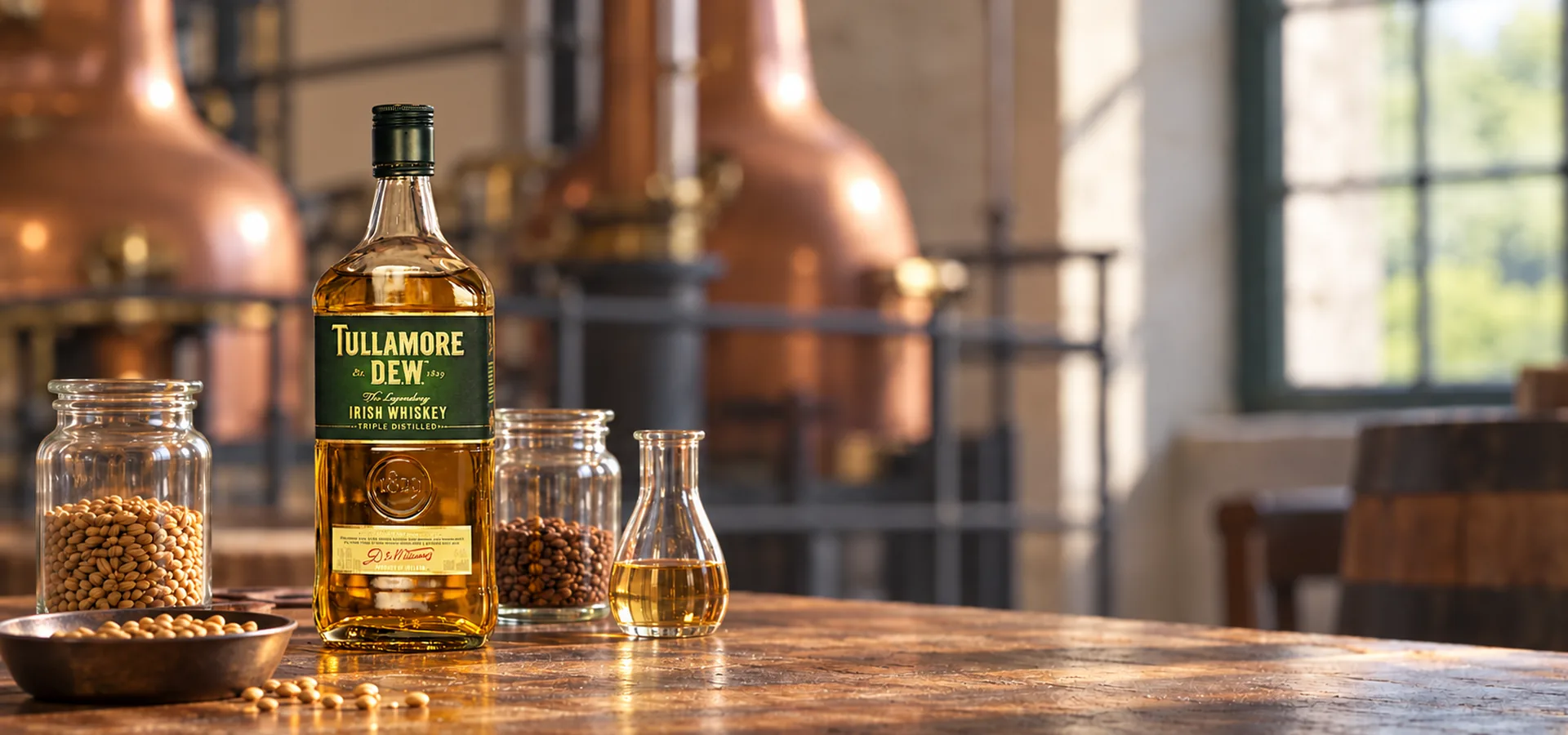
Blended Irish whiskey is a blend of two or more of the three Irish whiskey varieties: pot still, malt and grain. The word counts varieties rather than distilleries, which is why a blended Irish whiskey can legally be the work of a single distillery, and why in Ireland the word that carries a distillery count is single.
At a glance
- Legal category
- Blended Irish Whiskey, Irish Whiskey technical file section 4.2.4
- Minimum strength
- 40 percent ABV
- Also called
- Blended Irish Whiskey, Irish Blended Whiskey, Irish blend
What does blended count on an Irish whiskey label?
It counts varieties. Blended Irish Whiskey means a blend of two or more of the three whiskey types Ireland defines.
The rule then widens once, quietly. A general Irish Whiskey used in combination with any of those varieties is also entitled to the description, so the three named types are the core of the definition rather than the whole of it.
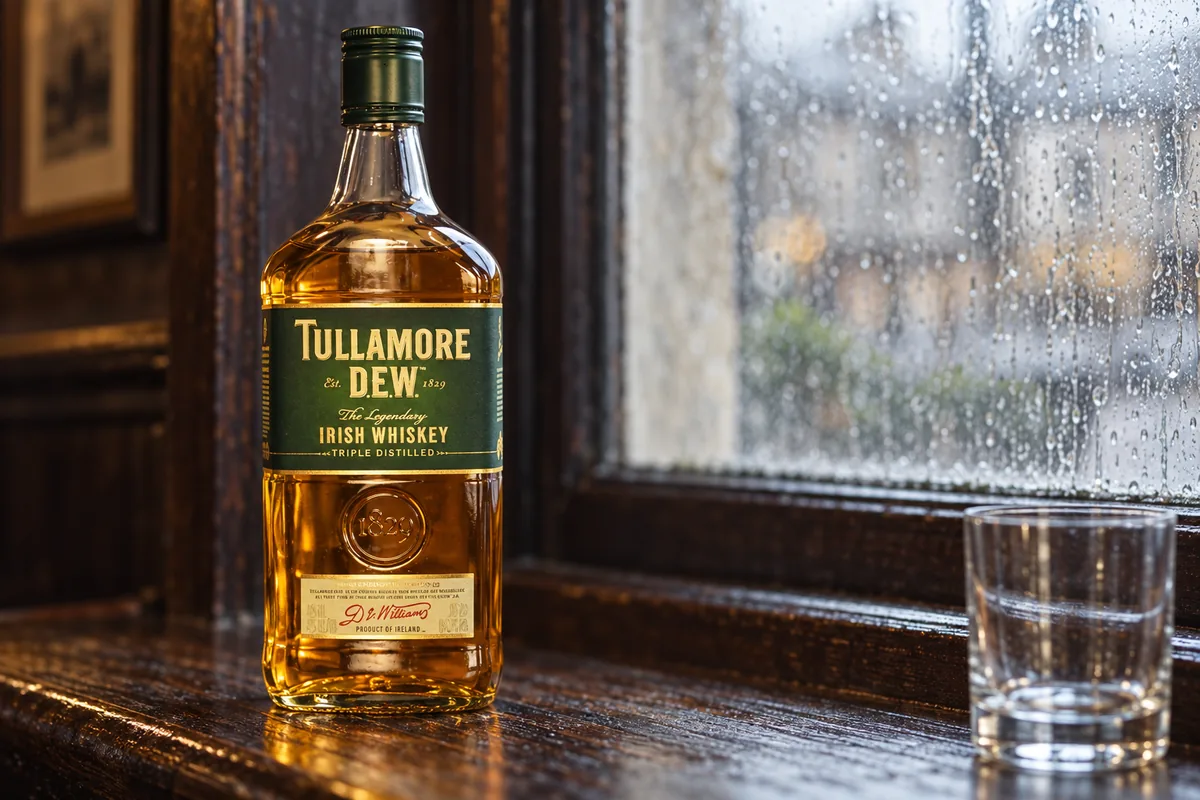
Those three varieties each have their own specification, so knowing what is being counted means knowing what they are.
| Variety | Mash | Still |
|---|---|---|
| Pot Still Irish Whiskey | Malted and unmalted barley, minimum 30 percent each | Pot |
| Malt Irish Whiskey | 100 percent malted barley | Pot |
| Grain Irish Whiskey | Malted barley not exceeding 30 percent, plus whole unmalted cereals | Column |
| Blended Irish Whiskey | Two or more of the three above, in any proportion | Whichever those varieties used |
The count stops there. Blended names how many varieties went in, not how much of each, so two bottles carrying the word can be built very differently.
One more thing the word does not report: spelling. The varieties may use whiskey or whisky, so a spelling difference on an Irish label is not a difference of category.
Can a blended Irish whiskey come from one distillery?
Variety is what blended counts, so a different word has to carry the distillery count, and in Ireland that word is single.
The rule is narrow. Single may only be applied to the Pot Still, Malt and Grain varieties, and only where all of the whiskey was distilled totally on the site of one distillery.
It may not be applied to a Blended Irish Whiskey at all. So the absence of single on a blend reports nothing about how many distilleries contributed.
The consequence readers rarely reach
Nothing requires a Blended Irish Whiskey to draw on more than one distillery, because its definition counts varieties instead.
A single distillery can make more than one variety. If it makes pot still and grain whiskey and blends them, the result is a Blended Irish Whiskey produced entirely on one site.
That is legal in Ireland and impossible for a blended grain Scotch, where the word blended itself means more than one distillery. Same word, different job, one sea apart.
What to read when you want the distillery count
Look for single, and read what follows it. Single Pot Still Irish Whiskey reports both a mash bill and a distillery count in two words, which is unusually efficient labelling.
The same word is doing a different job again in the American single malt standard.
What does pot still mean in Irish whiskey?
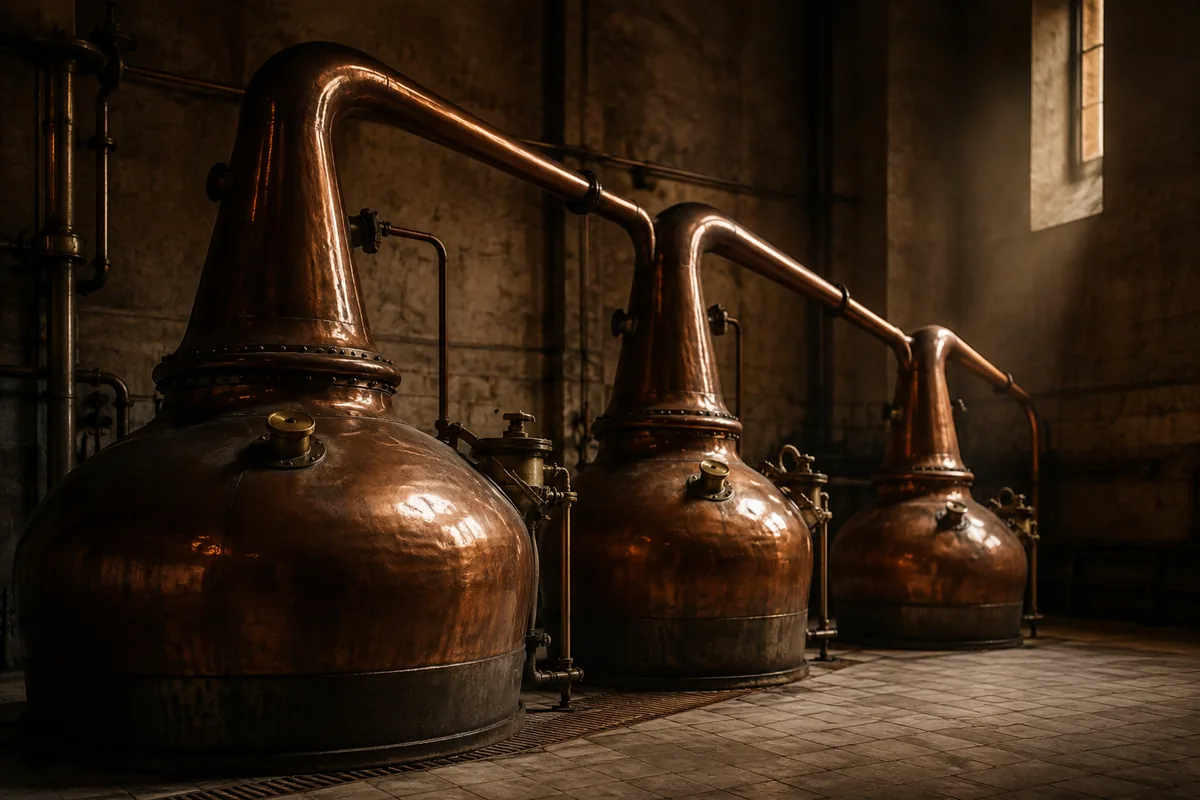
Pot still points at a vessel, and the rule behind it is about the mash. That is the source of most confusion around the term.
Pot Still Irish Whiskey is distilled from a mash of malted barley, unmalted barley and other unmalted cereals. That mash must contain a minimum of 30 percent malted barley and a minimum of 30 percent unmalted barley.
Up to 5 percent of other cereals, such as oats and rye, may be added if required, and each distillery works to its own recipe inside those two minimums and that ceiling.
What the unmalted barley is there for
The technical file does not treat unmalted barley as a substitution. It calls it an essential ingredient, because it gives the whiskey a distinctive spicy flavour and a creamy mouth feel.
That is the practical difference from a malt whiskey, which is made from 100 percent malted barley and comes off the same kind of still.
Why the still alone settles nothing
Malt Irish Whiskey is also distilled in pot stills. So a whiskey coming off a pot still is not automatically a Pot Still Irish Whiskey, and the name is doing more work than it looks.
Batch and continuous distillation differ in ways worth reading about on their own. Here the still matters only as one half of a definition.
What is the grain whiskey in a blend, and is it filler?
Grain is the variety most blends are mostly made of, and the one fewest drinkers could describe, defined by a limit rather than by a recipe.
- Malted barley
- Not exceeding 30 percent of the mash.
- The rest
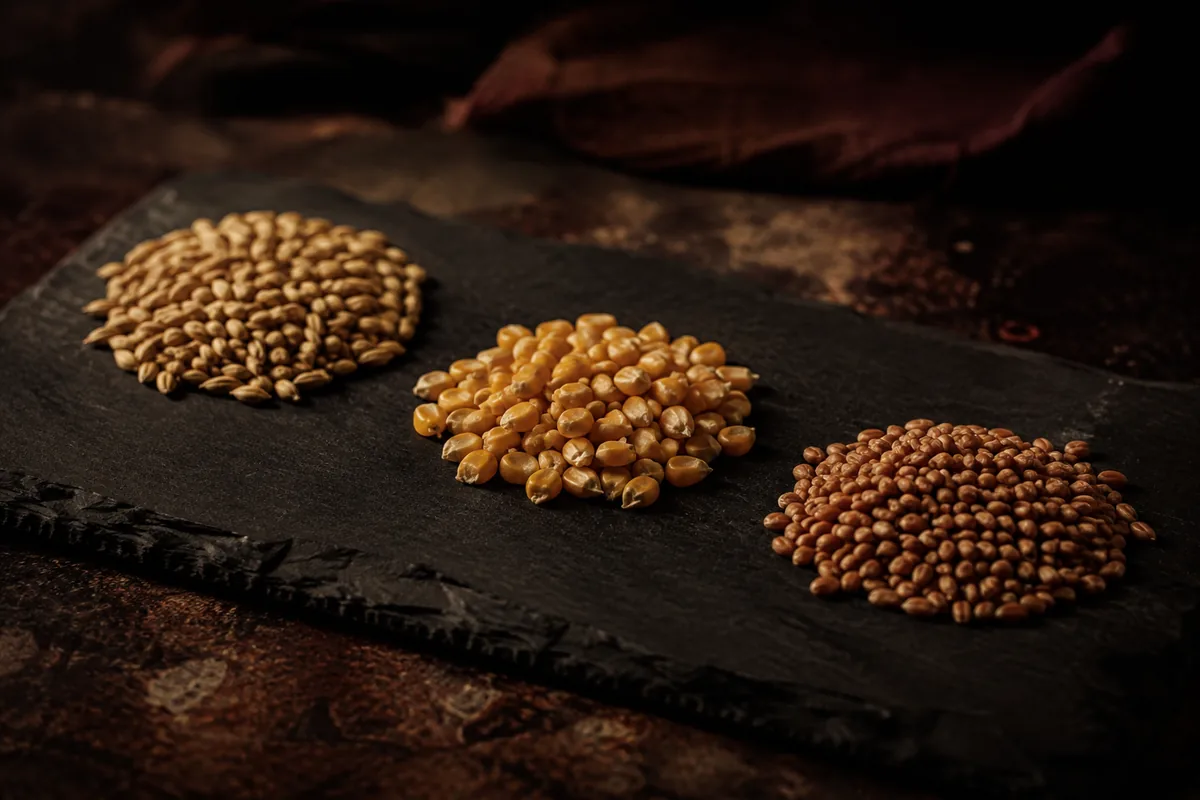
- Whole unmalted cereals, usually maize, wheat or barley.
- Still
- Column, distilled continuously rather than in batches.
- Off the still
- Typically around 94 percent alcohol by volume.
- Into the cask
- Reduced with local water to typically 63 to 70 percent.
- Then
- Three years minimum in wood on the island, like every other variety.
Note which way the barley limit runs. Pot still sets two floors, thirty percent malted and thirty percent unmalted.
Grain sets a ceiling instead, and malted barley is the ingredient it caps, because the malt is there to convert the starch rather than to carry the flavour.
Why light does not mean simple
Grain whiskey has a reputation as the filler in a blend. The technical file describes something a good deal more deliberate than that.
Two controls on a column decide what comes off it: where the spirit is drawn from the column, and how much of the side streams is taken away. Moving those produces a range from very light and delicate to more heavily flavoured.
So a blender specifying grain whiskey is not ordering a neutral base. They are ordering a point on that range, and the file puts the skill of the distiller at the centre of it.
The file puts the distiller’s judgement at the centre of that range, and placing a spirit along it is something a drinker can learn to do as well.
How a blend is actually built
The file describes the assembly in one direction, and it is worth reading in that order.
The blender starts with one or two lighter whiskeys, usually grain, and overlays one or more malt or pot still whiskeys on top of them until the flavour and the consistency are where they were aimed.
That is why the proportions are never printed. A blend is built to hit a target profile, and the recipe that reaches it is the thing being sold.
The United States takes the opposite approach on its own blends, where a minimum proportion is written into the class.
What must every Irish whiskey do before any blending?
A blend is assembled from finished whiskeys, so it is worth knowing what each one had already satisfied. The conditions are geographic, then temporal, then chemical.
- Made on the island of Ireland. Production must take place in the geographical area of the island, which includes Northern Ireland.
- Three years in wood, in Ireland. Maturation in wooden casks such as oak, only on the island, for a minimum of three years.
- Bottled at 40 percent or more. The minimum alcoholic strength by volume for Irish Whiskey.
- One additive only. Plain caramel colouring, which the technical file describes as a colouring and not a flavouring or a sweetening.
Casks that previously held Madeira, sherry, port or the bourbon entry are permitted, so the wood a whiskey met is not fixed by the rules and varies a great deal between bottlings. The cask has one stated size limit: not exceeding 700 litres.
One condition applies after the three years are up, which is that Irish whiskey may not leave Ireland or Northern Ireland in a cask that would let it go on maturing somewhere else.
So a blender in Ireland is never working with new spirit. Every component was already a finished Irish whiskey before it went into the blend.
What is in the bottle besides whiskey?
The permission is unusually narrow, and the shape of it is that only water and plain caramel colouring may be added to the matured distillate.
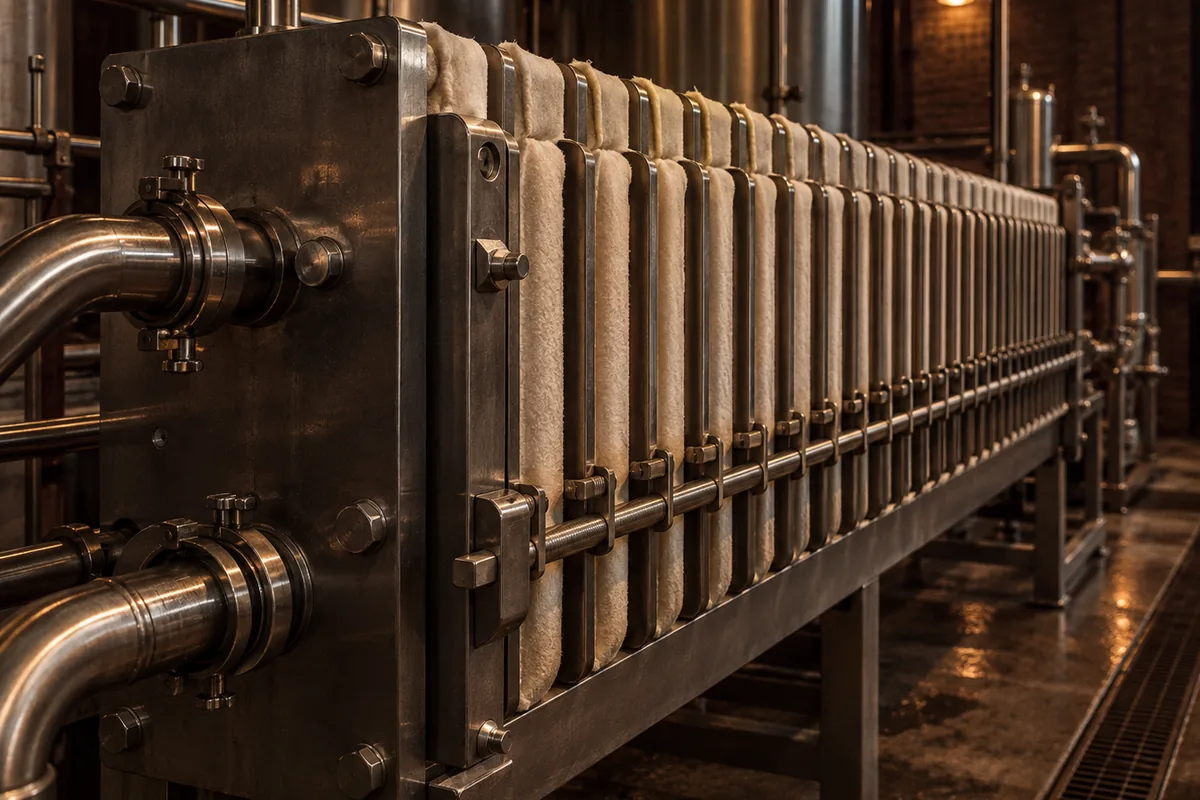
Filtration has a stated purpose and a stated boundary. Irish whiskey is filtered before bottling to remove wood particles, and often chill filtered as well, to stop the long chain esters dropping out of solution and hazing the bottle when it gets cold.
The file says that filtration must not be used to remove colour, flavour or aroma, because doing so would break the definition of Irish whiskey itself.
One geographic detail sits alongside this and surprises most readers. The four production stages must happen on the island of Ireland, but bottling need not.
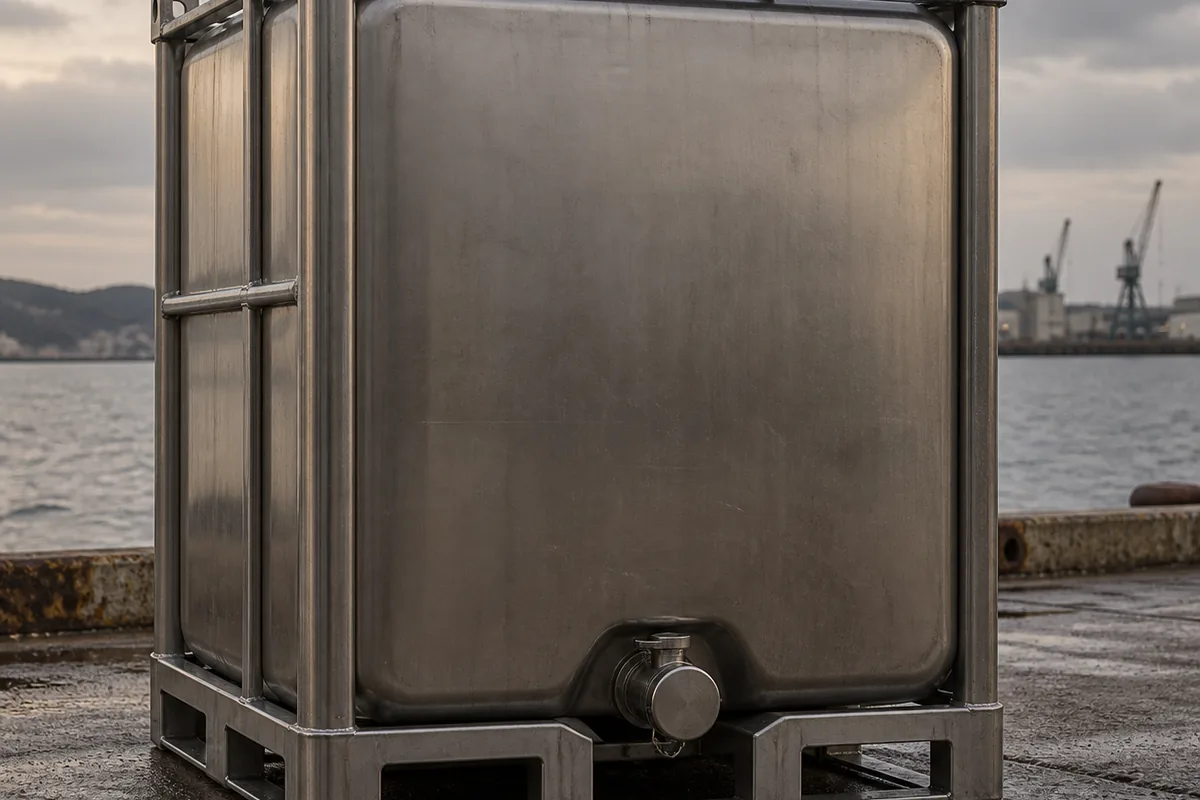
Whiskey bottled offshore travels in inert bulk containers, and any water added at that end must be demineralised.
One rule closes the loop: Irish whiskey may not be exported in wooden casks that would let it keep maturing outside Ireland or Northern Ireland. Maturation cannot be finished elsewhere and then called Irish.
Why is Irish whiskey blended at all?
The technical file records a reason, and it is a supply problem rather than a cost one.
Blending is thought to have been undertaken to smooth out irregularities in supply from the numerous distilleries on the island, and to give the customer a consistent product.
As lighter grain whiskey became available, a blender could build a range of blends that appealed to a wider audience. The practice grew because it solved something, not because it saved something.
What a blender is actually choosing
The parameters are named: whiskey type, distillery of origin, cask finish and age. A blender moves those four to hit a target.
The target is consistency. A blend is designed not to vary from batch to batch, which is a different goal from designing for maximum character, and the file names only the first.
That is history recorded in a technical file rather than a rule, so it explains the practice without governing it.
How are the numbers on an Irish whiskey label controlled?
Two rules govern what a number on an Irish bottle is allowed to say, and both exist for the same reason: a number must not imply more maturation than the whiskey had. What a label must carry changes with the country it is sold in, so a rule read here is the Irish one rather than the one that governs the bottle abroad.
The first concerns a distillation year. Irish whiskey may not be labelled with a reference to the year of distillation unless the presentation also refers to the year of bottling, the period of maturation, or the age.
Where such a reference is made, it must appear in the same field of vision as the distillation year. A reader cannot be shown one and made to hunt for the other.
What an age is allowed to be
Any reference to a period of maturation or an age must be to the youngest whiskey in the drink, expressed in years and consisting of one number, given as a numeral or a word.
One number in years is the whole permitted form. A range or an average is not available to a producer even where it would describe a blend more honestly.
The whiskey must also have been aged under appropriate control and verification, which is a condition on making the claim rather than a description of what is in the glass.
Common questions
- What does blended mean on an Irish whiskey label?
- A blend of two or more of the three Irish whiskey varieties: Pot Still Irish Whiskey, Malt Irish Whiskey and Grain Irish Whiskey. The word counts varieties, and it says nothing about their proportions.
- Can a blended Irish whiskey come from one distillery?
- Yes. Nothing requires a blended Irish whiskey to draw on more than one distillery, because the definition counts varieties. A distillery that makes both pot still and grain whiskey can blend them on one site.
- What does single mean on an Irish whiskey label?
- It reports the distillery count. Single may only be applied to the pot still, malt and grain varieties, and only where all of the whiskey was distilled totally on the site of one distillery. It may not be applied to a blend.
- What is pot still Irish whiskey?
- A whiskey distilled in pot stills from a mash of malted barley, unmalted barley and other unmalted cereals, with a minimum of 30 percent malted barley and a minimum of 30 percent unmalted barley, plus up to 5 percent of cereals such as oats and rye.
- How long must Irish whiskey be matured?
- A minimum of three years, in wooden casks such as oak, only on the island of Ireland. It may not be exported in casks that would let it keep maturing elsewhere.
- What does an age statement on a blended Irish whiskey mean?
- It is the age of the youngest whiskey in the bottle, expressed in years as one number. A range or an average is not permitted.
Sources
-
Irish Whiskey technical file, sections 2 and 4, Department of Agriculture, Food and the Marine
Accessed 4 September 2026.
More in Spirits
-
 American single malt whisky
01
What is American single malt whisky, and what does it guarantee?
-
 Australian whisky
02
How is Australian whisky defined, and by which law?
-
 Black rum
03
What is black rum, and does the colour mean anything?
-
 Blended American whiskey
04
What is blended American whiskey, and how much of it is whiskey?
-
 Blended Scotch
05
Blended Scotch: what is in it, and why does the recipe change?
-
 Blended grain Scotch
06
Blended grain Scotch: is the grain the cheap part of a blend?