
Spirits
Bourbon: which of the rules you have heard are actually in the standard?
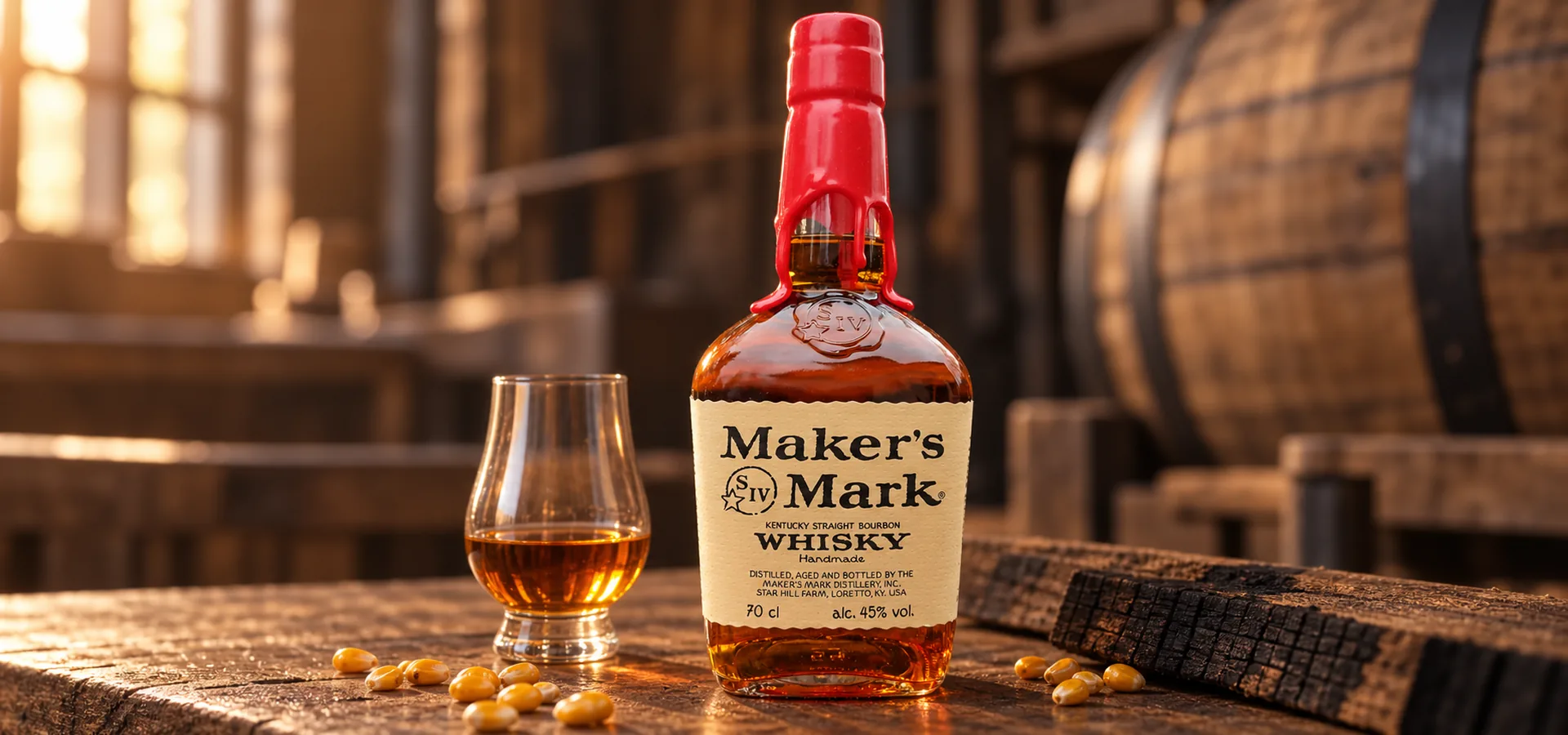
Bourbon is a fermented mash of not less than 51 percent corn, distilled at 160 degrees of proof or less and stored in charred new oak barrels filled at 125 degrees of proof or less. That is the whole of the type standard, which fixes no ageing period, names no state, and allows neither neutral spirits nor any colouring or flavouring material.
At a glance
- Legal category
- Bourbon Whisky, 27 CFR 5.143 Table 1 to paragraph (c), item 2
- Minimum strength
- 40 percent ABV
- Also called
- Bourbon whisky, Bourbon whiskey
What does the bourbon standard actually fix?
Bourbon is a type inside a wider class, and the class comes first. Whisky is a distillate from a fermented mash of any grain, distilled below 95 percent alcohol by volume, stored in oak barrels and bottled at not less than 40 percent.
The bourbon row narrows that on four points and stops.
| Variable | The requirement |
|---|---|
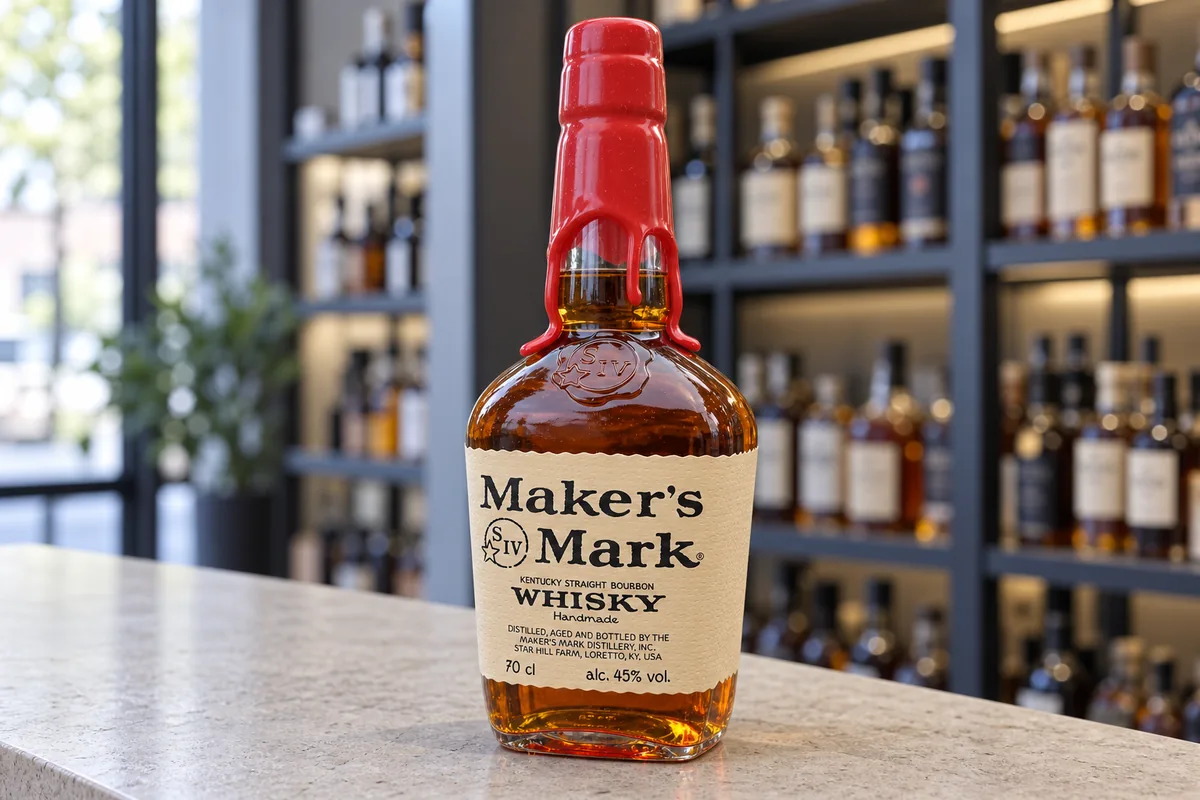
| Mash | Fermented mash of not less than 51 percent corn |
| Distillation proof | 160 degrees of proof or less |
| Storage | Charred new oak barrels, filled at 125 degrees of proof or less |
| Neutral spirits | Not permitted |
| Colouring and flavouring | Not permitted, and bourbon is the exception in its own row |
| Bottling strength | Not less than 40 percent, inherited from the class whisky |
The exception hiding in the table
That fifth row repays attention. The types sharing bourbon's row, rye and wheat and malt whisky, may use harmless colouring, flavouring and blending materials.
Bourbon is written in as the exception, and may not. So a bourbon carries only what the mash, the still and the barrel put there.
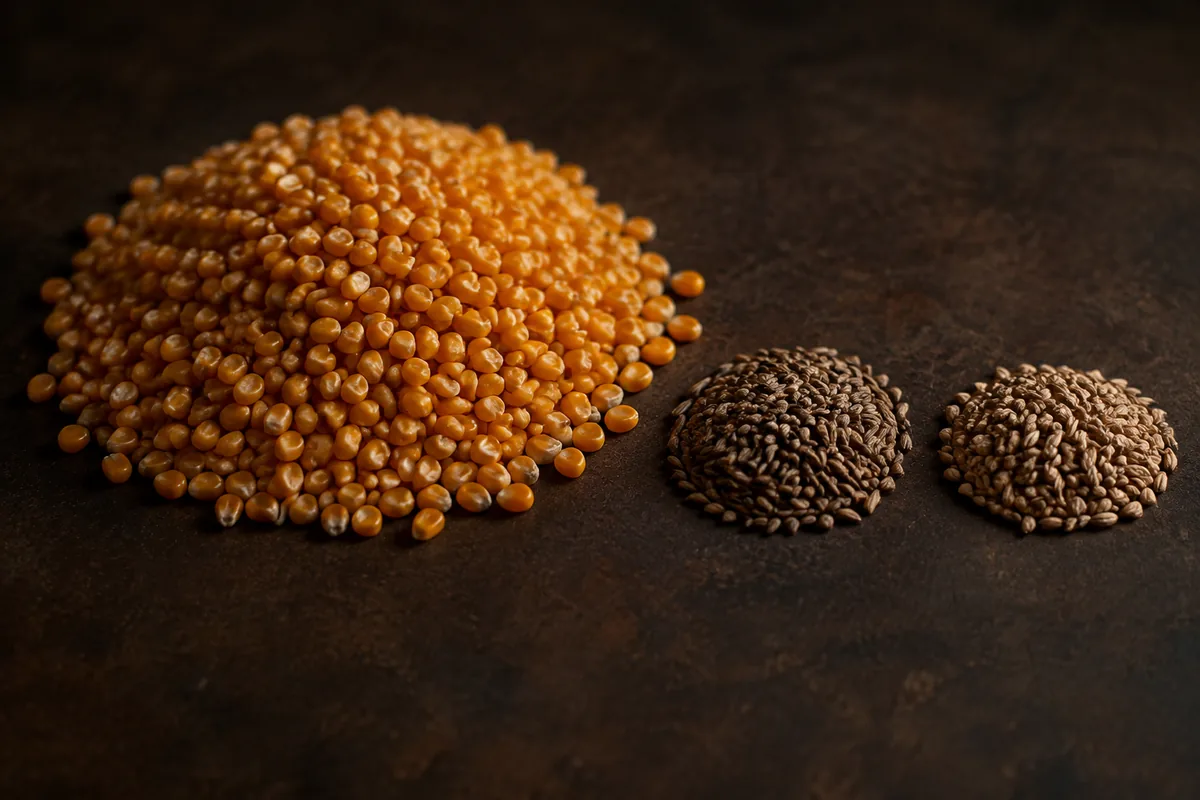
The corn floor is a floor and nothing else. Nothing in the standard says what the other 49 percent is, which is why two bourbons can share a category and very little else.
What the rest of the mash can be
The regulation is silent on the remainder, but the rows on either side of bourbon are not.
Rye whisky, wheat whisky, malt whisky and rye malt whisky are each defined the same way bourbon is, at not less than 51 percent of their own named grain. Those are the grains the table knows about.
So a distiller filling the rest of a bourbon mash is usually reaching for a grain the regulation defines elsewhere as a type in its own right. What that does to the spirit is not something the standard says, and this page will not say it either.
Is there a corn ceiling
Not in the bourbon row, because the standard sets a floor of 51 percent and never sets a maximum.
What does exist is a different type at the other end. Corn whisky is a fermented mash of not less than 80 percent corn, and it is stored at 125 degrees of proof or less in used or uncharred new oak barrels.
So the thing that separates a very high corn bourbon from a corn whisky is not the corn. It is the barrel again.
The strength the standard does fix
One number does come from the class rather than the type. A whisky must be bottled at not less than 40 percent alcohol by volume.
Above that floor the standard says nothing, so bourbon runs from 40 percent upward with no ceiling written anywhere, and two bourbons can therefore sit side by side at 40 and 62 percent where the same measure of each is not the same amount of alcohol.
How long must a bourbon spend in the barrel?
Everybody repeats this rule. It is in the wrong row.
The bourbon row attaches no period to its storage requirement. It says charred new oak barrels at 125 degrees of proof or less, and stops there. The minimum of 2 years belongs to straight bourbon whisky, which is a separate row of the same table.
The table is perfectly capable of stating a period when one applies. The straight bourbon row carries the same mash and the same distillation proof, and adds a minimum of 2 years.
The class whisky row goes further and says it outright: oak barrels with no minimum time requirement.
What that does and does not mean
A floor of none is not a ceiling. A bourbon may have spent a decade in wood and the standard would be equally satisfied.
What follows is only that the word bourbon reports nothing about time. If a bottle tells you how long, it is telling you something the type standard never asked for.
Conditions that do fix a period exist elsewhere, and bottled in bond sets four years among five other requirements.
Why must the barrel be new?
If time is not what the standard fixes, the barrel is. The regulation shows exactly how much weight it carries, by naming what happens when the barrel is wrong.
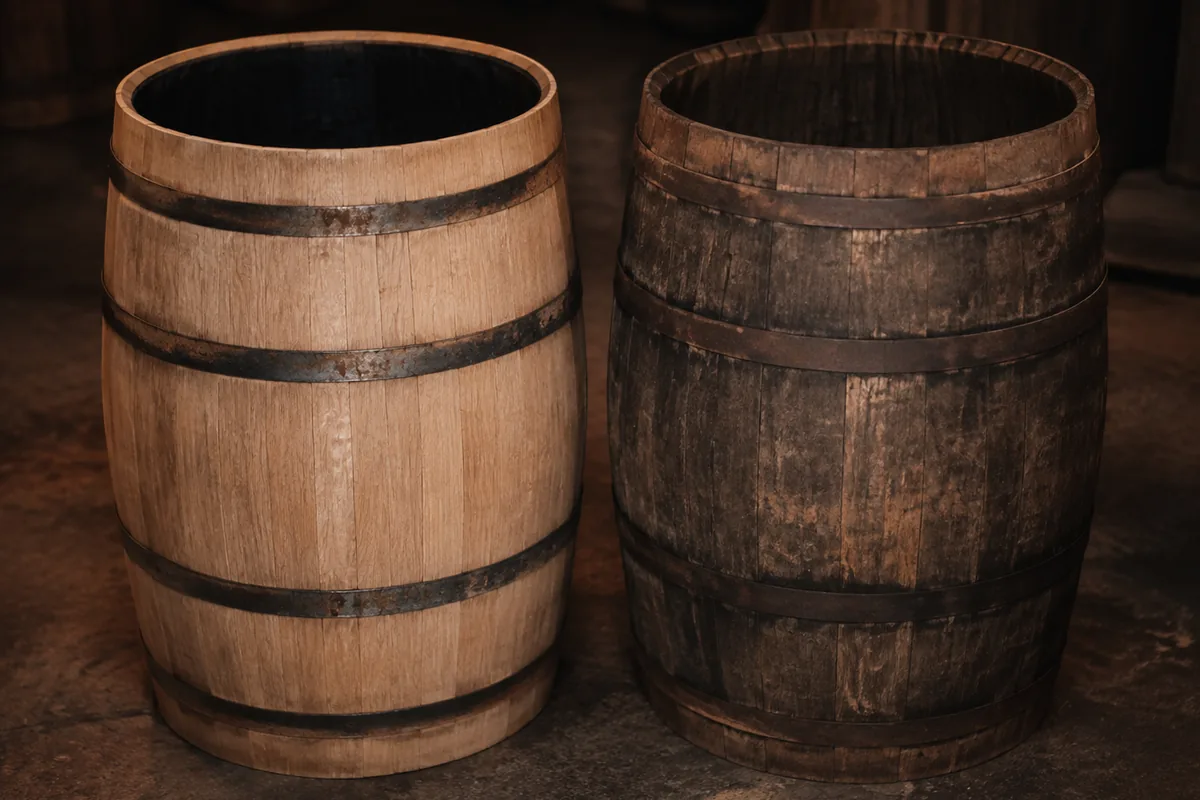
Take the identical mash, distil it to the same proof, and put it in a used oak barrel. The result is not bourbon, and the regulation already has a name waiting for it.
- Bourbon whisky. Not less than 51 percent corn, 160 proof or less, charred new oak barrels. No colouring, flavouring or blending materials.
- Whisky distilled from bourbon mash. The same mash at the same proof, stored in used oak barrels. Those materials are permitted here.
- Straight corn whisky. Not less than 80 percent corn, stored at 125 degrees of proof or less in used or uncharred new oak barrels for a minimum of 2 years.
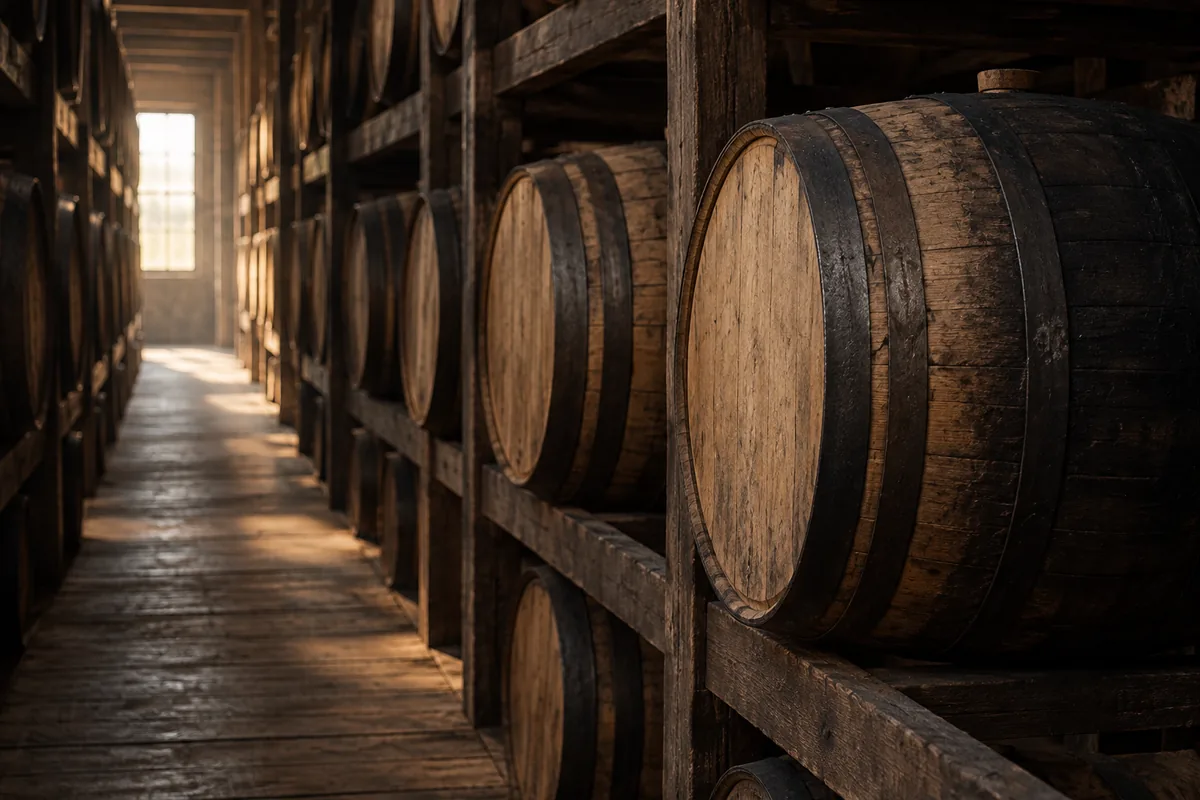
Read down that list and the new charred barrel stops looking like tradition, because it is the line the designation turns on.
The standard says charred and new and stops. What the char and the fresh wood then do to a spirit is a separate subject, and new charred oak leaves a signature that a tasting note can name and a standard of identity cannot.
Does a bourbon have to come from Kentucky?
Two geographic rules govern the word and the places that may sit beside it. Neither of them mentions the state most readers would guess.
- The word bourbon
- May not describe any whisky not distilled and aged in the United States.
- A place in the designation
- Only where the distillation and any required aging took place there.
- What may move
- Blending and bottling need not have happened in that place, State or region.
- What is never named
- No State is required by the standard, Kentucky included.
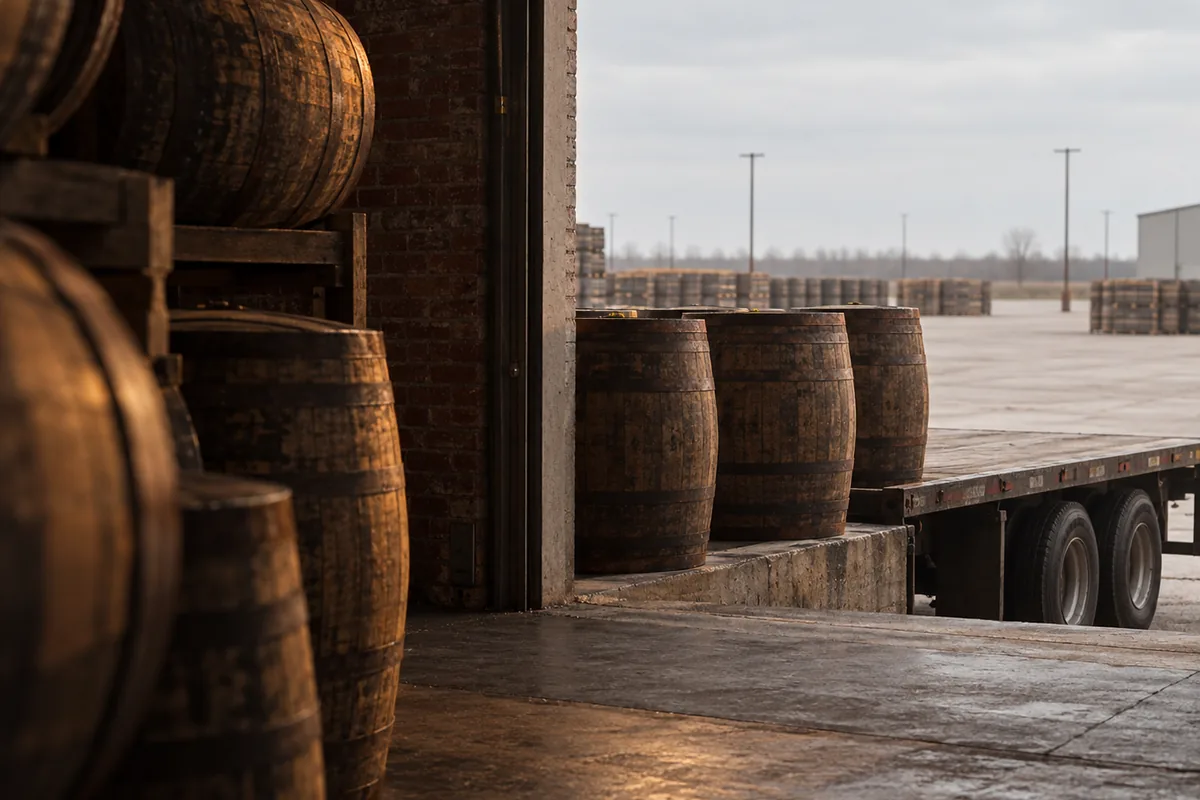
Reading a state name on the front
The regulation gives its own worked example. A New York Bourbon Whisky must be distilled and aged in the State of New York.
So a state on a bourbon label is a claim about two things, distillation and ageing, and about nothing else, so the blending and the bottling may have happened anywhere.
The national rule is the stricter one in practice. It reaches the word itself, and it turns on where the whisky was distilled and aged rather than where it was bottled or sold.
Both rules turn on where a whisky was distilled and aged, and neither is checkable from the glass. Where a label claim has to be traced back to the text that makes it, that is laws and labels.
What does the word straight add to a bourbon?
Straight is a further designation of a type rather than a type of its own, and attaching it is optional.
Straight bourbon whisky requires the same mash and the same distillation proof, stored in charred new oak barrels at 125 degrees of proof or less for a minimum of 2 years.
What straight does not add
On some whiskies, straight also removes the right to use colouring, flavouring and blending materials. On a bourbon it cannot, because bourbon was already forbidden them.
So on a bourbon the word adds the two years and nothing else. A bourbon without it has not necessarily had anything added, because there was nothing it was allowed to add.
Two years is a storage period rather than a claim about the whisky's age. What a bottle spent in wood and what strength it reaches you at are separate questions, and the standard fixes neither.
Why is a Scotch on the same shelf not defined the same way?
One last piece of the table explains why bourbon is defined the way it is, and it is the part covering whiskies the United States does not define at all.
Scotch, Irish and Canada's own whisky appear in a separate table as distinctive products. Each is defined by deference: a distinctive product of that country, manufactured there in compliance with that country's own laws regulating its manufacture for home consumption.
What that difference means on a shelf
So the regulation writes its own types in detail and its foreign ones by reference. A Scotch sold as a blend is whatever the United Kingdom says it is, and Irish whiskey whatever Ireland says.
There is also a protection that runs the other way. If a whisky is made partly from whisky distilled in a country other than the one its type designation indicates, the label must state the percentage and name the country that whisky came from.
So the shelf holds two kinds of definition side by side, and only one of them is written out where an American reader can check it.
Common questions
- What makes a whiskey a bourbon?
- A fermented mash of not less than 51 percent corn, distilled at 160 degrees of proof or less, and stored in charred new oak barrels filled at 125 degrees of proof or less. Neutral spirits and added colouring or flavouring are not permitted.
- How long must bourbon be aged?
- The bourbon type standard sets no minimum period at all. The minimum of 2 years that people quote belongs to straight bourbon whisky, which is a separate row of the same table.
- Does bourbon have to be made in Kentucky?
- No regulation names Kentucky. The word bourbon may not describe any whisky not distilled and aged in the United States, and a State name in the designation means it was distilled and aged in that State.
- What happens if bourbon mash goes into a used barrel?
- It is not bourbon. The regulation gives that case its own designation, whisky distilled from bourbon mash, which is the same mash at the same distillation proof stored in used oak barrels.
- What does straight add to a bourbon?
- A minimum of 2 years in charred new oak barrels. On other whiskies straight also removes the right to use colouring and flavouring materials, but bourbon was never allowed those anyway.
Sources
-
27 CFR 5.143, Standards of identity for whisky, Alcohol and Tobacco Tax and Trade Bureau
Accessed 4 September 2026.
More in Spirits
-
 American single malt whisky
01
What is American single malt whisky, and what does it guarantee?
-
 Australian whisky
02
How is Australian whisky defined, and by which law?
-
 Black rum
03
What is black rum, and does the colour mean anything?
-
 Blended American whiskey
04
What is blended American whiskey, and how much of it is whiskey?
-
 Blended Irish whiskey
05
Blended Irish whiskey: which word counts the distilleries?
-
 Blended Scotch
06
Blended Scotch: what is in it, and why does the recipe change?