
Spirits
Corn whiskey: the American whisky that does not need a barrel
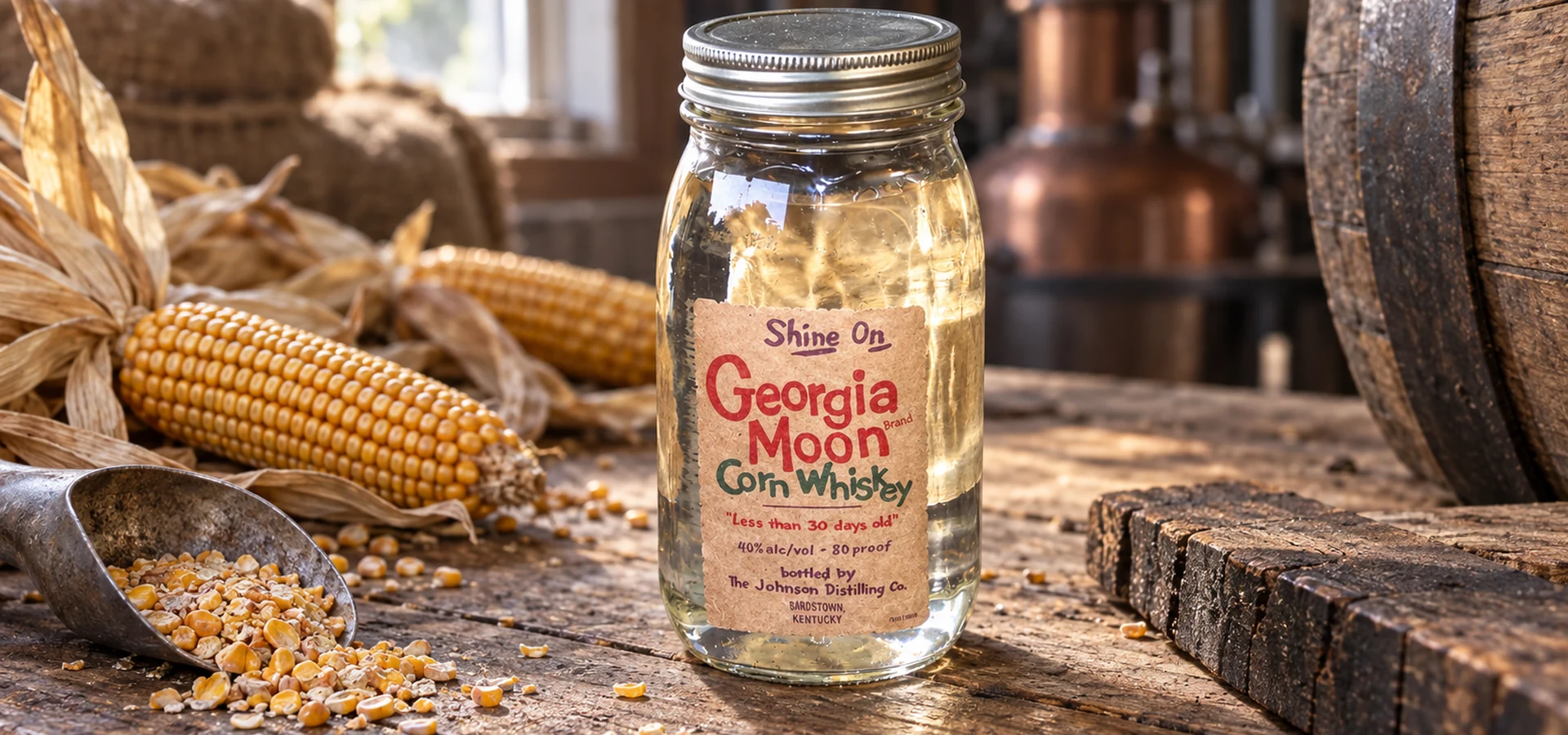
Corn whiskey is an American whisky designation built on a fermented mash of not less than 80 percent corn, distilled at 160 degrees of proof or less and bottled at not less than 40 percent alcohol by volume. It is also the only American whisky designation whose barrel is conditional, because storage is required only where an age is claimed on the label.
At a glance
- Legal category
- Standard of identity under 27 CFR 5.143. Not less than 80 % corn, distilled at 160 proof or less, stored only if age is claimed, bottled at not less than 40 % ABV.
- Minimum strength
- 40 percent ABV
- Also called
- Corn whisky
What has to be true before a bottle can say corn whiskey?
Four things have to be true before a bottle can carry the words, and the first of them is the strictest grain requirement in the American whisky table.
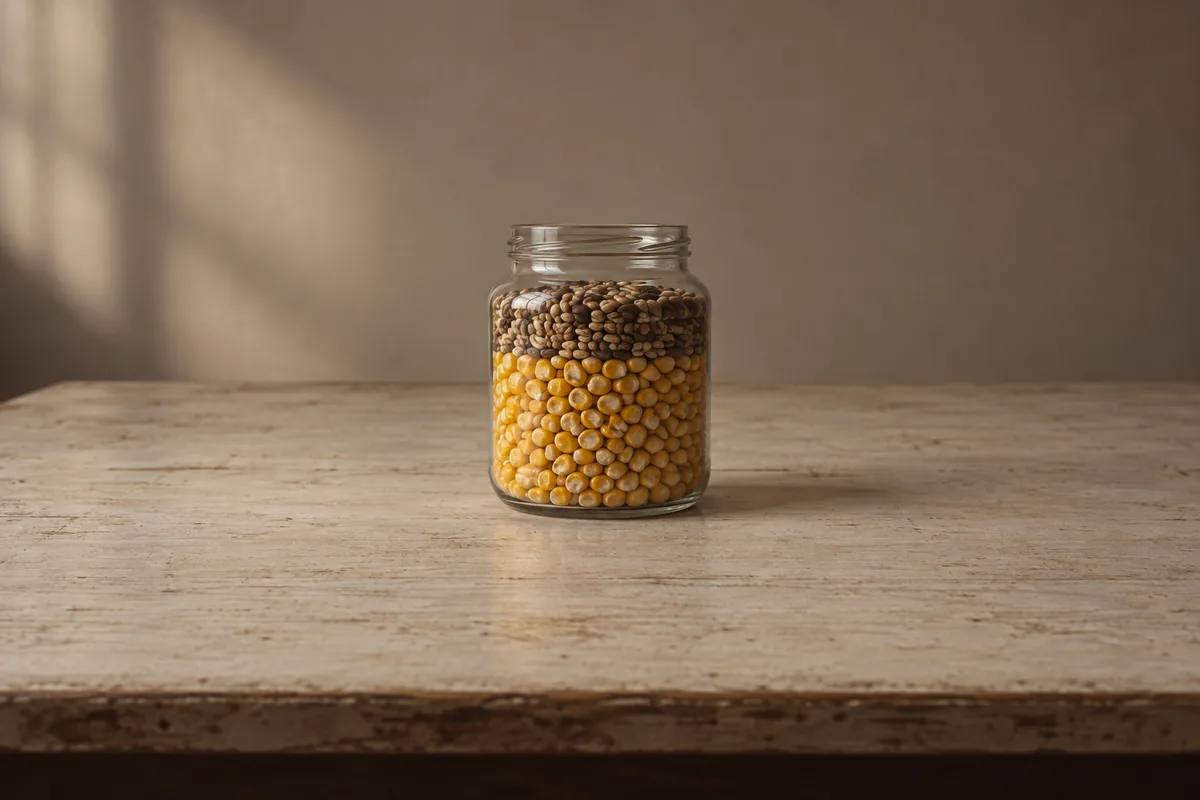
Corn whisky is made from a fermented mash of not less than 80 percent corn. Bourbon, rye, wheat, malt and rye malt whisky each set their own named grain at not less than 51 percent.
- Fermented mash
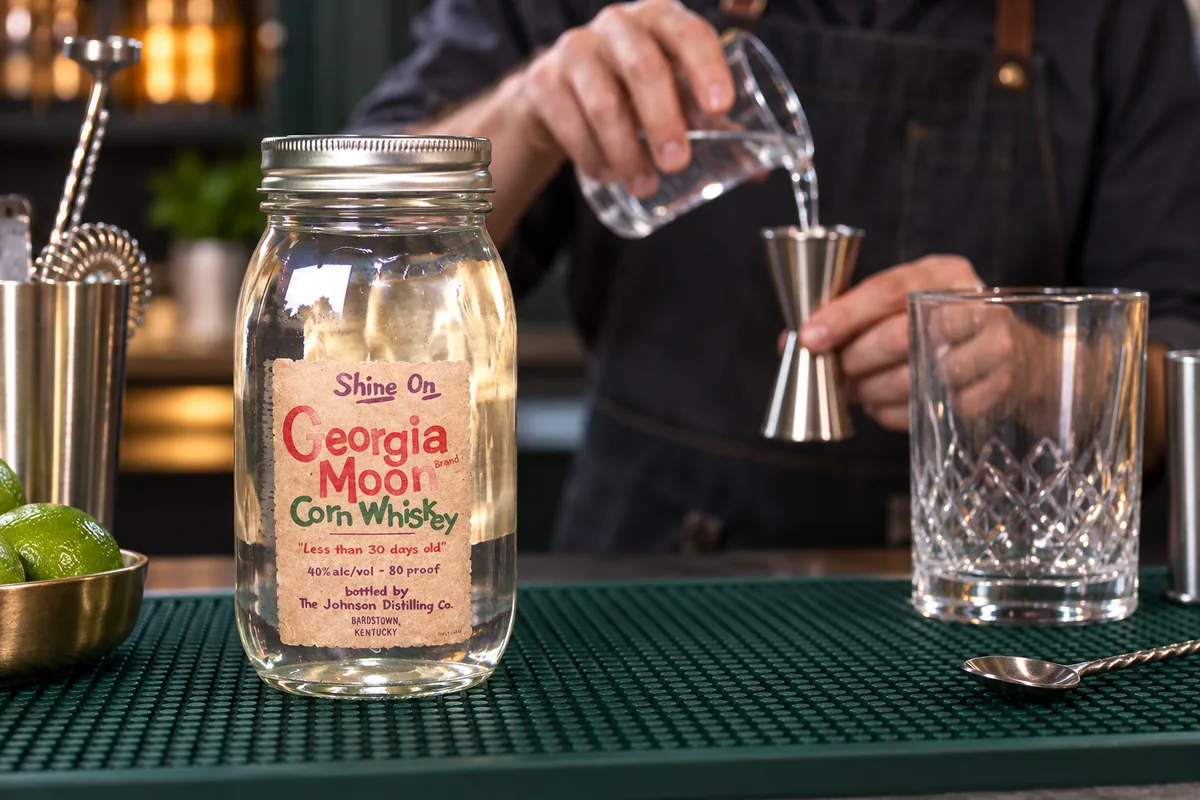
- Not less than 80 % corn
- Distilled at
- 160 proof or less
- Bottled at
- Not less than 40 % ABV
- Neutral spirits
- Not permitted
Two of those numbers do the same work here as they do everywhere else. The 160 proof ceiling keeps the spirit a whisky rather than a light whisky, and the 40 percent floor is the figure printed on the bottle.
The 80 percent is the one that catches people out, because it clears bourbon's 51 percent floor with room to spare and the grain on its own cannot separate the two designations.
What the standard leaves open is the remaining fifth of the mash, which may be any grain at all.
Why does the standard leave the barrel out?
Read down the storage column of the federal whisky table and every entry names a barrel. One of them names a condition instead.
For corn whisky the requirement is required only if age is claimed on the label. If the spirit is stored, it must be stored at 125 degrees of proof or less in used or uncharred new oak barrels.
The trigger is worth reading twice, because it is not in the liquid.
A producer brings the storage requirement into play by making a claim on the label, rather than by deciding what to do with the spirit.
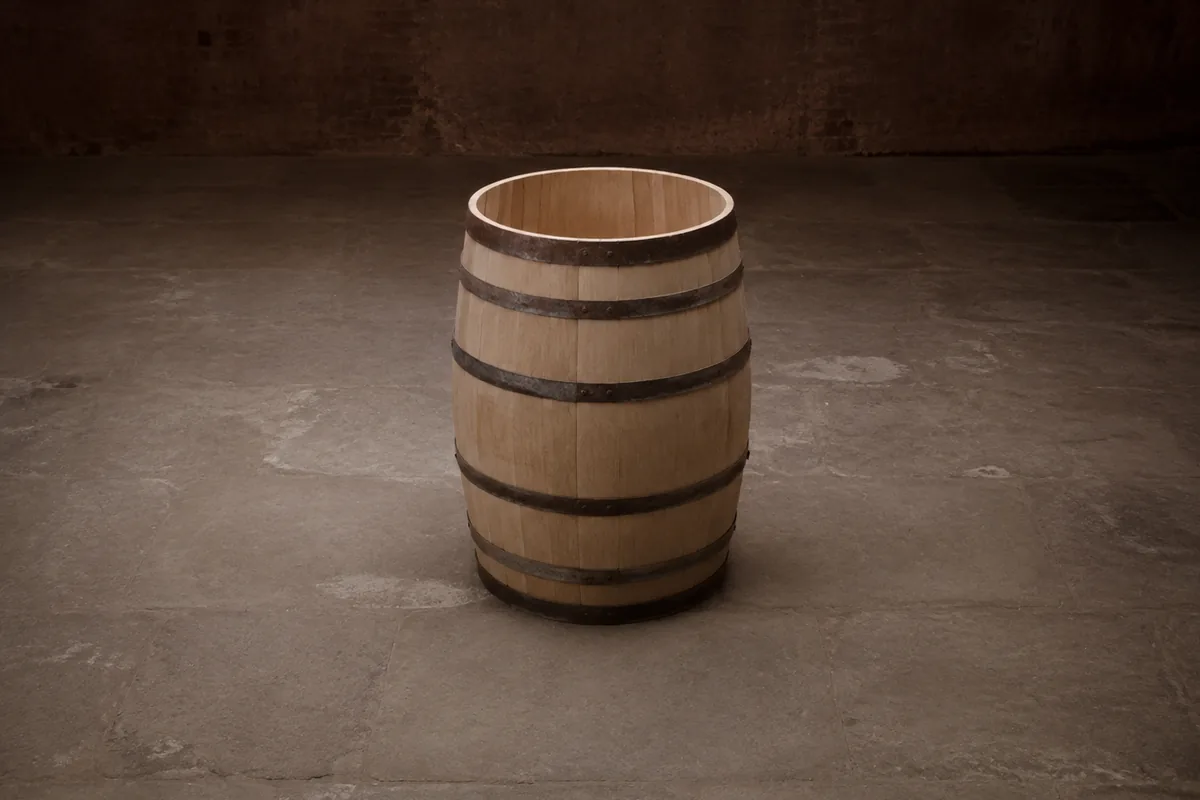
The rest of the column is unambiguous by comparison. Bourbon and the other named grain whiskies take charred new oak, whisky distilled from a named mash takes used oak, light whisky takes used or uncharred new oak, and the general class whisky takes oak barrels with no minimum time at all.
Corn whisky is the one place where that column stops describing the spirit and starts describing the label.
The cell does forbid something, and it is the wood a reader is most likely to assume. Charred new oak is never permitted, because corn whisky may use only used or uncharred new barrels.
Conditional is not the same as prohibited, and a great deal of corn whiskey has been in wood.
What does the colour of a corn whiskey tell you?
Most whisky drinkers read colour as a record of time in a barrel, and on most designations that reading is roughly safe.
A clear corn whiskey is already accounted for, because the barrel was optional and nobody used one. An amber one is the case that still needs explaining.
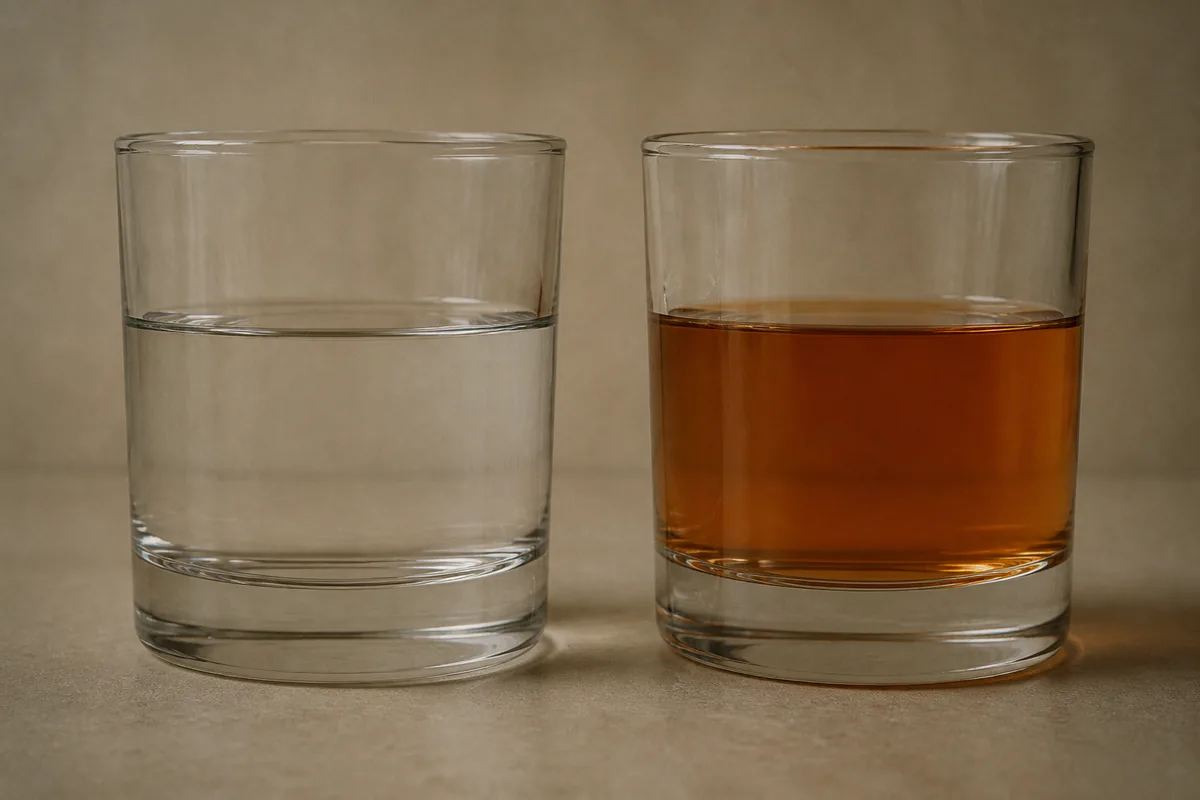
The federal table permits harmless colouring, flavouring and blending materials in corn whisky. They may total up to 2.5 percent by volume of the finished product.
What those materials can be is broader than caramel alone. The list runs to sugar, fruit juices, wine, and infusion of oak chips when approved by the Administrator.
No provision requires the label to say that any of them were used.
- Time in used or uncharred new oak. The explanation a reader assumes, and the only one that involves a barrel.
- Permitted colouring, flavouring or blending materials. Up to 2.5 percent by volume, added at the bottling stage, disclosed nowhere.
- Nothing at all. The clear bottling that the conditional storage cell makes possible.
An amber corn whiskey may have spent years in used oak, may have been coloured on the bottling line, or may be both, and the glass cannot tell a buyer which.
The permission itself is not special to this designation, and rye whiskey carries it too. What is unusual here is that optional storage removes the other explanation, so nothing is left to reason from.
The reading to fall back on is the age statement, which the label either carries or does not.
How does the same mash end up as bourbon instead?
A mash of 80 percent corn already satisfies bourbon's floor of 51 percent. The grain is not what is in dispute between these two designations.
Both come off the still at 160 degrees of proof or less, and both enter the barrel at 125 degrees of proof or less when they are stored at all.
| Standard | Corn whisky | Straight corn whisky | Bourbon whisky |
|---|---|---|---|
| Fermented mash | Not less than 80 % corn | Not less than 80 % corn | Not less than 51 % corn |
| Distilled at | 160 proof or less | 160 proof or less | 160 proof or less |
| Stored | Only if age is claimed; used or uncharred new oak at 125 proof or less | Used or uncharred new oak at 125 proof or less, minimum 2 years | Charred new oak at 125 proof or less |
| Colouring, flavouring, blending materials | Permitted | Not permitted | Not permitted |
The decision is made in the warehouse rather than at the still, where charred new oak makes it bourbon and used or uncharred new oak makes it corn whisky.
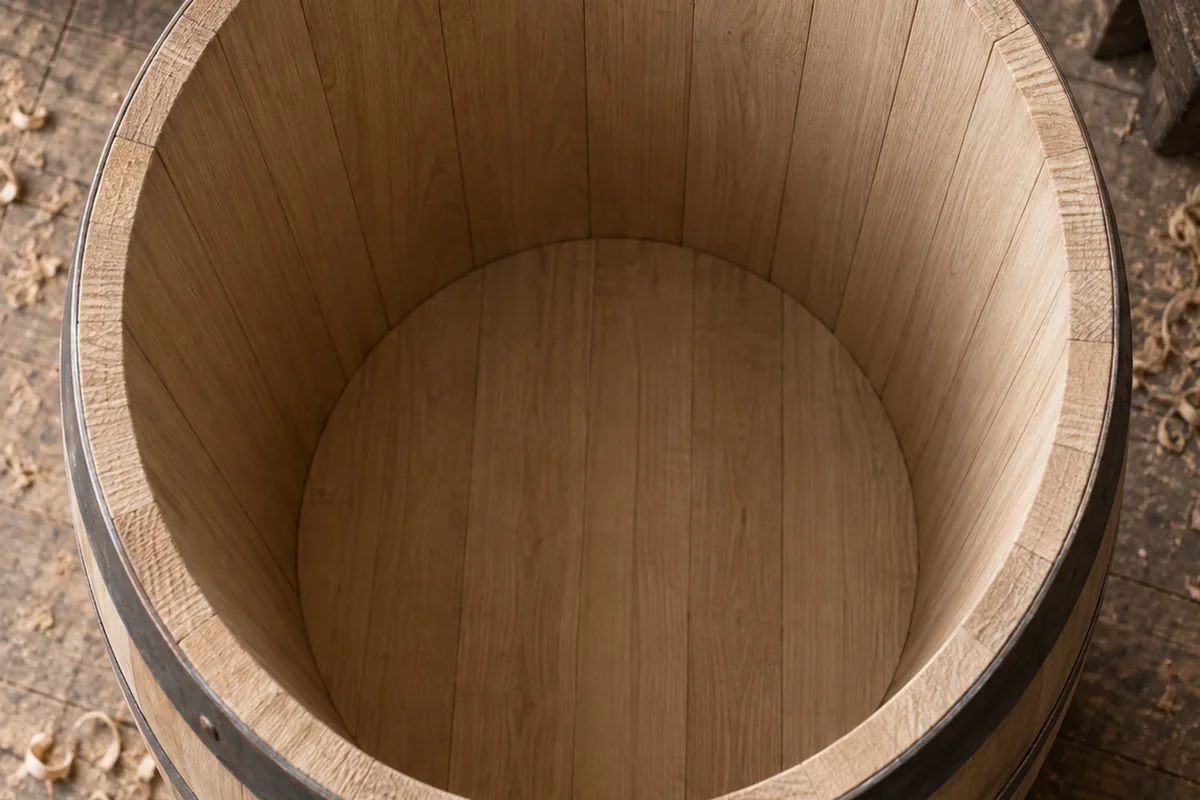
One word moves both of the columns where the three differ. Straight corn whisky must spend a minimum of two years at 125 degrees of proof or less in used or uncharred new oak.
It also loses the permission for added materials, which reads no for the straight form and yes without it.
So the word buys a floor under the time in wood and a prohibition on the additions, and between them they make the colour readable again.
What can the label say about age?
For all domestic or foreign whiskies aged less than four years, an age statement and a percentage of types of whisky statement are required on the label, unless the whisky is labelled bottled in bond.
That much a corn whiskey shares with every other whisky. The second provision, 27 CFR 5.74(b)(4), names it directly.
American whisky stored in reused oak barrels normally gives the period as stored so many years in reused cooperage, in place of an age in years. Corn whisky is excepted from that wording by name, alongside light whisky, American single malt whisky and straight American single malt whisky.
The exception follows from the storage cell, because used barrels are the normal case here rather than a fallback, so a corn whiskey states its age in years like any other whisky.
One case the rules do not reach is the spirit never stored in oak at all, which the conditional storage cell makes a real possibility here.
So silence about age on a corn whiskey is not evidence of youth, or of anything else.
Which words on a clear whiskey bottle are not designations?
The largest words on a bottle of clear whiskey are usually the ones with the least behind them. Moonshine, white whiskey, white dog and unaged whiskey appear nowhere among the federal whisky designations in 27 CFR 5.143.
- Moonshine
- Not a designation. Historically it meant spirit made outside the tax system, which is the one thing a bottle on a shelf cannot be.
- White whiskey
- Not a designation, despite reading like one. It describes the colour, and colour is not a class or type.
- White dog
- Not a designation. A distillery word for new spirit off the still that has reached the front of bottles.
- Unaged whiskey
- Not a designation. It sounds regulatory because age statements are, but no entry in the table carries the phrase.
What such a bottle usually is, in regulatory terms, is corn whisky, because that is the designation whose storage requirement is conditional.
None of this makes the words improper. A label statement may not be misleading irrespective of falsity, which is 27 CFR 5.122 and the rule a phrase with no standard of identity still answers to.
The move that works is to read past the front of the bottle and find the class and type statement, which is the part with a table behind it.
How much alcohol is in a corn whiskey compared with an aged whiskey?
A clear spirit reads as a lighter one. On this designation that instinct is worth checking against the standard.
Corn whisky must be bottled at not less than 40 percent alcohol by volume, which is the same floor every American whisky designation carries.
Time in a barrel changes strength in the warehouse rather than at the bottling line. A corn whiskey that never saw wood is not a weaker pour for it.
The floor is a minimum rather than a description, so the printed figure is the one to read.
Common questions
- Is corn whiskey the same thing as moonshine?
- Moonshine is not a federal designation and appears nowhere in the whisky standards, so a bottle sold under that word is sold as something else underneath it. That something else is often corn whisky, because it is the designation whose storage requirement is conditional and so the one a clear whiskey can sit under.
- Does corn whiskey have to be aged?
- No. The storage entry for corn whisky requires a barrel only if an age is claimed on the label. If the spirit is stored, it must be stored at 125 degrees of proof or less in used or uncharred new oak barrels, and never in charred new oak.
- Is corn whiskey just bourbon with more corn?
- No, because 80 percent corn already clears bourbon's floor of 51 percent, so the grain is the part the two designations agree on. The barrel separates them: charred new oak makes the spirit bourbon, while used or uncharred new oak makes it corn whisky.
Sources
-
27 CFR 5.122, Misleading statements or representations, Legal Information Institute
Accessed 6 September 2026.
-
27 CFR 5.155, Harmless coloring, flavoring, and blending materials, Legal Information Institute
Accessed 6 September 2026.
-
27 CFR 5.74, Statements of age, storage, and percentage
Accessed 4 September 2026.
-
Code of Federal Regulations, Title 27, sections 5.143 and 5.74
Accessed 5 September 2026.
More in Spirits
-
 American single malt whisky
01
What is American single malt whisky, and what does it guarantee?
-
 Australian whisky
02
How is Australian whisky defined, and by which law?
-
 Black rum
03
What is black rum, and does the colour mean anything?
-
 Blended American whiskey
04
What is blended American whiskey, and how much of it is whiskey?
-
 Blended Irish whiskey
05
Blended Irish whiskey: which word counts the distilleries?
-
 Blended Scotch
06
Blended Scotch: what is in it, and why does the recipe change?