
Spirits
What is rye whiskey, and what may it contain that bourbon may not?
Rye whiskey is built to bourbon's numbers: the same mash threshold, the same distillation ceiling, the same charred new oak. The two designations part on one column of the regulation's table, the column that says what may be added afterwards.
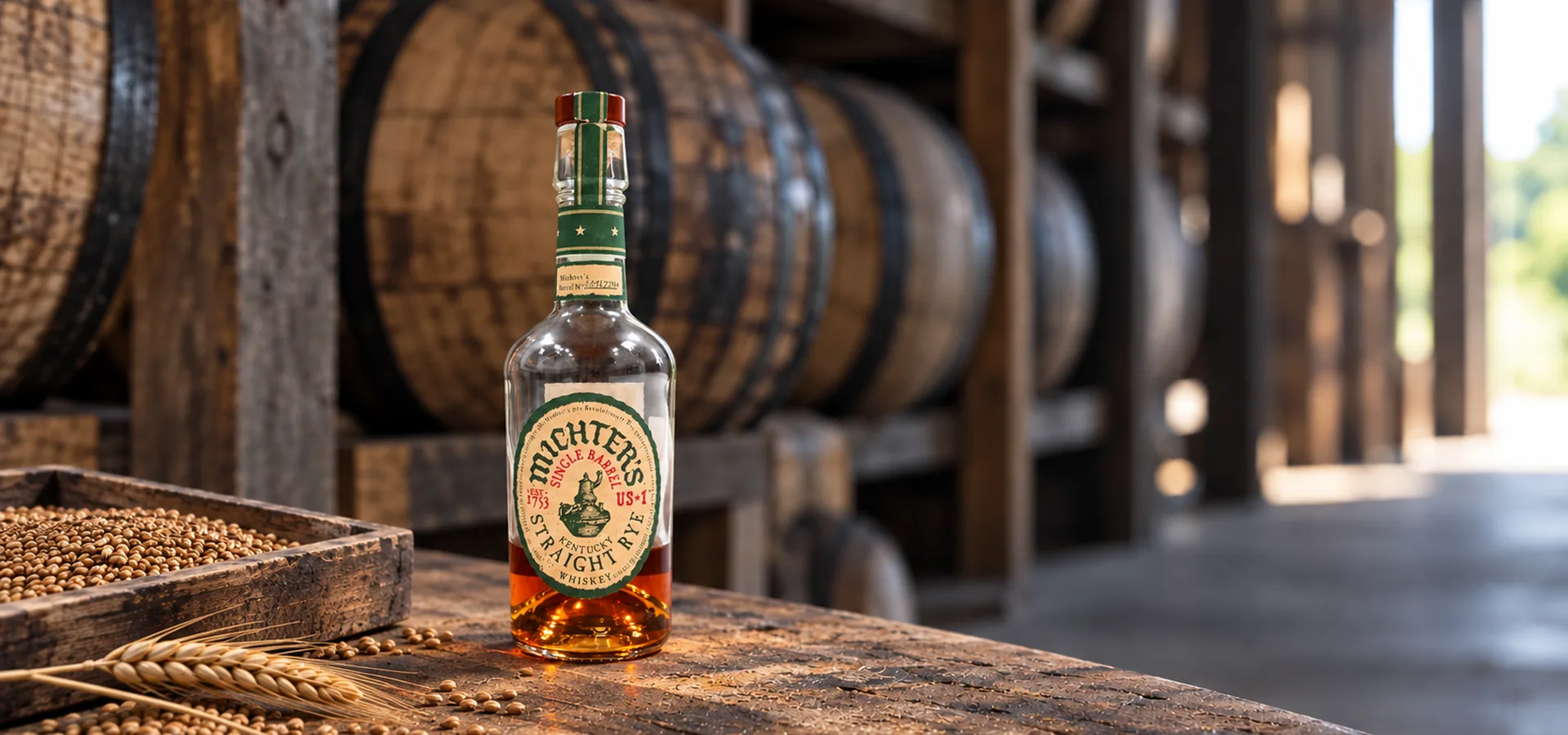
At a glance
- Legal category
- Rye Whisky, 27 CFR 5.143 Table 1
- Minimum strength
- 40 percent ABV
What does the word rye fix on an American whiskey label?
Under the United States standards of identity, the word rye on a label fixes four things and nothing else. Every bottle carrying the word has met all four.
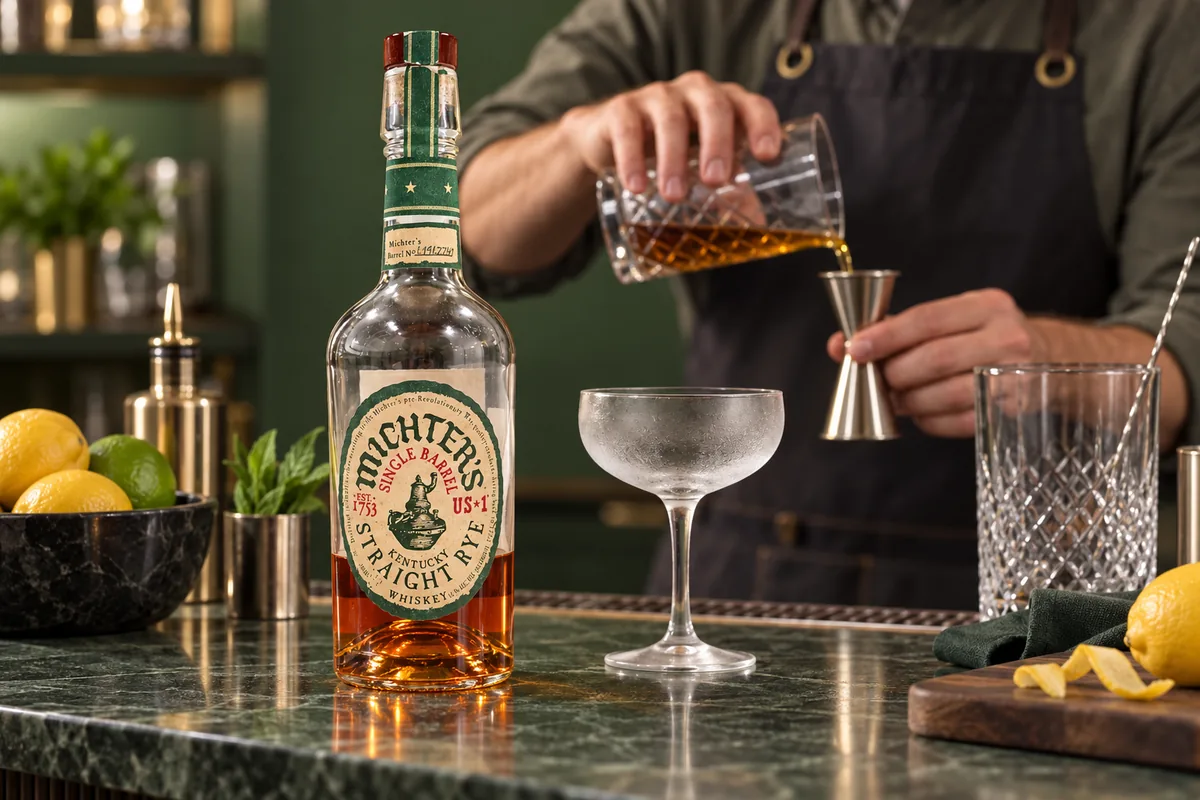
- The mash
- A fermented mash of not less than 51 percent rye.
- The distillation ceiling
- Distilled at 160 proof or less, which is 80 percent alcohol by volume.
- The barrel
- Stored in charred new oak barrels, entered at 125 proof or less.
- The bottle
- The class standard behind it requires bottling at not less than 40 percent alcohol by volume.
The two proof numbers do different work. A spirit qualifies as whisky at less than 190 proof, and the rye designation cuts that ceiling to 160.
The word new carries as much weight as the mash percentage, because a rye filled into wood that held something before loses the shorter name.
Two things the word does not fix are worth naming.
It sets no minimum time in the barrel, so a rye whiskey may be days old and still be a rye whiskey. And it says nothing about where the rye was grown.
What may a rye whiskey contain that a bourbon may not?
The bourbon standard is the same four numbers with corn in place of rye. Run down the table's columns and the two designations match on the mash threshold, on the 160 proof ceiling, on the 125 proof entry, and on charred new oak.
Readers who have been told rye is bourbon with a different grain have been told something true about all of that.
The last column is where it stops. The table permits harmless colouring, flavouring and blending materials in the named grain whiskies, and then adds four words: except for bourbon whisky.
| Standard | Rye whisky | Bourbon whisky |
|---|---|---|
| Mash | Not less than 51 percent rye | Not less than 51 percent corn |
| Distillation | 160 proof or less | 160 proof or less |
| Storage | Charred new oak at 125 proof or less | Charred new oak at 125 proof or less |
| Neutral spirits | Not permitted | Not permitted |
| Colouring, flavouring, blending materials | Permitted | Not permitted |
So the familiar comparison runs backwards. On the one standard where the two differ, rye is the permissive designation and bourbon is the restricted one.
A rye label is not required to disclose those materials, which means a bottle can carry them and say nothing.
Neutral spirits are a separate matter and are not permitted in either. The permission is about colouring, flavouring and blending materials, and it closes again the moment one word is added to the name.
What does the word straight add to a rye whiskey?
Straight rye whisky is the same designation with a floor of time under it: charred new oak barrels for a minimum of two years. That is the half of the word most people know.
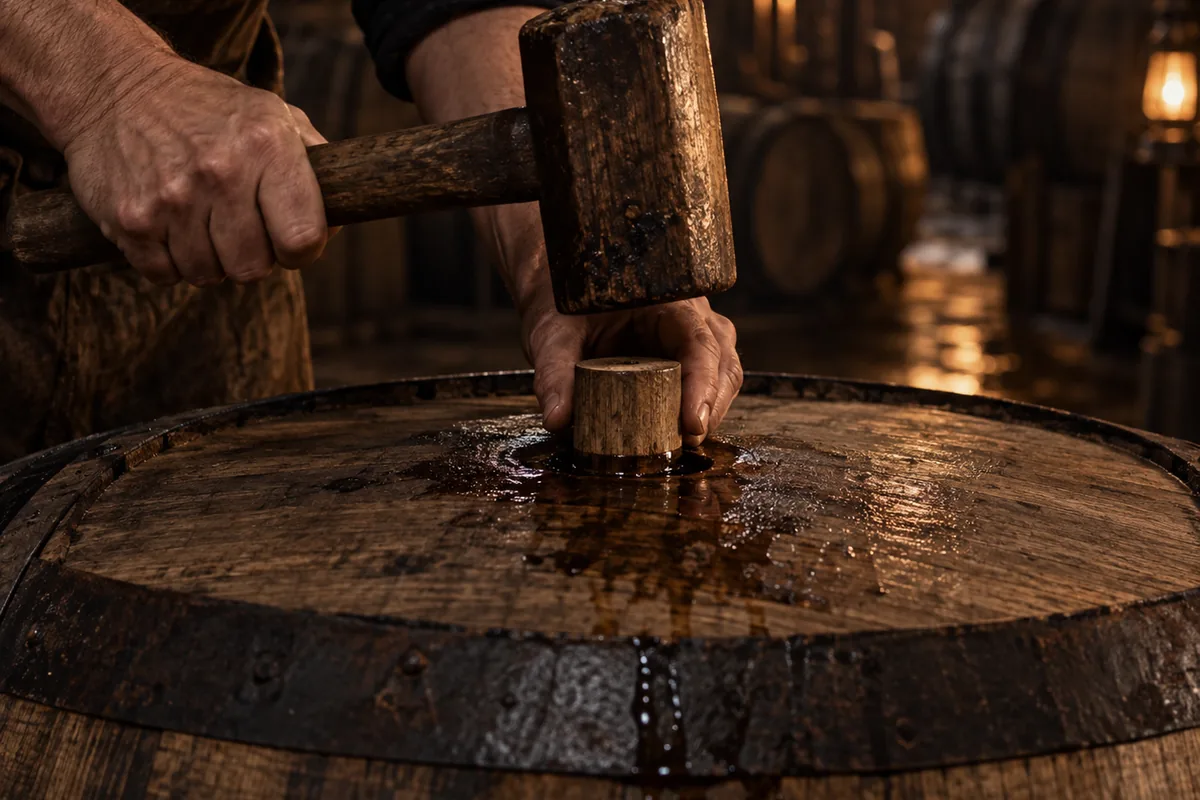
Straight adds two years in wood and removes the permission to add colouring, flavouring or blending materials, and those two changes are the whole of it.
The mash threshold, the distillation ceiling and the barrel entry proof are unchanged. So between a rye and a straight rye, the second is the narrower claim on both counts, and the first tells you less than most shelves imply.
Two years is a floor and not a ceiling, and the standard states no maximum. What a number on the front then means is a separate question about age statements.
What is whisky distilled from rye mash?
Some bottles say whisky distilled from rye mash rather than rye whisky. The longer phrase is required rather than chosen, because the spirit went into a barrel that disqualifies it from the shorter name.
- Used oak barrels. This is the only production standard that differs. The spirit went into wood that had held something before.
- The same mash and the same ceiling. Not less than 51 percent rye, distilled at 160 proof or less. It is the same spirit as a rye whisky up to the point of filling.
- No minimum time. The longer name reports the barrel and not a longer maturation.
So the phrase is a report about wood and not about time.
The designation says nothing about what the barrel held before, and because it sits outside the straight designations, colouring, flavouring and blending materials are permitted in it as they are in rye whisky. A bonded whiskey could never carry this name, since bonding requires the stricter barrel.
How does rye malt whisky differ from rye whisky?
Rye malt whisky is not a fuller description of rye whisky. It is a separate designation, because the standard counts a different grain to the same 51 percent, which means a whisky can meet one and fail the other.
Rye whisky counts rye grain to its threshold. Rye malt whisky counts malted rye grain.
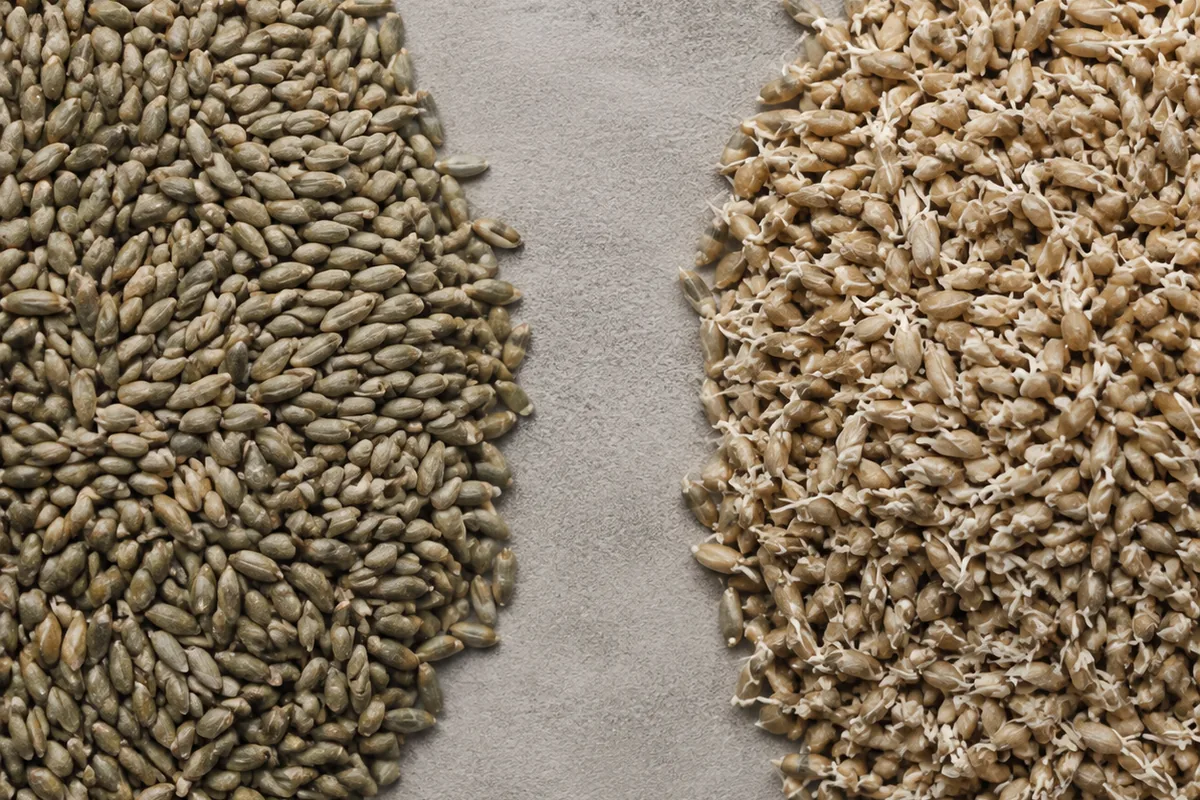
Everything else matches: 160 proof or less, charred new oak entered at 125 proof or less, the same permission on added materials.
So the two names are not degrees of the same thing, and a distiller must choose which threshold to meet before the mash is built. Straight rye malt whisky exists as its own designation too, with the same two year minimum that straight rye carries.
Does a rye whiskey have to be made in the United States?
No. Rye whisky is a distinctive product of the United States, and one distilled elsewhere is permitted so long as its label says so.
The country of origin must appear immediately adjacent to the type designation, or the designation must be preceded by the words American type with the country stated elsewhere on the label, and the regulation gives its own example, which is not the country most readers would guess: Rye Whisky distilled in Sweden.
| Designation | May be produced abroad | What the label must then carry |
|---|---|---|
| Rye whisky | Yes | The country of origin, immediately adjacent to the type designation |
| Light whisky, blended light whisky | No | Not applicable; production is restricted to the United States |
| Whisky distilled from rye mash | No | Not applicable; production is restricted to the United States |
The rule governs the wording on a rye label and not where the grain was grown. A rye distilled in the United States from imported rye is still a rye whisky, and nothing on the label reports the difference.
Which designations carry the word rye without being rye whisky?
Three designations sit beside rye whisky in the same table, and each is put outside it by a different standard.
The first is the one readers meet without noticing. A mash holding less than 51 percent of any single grain cannot be a named grain whisky at all, so it is designated straight whisky with no grain in the name.
A bottle labelled simply straight whiskey is usually telling you that no one grain reached the threshold.
| Designation | What it holds | Why it is not rye whisky |
|---|---|---|
| Straight whisky | A mash of less than 51 percent of any one named grain, aged two years in charred new oak | No grain reached the threshold, so no grain may be named |
| Blended rye whisky | At least 51 percent straight rye on a proof gallon basis, the rest whisky or neutral spirits | Neutral spirits are permitted, and rye whisky permits none |
| Blended straight rye whiskies | Straight rye whiskies from different states, or from one state with materials added | It is a mixture of whiskies rather than a single designation |
The proportions in a blend are measured on a proof gallon basis rather than by volume, which is not the same arithmetic. How the neutral spirits in such a bottle must then be declared belongs to the blended American designations, where those disclosure rules are set out.
Between them, these three and the four designations above account for every way the word rye can reach a label under the standard. The word alone never tells you which one you are holding.
Common questions
- Does rye whiskey have to be 51 percent rye?
- Yes. The rye whisky designation requires a fermented mash of not less than 51 percent rye. The standard fixes a floor and no ceiling, so a bottle may hold considerably more and the label reports nothing about it.
- Is rye whiskey just bourbon made with rye?
- On the numbers, almost. Both require a mash of not less than 51 percent of their named grain, distillation at 160 proof or less, and charred new oak entered at 125 proof or less. They differ on one standard: harmless colouring, flavouring and blending materials are permitted in rye whisky and the regulation excepts bourbon whisky alone from that permission.
- What does straight rye whiskey mean?
- It means the whisky met the rye standard, spent a minimum of two years in charred new oak, and contains no harmless colouring, flavouring or blending materials. Those two changes are the entire difference from rye whisky.
- What is whiskey distilled from rye mash?
- The same spirit as rye whisky, from a mash of not less than 51 percent rye distilled at 160 proof or less, but stored in used oak barrels rather than charred new ones. The longer name is required by the standard, and it carries no minimum time in wood.
- Can rye whiskey be made outside the United States?
- Yes. Rye whisky is a distinctive product of the United States, so one distilled elsewhere must state the country of origin immediately adjacent to the type designation, or be preceded by the words American type with the country shown elsewhere. The regulation's own example is Rye Whisky distilled in Sweden.
Sources
-
27 CFR 5.143, Standards of identity for whisky, Alcohol and Tobacco Tax and Trade Bureau
Accessed 4 September 2026.
More in Spirits
-
 American single malt whisky
01
What is American single malt whisky, and what does it guarantee?
-
 Australian whisky
02
How is Australian whisky defined, and by which law?
-
 Black rum
03
What is black rum, and does the colour mean anything?
-
 Blended American whiskey
04
What is blended American whiskey, and how much of it is whiskey?
-
 Blended Irish whiskey
05
Blended Irish whiskey: which word counts the distilleries?
-
 Blended Scotch
06
Blended Scotch: what is in it, and why does the recipe change?