
Spirits
Whiskey: What the Word Guarantees Anywhere in the World
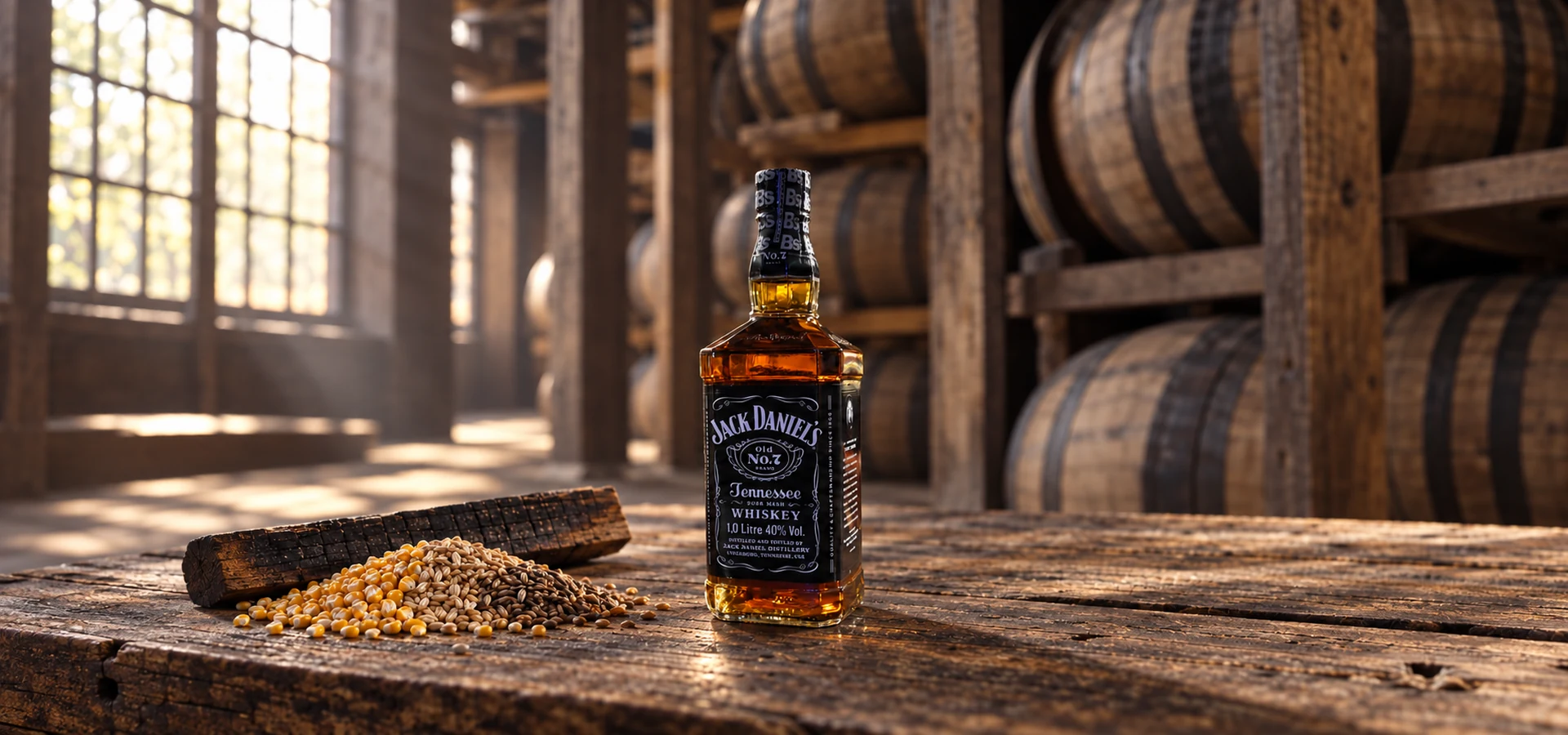
Whiskey is a spirit distilled from cereals and matured in wooden casks, and whisky is the same word spelled differently. No international standard defines it, so the jurisdiction on the label decides how long it sat in wood, what the wood was, and whether anything could be added to it.
At a glance
- Legal category
- No single global standard; each producing jurisdiction sets its own requirements
- Typical strength
- 40 to 46 percent ABV
- Also called
- Whisky, Grain spirit
- Shared shape
- Cereal, yeast, distillation below a ceiling, wooden casks
- Minimum strength
- 40 percent alcohol by volume in every rulebook compared
- Widest divergence
- Three years in wood, or none, depending on jurisdiction
What is whiskey, and is there one definition of it?
Whiskey is a spirit distilled from cereals and matured in wooden casks. That much every rulebook in the world agrees on.
The common character shared by every whiskey is distillation from cereals in a way that retains the aroma and flavour of the raw materials, together with years of maturation in wooden casks. That sentence is close to a paraphrase of how one national authority puts it.
- Cereal, yeast, still, wood
- Grain is mashed and fermented, the wash is distilled below the strength at which it would lose its character, and the spirit goes into wooden casks.
- No global rulebook
- There is no international standard of identity for whiskey. Each producing country writes its own and they disagree in ways a buyer can feel.
- Read the jurisdiction
- Scotch, Irish, Canadian and Japanese are not styles so much as addresses. So is bourbon, which names a set of American requirements rather than a region you could visit.
No single global standard defines whiskey, because each producing jurisdiction writes its own rule and those rules do not agree on time, wood or additives.
That is the fact this entry exists to deliver. Everything readers argue about turns out to be a question of whose rulebook is in force.
A whiskey label therefore states a jurisdiction as well as a category, and the jurisdiction is what tells you which rulebook the bottle was made under.
Read that first and the rest of the label falls into place. The category name is the part with a rulebook behind it, and everything else on the front is a producer talking.
Is it spelled whisky or whiskey, and does it matter?
Both spellings are correct, and neither one tells you anything about the liquid.
The American rulebook states that the word whisky may be spelled as either whisky or whiskey, and it uses the spelling without the letter e throughout its own class and type names. Bourbon whisky, rye whisky, wheat whisky, all without the e that most American labels print.
| Rulebook | Spelling it uses | What it says about the other one |
|---|---|---|
| United States | Whisky, throughout the class and type names | That the word may be spelled either whisky or whiskey |
| Scotland | Scotch Whisky, without the letter e | The protected name fixes the spelling for the designation |
| Canada | Canadian Whisky, without the letter e | The regulation uses the one spelling throughout |
| Ireland | Irish Whiskey, with the letter e, as the customary term | The protected name covers Irish Whisky as well, in one registration |
The extra letter has a documented origin. The Irish state's own specification records that Dublin distillers, intent on forging their uniqueness among other whiskies from Scotland and provincial Ireland, introduced the idea of spelling their whiskey with an e.
That was a commercial gesture rather than a description of a different product, which is why no rulebook has ever needed to define the letter.
No rulebook attaches a production, maturation or strength requirement to the whiskey spelling, so the letter describes a house habit and a designation rather than anything in the glass.
The plural follows whichever singular you use, giving whiskies or whiskeys. The Irish specification names Irish Whiskeys as the customary plural, which is the only place an authority settles it.
One place the letter does cost you something is a search box. A catalogue that stores one spelling literally will return nothing for the other, so search the designation instead and the problem disappears.
What do all whiskies actually have in common?
| Operation | What it does | Why every rulebook requires it |
|---|---|---|
| Mashing cereal | Starch in grain is converted to fermentable sugar | Without cereal it is not whiskey but some other spirit |
| Fermenting with yeast | Sugar becomes alcohol, and the yeast leaves its own compounds behind | It is where a great deal of the eventual aroma is created |
| Distilling below a ceiling | Concentrates the alcohol while keeping the character of the grain | Distil higher and the result is a neutral spirit rather than a whiskey |
| Maturing in wooden casks | Colour, sweetness and complexity come out of the wood over time | How long, and in what wood, is where the rulebooks part company |
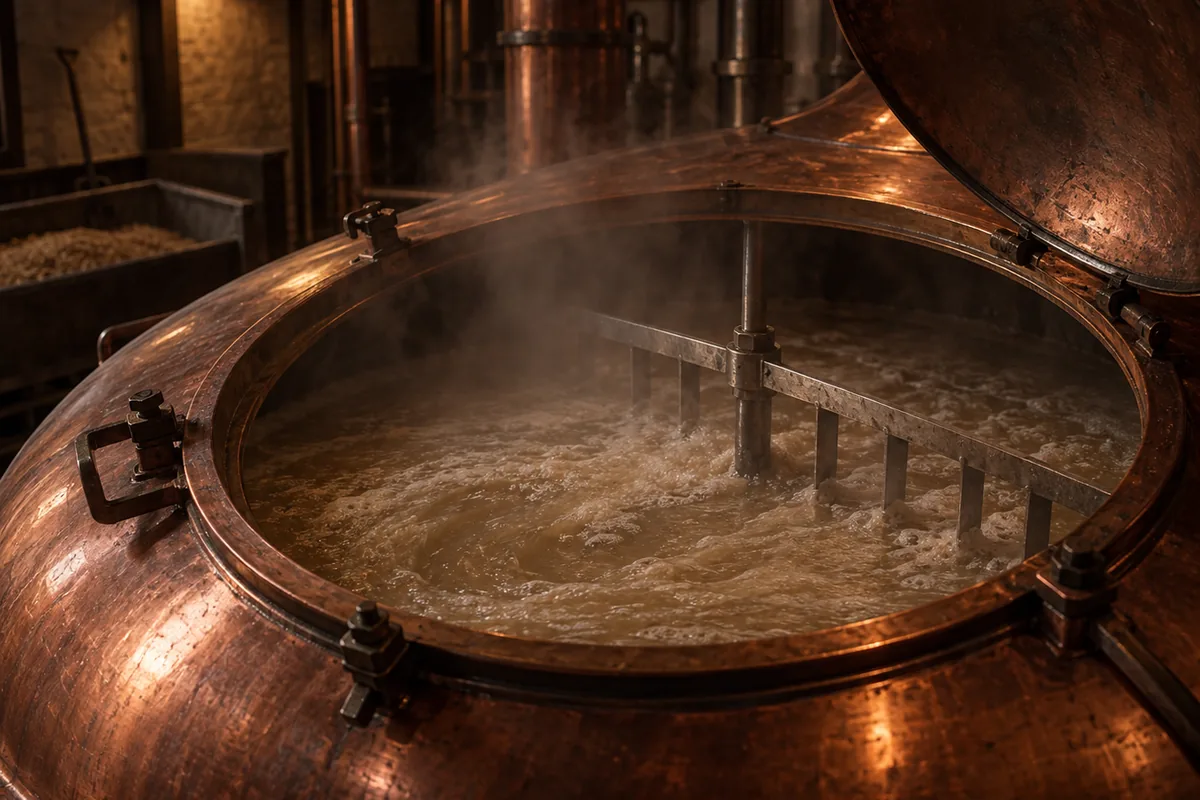
Every whiskey is made by mashing cereal, fermenting it with yeast, distilling the wash below the strength at which it would lose its raw material character, and maturing the spirit in wooden casks.
Four operations, in that order, everywhere.
The distillation ceiling is the operation that keeps a whiskey from becoming a neutral spirit, which is why every jurisdiction sets one. Push a still hard enough and everything that made the grain recognisable is stripped out.
The ceilings are strikingly close. The United States sets it below 95 percent alcohol by volume and the European rule below 94.8 percent, which for practical purposes is the same line drawn twice.
Any requirement beyond those four operations belongs to a particular jurisdiction rather than to whiskey as a whole. That is the doorway into the rest of this entry.
How long must a whiskey spend in wood?
This is where the rulebooks part company, and the distance is larger than most readers expect.
Irish whiskey must be matured for at least three years in wooden casks not exceeding 700 litres, and the Scotch requirement is three years in oak casks of the same maximum size.
- Ireland
- At least three years in wooden casks up to 700 litres
- Scotland
- At least three years in oak casks up to 700 litres
- United States
- No minimum for the class; two years to be called straight
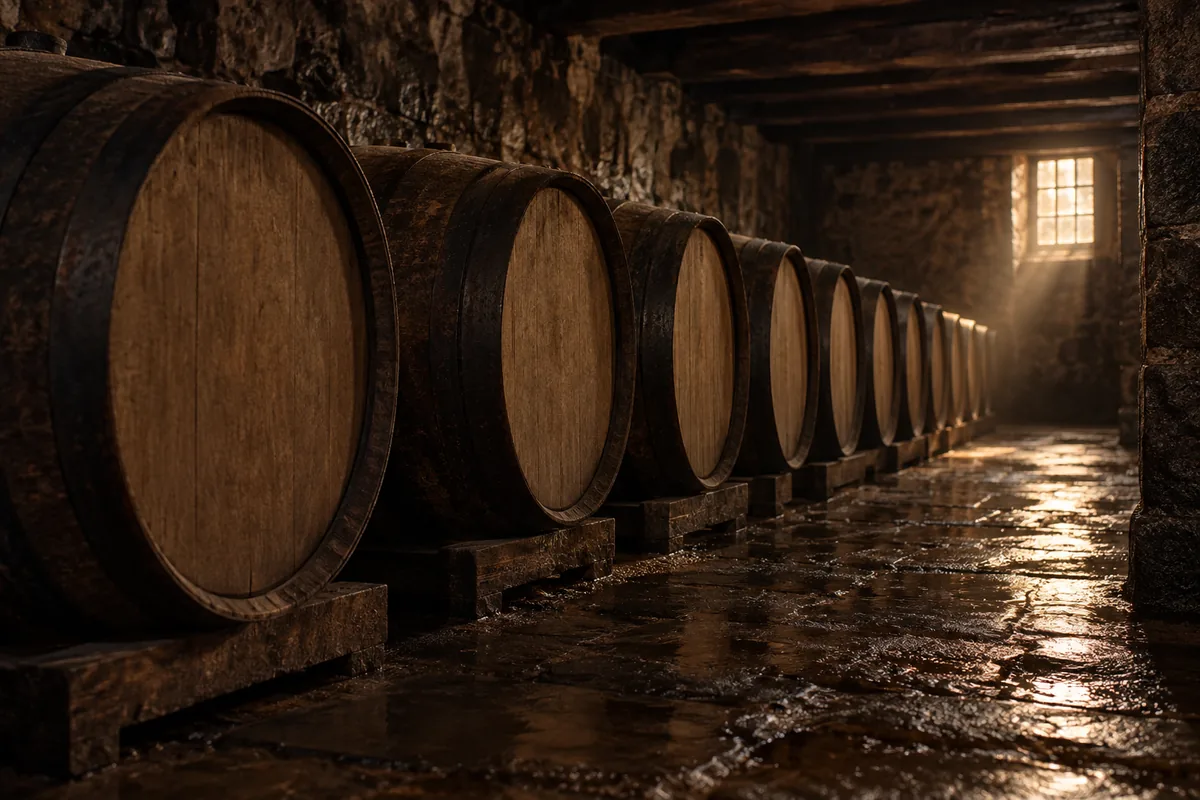
The American class whisky carries no minimum period in wood at all for a whiskey sold under it, and only the straight designation attaches a clock, at two years.
Read that carefully, because it is easy to misread as a loophole. It is not one.
The American rule requires storage in oak and requires the spirit to have the taste and characteristics generally attributed to whisky. It simply declines to put a number of years on it for the class as a whole.
The gap between a whiskey that has met a three year floor and one that has met none is the widest divergence in the whiskey world, and no label word signals it on its own.
What a buyer does about that is short. Look for an age statement, and if there is none, let the jurisdiction tell you what floor was in force.
What may legally be added to a whiskey?
The second real divergence is about what may go into the bottle besides whiskey.
Under the Irish specification only water and plain caramel colouring may be added to the matured distillate, and nothing else. Water for strength, caramel for consistency of colour, and that is the entire list.
- The strict position: Water and plain caramel colouring, nothing more. The colour, aroma and taste have to come from the production process itself.
- The permissive position: Harmless colouring, flavouring or blending materials up to 2.5 percent by volume of the finished product, in whiskies that are not straight.
- The word that closes it: Straight whisky may take none of those additions. The designation excludes them outright rather than limiting them.
American rules permit harmless colouring, flavouring or blending materials totalling not more than 2.5 percent by volume of the finished product to be added to a whiskey other than a straight whisky.
Two and a half percent is a small share and it is not nothing. In a category where producers compete on consistency, it is enough to matter.
A straight whisky may take none of those additions at all, which is why the word straight functions as a purity claim rather than only an age claim.
So the word does two jobs at once. Most buyers only know about the first of them, which is the one about years.
What strength is a whiskey, and what does that number mean?
Every jurisdiction compared here sets the minimum bottling strength for whiskey at 40 percent alcohol by volume, which is the one number the rulebooks agree on exactly.
For a family with no shared definition, that is a striking piece of agreement.
Most whiskey is bottled between 40 and 46 percent alcohol by volume, with cask strength releases running higher because no water has been added back. Above the floor the producer decides, and the decision is about dilution rather than quality.
A standard drink is a fixed amount of alcohol, not a fixed pour. It contains about 14 grams of pure alcohol, which is roughly 44 millilitres of a spirit at 40 percent alcohol by volume. The same measure of a whiskey at 58 percent contains close to half again as much.
A higher strength whiskey is a less diluted one rather than a better one, so water changes it more than it changes a bottling at the floor.
At the floor the producer has already done the diluting for you. Above it, that decision is still yours to make in the glass.
Which grains can a whiskey be made from?
The grain rules diverge in a way that is easy to miss, because both sides use the same short words. Cereal, malt and grain are each doing different work in different places.
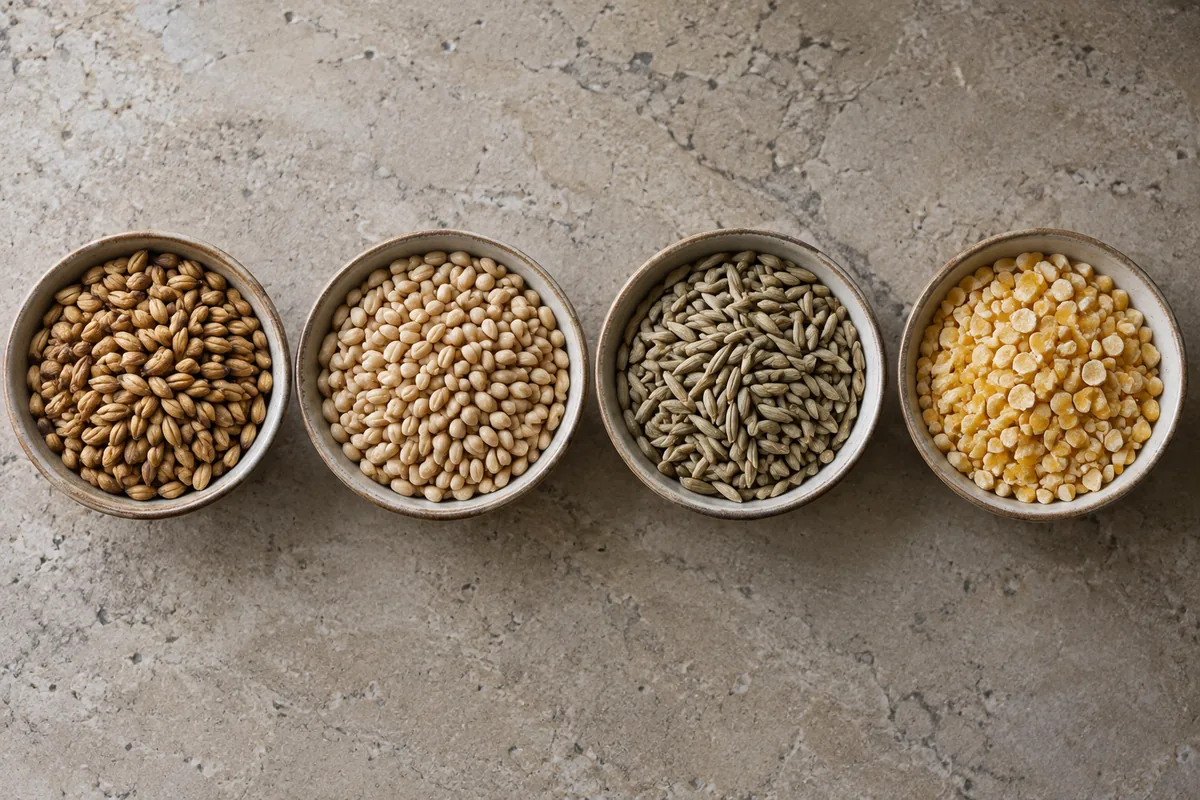
The American rules allow whisky to be made from a fermented mash of any grain, and add named types for mashes of at least 51 percent corn, rye, wheat or malted barley.
Any grain at all, and then a set of named types layered on top of it. That is a permissive base with specific labels attached.
The Irish and European rules require malted cereals, with or without whole grains of unmalted cereals, saccharified by the diastase of the malt. Malt is not one option among several there, it is required as the source of conversion.
| Rulebook | What grain it allows | What it requires of the malt |
|---|---|---|
| United States | A fermented mash of any grain | Malted barley is one named type among several, at 51 percent |
| Ireland and Europe | Malted cereals, with or without whole grains of unmalted cereals | Malt is required as the source of the enzymes that convert the starch |
A grain named on a whiskey label is therefore a claim made under one rulebook, and the same word on a bottle from another jurisdiction may be doing different work.
Malt is the clearest case. In one system it names a mash of at least 51 percent malted barley, and in another the malt is a structural requirement of every whiskey in the country.
How is a whiskey actually made, stage by stage?
Whiskey production runs through malting or milling, mashing, fermentation, distillation and maturation, and each stage adds compounds the next one carries forward.
Nothing is subtracted cleanly along the way. Every stage inherits what the last one left it.
- Malting or milling: Barley is steeped and germinated to develop enzymes, or grain is simply milled. This is where a kiln decides whether smoke enters the picture at all.
- Mashing: Hot water and enzymes turn starch into fermentable sugar. Get the temperatures wrong and the yield falls before anything has been made.
- Fermentation: Yeast turns sugar into alcohol and leaves its own aromatic compounds behind. Longer fermentations generally leave more of them.
- Distillation and the cut: The wash is distilled below the legal ceiling, and the distiller decides which part of the run to keep. That decision is made every single time.
- Maturation: The spirit sits in wooden casks and takes colour, sweetness and complexity out of the wood while some of it evaporates away.
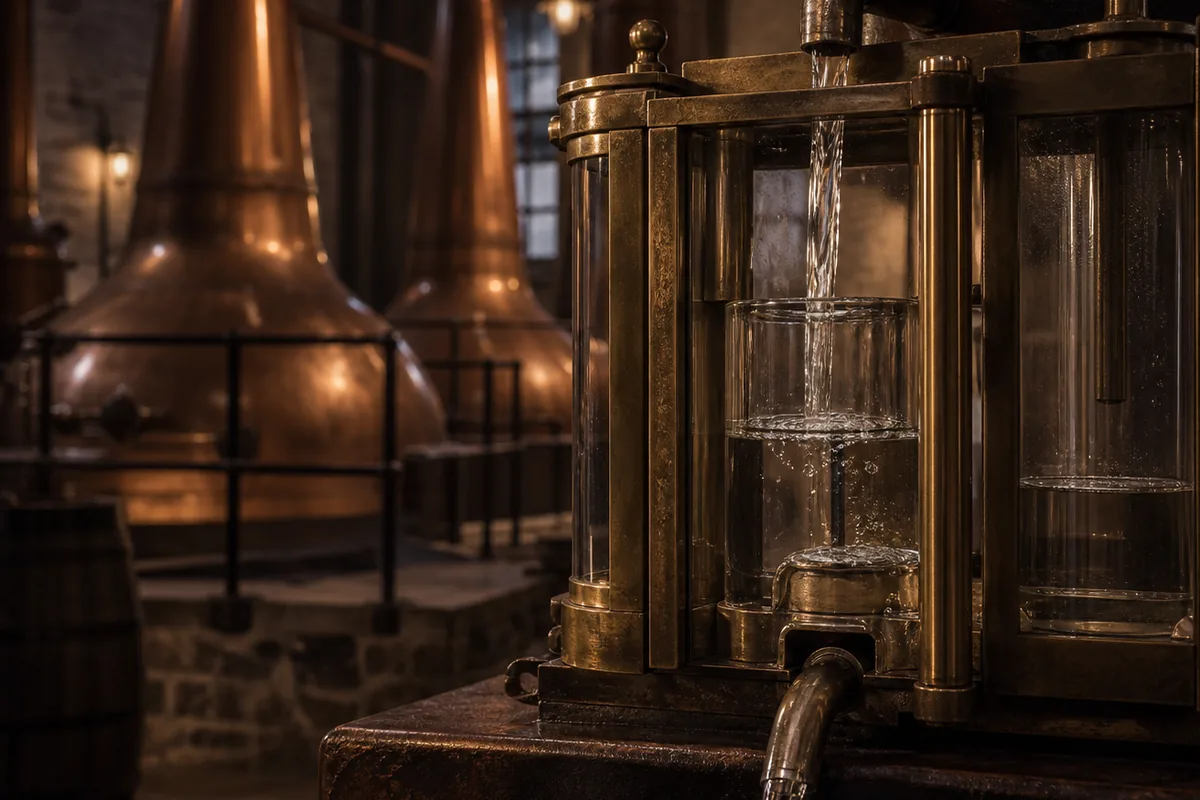
The distiller's cut, which decides how much of each distillation run is kept, is the stage with the largest single effect on what reaches the cask.
A wider cut gives more spirit and a heavier character. A narrower one gives less and a cleaner result.
Neither is correct, and the choice is remade every run.
Maturation contributes most of a whiskey's colour and a large share of its sweetness, which is why time and wood dominate the questions worth asking a producer.
Which is useful when you meet a marketing claim. Ask which stage it belongs to, and a surprising number of them turn out to belong to the cask.
What does a whiskey taste of, and where does it come from?
A whiskey is distilled in a way that deliberately retains the aroma and flavour of its raw materials, so cereal character reaching the glass is a design requirement rather than an accident.
That is the reason a whiskey and a vodka made from the same grain taste nothing alike. One rulebook asks for the grain to survive and the other asks for it to disappear.
Years in wooden casks add colour, sweetness and complexity to a whiskey, and that contribution grows with time while the spirit character does not. The two are not in balance at every age, which is why an old whiskey and a young one from one distillery can read as different products.
- From the grain
- Cereal character survives distillation by design, because the ceiling exists to stop it being stripped out.
- From the wood
- Colour, sweetness and a great deal of complexity come out of the cask, and the share grows every year the spirit sits there.
- Not from the category
- A category name fixes neither the cask nor the years, so it cannot fix what the whiskey tastes of.
Because a whiskey category name fixes neither the cask nor the years, a tasting note offered for a whole category describes a habit of production rather than a rule.
So treat any sentence beginning with a category name and ending in a flavour as a generalisation about how that category is usually made. It is often a fair one, and it is never a guarantee.
How should you serve and taste a whiskey?
There is no correct way to serve a whiskey, but every choice buys one thing at the price of another. Knowing the price is most of the skill.
Cold suppresses aroma in a whiskey, so ice buys refreshment and length at the cost of the smell that carries most of the flavour. On a hot afternoon that is a reasonable trade and nobody should apologise for it.
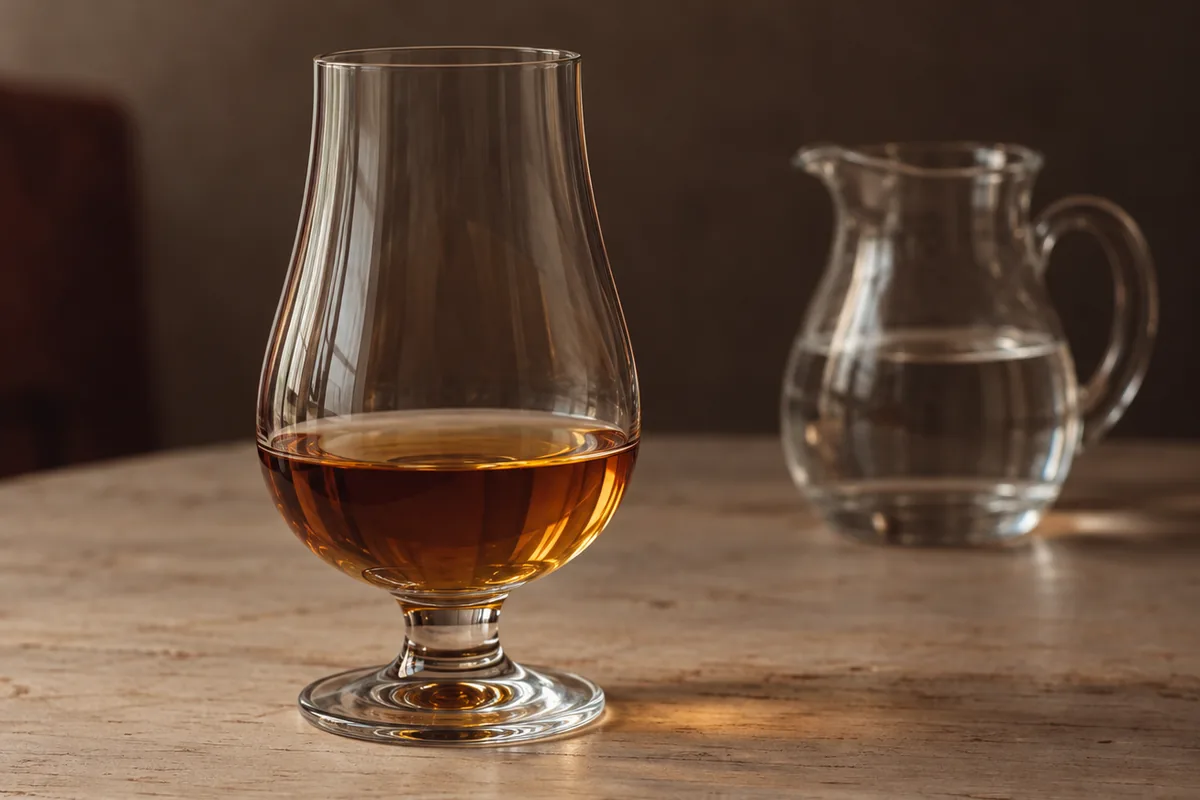
A small measured addition of water lowers the alcohol enough for a whiskey to release aroma, and it cannot be undone once made.
Which is the whole reason to measure it. Start with a few millilitres, taste, and add more if the glass is still holding back.
- Ice: Buys refreshment and length. Costs aroma, because cold suppresses the volatile compounds that carry most of what you would call flavour.
- Water: Buys aroma. Costs nothing except that it cannot be taken back out, which is the reason to measure rather than splash.
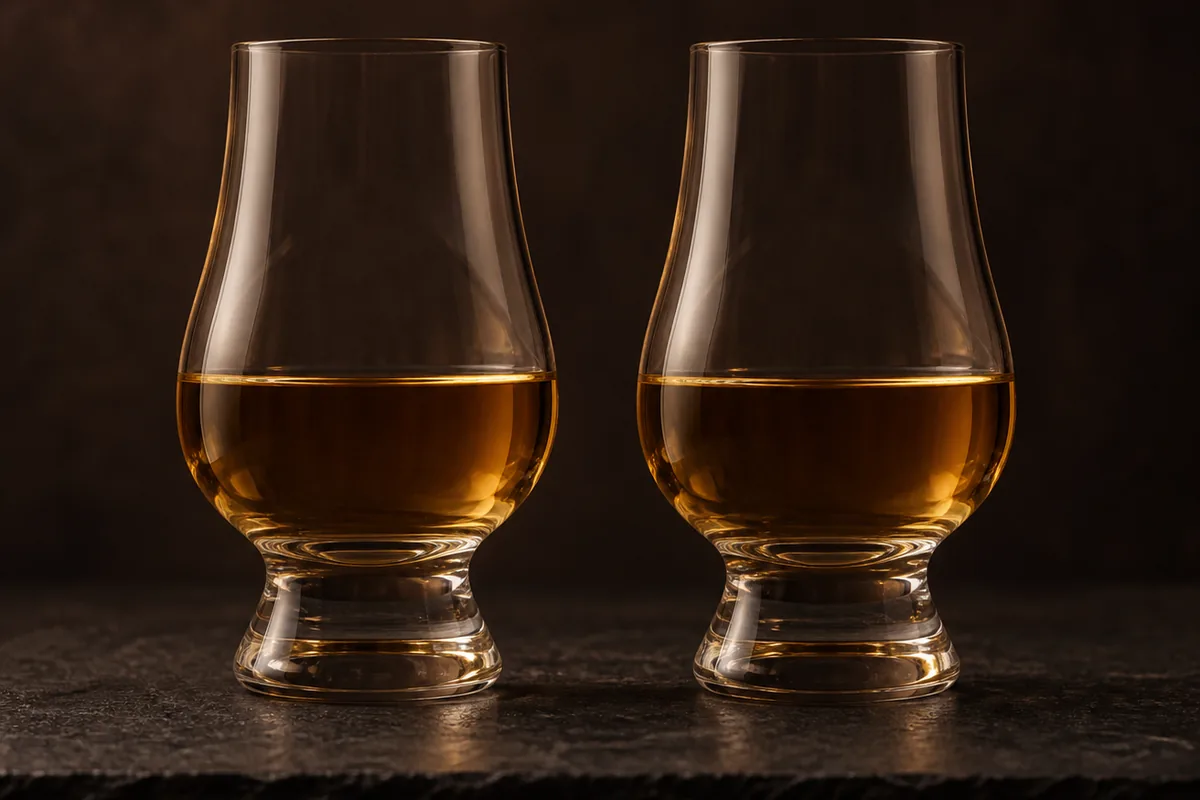
- The glass: A narrowing bowl gathers aroma above the liquid. A wide tumbler lets it go. The effect is real and it is smaller than the water decision.
A narrowing glass concentrates aroma above a whiskey while a wide tumbler disperses it, which is a real effect and a smaller one than the water decision.
Use whatever glass you have and take the water seriously. That ordering is the useful part.
What food does a whiskey go with?
The pairing question is asked of the category and answered by the bottle, which is why general advice about whiskey and food is so unreliable.
A whiskey at 40 percent and one at cask strength belong at different points on a table, so the weight in the glass decides the pairing rather than the category name.
Sweetness in a dish sharpens a dry or heavily wooded whiskey, and chilli heat is intensified by alcohol rather than cooled by it. Both mistakes are made for reasons that sound right.
- Sweetness on the plate: Sugar sharpens whatever tannin a whiskey took from its wood, and the glass reads drier and harder afterwards rather than richer.
- Chilli heat: Alcohol carries capsaicin rather than rinsing it away, so a spirit against a hot dish sharpens the heat for as long as both are in the mouth.
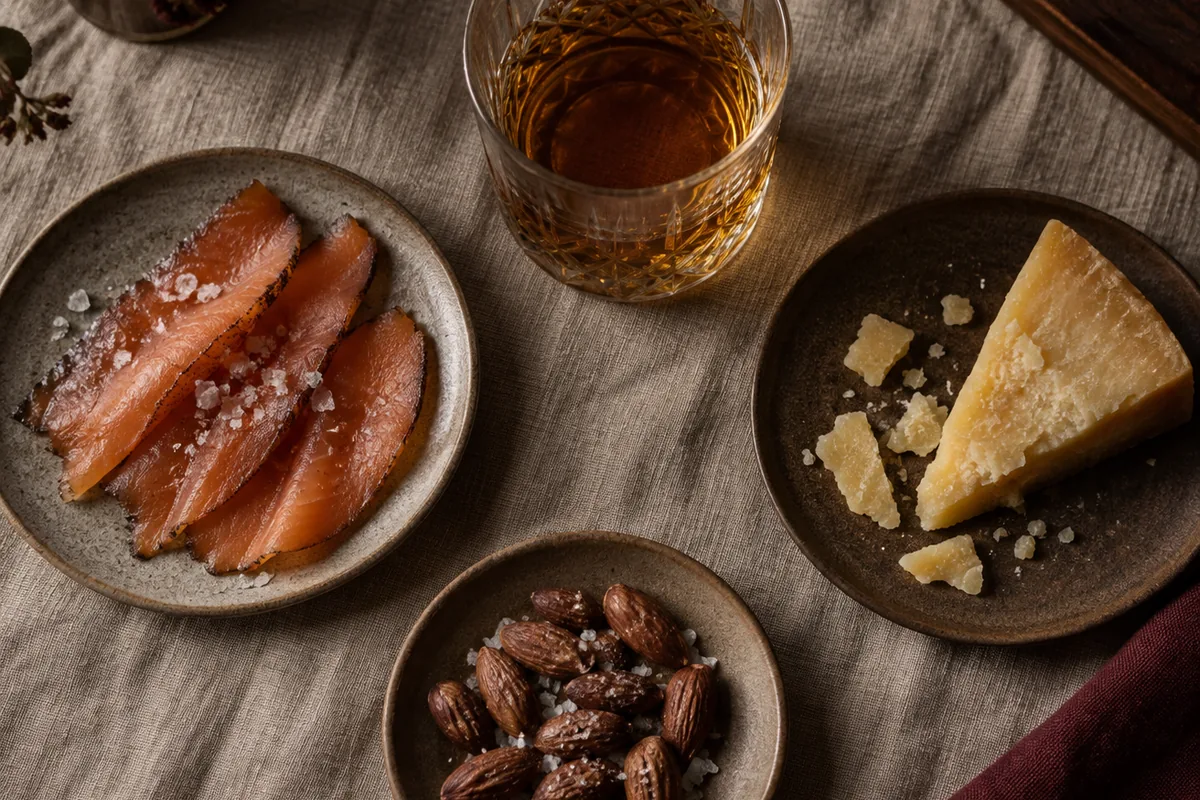
Salt, fat and char are the reliable directions with a whiskey, because they give a spirit something to work against rather than something to compete with.
Smoked fish, hard cheese, cured meat, roasted nuts and good bread are none of them a discovery, and all of them work for one reason.
If the glass in front of you is at cask strength, the same directions hold and the portions change. A stronger pour can carry a heavier plate.
How should you store a whiskey, opened and unopened?
Two questions get asked as one, and they have different answers. An unopened bottle and an opened one behave nothing alike.
A whiskey stops maturing the moment it leaves the cask, so an unopened bottle does not improve on a shelf however long it stands there. Age in a bottle is not age at all.
An unopened bottle standing upright in the dark will keep for years without meaningful change, and standing it upright matters because a high strength spirit sitting against a cork will eventually degrade it.
What an opened whiskey loses is aroma, as lighter compounds oxidise into the air sitting above the liquid, and the change runs one way.
- Light
- Direct sunlight fades colour and drives reactions in the liquid. A cupboard solves it completely and costs nothing.
- Heat
- Warmth speeds up everything, including the reactions you do not want. A stable cool spot beats a cold one that swings.
- Headspace
- The air above the liquid decides how fast an opened bottle fades. A bottle with a third left holds several times the air of a full one.
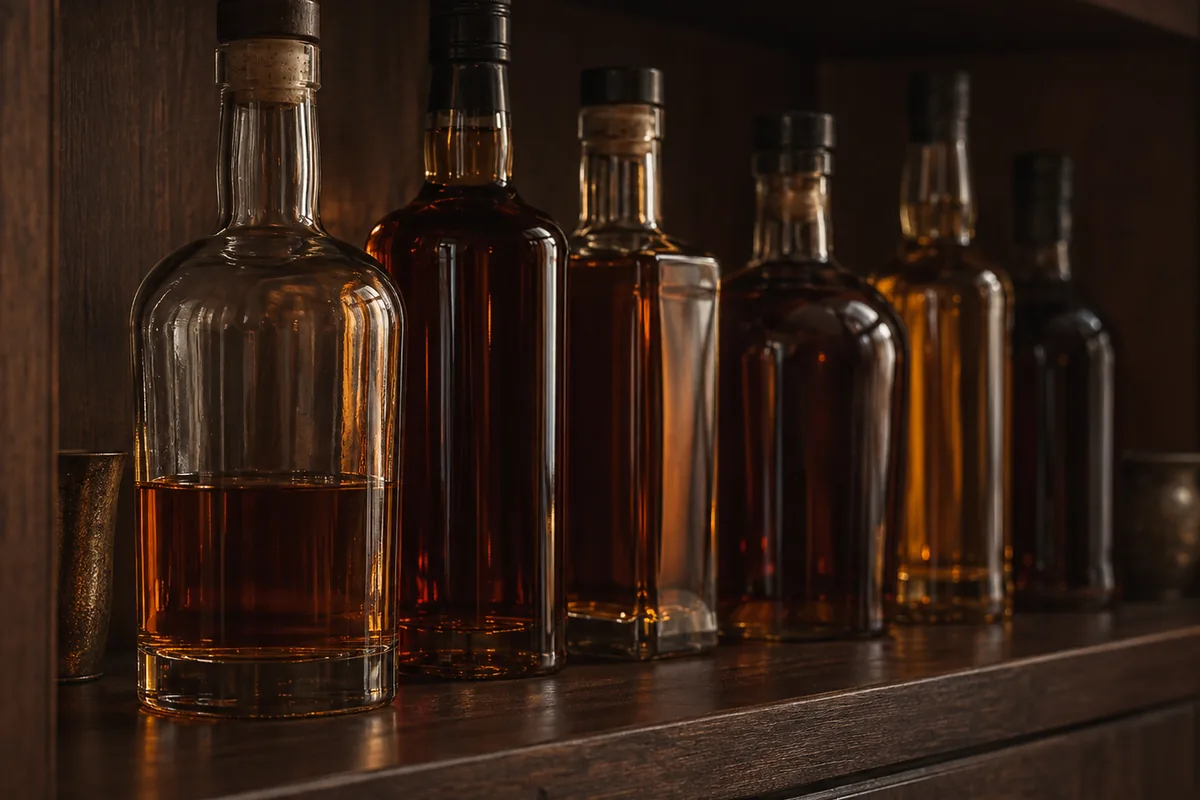
Light, heat and headspace are the three variables a whiskey keeper controls, and headspace is the one that decides how fast an opened bottle fades.
Nobody can tell you how many months an opened bottle has, because it depends on the bottle, the strength and the air above it. What can be said is the direction and the levers.
What do people get wrong about whiskey most often?
Three assumptions do most of the damage, and all three are reasonable places to start from. None of them survives a look at the rulebooks.
The most common error is treating one country's whiskey rule as the definition, when each jurisdiction sets its own floor for time, wood and additives.
It usually shows up as surprise. Someone learns the three year rule, meets a bottle made under a different rulebook, and concludes something has gone wrong.
The second is reading an unaged or lightly aged whiskey as impossible, when the American class carries no minimum storage period at all.
The class still requires oak and still requires the spirit to taste like whisky. It just does not count the years.
The third is assuming nothing may be added to a whiskey, when one rulebook permits up to 2.5 percent by volume of harmless materials outside the straight designations.
- One rule is the rule: Replace it with a question. Which jurisdiction made this, and what floor was in force there?
- Whiskey must be aged for years: Replace it with the age statement, or with the jurisdiction when there is none.
- Nothing can be added: Replace it with one word on the label. Straight closes the allowance outright.
The habit that replaces all three is short enough to carry to a shop. Find the jurisdiction, find the age statement if there is one, and find whether the label says straight.
Which whiskey should you buy first?
A first whiskey purchase is decided by the jurisdiction on the label, the age if one is stated and the bottling strength, because those three are the parts a rulebook stands behind.
Everything else on the front of the bottle is a producer talking, and some of it is worth hearing. It is simply not the same kind of information.
Buy two rather than one. Buying two bottles of whiskey from different jurisdictions teaches more than buying one from a well reviewed category, because the differences this entry describes become audible in the glass.
A three year floor against no floor, oak against wooden casks, and one rulebook that permits additions against another that does not. Those are not abstractions once two glasses are in front of you.
The useful first bottle is one you can compare something against, which makes the second purchase part of the first decision.
Start there and the rest of this entry stops being a set of rules and becomes a way of reading a shelf.
Common questions
- Is there one legal definition of whiskey?
- No. Each producing jurisdiction writes its own standard, and they disagree on how long a whiskey must spend in wood, what the cask must be made of, and what may be added after distillation. The jurisdiction named on the label tells you which rulebook applies.
- How long must whiskey be aged?
- It depends entirely on where it was made. Ireland and Scotland require at least three years in casks of up to 700 litres. The American class whisky carries no minimum storage period at all, and only the straight designation attaches a clock, at two years.
- Is whisky the same as whiskey?
- Yes. They are two spellings of one word, and no rulebook attaches a production, maturation or strength requirement to the letter. The American federal text says the word may be spelled either way and itself uses whisky, while Ireland registers Irish Whiskey and Irish Whisky in the same geographical indication.
- Can anything be added to whiskey?
- Under the Irish specification only water and plain caramel colouring may be added. American rules permit harmless colouring, flavouring or blending materials up to 2.5 percent by volume, but a straight whisky may take none of them.
Sources
-
27 CFR 5.155, Harmless coloring, flavoring, and blending materials, Legal Information Institute
Accessed 6 September 2026.
-
Code of Federal Regulations, Title 27, sections 5.143 and 5.74
Accessed 5 September 2026.
-
Food and Drug Regulations, section B.02.020, Justice Laws Website
Accessed 10 September 2026.
-
Irish Whiskey technical file, sections 2 and 4, Department of Agriculture, Food and the Marine
Accessed 4 September 2026.
-
NIAAA, What Is a Standard Drink?
Accessed 13 September 2026.
-
Scotch Whisky Association, Guidance for Bottlers and Producers 2025
Published 2025. Accessed 7 September 2026.
More in Spirits
-
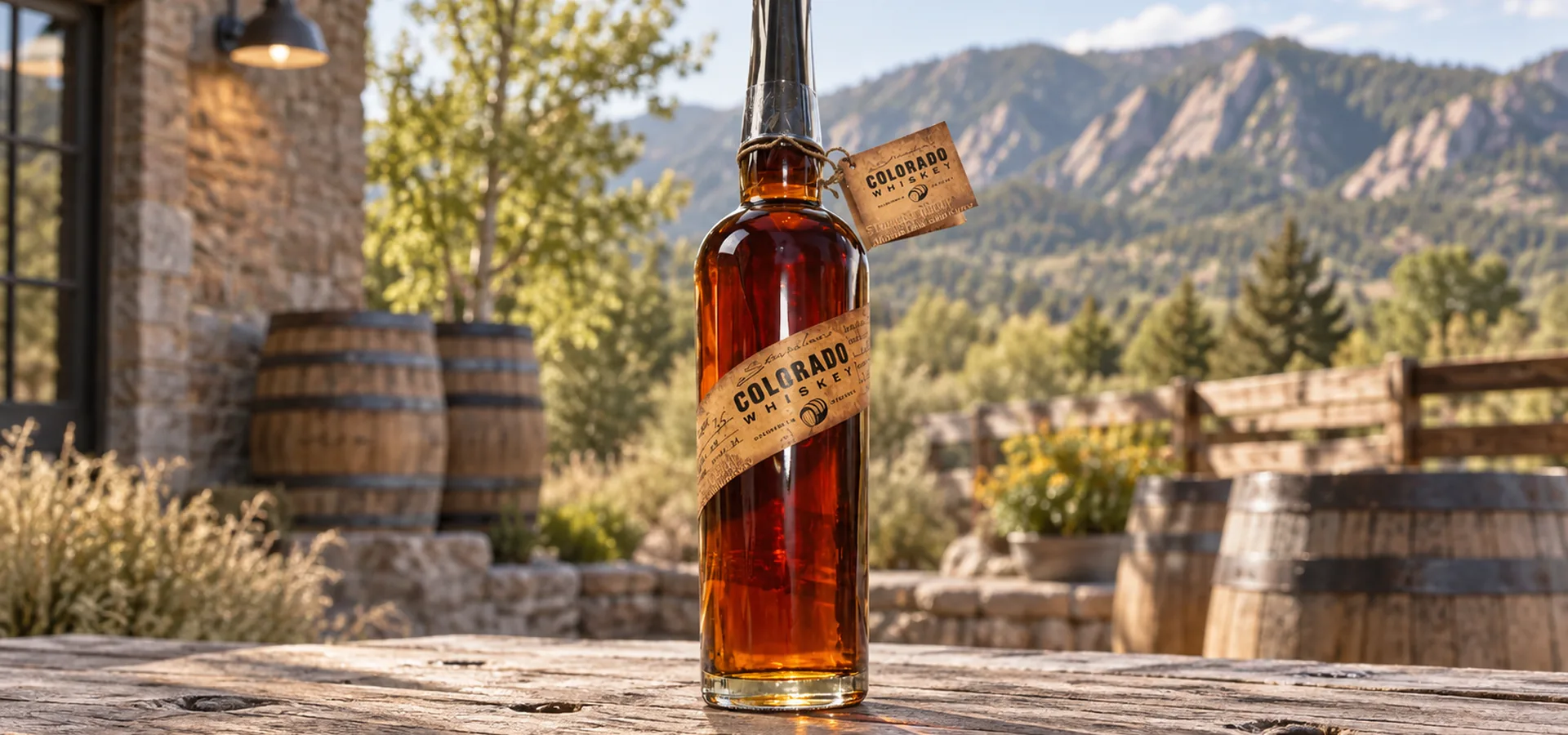 American single malt whisky
01
What is American single malt whisky, and what does it guarantee?
-
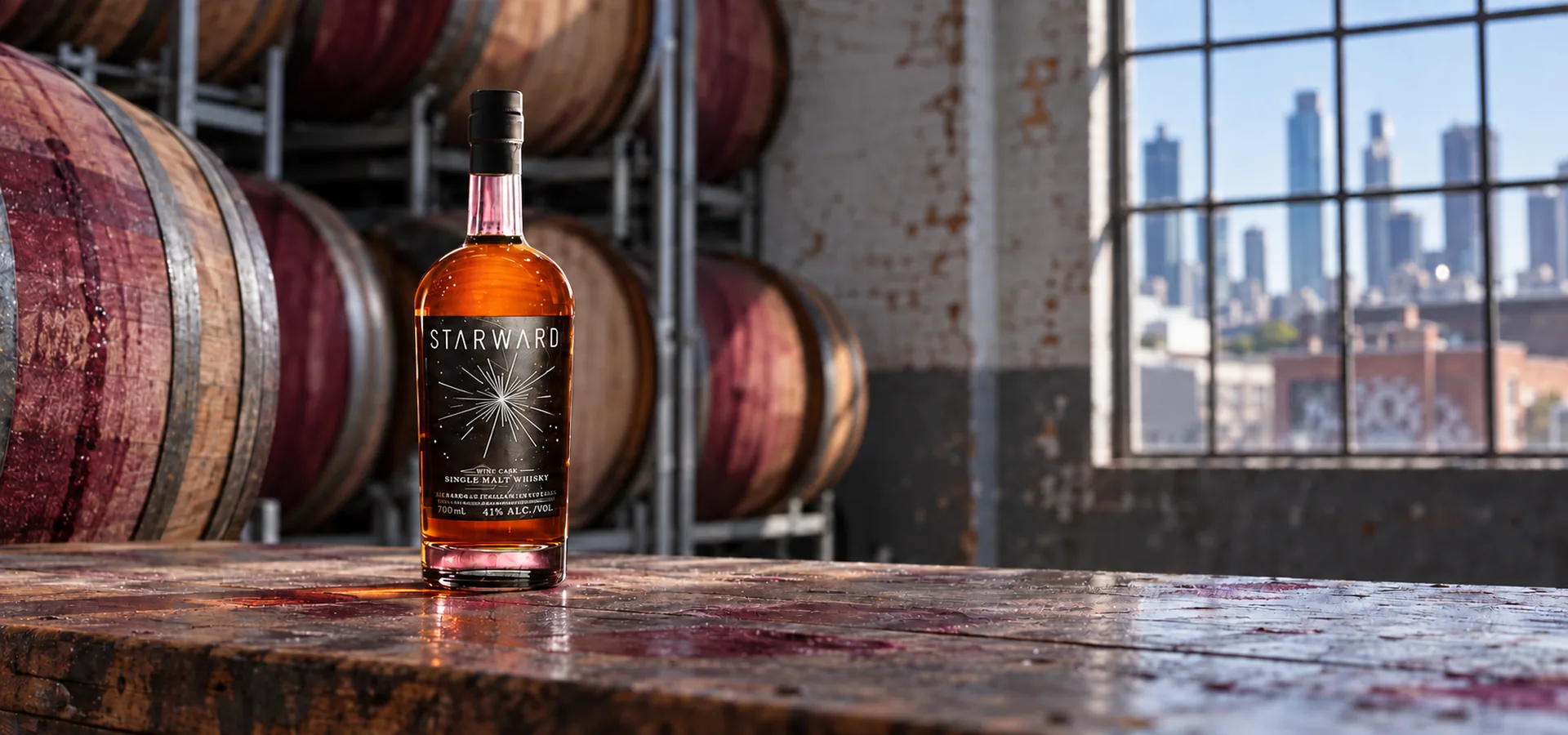 Australian whisky
02
How is Australian whisky defined, and by which law?
-
 Black rum
03
What is black rum, and does the colour mean anything?
-
 Blended American whiskey
04
What is blended American whiskey, and how much of it is whiskey?
-
 Blended Irish whiskey
05
Blended Irish whiskey: which word counts the distilleries?
-
 Blended Scotch
06
Blended Scotch: what is in it, and why does the recipe change?