
Spirits
What is new make spirit, and when does it become whisky?
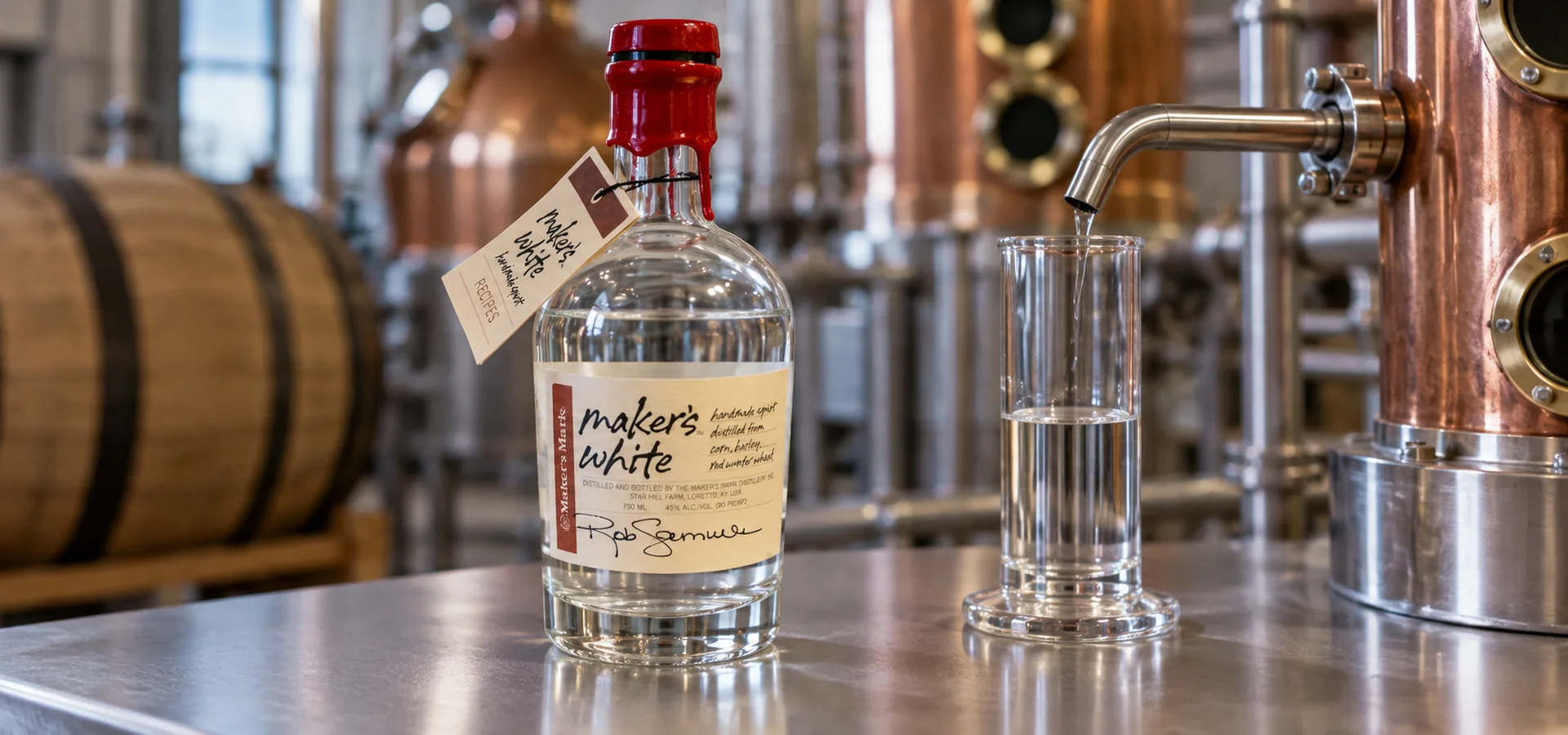
New make spirit is the clear, high-strength distillate collected before required whisky maturation. It already carries grain, fermentation, still, and cut decisions, but clear colour does not make it low strength or legally whisky.
At a glance
- Legal category
- Production wording rather than one universal class. Scotch new make becomes Scotch whisky only after at least three years in qualifying oak casks in Scotland.
- Minimum strength
- 40 percent ABV
What is new make spirit?
New make spirit is the clear distillate produced before the cask has turned it into mature whisky. It sits at a precise production stage, but the phrase is not one universal legal category.
In Scotch production, new make is the retained spirit that will be filled into oak.
It cannot be sold as Scotch whisky until it has matured in Scotland for at least three years in permitted oak casks no larger than 700 litres.
- Production status
- Distilled and selected, but not yet matured
- Normal appearance
- Water-clear before oak extraction
- Typical Scotch filling range
- About 60% to 70% ABV after reduction
- Legal name
- Depends on jurisdiction, composition, and any required maturation
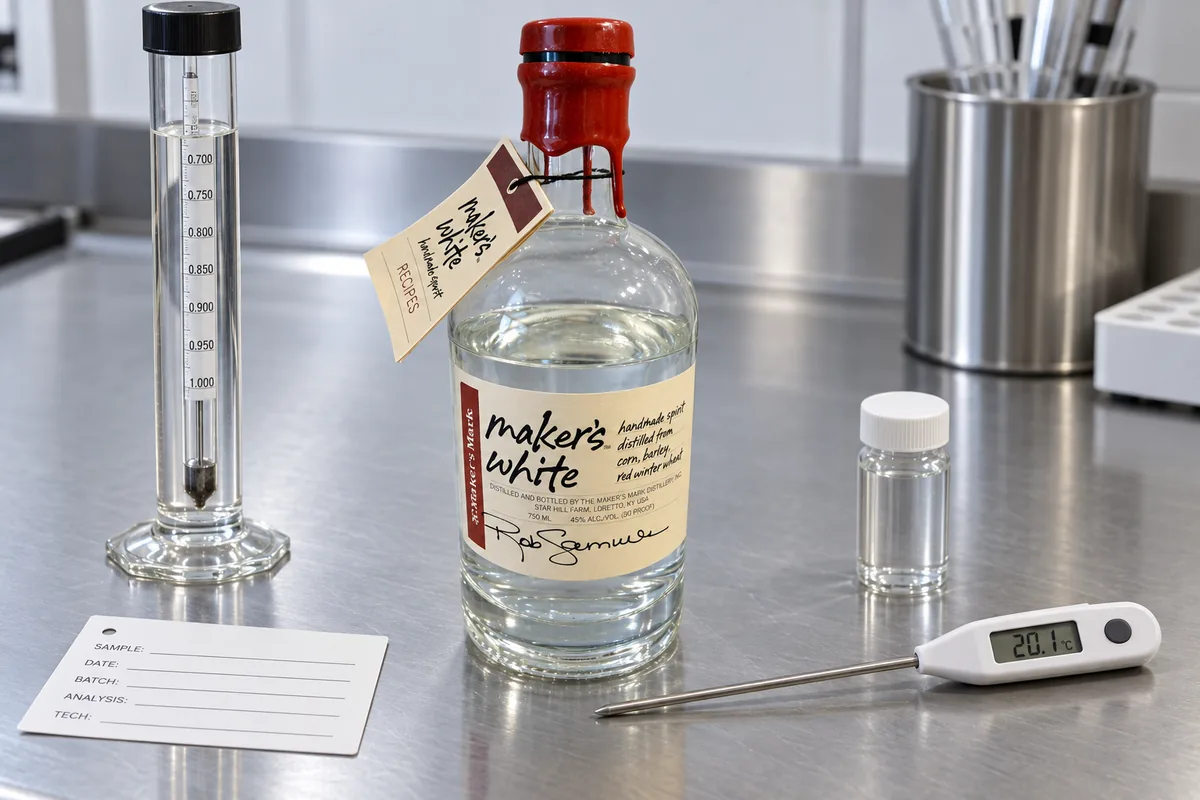
The liquid is sometimes bottled for education or sale under wording such as new make, spirit drink, unaged whiskey, or white dog. Those phrases do not become interchangeable merely because the contents look alike.
Clear describes colour, not maturity. Vodka, unaged cane spirit, new grain distillate, and high-strength new make may all be transparent while belonging to different categories.
Composition decides whether the future spirit is even on a whisky path.
Grain source, mash design, fermentation, distillation proof, and local rules can qualify or disqualify a liquid before maturation time is considered.
The phrase also appears in distillery conversation where no consumer label is involved. In that setting it identifies material moving from the spirit receiver to quality control, reduction, and cask filling rather than a finished retail category.
Where new make sits in the whisky process
Fermentation produces a low-strength wash containing ethanol, water, acids, esters, higher alcohols, sulphur compounds, and many other volatiles.
Distillation changes their concentration and distribution, then the cut policy decides which portion will become new make.
- Fermented wash: yeast has created the alcohol and much of the aroma potential.
- Distillation: heat and repeated condensation separate compounds according to volatility and still behaviour.
- Retained spirit cut: the selected middle run becomes new make, while other fractions are redirected according to the distillery's system.
- Reduction and filling: water may lower the spirit to a chosen cask-entry strength before it reaches oak.
- Maturation: extraction, evaporation, oxidation, and continuing reactions reshape the spirit over years.
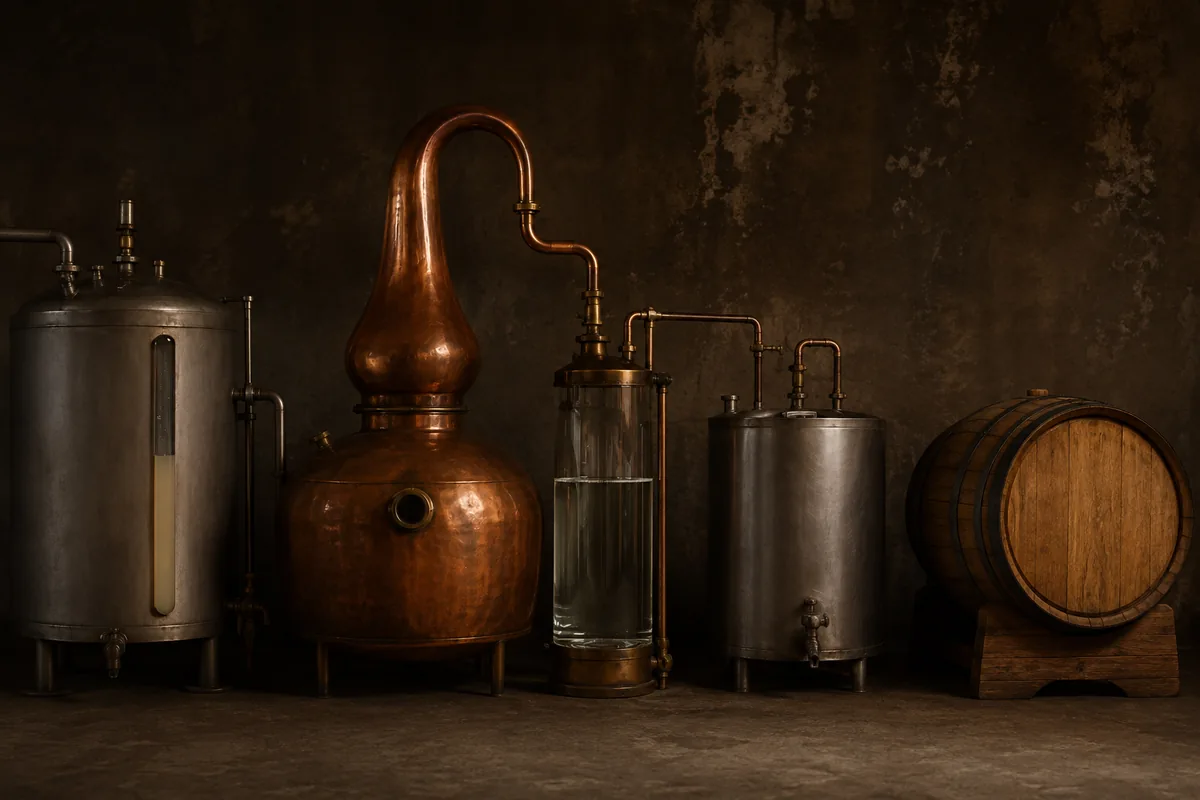
The order matters because a sample of new make already carries a distillery's choices in grain, fermentation, still design, copper contact, and cuts. Oak has not yet added its own compounds or hidden any rough edges.
This makes new make useful for understanding production character, but not for predicting a mature bottle with certainty.
Two cask types can take the same filling spirit in markedly different directions.
Detailed still operation belongs in distillation guidance because alcohol vapour is flammable and uncontrolled distillation can be illegal and dangerous. A beverage profile can explain the handoff without publishing a procedure.
The retained cut is commonly collected into a spirit receiver or safe where strength and composition can be monitored.
Sampling at this stage supports quality control, but a sample represents a batch moment and does not establish how every future cask will mature.
Filling strength is another deliberate variable. Reducing new make before the cask changes the volume of water, the spirit-to-wood environment, and later extraction, while the chosen range depends on category rules and producer practice.
Why new make is clear
Grain, molasses, and fermented wash can be dark or cloudy, yet the condensed distillate runs clear.
Pigments and suspended solids are not volatile under normal distillation conditions, so they remain behind while ethanol, water, and volatile congeners travel through the still.
Oak is the principal source of the familiar amber colour in matured whisky. New make has not extracted coloured compounds from wood, and plain caramel colouring permitted in some mature whisky categories has not entered the production stage either.
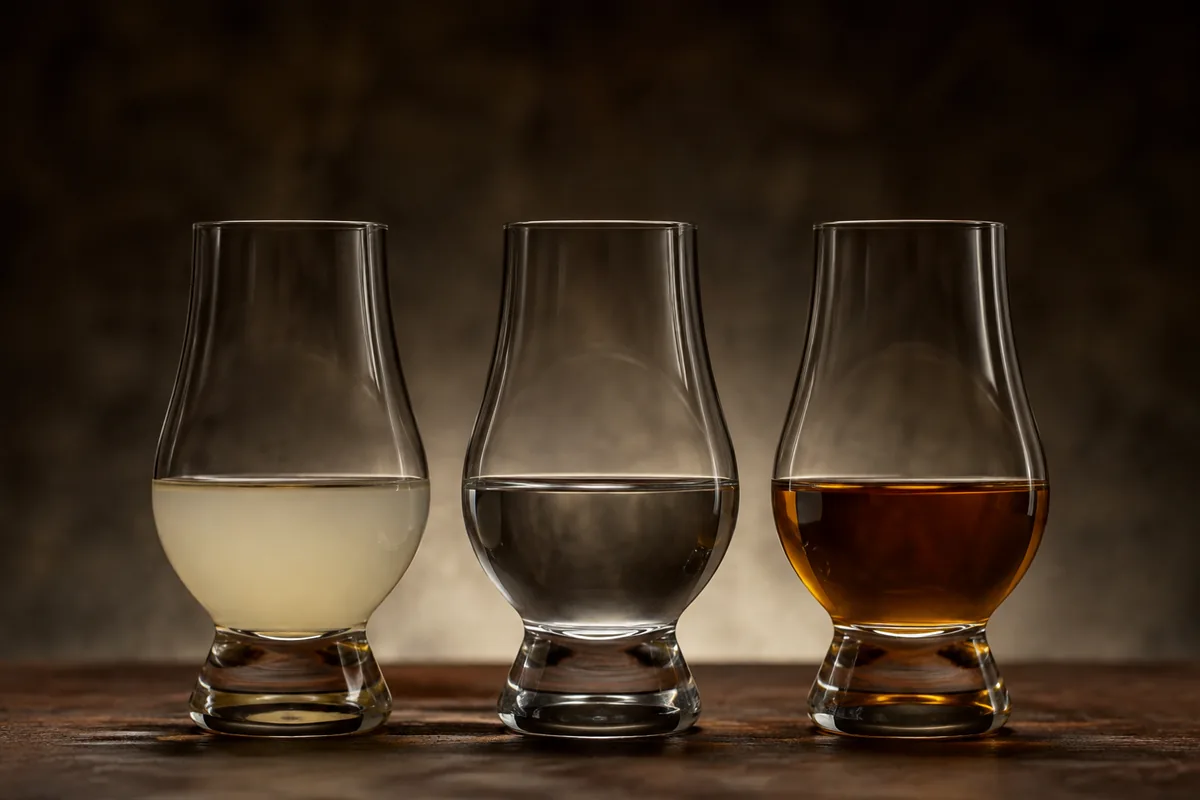
Transparency should never be read as purity in an absolute sense. New make contains many congeners alongside ethanol and water, and those compounds are part of the character the distiller has chosen to send to the cask.
Nor is clarity a strength cue.
New make can leave the still far above ordinary bottling strength, and a glass offers no visual warning that it contains a concentrated flammable liquid.
Colour can appear before maturation only when something coloured has been introduced or carried outside the normal distillation path. Cloudiness may also come from water, oils, suspended material, or contamination, which makes an abnormal sample a quality-control question rather than evidence of age.
The mature amber sample contains compounds that were absent from the visible new make, yet colour still understates the change. Reactions can reduce sharp sulphury notes, form new esters, change acidity, and alter texture without producing a separately visible layer.
What the cut changes
A distillation run changes over time because the vapour composition changes as the charge is depleted.
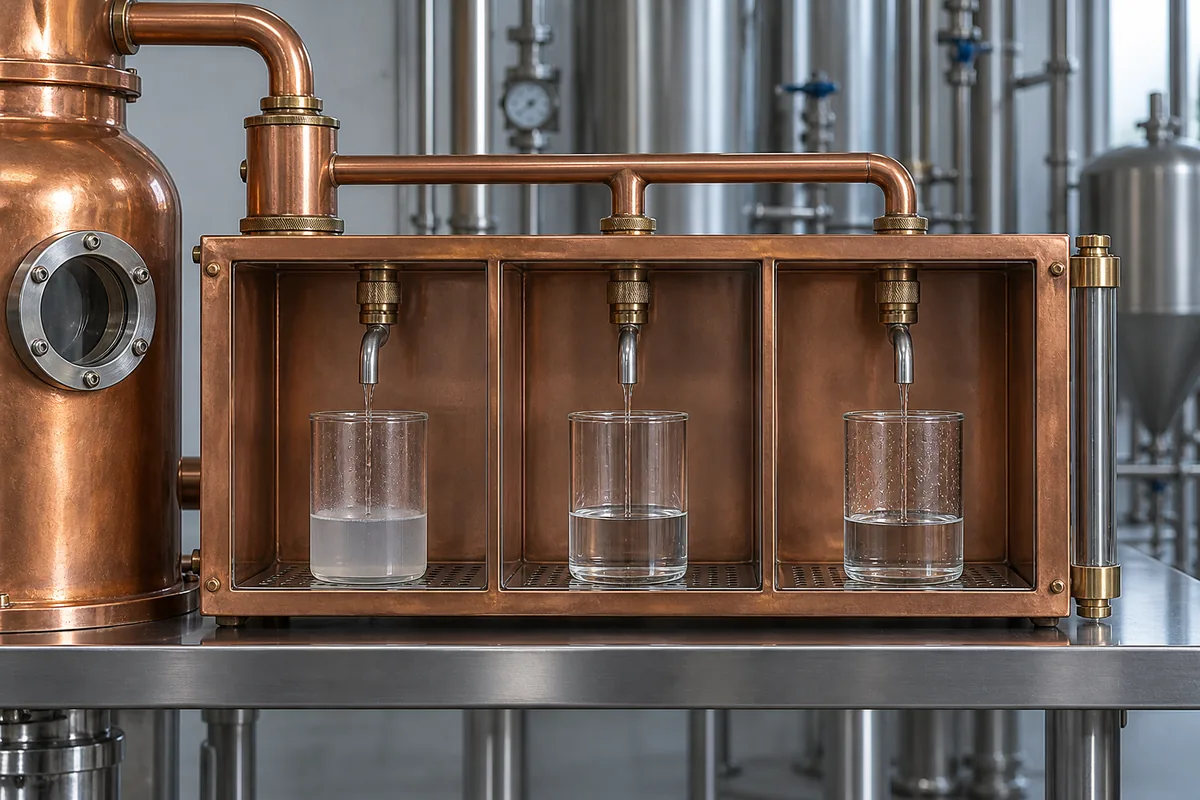
Distillers divide that changing output into early fractions, a retained portion, and later fractions, but the useful boundaries are sensory and operational decisions rather than universal clock times.
| Fraction | General tendency | Why the boundary varies |
|---|---|---|
| Early run | Greater proportion of highly volatile compounds, including sharp solvent-like notes | Still charge, reflux, equipment, and recycling practice differ |
| Retained spirit | Chosen balance of fruity, cereal, floral, sulphury, oily, and alcoholic character | Each distillery protects a house style and a cask plan |
| Later run | Increasing share of heavier, oily, earthy, and feinty compounds | Some heavier character may be deliberately retained or recycled |
The middle cut is not a purity score. A narrower cut can make a lighter new make, while a wider cut may preserve heavier compounds that develop usefully in long maturation.
Copper contact and reflux also matter.
A tall still that returns more condensate to the boiling pot may produce a different balance from a shorter system even when both collect a portion called the heart.
The clear sample cannot reveal where those boundaries sat. Cut claims require production records or a producer statement, not visual inspection.
Early and late fractions are often returned to a later distillation rather than discarded, so the boundaries affect more than one run.
Recycling can feed selected compounds back into the system and makes a simple diagram of three isolated outputs incomplete.
A distillery protects cut decisions because they connect its equipment to a desired mature style. Copying another plant's clock time would ignore charge composition, still geometry, heating rate, receiver strength, and the sensory development expected in wood.
What new make smells and tastes like
New make can smell of cereal, fresh dough, fruit, flowers, grass, sulphur, wax, oil, or solvent-like compounds.
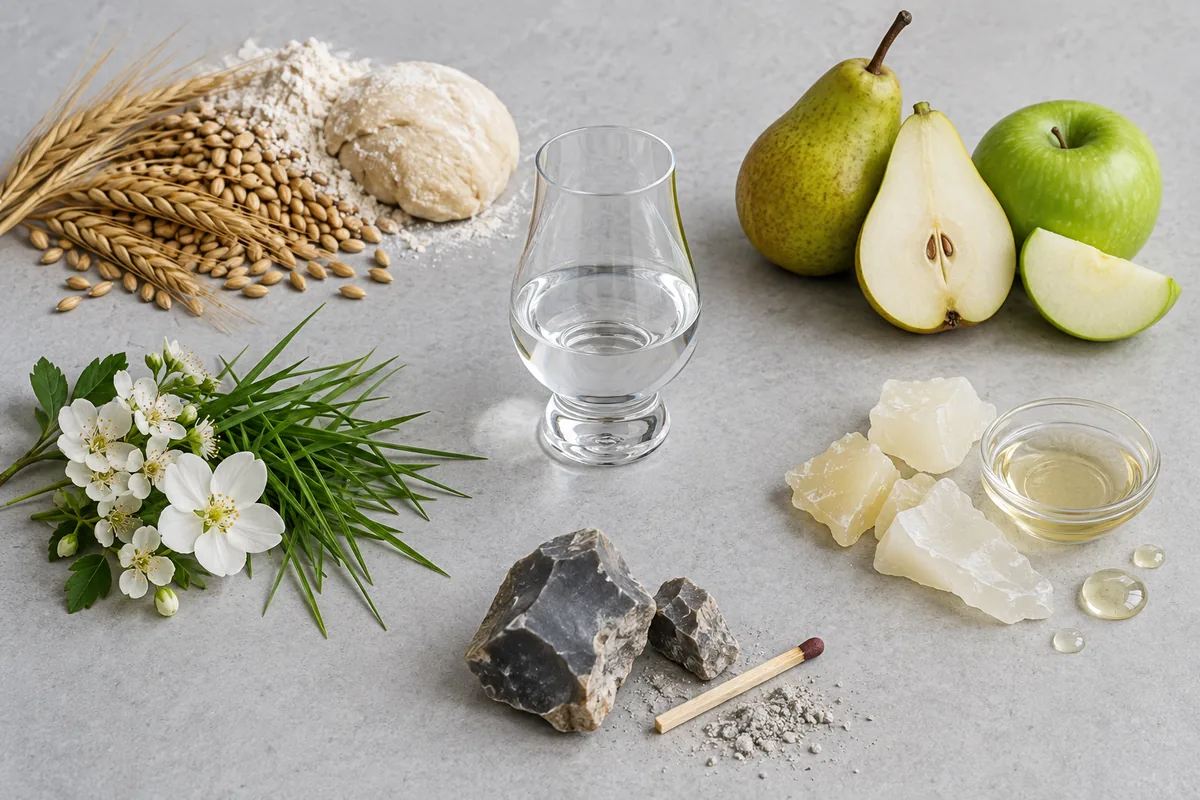
That range does not indicate a category failure, because the spirit is an unfinished input designed for a particular maturation plan.
Fruity aromas often begin in fermentation as esters, while cereal character can connect more directly to grain and malt treatment. Still design and cut selection then determine how much of each family reaches the receiver.
| Observation | Useful question | Do not conclude |
|---|---|---|
| Pear, apple, banana, floral | Which yeast and fermentation conditions produced the ester balance? | That fruit was added |
| Cereal, husk, dough | How did malt specification, mashing, and solids handling differ? | That the spirit will stay cereal-led after ageing |
| Sulphur, struck match, vegetal | How much copper contact and reflux did the spirit receive? | That the matured whisky must be defective |
| Oil, wax, earth | How wide was the retained cut and what cask duration is planned? | That a heavier spirit is better or worse |
A solvent-like note deserves caution in evaluation but not an instant diagnosis. High ethanol concentration itself changes perception, and a sample should not be judged by inhaling deeply over a full-strength glass.
New make is therefore revealing and incomplete at the same time.
It exposes distillery character before oak, while withholding the transformations that may integrate, mask, or redirect that character.
Texture deserves attention alongside aroma. A spirit that feels oily, thin, hot, waxy, or drying may be expressing higher alcohols, fatty compounds, sulphur chemistry, ethanol concentration, or a combination that the cask will later rebalance.
Dilution during evaluation can separate ethanol heat from persistent aroma, but it also changes the sample being judged. Notes should record strength and whether water was added so later comparisons describe the same conditions.
What oak changes first
When new make enters oak, extraction begins at the liquid and wood boundary. Compounds associated with vanilla, coconut, toast, spice, colour, and tannin can move into the spirit, with rates affected by oak species, seasoning, heat treatment, cask size, previous use, and temperature.
Evaporation begins as well.
Water and ethanol leave at different rates according to humidity and warehouse conditions, so alcohol strength may rise or fall rather than moving in one universal direction.
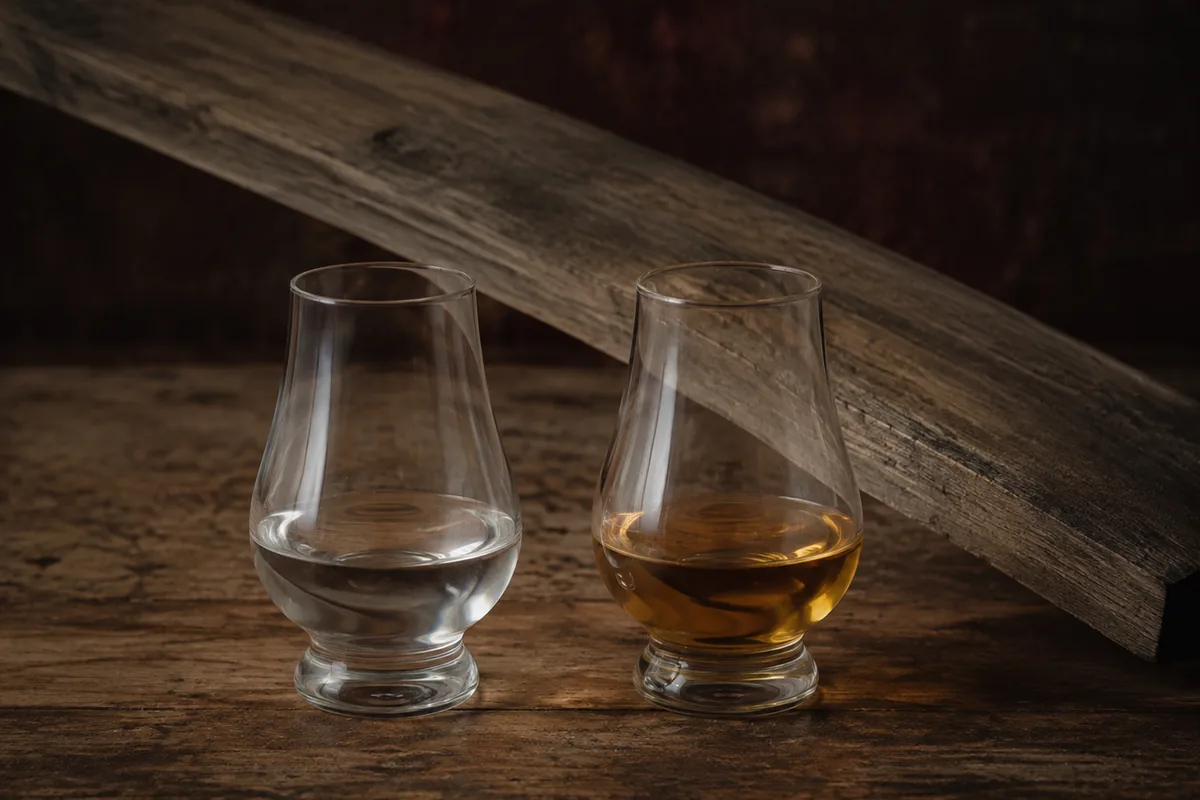
Oxygen entering slowly through the cask and reactions among acids, alcohols, wood compounds, and existing congeners continue to alter aroma. Mature whisky is therefore not merely new make plus brown colour.
A previous-fill cask adds another history. Former bourbon casks, sherry, Port, wine, and refill oak differ in residual compounds and available wood extraction, but the name of the previous liquid never guarantees one flavour.
The cask edits an existing spirit.
A delicate new make and a heavy sulphury one can react differently to the same nominal wood.
Cask entry also begins a bookkeeping obligation. Identity, filling date, warehouse location, cask type, volume, and strength allow a producer to substantiate later age and origin claims rather than relying on the appearance of a mature sample.
The required clock belongs to elapsed time in qualifying wood, not to colour acquisition. A cask can become dark quickly and still be too young for a protected whisky name, while a pale refill cask can hold legally mature spirit.
New make, white dog, and unaged whiskey
New make is primarily production language. It points to a selected spirit before maturation, especially in Scotch and other malt-whisky contexts.
- New make
- A pre-maturation production stage; exact label treatment varies
- White dog
- Informal American wording, often used for unaged grain distillate
- Unaged whiskey
- A market-facing designation that must still meet the applicable whiskey standard
- Spirit drink
- A broader legal description used where a protected whisky name does not yet apply
White dog does not reveal the mash bill, distillation proof, cut, or whether the liquid could eventually qualify for a particular whiskey.
It is a nickname, not a complete specification.
Unaged whiskey can be a legally meaningful statement in one market and impossible for a protected category in another. Scotch, for example, cannot exist without the required maturation period.
Read the full designation, origin, grain statement, strength, and producer explanation together.
A transparent bottle with rustic wording is still not enough evidence to reconstruct production.
United States law can permit specific unaged whiskey designations whose grain and distillation rules are already satisfied, while other named types require oak treatment. That is why the word unaged needs the complete designation beside it.
Retail bottling also changes the reader's context. A new make sold at a reduced strength for tasting is still pre-maturation spirit, while a production sample at filling strength demands tighter handling even though both carry the same broad phrase.
Strength, sampling, and storage
Scotch new make is commonly reduced with water to about 60% to 70% ABV before cask filling, according to the Scotch Whisky Technical File.
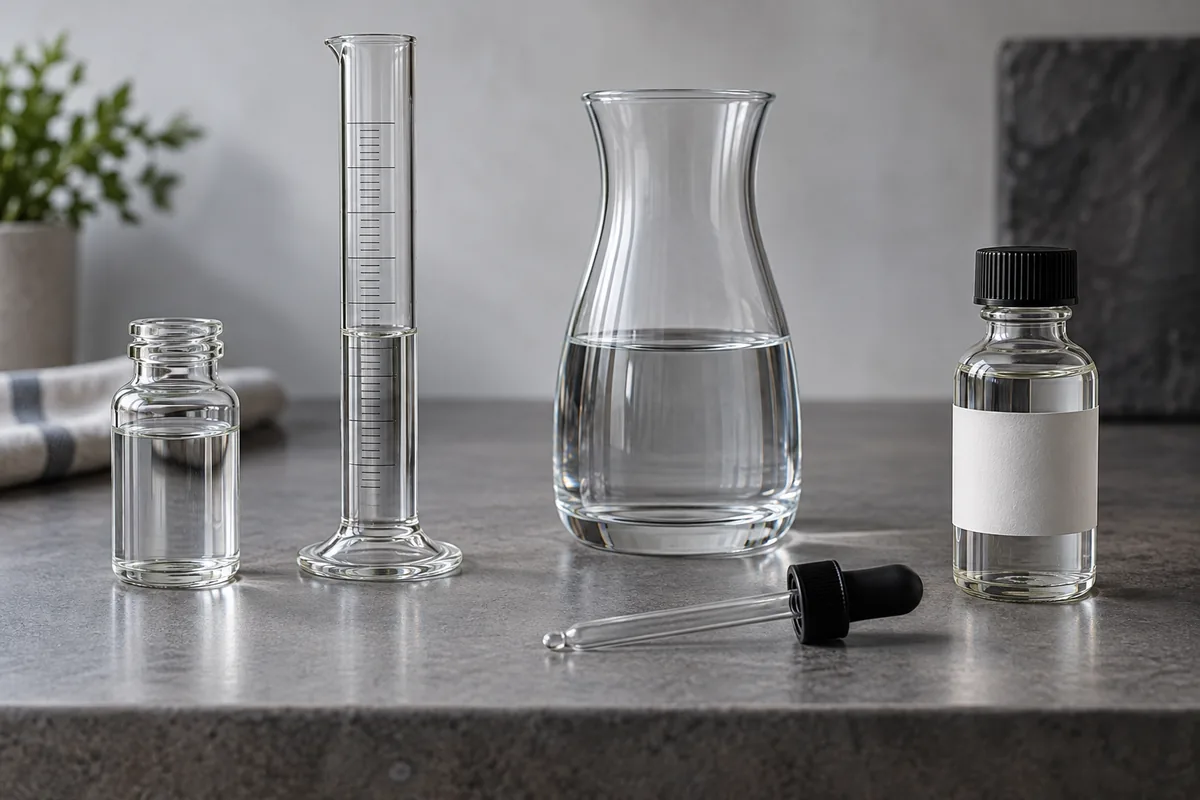
A sample at that strength carries substantially more alcohol than the same volume of ordinary 40% whisky.
Treat new make as high-strength flammable spirit. Keep it away from flame, hot surfaces, and ignition sources, and do not use a clear appearance as a reason for a larger tasting pour.
Use only a small sample in a stable clean glass, avoid deep inhalation, and add water gradually if sensory evaluation is necessary. Water changes concentration and aroma release, but it does not remove the total alcohol in the sample.
A 30 ml sample at 65% ABV contains about as much pure alcohol as roughly 49 ml at 40% ABV.
The vessel can make those portions look similar even though the alcohol amount is not.
- Measure the sample: use volume and stated ABV rather than the apparent size of the glass.
- Control ignition: keep high-strength spirit away from flame, hot surfaces, and sparks.
- Label the container: retain the spirit identity and strength on a compatible, tightly closed vessel.
Store new make in a compatible, tightly closed container intended for high-strength alcohol, upright and away from heat and light. Do not move it into an unlabelled water bottle or any container that could lead someone to mistake it for a harmless liquid.
No calculation can say that a person is unimpaired or safe to drive after sampling. Alcohol effects vary, and high-strength spirit makes casual volume estimates especially unreliable.
New make is valuable because it shows where the distillery begins, not because it is unfinished whisky to drink quickly. Its clear colour removes the cask from the picture and places more responsibility on the reader to notice the strength.
Common questions
- Is new make spirit whisky?
- Not necessarily. It is the selected distillate before maturation, and protected categories such as Scotch whisky require qualifying cask ageing before the whisky name applies.
- Why is new make spirit clear?
- Distillation carries volatile alcohol and congeners while nonvolatile pigments remain behind. The spirit has also not yet extracted colour from oak.
- Is white dog the same as new make?
- The terms overlap in informal use, but white dog is American trade slang while new make primarily describes a production stage. The full legal designation still depends on jurisdiction and composition.
Sources
-
27 CFR 5.143, Standards of identity for whisky, Alcohol and Tobacco Tax and Trade Bureau
Accessed 4 September 2026.
-
Regulation (EU) 2019/787 on spirit drinks
Accessed 7 September 2026.
-
Scotch Whisky Technical File, June 2019, the gov.uk product specification for the Scotch Whisky geographical indication, quoting the Scotch Whisky Regulations 2009 regulation 3
Accessed 4 September 2026.
-
What is a standard drink?
Accessed 7 September 2026.
More in Spirits
-
 American single malt whisky
01
What is American single malt whisky, and what does it guarantee?
-
 Australian whisky
02
How is Australian whisky defined, and by which law?
-
 Black rum
03
What is black rum, and does the colour mean anything?
-
 Blended American whiskey
04
What is blended American whiskey, and how much of it is whiskey?
-
 Blended Irish whiskey
05
Blended Irish whiskey: which word counts the distilleries?
-
 Blended Scotch
06
Blended Scotch: what is in it, and why does the recipe change?