
Spirits
Straight Bourbon: What Does the Word Actually Add?
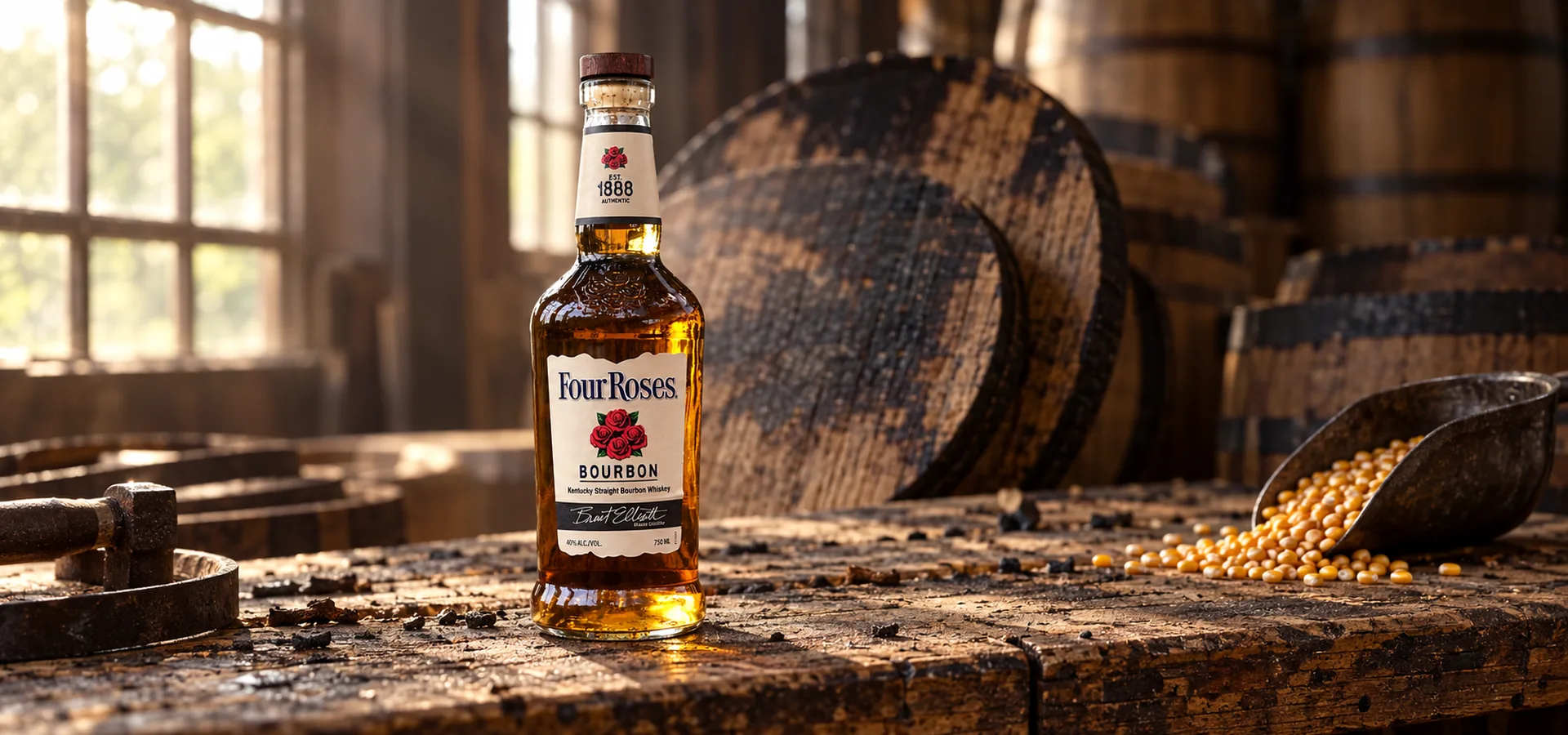
Straight bourbon is bourbon stored in charred new oak containers for at least two years, with no colouring, flavouring or blending material added. The designation is optional, and a mixture of straight bourbons from one state still carries it.
At a glance
- Legal category
- Further designation of a type under 27 CFR 5.143
- Minimum strength
- 40 percent ABV
- Also called
- Straight bourbon whiskey, Straight bourbon whisky
- What it adds
- Two years in charred new oak and no colouring, flavouring or blending material
- Legal status
- An optional further designation of a type under 27 CFR 5.143
- Mixing
- Survives mingling within one state; crossing state lines makes it blended straight bourbon whiskies
What does straight mean on a bourbon label?
Straight bourbon is bourbon that has been stored in charred new oak containers for at least two years, and that has had no colouring, flavouring or blending material added to it.
Two conditions. That is the whole increment.
The word is not exclusive to bourbon, either. The same designation attaches to rye, wheat, malt and corn whiskey on the same terms, so straight rye whiskey means exactly what straight bourbon means with a different grain majority underneath it.
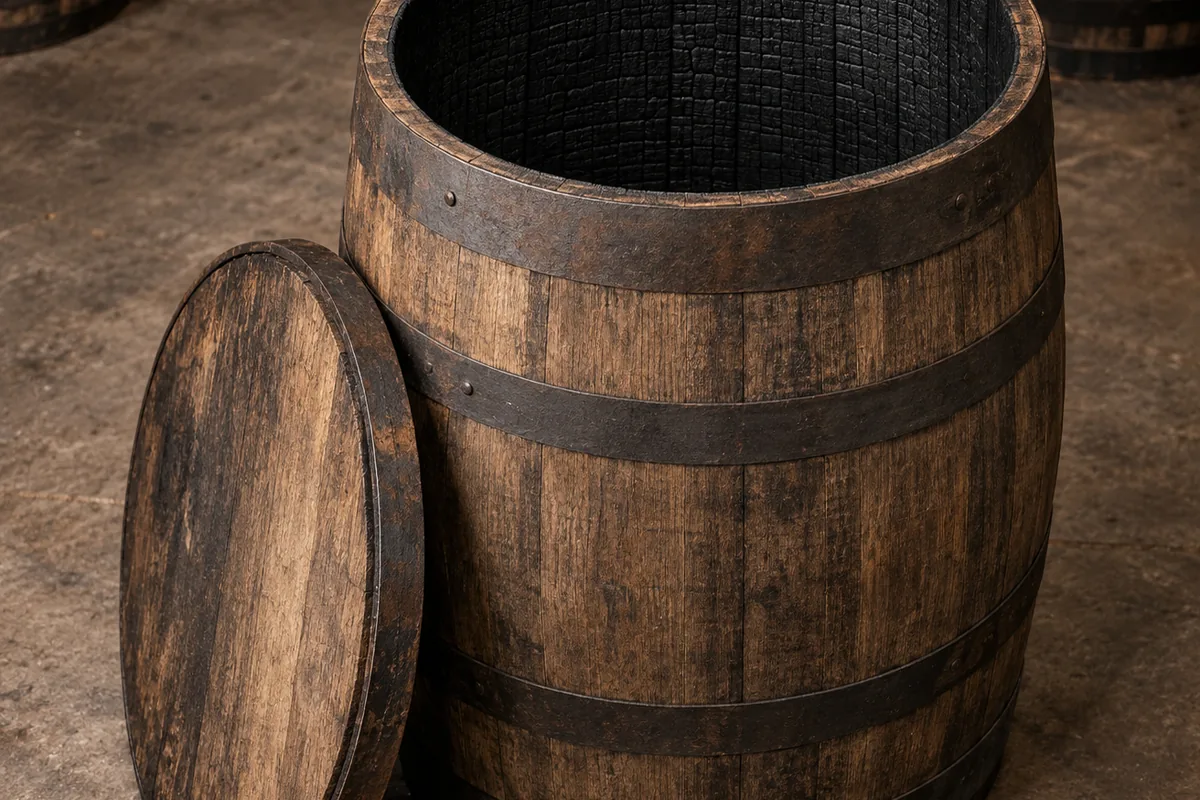
One phrase in the definition repays attention, and it is charred new oak containers. The word container is doing more work there than it appears to.
The standard names a container rather than a barrel, and it fixes no size.
A producer may use a 53 gallon barrel, and may equally use something much smaller, provided the oak is new and the interior is charred.
- Two years in charred new oak
- The only quantity the word supplies. Bourbon itself carries no minimum storage period at all.
- Nothing added
- No neutral spirits, and no colouring, flavouring or blending material of any kind. Water used to reduce strength is not an addition in this sense.
- The word is optional
- 27 CFR 5.143 treats straight as a further designation of a type, and says its use is optional. A whiskey can meet every condition and not print it.
That last point does more work than it looks.
Because the designation is optional, a bottle without the word is not making a negative claim. It has simply not made a claim either way, and no inference about the whiskey follows from the silence.
In practice most American whiskey that qualifies does print it, which is what makes the exceptions hard to read.
A bottle that omits the word may be young, may be a mixture that crossed a state line, or may simply have chosen a different front label. Only the other statements on the bottle will separate those cases.
An absent designation is not evidence, and reading it as one is the commonest mistake made with this word.
What does bourbon already require before the word straight?
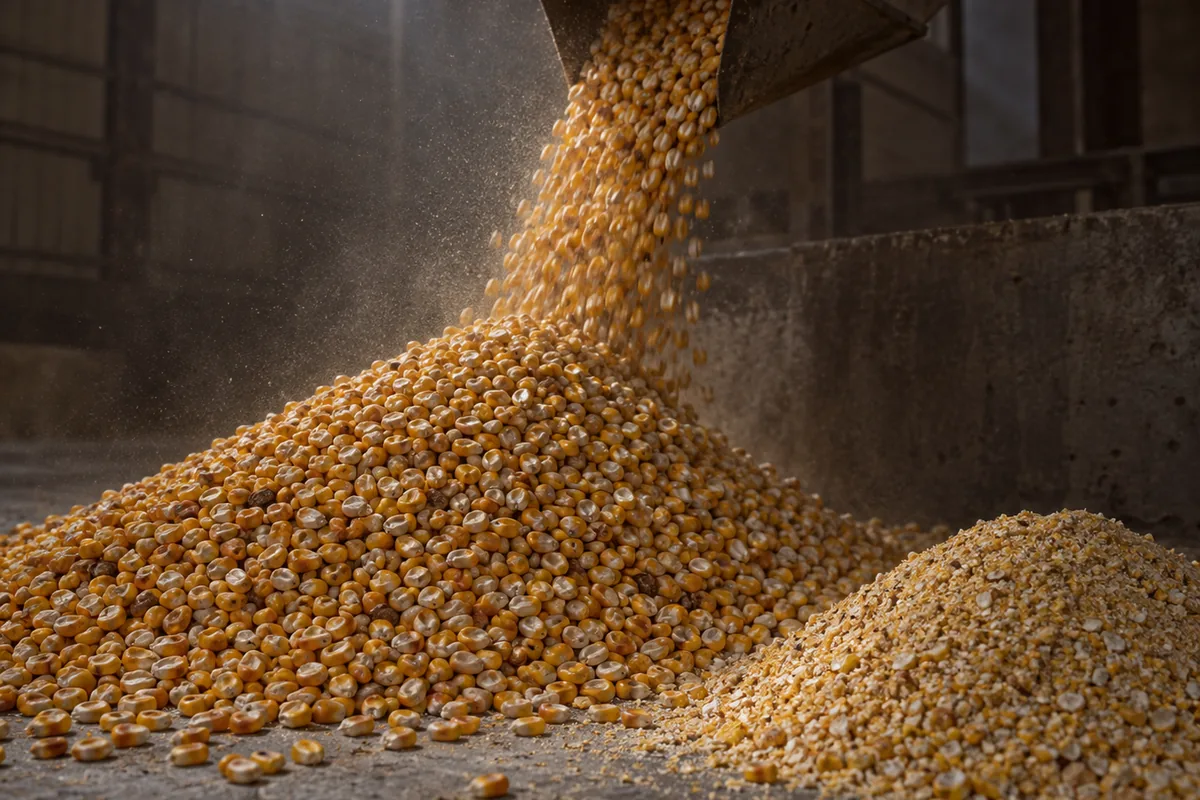
A good deal, and none of it is about time. The mash has to be at least 51 percent corn, cooked and fermented before any of it reaches a still, and three further conditions apply after that.
| What bourbon requires | What it controls | What it leaves open |
|---|---|---|
| At least 51 percent corn | The grain that makes a whiskey bourbon rather than rye or wheat whiskey | The rest of the mash, which may be rye, wheat, malted barley or a mixture |
| Distilled at no more than 160 proof | How much distillate character survives, since a higher proof strips more of it | Everything below that ceiling, which is a wide operating range |
| Entered at no more than 125 proof | The strength of the solvent that meets the wood, and therefore the rate of extraction | How much lower a producer chooses to enter, which is rarely disclosed |
| Charred new oak containers | The vessel, which must be new and must be charred rather than merely toasted | How long the spirit stays in it, because bourbon carries no minimum age |
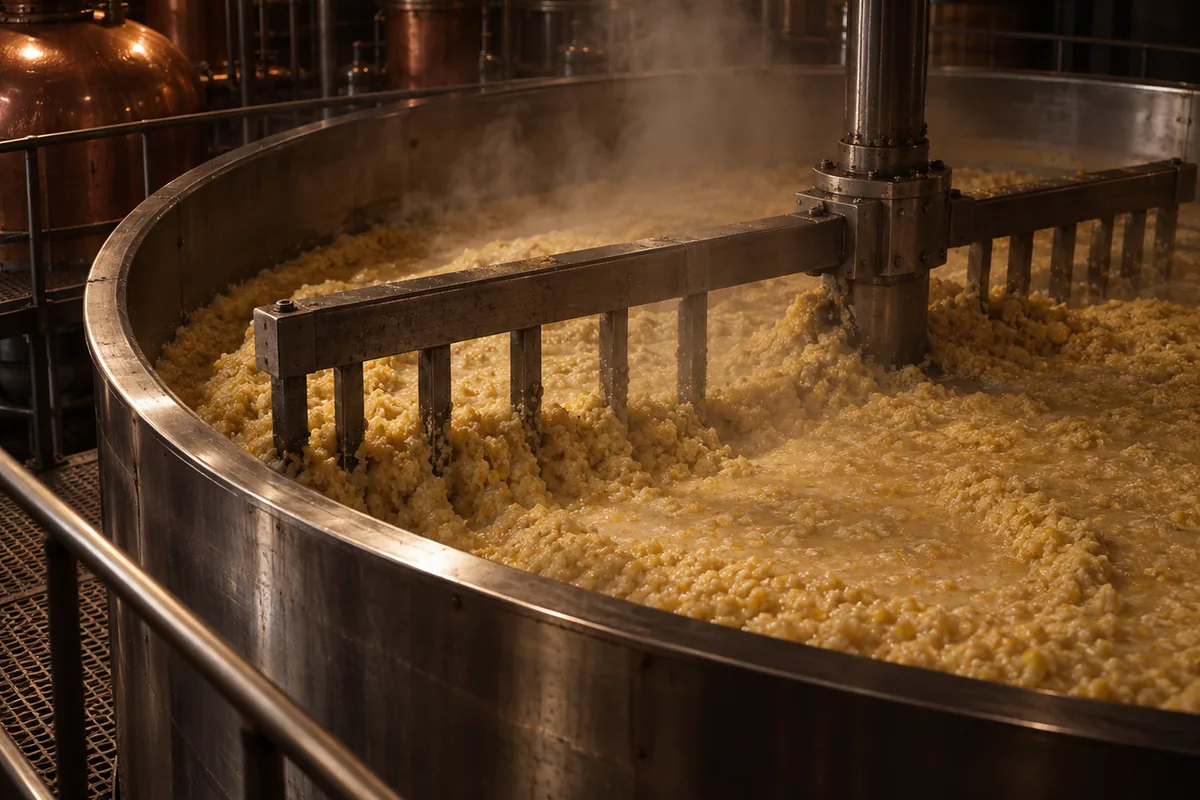
Read the last row again, because it is where the word straight becomes necessary. Two of those four numbers are worth converting, because proof is not how a strength is printed anywhere else in the world.
Distillation at no more than 160 proof is 80 percent alcohol by volume, and entry at no more than 125 proof is 62.5 percent. Both ceilings are high enough to leave a producer a wide operating range below them.
Entry proof in particular is a commercial decision as well as a flavour one.
Filling barrels at the maximum strength puts more finished whiskey into fewer barrels, which costs less per bottle. Entering lower means more barrels for the same volume of spirit, and a different balance of what the wood gives back.
Bourbon must go into charred new oak. Nothing in the bourbon standard says it has to stay there for any particular length of time, which means a bourbon can in principle be very young indeed.
That gap is precisely what the straight designation closes.
What does the word straight actually add?
Two things, and it is worth being exact about how narrow they are.
- A minimum of two years
- Storage in charred new oak containers for at least two years, which is the only period the designation fixes.
- No additions of any kind
- No neutral spirits, no colouring, no flavouring and no blending material. Bourbon is already restricted here, and straight makes the restriction absolute.
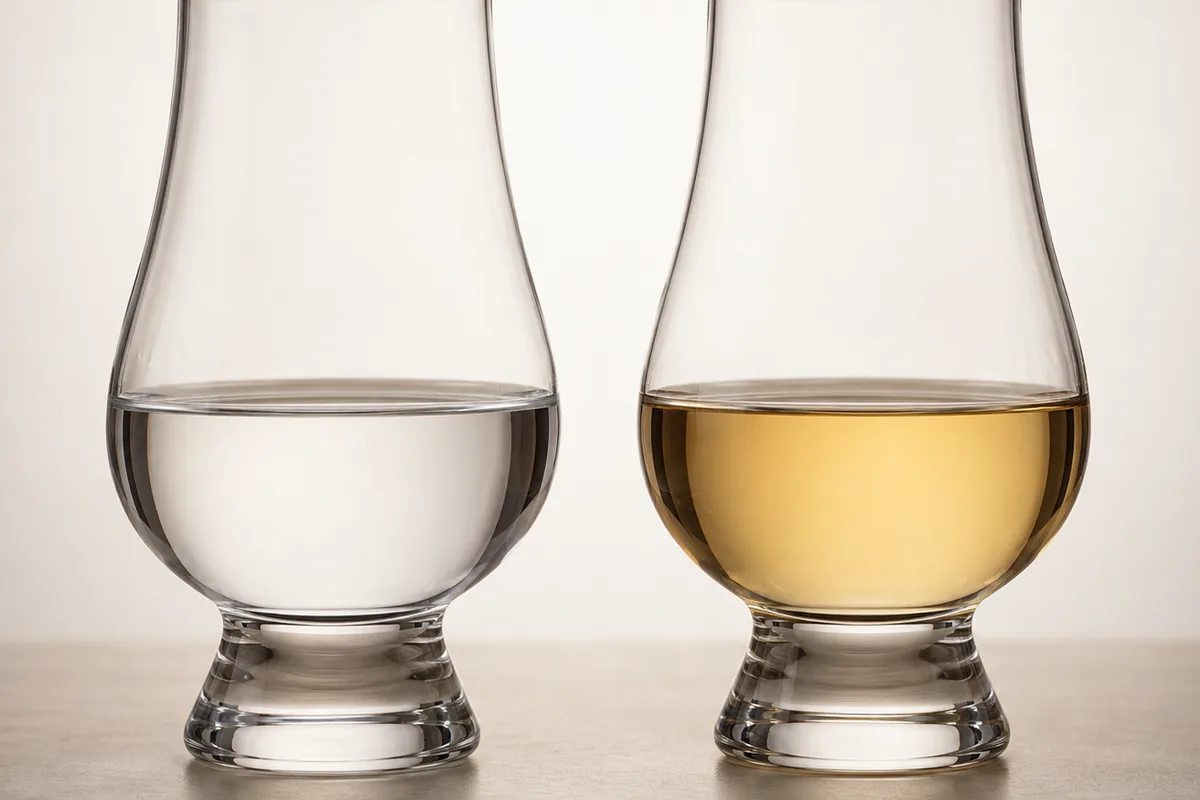
Notice what is not on that list. The prohibition on additions is stricter than most national standards, and the comparison is instructive.
Scotch whisky permits plain caramel colouring, which means a Scotch and a straight bourbon of the same shade are not making the same claim about how that shade arrived. In a straight bourbon the colour can only have come out of the wood.
That is a small thing to know and a genuinely useful one, because it makes colour a slightly better signal here than it is almost anywhere else.
The designation says nothing about who distilled the whiskey, in what season, at what scale, or with what care. It fixes a container, a period and a prohibition, and it stops.
Can a straight bourbon be a mixture of several bourbons?
Yes, and this is the part of the definition that surprises people most.
A mixture of straight bourbons produced in the same state is still straight bourbon whiskey. The designation survives mingling, which means the word carries no promise about one barrel, one batch or one distillery.
Cross a state line and the answer changes.
The rule is administrative rather than sensory, and it long predates the modern trade in sourced whiskey.
Its practical effect today lands on brands that buy mature stock from more than one place. A company mingling straight bourbon bought in two states has to say so on the front of the bottle, whatever the whiskey tastes like.
| What was mixed | What it may be called | Why the line falls there |
|---|---|---|
| Straight bourbons from one state | Straight bourbon whiskey | The mixture still satisfies every condition, so nothing about the designation has changed |
| Straight bourbons from different states | Blended straight bourbon whiskies | The regulation treats a mixture across state lines as its own type, and it must be named as one |
| Straight bourbons from one state, with material added | Blended straight bourbon whiskies | Adding colouring, flavouring or blending material breaks the straight prohibition, whatever the geography |
So the phrase blended straight bourbon whiskies, which sounds like a contradiction, is a precise designation with a specific trigger.
It tells you either that state lines were crossed or that something was added, and the label alone will not say which.
Neither trigger is a defect. A mixture across states can be excellent, and a mixture within one state can be dull, because the rule is about geography and additions rather than about quality.
What the longer designation does give you is a fact you would not otherwise have, which is that more than one straight whiskey went into the bottle.
For a reader the useful consequence is a negative one: straight is not a singleness claim. If you want one barrel or one distillery, those are separate words on separate bottles.
When must a straight bourbon print an age?
Below four years, always. At four years and above, never.
Whisky aged less than four years must carry an age statement and a percentage of types statement, unless it is labelled bottled in bond. Above that threshold the statement becomes optional.
- Look for an age statement: if there is one, and the number is under four, the label had no choice about printing it.
- Check for bottled in bond: that designation is exempt from the requirement, so a bonded bottle carrying no age is not making a claim about youth.
- Read a stated age as the youngest: where whiskies of different ages are combined, the number reports the youngest whisky present rather than an average.
Turn that around and an absent age becomes informative.
The percentage of types statement is worth knowing about too, because it appears in the same provision and answers a different question.
Where a whiskey under four years old carries an age, it must also state the proportion of each type of whisky in the bottle, which is what stops a young age statement standing alone and unexplained.
On an ordinary straight bourbon with no bonded designation, no age statement means the whiskey is at least four years old. That is a floor rather than a figure, but it is a real one.
It also explains a pattern that puzzles buyers, which is why so many bottles print nothing. Once the whiskey passes four years, printing an age is a marketing decision rather than a legal one.
Straight, bonded or blended: what does each word fix?
Three designations, three very different amounts of information.
| Designation | What it fixes | What it leaves open |
|---|---|---|
| Bottled in bond | One kind of spirit, one distilling season, one distiller, one distillery, at least four years in wood, and bottling at 50 percent alcohol by volume | The mash bill beyond its class, the wood beyond the four year minimum, and the warehouse the barrels sat in |
| Straight bourbon | Charred new oak, at least two years, and no additions of any kind | Who distilled it, when, at what scale, and whether it is a mixture of many barrels from one state |
| Blended whisky | That the product is a blend, with the proportion of neutral spirits disclosed | Almost everything else, since neutral spirits are permitted here and prohibited in a straight bourbon |
Reading down the middle column is the fastest way to rank them.
The blended row deserves a caution, because the word blended is doing two jobs on American shelves and they are not the same job.
Blended whisky permits neutral spirits, and can be a majority neutral spirit product. Blended straight bourbon whiskies permits none at all, because every component has to be a straight bourbon already.
Two designations, one shared word, and a very large difference in what is in the bottle.
Bonded fixes six things and is the strictest word on an American whiskey shelf. Straight fixes three.
Blended fixes the least and permits the one thing straight rules out entirely.
None of that is a ranking by taste, and it is not meant to be. It is a ranking by how much of the bottle you already know before you open it.
What do two years in charred new oak actually do?
The requirement is a period of time, so it helps to know what the time is being spent on.
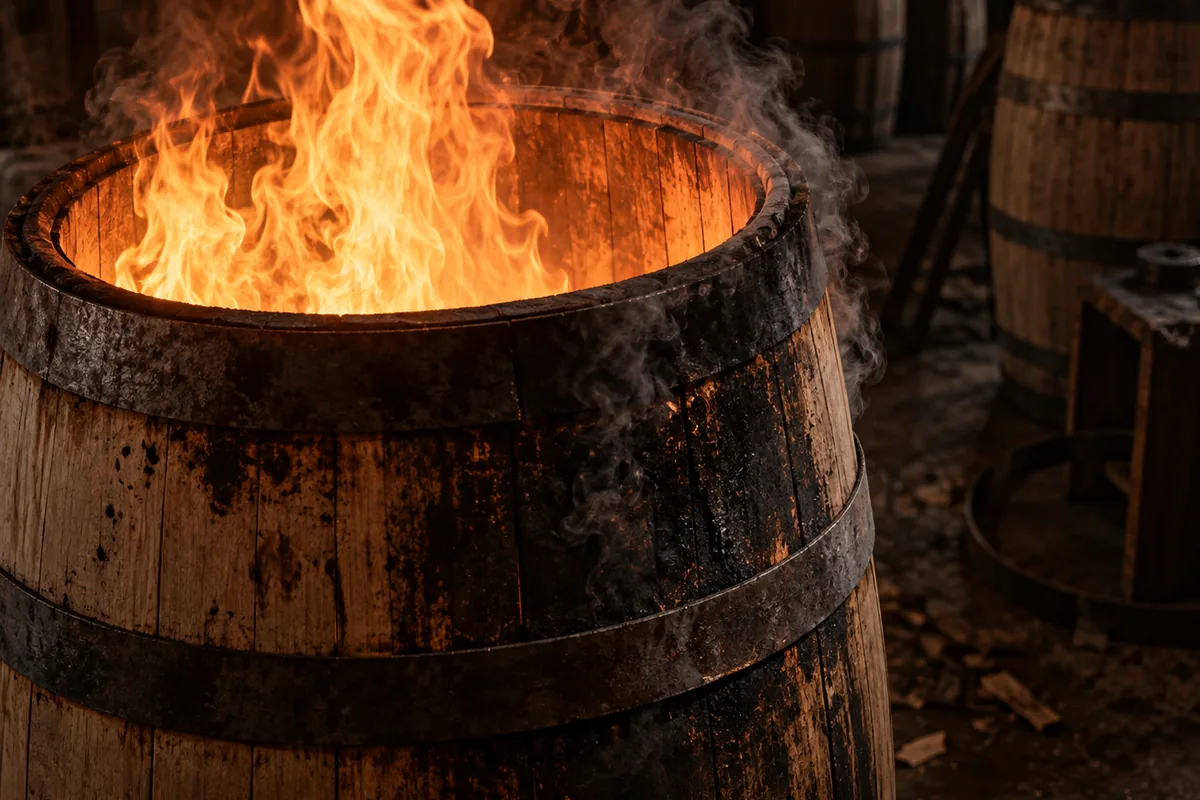
The result is layered, and the layers matter.
Charring is not the same operation as toasting, and the standard requires the former.
Toasting heats the wood until its sugars and lignin change chemically. Charring goes further and burns the surface, leaving a carbon layer over the toasted band rather than instead of it.
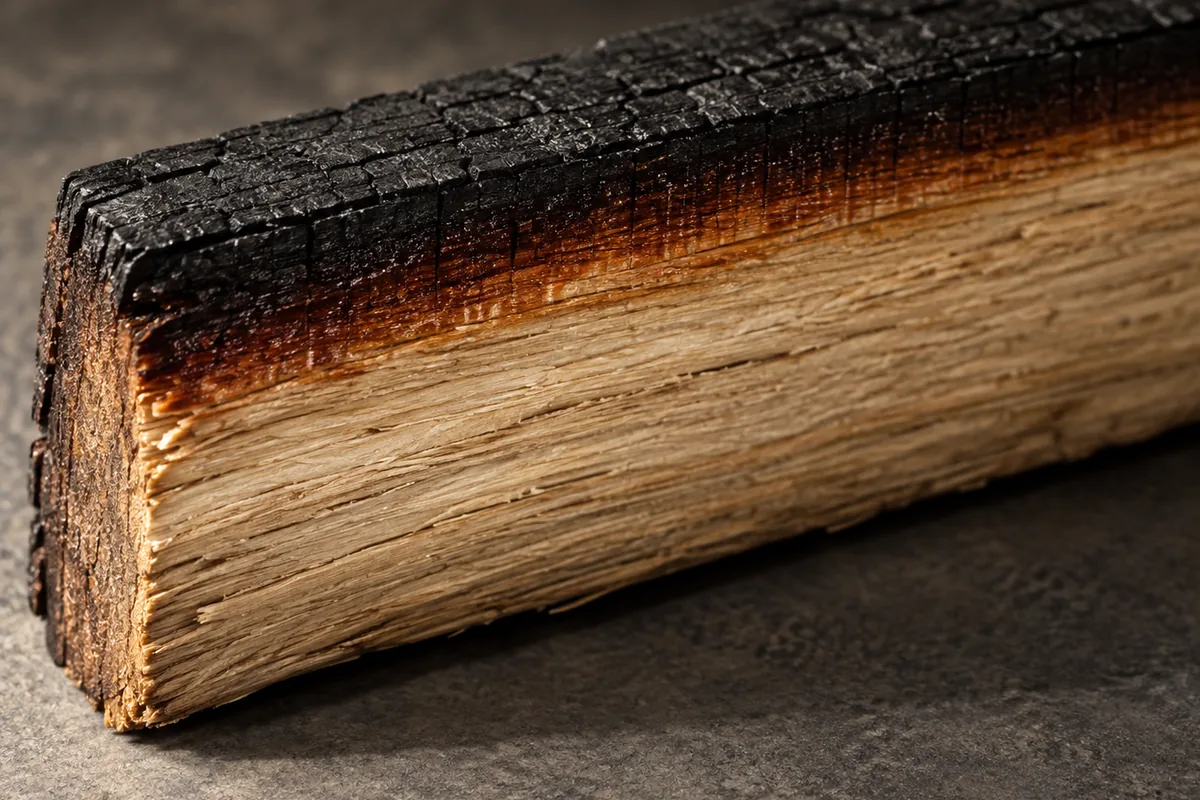
- The char and the layer under it: extraction works on the caramelised band, and the carbon layer above it acts on compounds already in the spirit.
- Entry proof: the strength going into the barrel decides what the spirit can dissolve, and the 125 proof ceiling leaves a producer free to enter lower.
- Warehouse and time: position, climate and duration decide how far into the wood the spirit actually reaches, which is why two barrels filled the same morning do not finish alike.
Two years is therefore a floor under a process rather than a quantity of flavour.
It is also worth knowing what leaves during those years, not only what arrives. Water and alcohol evaporate through the staves at rates that depend on temperature and humidity, so a barrel in a hot upper rick loses volume faster and often gains strength, while a cool ground floor barrel changes more slowly in both.
Which is why a distiller who wants consistency mingles across positions rather than bottling one rick at a time. A hot upper rick and a cool ground floor will produce visibly different whiskey in the same two years, and both are equally entitled to the word.
Does straight mean a better bourbon?
No. It means a bourbon that met two conditions.
A two year old straight bourbon and a twelve year old straight bourbon carry exactly the same word, and so does a mixture of dozens of barrels from one state.
Restrictions are not a grade. The designation constrains what a producer may do. It does not assess how well they did it, and nothing in the definition addresses grain quality, fermentation, still design, cut points or the character of the wood.
What the word does do is rule things out, and that is genuinely worth something. Think of it as a floor with a wide room on top of it.
Everything from a two year old bottling at the legal minimum strength to a fifteen year old barrel proof release sits inside the same designation, and the word cannot distinguish between them at all.
A straight bourbon cannot be coloured, cannot be flavoured, and cannot have been sweetened with blending material. Those are real assurances, and they are the ones the word actually gives.
What follows is that the word is a poor shortlist filter. It will not separate one bourbon from another on a shelf where nearly every bottle carries it.
How do you compare a straight bourbon with one that is not?
Nothing in the glass will tell you which is which. A straight bourbon and an undesignated bourbon look identical poured, so the comparison has to be set up rather than simply observed.
- Strength: alcohol changes aroma delivery and heat more than the designation ever will, so match the proof as closely as the two labels allow.
- Age: where both labels carry a number, keep them close, because time in wood is the variable most easily mistaken for the word straight.
- Mash bill: where it is disclosed, match it, since a high rye recipe against a wheated one will swamp anything the designation contributes.
With those held still, pour equal measures into the same glass shape and nose both before adding anything.
Then add the same recorded amount of water to each, rather than a splash to whichever seems hotter. Dilution changes which compounds reach the nose, and doing it unequally is the fastest way to manufacture a difference that was not there.
A difference found that way is evidence about those two bottles. It is not evidence about the designation, and a second pair could easily point the other way.
What food suits a straight bourbon?
The designation cannot answer this, because it covers whiskeys that taste nothing like each other.
Food meets the strength and the wood first, so start there.
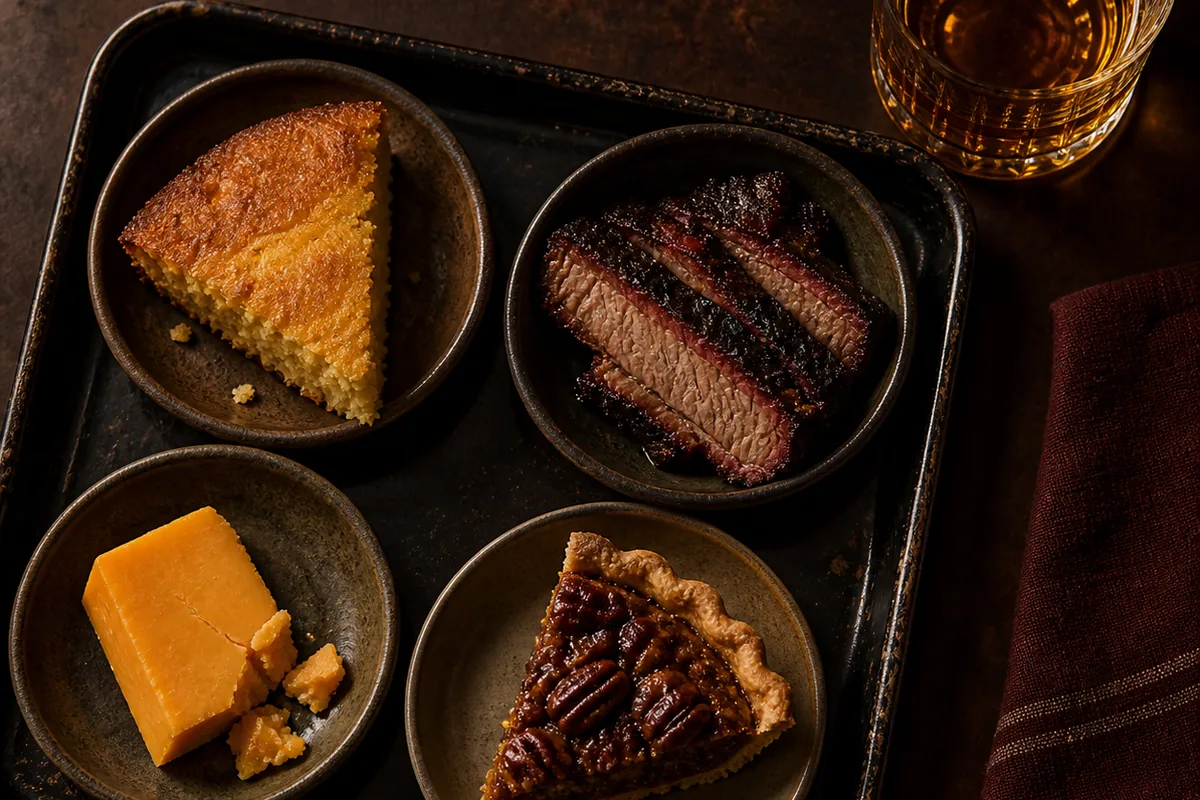
| What the bottle turned out to be | Food direction | Why it works |
|---|---|---|
| Sweet and corn-led | Smoked or barbecued meat, sharp cheese, browned cornbread | Salt and smoke give the sweetness something to push against rather than doubling it |
| Dry and oak-led | Fattier meat, aged cheese, roasted nuts | Fat softens tannin and alcohol heat, where a sweet dish would sharpen both |
| High proof | Richer food in smaller portions | Food has to have enough weight not to disappear, and fat is what carries alcohol heat comfortably |
Two interactions go wrong reliably. Very hot chilli magnifies alcohol burn, and a sugary dessert can make a dry whiskey seem harsher than it is.
There is a third that is less often mentioned, which is temperature.
A bourbon served very cold gives up much less aroma, so a pairing worked out over ice and then repeated neat at room temperature will not behave the same way twice.
Pecan pie beside a high proof straight bourbon is the classic version of that second mistake, and it is worth tasting once to understand why the pairing is usually recommended the other way round.
How should an opened bottle of straight bourbon be kept?
Whiskey does not go on maturing in glass. What happens after opening is oxidation and the slow loss of the most volatile aroma.
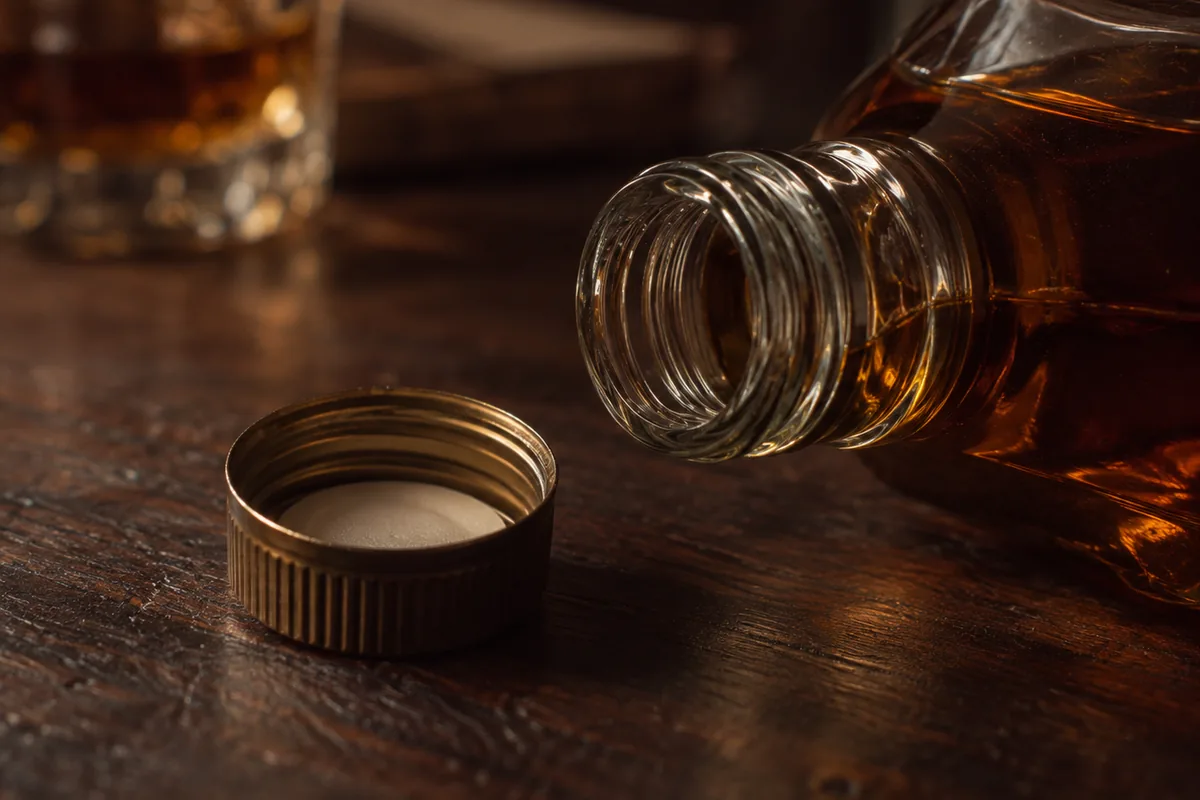
- Cool and dark: heat and light are the two conditions you can remove outright, and nothing in the bottle improves with either.
- Check the liner: look inside the cap. A hardened, cracked or pierced liner has stopped sealing, whatever the cap feels like when you tighten it.
- Upright: a high strength spirit resting against a closure will attack the material over the years a bottle can sit.
- Decant a small remainder: moving the last third into a clean smaller bottle cuts the air above it, which is the only variable here you can actually reduce.
As the level falls the bottle holds more air, and every opening replaces that air with a fresh supply.
Bourbon at high proof is a little more forgiving here than a lower strength whiskey, because there is more alcohol and less water in the liquid to begin with.
That is a difference of degree rather than of kind. A barrel proof bottle left half empty in a warm kitchen for two years will still be measurably flatter than it was.
None of that is fast, and none of it is dramatic. It simply means a bottle you opened three years ago is not the reference it was when you opened it.
How much alcohol is in a straight bourbon pour?
A straight bourbon must reach the bottle at no less than 40 percent alcohol by volume, and a great many are presented well above that.
In the United States a standard drink contains about 14 grams of pure alcohol, which is roughly 1.5 fluid ounces, or 44 millilitres, of a spirit at 40 percent. Pour the same measure of a barrel proof bottling at 62 percent and you have taken more than half as much alcohol again, from a glass that looks no different.
Read the proof, not the designation. Straight, bonded, small batch, colour, smoothness, water, food, coffee and time spent tasting cannot establish that someone is unimpaired or safe to drive. Measure the pour and read the alcohol content.
Anyone who is pregnant, below the legal drinking age, taking an interacting medicine, managing a condition worsened by alcohol, or responsible for driving needs an alcohol-free choice instead.
Is the word straight worth paying for?
Price it honestly and the answer follows.
What you are buying is two years in charred new oak and a guarantee that nothing was added. Both are real, both cost the producer money, and neither is trivial.
What you are not buying is age beyond two years, a single distillery, a single barrel, a particular mash bill, or any assessment of how well the whiskey was made.
So the word is worth what it fixes, and no more. On a shelf where almost every bourbon carries it, that also means it is doing very little work to separate one bottle from the next.
Read past the designation. Where two bottles both say straight bourbon, everything that separates them is printed somewhere else: a number of years on the front, a bonded designation, a disclosed mash bill, and the proof. Start there, and let the shared word be the last thing you consider.
That is not a criticism of the designation. It is what a floor is for, and a floor is most useful when you know exactly how high it sits.
Common questions
- How long must straight bourbon be aged?
- At least two years in charred new oak containers. Bourbon itself carries no minimum storage period, so the two year floor is the only quantity the word straight supplies.
- Can straight bourbon be a blend of different bourbons?
- Yes, within one state. A mixture of straight bourbons produced in the same state is still straight bourbon whiskey. Mixing across state lines, or adding colouring, flavouring or blending material, makes it blended straight bourbon whiskies.
- Why do some straight bourbons have no age statement?
- An age statement is compelled only below four years, and bottled in bond is exempt. On an ordinary straight bourbon with no bonded designation, no age statement means the whiskey is at least four years old.
Sources
-
27 CFR 5.74, Statements of age, storage, and percentage
Accessed 4 September 2026.
-
27 CFR 5.88, Bottled in bond, Legal Information Institute
Accessed 6 September 2026.
-
Code of Federal Regulations, Title 27, sections 5.143 and 5.74
Accessed 5 September 2026.
-
NIAAA, What Is a Standard Drink?
Accessed 13 September 2026.
More in Spirits
-
 American single malt whisky
01
What is American single malt whisky, and what does it guarantee?
-
 Australian whisky
02
How is Australian whisky defined, and by which law?
-
 Black rum
03
What is black rum, and does the colour mean anything?
-
 Blended American whiskey
04
What is blended American whiskey, and how much of it is whiskey?
-
 Blended Irish whiskey
05
Blended Irish whiskey: which word counts the distilleries?
-
 Blended Scotch
06
Blended Scotch: what is in it, and why does the recipe change?