
Spirits
Wheat Whiskey: What Does the 51 Percent Floor Buy?
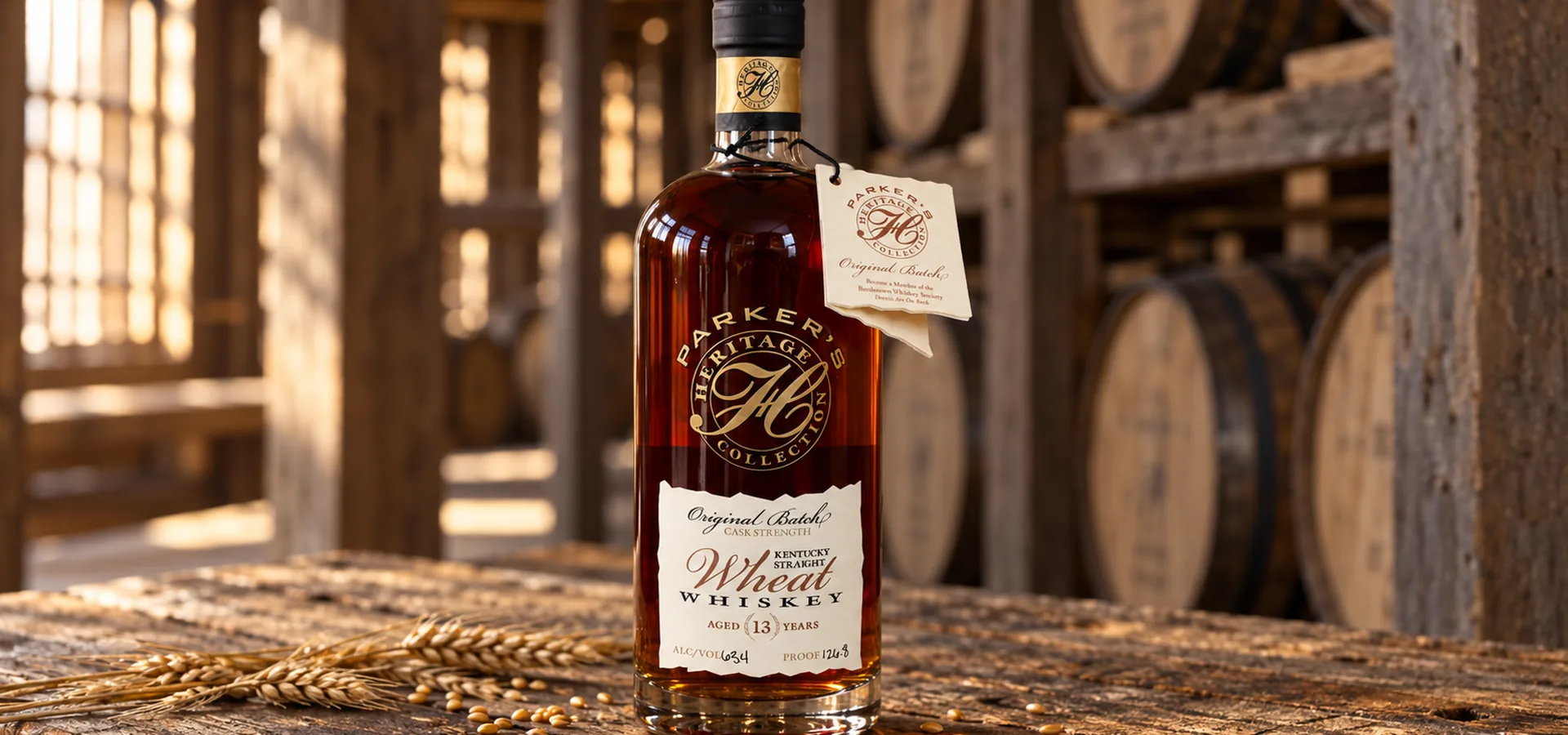
Wheat whiskey is an American class made from a mash of at least 51 percent wheat and stored in charred new oak. The figure is a floor rather than a recipe, the rule is the rye rule with one cereal changed, and the largest wheat whisky in the world never prints the word.
At a glance
- Legal category
- United States standard of identity: not less than 51 percent wheat, charred new oak
- Typical strength
- 40 to 50 percent ABV
- Also called
- Wheat whisky, Straight wheat whiskey
- Cereal floor
- Not less than 51 percent wheat in the mash
- Wood
- Charred new oak, entered at not more than 125 proof
- Straight
- Adds a two year minimum in that wood
What is wheat whiskey, and what does the class name promise?
Wheat whiskey is a class of American whisky made from a fermented mash of not less than 51 percent wheat, distilled at not more than 160 proof and stored in charred new oak at not more than 125 proof.
That is the entire definition. Four numbers, one cereal, and nothing else.
- A floor, not a recipe
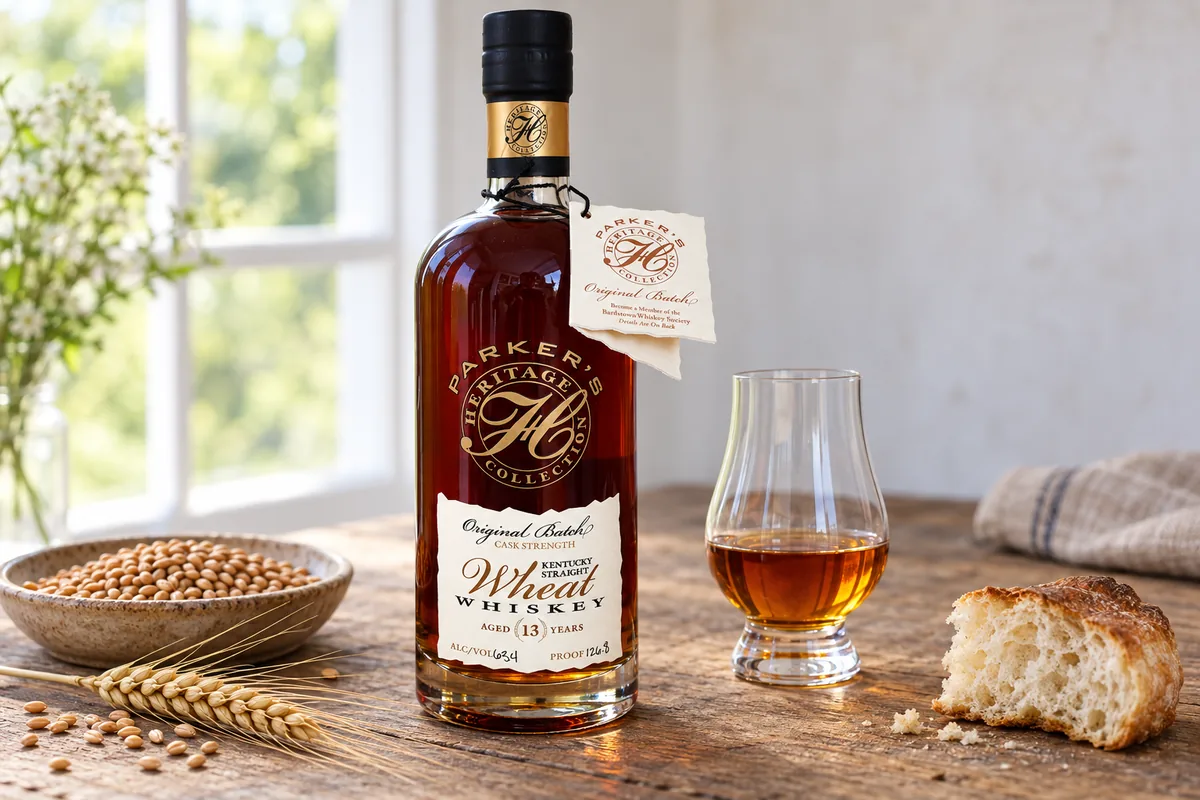
- The standard sets a minimum. A mash of 51 percent wheat and one of 95 percent wheat carry the same class name and can taste nothing alike.
- The rest of the mash is unstated
- Whatever fills the remaining share is chosen by the producer and disclosed only if they want to disclose it. Corn and malted barley are the usual companions.
- No variety, no clock
- The class says nothing about which wheat, and on its own it sets no minimum time in wood. Age is governed by other parts of the same rulebook.
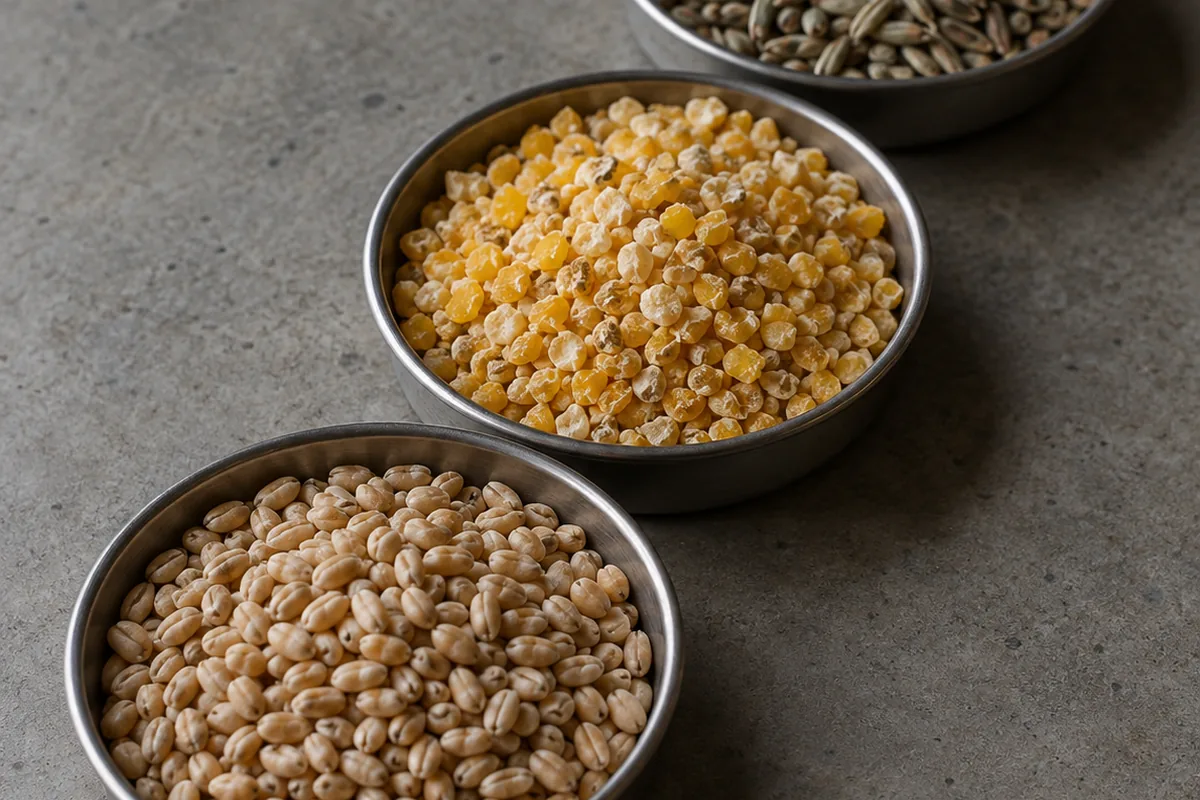
Whatever fills the remaining share is chosen by the producer and is rarely printed anywhere. Corn and malted barley are the usual companions, the first for yield and the second for enzymes.
The 51 percent is a floor rather than a recipe, so the other 49 percent of the mash is unstated. Two bottles can carry the same class name while one is a wheat whiskey by a single percentage point and the other is almost entirely wheat.
The class also says nothing about which wheat.
Variety, hardness and protein are all left open, and they are the properties a distiller actually argues about when buying grain.
What it does fix is worth stating plainly, because the four things a wheat whiskey class name guarantees are real constraints. New wood, charred, and no more than 125 proof going in, which rules out the refill and reused casks that most of the whisky world runs on.
Why is the wheat rule written exactly like the rye rule?
| Class | Cereal floor | Everything else in the rule |
|---|---|---|
| Wheat whisky | Not less than 51 percent wheat | Distilled at not more than 160 proof, stored in charred new oak at not more than 125 proof |
| Rye whisky | Not less than 51 percent rye | Distilled at not more than 160 proof, stored in charred new oak at not more than 125 proof |
| Malt whisky | Not less than 51 percent malted barley | Distilled at not more than 160 proof, stored in charred new oak at not more than 125 proof |
| Bourbon whisky | Not less than 51 percent corn | Distilled at not more than 160 proof, stored in charred new oak at not more than 125 proof |
Read the four standards next to each other and the drafting becomes obvious. One sentence is doing all four jobs.
One sentence, four cereals, one number, with the wheat whiskey standard using the same distillation ceiling, entry proof and charred new oak requirement as the rye, malt and bourbon standards and changing only the named cereal and its 51 percent share.
That matters because of what it rules out. Because the wheat whiskey template is shared across the grain classes, the rule cannot encode anything about how wheat behaves in a mash or in a cask.
It was never trying to. A standard of identity exists so that a word on a label means the same thing in every state, and grain accounting is something an inspector can check.
Flavour is not.
A wheat whiskey label therefore carries a claim about grain accounting, and every question about character has to be answered from outside the standard. The rest of this entry is that outside.
Is it wheat whiskey or wheated bourbon in the bottle?
Two different things put wheat in front of a whiskey buyer, and only one of them is a wheat whiskey. The other outsells it many times over.
A wheated bourbon is legally a bourbon, made from a mash of at least 51 percent corn in which wheat replaces rye as the secondary grain. The wheat is the flavouring grain rather than the base.
The arithmetic settles it. A wheat whiskey needs at least 51 percent wheat, which is more wheat than any wheated bourbon can contain while still meeting the corn floor of its own class. The two categories cannot overlap.
Corn has to be the majority in a bourbon and wheat has to be the majority in a wheat whiskey.
Both floors sit at 51 percent, and a mash cannot be majority corn and majority wheat at once.
Which leaves the label. The class name printed on the bottle settles which of the two it is, because a wheated bourbon must still be labelled bourbon whiskey.
The word wheated is not a class at all. It is a trade description that producers and writers use for a bourbon whose secondary grain is wheat, and it appears on front labels because it sells.
So the reading order is fixed. Find the class name, which is the small print rather than the large, and the marketing arranges itself around it afterwards.
What does the word straight add to a wheat whiskey?
- Two years, minimum: A straight wheat whiskey must be stored in charred new oak at not more than 125 proof for a minimum of two years. Below that the word cannot be used at all.
- A restriction on what goes in: The designation limits what may be added after distillation, which is why it reads as a plain declaration rather than a boast.
- Still silent on the grain: Nothing about the wheat changes when the word is applied. The same designation attaches to corn, rye and malt whiskies on the same terms.
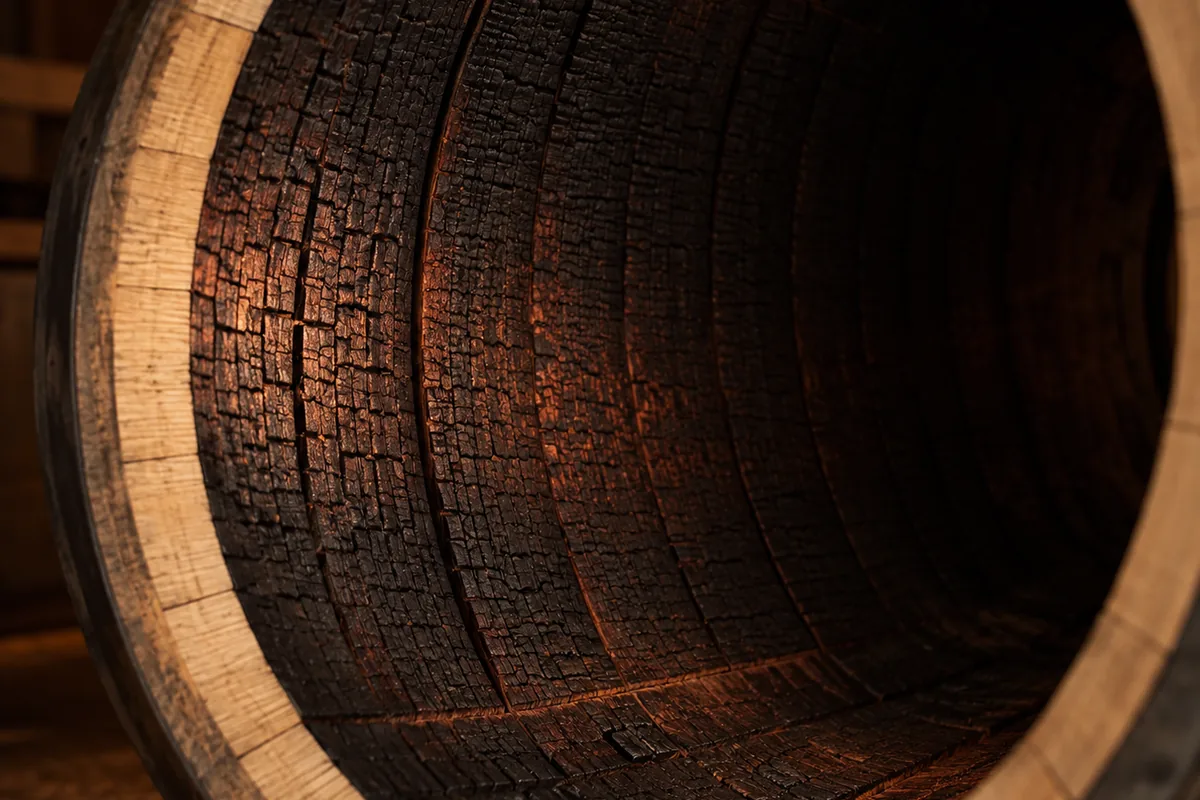
Nothing about the wheat changes when the word is applied, but a good deal about the liquid does.
Two years is not a long maturation by the standards of most whisky categories. It is long enough that a spirit which went into wood tasting of raw cereal will not still taste that way.
Below two years a producer can still sell the whiskey. They simply cannot call it straight, and if it is under four years old the label has to carry a statement of its age.
That last rule is the one that gives the shelf its rhythm. A young whiskey has to admit it, and everything older than four years may stay quiet.
Where does most of the world's whisky wheat actually go?
Ask where wheat matters most in whisky and the American class is the wrong answer.
The United Kingdom distilling industry uses between 700,000 and 800,000 tonnes of wheat each year, around 5 percent of total United Kingdom wheat production. Almost none of it ends up in anything called a wheat whisky.
- Wheat used by UK distillers
- 700,000 to 800,000 tonnes a year
- Share of the national crop
- About 5 percent of United Kingdom wheat production
- Wheat share of a grain mash bill
- About 90 percent, with around 10 percent malted barley
In grain Scotch whisky the unmalted wheat forms about 90 percent of the total mash bill, with around 10 percent high enzyme malted barley added to convert the starch. The barley is there for its enzymes rather than its flavour.
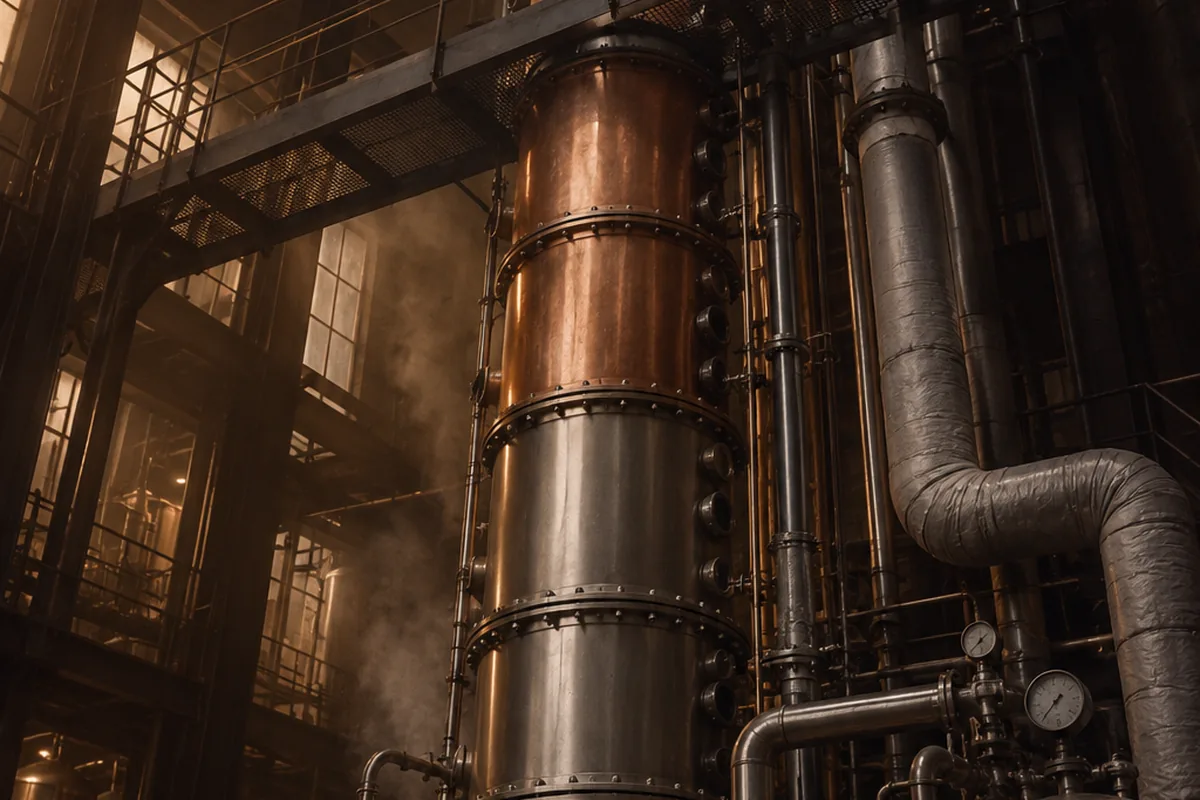
A whisky that is 90 percent wheat is sold as grain Scotch whisky rather than as wheat whisky, so the largest wheat whisky in the world never uses the word on a label.
There is no deception in that. The Scotch categories are drawn by process and place rather than by cereal, so a grain whisky is named for how it was made and not for what it was made from.
But it does something useful to the American class name. A bottle labelled wheat whiskey may hold less wheat than a blended Scotch that never mentions the grain at all.
If the industry that uses the most wheat does not advertise the fact, the interesting question becomes what those buyers are choosing when they buy grain.
Which wheat do distillers buy, and why not bread wheat?
Distillers have used white soft winter wheat as the main starch source for whisky production since 1984, and the hard milling and baking wheats are considered unsuitable for distilling. Unsuitable is a strong word for a trade body to use, and it is worth understanding why.
Soft wheat varieties carry more starch than hard ones, so they give more alcohol per tonne. Hard wheats carry more protein, which is what a baker wants and what a distiller pays for without getting anything back.
- Moisture
- Maximum 15 percent
- Total nitrogen
- Below 2 percent, for high starch content
- Specific weight
- Greater than 72 kilograms per hectolitre
Every criterion in a distilling wheat specification is about starch yield and processing behaviour, so nothing in the way whisky wheat is bought is chosen for taste.
No line on that specification asks what the grain will contribute to a glass. Moisture, nitrogen and specific weight are all ways of asking the same question, which is how much alcohol will come out per tonne that went in.
Varieties are assessed and listed for distilling suitability, and the assessment is run on alcohol yield and processing behaviour. A variety that scores badly comes off the list.
So the grain in a whisky was chosen by someone thinking about tonnes and pumps.
Does wheat make a whiskey mash harder to run?
Wheat behaves differently in a mash from corn or barley, and the difference is physical rather than chemical.
Even the best distilling wheats are quite viscous, and the problem appears at cooking, where the wheat starch gelatinises and gum like polymers hydrate, causing problems with pumping.
Picture wallpaper paste. That is roughly what a hot wheat mash wants to become, and a distillery runs on the assumption that everything in it can be moved through a pipe.
- At the cooker: Starch gelatinises and the gums take up water. The mash thickens, and pumps that were sized for a thinner liquid start to struggle.
- At the evaporator: After distillation the leftover liquid is boiled down into animal feed syrup. Viscous residue coats the evaporator plates, and cleaning them means stopping.
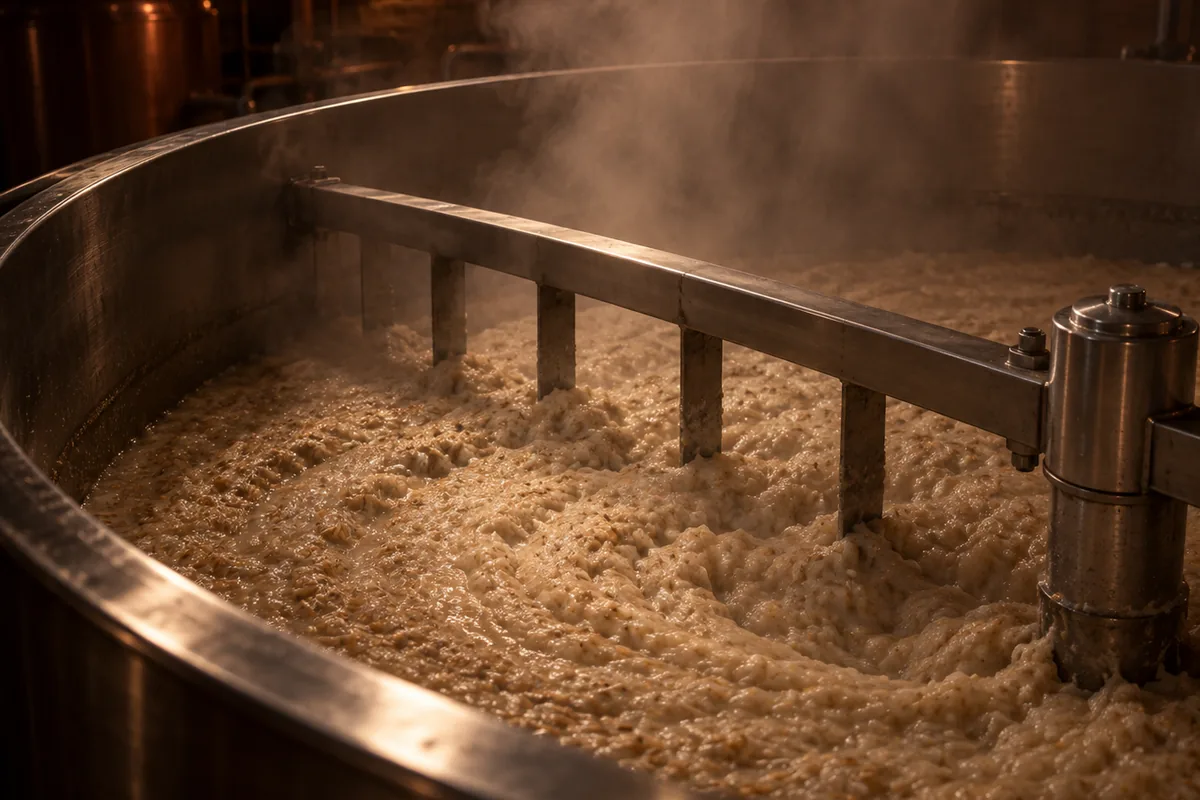
Both wheat viscosity problems are heat transfer and pumping problems rather than flavour ones, which is why low viscosity is bred into distilling wheat without any of it reaching the glass.
That is the part worth keeping. Plant breeders have spent decades selecting wheat for high alcohol yield and low viscosity, and neither trait is a taste.
A smaller distillery working with wheat runs into the same physics with less equipment to absorb it, which is one honest reason wheat whiskey is a thinner category than corn or rye.
Does a wheat whiskey actually taste softer than a rye?
Two pieces of evidence point in different directions, and a reader is better served by both than by either.
In a controlled comparison where four grains were fermented and distilled identically, the wheat spirit carried the highest citronellol content at about 4.1 milligrams per litre, some two thirds of its total terpenes, with fruity, floral and grain aromas.
Citronellol reads as rose and sweet. So at the level of new spirit, made under identical conditions, wheat does bring something of its own.
| What was tested | What it found | What it licenses you to say |
|---|---|---|
| Four grains, identical process | Wheat spirit highest in citronellol, fruity and floral aromas | That wheat contributes distinguishable aroma compounds when nothing else varies |
| 24 finished American whiskeys, trained panel | Bottlings individually distinct, categories not separated by mash bill | That you cannot predict a finished whiskey from the grain proportions on its class name |
The second finding is the one that should change behaviour. A trained sensory panel assessing 24 American whiskeys found individual bottlings clearly distinct while the bourbon and rye categories themselves were not discriminated by mash bill.
Those were bourbons and ryes rather than wheat whiskeys, and the point transfers because the question is the same one. Whether a cereal floor on a label predicts what a panel can taste.
Taken together the two findings mean wheat contributes measurable aroma compounds without the wheat whiskey class predicting where a finished bottle lands.
Everything between the still and the bottle intervenes. Entry proof, cask, warehouse position, years, and the cut the distiller took.
Each of those moves a whiskey further than the difference between 51 and 70 percent of one cereal will.
So the honest expectation is a mild one. Reach for a wheat whiskey expecting a quieter, rounder profile than a rye of the same age, and treat that as a tendency you are testing rather than a guarantee you have bought.
What strength should you expect, and what does it change?
Whisky must be bottled at not less than 40 percent alcohol by volume, so 40 percent is the floor a wheat whiskey cannot go below and still be sold as whisky. Above that the producer chooses.
Wheat whiskey is commonly bottled between 40 and 50 percent alcohol by volume, with cask strength releases reaching the high fifties or above because nothing has been added back. The number is a decision about how much water to put in, taken by someone who tasted both versions.
A standard drink is a fixed amount of alcohol, not a fixed pour. It contains about 14 grams of pure alcohol, which is roughly 44 millilitres of a spirit at 40 percent alcohol by volume. The same measure of a cask strength wheat whiskey at 58 percent contains close to half again as much.
A higher strength wheat whiskey is not a stronger flavour so much as a less diluted one, which is why water changes it more than it changes a bottling at the floor.
At 40 percent the producer has already done the diluting. At 58 percent that decision is still yours, and it is the most useful thing you can do to a glass.
How should you taste a wheat whiskey against a rye?
A comparison is only worth running if it is controlled, and most informal ones are not.
A wheat whiskey comparison only tests the grain if age, bottling strength and cask type are matched between the two glasses, because each of those moves a whiskey further than the mash bill does.
Get those three wrong and you will learn something real about two bottles. You will learn nothing at all about wheat, which was the thing you sat down to find out.
- Match the three variables first: Same age band, same strength within a point or two, same cask type. If you cannot match them, note what is unmatched and discount the result accordingly.
- Pour the wheat one first: Rye character carries forward in the mouth. Take the quieter glass while your palate is clean and you get a reading rather than an aftertaste.
- Add the same water to both: A few millilitres, measured rather than splashed, into each glass. Then go back through in the same order and see what moved.
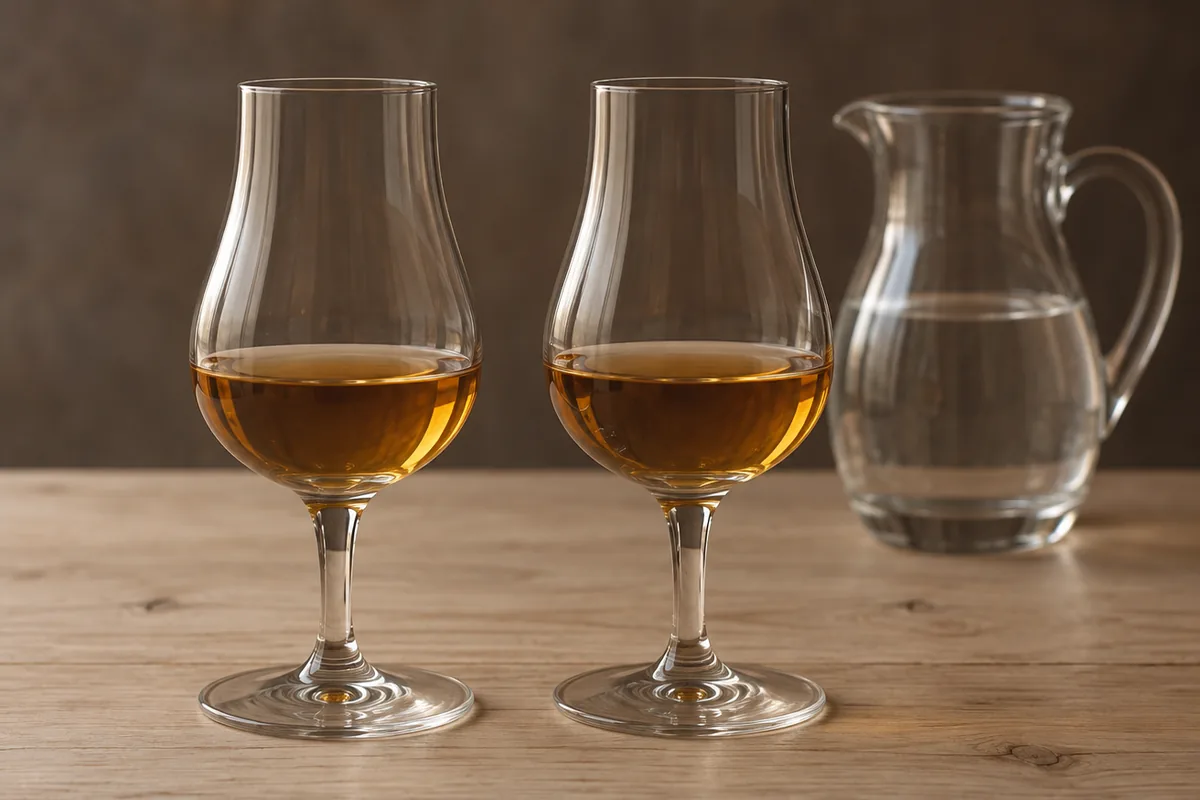
What counts as an answer is narrower than most people expect. This is a method for testing the softness claim about a wheat whiskey against a comparable rye, and it cannot answer anything wider than that.
If the wheat whiskey reads rounder and quieter at both strengths and holds that after water, you have learned something about those two bottles. Run it again with a different pair before you believe anything about the categories.
What food gives a wheat whiskey something to do?
The pairing question is usually asked of the category and answered by the bottle.
A wheat whiskey at the 40 percent floor and a cask strength one belong at different points on a table, so weight in the glass decides the pairing rather than the wheat.
Two interactions go wrong reliably. Sweetness in a dish sharpens a dry tannic wheat whiskey, and chilli heat is intensified by alcohol rather than cooled by it.
- Sweetness in the dish: Sugar in the food sharpens whatever tannin the whiskey took from its new oak, and a wheat whiskey reads drier and harder afterwards.
- Chilli heat: Alcohol carries capsaicin rather than washing it away, so a spirit poured against a hot dish makes the heat worse for both of you.
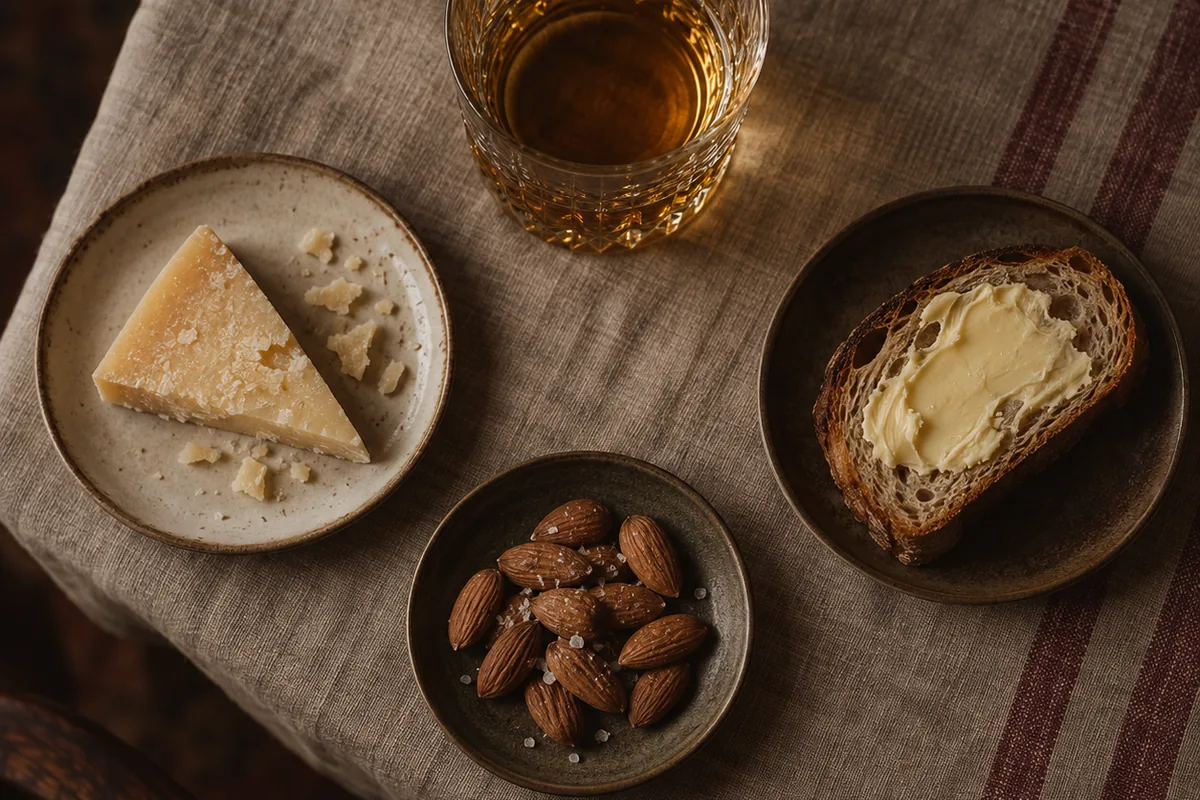
The direction that works with a quieter wheat whiskey is food with texture and salt rather than food with volume, because a lighter spirit has nothing to push back with.
Hard cheese, cured meat, roasted nuts, good bread and butter. None of these is a discovery, and all of them work for the same reason, which is that salt and fat make a spirit read fuller without competing with it.
If the bottle in front of you is a cask strength one, the same list works but the portions change. A stronger pour can take a heavier plate.
What happens to an open bottle of wheat whiskey?
An opened bottle of wheat whiskey does not spoil, because the alcohol level that keeps it stable does not fall once the cork is out.
Nothing is going to grow in it. That is the whole of the reassurance an opened wheat whiskey needs, and what changes instead is the part worth doing something about.
What changes in an open wheat whiskey is aroma, as the lighter compounds oxidise and escape into whatever air is sitting above the liquid. The change is slow and it is one directional.
A wheat whiskey has less in reserve than a heavier spirit does, which is the same reason it rewarded careful pairing. Quieter whiskies have less to lose before the loss is audible.
- Does not spoil
- The strength that made it stable in the bottle is unchanged by opening it. There is no safety clock running on an opened whiskey.
- Does fade
- Aroma goes first and it goes in one direction. Nothing you do afterwards puts it back.
- Headspace is the lever
- How much air sits above the liquid decides how fast the fading happens, and it is the only part of the process you control.
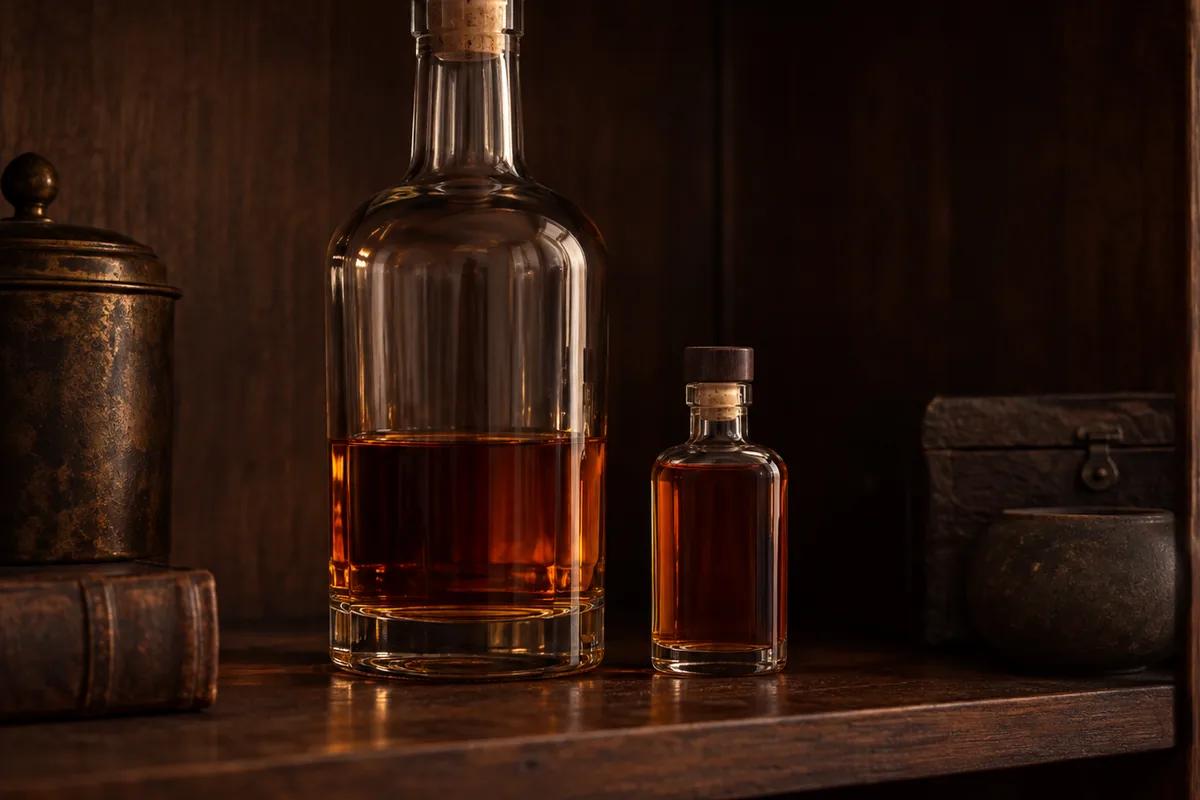
The variable worth managing in a part used wheat whiskey is headspace, since a bottle with a third left has several times the air of a full one.
What to do about it is short. Stand the opened bottle upright so the spirit is not against the cork, keep it dark and cool, and if it is going to sit for months, move it into a smaller bottle filled to the neck.
Nobody can tell you how long you have, because it depends on the bottle, the strength and how much air is in there. What can be said is which direction it is going and which lever you hold.
Is a wheat whiskey worth buying, and who for?
A wheat whiskey class name reliably buys a majority wheat mash bill and charred new oak, and nothing else about the bottle follows from it.
That is a smaller promise than the category usually gets credit for, and it is still a real one. New charred wood is an expensive commitment, and a majority of a cereal that is harder to run through a plant is a deliberate choice rather than a default.
Buy it for the mash bill, not for a promise about the taste. A wheat whiskey suits a drinker who wants an American whiskey with less of the rye edge, and suits it poorly for anyone hoping the class name predicts a particular character.
Anyone chasing a specific flavour is better served by asking about the cask and the years than by asking about the grain.
So the purchase decides itself once you know what you actually want from it. Buy a wheat whiskey because you want to taste what a majority wheat mash does in new wood, and the right bottle is whichever one you can compare against something.
The thing to check before paying for a wheat whiskey is the age and the strength, because both do more to the glass than the difference between 51 and 90 percent wheat.
Look for the age statement if there is one, and read the strength. Those two numbers will tell you more about what is in the bottle than the class name that got you to pick it up.
Common questions
- Is wheat whiskey the same as wheated bourbon?
- No. A wheated bourbon is a bourbon of at least 51 percent corn in which wheat replaces rye as the secondary grain, while a wheat whiskey needs at least 51 percent wheat. Both floors sit at 51 percent, so a mash cannot meet them both, and the class name on the bottle settles which one you are holding.
- How much wheat is in a wheat whiskey?
- At least 51 percent, and the standard says nothing beyond that. The remaining share is chosen by the producer and is usually corn or malted barley, so two bottles carrying the same class name can differ enormously in how much wheat they contain.
- Does wheat whiskey taste softer than rye?
- Wheat spirit does carry its own aroma compounds when four grains are distilled under identical conditions. But a trained panel could not separate finished American whiskey categories by mash bill, so softness is a tendency worth testing rather than something the class name guarantees.
Sources
-
Bourbon and Rye Whiskeys Are Legally Distinct but Are Not Discriminated by Sensory Descriptive Analysis, Journal of Food Science
Accessed 10 September 2026.
-
Code of Federal Regulations, Title 27, sections 5.143 and 5.74
Accessed 5 September 2026.
-
Comparison of Aroma Profiles of Whiskeys Fermented from Different Grain Ingredients, Foods
Accessed 10 September 2026.
-
NIAAA, What Is a Standard Drink?
Accessed 13 September 2026.
-
Scotch Whisky Cereals Technical Note, 6th Edition, Scotch Whisky Association
Accessed 10 September 2026.
More in Spirits
-
 American single malt whisky
01
What is American single malt whisky, and what does it guarantee?
-
 Australian whisky
02
How is Australian whisky defined, and by which law?
-
 Black rum
03
What is black rum, and does the colour mean anything?
-
 Blended American whiskey
04
What is blended American whiskey, and how much of it is whiskey?
-
 Blended Irish whiskey
05
Blended Irish whiskey: which word counts the distilleries?
-
 Blended Scotch
06
Blended Scotch: what is in it, and why does the recipe change?