
Spirits
Wheated Bourbon: What Does the Word Actually Guarantee?
A wheated bourbon is a bourbon whose secondary grain is wheat instead of rye. The word is not in the standards of identity, the mash bill is not on any mandatory label, and the age premium attached to the category predicts an effect a controlled study did not find.
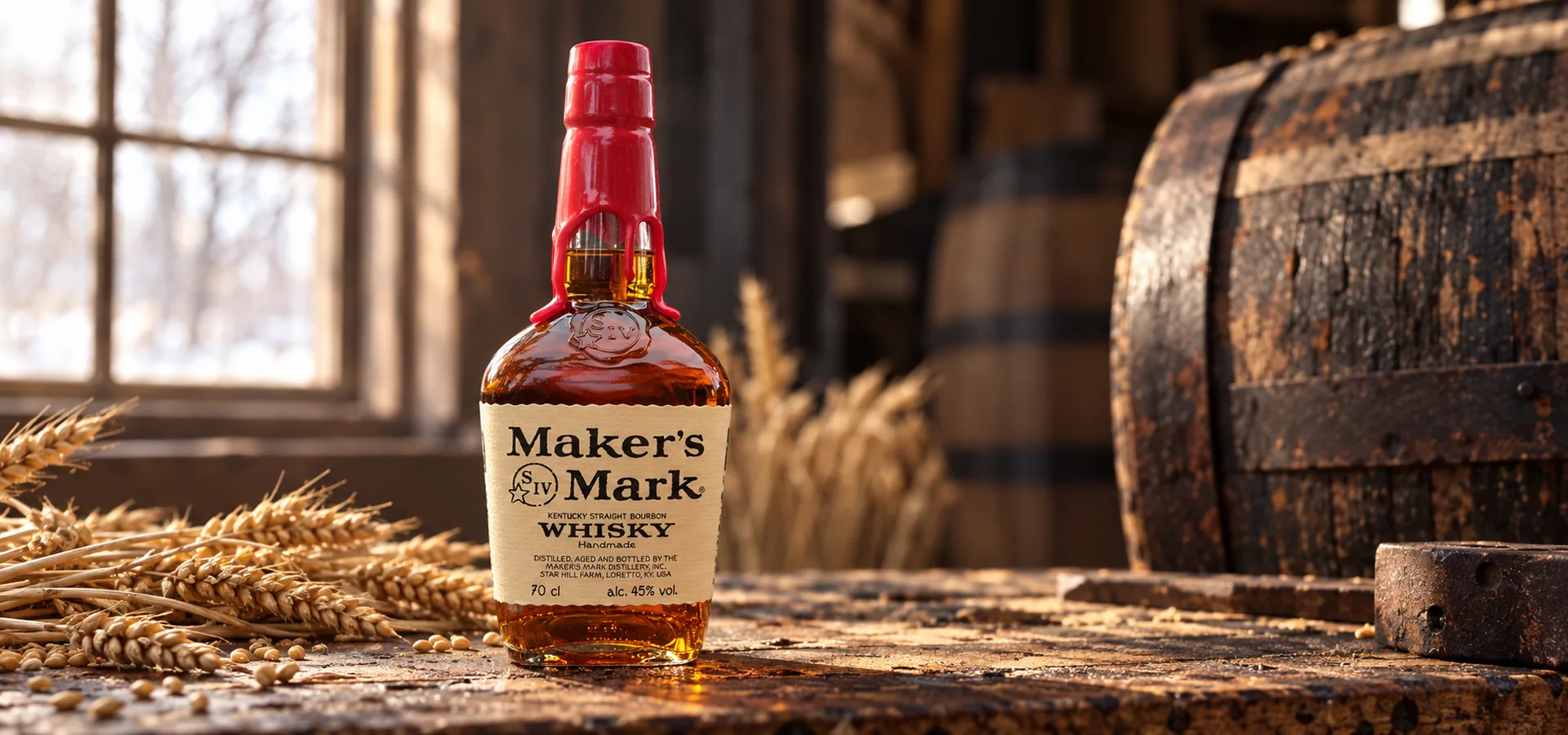
At a glance
- Legal category
- Not a class or type; a trade description applied to bourbon whiskey
- Typical strength
- 40 to 50 percent ABV
- Also called
- Wheat recipe bourbon, Wheater
- Legal status
- Not a class; bourbon whiskey is the designation
- Grain position
- Wheat as the secondary grain behind at least 51 percent corn
- On the label
- Mash bill is not mandatory information anywhere
What is a wheated bourbon, and is it a legal category?
A wheated bourbon is a bourbon in which wheat rather than rye occupies the secondary grain position behind the corn that the standard requires.
Read that sentence again with the emphasis in the right place. It is a bourbon, and the wheat is in second position.
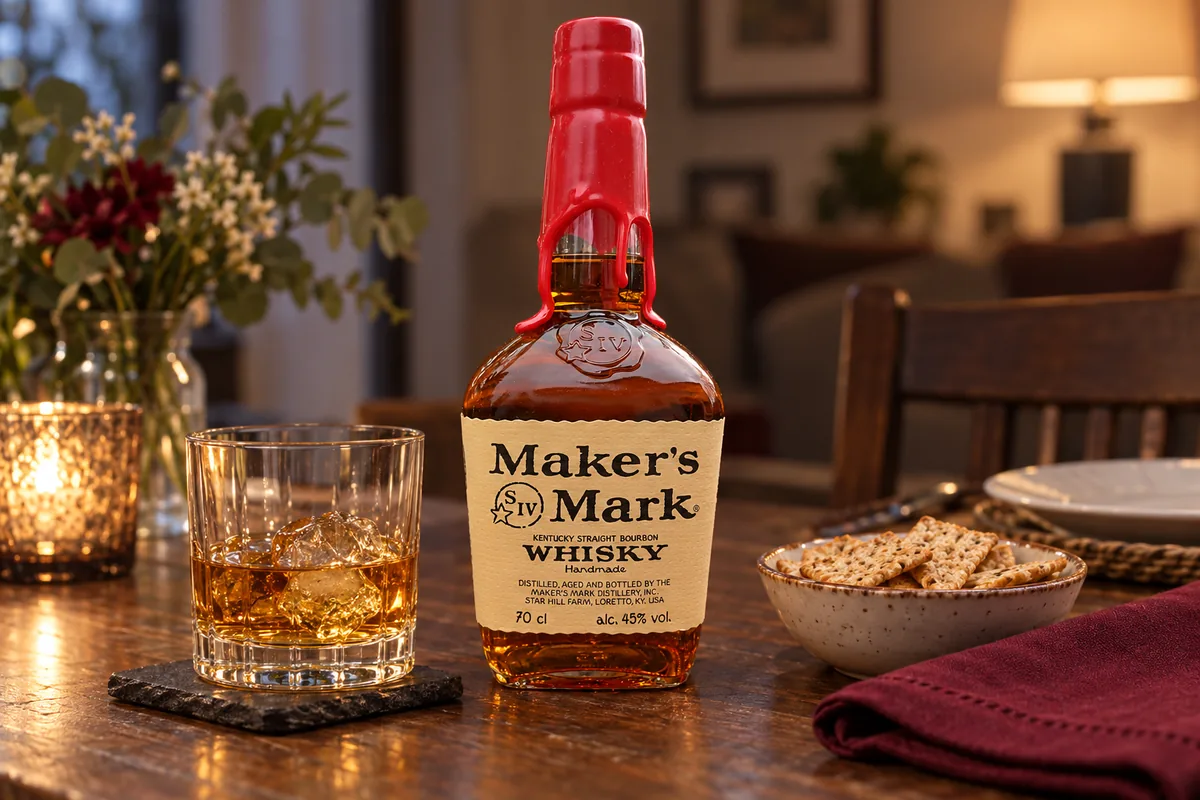
- A bourbon first
- Everything the bourbon standard requires still applies. At least 51 percent corn, charred new oak, and the distillation and entry limits that go with them.
- Wheated is not in the rulebook
- No American standard of identity uses the word. It is a trade description, used consistently but with nothing behind it that an inspector could check.
- The class name stays bourbon
- The designation on the bottle is bourbon whiskey. Wheated sits on the front label or in the marketing, or nowhere at all.
The word wheated appears nowhere in the American standards of identity, so a wheated bourbon is legally just a bourbon and the description is added by the producer.
That is not a scandal. Trade descriptions do useful work all over the drinks shelf, and this one points at something real.
It simply means the word carries no threshold, no minimum, and no enforcement. Whatever it tells you, it tells you on the producer's authority rather than a regulator's.
Because wheated describes a minority grain in a bourbon and not the class itself, the bottle must still be labelled bourbon whiskey and carries no obligation to mention wheat at all.
What does the bourbon standard say about the other grains?
| What the bourbon rule fixes | The number | What it leaves open |
|---|---|---|
| Corn share | Not less than 51 percent of the fermented mash | Everything above that floor, and every grain below it |
| Distillation strength | Not more than 160 proof | Nothing about which cereals were in the wash |
| The wood and entry proof | Charred new oak, entered at not more than 125 proof | How long it stays there, unless straight is claimed |
| The other 49 percent | Unspecified | Wheat, rye, malted barley, more corn, or any mixture of them |
The bourbon standard requires a fermented mash of not less than 51 percent corn, distillation at not more than 160 proof and storage in charred new oak at not more than 125 proof, and names no other grain.
Look for the second grain in the rule and there is nothing there.
Because the bourbon standard is silent on the remaining 49 percent, a producer may fill it with wheat, rye, malted barley, more corn, or any combination of them. Most bourbons use rye and malted barley, which is convention rather than obligation.
The second grain in a bourbon is therefore a recipe decision rather than a regulated one, which is why wheated and high rye are trade descriptions rather than classes.
A standard of identity exists to stop a word meaning different things in different places. Recipes are where producers compete, and a rule that fixed them would have flattened the category it was written to protect.
How much wheat is actually in a wheated bourbon?
There is a hard ceiling and a soft convention, and only one of them is written down anywhere.
The wheat in a wheated bourbon can never exceed 49 percent of the mash, because the corn floor of 51 percent takes the majority by definition. That is the arithmetic and it does not move.
- Hard ceiling on the wheat
- 49 percent of the mash, set by the corn floor
- Usual working share
- A low double figure percentage of the mash
- What a bottle must disclose
- Nothing about the wheat share
In practice the secondary grain in a bourbon usually occupies a low double figure share, with malted barley taking a smaller slice again for its enzymes.
So the grain the description is named after is often a tenth of the mash or a little more. Treat that share as an undisclosed variable rather than a recipe you have been given.
Two wheated bourbons can differ several fold in how much wheat they contain, and neither is obliged to tell you which end of that range it sits at. The word is the same on both bottles.
Does the label have to tell you the mash bill?
The regulator looks at every distilled spirits label before it reaches a shelf. It is worth knowing what it looks at.
The mandatory label information a regulator reviews on every distilled spirits label is the brand name, the class and type designation, the alcohol content, the net contents and the name and address of the bottler.
- Brand name: The name the product is sold under. It has to sit in the same field of vision as the alcohol content and the class designation.
- Class and type designation: Bourbon whiskey, in this case. This is the word that has to be consistent with a class listed in the regulations.
- Alcohol content, net contents, bottler: Strength as a percentage by volume, the volume in the container, and who bottled it and where.
- Nothing about the grain: Grain proportions and mash bill statements are not on the list. The published checklist of mandatory items does not contain the word grain anywhere.
Grain proportions and mash bill statements appear nowhere in the mandatory label information for distilled spirits, and the published checklist of mandatory items does not use the words grain, mash or wheat at all.
That is a strong claim, so it is worth saying how it can be checked. Search the published checklist for the word grain and the count is zero.
A wheated claim is therefore voluntary information sitting beside mandatory information, and only the mandatory part has been checked by anyone.
None of which makes the claim false. Producers who say wheated overwhelmingly mean it, because the word is worth more to them intact than broken.
It does mean the word belongs in a different mental column from the class designation printed beside it. One has a standard behind it and one has a reputation.
So how do you actually know a bourbon is wheated?
The information exists. It just does not arrive through the label.
A wheated bourbon mash bill reaches the public through producer disclosure rather than through any required statement, so the producer is the primary source for it.
Rank your sources before you repeat a number. Secondhand mash bill figures for a wheated bourbon circulate widely and are often repeated from a single unattributed original, which is why they should carry less weight than a producer statement.
A producer who publishes a mash bill has put their name to it. A figure that appears everywhere with no name attached has only been copied.
When no wheated bourbon mash bill is disclosed at all, the honest position is that the secondary grain is stated and its share is unknown.
That is a perfectly workable place to stand. It just means the next questions have to be about things the bottle does tell you.
What does wheat do in the slot that rye does not?
The swap is smaller than the language around it suggests.
Swapping wheat for rye in a bourbon changes a minority of the mash, so the change is better described as removing rye than as adding a large quantity of wheat.
Rye is an assertive cereal in a small dose. Take it out and the space it occupied does not fill with an equally assertive replacement, it simply becomes quieter.
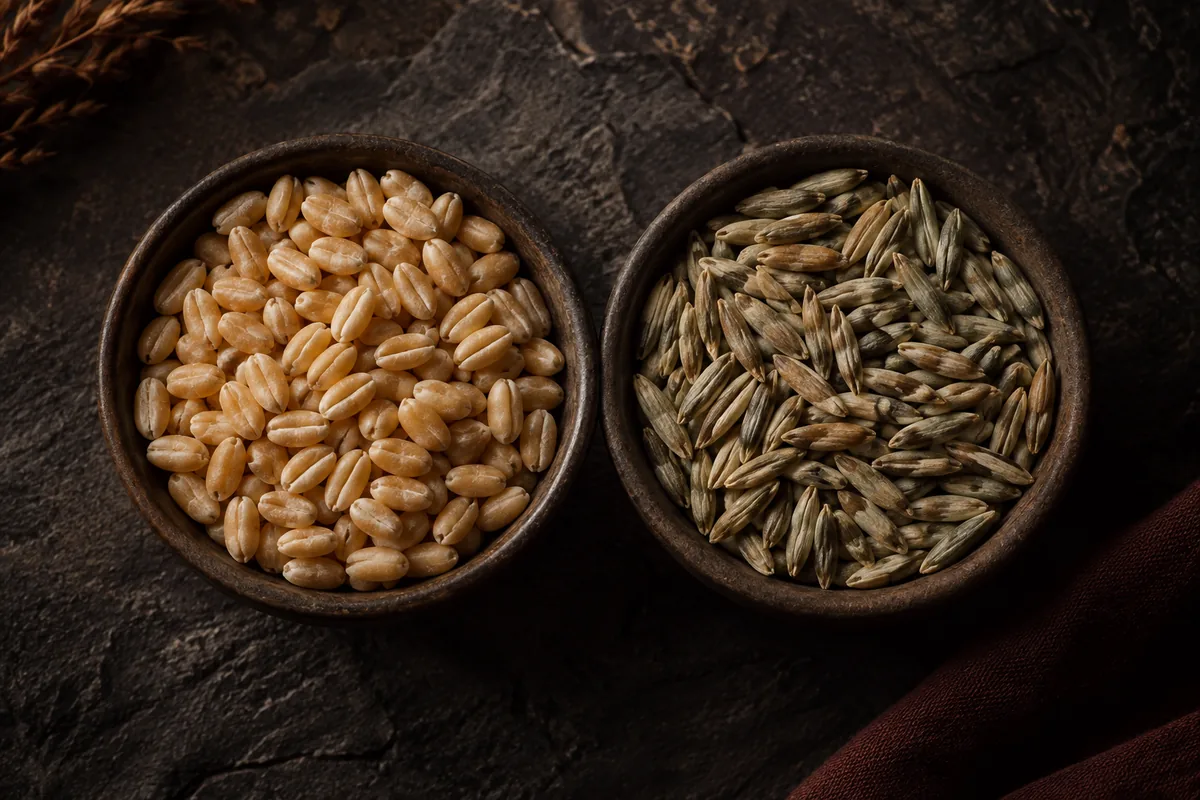
- What changes
- One minority grain. Rye leaves the recipe and wheat takes its place, at roughly the share rye occupied.
- What does not
- The corn majority, the charred new oak, the entry proof, the warehouse and the years. None of them moves because the second grain moved.
- What that makes it
- One producer decision among several, and the smallest of them by the share of mash it affects.
The corn that makes up the majority of a wheated bourbon mash and the charred new oak it matures in are both unchanged by the grain swap.
That is worth sitting with, because it is where most of the material in the glass comes from. The corn is the majority of the fermentable content and the wood contributes most of the colour and a great deal of the sweetness.
Neither of them moved.
The second grain in a wheated bourbon is therefore one variable among several, and it is the smallest of the ones a producer chooses. Entry proof, warehouse position, years and the cut all sit in the same conversation and several of them are larger.
What does the evidence map onto a bourbon mash bill?
One study is unusually well suited to this question, because of how it was built rather than what it concluded.
A study of American whiskeys distilled from controlled mash bills and aged in new charred oak barrels from the same cooperage and stave lot found significant variation by mash bill and by aging time, but not by the interaction of the two.
Read the design before the result. Same cooperage, same stave lot, controlled recipes.
That removes the wood variation that usually swamps a comparison between two whiskeys, which is exactly the variation that makes shelf comparisons useless.
| What the study varied | What it found | What it licenses you to say |
|---|---|---|
| Mash bill | Significant differences across 18 of 35 sensory attributes | That the recipe does reach the glass in a measurable way |
| Aging time at bottling | Significant differences, independent of the mash bill | That time in wood is its own lever rather than an amplifier of the recipe |
| The two together | No significant interaction between mash bill and aging time | That a recipe does not change how a whiskey responds to time in wood |
The same bourbon study linked vanilla and apple attributes to increased aging times and higher corn content, and linked vegetal and hay attributes to shorter aging times.
Notice which grain that finding names. It is corn, the majority cereal, rather than the flavouring grain the marketing argues about.
Mash bill and time in wood therefore move a bourbon independently, so the recipe and the age of a wheated bourbon are two questions rather than one.
A reader can take something practical from that. Ask what the mash bill is and ask how long it sat, and do not let a good answer to one stand in for the other.
Does a wheated bourbon really need longer in wood?
The claim is everywhere and it is stated with confidence.
The common claim about a wheated bourbon is that it rewards longer maturation, because there is less rye character to carry a young spirit.
It sounds right, and there is a version of it that survives scrutiny. But the strong version makes a testable prediction.
The wheated bourbon age claim predicts an interaction between mash bill and aging time, and the controlled study found no significant interaction between the two. If a wheated recipe genuinely responded to wood differently, that is the effect that would show it.
Absence of evidence in one study is not proof of absence. It is enough to stop treating the claim as settled, which is how it is usually offered.
- What the claim says: That a wheated bourbon rewards longer maturation, because it has less rye character to carry it while it is young.
- What it predicts: That recipe and time in wood interact, so a wheated recipe should improve with age faster than another recipe does.
- What was found: Both effects were significant on their own. The interaction between them was not.
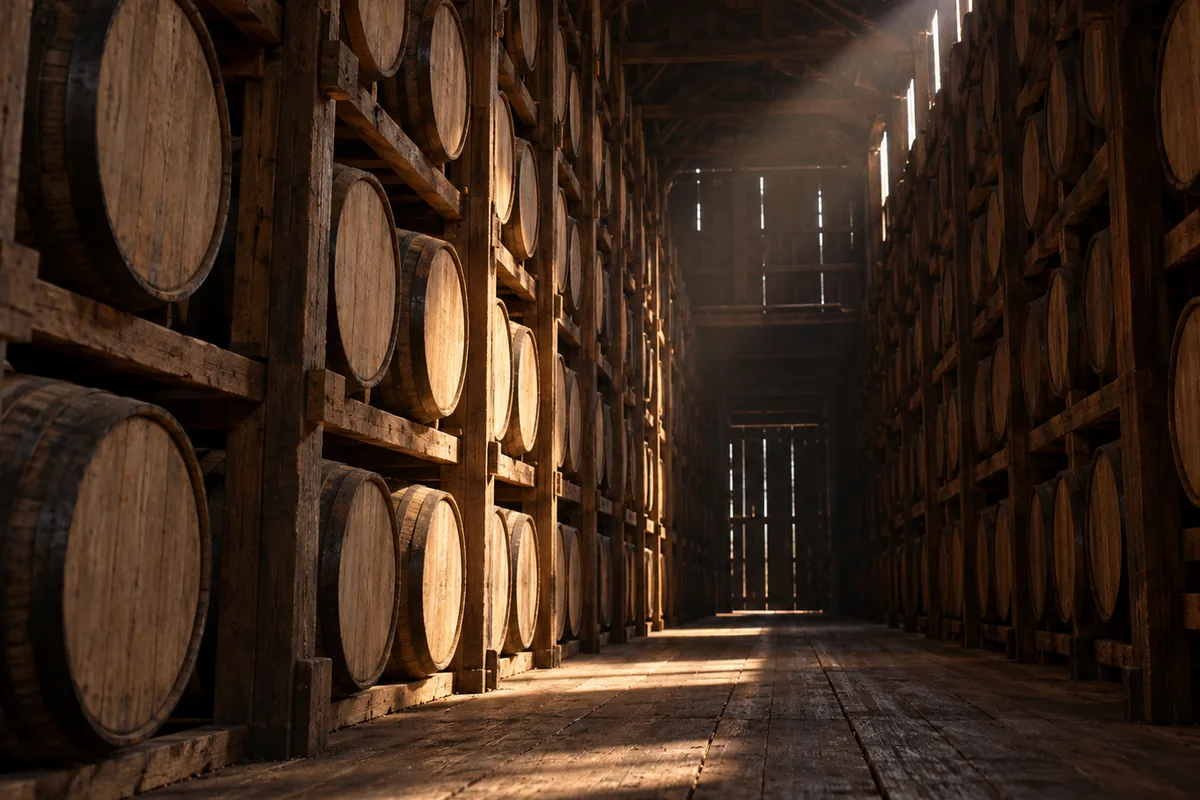
What remains defensible is that a young wheated bourbon has less assertive grain character to hide behind, which is a statement about the young spirit rather than about how it ages.
So the practical reading is unchanged from the last section. Age is worth paying for on its own terms, in any recipe, and not as a correction to one.
What strength should you expect from a wheated bourbon?
Whisky must be bottled at not less than 40 percent alcohol by volume, so 40 percent is the floor a wheated bourbon cannot go below and still be sold as whiskey. Above that the producer decides.
Wheated bourbon is commonly bottled between 40 and 50 percent alcohol by volume, with cask strength releases running well above that because no water has been added back.
The number is a decision about dilution taken by someone who tasted both versions, which is more than most buyers can say.
A standard drink is a fixed amount of alcohol, not a fixed pour. It contains about 14 grams of pure alcohol, which is roughly 44 millilitres of a spirit at 40 percent alcohol by volume. The same measure of a cask strength bourbon at 62 percent contains around half again as much.
A higher strength wheated bourbon is a less diluted one rather than a more flavoursome one, which is why water moves it further than it moves a bottling at the floor.
At the floor the producer has already done the diluting. Above it, that decision is still yours.
How do you taste a wheated bourbon against a rye recipe?
Most informal comparisons answer a question nobody asked, because two bottles differ in more than the thing being argued about.
A wheated bourbon comparison only tests the grain swap if age and bottling strength are matched, because the controlled study found both of those move a whiskey on their own.
- Match age and strength first: Same age band, same proof within a point or two. If you cannot match them, say which one is unmatched and discount the result by that much.
- Take the wheated glass first: Rye persists in the mouth. Meet the quieter whiskey with a clean palate and you get a reading rather than a residue.
- Add the same water to both: A few millilitres into each, measured rather than splashed. Then run the same order again and note what moved and what did not.
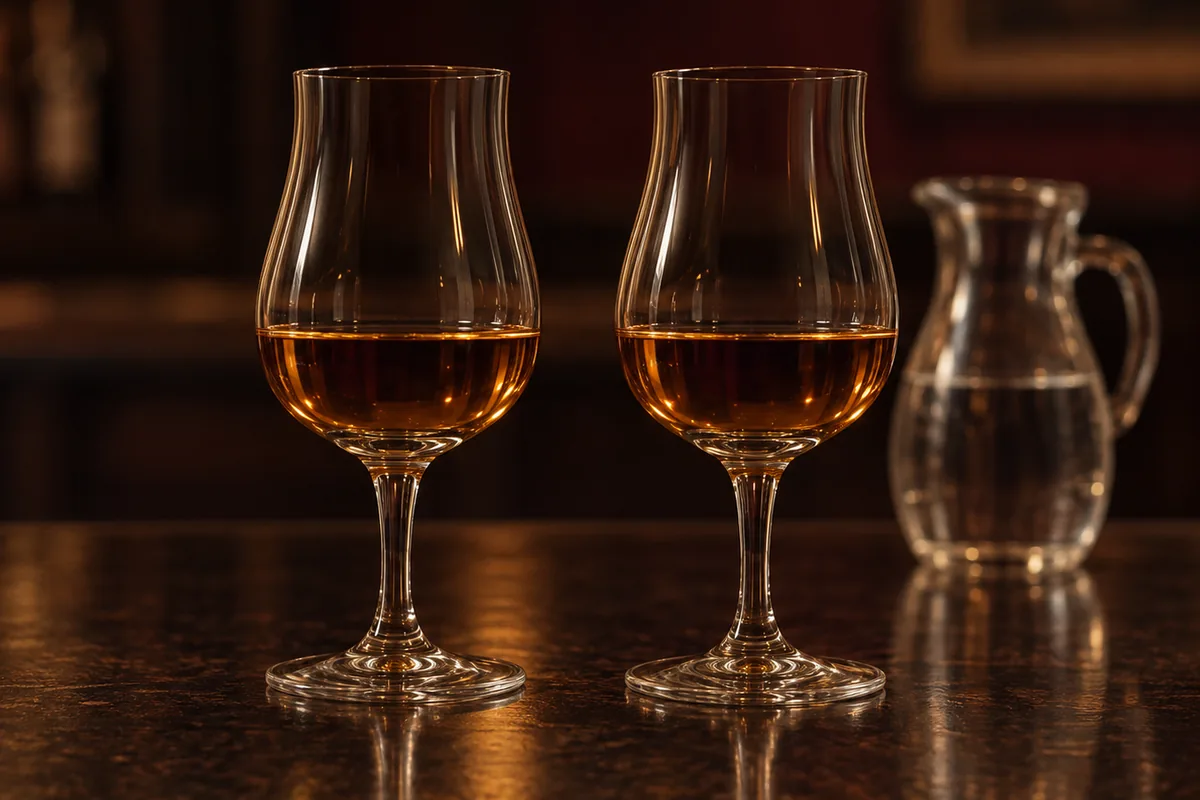
What counts as an answer here is narrower than most people expect. This method tests one grain swap between two particular bottles and nothing wider.
If the wheated glass reads rounder at both strengths and holds that after water, you have learned something about that pair. Run it again with a different pair before you believe anything about the recipes.
What food does a wheated bourbon actually suit?
The pairing question gets asked of the recipe and answered by the bottle, which is why the usual advice is so unreliable.
A wheated bourbon at the 40 percent floor and one at cask strength want different food, so the weight in the glass decides the pairing rather than the grain swap.
Sweetness in a dish flattens a bourbon that already carries corn and new oak sweetness, and chilli heat is intensified by alcohol rather than cooled by it. Both are worth taking seriously because the reasoning that leads people into them feels correct.
- Sweetness in the dish: A bourbon already carries sweetness from corn and from charred new wood. Add sugar on the plate and the two cancel rather than combine.
- Chilli heat: Alcohol carries capsaicin rather than rinsing it away, so a spirit against a hot dish sharpens the heat for as long as both are in the mouth.
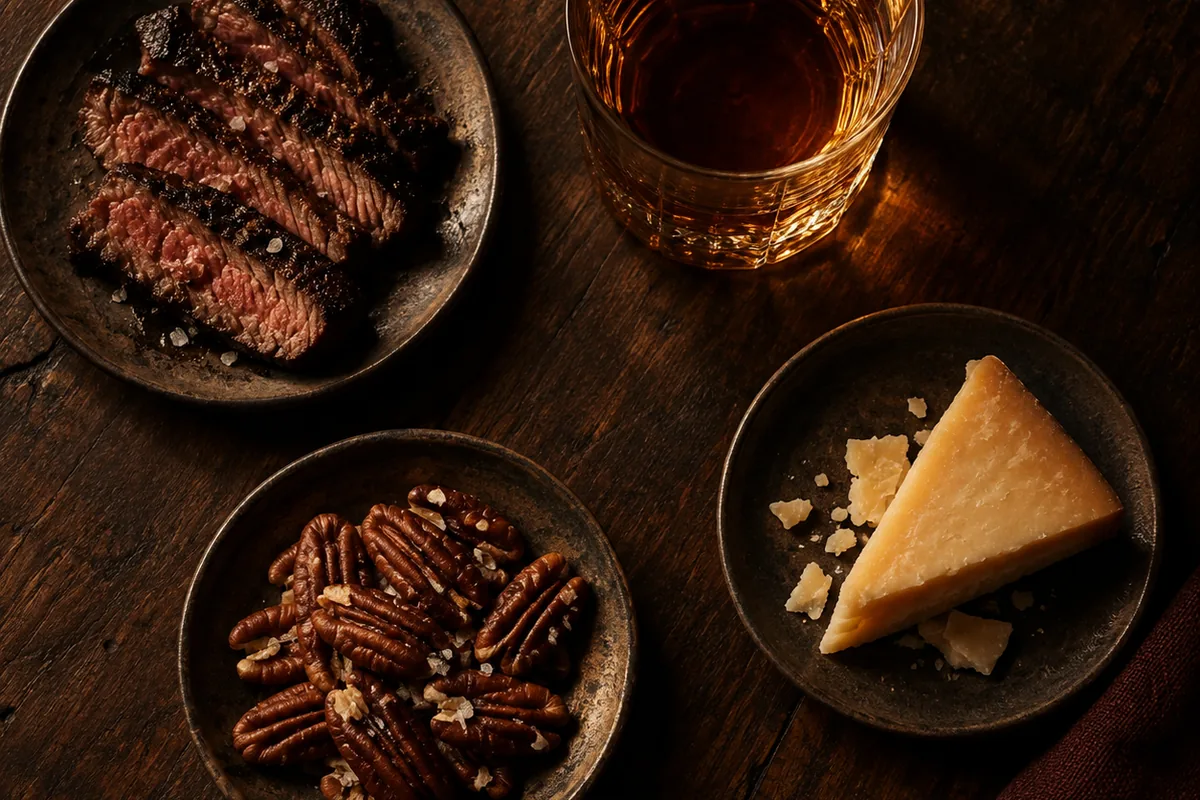
The direction that works with a wheated bourbon is salt, fat and char rather than sugar, because those give a sweet spirit something to work against.
Grilled and smoked meat, aged cheese, salted nuts, good bread. None of that is a discovery, and all of it works for one reason, which is that salt and char make a sweet spirit read drier without shouting over it.
At cask strength the same list holds and the portions change, because a stronger pour can take a heavier plate.
What happens to an open bottle of wheated bourbon?
An opened bottle of wheated bourbon does not spoil, because the strength that keeps it stable does not fall when the cork comes out. Nothing is going to grow in it.
That is the whole of the reassurance, and it is genuine as far as it goes.
What an opened wheated bourbon loses is aroma, as the lighter compounds oxidise into whatever air is sitting above the liquid. The change is slow and it runs one way.
A bourbon carries more weight in reserve than a lighter spirit does, so it fades more slowly than many whiskies. It still fades.
The last third of a bottle is where anyone notices.
- It does not spoil
- The strength that made it stable is unchanged by opening. There is no safety clock running on an opened bottle.
- It does fade
- Aroma goes first and it goes in one direction. Nothing done afterwards puts it back.
- Headspace is the lever
- The air above the liquid decides how fast that happens, and it is the only part of the process a drinker controls.
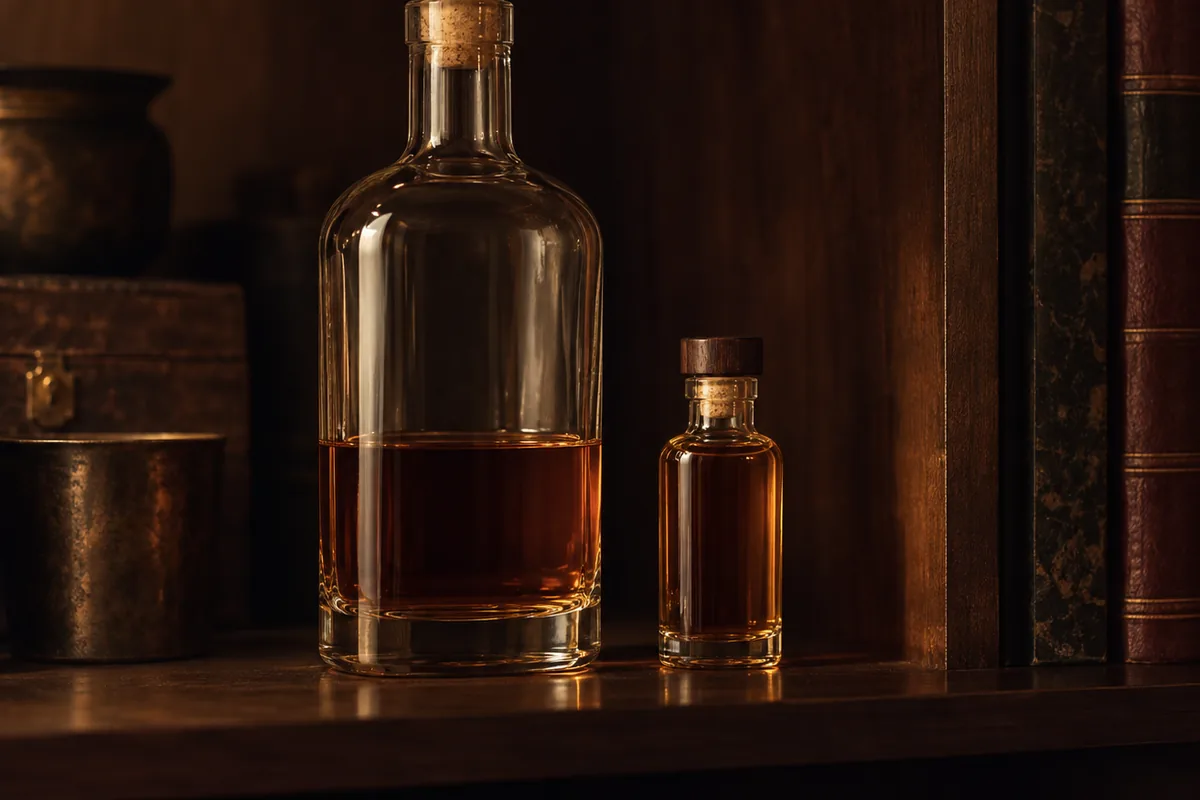
What to do about it is short. Stand the opened bottle upright so the spirit is not against the cork, keep it dark and cool, and move the last third into a smaller bottle if it is going to sit.
Nobody can tell you how many months you have, because it depends on the bottle, the strength and the air. What can be said is the direction and the lever.
Is a wheated bourbon worth buying, and who for?
The word wheated on a bourbon reliably tells you the producer chose wheat for the secondary grain, and it reliably tells you nothing else about the bottle.
That is a smaller promise than the category usually gets credit for, and it is still worth something. A producer who fills the flavouring slot differently from almost everyone else has made a deliberate decision and is telling you about it.
Buy it for the recipe decision, not for a promise about the taste. A wheated bourbon suits a drinker who wants a bourbon with less rye assertion, and suits it poorly for anyone hoping the description predicts a particular character.
Anyone chasing a specific flavour will get further by asking about the wood and the years than by asking about the grain.
The two figures worth checking before paying for a wheated bourbon are its age and its strength, because a controlled study found both of those move a whiskey on their own.
Both are printed or available. The recipe usually is not, and it is the smallest of the three anyway.
Common questions
- Is wheated bourbon a legal category?
- No. The American standards of identity define bourbon by a corn floor of 51 percent and never name a second grain, so wheated is a trade description added by the producer. The class designation on the bottle is still bourbon whiskey.
- Does a bourbon label have to show the mash bill?
- No. The mandatory label information a regulator reviews is the brand name, the class and type designation, the alcohol content, the net contents and the bottler's name and address. Grain proportions appear nowhere on that list.
- Does wheated bourbon need longer aging?
- That claim predicts an interaction between mash bill and aging time. A study using controlled mash bills and barrels from one cooperage and stave lot found significant effects for mash bill and for aging time separately, but no significant interaction between them.
Sources
-
Checklist of Mandatory Label Information, Distilled Spirits, Alcohol and Tobacco Tax and Trade Bureau
Accessed 10 September 2026.
-
Code of Federal Regulations, Title 27, sections 5.143 and 5.74
Accessed 5 September 2026.
-
Mashbill and barrel aging effects on the sensory and chemometric profiles of American whiskeys, Journal of the Institute of Brewing
Accessed 10 September 2026.
-
NIAAA, What Is a Standard Drink?
Accessed 13 September 2026.
More in Spirits
-
 American single malt whisky
01
What is American single malt whisky, and what does it guarantee?
-
 Australian whisky
02
How is Australian whisky defined, and by which law?
-
 Black rum
03
What is black rum, and does the colour mean anything?
-
 Blended American whiskey
04
What is blended American whiskey, and how much of it is whiskey?
-
 Blended Irish whiskey
05
Blended Irish whiskey: which word counts the distilleries?
-
 Blended Scotch
06
Blended Scotch: what is in it, and why does the recipe change?