
Spirits
Cask strength whisky: what does the phrase actually promise?
Cask strength whisky is bottled at the strength it left the cask, with no water added to bring it down, and neither the United States standards of identity nor the Scotch Whisky Regulations define the phrase. What the law fixes sits on either side of it: whisky may not be bottled below 40 percent alcohol by volume, and no rule sets a maximum at all.
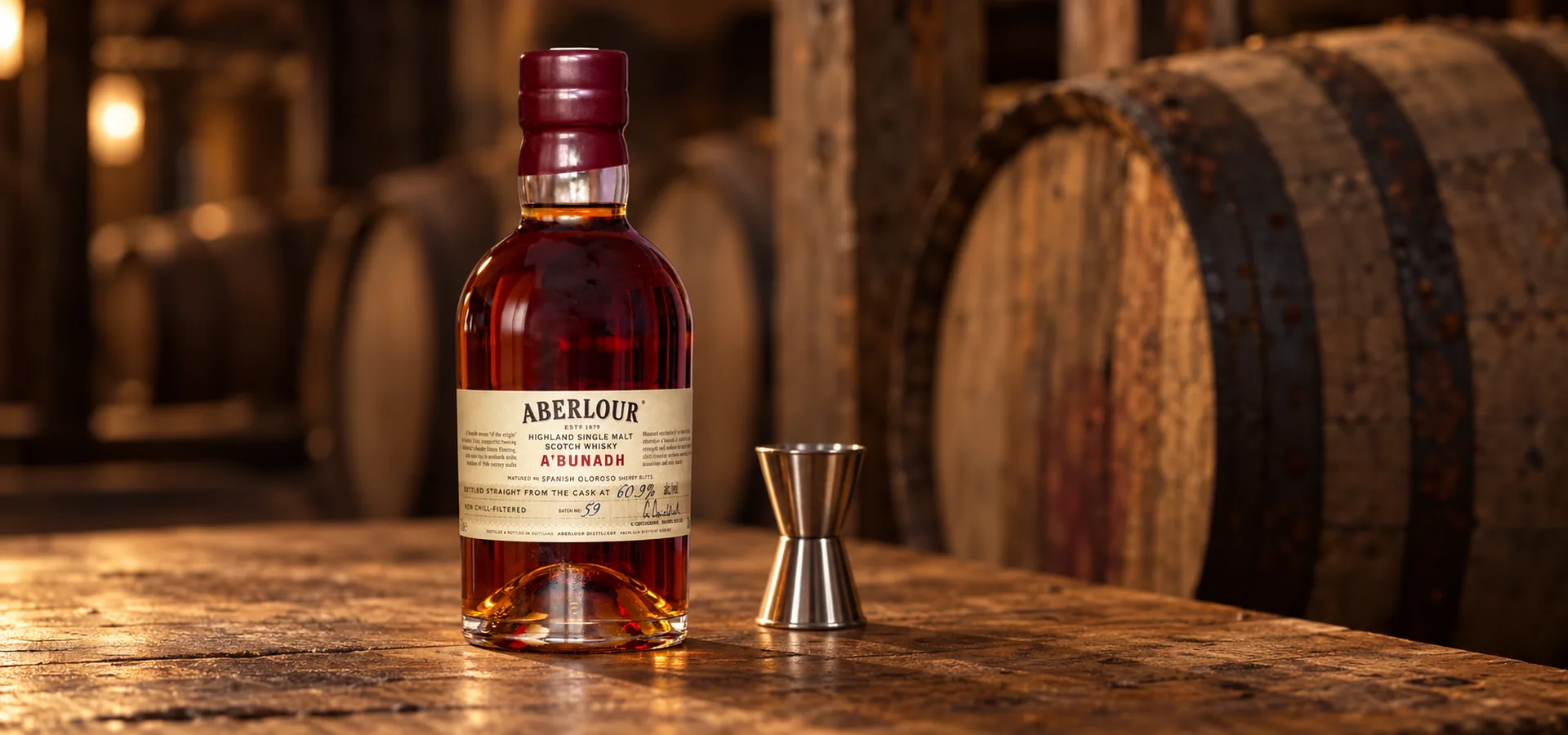
At a glance
- Legal category
- No standard of identity in the United States or the United Kingdom. Governed as a label claim under 27 CFR 5.122, which requires a reasonable basis in fact.
- Minimum strength
- 40 percent ABV
- Also called
- Barrel proof, Barrel strength, Cask proof
What does the phrase promise on a label?
The phrase makes exactly one claim about the liquid, which is that nothing was added to it between the cask and the bottle. Everything else a reader takes from those two words is inference.
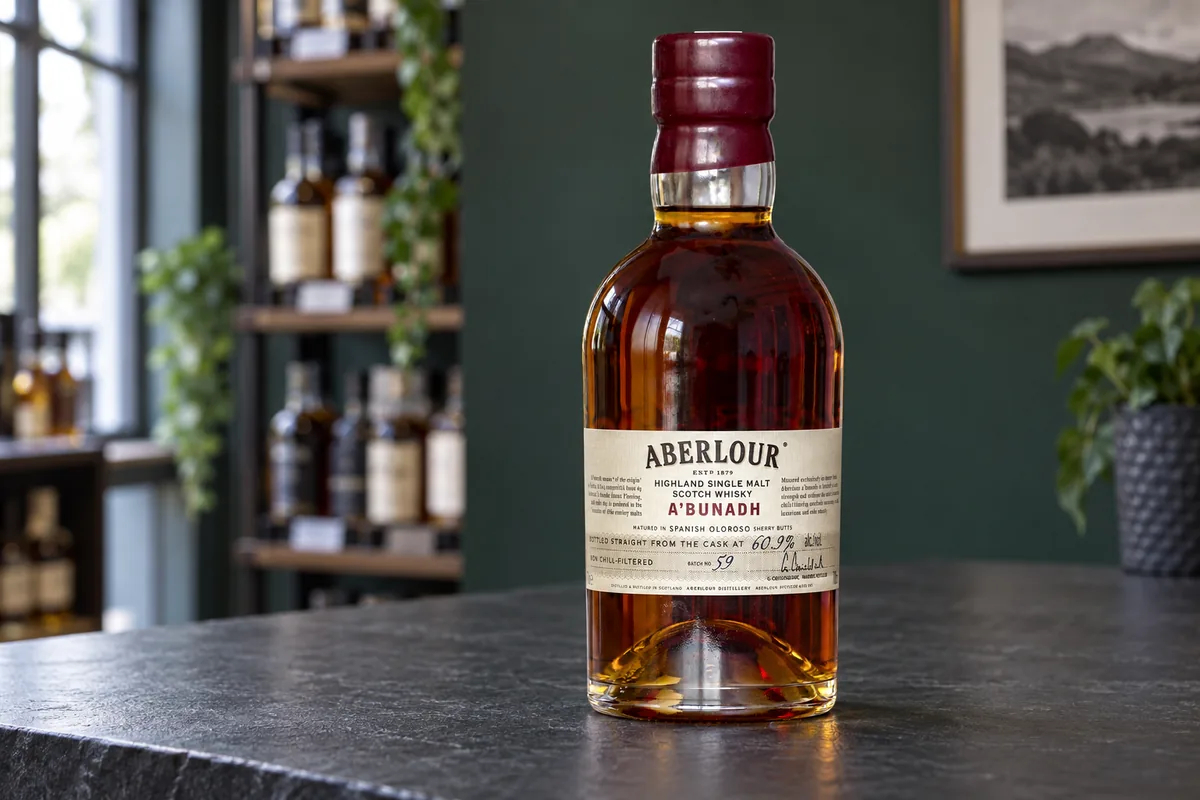
Whisky arriving at a bottling hall is normally reduced with water, because a cask comes out stronger than most people want to drink and stronger than most producers want to sell. A cask strength bottling skips that step and prints whatever the vat measured.
- Water added
- None
- Strength set by
- The cask, measured at bottling
- Legal minimum
- 40 % ABV
- Legal maximum
- None
So the claim is about something not done, and an omission is harder to check on a shelf than an addition.
The one piece of evidence a buyer holds is the alcohol content, which every bottle has to carry anyway. That figure is where the rest of the answer lies.
Reduction with water is not a shortcut and not an adulteration, and most whisky sold anywhere has been through it. What this offers is a different process rather than a better one, with the arithmetic left for the drinker to finish.
Why is it not a legal category anywhere?
Food law specifies whisky more closely than almost anything else people drink, which makes the absence of a definition here worth explaining rather than noting.
The United States standards of identity at 27 CFR 5.143 set out every whisky designation and the production limits behind each one. Cask strength appears nowhere in the section.
The Scotch Whisky Regulations 2009 are as specific about whisky and as silent about this.
No standard of identity defines it. A producer using the phrase is making an ordinary label claim, which has to be substantiated on request rather than measured against a published number.
Those regulations fix a minimum of 40 percent alcohol by volume, allow only water and plain caramel colouring to be added, and cap the cask at 700 litres. None of that reaches the strength a bottle is filled at.
That does not make the words free. Under 27 CFR 5.122 a label statement is prohibited if it misleads, irrespective of falsity, and every claim must have a reasonable basis in fact.
The practical difference is who does the checking. A designation like straight bourbon is measured against a written rule, while this one is measured against whatever a producer can produce on request.
What sets the number when no rule does?
Four regulated numbers sit around the unregulated one.
Two of them bound the whisky before it ever reaches a cask, and two govern what may be printed once it leaves. Not one of the four names a bottling strength.
| What is fixed | Where | The number |
|---|---|---|
| Entry into the barrel, US bourbon, rye, wheat, malt and rye malt | 27 CFR 5.143 | 125 proof, or 62.5 % ABV, or less |
| Distillation, all US whisky | 27 CFR 5.143 | Less than 190 proof, or 95 % ABV |
| Bottling floor, all US whisky | 27 CFR 5.143 | Not less than 40 % ABV |
| Accuracy of the printed figure | 27 CFR 5.65 | Within 0.3 percentage points |
| Bottling ceiling | Nowhere | Not set |
| Filling strength for Scotch | Nowhere | Not set |
The first row repays attention: a bourbon may not enter the barrel above 62.5 percent alcohol by volume, so one sold at 65 percent did not arrive there from the still.
It gained strength in the warehouse, which can only happen if water left the cask faster than alcohol did. That is a fact about where the barrel sat rather than about how the whisky was made.
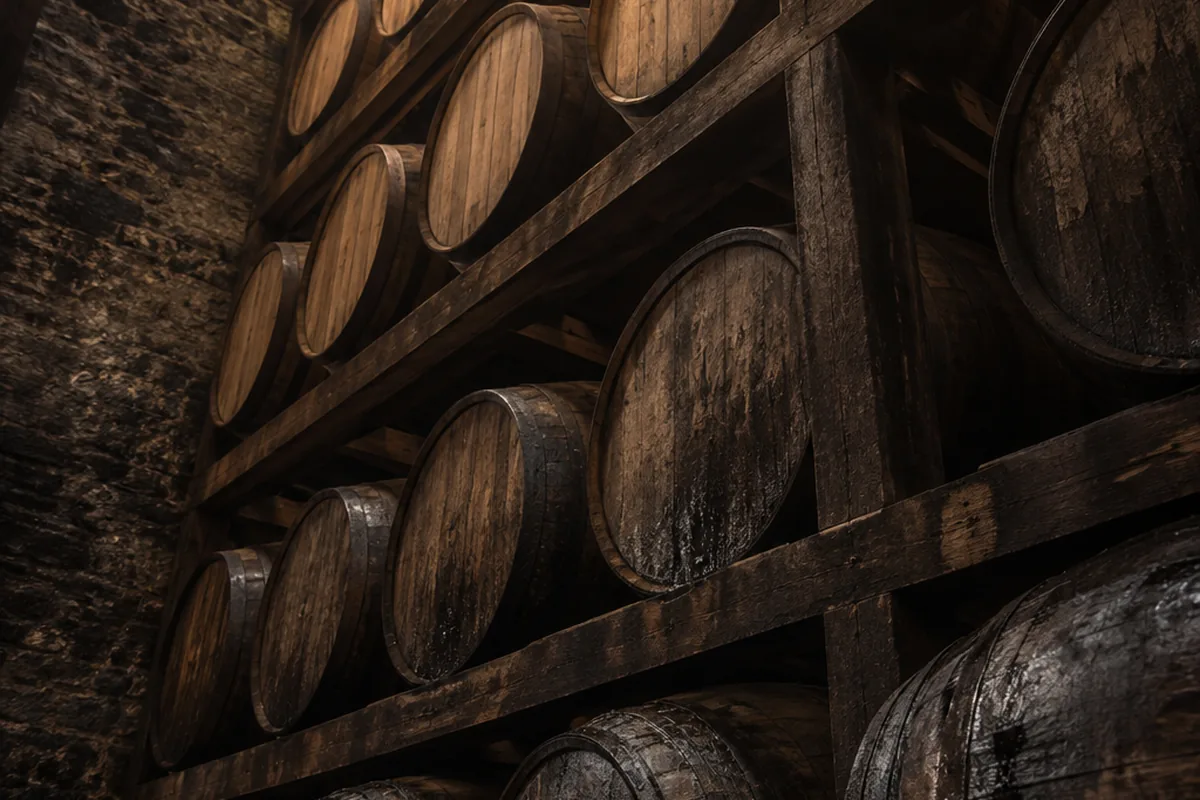
Scotch carries no filling strength in its regulations at all, so the same reasoning does not transfer to a Scotch label. Only the floor of 40 percent and the three year minimum are fixed.
Why do two bottles of the same whisky differ?
A cask strength release is usually a batch rather than a product.
Each cask matures on its own. Two barrels filled on the same day from the same distillate come out at different strengths, and a bottling drawn from a handful of them lands wherever those casks landed.
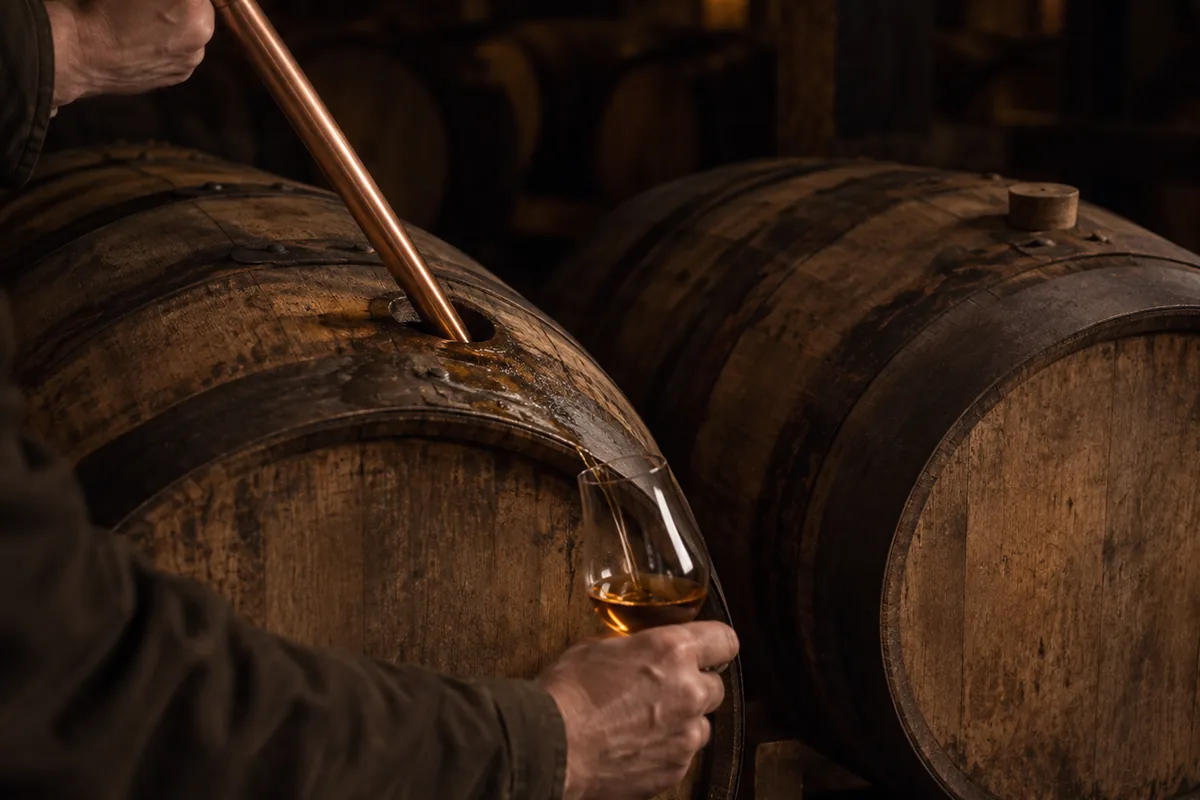
That is why the strength is often printed to a decimal place, and why it moves between releases sharing a name. The number describes the vat on the day, not the brand.
The figure is a measurement, not a specification. The printed alcohol content is allowed to sit within 0.3 percentage points of the true figure, so a number given to one decimal place still carries a stated error.
Compare that with an age printed on a label, which reports the youngest whisky in the bottle against a rule that does not move. One is a description of a batch and the other is a claim held to a standard.
Both are printed in the same size type, and neither is a quality mark.
Neither figure tells anybody how the whisky will taste. They report different things about the same liquid, one about time and one about strength, and a reader who wants a third thing has to look somewhere else.
How much alcohol is in a cask strength pour?
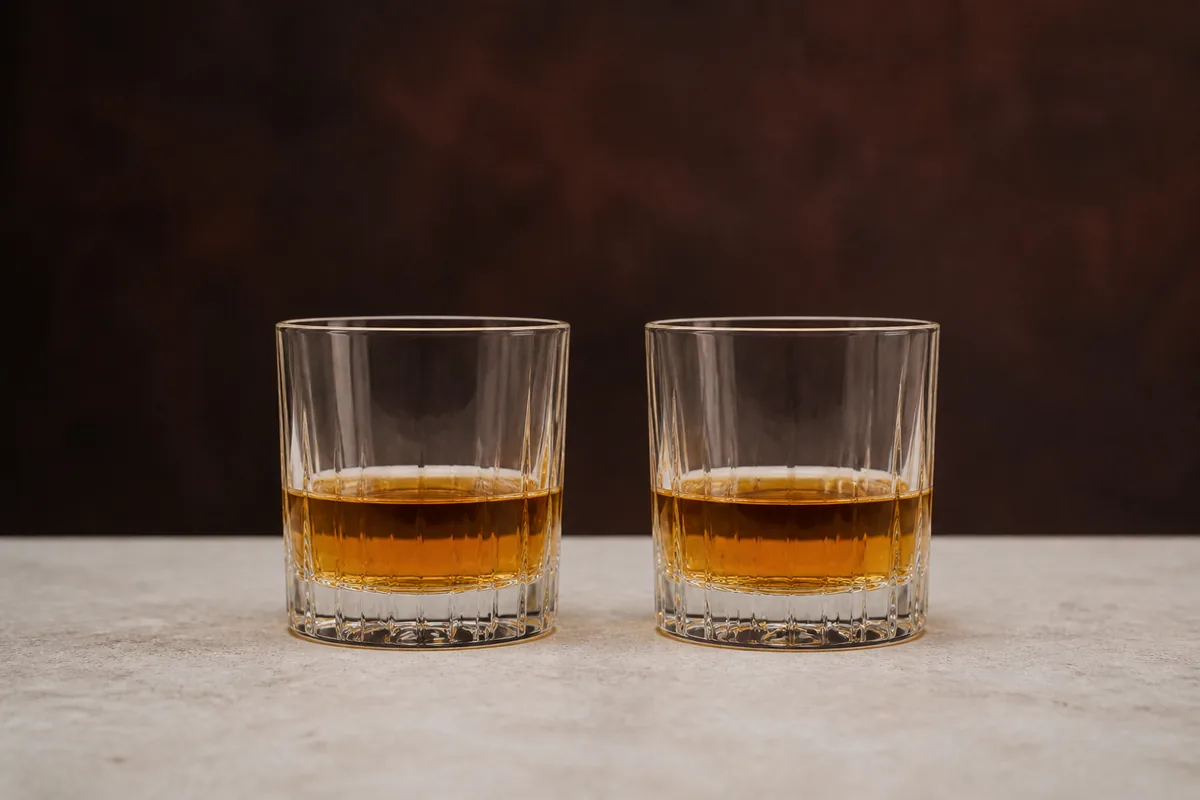
This is the part the phrase hides, because the pour looks identical. A cask strength measure and a reduced one fill the same glass to the same line.
A measure at 60 percent alcohol by volume holds half again as much alcohol as the same measure at 40 percent, and nothing about the glass shows it.
| Where you are | The pour | At 40 % ABV | At 60 % ABV |
|---|---|---|---|
| United States, 14 g per standard drink | 44 ml, or 1.5 fl oz | 1.0 | 1.5 |
| United Kingdom, 10 ml per unit | 25 ml | 1.0 | 1.5 |
| Australia, 10 g per standard drink | 30 ml | 0.9 | 1.4 |
The ratio holds everywhere because it is arithmetic, and only the size of the national unit changes. Two thirds of a cask strength pour carries the alcohol of a full one at 40 percent.
Count the alcohol, not the glasses. A cask strength measure is not a stronger version of the same drink, and at 60 percent it is one and a half of them in a glass that looks no different.
Adding water is therefore not only a tasting decision but the difference between one drink and one and a half, and standard drink definitions are national rather than universal.
Halving a cask strength measure and topping it with water gives roughly the alcohol of an ordinary one, in a longer drink. That is a decision about arithmetic before it is a decision about flavour.
Which whiskies can never be sold this way?
Two rules make the phrase impossible rather than merely unused.
The first is the floor, and a cask can drift under it. Below 40 percent alcohol by volume the contents cannot be bottled as whisky in the United States or as Scotch in the United Kingdom.
The second is narrower and more interesting. Under 27 CFR 5.88 a spirit labelled bottled in bond must be reduced in proof by the addition of only pure water to 50 percent alcohol by volume, and bottled there.
A whisky cannot be both bonded and cask strength. The bonded designation requires water to be added down to exactly 50 percent. Cask strength claims that none was added at all.
A bonded bottling and a cask strength bottling can come from the same distilling season, the same distiller and the same warehouse. They cannot come out of the same bottle.
That is worth knowing before reading a bonded label as the stricter of the two, because the two designations are strict about different things.
A cask that has drifted below 40 percent cannot be rescued by anything the rules permit to be added, because water only takes it further down. It can reach a bottle only mixed with something stronger.
Which label terms get confused with it?
Three phrases travel with it on the same kind of bottle, and not one of them means the same thing.
- Single barrel. Names how many casks the bottle was drawn from. It says nothing about whether water was added afterwards.
- Non-chill-filtered. Names a processing step that was skipped, not a strength.
- Barrel proof. Used as a synonym, and defined by the United States standards of identity no more than cask strength is.
The overlap is not accidental. All three signal the same thing to a buyer, which is that less was done to the whisky between the warehouse and the shelf.
Signalling less intervention is not the same as stating a fact about the liquid.
Only the alcohol content is a fact the label is required to state and required to get right. The other three are descriptions a producer chose.
That manual carries its own warning that it has not been brought into line with the current labelling regulations, so its silence is corroboration rather than proof. The regulations are the binding text, and they are silent as well.
A buyer who wants something checkable has one move available. The alcohol content is the only figure on the bottle a regulator will hold anybody to, so it is the only one worth reading as a fact rather than as a description.
How do the American and Scottish versions differ?
The phrase reads the same on both bottles and rests on different regulations underneath.
An American cask strength whiskey starts from a capped entry proof, so the distance between what went into the barrel and what came out is bounded on one side. A number above 62.5 percent is evidence about the warehouse.
A Scotch carries no such anchor.
Its regulations set the cask size, the three years, the 40 percent floor and the short list of what may be added, and they say nothing about the strength at filling or at bottling. The number on a Scotch label is therefore uninformative about maturation in a way the American one is not.
| What the rules fix | United States | Scotland |
|---|---|---|
| Strength entering the barrel | 125 proof, or 62.5 % ABV, or less | Not set |
| Strength at bottling | Not less than 40 % ABV, and no maximum | Not less than 40 % ABV, and no maximum |
| What a high figure reports | Strength gained in the warehouse | Nothing, because nothing fixes the filling strength |
One rule they share is the additions list. A Scotch of any kind may receive only water and plain caramel colouring, so a cask strength Scotch has had at most the colouring.
That makes the phrase a stronger statement on a Scotch label than on an American one, because there is less it could be concealing.
How should the number change what you do?
The strength is the one thing on a cask strength label that is both required and checkable.
Everything else on that label is a description somebody chose. The figure is the only part that changes the arithmetic in the glass.
Nothing else printed beside it was measured against a published rule.
- Before pouring
- Work out the alcohol rather than the volume, because the glass will not show it.
- Before adding water
- Add it in stages. What comes out cannot be put back.
- Before comparing bottles
- The figure describes that batch, not the name on the front.
- Before reading the phrase
- It is a claim rather than a designation, so nothing behind it was measured against a published rule.
None of that makes a cask strength bottling better or worse than a reduced one. No evidence for that claim exists in a form anybody could cite, and the honest position is to decline it.
What the higher strength does change runs in one direction and is measurable: more alcohol in the same volume, and less room for error in the pour.
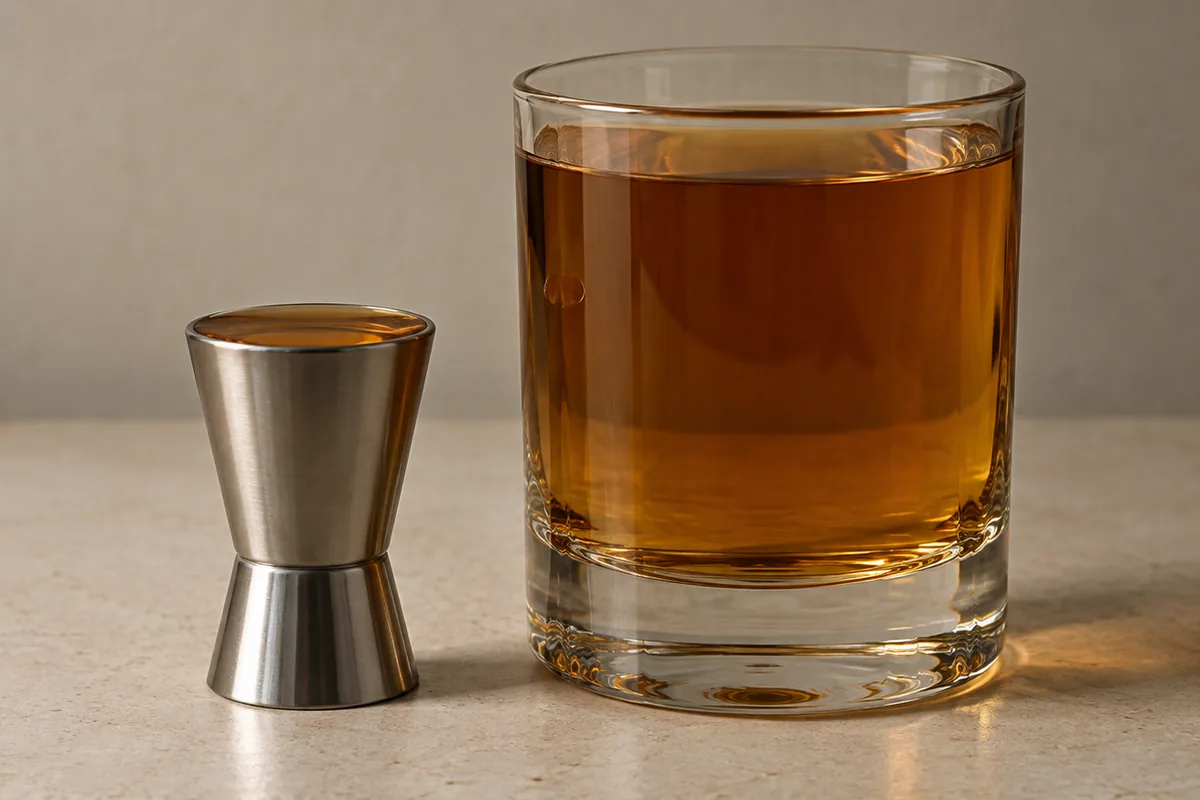
Why a higher strength also presents differently rather than merely more strongly is a question about how aroma leaves the glass, and it belongs with the tasting method rather than with the label.
Common questions
- Is cask strength whisky legally defined?
- No. The phrase appears in neither the United States standards of identity at 27 CFR 5.143 nor the Scotch Whisky Regulations 2009. It is governed as an ordinary label claim, which under 27 CFR 5.122 must not mislead and must have a reasonable basis in fact.
- How strong is cask strength whisky?
- There is no fixed answer, because no rule sets one. United States whisky must be bottled at not less than 40 percent alcohol by volume and no maximum is set anywhere, so the number comes from the cask and is printed on the label, accurate to within 0.3 percentage points.
- Can a bourbon be both bottled in bond and cask strength?
- No. Bottled in bond, under 27 CFR 5.88, requires the spirit to be reduced in proof by the addition of only pure water to 50 percent alcohol by volume. Cask strength claims that no water was added.
Sources
-
27 CFR 5.122, Misleading statements or representations, Legal Information Institute
Accessed 6 September 2026.
-
27 CFR 5.65, Alcohol content, Legal Information Institute
Accessed 6 September 2026.
-
27 CFR 5.88, Bottled in bond, Legal Information Institute
Accessed 6 September 2026.
-
Code of Federal Regulations, Title 27, sections 5.143 and 5.74
Accessed 5 September 2026.
-
Scotch Whisky Regulations 2009, regulation 3, as set out in the Scotch Whisky Association guidance for producers and bottlers
Accessed 4 September 2026.
-
TTB Distilled Spirits Beverage Alcohol Manual, Chapter 4
Accessed 12 September 2026.
More in Spirits
-
 American single malt whisky
01
What is American single malt whisky, and what does it guarantee?
-
 Australian whisky
02
How is Australian whisky defined, and by which law?
-
 Black rum
03
What is black rum, and does the colour mean anything?
-
 Blended American whiskey
04
What is blended American whiskey, and how much of it is whiskey?
-
 Blended Irish whiskey
05
Blended Irish whiskey: which word counts the distilleries?
-
 Blended Scotch
06
Blended Scotch: what is in it, and why does the recipe change?