
Spirits
What Is Irish Whiskey, and Is It Always Triple Distilled?
Irish Whiskey is a protected geographical indication for whiskey brewed, fermented, distilled and matured on the island of Ireland. Pot still, malt, grain and blended varieties differ, and triple distillation is common but not universal.
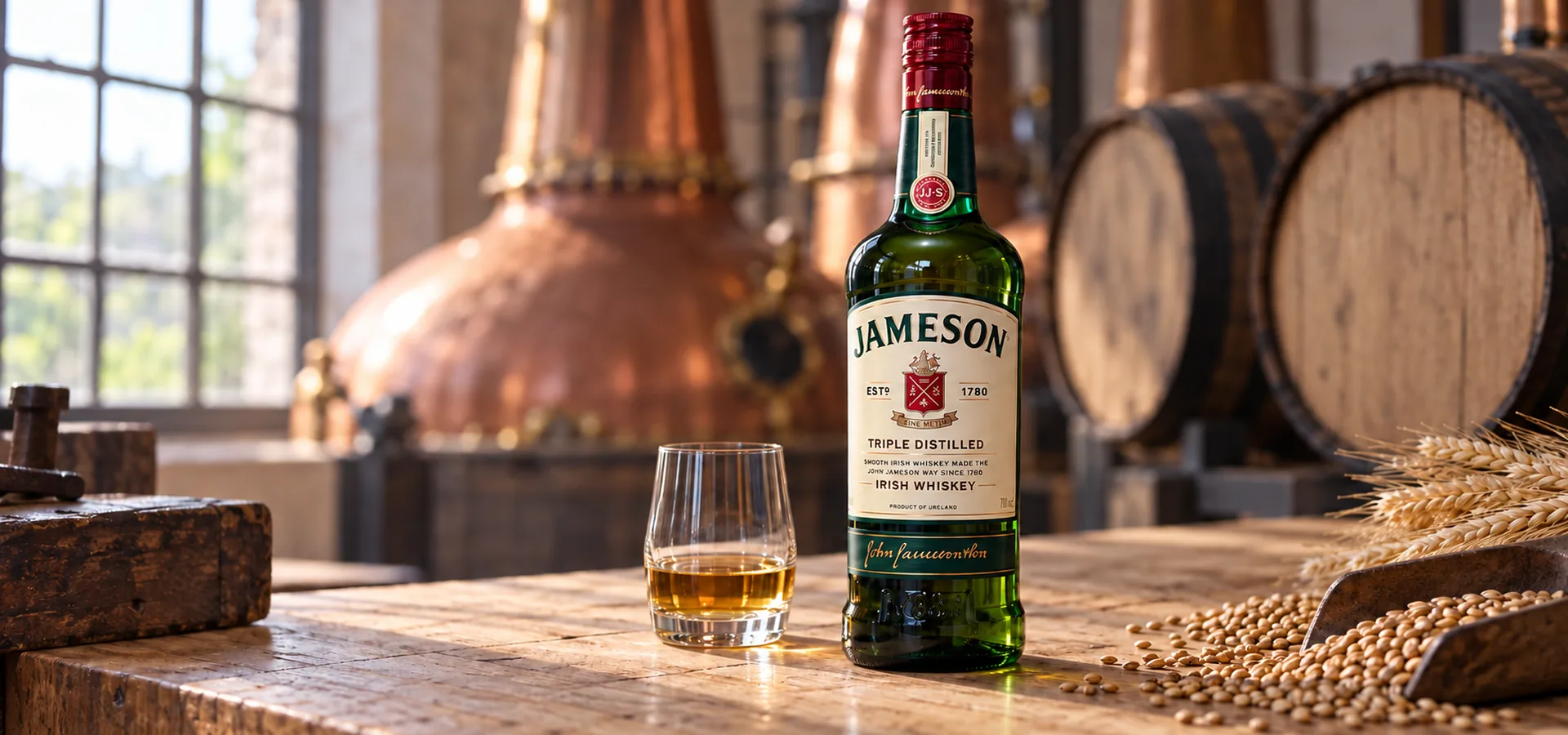
At a glance
- Legal category
- Irish Whiskey, Irish Whisky and Uisce Beatha Eireannach, a protected spirit geographical indication covering Ireland and Northern Ireland.
- Minimum strength
- 40 percent ABV
- Also called
- Irish whiskey, Irish whisky, Uisce Beatha Eireannach
- Protected area
- The island of Ireland, including Ireland and Northern Ireland
- Protected names
- Irish Whiskey, Irish Whisky and Uisce Beatha Eireannach
- Main varieties
- Pot still, malt, grain and blended
- Triple distillation
- Common in some whiskey but not universally required
- Minimum maturation
- 3 years in wooden casks up to 700 litres
What is Irish Whiskey?
Irish Whiskey is a protected all-island spirit made under a geographical indication covering Ireland and Northern Ireland. Brewing, fermentation, distillation and maturation take place on the island, while verified offshore bottling can occur under controlled conditions.
- Protected names
- Irish Whiskey, Irish Whisky and Uisce Beatha Eireannach
- Geographic area
- The island of Ireland, including Ireland and Northern Ireland
- Core families
- Pot still, malt, grain and blended Irish Whiskey
- Minimum maturation
- 3 years in wooden casks no larger than 700 litres
- Minimum strength
- 40% ABV
- Triple distillation
- Traditional and common in some styles, but not universal
The protected identity describes a family rather than one recipe. Different grain bills, pot and column systems, double or triple distillation, cask histories and blending decisions can all sit inside the Irish Whiskey GI.
The all-island chain includes processing the cereals into mash, fermentation, distillation and maturation. Verification applies to operators and products, so a place name on its own is not enough.
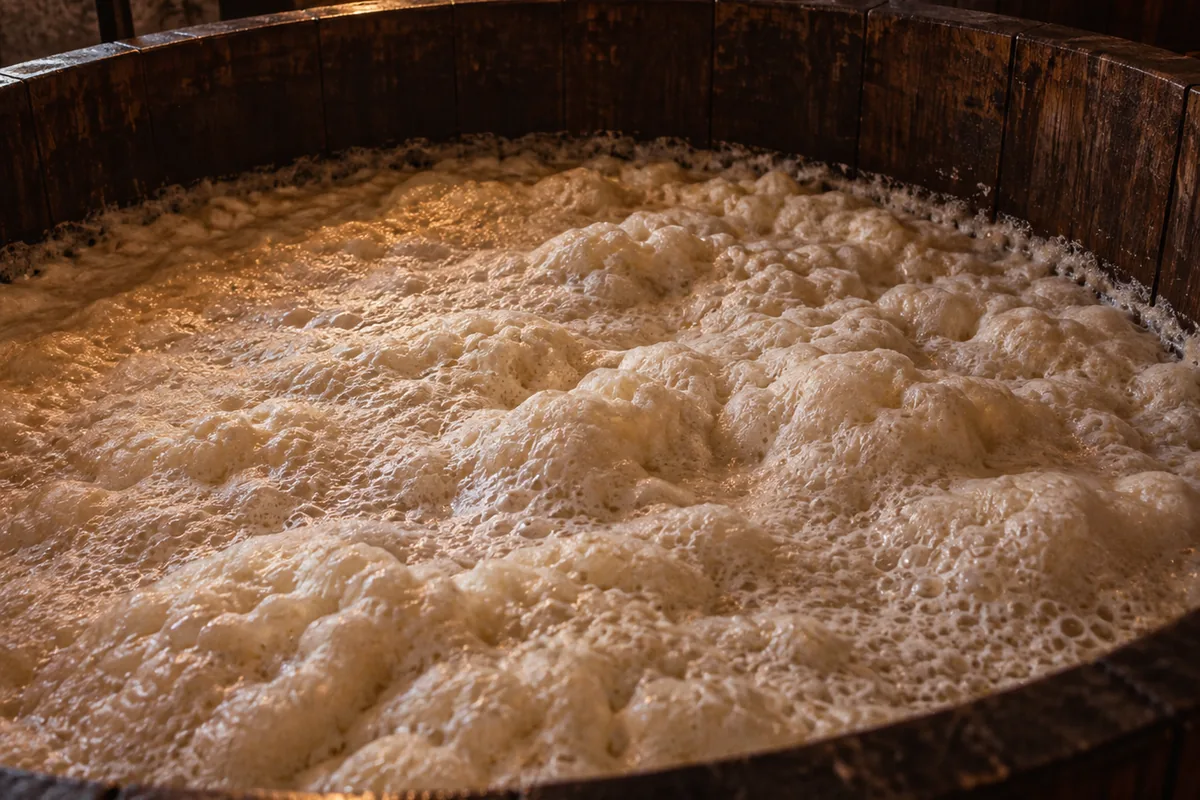
Bottling is a separate stage: it may occur outside the island when whiskey travels in inert bulk containers and remains under company controls and official verification. Wooden export containers are excluded because they could continue maturation beyond the protected area.
Spelling does not create a quality hierarchy.
Irish Whiskey is the familiar English form, Irish Whisky is also protected, and the Irish-language name Uisce Beatha Eireannach appears in the technical specification.
The direct answer: look for a protected name backed by verified all-island production and maturation. Then use the category, distillation claim, cask, age and ABV to understand the individual bottle.
This evidence order keeps national reputation in proportion. A smooth or light flavour cannot prove Irish origin, and an Irish name on packaging cannot replace GI compliance.
Which Irish Whiskey types appear on labels?
Four main type terms change what the label tells you: pot still, malt, grain and blended Irish Whiskey. They describe materials, distillation or assembly more precisely than the national term alone.
| Type | Identity clue | What remains open |
|---|---|---|
| Pot Still Irish Whiskey | A pot-distilled mash containing at least 30% malted barley and at least 30% unmalted barley, with limited room for other cereals under the specification | Pass count, peat, casks, age beyond the minimum and strength |
| Malt Irish Whiskey | Made from malted barley and distilled in pot stills | Single distillery status, still regime, casks and vatting |
| Grain Irish Whiskey | May use malted barley with other cereals and commonly uses column distillation | Exact grain bill, still setup and role in the final whisky |
| Blended Irish Whiskey | Combines two or more of the qualifying pot still, malt or grain varieties | Component proportions, ages, casks and production sites |
Single is a separate label clue from malt or pot still. It generally narrows the spirit to one distillery within the relevant variety, while blended tells you that qualifying varieties were combined.
The category does not rank quality. Grain whiskey can supply lightness and structure, pot still spirit can bring spice and texture, malt can add cereal and fruit, and blending can deliberately balance all three.
A bottle may also use a producer-created style name.
Read that language after the protected variety, because marketing terms cannot quietly rewrite the technical specification.
How do malted and unmalted grains change the category?
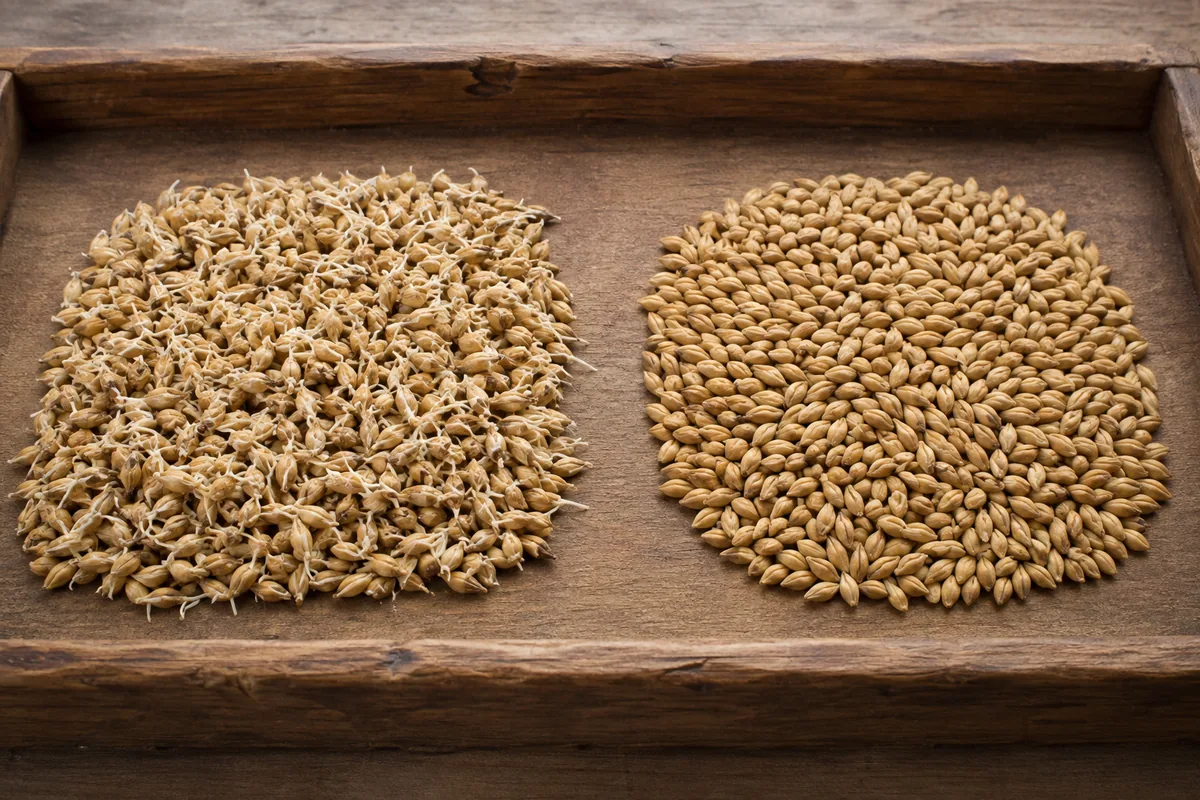
Malted grain has germinated far enough to develop enzymes that help convert starch into fermentable sugar. Unmalted barley has not gone through that malting step, so its use changes both the mash and the identity of pot still Irish Whiskey.
- Malted barley. Supplies fermentable material and enzyme activity, and it forms the entire cereal base of malt Irish Whiskey.
- Unmalted barley. Is essential to the pot still variety and is associated with a distinctive grain texture and spice in the specification.
- Other whole cereals. Can contribute to grain whiskey and, within stated limits, to the pot still mash.
- Water and yeast. Complete the fermentation system, but their exact sources and strains remain producer-level evidence.
The pot still mash must contain a minimum of 30% malted barley and a minimum of 30% unmalted barley. That paired floor is more useful than assuming pot still simply means the shape of the equipment.
Grain Irish Whiskey can use a broader cereal mix and a different distillation path. Wheat, maize or other cereals may change fermentable composition, cereal aroma and the role the spirit plays in a blend.
Raw material alone cannot predict the finished flavour.
Fermentation, distillation, cask maturation and blending reshape what begins in the mash.
Is Irish Whiskey always triple distilled?
No.
Triple distillation is an important Irish tradition and a real bottle-level fact for many whiskeys, but it is not a universal requirement of the geographical indication.
| Path | What it changes | What it cannot prove |
|---|---|---|
| Double pot distillation | Uses two main still passes, with character shaped by still design, reflux and the spirit cut | That the whiskey is heavier, better or non-Irish |
| Triple pot distillation | Adds another charge and separation stage, often increasing rectification in that production system | That every Irish Whiskey follows the same route |
| Column distillation | Can create grain spirit continuously at a chosen strength below the category ceiling | That the spirit is neutral or inferior |
| Blended construction | Combines qualifying varieties after maturation | The pass count of every component without disclosure |
An extra pass can create a lighter new make when still geometry, charge and cut points support that goal. It does not act alone, and later wood can add substantial fruit, spice, tannin and weight.
Pot and column stills also solve different production tasks. A photograph of the equipment cannot reveal how it was operated, which fractions were selected or how the resulting spirit entered a blend.
When the pass count matters to you, use the producer's technical statement and the exact bottle wording.
Irish origin does not guarantee three passes.
What do casks and age statements tell you?
Irish Whiskey must mature on the island for at least three years in wooden casks with a capacity no greater than 700 litres. The specification allows cask choices broad enough to create markedly different whisky styles.
- Minimum time
- 3 years
- Maximum vessel
- 700 litres
- Maturation area
- Ireland or Northern Ireland
- Minimum bottling
- 40% ABV
- Permitted colouring
- Plain caramel E150a
Ex-bourbon barrels, wine-seasoned casks, refill wood and other qualifying seasoned vessels may contribute different extraction and previous-content character. Fill number, warehouse conditions, duration and spirit-to-wood ratio can matter as much as the broad cask name.
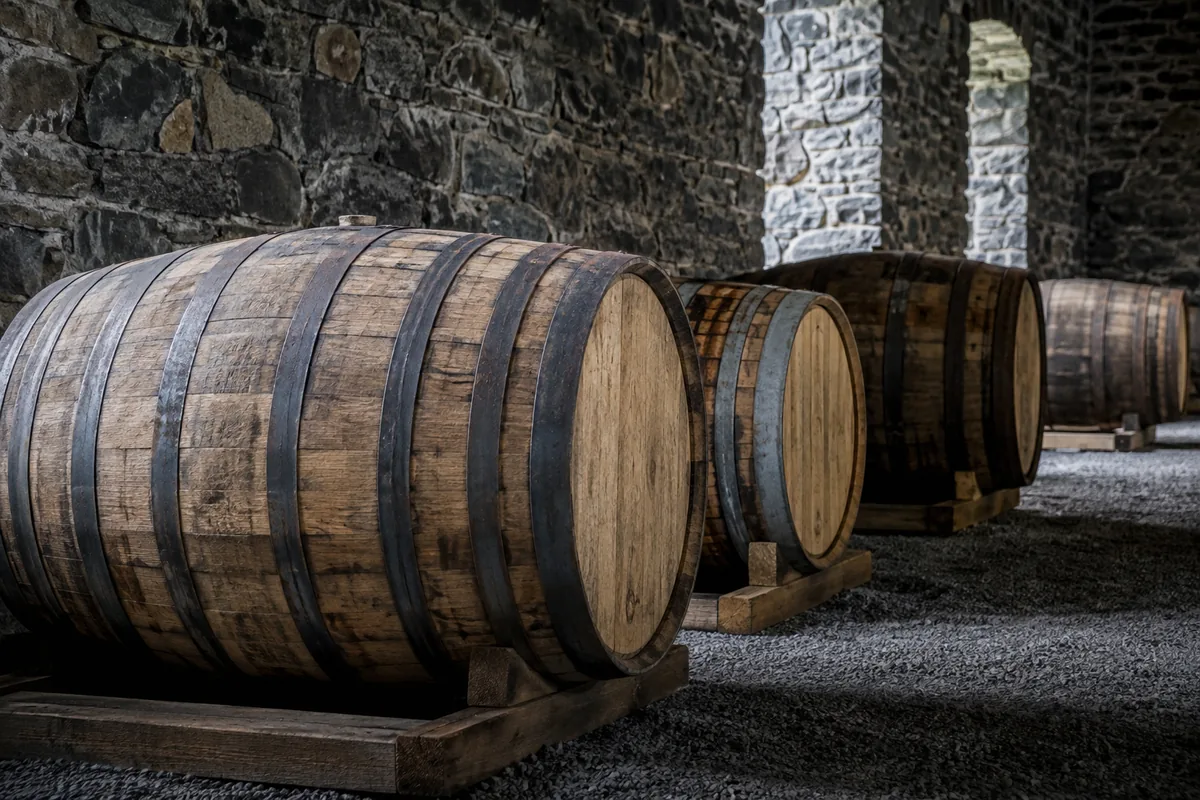
An age statement should be read as the stated age of the youngest whiskey represented, not the average age of a blend. Older components can be present without changing the number the label may claim.
Three years is a qualification threshold rather than a quality target.
A well-managed younger cask can suit a blend better than an older cask carrying excessive tannin or tired wood.
Plain caramel colouring may adjust appearance, so darkness cannot establish age, sweetness or cask intensity. The liquid also cannot be exported in wooden containers that would continue maturation outside the protected area.
Why does Irish Whiskey taste so varied?
Irish Whiskey spans light cereal blends, fruit-led malts, spicy and creamy pot still styles, smoky releases and richly cask-driven bottlings. The GI protects an origin and production tradition broad enough to accommodate all of them.
Trace the flavour backward. Ask about grain, fermentation, still system, pass count, spirit cut, cask history, vatting and ABV before assigning a note to nationality.
Fruit can begin in fermentation, where yeast and time create esters and other aroma precursors. Distillation then selects and reshapes that field through reflux, copper contact, condensers and cut points.
Pot still spice and creamy texture are recognised characteristics of the traditional malted and unmalted barley construction. Even within that family, exact mash proportions and distillery operations can move the result.
Grain spirit is often lighter, but lighter does not mean flavourless. Distillation must retain character from the raw materials and process rather than producing an unrestricted neutral alcohol.
Peat is another optional variable. Some historical and current Irish malt can carry smoke, while many familiar releases use unpeated material.
Casks may preserve delicate cereal and fruit or redirect them toward vanilla, dried fruit, nut, toast, spice and tannin. Bottling strength then changes concentration, texture and aroma release in the glass.
A controlled tasting lets you test these explanations without pretending one sample represents the whole category.
How should you read an Irish Whiskey label?
Start with the protected name and the variety. Those two lines answer origin and construction before decorative language enters.
| Label clue | What it supports | Question still open |
|---|---|---|
| Irish Whiskey, Irish Whisky or Uisce Beatha Eireannach | A claim to the protected GI | Which qualifying variety and producer made it |
| Pot still, malt, grain or blended | Material, still or assembly information | Exact mash, pass count, component proportions and casks |
| Single | A one-distillery claim within the relevant type | Whether several ages or casks were combined |
| Age statement | The youngest whiskey represented by the number | The ages and proportions of older components |
| Cask or finish | A stated maturation stage or wood history | Duration, fill number and share of the vatting |
| Printed ABV | Alcohol concentration at bottling | The measured volume you will pour |
Country imagery, family names and heritage language can add genuine context, but they do not independently verify the production chain. Current GI verification and a traceable operator statement carry more weight.
Triple distilled is useful when it appears as a supported process statement. Its absence does not prove double distillation, and its presence does not make the bottle smoother for every drinker.
No-age-statement whiskey leaves exact age undisclosed.
It does not say that the youngest liquid only met the minimum.
Read cask strength carefully as well. A verified cask-strength whisky describes strength handling after maturation, not one fixed ABV or a quality grade.
The best label reading moves from protected facts to optional detail.
How should you serve Irish Whiskey?
If you want to compare bottles, begin with a clean tulip-shaped glass, a measured pour and a neutral room temperature. That setup keeps glass shape, volume and temperature from changing at the same time.
- Measure the baseline. Record the pour and printed ABV before adding anything.
- Nose gently. Look for cereal, fruit, spice, smoke, oak and sulphur in short passes above the rim.
- Taste a small amount. Note sweetness, acidity, bitterness, texture, development and finish.
- Add water deliberately. Use a recorded amount and compare the same sample again.
- Test chilling separately. One large ice cube changes temperature first, then dilution over time.
- Choose the final serve. Neat, diluted, chilled or mixed can each suit a different bottle and purpose.
Water changes concentration and volatility. It may reveal fruit or spice hidden by alcohol heat, although too much can make a lighter whiskey feel thin.
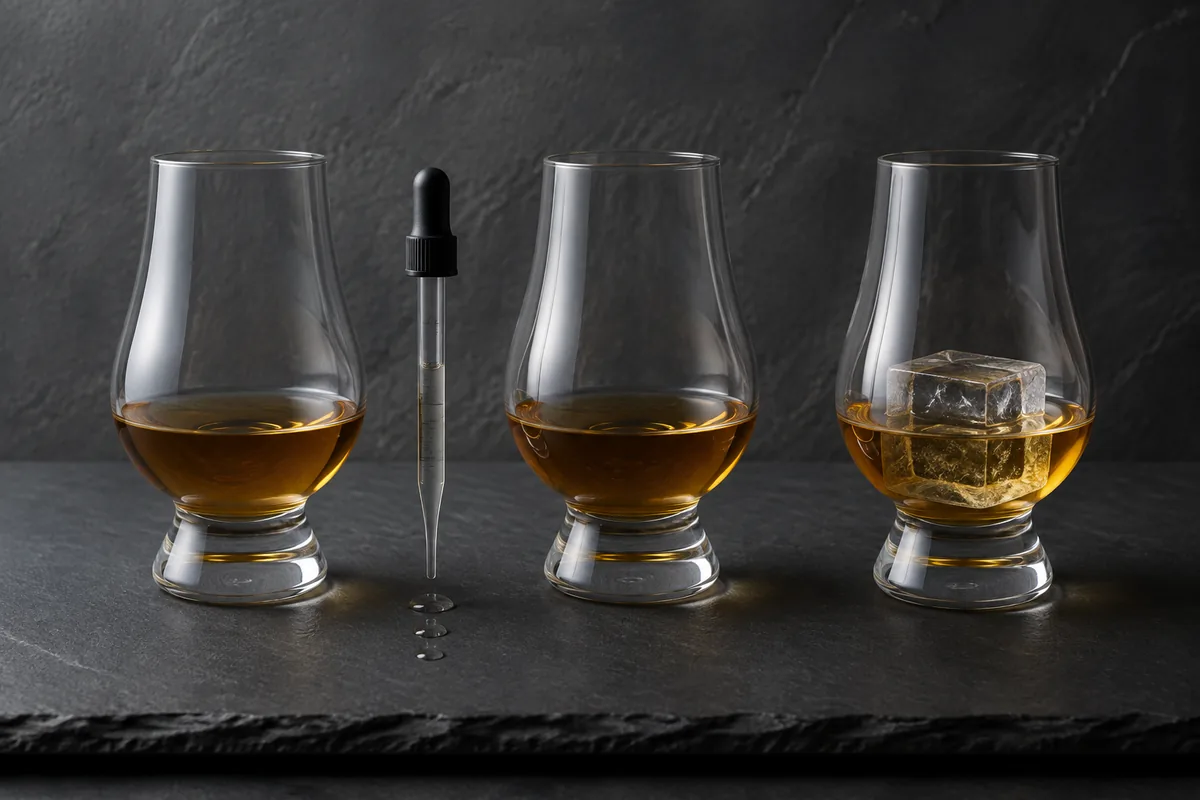
Ice lowers temperature and adds dilution gradually. It can soften perceived heat while muting some delicate aromas, so chilled is a different condition rather than a wrong one.
You can follow a consistent step by step whiskey tasting when the goal is comparison.
Smoothness is sensory, not medical evidence. Water, ice, food and familiarity cannot show that a person is unimpaired or safe to drive.
Which foods work with different Irish Whiskey styles?
Pair from the tasted whisky rather than nationality. A light grain-led blend, spicy pot still whiskey, fruit-led malt and dark wine-cask release need different food intensity.
| Whiskey direction | Food direction | Balance to watch |
|---|---|---|
| Light cereal and vanilla | Roast poultry, mild cheese, oat biscuits or apple | Heavy smoke and sugar can erase subtle grain notes |
| Spicy pot still texture | Pork, mushrooms, aged cheese or root vegetables | Chilli may magnify alcohol heat |
| Fruit-led malt | Salmon, soft cheese, nuts or restrained fruit dessert | Excess sweetness can flatten fresh fruit character |
| Smoky style | Grilled vegetables, smoked fish or charred meat | Shared smoke needs acidity or freshness to avoid dullness |
| Rich wine-cask style | Braised meat, hard cheese, nuts or dark chocolate | Tannin and bitterness can stack into harshness |
Irish food can create a coherent menu, but shared geography does not guarantee balance. Fat, salt, acidity, sweetness, texture and serving temperature do the practical work.
When you test a pairing, take one bite and one measured sip. If either side becomes harsher, duller or more bitter, change the intensity or serving format.
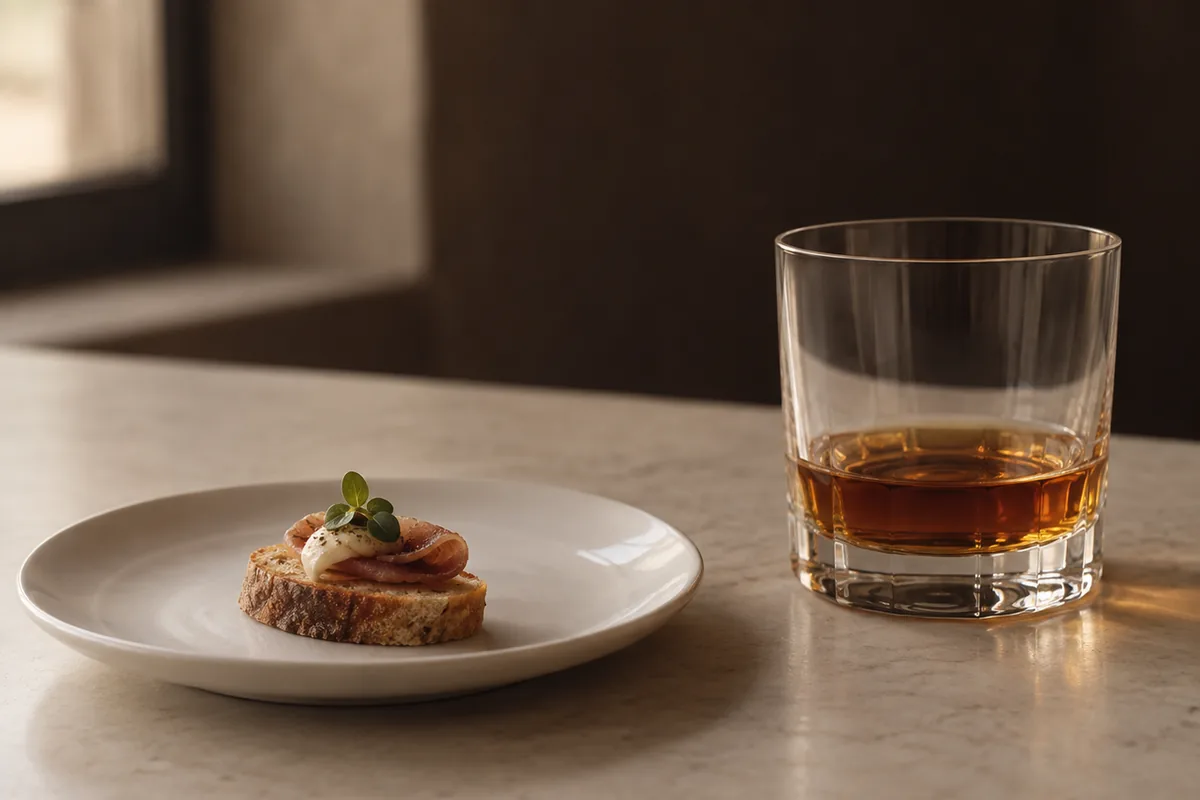
Food changes absorption and perception, but it does not cancel the alcohol consumed.
How should an opened bottle be stored?
Store opened Irish Whiskey upright, tightly closed and away from direct sunlight or sustained heat. The spirit does not continue cask maturation in glass, although oxygen exposure, volatile loss and closure problems can change it.
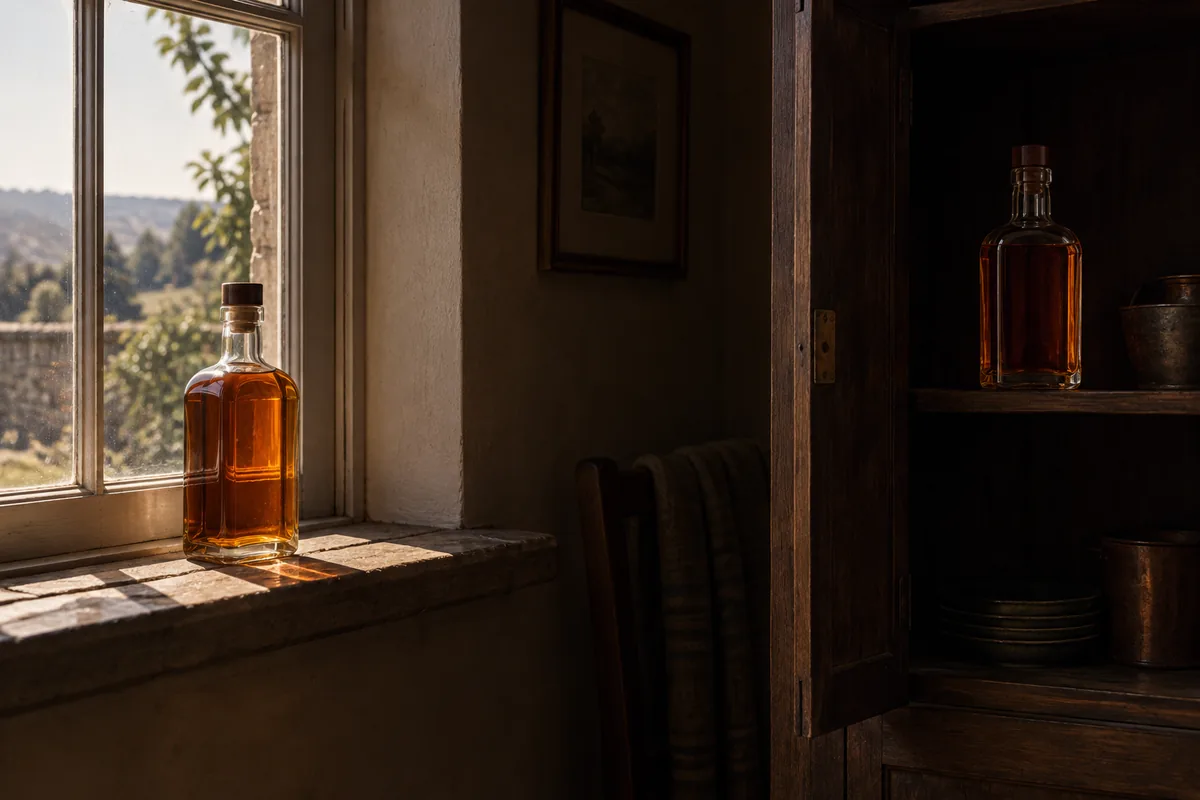
- Keep the bottle upright. Limit prolonged contact between high-strength spirit and the cork or liner.
- Use stable darkness. Avoid window shelves, radiators and repeated temperature swings.
- Check the closure. Replace a failed compatible closure before evaporation and contamination progress.
- Watch headspace. A small remainder has more air above it and may change faster after repeated opening.
- Record any transfer. Label a clean compatible smaller container and never use an unidentified bottle.
Haze can appear after chilling or adding water, especially in whiskey that was not chill-filtered. Cloudiness alone does not prove spoilage.
Foreign material, an unknown refill, active pressure, a failed closure or a clearly abnormal odour deserves more concern. When bottle history is uncertain, discarding the liquid is safer than tasting to diagnose it.
A slow loss of fresh fruit or a softer aroma can be oxidation rather than a safety failure. Recording the opening date and fill level gives you a better comparison than memory alone.
How does ABV change the serving decision?
ABV changes both sensory concentration and the amount of alcohol in a measured volume. A 30 mL pour at 55% contains more alcohol than 30 mL at 40%, even if both are later diluted to the same glass size.
Measure before adding water or ice. Dilution lowers concentration in the glass but does not remove the alcohol already poured.
Higher strength can carry more aroma, texture and heat. Measured water lets you compare how the whiskey changes, while an uncontrolled free-pour makes both tasting and alcohol calculation less reliable.
In the United States, NIAAA defines one standard drink as 14 grams of pure alcohol, represented by about 45 mL or 1.5 US fluid ounces of 40% distilled spirits. Other countries use different definitions, so the jurisdiction and unit always matter.
No calculator can provide personal clearance for driving, machinery, swimming, caregiving or another safety-critical task. Individual impairment varies, and a mild flavour does not mean a mild dose.
The complete answer is specific: Irish Whiskey is a protected all-island family, while variety, grain, distillation, cask, age, service and ABV determine how one bottle should be understood.
Common questions
- Is Irish Whiskey always triple distilled?
- No. Triple distillation is traditional and common in some Irish Whiskey, but the geographical indication does not require every qualifying spirit to use three passes.
- What is pot still Irish Whiskey?
- It is pot-distilled Irish Whiskey made from a mash containing at least 30% malted barley and at least 30% unmalted barley, with limited room for other cereals under the specification.
- How long must Irish Whiskey mature?
- It must mature on the island of Ireland for at least three years in wooden casks no larger than 700 litres.
Sources
-
Department of Agriculture, Food and the Marine, Geographical Indications for Spirit Drinks
Published 2019. Updated 22 May 2025. Accessed 7 September 2026.
-
Irish Whiskey Technical File
Accessed 10 September 2026.
-
NIAAA, What Is a Standard Drink?
Accessed 13 September 2026.
More in Spirits
-
 American single malt whisky
01
What is American single malt whisky, and what does it guarantee?
-
 Australian whisky
02
How is Australian whisky defined, and by which law?
-
 Black rum
03
What is black rum, and does the colour mean anything?
-
 Blended American whiskey
04
What is blended American whiskey, and how much of it is whiskey?
-
 Blended Irish whiskey
05
Blended Irish whiskey: which word counts the distilleries?
-
 Blended Scotch
06
Blended Scotch: what is in it, and why does the recipe change?