
Spirits
Canadian whisky: the standard that never mentions a grain
Canadian whisky is mashed, distilled and aged in Canada, held not less than three years in casks of no more than 700 litres.
The standard that requires all of that names no grain and sets no proportion of one. That is why Canadian Whisky, Canadian Rye Whisky and Rye Whisky are three permitted names for the same product.
Since 18 December 2024 it has sat outside the Food and Drug Regulations that most accounts still cite.
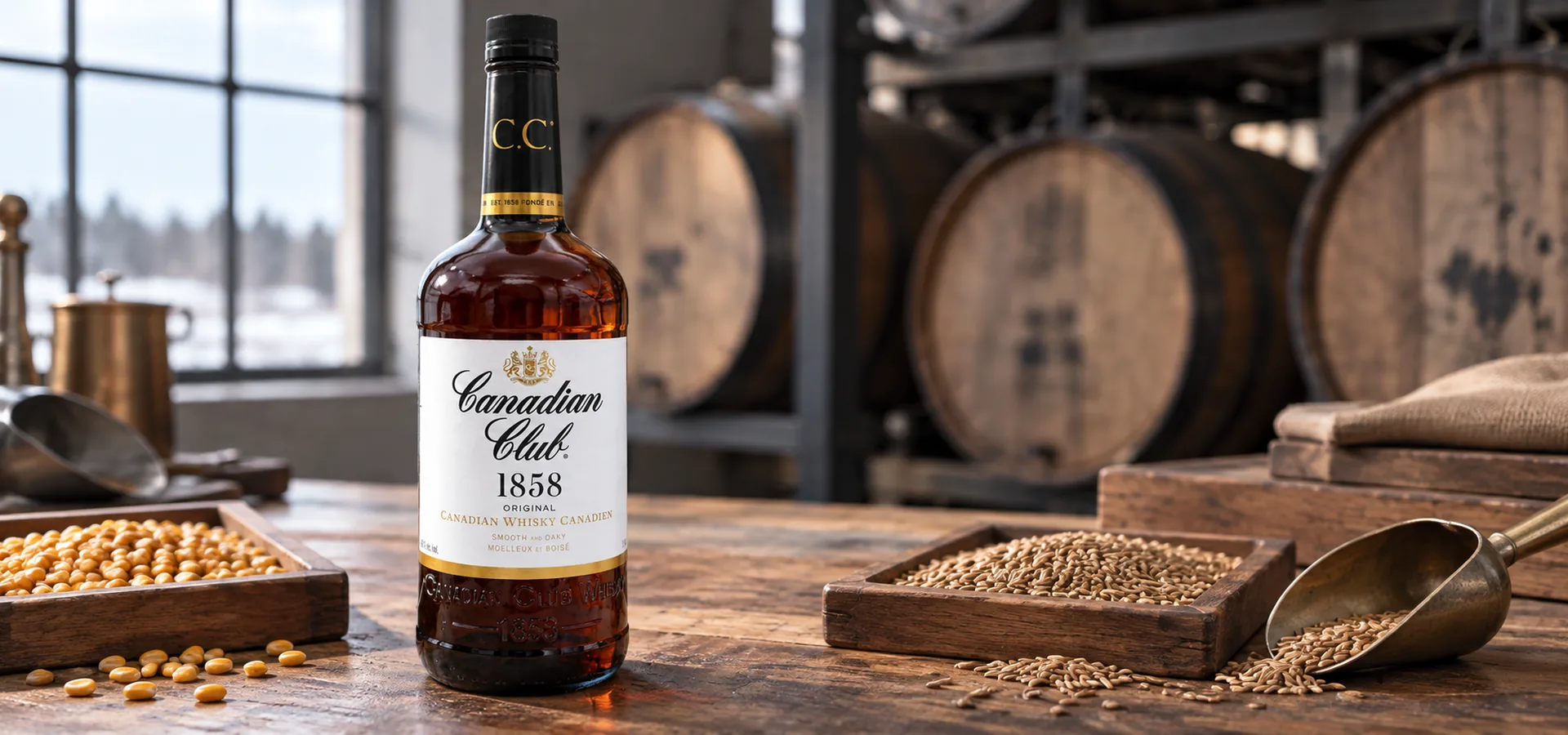
At a glance
- Legal category
- Canadian Whisky, Canadian Rye Whisky or Rye Whisky, Canadian Food Compositional Standards Volume 2 section 2.1.3, incorporated by reference into the Food and Drug Regulations
- Minimum strength
- 40 percent ABV
- Also called
- Canadian rye whisky, Rye whisky, Canadian rye
What is Canadian whisky?
- Where it is made
- Mashed, distilled and aged in Canada. All three, not one of them.
- What it is made from
- A mash of cereal grain or cereal grain products, saccharified by the diastase of malt or by other enzymes, fermented by yeast.
- How long it is aged
- Not less than three years in small wood.
- Minimum strength
- Not less than 40 percent alcohol by volume.
- What it must taste like
- It must possess the aroma, taste and character generally attributed to Canadian whisky.
- Other law it must satisfy
- Manufacture in accordance with the Excise Act and the regulations made under it.
- What may be added
- Flavouring.
That is the whole standard. Seven conditions, and not one of them names a grain.
Four are checkable against a bottle. The country, the three years, the strength, and the vessel the three years have to happen in.
What the requirements never reach
Bottling is not among them, so a Canadian whisky can lawfully leave the country in bulk and go into its bottle somewhere else.
Nor is there a mash bill anywhere in the seven. Corn, rye, wheat, barley, any split of them at all, and the standard is indifferent.
One condition points somewhere else entirely. Manufacture has to accord with the Excise Act, which is federal tax law rather than food law, and a great deal of what a distiller may actually do is settled there.
Where is the Canadian whisky standard written now?
Almost every account of Canadian whisky cites section B.02.020 of the Food and Drug Regulations, and that subsection today reads Repealed, SOR/2024-244.
The standard moved rather than vanished. It is now section 2.1.3 of Volume 2 of the Canadian Food Compositional Standards, a document the Canadian Food Inspection Agency publishes and can amend without a regulatory amendment.
SOR/2024-244 was published in the Canada Gazette Part II on 18 December 2024, and it did not move every whisky rule.
| Rule | Before | Now |
|---|---|---|
| The Canadian whisky standard | Food and Drug Regulations, B.02.020(1) | Canadian Food Compositional Standards, Volume 2, section 2.1.3 |
| What may be claimed as age | Food and Drug Regulations, B.02.020(2) and (3) | Unchanged, still there |
| Three years before sale in Canada | Food and Drug Regulations, B.02.023 | Unchanged, still there |
| Scotch, Irish, bourbon, Tennessee | Food and Drug Regulations | Repealed, and not carried across |
The last row is the one that shows this was not a straight transfer. Four foreign whisky standards were taken out and put nowhere, on the ground that they were redundant or in conflict with the Spirit Drinks Trade Act.
One word that did not survive the move
The repealed subsection said Canadian whisky may contain caramel and flavouring, where section 2.1.3 says only that it may contain flavouring.
That is a difference between two texts rather than a finding about what may go in a bottle. Colouring is governed by the food additive rules, and nothing read for this page says caramel became prohibited.
What the difference does settle is where to look. A reader checking the composition rule opens the compositional standards document, because the regulation most writing still cites no longer holds it.
What does the word whisky alone have to mean in Canada?
Less than most people would guess, because the plain whisky standard sits in the same volume and runs to two conditions.
It has to be a potable alcoholic distillate from a mash of cereal grain, saccharified by the diastase of malt or by other enzymes. It may contain flavouring.
What it never says
No country. No period in wood, no cask of any size, and no minimum strength.
Everything a reader thinks of as making whisky whisky, the barrel and the years and the proof, is absent from the standard that governs the word.
- Where it is made
- Canada
- Minimum age
- 3 years
- Minimum strength
- 40 % ABV
Those three are what the word Canadian adds, and they are the whole of what it adds.
The rule that closes the gap
A bottle labelled only whisky is not therefore young. The three year requirement is written as a rule about selling rather than as part of any standard, so it reaches every whisky sold in Canada whatever the label says.
Which leaves the country and the strength as the two things the narrower name genuinely guarantees on its own.
A third standard sits beside both. Malt whisky adds a malted grain mash and a character clause, and says nothing about where it was made.
Does Canadian rye whisky have to contain rye?
No. Section 2.1.3 is headed Canadian Whisky, Canadian Rye Whisky or Rye Whisky, and it states one set of requirements for all three names. Not one of those requirements mentions rye.
The three names are alternatives for the same product. A distiller who meets the standard may put any of them on a label.
Read the mash requirement and the reason is plain. It reaches cereal grain or cereal grain products and stops there.
What that leaves undecided
No individual grain is named anywhere in the standard, and no minimum proportion of one is set.
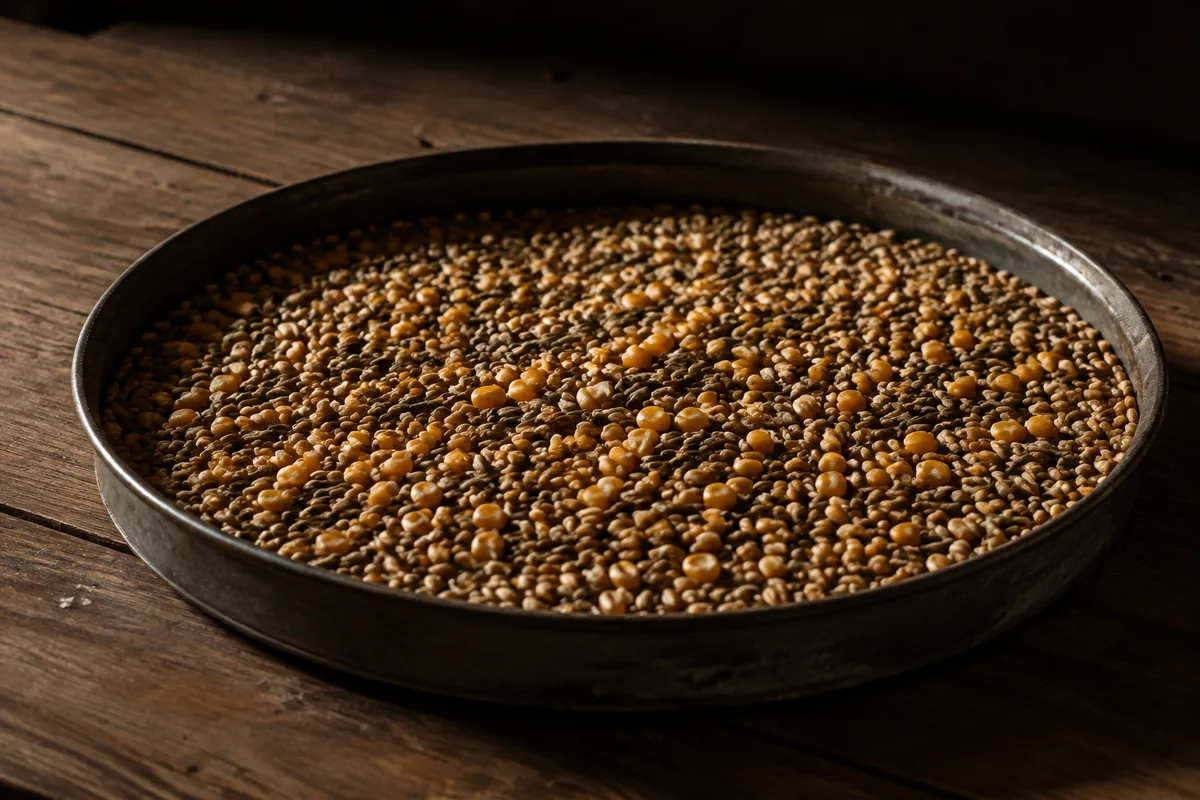
A bottle labelled Canadian Rye Whisky may therefore hold a great deal of rye, or very little of it. The label is not where that gets settled.
The American designation runs the other way and turns on a minimum proportion of rye.
What does the Canadian whisky standard leave to the producer?
The grain was not the exception. It is the first row of a pattern that runs through the whole standard.
Set out every decision a reader might expect a whisky rule to make, and most of them are simply absent.
| Decision | What the standard says |
|---|---|
| Which grain | Nothing. Cereal grain or cereal grain products |
| Proportion of each grain | Nothing |
| Distillation strength | Nothing. No ceiling of any kind |
| Cask material | Wood. No species named |
| New or used, charred or not | Nothing |
| Cask size | Fixed. Not greater than 700 litres |
| Minimum time in wood | Fixed. Three years |
| Maximum age | Nothing |
| Strength in the bottle | Fixed as a floor. Not less than 40 percent |
| Additions | Flavouring permitted, quantity settled elsewhere |
Three numbers and a country. That is the whole of what the standard fixes.
The two absences that change the most
The first is distillation strength. American law caps bourbon at 160 proof and any whisky at 190, because the higher a spirit is distilled the less of the grain survives into it.
The Canadian standard sets no ceiling at all.
The second is the cask. Small wood asks for wood, and for no more than 700 litres, and stops.
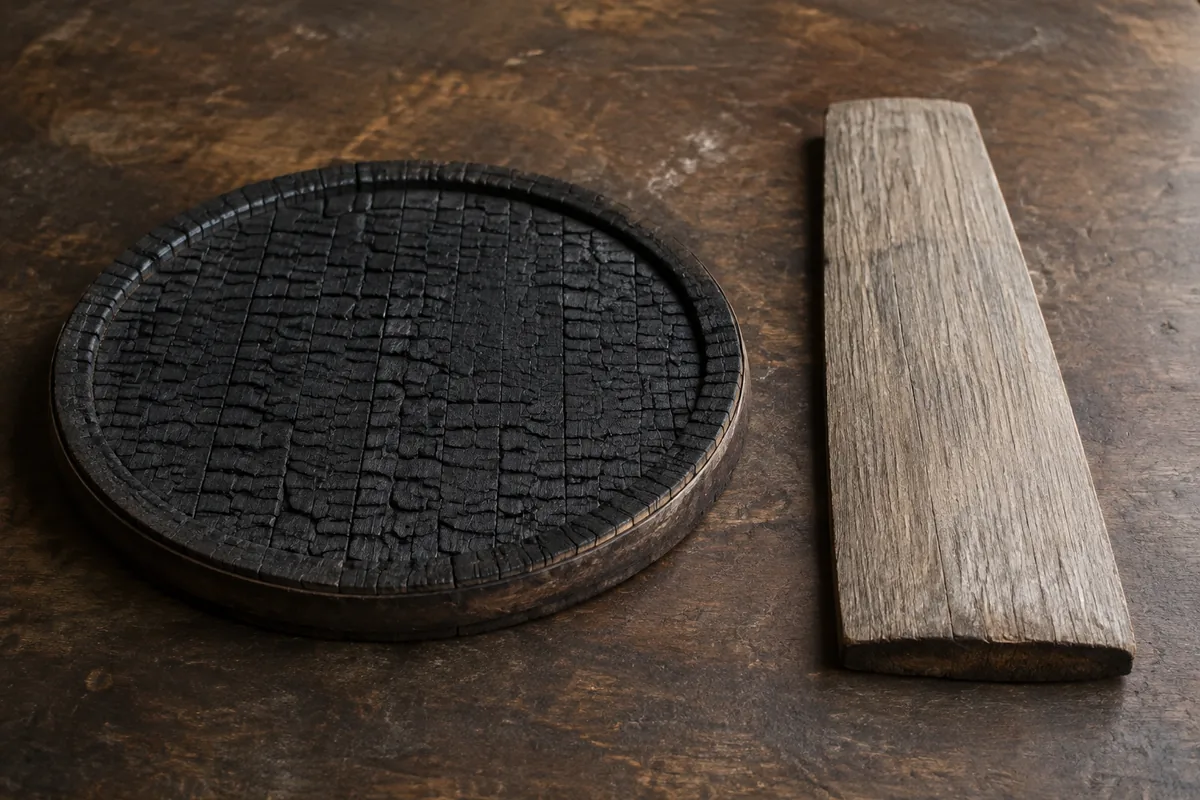
No species, no char, no requirement that the cask be new and no entry strength, where American law writes all four as numbers and the bourbon standard sets them out.
What the silence is not
It is not permission to do anything at all. The standard requires manufacture in accordance with the Excise Act, and that requirement carries rules this document never repeats.
Nor is any of it a claim about a particular producer. The point is only that the label reports a country, a period and a strength, and reports nothing about the decisions above.
How long does Canadian whisky have to be aged?
Three years, and the clock only runs while the whisky sits in small wood.
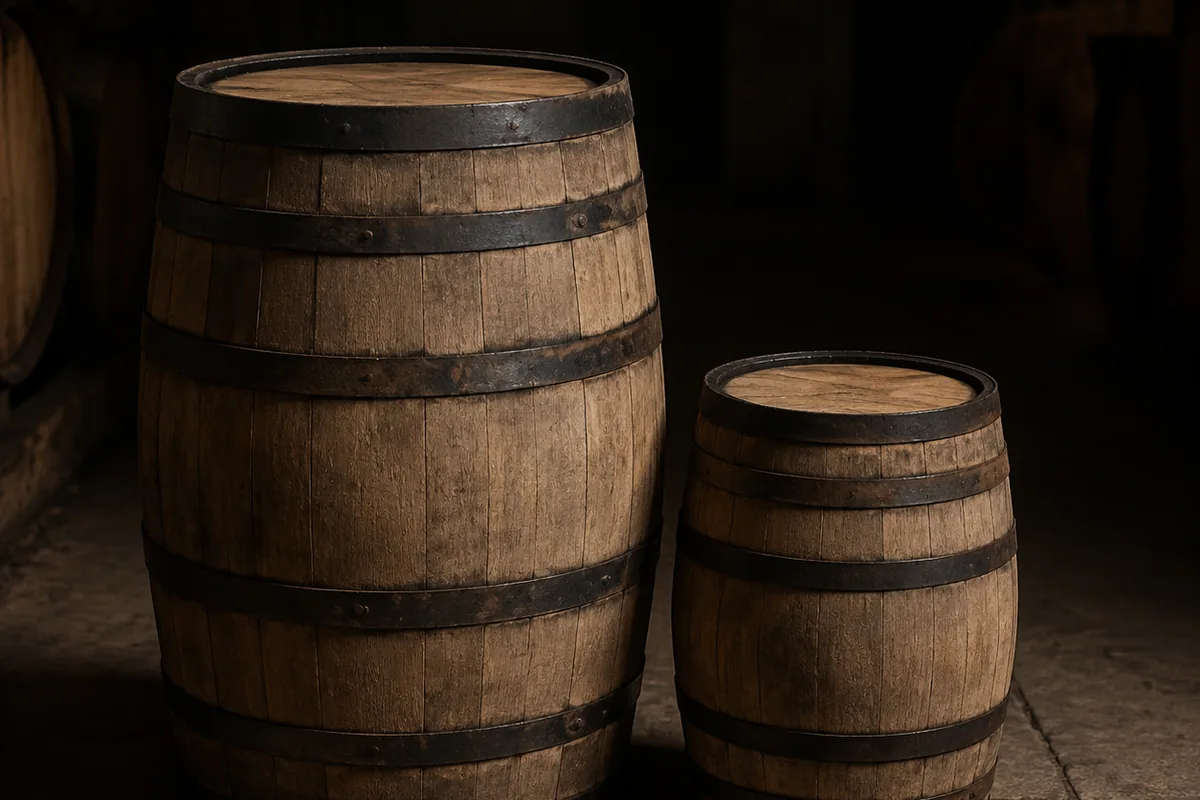
Small wood is a defined term. Section B.02.002 of the Food and Drug Regulations gives it as wood casks or barrels of not greater than 700 litres capacity.
That ceiling is generous rather than tight. A 700 litre cask holds roughly three times the volume of the 200 litre barrel most whisky matures in.
What may be called age
The claim rules are narrower than the aging rule, and they are worth reading before trusting a number on a label.
- No age may be claimed other than the period the whisky was held in small wood.
- Once three years in small wood are complete, a further period of not more than six months in other containers may be claimed as age.
- Time in anything larger than 700 litres is therefore not age at all, however long it runs.
An age statement on a Canadian bottle is a claim about cask time, then, and not about time since distillation.
The rule that reaches further
Three years is not only a condition of the name. No whisky may be sold for consumption in Canada unless it has been aged three years in small wood, with bourbon whisky and Tennessee whisky the two exceptions.
An American label adds a rule of its own, so any whisky under four years old sold there carries an age statement, imported whisky included, unless it is labelled bottled in bond.
Can Canadian whisky contain something that is not whisky?
Yes, and the permission is the last line of the standard. Canadian whisky may contain flavouring.
Flavouring is not what the word suggests. Section B.02.002 of the Food and Drug Regulations defines it, in respect of a spirit, as any other spirit or wine, domestic or imported, added as a flavouring to that spirit as authorized under the Excise Act.
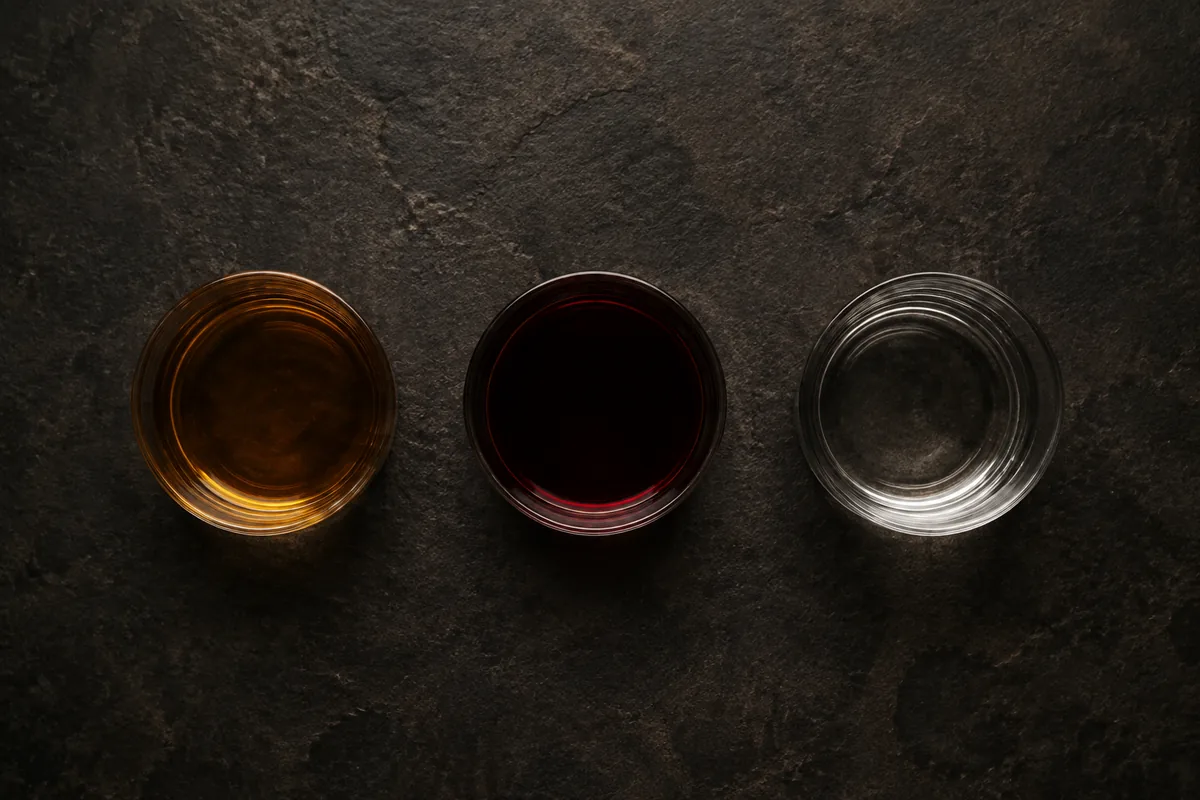
A sherry, a rum or an imported brandy can all be flavouring under that definition.
Where the quantity is not written. Almost every account of the category quotes a ceiling of 9.09 percent. That figure appears in neither section 2.1.3 nor the whisky sections of the Food and Drug Regulations read on 5 September 2026. The definition sends the authorization to the Excise Act, so the amount is settled in tax law rather than in the food standard.
One constraint does sit in the food rules. A whisky containing any flavouring other than wine may not be sold in Canada unless that flavouring has itself been aged two years in small wood.
Wine is the exception in that sentence, and every other spirit added as flavouring has to have served its own two years first.
An American blended whiskey carries a stated minimum of whiskey in the bottle. The Canadian standard states no equivalent figure, and leaves the amount to be settled elsewhere.
Why does the label not list what is in the bottle?
Because having a standard is what removes the list. A standardized alcoholic beverage is exempt from showing a list of ingredients, under B.01.008(2)(f) of the Food and Drug Regulations.
Canadian whisky holds a standard, so it is standardized, so the exemption applies.
What that does to the flavouring
The spirit or wine permitted as flavouring never has to appear anywhere on the bottle. It is an ingredient, and the ingredient list is the thing that is not required.
So a reader looking for what is in a Canadian whisky is looking at the one part of the label that was never going to answer.
No ingredient list, but allergens are still declared. The exemption covers the list of ingredients and stops there. Allergen declaration applies to every alcoholic beverage in Canada, standardized or not, including the ones exempt from listing ingredients at all.
That is the one thing a Canadian whisky label still has to tell you about its contents, and it is the part that matters if a grain or an added wine is a problem for you.
Who else gets there, and by a different route
Scotch, Irish, bourbon and Tennessee whisky reach the same exemption. They are named individually in the rule, because their standards were repealed and they no longer hold one to be exempt by.
The same December 2024 change that moved the Canadian standard is why that list has to name them.
What does the character clause in the standard mean?
One of the seven requirements is not a measurement at all. A Canadian whisky must possess the aroma, taste and character generally attributed to Canadian whisky.
The standard defines none of those three words and gives no reference point for any of them.
The same construction, used elsewhere
It is not a slip. The malt whisky standard in the same volume requires the aroma, taste and character generally attributed to malt whisky.
A clause of that shape does one job. It keeps a product that meets every number from being sold under a name it does not belong to.
Enforcement is by judgement, which is why nothing measurable sits behind it and why no regulator publishes a target to compare a bottle against.
What the clause cannot be read as
A flavour description. No source we read carries a tasting characteristic for Canadian whisky as a category, so none is set out here.
The clause gives nothing to taste against, so what a given bottle smells and tastes of has to be worked out at the glass.
Why can only Canada make Canadian whisky?
Because two other countries agreed not to allow it. Article 3.C.2 of Annex 3-C of the Canada United States Mexico Agreement requires Mexico and the United States to recognize Canadian Whisky as a distinctive product of Canada.
Neither may permit a product to be sold as Canadian Whisky unless it was manufactured in Canada in accordance with the laws governing its manufacture for consumption in Canada.
What the American rule says
United States regulation puts it the same way. Canadian whisky is defined there as a distinctive product of Canada, manufactured in Canada in compliance with the laws of Canada regulating the manufacture of Canadian whisky for consumption in Canada.
Both instruments fix the name by pointing at Canadian law rather than by writing a requirement of their own.
That has a practical edge on a shelf outside Canada. The words on an imported bottle are a claim about a Canadian standard, and everything that standard leaves open stays open there too.
Common questions
- Does Canadian whisky have to be bottled in Canada?
- No. The standard requires mashing, distilling and aging in Canada and says nothing about bottling, so a Canadian whisky may leave the country in bulk and go into its bottle elsewhere.
- Can a whisky aged less than three years be sold in Canada?
- No, with two exceptions. No whisky may be sold for consumption in Canada unless it has been aged three years in small wood, and bourbon whisky and Tennessee whisky are the only whiskies that rule does not reach.
- Can Canadian whisky be aged in used barrels?
- Yes. The standard requires wood casks or barrels of not greater than 700 litres and says nothing about species, char, or whether the cask has been filled before, so a used barrel meets it exactly as a new one does.
Sources
-
Canada United States Mexico Agreement, Chapter 3 Agriculture, Annex 3-C, Article 3.C.2
Accessed 5 September 2026.
-
Code of Federal Regulations, Title 27, sections 5.143 and 5.74
Accessed 5 September 2026.
-
Food and Drug Regulations, C.R.C., c. 870, sections B.02.002, B.02.020 and B.02.023
Accessed 5 September 2026.
-
SOR/2024-244, Regulations Amending Certain Regulations Concerning Food Additives and Compositional Standards, Canada Gazette Part II, Volume 158, Number 26
Published 18 December 2024. Accessed 5 September 2026.
-
Canadian Food Compositional Standards, Volume 2 Alcoholic Beverages, section 2.1.3, the standard for Canadian Whisky, Canadian Rye Whisky or Rye Whisky
Accessed 10 September 2026.
-
Labelling requirements for alcoholic beverages, Canadian Food Inspection Agency
Accessed 5 September 2026.
More in Spirits
-
 American single malt whisky
01
What is American single malt whisky, and what does it guarantee?
-
 Australian whisky
02
How is Australian whisky defined, and by which law?
-
 Black rum
03
What is black rum, and does the colour mean anything?
-
 Blended American whiskey
04
What is blended American whiskey, and how much of it is whiskey?
-
 Blended Irish whiskey
05
Blended Irish whiskey: which word counts the distilleries?
-
 Blended Scotch
06
Blended Scotch: what is in it, and why does the recipe change?