
Spirits
Single pot still Irish whiskey: why the unmalted barley?
Single pot still Irish whiskey is made at one distillery from a mash of at least 30 percent malted barley and at least 30 percent unmalted barley, distilled in pot stills. The unmalted half is a requirement no other whiskey category imposes, and it is there for reasons that began with a tax.
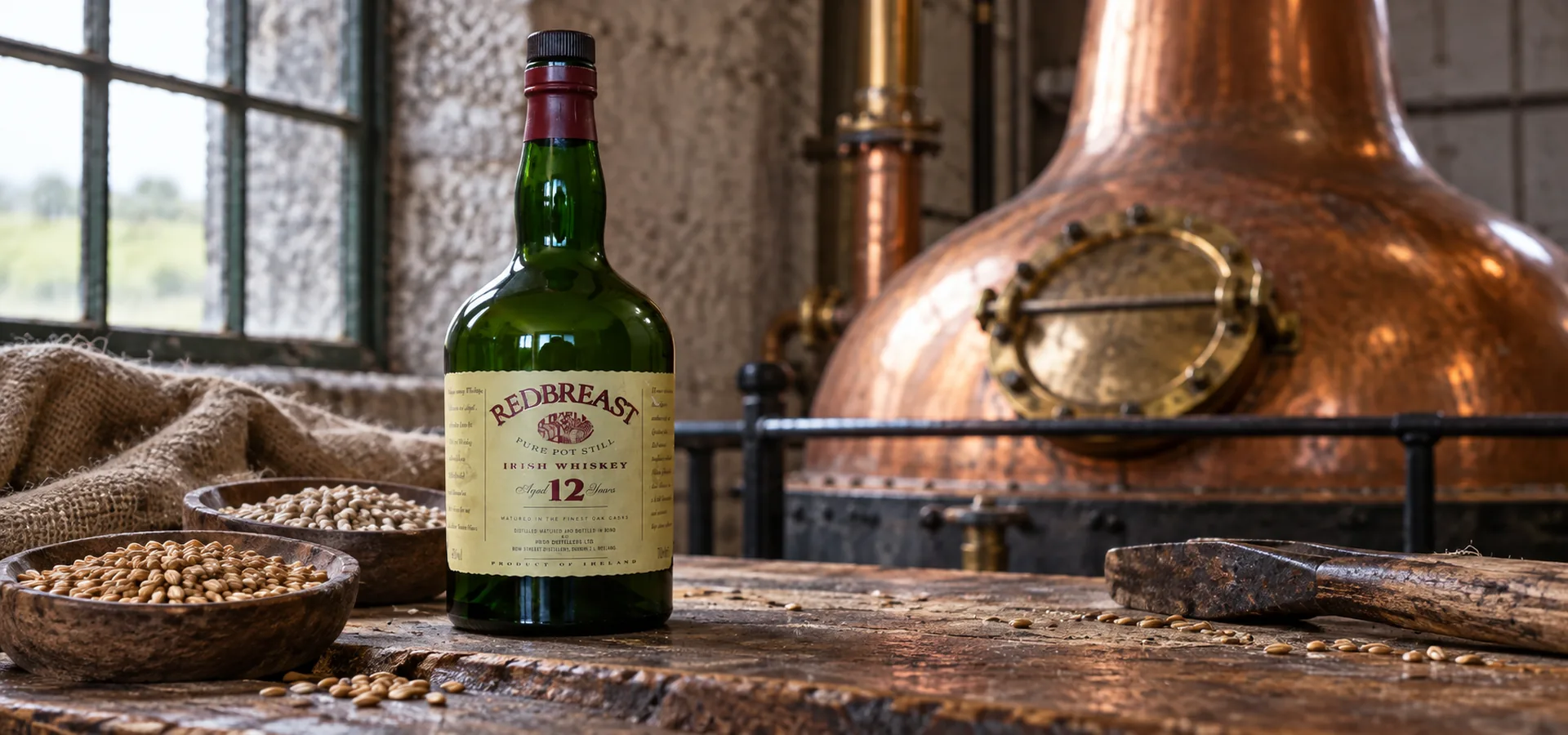
At a glance
- Legal category
- Pot Still Irish Whiskey under the Irish Whiskey technical file, carrying the qualifier single because it is distilled totally on the site of a single distillery. Protected as a geographical indication for the island of Ireland.
- Minimum strength
- 40 percent ABV
- Also called
- Pot still Irish whiskey, Pure pot still whiskey, Irish pot still whiskey
What is single pot still Irish whiskey?
The name points at a vessel and the rule is about a mash.
A single pot still Irish whiskey mash must contain a minimum of 30 percent malted barley and a minimum of 30 percent unmalted barley. The unmalted half is the requirement no other whiskey category imposes anywhere in the world.
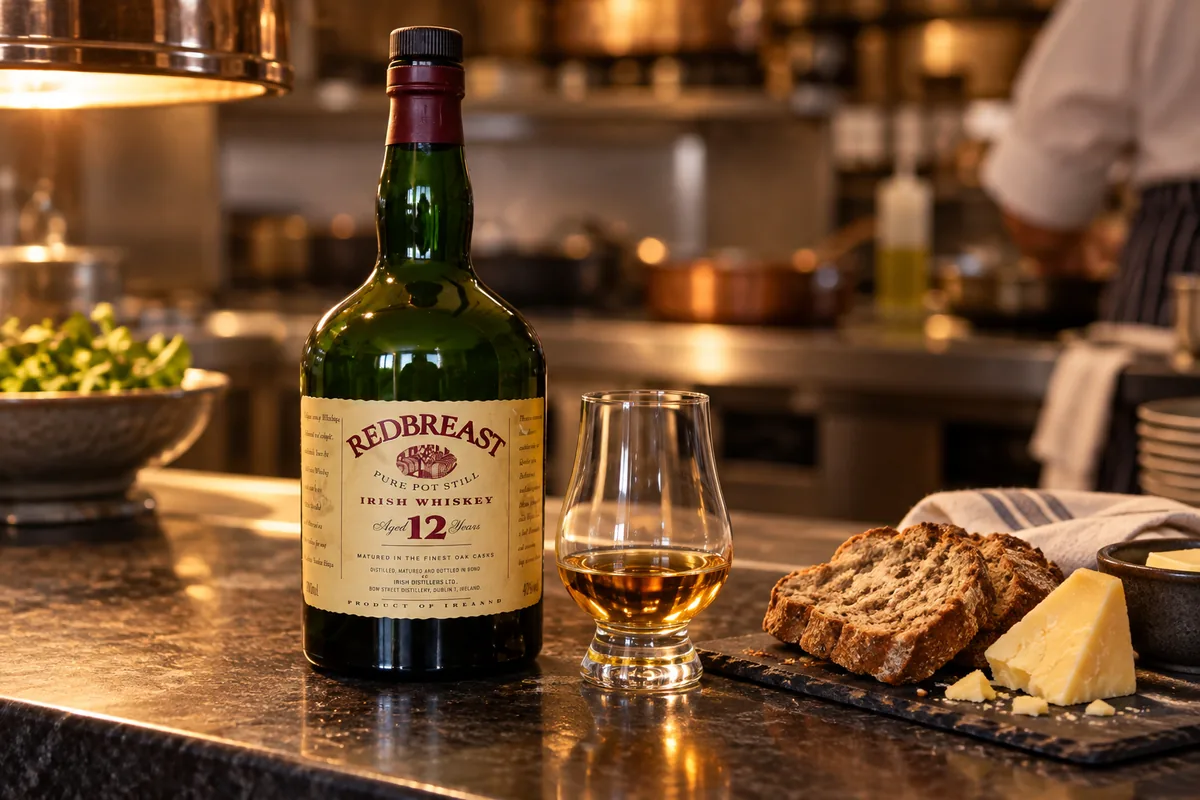
- Malted barley
- At least 30 %
- Unmalted barley
- At least 30 %
- Other cereals
- Up to 5 %
- The still
- Pot stills
Single pot still Irish whiskey is saccharified by the diastase of the malt it contains, with or without other natural enzymes, fermented by yeast and distilled in pot stills.
Here is the trap the name sets. Malt Irish whiskey also comes off pot stills, so the vessel named in the phrase does not identify the category.
That phrase about other natural enzymes is worth noticing. Irish whiskey may be converted with or without other natural enzymes, where the Scotch standard allows only the enzymes already in the mash.
Pot still is one of the varieties Irish whiskey is divided into, and only this one fixes a proportion of unmalted grain.
Everything interesting about this whiskey follows from the half of the mash that never went through a malting floor.
The tax that put unmalted barley in the mash
Categories usually begin with a preference. This one began with a bill.
A malt tax introduced in 1785 charged Irish distillers duty on the malt they used, which gave them a reason to mash unmalted grain instead. Duty on malt plus duty on spirit made a fully malted mash the expensive way to work.
That account is widely repeated and it is not the whole story.
Two different reasons for the same grain. The Irish specification calls unmalted barley an essential ingredient of pot still whiskey rather than a substitution, and gives flavour and texture as the reason for it.
Distillers are reported to have understood what unmalted barley did to texture before the tax made it cheaper.
So the honest position is that the tax explains the scale of the practice and not the discovery of it.
It is worth being clear about where each account comes from. The tax account comes from published histories rather than from the specification, which gives only the flavour and texture reason.
What does the unmalted grain ask of the brewhouse?
Before any of that texture exists there is a mash to get through, and the unmalted half makes it harder.
Brewing a pot still whiskey starts from a proportional mix of malted and unmalted barley with up to 5 percent other cereals.
An all malt mash comes with its own filter built in. Germination loosens the husk, the husks settle into a bed, and the liquid runs off through it.
A pot still mash has less of that to work with. Unmalted barley has no husk loosened by germination to form a filter bed, so separating the wort is harder than it is on an all malt mash.
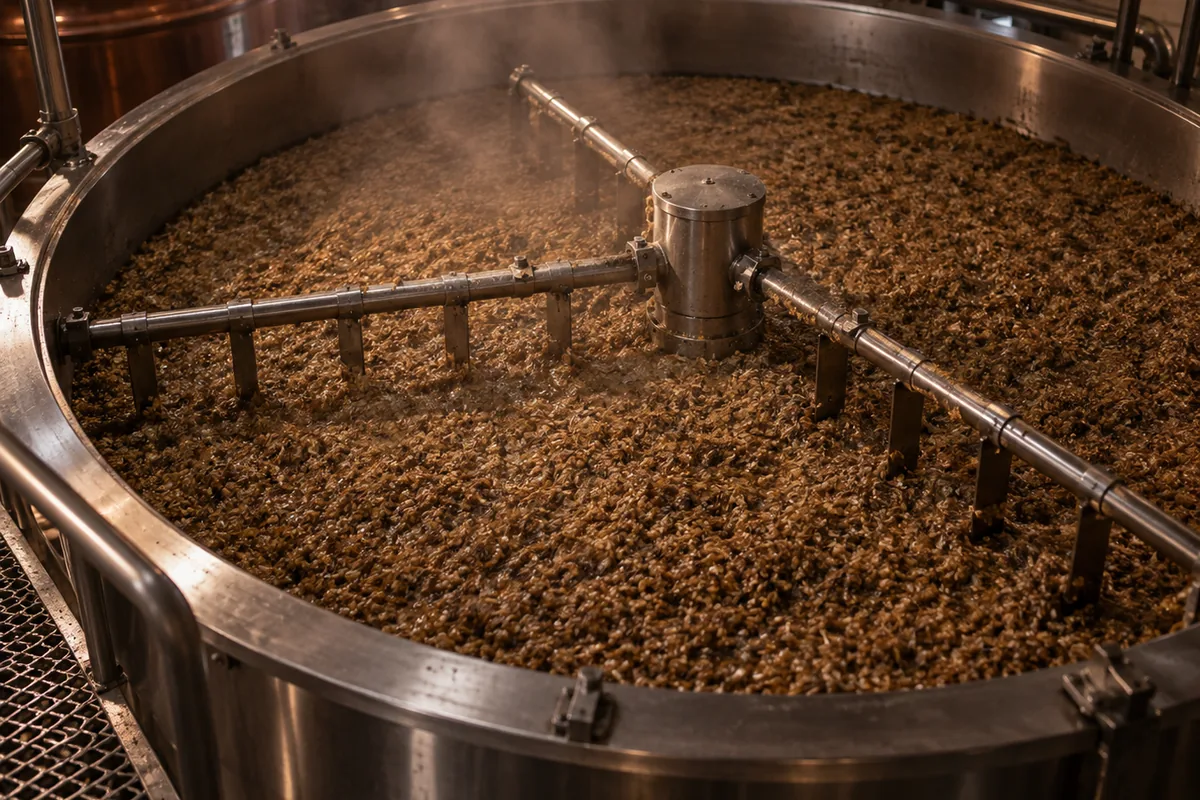
The specification does not treat that step as a technicality. The method used to separate the wort plays a significant role in the flavour a pot still whiskey develops later.
So the grain that gives the whiskey its body is also the grain that slows the brewhouse down, and how a distillery solves that is part of what it makes.
- What malted barley brings
- Enzymes, and a husk that forms a filter bed
- What unmalted barley brings
- Body and spice, and no filter bed of its own
- Where the difficulty lands
- Separating the wort from the grain
That makes the unmalted requirement a production burden carried in the brewhouse, not only a flavour decision taken at the recipe stage.
Equipment choices in a pot still brewhouse are each distillery's own, so the specification names the step without prescribing the machinery.
The texture the unmalted barley brings
The specification does not leave the texture to the drinker to notice. It says unmalted barley gives pot still whiskey a distinctive spicy flavour and a distinct creamy mouth feel.
That second phrase has a physical cause, and it sits in a part of the grain most drinkers never think about.
Malting germinates the grain and breaks down the cell wall material that holds the starch, which is the step unmalted barley has not been through.
| What you are asking | Malted barley | Unmalted barley |
|---|---|---|
| Has it germinated | Yes, and then it was kilned | No |
| Cell wall material | Largely broken down | Still intact |
| What it gives the mash | The enzymes that convert the starch | Viscosity, and the spice the specification names |
Undegraded cell wall material from unmalted grain raises viscosity and is associated with fullness in the mouth.
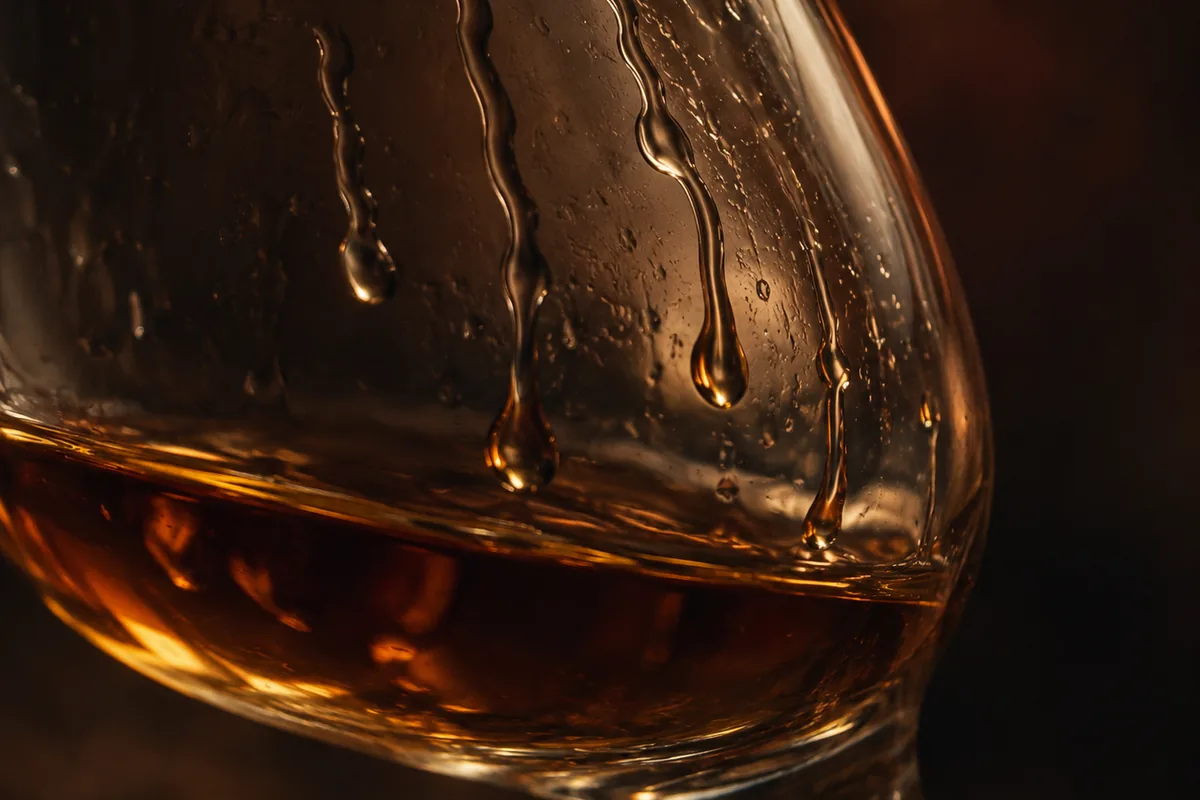
Malting exists to remove that material, because a brewer or a malt distiller wants a mash that runs freely. A pot still mash keeps some of it on purpose.
That choice has a cost on the production floor. A pot still mash runs off more slowly than a fully malted one, because the material that gives the whiskey its body also resists separation.
The mash is not the only place texture is decided. How the wort is drawn off, the strength the spirit is cut at and the years in wood all act on the same body afterwards.
Texture in a pot still whiskey is also moved by strength, cask and dilution, so an unmalted mash is a cause rather than a guarantee.
The five percent, and what goes into it
The small allowance gets far more attention than the large one. Reversing that is the quickest way to understand a pot still recipe.
- At least 30 percent malted barley. One floor, and the source of the enzymes the whole mash depends on.
- At least 30 percent unmalted barley. The other floor, and the requirement that makes the category what it is.
- Up to 5 percent other cereals. A ceiling rather than an instruction, with oats and rye named in the specification.
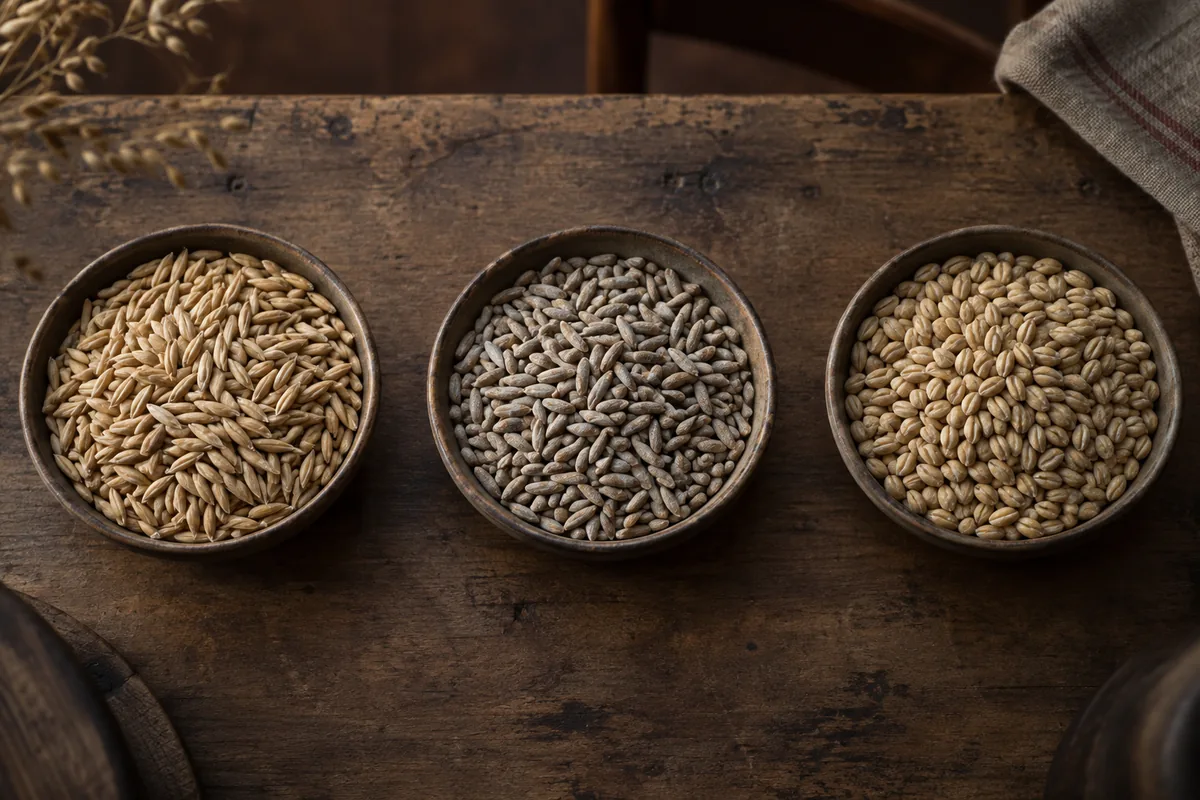
Up to 5 percent of other cereals such as oats and rye may be added to a pot still Irish whiskey mash if required.
Each distillery works to its own recipe within the two 30 percent minimums and the 5 percent ceiling.
Now do the arithmetic on the floors rather than the ceiling. The two minimums leave up to 40 percent of the mash unallocated, so the recipe space is far wider than the five percent suggests.
That 40 percent can go to either barley, in any split a distillery chooses, which is where two pot still whiskeys diverge long before any cask is involved.
The five percent allowance is a ceiling rather than an instruction, so many pot still whiskeys contain no third cereal at all.
None of that recipe reaches the shelf on its own by default. Pot still spirit is also one of the three components a blended Irish whiskey is built from.
Why are the stills so large?
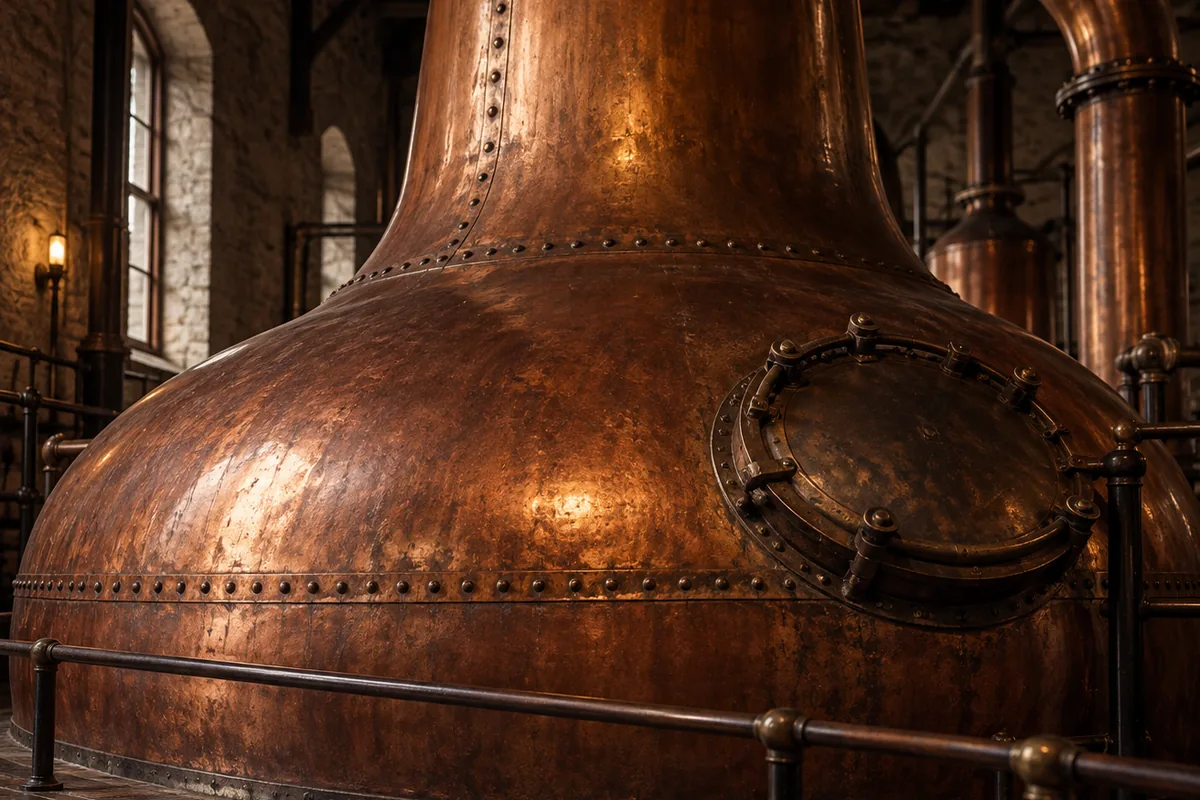
Pot still Irish whiskey is usually distilled in large pot stills, and the size is not just a matter of volume.
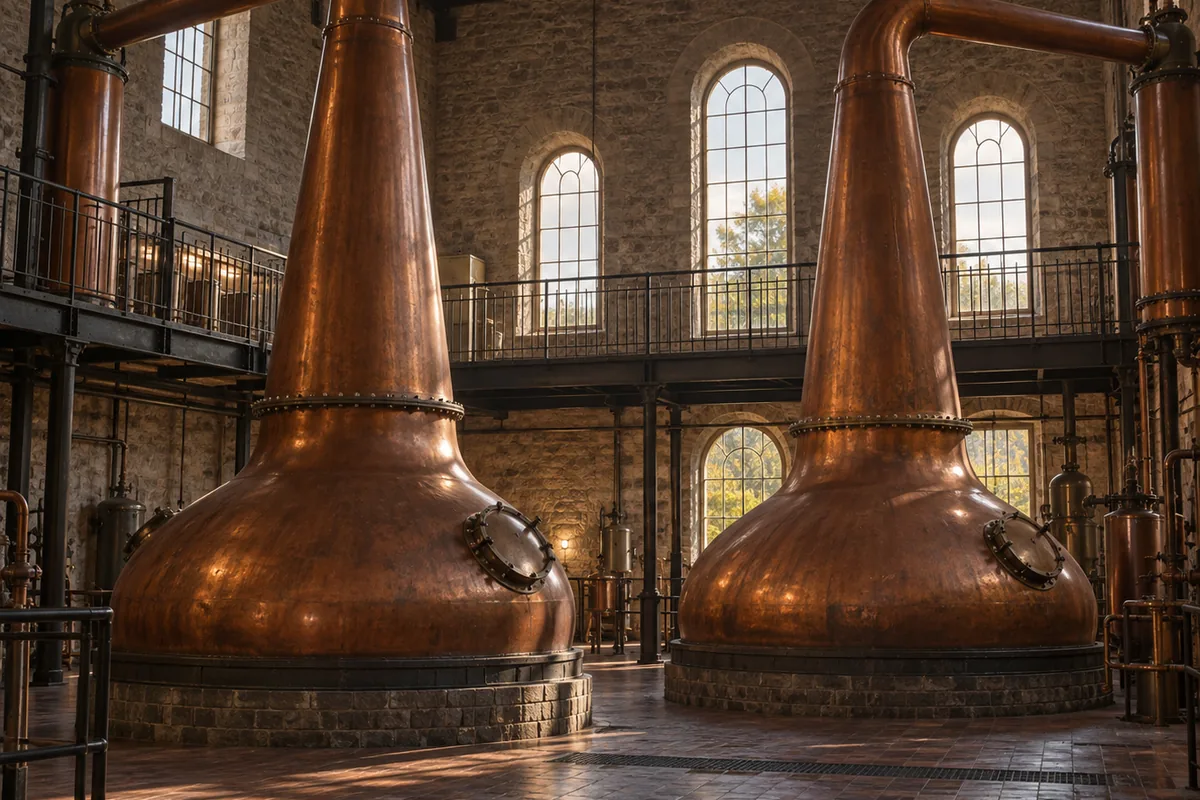
The vessel is part of the character, not just the mash. The large stills contribute to a unique range of reflux ratios that lead to a distinct flavour and aroma profile.
Reflux is the part of the vapour that condenses on the way up and falls back to be distilled again. A taller, wider still gives more of it more chances to fall back.
More reflux means a lighter, more refined spirit reaching the condenser, and the proportions of the vessel set how much of it happens.
The specification treats those proportions as identity rather than as engineering. The shape of the stills is particular to individual distilleries and is a factor in determining aroma and flavour.
Set that beside the neighbouring variety and a second difference appears. Malt Irish whiskey is usually distilled in smaller pot stills, so the two varieties differ in vessel as well as in mash.
Usually is the specification's own word, so pot still size is a tendency of the variety rather than a requirement of it.
Where most pot still spirit ends up
A bottle labelled single pot still is the exception rather than the rule for this spirit.
A blended Irish whiskey is a combination of pot still, malt and grain Irish whiskeys. Pot still spirit is one of the three components a blender draws on rather than a separate production stream.
That is the ordinary destination, and it is why the category was nearly invisible for so long.
A bottling under the pot still name is stock kept back from that use. Somebody decided not to blend it.
The distillation is the same either way. The traditional practice is to triple distil pot still Irish whiskey, although double distillation may also be employed.
The pattern is changing at the edges. Several distilleries now fill deliberately for pot still release, so the blending destination is a tendency rather than a rule.
From pure pot still to single pot still
Two phrases name this category and a reader will meet both.
The Irish specification defines the category as pot still Irish whiskey and permits the qualifier single, and it uses the word pure nowhere.
The change from pure pot still is reported to date from 2011, after United States labelling objections to the word pure.
The objection is easy to understand. Pure sounds like a claim about the liquid, and it was doing a job about the distillery.
The word single now does the work the word pure was doing, by pointing at one distillery rather than at purity.
The relabelling of the pot still category comes from trade reporting rather than from the specification, which simply does not use the older word.
A bottle labelled pure pot still is an older bottle rather than a different whiskey, so the wording dates the label and not the category.
How do you read a single pot still label?
A pot still front label carries one word that commits its producer and several that do not.
- The variety term. The variety term pot still may be included only where that variety's requirements are strictly fulfilled.
- The qualifier single. The qualifier single requires all the whiskey to be distilled totally on the site of one distillery.
- The age reference. An age reference must state the age of the youngest whiskey in the drink, as one number.
- A printed mash bill. A mash bill printed on a pot still Irish whiskey label is a producer's disclosure rather than a required statement.
The first two are conditional, which is what makes them worth something. A producer printing pot still is asserting compliance with a mash rule rather than describing a house style.
What the specification compels stops there. Everything else on the front was volunteered, and nothing on the bottle separates the two for you.
The fourth is the one readers most want and least often get.
Some producers publish full pot still mash bills on technical sheets, so an absent figure on a bottle is not an absent figure everywhere. It is the obvious question to put to a distillery that has already told you the rest.
What the body asks of you at the glass
Water does something here that it does not do to a lighter whiskey.
Water thins the body of a pot still Irish whiskey as well as opening its aroma, so dilution costs something here that it does not cost elsewhere. Go slowly, and stop earlier than you would on a light grain spirit.
Work through the nose undiluted first, then add a few drops at a time.
An opened bottle of single pot still Irish whiskey loses aroma to the headspace as it empties. Keep it upright and out of direct light, and finish the last third sooner than the first.
- Standard drink, United States
- 14 g of pure alcohol
- One drink at 40 % ABV
- About 44 ml
- One drink at 46 % ABV
- About 38 ml
- What the mash changes
- Nothing in this column
A standard drink in the United States is 14 grams of pure alcohol, whichever Irish variety the whiskey belongs to.
Fourteen grams of alcohol is roughly 44 ml of a whiskey bottled at 40 percent alcohol by volume. The same 14 grams is about 38 ml of a pot still Irish whiskey bottled at 46 percent.
A fuller texture in a pot still Irish whiskey is not a stronger drink, because the alcohol is set by the stated strength and the pour.
No Irish variety, mash or dilution can establish that anybody is fit to drive.
Common questions
- Does single pot still mean the whiskey was made in a pot still?
- It was, and that is not what distinguishes it. Malt Irish whiskey also comes off pot stills, so the category is identified by its mash of at least 30 percent malted and at least 30 percent unmalted barley rather than by the vessel.
- Is single pot still whiskey the same as pure pot still?
- Yes, as a category. The specification defines pot still Irish whiskey and permits the qualifier single, and the earlier wording is reported to have been dropped in 2011 after United States objections to the word pure.
- Why does single pot still whiskey feel thicker in the mouth?
- Malting breaks down the cell wall material that holds a barley grain's starch, and unmalted barley has not been through that step. The undegraded material raises viscosity and is associated with fullness, which is the creamy mouth feel the specification names.
- Can single pot still Irish whiskey contain oats or rye?
- Up to 5 percent of other cereals such as oats and rye may be added if required. It is a ceiling rather than an instruction, so many pot still whiskeys contain no third cereal at all.
Sources
-
Influence of dextrins and beta-glucans on palate fullness and mouthfeel, European Food Research and Technology
Published 2023. Accessed 10 September 2026.
-
Irish Whiskey Explained: Single Pot Still Whiskey, Master of Malt
Accessed 10 September 2026.
-
Irish Whiskey Technical File
Accessed 10 September 2026.
-
NIAAA, What Is a Standard Drink?
Accessed 13 September 2026.
-
The 18th-century tax that shaped the identity of Irish whiskey, VinePair
Accessed 10 September 2026.
More in Spirits
-
 American single malt whisky
01
What is American single malt whisky, and what does it guarantee?
-
 Australian whisky
02
How is Australian whisky defined, and by which law?
-
 Black rum
03
What is black rum, and does the colour mean anything?
-
 Blended American whiskey
04
What is blended American whiskey, and how much of it is whiskey?
-
 Blended Irish whiskey
05
Blended Irish whiskey: which word counts the distilleries?
-
 Blended Scotch
06
Blended Scotch: what is in it, and why does the recipe change?