
Spirits
What is single malt Irish whiskey, and is it triple distilled?
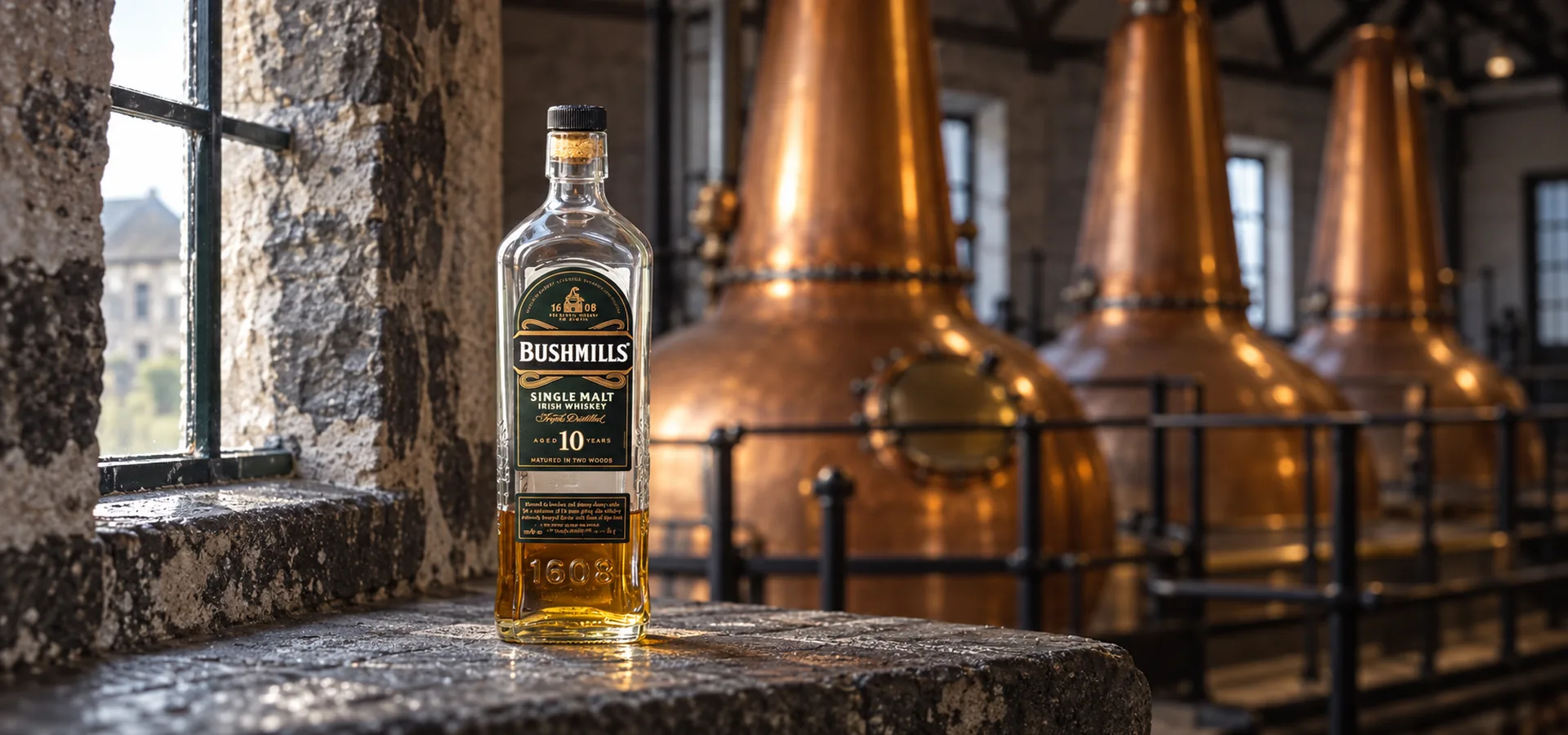
Single malt Irish whiskey is made at one distillery from a mash of 100 percent malted barley and distilled in pot stills. The technical file fixes the mash, the conversion and the still, and it deliberately leaves the number of distillations to the distillery.
At a glance
- Legal category
- Malt Irish Whiskey under the Irish Whiskey technical file, carrying the qualifier single because it is distilled totally on the site of a single distillery. Protected as a geographical indication for the island of Ireland.
- Minimum strength
- 40 percent ABV
- Also called
- Irish single malt, Malt Irish whiskey, Single malt Irish whisky
What must a whiskey do to be called single malt Irish?
Three words, three requirements, and one deliberate silence.
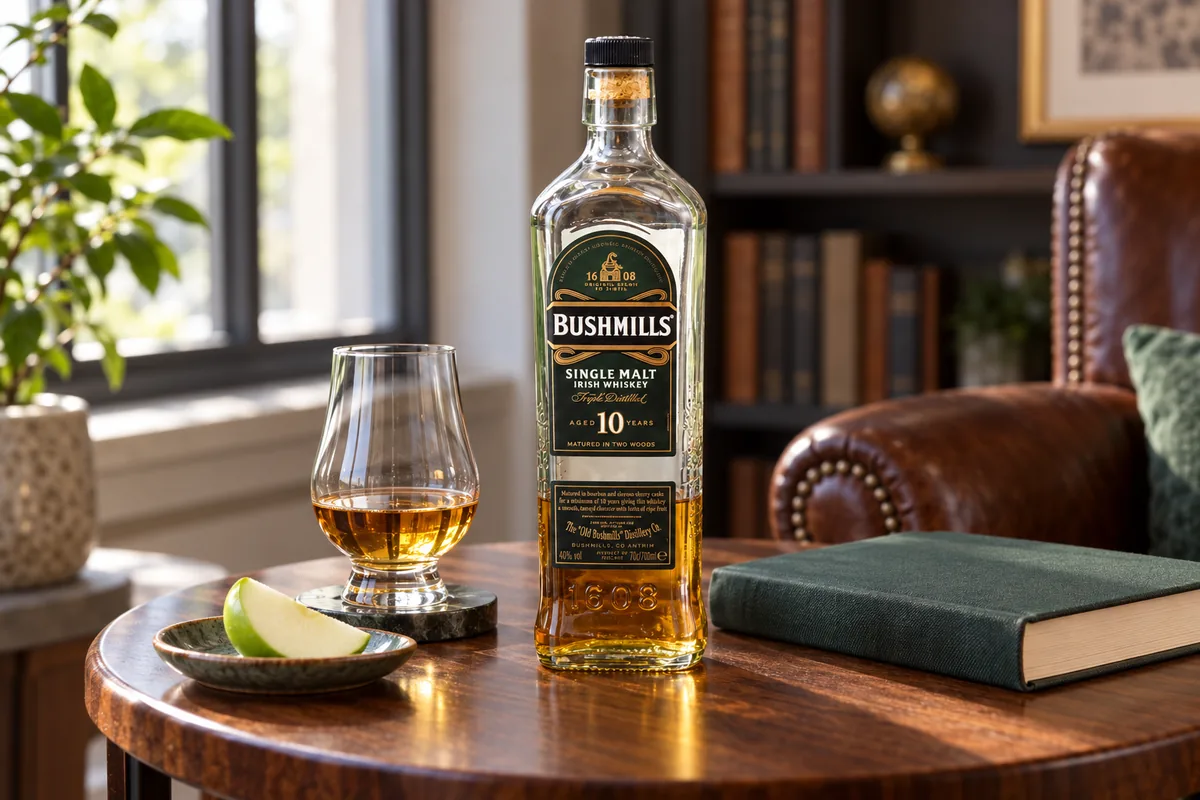
Malt Irish whiskey is made from a mash of 100 percent malted barley. There is no permitted proportion of anything else.
- The mash
- 100 % malted barley
- How it is converted
- By the diastase of the malt itself
- The still
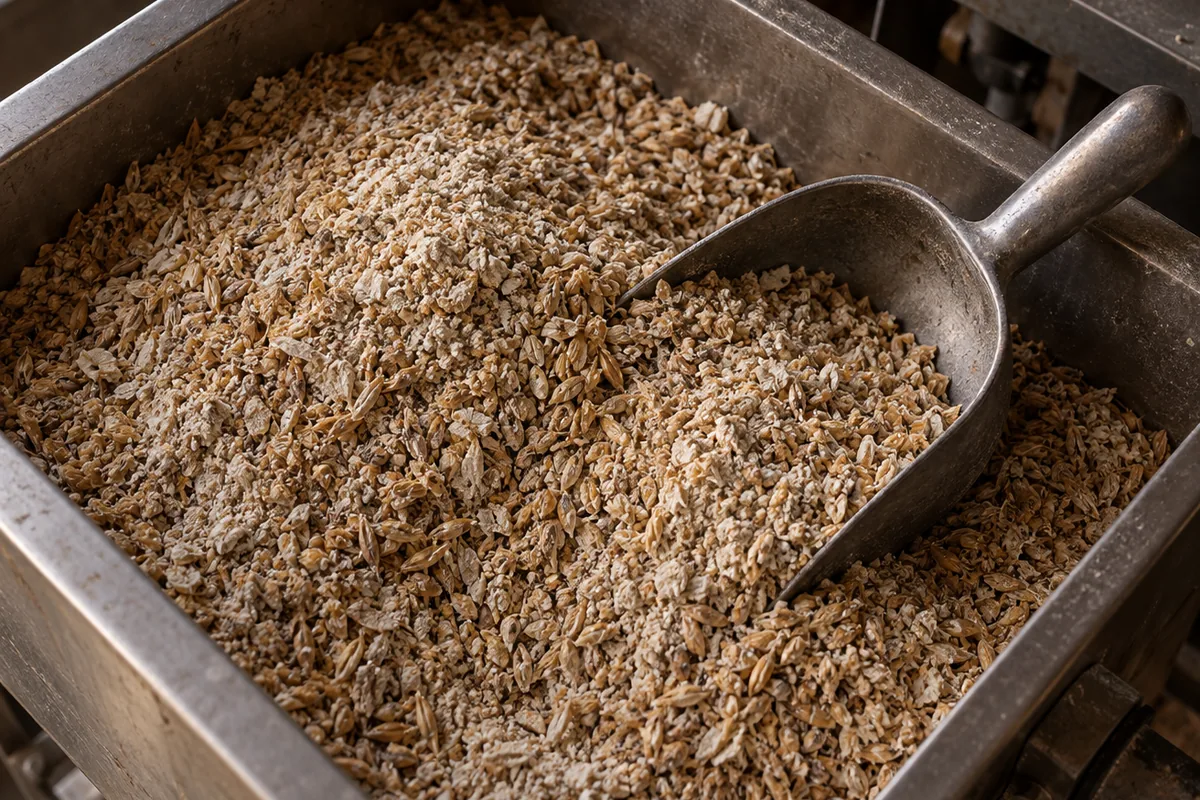
- Pot stills
- What single requires
- All of it distilled on one site
Malt Irish whiskey must be saccharified by the diastase of the malt it contains, fermented by the action of yeast, and distilled in pot stills.
Those are production rules rather than descriptions of what distilleries happen to do.
The word single then adds a condition about place. The word single requires all the whiskey in the product to be distilled totally on the site of one distillery, which is a stricter phrasing than it first appears.
Now the silence. The specification fixes no number of distillations for malt Irish whiskey, which is where most of what people believe about the category comes from and where none of it is written down.
Three requirements is what the name commits a producer to. A fourth is what readers supply for themselves.
The word single, and what it may describe
Ireland restricts the word rather than leaving it to custom. That is unusual enough to be worth reading closely.
The term single may be applied only to the pot still, malt and grain varieties of Irish whiskey. It is not a word a producer may attach to whatever it likes.
Single rules out a blended Irish whiskey. A blended Irish whiskey may not carry the word single, because it combines varieties rather than sitting inside one.
Single requires the whiskey to be distilled totally on the site of a single distillery and to come from one of those three varieties.
Two conditions therefore travel with the word: one distillery, and one variety.
The restriction governs a word on a label, so it settles which variety a whiskey belongs to rather than how good it is. What it gives a buyer is a reliable negative, which is more than the word carries in every regime.
Twice or three times, and who decides
Irish whiskey is described almost everywhere as triple distilled, and the category as a whole does not require it.
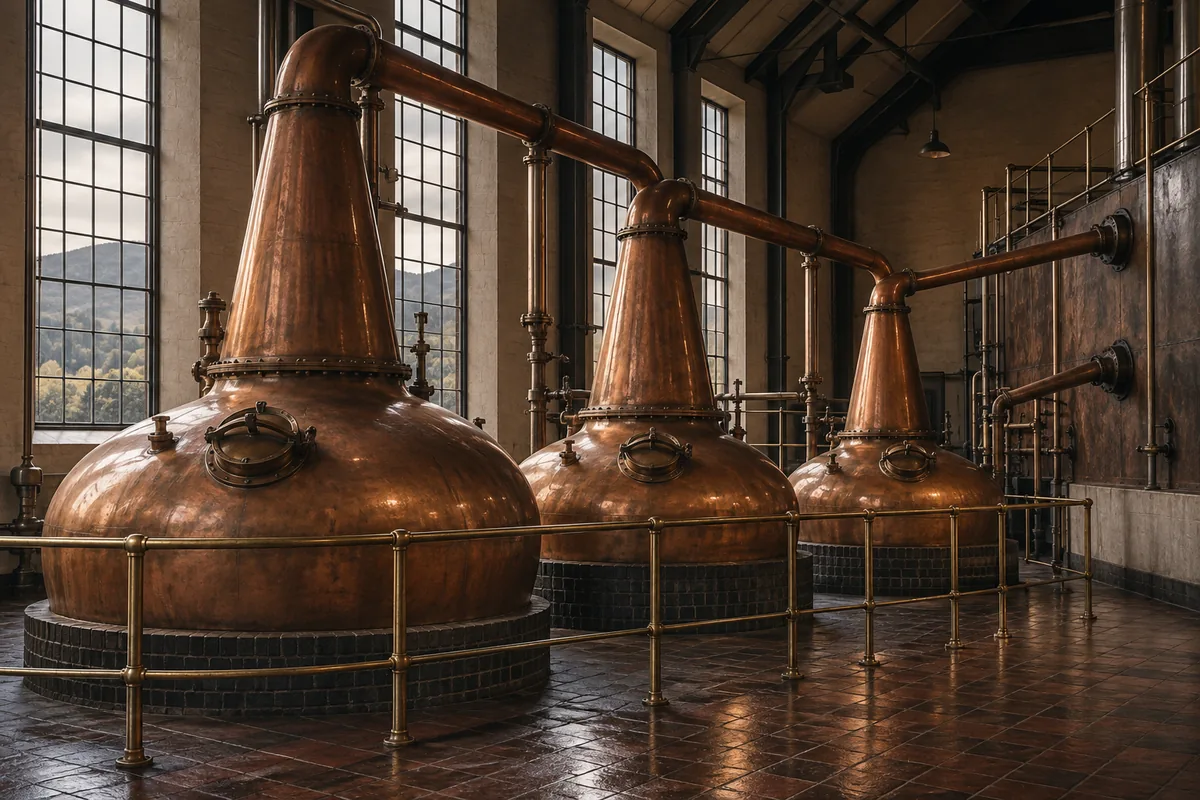
The malt variety is no different. Malt Irish whiskey may be double or triple distilled, and the choice depends on the tradition of individual distilleries.
| What you are asking | Double distilled | Triple distilled |
|---|---|---|
| What the specification says | Permitted | Permitted |
| Where the strength lands | Lower off the still | Higher off the still |
| What still moves the result | Distillation time, the fractions collected, and the cutting strengths | |
Triple distillation of an Irish malt results in a higher strength final spirit. That is the one consequence the specification itself attaches to the choice.
Distilling an Irish malt three times is an installed decision, because it requires a third pot still and the pipework to feed it. A distillery does not switch between the two on a whim.
Malt Irish whiskey is batch distilled, usually in smaller pot stills, which allows flavour to be modified through distillation time, the fractions collected and the cutting strengths. All three act on the spirit that leaves the final still, long before a cask has any say.
Those three variables operate inside either route. Neither distillation count is a quality claim for an Irish malt, because the fractions collected and the cut points move the outcome as much as the number of runs does.
Where is the character of an Irish malt actually decided?
The count of distillations gets the attention. What the count moves is the interesting part.
The first stage distillate from an Irish malt wash still is called low wines. Nothing about it is drinkable and it is not meant to be.
In a two stage Irish distillation the low wines go to a second pot still, where the first runnings are collected separately as foreshots or heads.
- Foreshots, or heads. The first runnings off the still, taken aside rather than kept.
- The middle cut. The fraction that goes into a cask, and the one the distiller is actually choosing.
- Feints. What comes after the cut, collected and returned to a later run rather than discarded.
The middle cut is selected as the spirit that goes for maturation, and it determines the character in taste, smoothness and flavour.
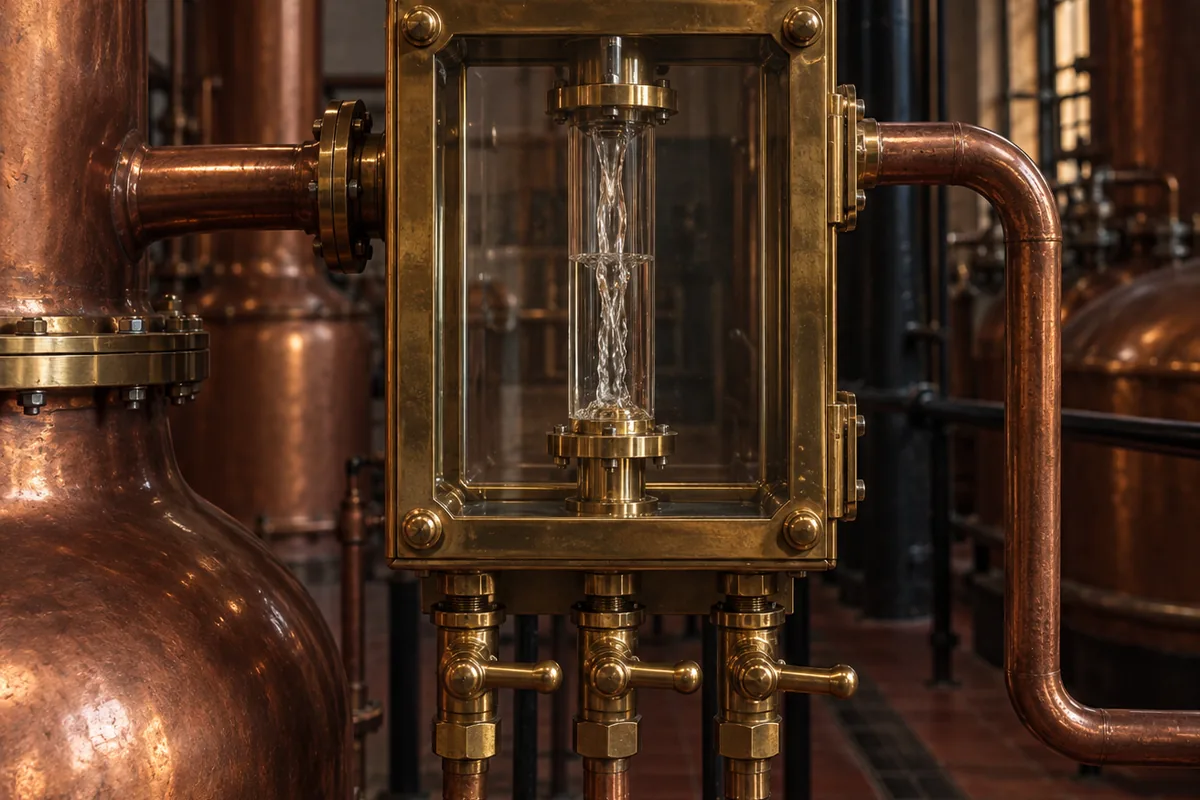
Everything before and after it is recycled or set aside. After the middle cut the distillation continues and the resulting alcohol, called feints, is collected and recycled into later runs.
Now the third stage, and what it actually changes.
Triple distilled Irish spirit obtains its character from the choices used to select the centre cut at the third stage rather than at the second. The distiller is making the same decision, later, on a spirit that has already been through one more separation.
Which is why a distillation count on its own settles very little. Cut points for an Irish malt are each distillery's own practice, so the specification describes the stages without fixing the strengths.
Does the shape and size of the still change an Irish malt?
The specification is unusually direct about this.
The shape of the stills is particular to individual distilleries and is a factor in determining the aroma and flavour of the spirit. That is a production document conceding that geometry matters.
It goes on to assign a tendency to each variety.
| What you are asking | Malt Irish whiskey | Pot still Irish whiskey |
|---|---|---|
| Usual still size | Smaller pot stills | Large pot stills |
| What the specification attributes to it | Intensity, complexity and diversity of flavour | A distinct range of reflux ratios |
Malt Irish whiskey is usually distilled in smaller pot stills. Smaller pot stills contribute to an intensity of flavoured spirit of great complexity and diversity.
Pot still Irish whiskey is usually distilled in large pot stills, which give a different range of reflux.
For a reader that turns a still house into part of the whiskey's identity rather than equipment that happens to be installed there. A distillery's stills are as much a part of what it makes as its barley is.
One word in all of that is doing a lot of work. Usually is the specification's own word, so still size is a tendency of an Irish variety rather than a requirement of it.
A hundred percent malted barley, and what that excludes
The hundred percent figure is doing exclusion work rather than describing a recipe. What it rules out is more useful than what it permits.
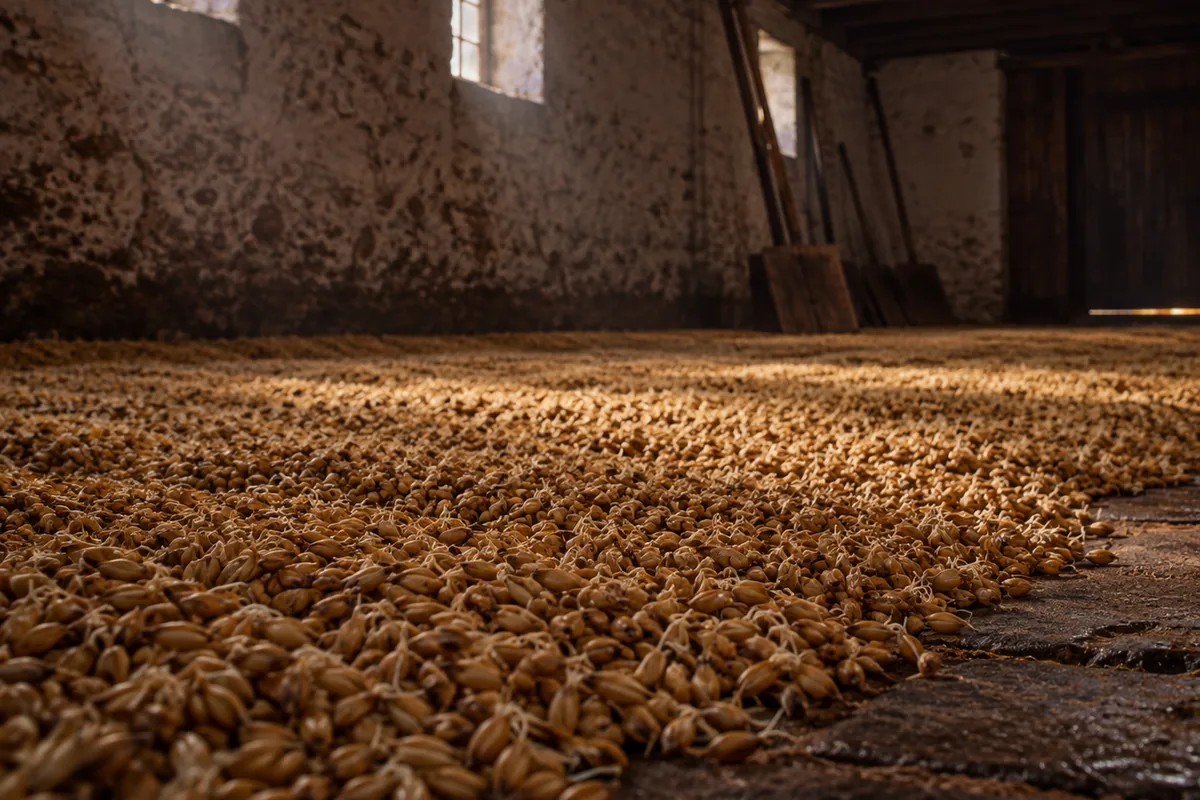
A hundred percent malted barley mash excludes the unmalted barley that pot still Irish whiskey requires. That is the whole boundary between the two varieties.
| Variety | The mash | The still |
|---|---|---|
| Malt Irish whiskey | 100 % malted barley | Pot stills |
| Pot still Irish whiskey | At least 30 % malted and at least 30 % unmalted barley | Pot stills |
| Grain Irish whiskey | Malted barley not exceeding 30 %, plus whole unmalted cereals | Column stills |
Pot still Irish whiskey must contain a minimum of 30 percent malted barley and a minimum of 30 percent unmalted barley.
Grain Irish whiskey uses malted barley not exceeding 30 percent alongside whole unmalted cereals and is distilled in column stills.
Read the still column and the trap becomes obvious. Pot still and malt Irish whiskey both come off pot stills, so the vessel cannot settle the variety.
The mash settles it, and the mash is the one thing a bottle rarely prints.
The word malt behaves the same way wherever it appears on a label. It names a mash rather than a vessel.
Three years in wood, on the island of Ireland
Malt Irish whiskey is stored for a minimum of three years in wooden casks on the island of Ireland.
That geography is worth reading precisely. The island of Ireland includes Northern Ireland, so the geography of the specification is not the geography of a state.
The specification also contemplates what those casks held before.
- Madeira. Named first among the previous fills, and the least expected of the four.
- Sherry. The fortified wine cask most often named on an Irish label, and one with a supply chain of its own.
- Port. The other fortified wine cask the document contemplates.
- Bourbon. The ordinary working cask behind most Irish maturation.
The Irish specification names Madeira, sherry, port and bourbon among the previous contents a maturation cask may have held. Naming them puts a wine cask history inside the specification rather than beside it.
A named previous fill is a permission rather than a prediction for an Irish malt, because the condition of the cask and the years in wood move the outcome.
What three years in an Irish warehouse does
The minimum period is the part everyone quotes. The conditions are the part the specification actually describes.
Irish whiskey matures in large, dark and aromatic warehouses on the island of Ireland.
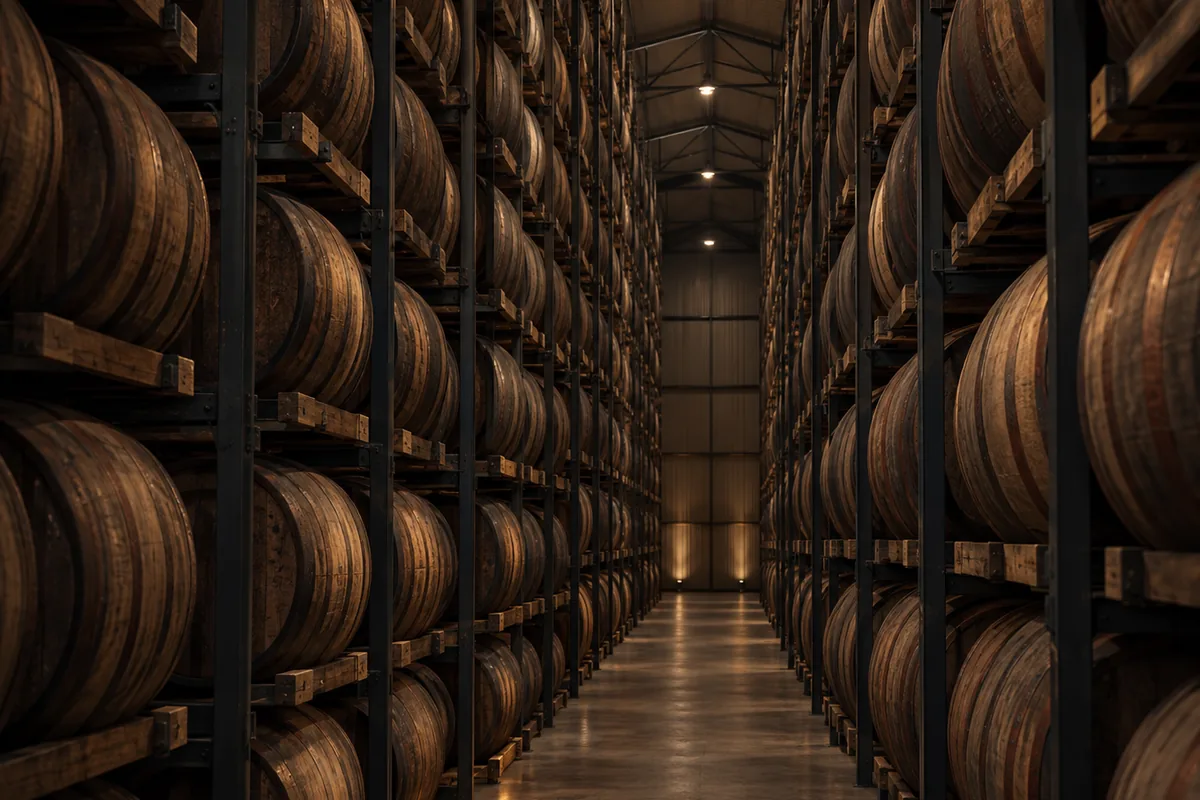
The moderate Irish climate influences the rate of maturation and enables the development of particular flavour attributes. An even maturation is what the specification attributes to those Irish conditions.
A mild, damp island without hard seasonal swings moves spirit in and out of the wood gently, and the exchange happens over years rather than in bursts.
The wood itself is less constrained than readers expect. New casks as well as previously used casks may be filled with Irish malt, so the wood is not required to have held anything before.
Be careful how much weight that claim carries. A moderate climate slows the exchange rather than fixing an outcome, so it shapes the rate rather than the flavour.
The spirit is tasted before the cask
There is a control point between the still and the warehouse that almost nothing written about Irish whiskey mentions.
The final spirit is assessed by a trained quality control panel before release for subsequent maturation. People taste it before a cask ever sees it.

That assessment guarantees a uniform quality check on the consistency of the Irish distillate.
Note where it sits. The check sits between the still and the cask, so it governs the spirit rather than the finished Irish whiskey, and nothing about it speaks to what three years in wood will do.
Note also what it measures. A panel checks an Irish spirit for consistency against the character that distillery means to make, rather than against a published sensory standard.
A consistency check on an Irish spirit is not a quality ranking, and the specification publishes no sensory scale for it.
Where does the Irish phrase part from the Scottish one?
The same three words govern whisky on both islands under two different documents.
Single Malt Scotch Whisky must be produced from water and malted barley without the addition of any other cereals, at a single distillery, in pot stills.
| What the rule fixes | Single malt Irish whiskey | Single malt Scotch whisky |
|---|---|---|
| How the cereal is worded | A mash of 100 % malted barley | Malted barley without the addition of any other cereals |
| The still | Pot stills | Pot stills |
| Where it matures | The island of Ireland, three years | Scotland only, three years |
| How it may leave | No restriction of this kind | Only in a bottle labelled for retail sale |
The first two rows arrive at the same place by different routes, and the third fixes two territories that are defined differently.
Scotch must be matured only in Scotland and Irish whiskey on the island of Ireland, and both require not less than three years.
The last row is the real divergence. Single Malt Scotch Whisky may not be exported from Scotland other than in a bottle labelled for retail sale, which has no Irish counterpart.
That restriction has applied since 23 November 2012 and it exists to stop single malt being shipped in bulk and bottled abroad.
Neither the Irish nor the Scottish specification fixes a number of distillations, so the triple distillation habit is tradition on both islands rather than law.
How do you read a single malt Irish whiskey label?
Some of the front label is compelled and some of it is chosen. Nothing on the bottle marks the difference.
- The geographical indication. The Irish whiskey geographical indication must appear on the front of the bottle, prominently and legibly, as the sales description.
- The variety term. The variety terms pot still, malt, grain or blended may be included only where that variety's requirements are strictly fulfilled.
- The age reference. An age reference must state the age of the youngest whiskey in the drink, as one number.
- The spelling. The varieties may use either the spelling whiskey or whisky, so the spelling is not evidence of anything.
The last of those catches people out regularly. A bottle spelled whisky is not thereby Scottish, and a bottle spelled whiskey is not thereby Irish.
The variety term is the entry that carries real weight, because it is conditional. A producer printing the word malt is asserting compliance with a specification rather than describing a style.
A distillery may hold far more detail than the front label carries. The mash, the number of runs and the cask history are all normal questions for a technical sheet and none of them is compelled onto the bottle.
What the distillation choice asks at the glass
Ask the distillation question before you ask anything else, because it changes what water will do.
A triple distilled malt reaches a higher strength off the still, so its spirit character reaches the glass differently from a double distilled one. Work through the nose undiluted first, then add water in stages.
An opened bottle of single malt Irish whiskey loses aroma to the headspace as it empties. Keep it upright and out of direct light, and finish the last third sooner than the first.
- Standard drink, United States
- 14 g of pure alcohol
- One drink at 40 % ABV
- About 44 ml
- One drink at 46 % ABV
- About 38 ml
- What the variety changes
- Nothing in this column
A standard drink in the United States is 14 grams of pure alcohol, whichever Irish variety the whiskey belongs to. Fourteen grams of alcohol is roughly 44 ml of a whiskey bottled at 40 percent alcohol by volume.
The same 14 grams is about 38 ml of a single malt Irish whiskey bottled at 46 percent, which is a common strength for these bottlings.
A triple distilled Irish malt is a lighter spirit and not a weaker drink, because the alcohol is set by the stated strength and the pour.
No Irish variety, cask or dilution can establish that anybody is fit to drive.
Common questions
- Does single malt Irish whiskey have to be triple distilled?
- No. The technical file states that malt Irish whiskey may be double or triple distilled, and that the choice depends on the tradition of individual distilleries. Triple distillation is common rather than compulsory.
- Can a blended Irish whiskey be called single?
- No. The term single may be applied only to the pot still, malt and grain varieties, so a blended Irish whiskey cannot carry it. The word is a reliable sign that a bottle is not a blend.
- Is single malt Irish whiskey the same as single malt Scotch?
- The two share a hundred percent malted barley mash, pot still distillation and a three year minimum, and they answer to different documents. The clearest difference is that single malt Scotch may leave Scotland only in a bottle labelled for retail sale, which has no Irish equivalent.
- Does whiskey spelled with an e mean the bottle is Irish?
- No. The Irish specification permits either whiskey or whisky for its varieties, so the spelling identifies neither the country nor the variety. Read the geographical indication instead.
Sources
-
Irish Whiskey Technical File
Accessed 10 September 2026.
-
NIAAA, What Is a Standard Drink?
Accessed 13 September 2026.
-
Scotch Whisky Association, Guidance for Bottlers and Producers 2025
Published 2025. Accessed 7 September 2026.
-
The Scotch Whisky Regulations 2009 (SI 2009/2890), regulation 3
Accessed 4 September 2026.
More in Spirits
-
 American single malt whisky
01
What is American single malt whisky, and what does it guarantee?
-
 Australian whisky
02
How is Australian whisky defined, and by which law?
-
 Black rum
03
What is black rum, and does the colour mean anything?
-
 Blended American whiskey
04
What is blended American whiskey, and how much of it is whiskey?
-
 Blended Irish whiskey
05
Blended Irish whiskey: which word counts the distilleries?
-
 Blended Scotch
06
Blended Scotch: what is in it, and why does the recipe change?