
Spirits
What does single malt Scotch actually require?
Single malt Scotch is distilled at one distillery, from water and malted barley with no other cereal added, in pot stills. The word single counts distilleries rather than casks, and one rule applies to this category alone: since 2012 it may leave Scotland only in a bottle labelled for retail sale.
At a glance
- Legal category
- Single Malt Scotch Whisky under regulation 3(2) of the Scotch Whisky Regulations 2009, with an export restriction under regulation 7 that applies to no other Scotch category.
- Minimum strength
- 40 percent ABV
- Also called
- Single malt Scotch whisky, Scottish single malt, Single malt whisky
What do the three clauses require?
The definition is one sentence carrying three separate conditions, and they are easier to use apart than together.
- The distillery
- One
- The cereal
- Water and malted barley, with no other cereal added
- The still
- Pot stills
- The batches
- One or more
Single Malt Scotch Whisky must be distilled at a single distillery. That is the first clause and it is the one the name refers to.
Single Malt Scotch Whisky must be distilled from water and malted barley without the addition of any other cereals.
Notice the wording. It forbids an addition rather than stating a proportion, which is a stricter instrument than a percentage would be.
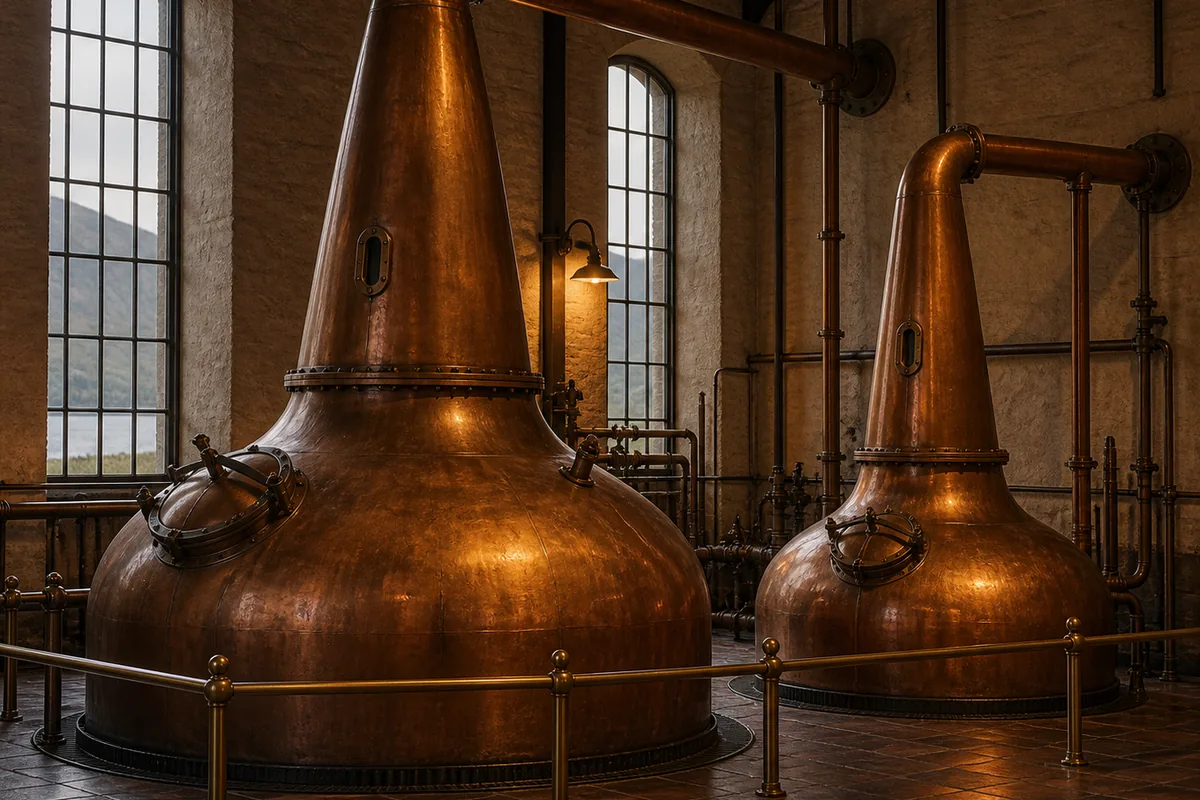
Single Malt Scotch Whisky must be distilled in pot stills, and the definition permits one or more batches. That third clause is what sends an otherwise identical whisky into the grain category when it comes off a column.
The three clauses of the single malt Scotch definition fix production and say nothing about the casks the whisky matured in.
Everything a drinker argues about afterwards happens in the space that silence leaves.
Single counts distilleries, not casks
The word invites a reading it does not support.
Single counts distilleries and nothing else. The word single in a Scotch category counts distilleries and not casks, so it reports a place rather than a quantity.
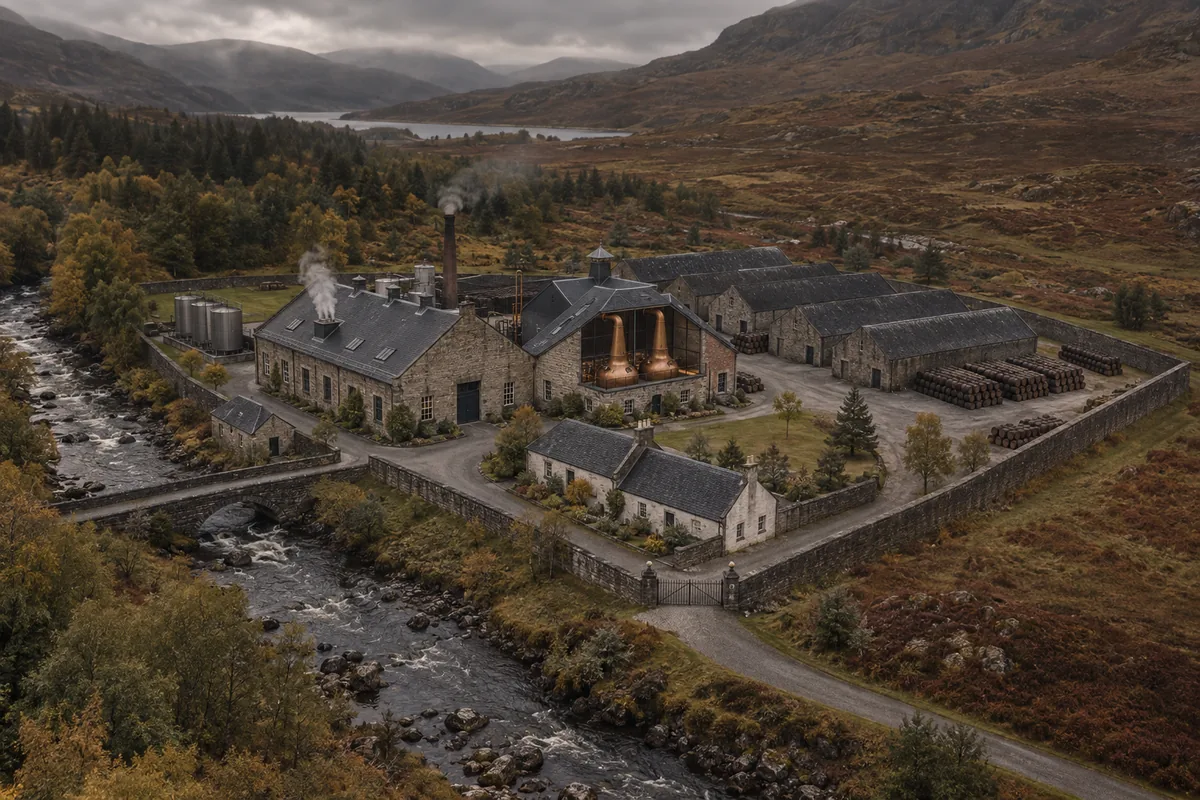
A distillery is a site rather than a still, with its mash house, still house and bonded warehouses standing inside one boundary. The clause counts that whole enclosure.
The batch reading fails on the text itself. The single malt Scotch definition permits distillation in one or more batches, so one production run is not required.
The cask reading fails on ordinary practice.
A single malt Scotch vatted from fifty casks of one distillery is correctly named. Most of what sits on a shelf under that description is exactly that.
A reader who wants one container has a different phrase to look for. A single malt Scotch may also be a single cask bottling, so the two claims can appear together without either implying the other.
It may not leave Scotland in bulk
One rule applies to this category and to nothing else in Scotch, and it is not about the whisky at all.
Since 23 November 2009 no Scotch of any category may be exported in an oak or other wooden cask. Maturation has to happen in Scotland, so a cask crossing a border was the obvious way around that.
| In what form | Single malt Scotch | Other Scotch categories |
|---|---|---|
| In a wooden cask | No | No |
| In bulk, in an inert container | No | Yes |
| In a retail bottle | Yes, and only this | Yes |
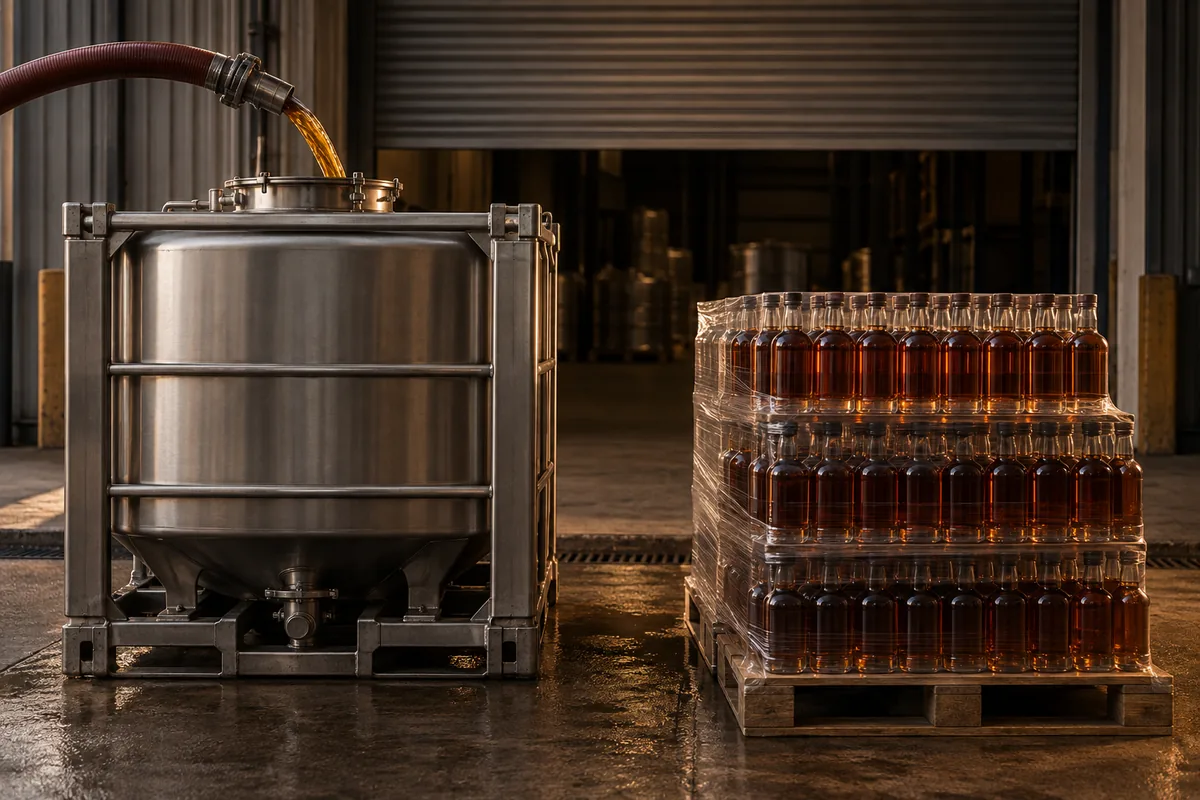
Since 23 November 2012 Single Malt Scotch Whisky may not be exported from Scotland other than in a bottle labelled for retail sale.
Other Scotch categories may still be exported in bulk in inert containers such as plastic drums or steel containers, and are then bottled wherever they land.
The consequence for a buyer is unusually clean. A single malt Scotch bought in Tokyo or Toronto was filled into that bottle in Scotland, and no other Scotch category carries that guarantee.
It is worth being precise about what the guarantee covers. The single malt Scotch export restriction fixes where the bottling happened rather than anything about the whisky inside.
The standard underneath every Scotch
Three clauses make a whisky a single malt. A longer list makes it Scotch at all, and the two are constantly confused.
- Distillation ceiling
- Below 94.8 % ABV
- Maximum cask size
- 700 litres
- Minimum maturation
- 3 years
- Where it must mature
- Scotland, in an excise warehouse or a permitted place
- Minimum strength
- 40 % ABV at bottling
A single malt Scotch must be distilled at less than 94.8 percent alcohol by volume, which is the ceiling that keeps a spirit reporting its raw materials.
A single malt Scotch must be matured only in Scotland, in oak casks not exceeding 700 litres, for not less than three years.
One requirement in that group is almost never quoted. A single malt Scotch must be matured only in an excise warehouse or a permitted place, so the maturation happens somewhere the revenue can see it.
A single malt Scotch must be bottled at not less than 40 percent, with nothing added but water and plain caramel colouring.
These requirements apply to every Scotch, so satisfying them is not evidence that a whisky is a single malt. A blend meets every one of them too.
That is why the three category clauses and the standard underneath them have to be read separately. One tells you what kind of Scotch it is and the other tells you that it is Scotch.
One distillery, many different whiskies
A distillery name looks like a flavour prediction and works badly as one.
The single malt Scotch definition fixes the cereal and the still and says nothing about the cask. Nothing in the three clauses reaches past the moment the spirit leaves the still.
Cask history, fill strength, warehouse position and time all move a single malt Scotch after the definition has been satisfied.
- Cask history. What the wood held before, and how many whiskies have already drawn on it.
- Fill strength. The strength the spirit went into the cask at, chosen by the distillery.
- Warehouse position. Where the cask sat, since one building is not one climate.
- Time. Everything above the three year floor, which is a decision rather than a rule.
Fill strength is the least discussed of the four and it is entirely at the distillery's discretion. The Scotch regulation sets no maximum strength for filling a cask, so a single malt distillery chooses its own entry strength.
That is a genuine difference from American whiskey, where a barrel entry cap bounds the same decision.
Warehouse position changes temperature and humidity across a single building, so two casks filled the same morning do not mature in the same conditions.
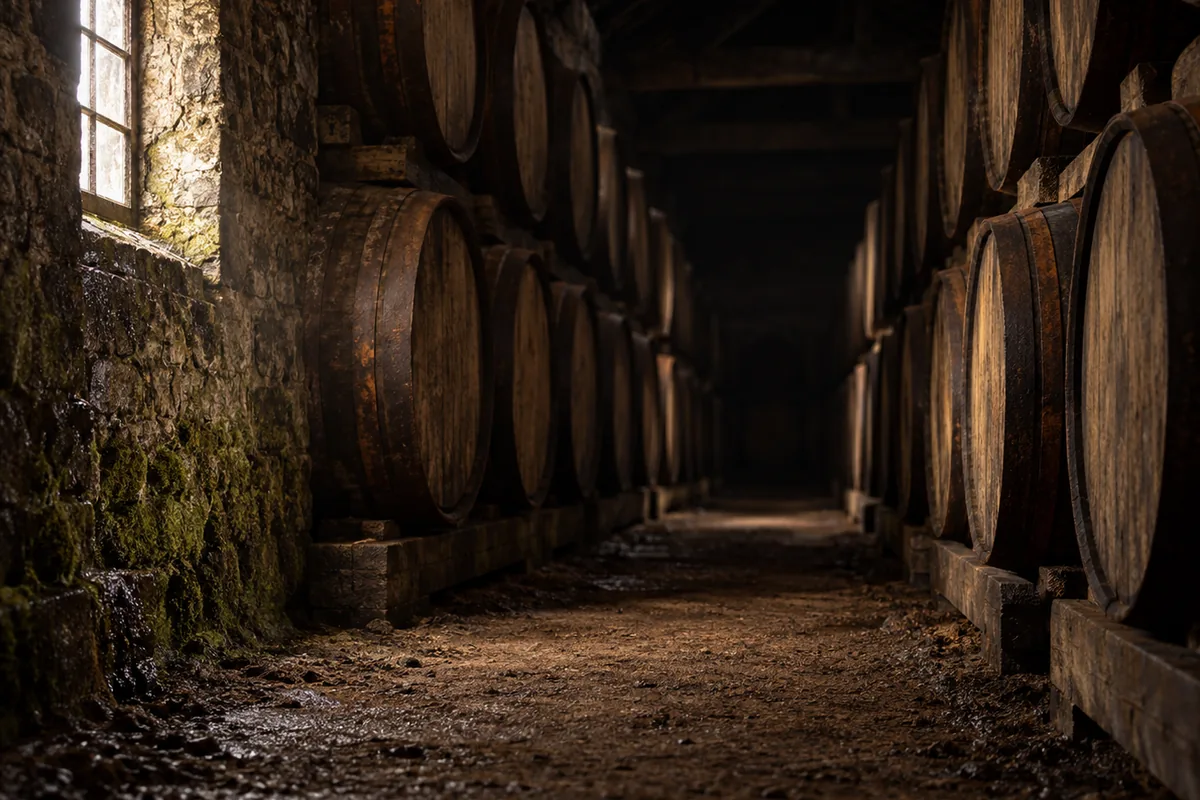
Those variables are not small. Two bottlings from one distillery can share every clause of the definition and share very little else.
None of that makes house character a fiction. A house character still exists as a tendency, because still shape and cut points repeat across a distillery's production.
It is a tendency rather than a guarantee, and a cask can outvote it.
The category must appear on the front
The words Single Malt Scotch Whisky on a bottle were not a marketing decision.
- It must be there. Every Scotch must bear the category description on the front of the bottle and on any individual packaging.
- It must be prominent. The category description must be as prominent as any other description of the whisky on the labels or packaging.
- Only a place may be added. The only words that may be added to a Scotch category description name the Scottish region or locality of distillation.
The prominence rule explains a layout readers take for granted. The category cannot be shrunk beneath a brand name, which is why it sits where it does on almost every bottle.
The third rule explains something else. A region printed beside the category is there under a specific permission rather than as free description.
Everything else on a single malt Scotch label remains the producer's own wording. Age, cask, strength and every adjective are chosen, and only the sales description is compelled.
A brand name is not a distillery name
The name in the largest type on a single malt is not necessarily the place that made it, and the regulation has a good deal to say about that.
It is illegal to use the name of a listed Scotch distillery as a brand name unless the whisky was wholly distilled there. That much is straightforward.
The harder rule is the one about resemblance.
A separate provision makes it illegal to label a Single Malt Scotch Whisky in a way likely to deceive the public as to the identity of the distiller. It bites on names that merely sound like distilleries.
The rule came from complaints, not from theory. It was introduced after consumers complained about buying a single malt under a brand name they had taken for a distillery, and later found was not one.
The regulator's own guidance works the problem through with an invented name. A great many Scottish distilleries begin with Glen, and a brand built on that pattern invites a reader to assume a distillery exists behind it.
Add a trading name in the same style and the assumption hardens into a belief.
A brand owner in that position has three ways out.
- Avoid the name entirely. The simplest course is not to use a brand or trading name that a buyer could read as a distillery.
- Name the actual distillery. An established brand can keep its name and state plainly on the label where the whisky was distilled.
- Amend the name. A place word can be qualified so it stops reading as a distillery, which is why some brands pair a location with a second word.
None of that is filed with anybody. The deception test on a single malt brand name is a subjective one, applied by the brand owner rather than by a filing.
For a reader the practical upshot is small and useful. If a single malt names a distillery somewhere on the label, that is where it was distilled, and if it names none, the brand on the front is not evidence of one.
What a region on the front is allowed to mean
Region names are the one addition the regulation permits beside the category description, and they are governed more tightly than they look.
Five localities and regions are defined and protected: Highland, Lowland, Speyside, Islay and Campbeltown.
| What the rule fixes | What it requires |
|---|---|
| The five protected names | Highland, Lowland, Speyside, Islay, Campbeltown |
| What the name requires | The whisky was wholly distilled in that place |
| How it must be printed | Immediately before the category description, in that order |
| When it does not apply | A trade mark or company name registered before 1 September 2009 |
A region may precede the category description only where the Scotch was wholly distilled there, and the words must appear in that order. That is why the phrasing on these bottles never varies.
The set is not closed. Another Scottish locality name such as Orkney may precede a single malt Scotch category description the same way, when the whisky was entirely distilled there.
One of the five sits inside another, which surprises people. Speyside falls inside the Highland region, so a Speyside single malt may be described either way.
A producer choosing Highland over Speyside is therefore making a marketing decision rather than a factual one, and both statements are true.
Then the exception that breaks the pattern. A protected region name inside a trade mark or company name registered before 1 September 2009 is exempt, so an old brand may carry a region it was not distilled in.
That is the one case where the word on the front is not a claim about geography at all.
What the age and the year on the bottle count
Two kinds of number appear on these labels and they are governed by different rules.
The only age that may be stated is the age of the youngest Scotch whisky in the product. An age counts the youngest component, not the average and not the oldest.
The regulation works its own example, which is worth quoting because it is so unintuitive.
A product blending 8, 12 and 15 year old whiskies may claim only 8 years old. The fifteen year old whisky in that bottle is real and it earns the label nothing.
A vintage is a stronger claim, and it comes with three conditions attached.
- An age counts the youngest whisky. Whatever else is in the vatting, the number reports the least mature component of it.
- Only one year may be shown. A range of distillation years cannot be printed, so a vintage rules out a vatting across seasons.
- All of it distilled that year. The claim covers every drop in the bottle rather than a majority of it.
- A bottling year or age beside it. The second figure must appear in the same field of vision, which is why these numbers always travel in pairs.
That last condition explains a label convention most readers have stopped noticing. A vintage on its own would tell a buyer when the whisky was made and nothing about how long it matured.
Every other number is treated with suspicion by the same regulation. Any other number on a Scotch label likely to be read as an age when it is not is an offence.
None of this reaches the glass. The age rule fixes what the number counts and not how the single malt Scotch tastes, and a higher figure is a fact about time rather than about quality.
The limits of the single malt claim
Three clauses is a great deal to fix, and it still leaves most of a bottle unexplained.
The single malt Scotch claim promises nothing about the cask, the age or the strength of the whisky.
The clearest case is smoke. The single malt Scotch claim promises nothing about peat, because peating is a malting choice the definition does not address.
Age is looser than it looks as well. A single malt Scotch may be a vatting of many casks of widely different ages above the stated one.
Two further things people read into the category are simply absent from it. The single malt Scotch definition says nothing about chill filtration or the shape of the stills, so neither is settled by the category.
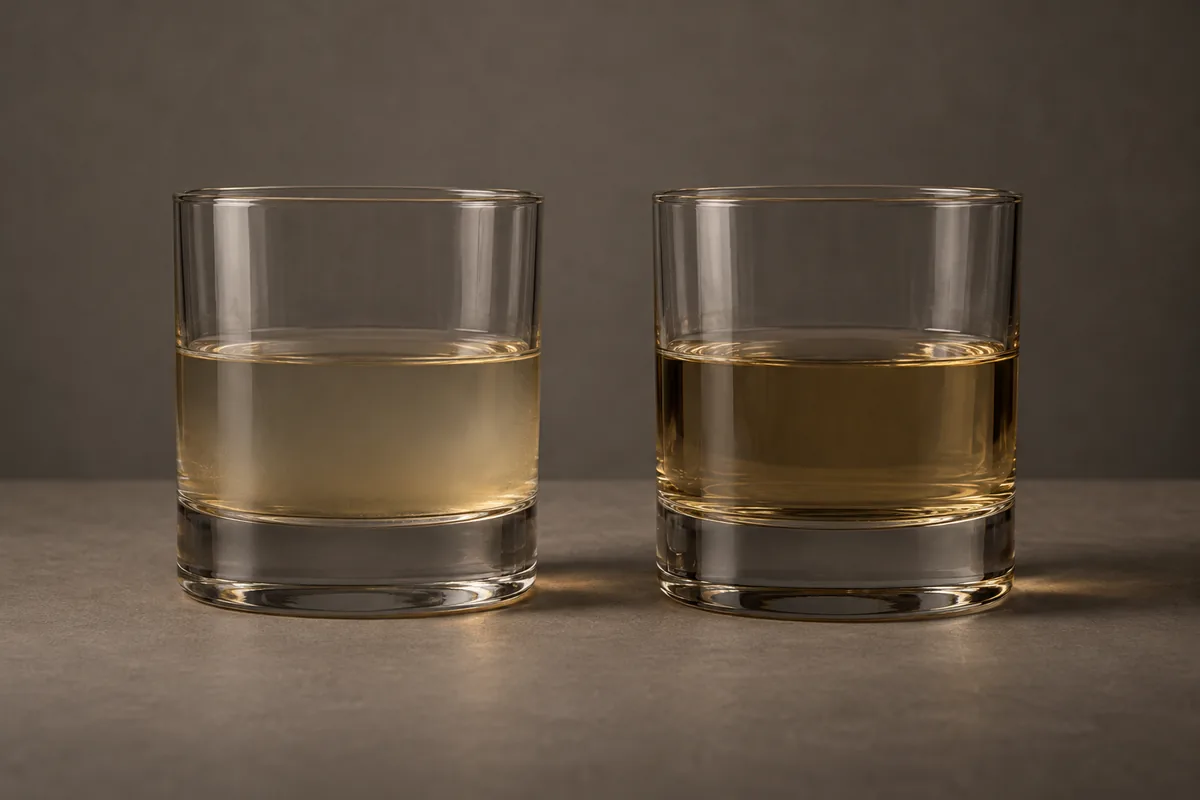
Chill filtration removes compounds that would otherwise cloud a single malt Scotch when water or ice is added, and the claim settles neither way. Producers weigh a clear glass against whatever those compounds were carrying, and the category description records neither decision.
None of that empties the claim out. The single malt claim is still a strong one, because it fixes a distillery, a cereal and a still that other categories leave open.
What it will not do is choose a bottle for you.
What to do with the bottle once it is open
No instruction that begins with the category is worth much here.
A single malt Scotch spans strengths from the 40 percent floor to well above 60 percent, so no single serving instruction fits the category. Read the figure on the label and treat 46 percent and 60 percent as different drinks.
Work through the nose undiluted before deciding anything.
Water cannot be taken back out of a glass of single malt Scotch, so dilution is a one way decision made in stages. A few drops, a pause, then a few more.
- How to stand it
- Upright, so a high strength spirit is not sitting on the cork
- When the airspace matters
- Below about half, when the loss speeds up
- How to add water
- In stages, because it cannot be undone
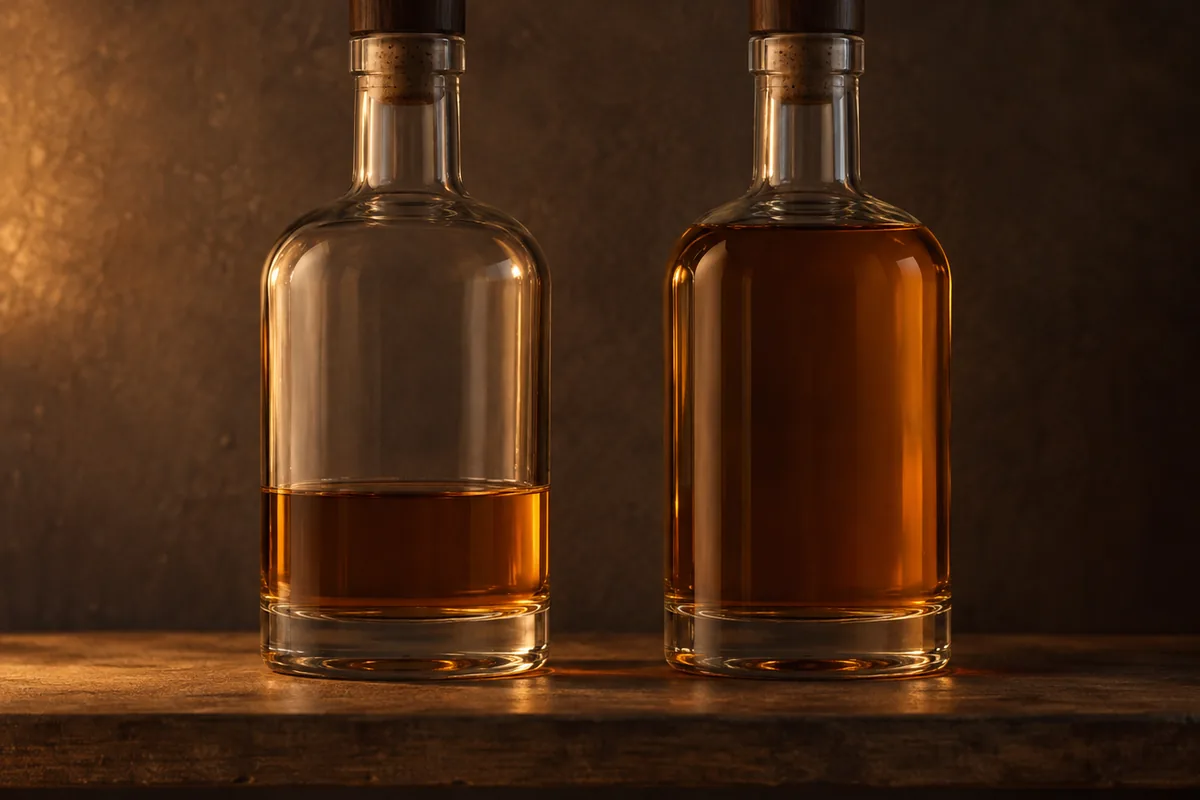
An opened bottle of single malt Scotch loses aroma to the headspace as it empties, and the loss accelerates as the airspace grows. The last third of a bottle changes faster than the first two thirds did.
There is a cheap remedy for that. Decanting a half empty single malt Scotch into a smaller bottle removes the airspace that drives the loss.
Who checks that any of this is true?
A page of rules is only as good as whoever applies them.
HM Revenue and Customs is appointed as the competent authority for verifying Scotch whisky. The same body that collects the duty checks the description.
Verification of a Scotch covers production as well as labelling, so a single malt category description is checked rather than self declared.
There is a separate offence for the marketing. It is an offence to advertise or promote a Scotch whisky as belonging to a category to which it does not belong, which reaches material that never appears on a bottle.
The limit is worth stating plainly. Enforcement reaches the regulated claims a single malt Scotch label makes, so anything the regulation leaves open remains a producer's own description.
Which returns the reader to the three clauses. They are narrow, they are enforced, and almost everything else on the bottle is somebody's choice of words.
Common questions
- Does single malt mean the whisky came from one cask?
- No. The word single counts distilleries, and the definition expressly permits distillation in one or more batches. Most single malt Scotch is vatted from many casks of one distillery, and a bottling from one container carries a separate single cask claim.
- Can a single malt Scotch be bottled outside Scotland?
- Not for export. Since 23 November 2012 Single Malt Scotch Whisky may leave Scotland only in a bottle labelled for retail sale, so a single malt bought abroad was filled into that bottle in Scotland.
- Is single malt Scotch always peated?
- No. Peating is a choice made during malting and the definition does not mention it, so the category description tells you nothing about smoke either way.
- Does a region printed next to the category mean a flavour?
- It means the whisky was distilled there. The regulation permits a Scottish region or locality to be added to the category description, and it attaches no sensory meaning to that name.
Sources
-
NIAAA, What Is a Standard Drink?
Accessed 13 September 2026.
-
Scotch Whisky Association, Guidance for Bottlers and Producers 2025
Published 2025. Accessed 7 September 2026.
-
The Scotch Whisky Regulations 2009 (SI 2009/2890), regulation 3
Accessed 4 September 2026.
More in Spirits
-
 American single malt whisky
01
What is American single malt whisky, and what does it guarantee?
-
 Australian whisky
02
How is Australian whisky defined, and by which law?
-
 Black rum
03
What is black rum, and does the colour mean anything?
-
 Blended American whiskey
04
What is blended American whiskey, and how much of it is whiskey?
-
 Blended Irish whiskey
05
Blended Irish whiskey: which word counts the distilleries?
-
 Blended Scotch
06
Blended Scotch: what is in it, and why does the recipe change?