
Spirits
Single cask whisky: what happens when the cask runs out?
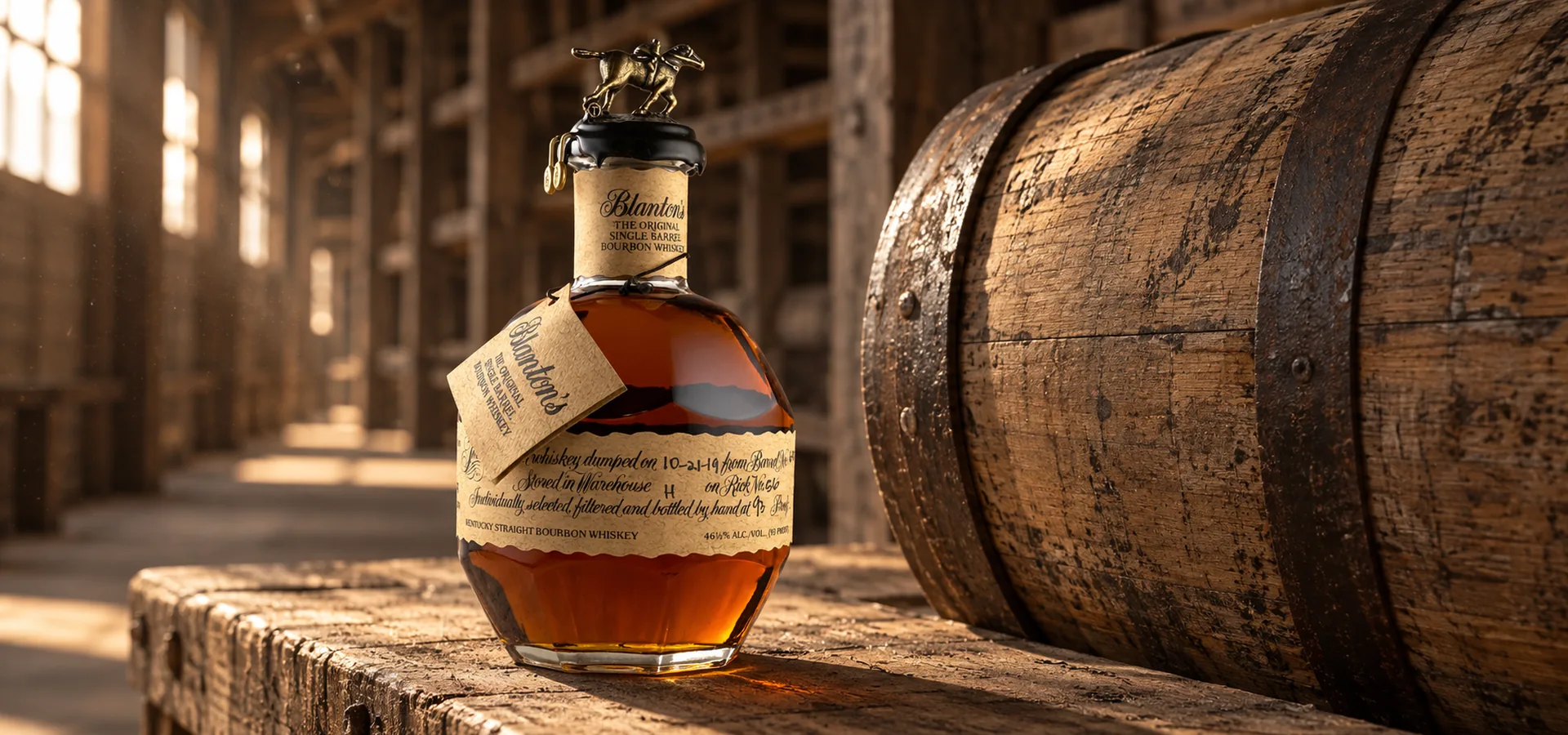
Single cask whisky is drawn from one cask, with no whisky from any other cask added to it. That fixes the number of containers and nothing else, and it means the bottling ends when the cask empties and can never be matched again.
At a glance
- Legal category
- No standard of identity defines the phrase in any whisky regime. It is a label claim, and a single cask Scotch still meets every requirement of the Scotch Whisky Regulations 2009.
- Minimum strength
- 40 percent ABV
- Also called
- Single barrel whisky, Single cask bottling, One cask whisky
What does single cask fix about a whisky?
The phrase settles the number of containers behind the bottle. A single cask whisky is drawn from one cask, and no whisky from a second cask was added to it.
No whisky designation in any regime defines the phrase single cask. It travels on a bottle as an ordinary label claim rather than as a category a regulator wrote down.
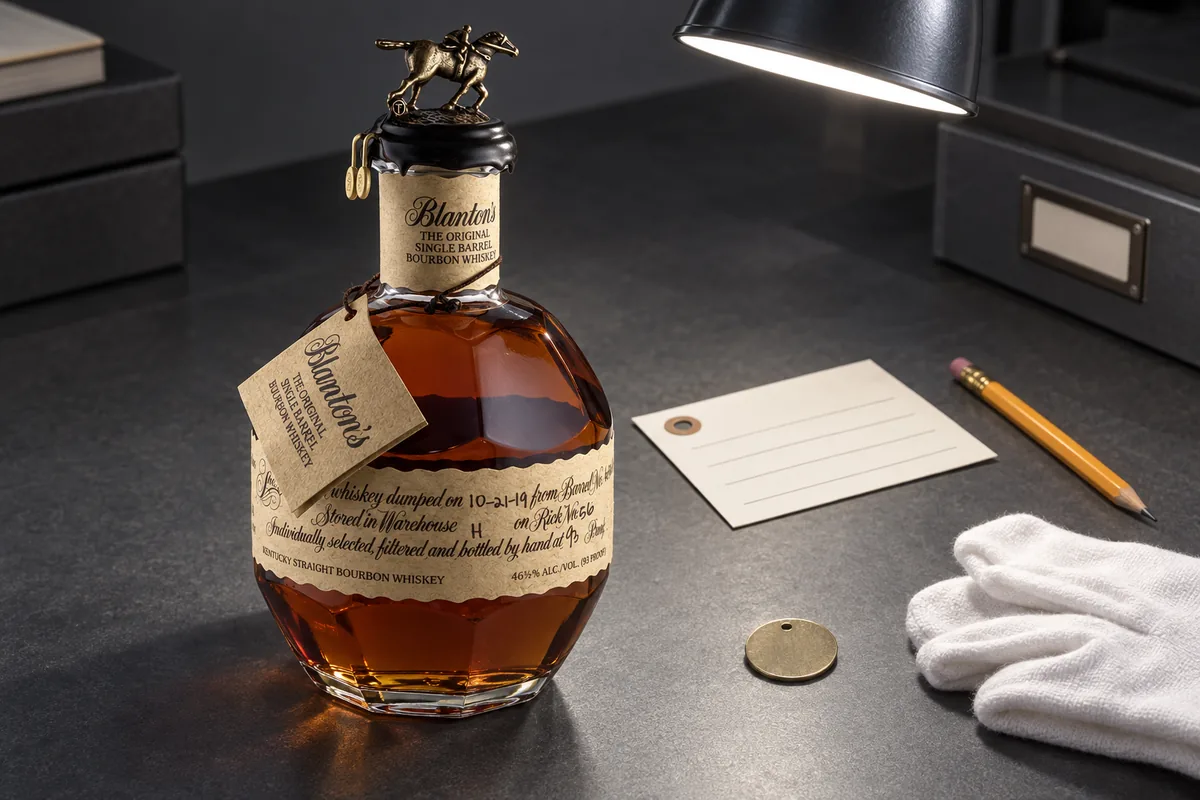
Single cask counts containers, it does not grade the whisky. A producer using the phrase is describing where the liquid came from, which is a claim to be substantiated on request rather than a mark of quality.
The single cask phrase settles nothing about the strength, the age, the wood or the quality of the whisky inside.
American bottlers usually write the same claim as single barrel. The wording follows the cask format in local use rather than marking a different practice.
Each of those four is decided somewhere else. Three of them are printed on the same label if you know which figures to read.
What the phrase does carry is a consequence larger than the claim itself.
A single cask bottling cannot be repeated
Consistency in whisky is manufactured. The tool that manufactures it is the vatting.
A vatted bottling draws on many casks, so a cask that runs out or drifts can be replaced from stock. The blender is working towards a target, and the range of casks is what makes hitting it possible.
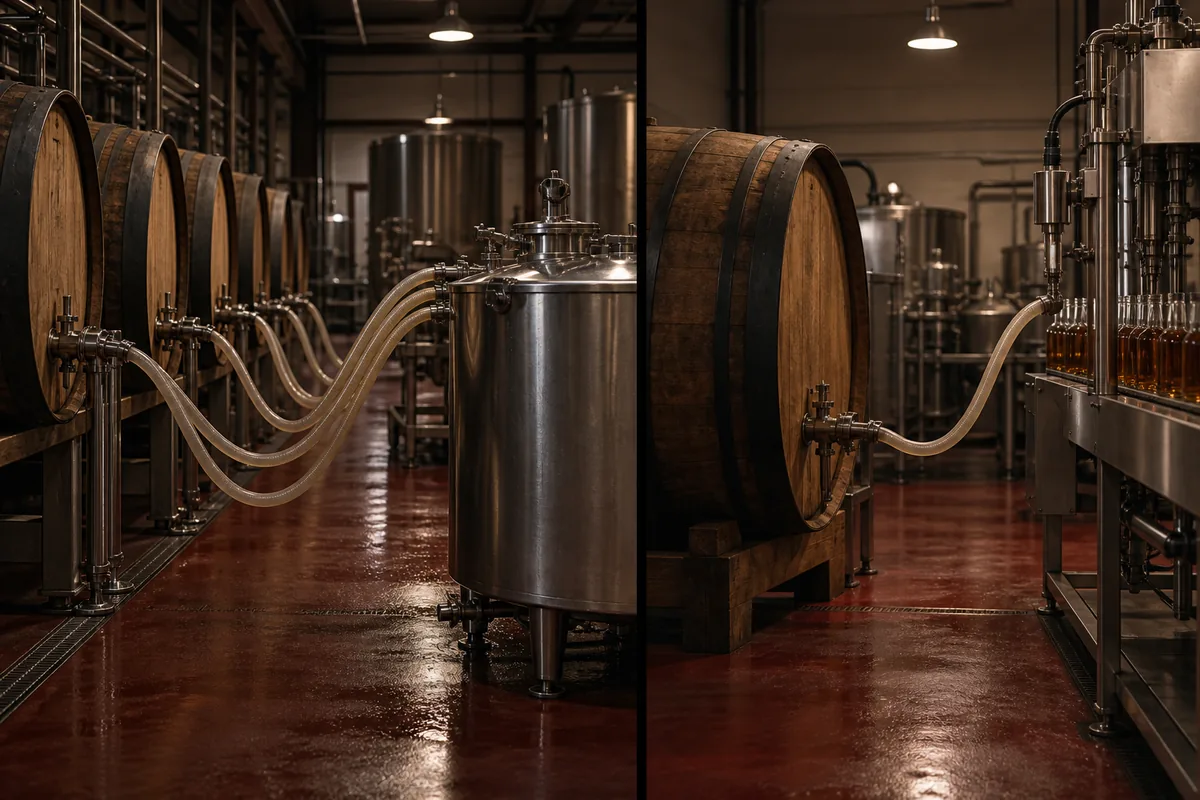
Take the vatting away and the target goes with it.
A single cask bottling ends when that cask is empty, and no later release can be matched to it. There is no stock to draw on, because the stock was the cask.
| What you are asking | A vatted bottling | A single cask bottling |
|---|---|---|
| What sets the flavour | An average across many casks, aimed at a target | One cask, wherever it happened to land |
| When the stock runs out | More casks are drawn in and the release continues | The release is finished |
| Can a later bottle be matched | Yes, that is the point of the vatting | No, and nothing can be substituted for it |
People often assume a producer could go back and fill more if demand justified it. Two casks filled on the same day with the same new spirit come out different, so a second cask is a different whisky rather than a refill.
That is also why a shared name on the shelf is worth reading carefully.
A series name shared across several single cask releases reports the series and not the whisky in any one bottle. The name is continuous and the liquid behind it is not.
The outturn number, and what it counts
Outturn is the number of bottles a release produced. On a single cask bottling that is the number one cask produced.
A cask behind a single cask whisky holds about 200 litres at filling if it is a barrel, about 250 as a hogshead and about 500 as a butt. The ex-bourbon barrel is the commonest of the three by a wide margin.
Then the warehouse takes its share.
Scottish maturation loses roughly 2 percent of a cask's contents a year, and age, cask size, warehouse and climate all move that figure. It is an average rather than a rate anybody can rely on.
- Barrel at filling
- About 200 litres
- After twelve years
- About 157 litres
- Bottles of 700 ml
- About 224
- The same sum from a butt
- About 560
The arithmetic is worth doing once. A cask filled with 200 litres and losing 2 percent a year holds about 157 litres after twelve years, which fills about 224 bottles of 700 ml.
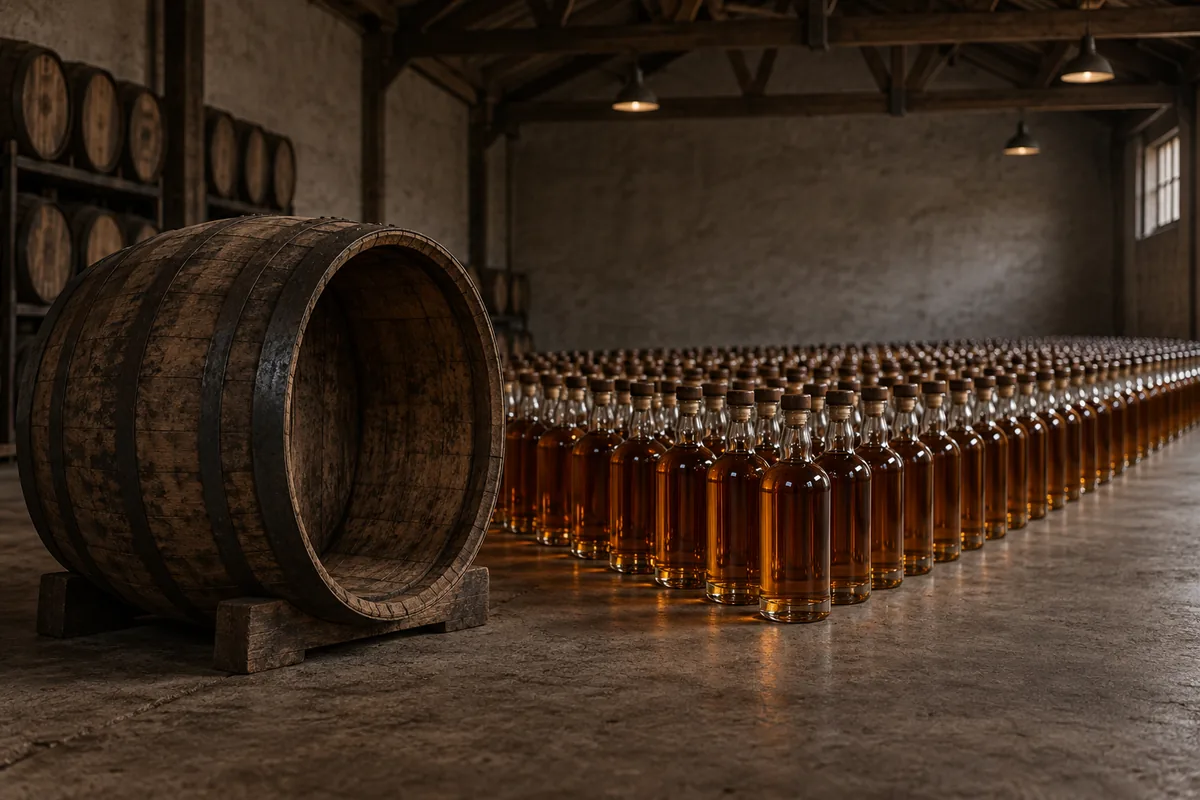
The same arithmetic on a 500 litre butt leaves about 392 litres of whisky after twelve years, or about 560 bottles.
Those two figures bracket almost everything you will see printed.
A printed outturn can be read backwards, because a small figure points at a small cask or a long maturation and a large one at a butt. An outturn of ninety from a whisky bottled at twenty five years old is telling you about evaporation, not about a marketing decision.
Single cask and cask strength are separate claims
The two phrases appear on the same bottles often enough to be read as one idea. They report different things.
The single cask claim reports how many casks the whisky came from. The cask strength claim reports whether water was added before bottling.
- Single cask reports
- One container, and nothing was blended into it
- Cask strength reports
- No water was added between the cask and the bottle
- Neither reports
- Age, wood, or quality
All four combinations exist.
A single cask whisky may be reduced with water, and a cask strength whisky may be vatted from many casks.
So one phrase is not evidence for the other, and a bottle carrying one is worth checking for the other rather than assumed to carry it.
Neither the single cask claim nor the cask strength claim settles the age, the wood or the quality of the whisky. Two phrases about provenance and dilution cannot be made to answer a third question by appearing together.
Which numbers on the label can be checked?
A single cask bottle is unusually crowded with figures. They are not equal.
- The alcohol content. Mandatory label information, and the only figure on the bottle a regulator holds anybody to.
- The cask number. It identifies the container in the producer's own records and means nothing outside them.
- The bottle number. It reports the order a bottle came off the line and says nothing about its contents.
- The outturn. A figure describing the whole release, and the one number on the bottle that can be checked by arithmetic.
- Distillation and bottling dates. Together they bracket the time the whisky spent in that one cask.
The ranking matters because the crowding invites a reader to weigh them equally.
A low bottle number is a common object of attention and it reports nothing at all. Bottle four of two hundred came off the line before bottle one hundred and ninety, and both were filled from the same vat on the same afternoon.
The two dates are the pair worth doing something with. Subtract one from the other and you have the time in wood, which is a firmer figure than an age statement has to be on a vatted bottle.
The cask number earns its place for a different reason. Nobody outside the company can verify it, and it is exactly what you quote when you want a precise answer from the people who can.
Which of those numbers the regulation governs
Two of the figures in that list carry conditions. The rest carry none.
A distillation or vintage year may be shown on a single cask whisky only if one year is given and all the whisky was distilled in it.
Read that against the object and something neat falls out.
A single cask bottling satisfies the one year condition automatically, because one cask was filled on one day. What is a demanding condition on a vatting is a description of the container here.
- Only one year. A range of distillation years cannot be printed, which a single cask never needs to do.
- All of it from that year. The claim has to cover every drop rather than a majority, which one cask satisfies by definition.
- A second figure beside it. A bottling year or an age statement must appear on a single cask label in the same field of vision as the distillation year.
That third condition explains the pair of dates. A distillation year alone would tell a buyer when the spirit was made and nothing about how long it sat in wood.
The cask number and the bottle number are not covered by any of that, and they are not unpoliced either. Any other number on a single cask label likely to be read as an age when it is not is an offence.
A cask reference of 1987 printed prominently on a whisky filled in 2011 would be exactly the kind of number that rule exists to catch.
None of it reaches the glass. A compliant number on a single cask whisky asserts a date and says nothing about how the whisky tastes.
From the cask to the bottle
Somebody tasted the cask before anybody bottled it, and what they tasted is not quite what you will open.
A cask is sampled by drawing spirit through the bunghole with a long tube called a valinch or a whisky thief. The tube is lowered in, fills from the body of the cask, and is lifted out with a measure held inside it.
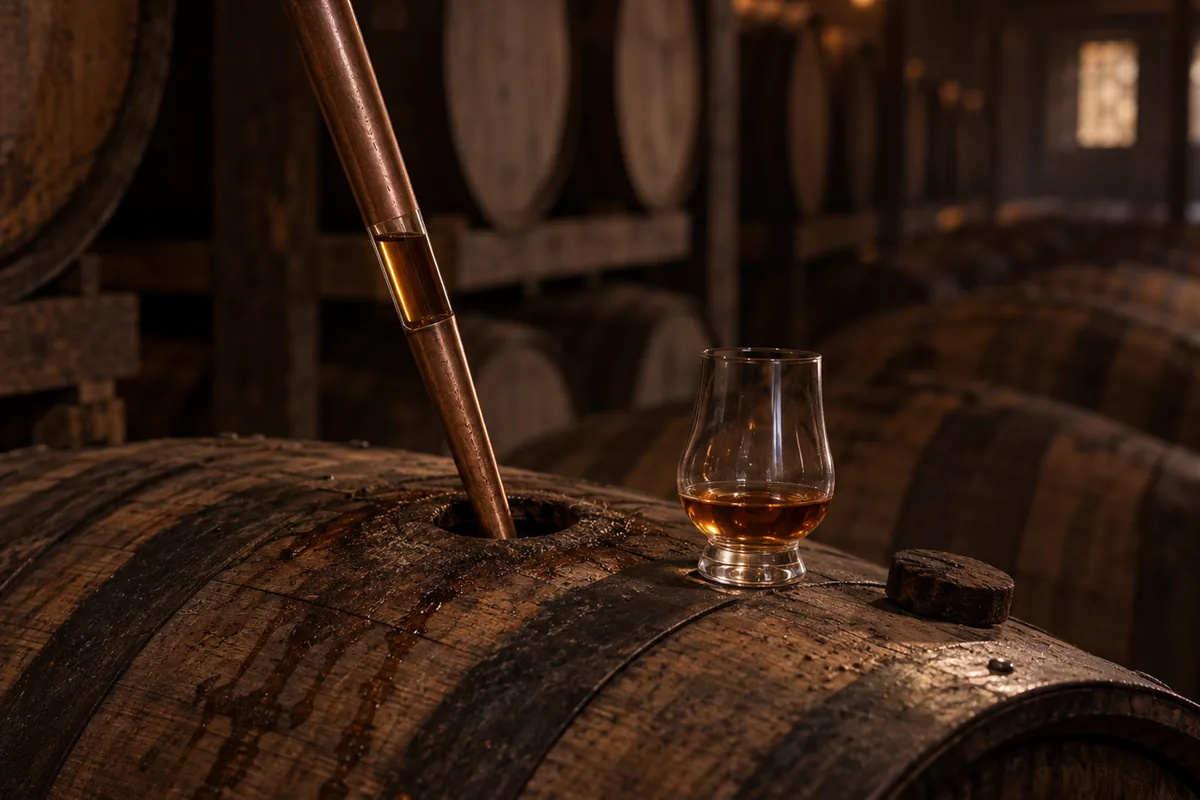
That last detail matters more than it sounds. A cask of whisky is not homogeneous with its sample, because the spirit nearest the staves has had different contact from the spirit in the middle.
| Stage | What happens | Is it optional |
|---|---|---|
| Drawing the sample | Spirit is lifted from the body of the cask through a valinch | No, this is how the cask is judged |
| Reduction with water | The strength is brought down before filling | Yes, and many single casks skip it |
| Chill filtration | The whisky is chilled and filtered to stop it hazing with water | Yes, and skipping it is what non-chill-filtered means |
Between the sample and the bottle a single cask may be reduced with water, chill filtered, or neither.
Chill filtration and reduction of a single cask are producer choices rather than regulated steps, so a label may disclose them or say nothing.
There is one configuration where the gap closes almost completely. A single cask bottled at cask strength without chill filtration is the case where the sample and the bottle are closest, which is why those two phrases so often travel together on these releases.
Who chose the cask, and what does the choice mean?
Two kinds of company put single casks on a shelf. The name on the label tells you which.
A distillery bottling a single cask is choosing a cask it filled and warehoused itself. An independent bottler buys casks from distilleries and releases them under its own name.
| What you are asking | A distillery release | An independent bottling |
|---|---|---|
| Who filled the cask | The company selling it | A distillery that then sold the cask on |
| What the selector could compare it with | The distillery's own stock, of every age and wood | Whatever casks that bottler holds, often across many distilleries |
| Whether the distillery is named | Always, because it is the brand | Sometimes, and sometimes the contract forbids it |
A selection is a comparison rather than a verdict, and each selector sets a cask beside a different shortlist before choosing it.
A missing distillery name reads as evasion and frequently is not. An independent single cask bottling may not name the distillery when the supply contract forbids it, so a vague regional description can be a contractual limit rather than concealment.
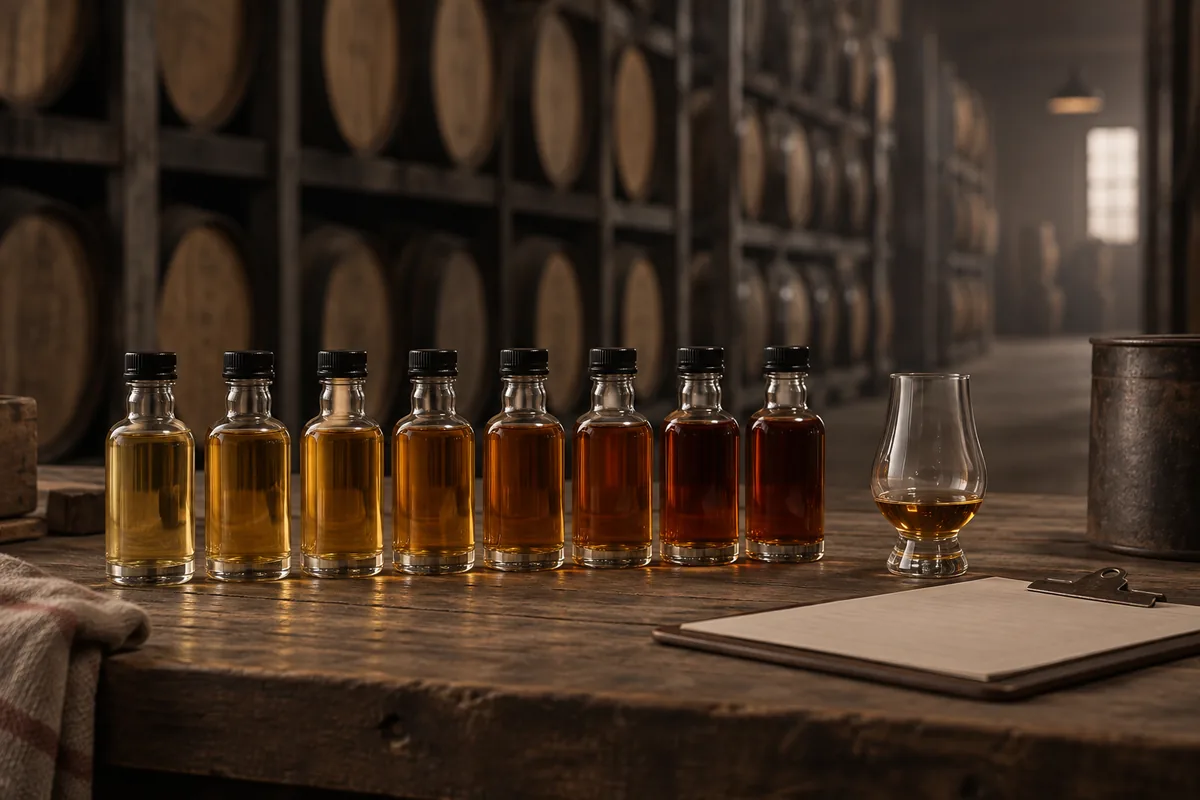
Neither selector can offer a reference bottle, because the cask that would supply it is the one being sold.
That is the honest limit of the judgement standing behind any single cask. Somebody tasted the cask and chose it, then bottled the evidence for that judgement.
A producer gives up a cask to release it
Releasing a cask whole is a decision with a cost attached, and the cost falls on somebody who is not the buyer.
Releasing one cask removes it from the stock a blender uses to hit a target, so the decision costs the vatting something. Every cask sold on its own is a cask the blender cannot reach for next year.
Sometimes that trade is easy to make.
A cask of whisky that sits outside the house profile is easier to release whole than to blend away. A cask that would pull a vatting off target is worth more standing on its own than diluted into one.
What the producer buys with it is a different kind of attention. Single cask releases carry a distillery's name to buyers who want provenance rather than consistency, and those buyers ask questions the standard range never provokes.
Distilleries are not the only ones making the decision. Retailers, clubs and societies also buy casks whole and release them under their own selections, which is why the same distillery can appear under several names on one shelf.
- The distillery itself. The only party weighing the release against its own blending stock.
- Retailers and independent bottlers. Buying casks outright and selecting for a shelf they know.
- Clubs and societies. Selecting for a membership rather than for a market, which rewards different casks.
The commercial reasoning behind a single cask whisky release describes how the trade works rather than any particular bottling. No label tells you which of these reasons applied.
The limits of a single cask bottling
A distillery's house character is the average a vatting produces, so no individual cask is obliged to show it.
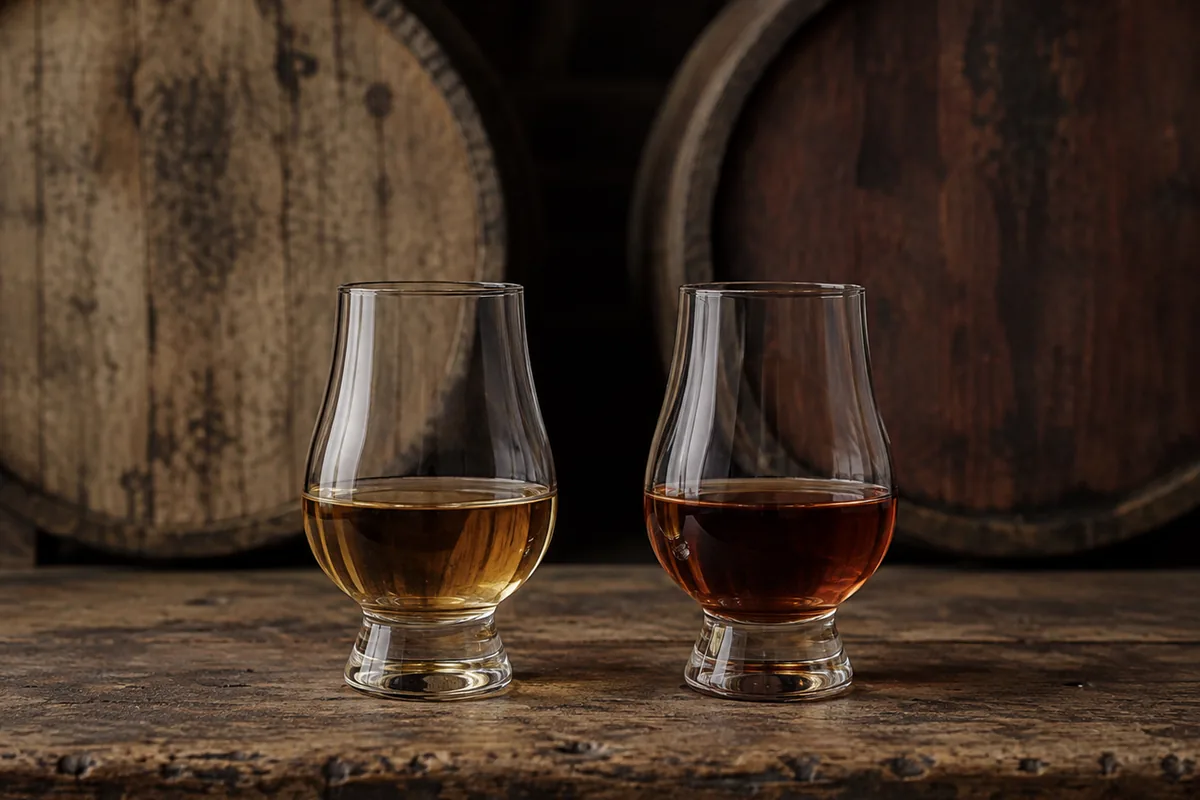
An unusual single cask is interesting for the same reason it is unrepresentative.
Wood widens the scatter further. A first fill sherry butt and a tired refill barrel filled on the same morning will not be recognisable as siblings twelve years later.
Judging a distillery from one of its casks is judging a population from one member of it. That is a fair thing to enjoy and a poor thing to generalise from.
Nothing on a single cask label says whether the cask was chosen because it was typical or because it was not. Both are legitimate selections and they lead to opposite conclusions about the distillery.
The rules that still apply to every single cask Scotch
A special bottling is assumed to bend something. This one bends nothing.
One of those requirements is a condition on the building itself. A single cask Scotch matures in an excise warehouse or a permitted place, which is a secured store the revenue rather than the distiller controls access to.
- Where and how long it matured. A single cask Scotch must be matured only in Scotland, in oak of a capacity not exceeding 700 litres, in an excise warehouse or a permitted place.
- The strength it may be bottled at. A single cask Scotch must still be matured for not less than three years and bottled at not less than 40 percent alcohol by volume.
- What may be added. Nothing may be added to a single cask Scotch other than water, plain caramel colouring, or water and plain caramel colouring.
- What the front label must show. Every Scotch must show its category on the front of the bottle, as prominently as any other description on it.
The last of those explains a detail people notice and misread. The words single malt or single grain sit beside the cask claim because a Scotch has to carry its category, not because the producer wanted two claims on one label.
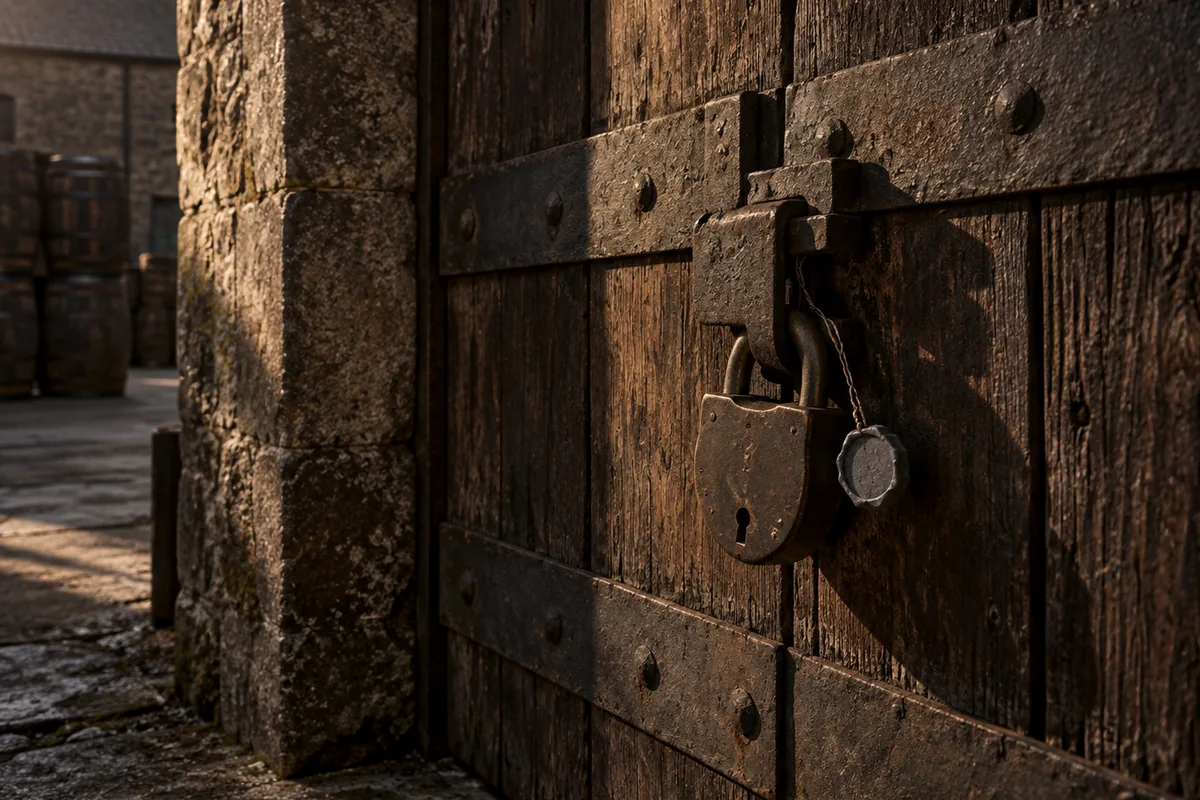
The additions rule is the one that gives the untouched impression its actual content. Only water and plain caramel colouring may go in, and a cask strength single cask has had neither.
A single cask whisky made outside Scotland answers to its own regime rather than to these requirements. The bottling claim travels everywhere and the standard underneath it does not.
Opening a bottle you cannot replace
Bottles that cannot be bought again tend to stay shut. The whisky does not benefit from the wait.
An opened bottle of single cask whisky loses aroma to the headspace as it empties, and rarity does not slow that. A bottle kept a third full for three years is a different drink from the one that was poured on the day it was opened.
Store it upright and out of direct light. Finish the last third sooner than the first.
Cask strength releases are common here, so work through the nose before adding water and then add it in stages, because what comes out cannot be put back.
- Standard drink, United States
- 14 g of pure alcohol
- One drink at 40 % ABV
- About 44 ml
- One drink at 58 % ABV
- About 31 ml
- What the cask number changes
- Nothing in this column
A standard drink in the United States is 14 grams of pure alcohol, whichever cask the whisky came from. Fourteen grams of alcohol is roughly 44 ml of a whisky bottled at 40 percent alcohol by volume.
The same 14 grams is about 31 ml of a whisky bottled at 58 percent, which is where many single cask releases sit.
A cask number changes nothing about the alcohol, which stays a matter of the stated strength and the size of the measure.
No cask, no outturn and no scarcity can establish that anybody is fit to drive.
Common questions
- Is a single cask whisky better than a vatted one?
- There is no evidence for that in a form anybody could cite, and the defensible difference is about sample size rather than quality. A vatting aims at a target across many casks, while a single cask lands wherever that cask landed, which can be above or below the distillery's usual character.
- Does single cask mean the whisky is bottled at cask strength?
- No. The two claims are independent, and a single cask whisky may be reduced with water before bottling. Check the alcohol content on the label rather than inferring it from the cask claim.
- What does the bottle number on a single cask release tell you?
- Only the order that bottle came off the filling line. Every bottle in the run was filled from the same cask on the same day, so a low number carries no information about what is inside it.
- Can a distillery release the same single cask twice?
- No. The release ends when the cask empties, and a second cask filled with the same spirit on the same day matures into a different whisky rather than a refill of the first.
Sources
-
Ministers to review whether the angels' share of whisky harms the environment, The Scotsman
Accessed 10 September 2026.
-
NIAAA, What Is a Standard Drink?
Accessed 13 September 2026.
-
Scotch Whisky Association, Guidance for Bottlers and Producers 2025
Published 2025. Accessed 7 September 2026.
-
The Scotch Whisky Regulations 2009 (SI 2009/2890), regulation 12
Accessed 10 September 2026.
-
The Scotch Whisky Regulations 2009 (SI 2009/2890), regulation 3
Accessed 4 September 2026.
More in Spirits
-
 American single malt whisky
01
What is American single malt whisky, and what does it guarantee?
-
 Australian whisky
02
How is Australian whisky defined, and by which law?
-
 Black rum
03
What is black rum, and does the colour mean anything?
-
 Blended American whiskey
04
What is blended American whiskey, and how much of it is whiskey?
-
 Blended Irish whiskey
05
Blended Irish whiskey: which word counts the distilleries?
-
 Blended Scotch
06
Blended Scotch: what is in it, and why does the recipe change?