
Spirits
What Is Highland Whisky, and Is It One Flavour Style?
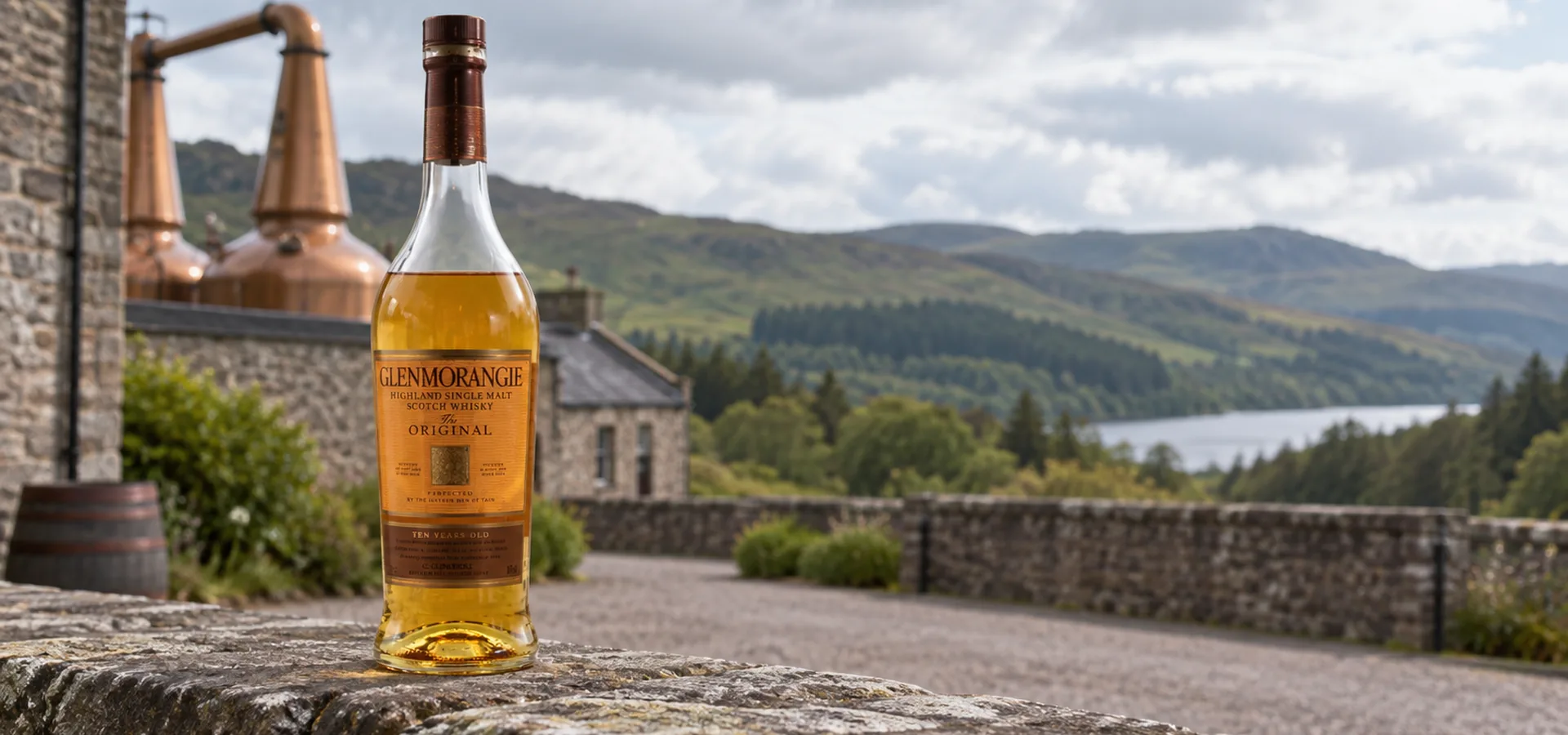
Highland whisky is Scotch Whisky distilled in the protected Highland region north of Scotland's statutory Highland-Lowland line. Highland establishes origin, not one recipe or flavour profile.
At a glance
- Legal category
- Scotch Whisky protected region, Scotch Whisky Regulations 2009 regulation 10
- Minimum strength
- 40 percent ABV
- Also called
- Highland Scotch whisky, Highland Scotch
- Protected geography
- Highland is one of the protected Scotch whisky regions
- Speyside relationship
- Speyside is protected separately but lies within the Highland boundary
- Scotch minimum age
- At least 3 years in oak casks in Scotland
What does Highland whisky mean on a label?
Highland is a protected answer to where Scotch Whisky was distilled.
It is not one of the five composition categories and it does not require a particular peat level, still shape, cask, or flavour.
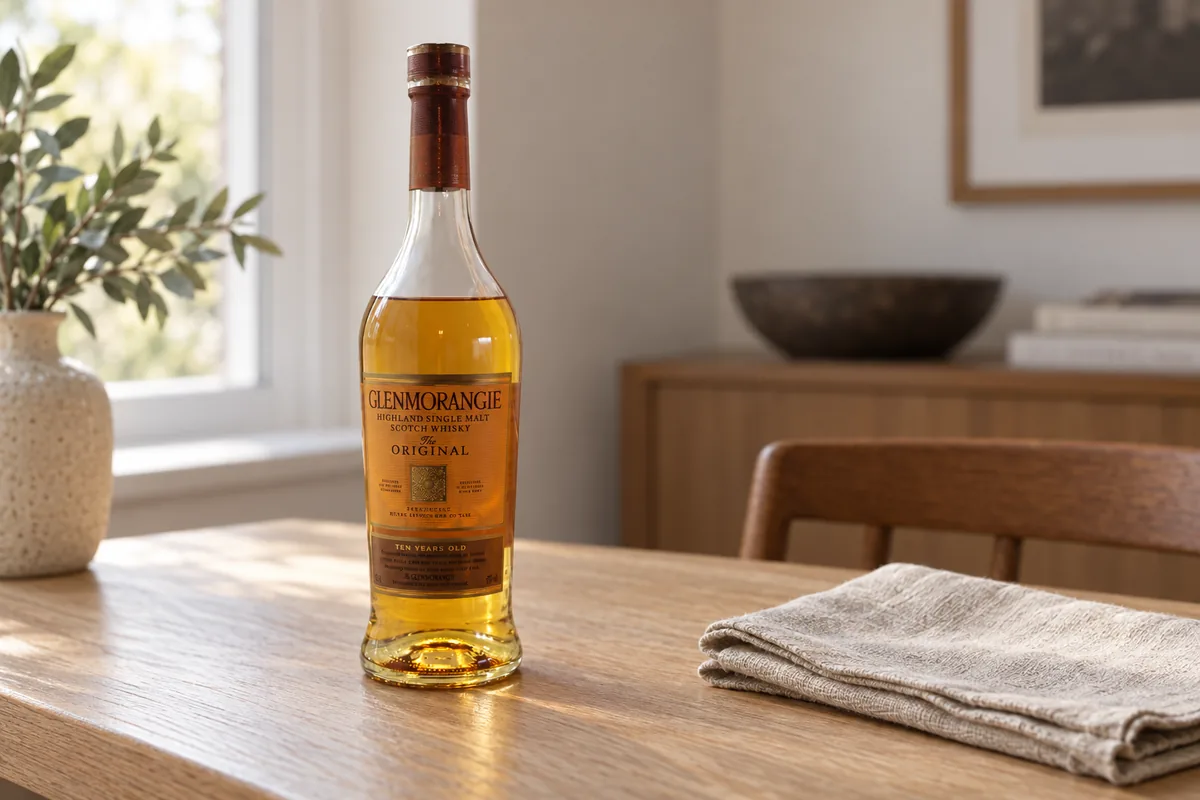
The underlying distilled spirit must first qualify as Scotch Whisky. It must be produced in Scotland, distilled below the legal ceiling, matured there in oak casks no larger than 700 litres for at least three years, and bottled at no less than 40 percent alcohol by volume.
| Words on the label | What they establish | What they leave open |
|---|---|---|
| Highland | Distillation in the protected Highland region | Grain construction, cask, peat, age beyond the minimum, and flavour |
| Single malt, single grain, blended malt, blended grain, or blended Scotch | The legal composition category | The exact sensory result |
| Age statement | The age of the youngest Scotch Whisky in the bottle | Quality and flavour preference |
A Highland whisky can be single malt, single grain, or part of another qualifying presentation, so reading region and category together prevents a place name from being mistaken for a recipe.
The protected name cannot falsely suggest distillation in the region because it is a geographic safeguard rather than an endorsement or ranking.
Highland modifies the place of distillation, while the compulsory category description identifies the whisky construction. A label may therefore read Highland Single Malt Scotch Whisky, with each part contributing a different fact.
Single malt as Scotland defines it means malted barley, pot stills, and one distillery, while single grain covers qualifying whisky from one distillery that is not single malt; blended malt, blended grain, and blended Scotch describe specific combinations across distilleries or category types.
- Produced in Scotland
- Mashing, fermentation, distillation, and maturation must meet the Scotch Whisky requirements tied to Scotland.
- Distilled below 94.8% ABV
- The distillate must retain aroma and taste from its raw materials and production method.
- At least three years
- Maturation takes place in Scotland in oak casks no larger than 700 litres.
- At least 40% ABV
- The minimum bottling strength applies regardless of whether Highland appears on the label.
Plain caramel colouring and water are the limited additions permitted under the cited Scotch rules. Colour therefore cannot supply a cask history or flavour verdict, and a regional name cannot tell you whether plain caramel was used.
If an age appears, it refers to the youngest alcoholic component in the drink and must be expressed in years under the applicable rule; age and region remain independent facts, so neither can substitute for the other.
Distillery wording has its own protections because a presentation must not create a false impression about where whisky was distilled. A place-rich label should be read literally rather than as a general landscape theme.
The label is most informative when you read outward from the legal category: category, regional designation, age, ABV, and specific cask or production details. General adjectives about smoothness, craft, or tradition cannot replace those facts.
Where does the Highland region begin?
The regulations define Highland as Scotland north of a detailed line running from the Firth of Clyde in the west to the Firth of Tay and the North Sea in the east.
This is why the Highland whisky region covers an exceptionally large and varied area.
At the western end, the line follows the southern shore of the Firth of Clyde to Greenock and reaches Cardross. It then crosses toward the summit of Earl's Seat in the Campsie Fells and the Wallace Monument.
- Greenock and Cardross
- The western anchors as the legal line leaves the Firth of Clyde.
- Campsie Fells and Wallace Monument
- Central landmarks used to carry the boundary eastward.
- River Earn and Firth of Tay
- The waterways that take the line toward the North Sea.
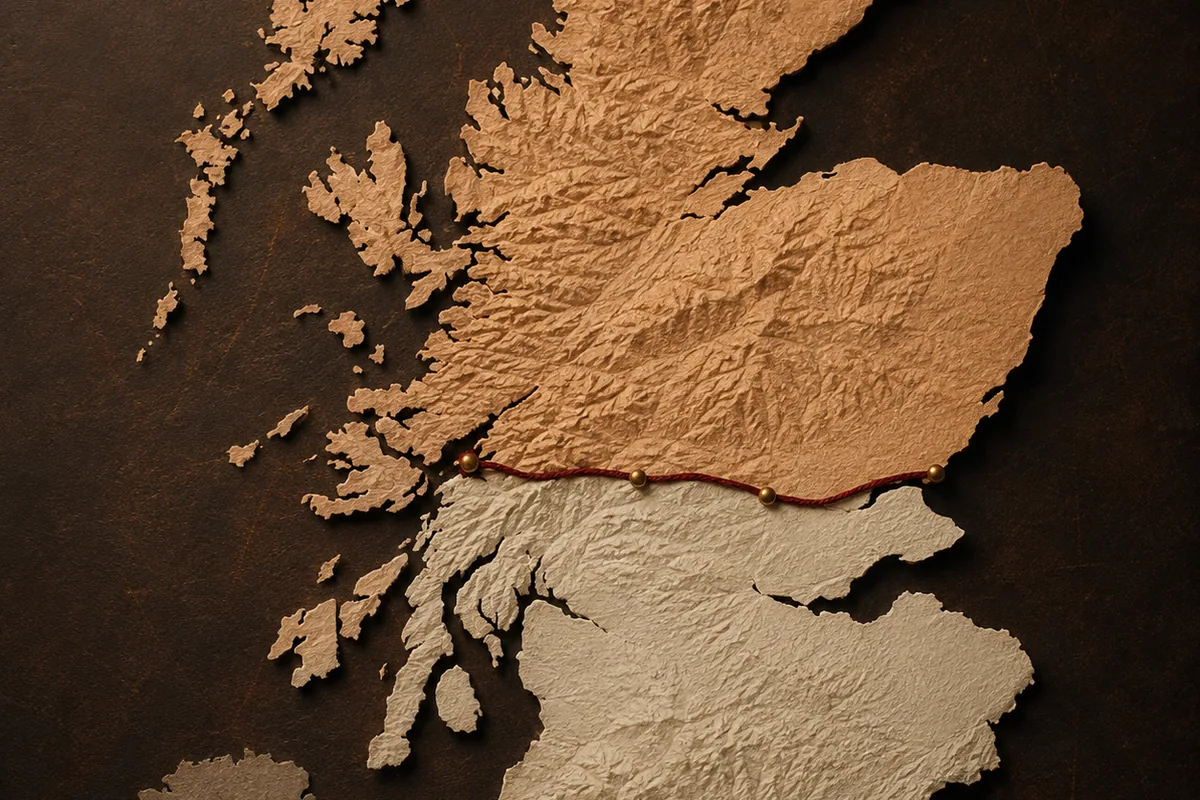
Farther east, the route follows roads toward Milnathort, turns north to Bridge of Earn, then follows the River Earn to the River Tay. The southern shore of the Tay and Firth of Tay completes the boundary to the sea.
The simplified Highland whisky map is orientation; regulation 10 controls the exact line.
An official Scotch Whisky map helps place current distilleries without replacing that legal text.
The western and eastern anchors matter because a casual north-south line would put some places on the wrong side. The statutory route follows shores, named landmarks, roads, and rivers, so the boundary is geographic evidence rather than a broad impression of northern Scotland.
The line separates protected regions, not climates: elevation, rainfall, coastal exposure, water source, and warehouse conditions can vary on either side, and none changes a distillery's legal location.
| Map question | Reliable answer | Common mistake |
|---|---|---|
| Is this distillery Highland | Check its distillation site against the protected boundary and official map | Judging by scenery, county name, or flavour |
| Does north mean smoky | No; peat use and production choices need bottle-level evidence | Turning a compass direction into a tasting note |
| Does the map fix the recipe | No; Scotch category and production disclosures explain construction | Assuming every distillery north of the line works alike |
Islands associated with the Highland region add more coastline and production diversity, but an island setting does not guarantee salt, smoke, or peat in the liquid. Sensory language needs support from the whisky rather than from a photograph of the coast.
Distillery locations can change as sites open, close, or resume production, which is why a current official map is useful for navigation; the legal boundary itself comes from the regulation, and a marketing map cannot redraw it.
The map also does not show where barley was grown, where a cask was made, or where a bottle was eventually sold. Highland answers where distillation occurred, while Scotch Whisky rules separately require maturation in Scotland.
For a buyer, this keeps map reading proportionate: confirm the protected place once, then move to category and bottle details for decisions about style. Spending more time tracing the line will not uncover the peat, cask, or proof.
How does Speyside fit inside the map?
Speyside sits in the broad geography of northern Scotland, yet it is also named as a protected Scotch Whisky region in its own right.
Physical location and protected label wording can therefore overlap without being interchangeable.
The regulations define Speyside through named wards in Moray plus the Badenoch and Strathspey ward of Highland Council. It is not simply any place near the River Spey, and every use of either regional name must meet the protected-name rules.
Current guidance allows whisky distilled in protected Speyside to be described as Speyside or Highland, giving the producer a permitted regional choice without allowing a false place of distillation.
Two whiskies from one Speyside distillery can emphasise different protected regional wording without changing where they were made or removing the compulsory Scotch category.
| Distillation place | Protected regional wording available | What still needs separate evidence |
|---|---|---|
| Within defined Speyside | Speyside or Highland, subject to the labelling rules | Category, age, cask, peat, strength, and flavour |
| Highland outside Speyside | Highland | The same bottle-level production and sensory facts |
| South of the statutory line | Lowland, if the protected conditions are met | Any assumption that geography fixes style |
Retail filters may separate Highland and Speyside for easier browsing, but that interface choice does not override the wider Highland designation permitted by the guidance.
The locality and region distinction creates another useful boundary. Campbeltown and Islay are protected localities, while Highland, Lowland, and Speyside are protected regions under regulation 10.
The existing Campbeltown whisky entry explains that locality on its own terms; its coastal reputation cannot be copied onto Highland, just as a Speyside fruit stereotype cannot define every whisky legally presented as Highland.
If a label uses a distillery or place name prominently, check whether the presentation identifies the actual distillation source. Protected geography is meant to prevent confusion, so decorative place language deserves less weight than a clear category and origin statement.
A place may lie within the broad northern landmass people call the Highlands while its whisky is presented under the separately protected Speyside name. The label is using a legal regional designation, not denying the map.
This distinction explains why some simplified discussions say Speyside is within the Highlands while official whisky maps show it as one of five regions alongside Highland. One statement describes physical geography; the other describes protected Scotch Whisky regions.
Campbeltown and Islay are protected localities under the same regulations, while Highland, Lowland, and Speyside are protected regions. The existing Campbeltown whisky entry explains that locality without making it a model for Highland.
Why Highland is not one flavour style
The region is too large and the permitted production choices are too broad for one honest tasting note.
The Scotch Whisky Association describes Highland as highly diverse, ranging from lighter styles to coastal and smoky whiskies.
- Read the Scotch category Single malt, single grain, and blended constructions begin from different materials and combinations.
- Check cask and age information Previous fill, wood treatment, warehouse conditions, and time change extraction.
- Look for peat and strength clues Smoke character and alcohol by volume can dominate a broad regional expectation.
Fermentation, still shape, cut points, cask history, blending, and dilution add further variation; region predicts origin better than flavour, while bottle-level details give the more useful sensory forecast.
If you want to compare aromas, use the same glass, measured pour, rest time, and dilution for each sample. Holding those four constant is what leaves the whisky as the only thing that changed, and temperature and glassware belong to the same discipline.
A bottle described only as Highland still leaves many questions open. Category, age, cask, peat, and strength are the next facts to gather before deciding what kind of whisky is actually in front of you.
Malted barley and pot distillation define single malt, but fermentation length, still geometry, condenser design, cut points, and new-make strength can still produce very different starting spirits. Regional location does not standardise any of those choices.
Casks widen the range through previous contents, oak species, size, fill number, warehouse conditions, and time, leaving colour unable to prove maturity, cask type, or quality.
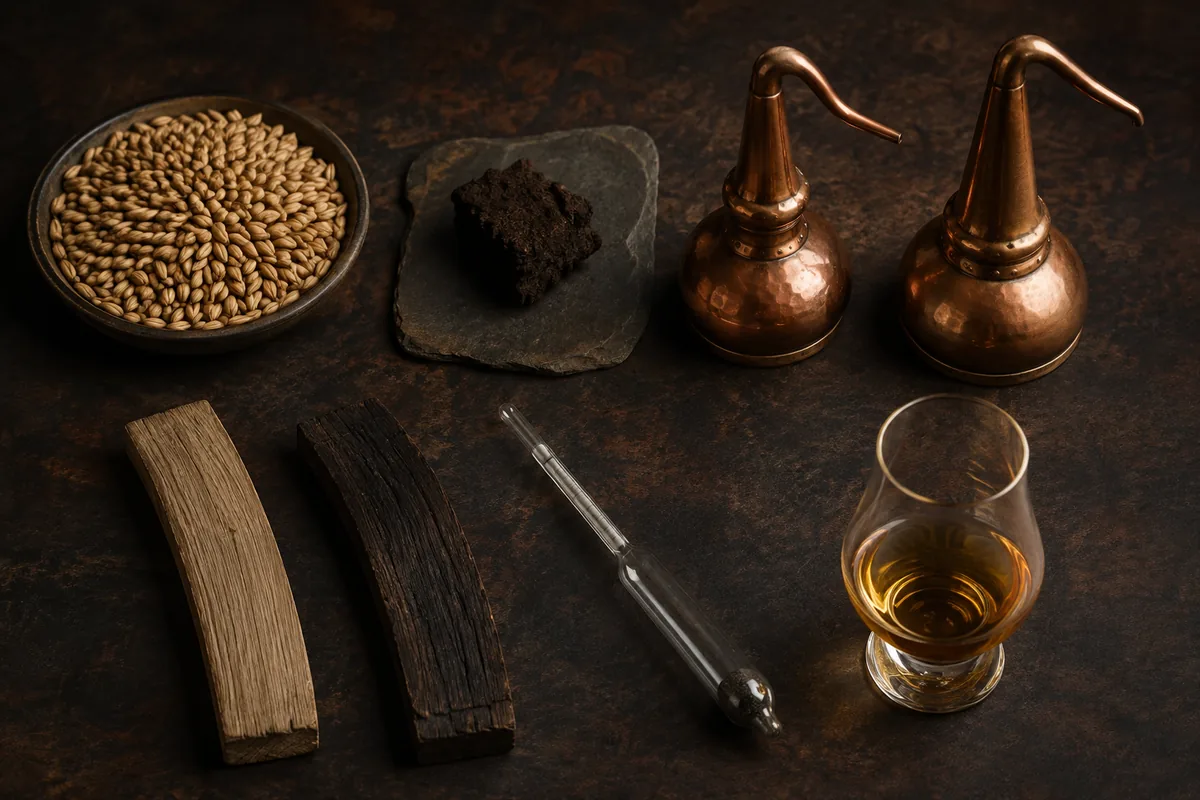
Peat is prone to regional shorthand even though a Highland malt may use peated malt or none and smoke intensity also changes with cut selection, maturation, dilution, and time in the glass.
Coastal is not a measurable flavour category: a producer may describe maritime associations, but geography alone cannot prove that salt entered the spirit or that every drinker will perceive a coastal note.
For comparison, hold glass shape, pour volume, resting time, and initial ABV as steady as practical. Add water in recorded amounts so a high-strength whisky does not win or lose simply because concentration changed the aroma and texture.
The method for tasting Highland whisky comparatively separates aroma, taste, texture, dilution, and finish, which helps prevent one remembered regional stereotype from steering every observation.
Service should follow the bottle and the reader's question: neat for a baseline, measured water for a dilution comparison, or a complete recipe when mixing. Ice and low temperature can mute volatility, while warmth and time may reveal more aroma without making either method universally correct.
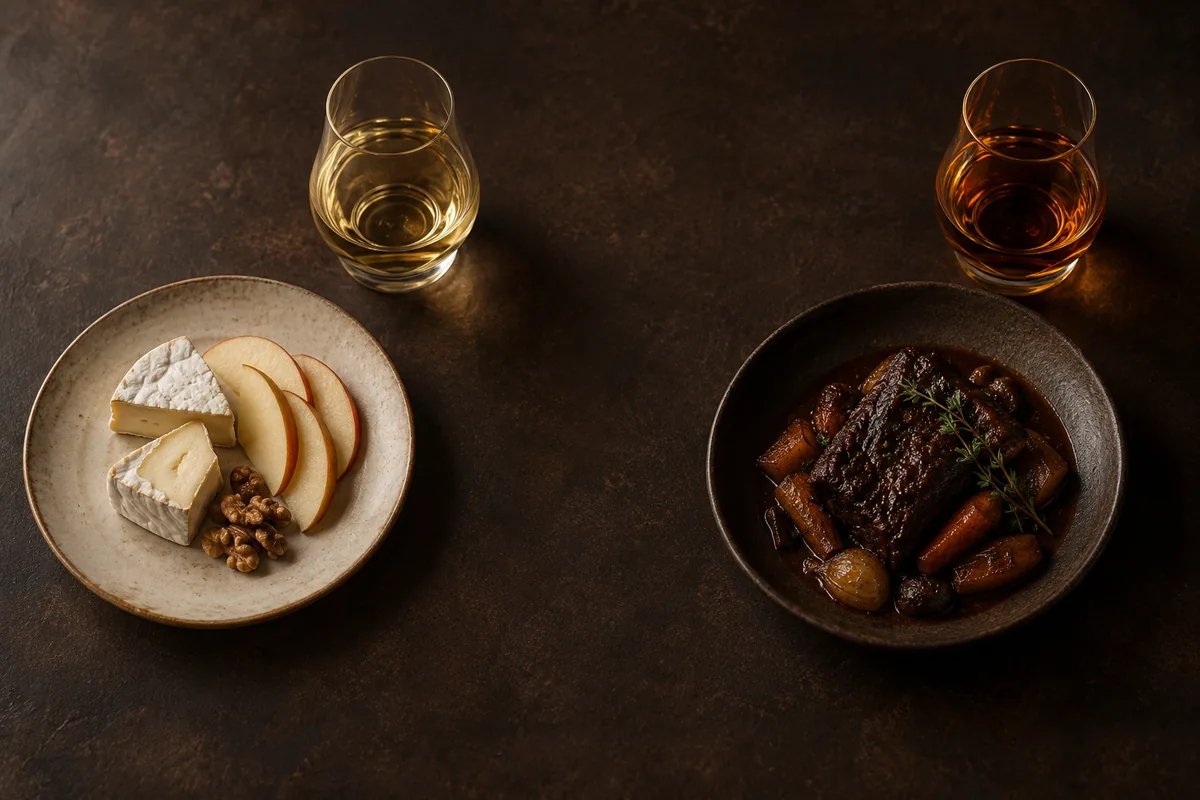
- Light and fruit-led whisky: pair by delicacy or use fresh fruit and mild cheese as a controlled contrast.
- Rich cask-led whisky: compare dried fruit, nuts, roasted foods, and sweetness so oak does not dominate the plate.
- Peated whisky: match smoke carefully with grilled food or contrast it with sweetness, while keeping intensity in balance.
- Higher-strength whisky: measure the pour and any water because flavour intensity and alcohol contribution both change.
Opened whisky should remain upright, tightly closed, and away from direct light or heat. It does not continue cask maturation in glass, and greater headspace can gradually alter aroma through repeated exposure to air.
Check the printed ABV before serving because flavour descriptors, age, region, food, water, and elapsed time cannot determine impairment; no regional style supports a driving decision, and transport should be arranged without relying on perceived smoothness or confidence.
The useful conclusion is precise: Highland is strong evidence of protected distillation origin and weak evidence of any single flavour. Read the legal category and bottle details next, then taste under controlled conditions if the sensory distinction matters.
Which Scotch categories can use Highland?
Highland is a protected regional name within Scotch whisky labelling, but the useful phrase on a bottle includes more than the region. Read whether the product is single malt, single grain, blended malt, blended grain, or blended Scotch whisky before treating Highland as a complete identity.
Region and category perform different jobs.
The region locates the relevant production claim, while the category describes the whisky type and, in several cases, how distillates may be combined.
| Label element | What it establishes | What remains open |
|---|---|---|
| Highland | A protected regional connection under Scotch rules | Still design, peat use, cask history, flavour, and age |
| Single malt Scotch whisky | Malt whisky from one distillery, made under the category rules | Whether the distillery style is light, waxy, fruity, smoky, or robust |
| Age statement | The age of the youngest whisky represented by that statement | The age and proportion of every component or cask |
| Cask description | A producer claim that needs to be read in its exact wording | Previous fill, time in each cask, and proportion unless disclosed |
A distillery name can be more predictive than the broad region because it connects the whisky to a particular production system. Even then, different still runs, casks, ages, strengths, and finishing choices can produce several expressions from one place.
When a label pairs Speyside with a distillery location, follow the specific claim shown rather than replacing it with a preferred regional shorthand. The rules allow important geographic relationships that a simple five-box map cannot fully explain.
What production rules do Highland whiskies share?
Highland Scotch follows the same baseline Scotch whisky requirements as Scotch made elsewhere.
It must be produced in Scotland from water and cereals through the required fermentation and distillation process, matured in Scotland in oak casks within the permitted capacity, and meet the minimum maturation and bottling rules.
The common legal floor does not prescribe one Highland recipe. Malted barley, other cereals where the category permits them, yeast, process water, and cask selection interact with the specific Scotch category shown on the label.
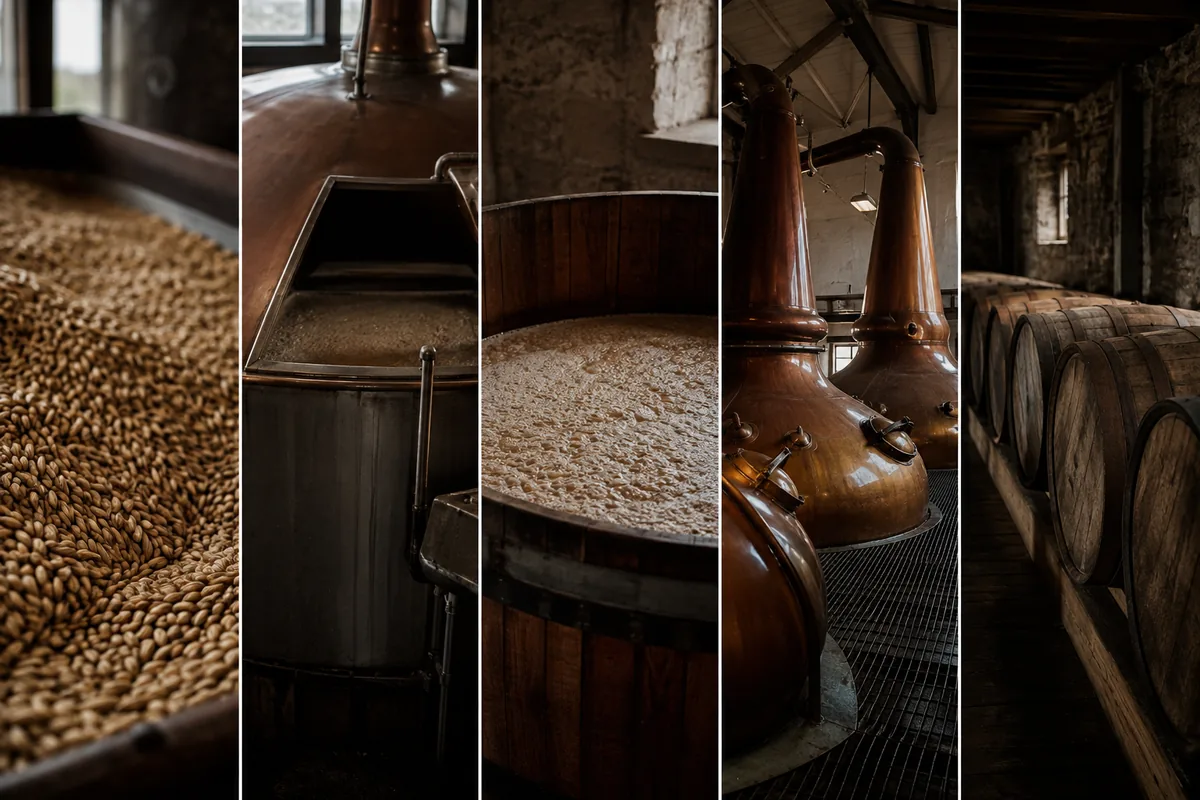
Single malt production uses malted barley at one distillery and pot still distillation, which distinguishes it from grain and blended categories. The region alone does not tell you whether the bottle is single malt, so the category line remains essential.
Scotch must mature for at least three years, but three years is a legal minimum rather than a flavour target.
Longer time can increase wood influence, oxidation, and concentration changes, although cask activity and warehouse conditions determine the rate.
- Scotland
- Production and maturation location required by the Scotch framework.
- Oak cask
- The maturation vessel, limited by the applicable maximum capacity.
- At least three years
- The minimum maturation period, not a guarantee of sensory maturity.
- At least 40% ABV
- The minimum bottling strength for Scotch whisky.
These shared rules explain why Highland whisky is recognisably Scotch while still covering a very wide flavour range. They are a boundary for identity, not a recipe for sameness.
How do fermentation and distillation create distillery character?
Mashing extracts fermentable sugars and other soluble material from the grain. Water chemistry, milling, mash separation, clarity of wort, and extraction choices can influence what reaches fermentation.
Yeast converts sugars to alcohol and creates aroma-active compounds during fermentation.
Duration, temperature, yeast strain, vessel management, and bacterial activity where accepted can shift fruit, floral, cereal, sulphury, and heavier notes.
Copper pot still shape and operation then affect reflux and contact with copper. Tall stills and operating choices may favour lighter fractions, while squat shapes or different cut decisions can retain heavier compounds, but equipment shape never acts alone.
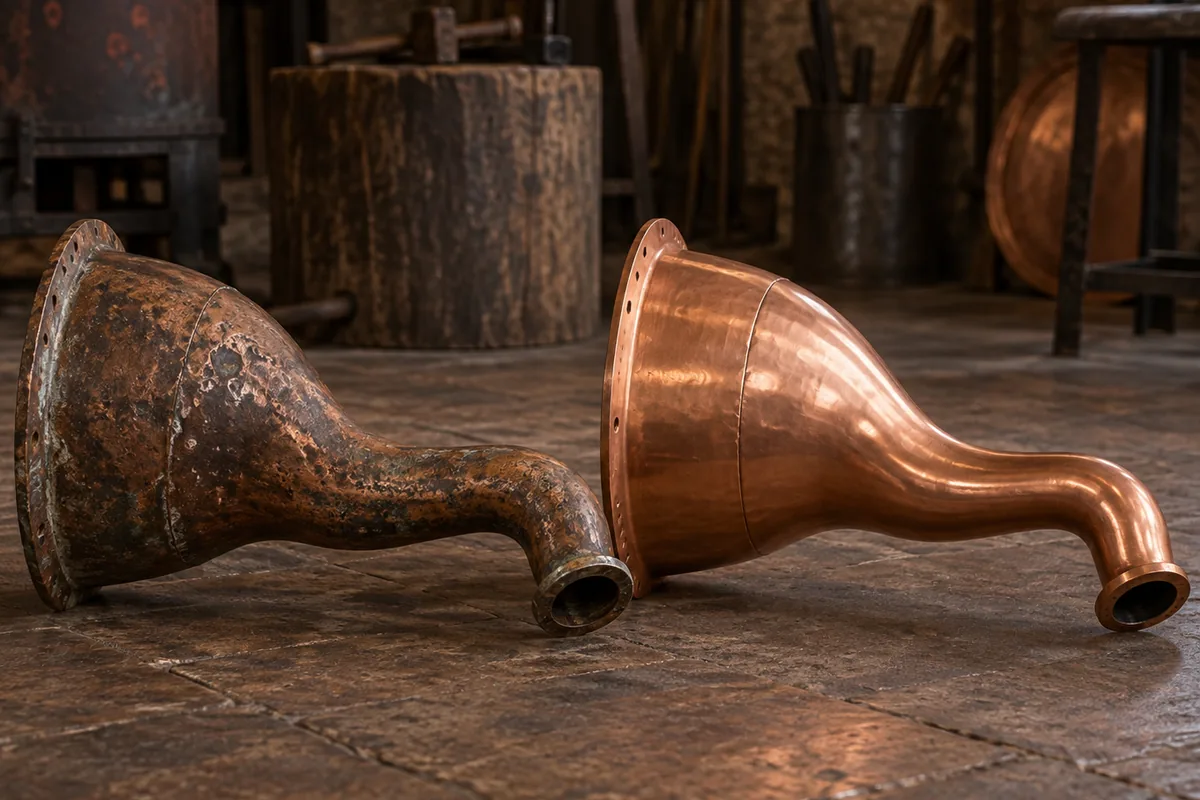
| Decision | Potential sensory direction | Why region cannot predict it |
|---|---|---|
| Wort and fermentation | Cereal, fruit, floral, waxy, sulphury, or savoury precursors | Distilleries inside Highland use different equipment and schedules |
| Still geometry | Lighter or heavier new-make balance | No single still shape defines the region |
| Cut points | Which volatile and heavier compounds are retained | Operational practice belongs to each distillery |
| Peat use | Smoke, earth, medicinal, or maritime associations where present | Peated and unpeated Highland whiskies both exist |
This production diversity is the main reason regional tasting notes need restraint. Geography can organize discovery, but it cannot replace information about the distillery and expression.
How do casks widen the Highland flavour range?
Oak maturation changes colour, aroma, flavour, and texture through extraction, oxidation, and the movement of spirit and air through the cask.
Previous fill, oak species, toasting, charring, cask size, refill history, warehouse, and time all matter.
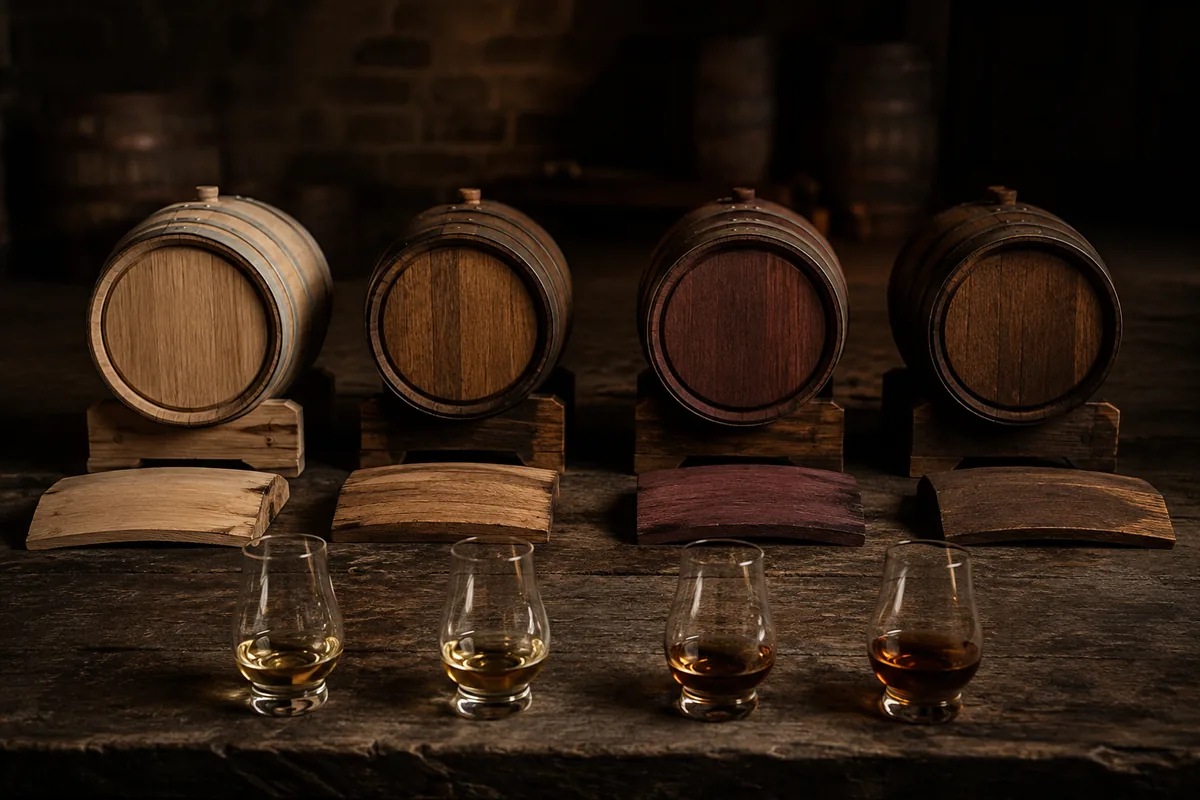
Ex-bourbon casks often contribute vanilla, coconut-like notes, honeyed sweetness, and gentle spice, while wine-seasoned casks can add dried fruit, nut, tannin, and colour. These are useful tendencies, not guaranteed tasting notes.
A refill cask generally extracts less aggressively than a first-fill cask, which may leave fermentation and distillation character more visible. A finishing cask adds another maturation stage, so its influence depends on both the earlier cask and the finishing period.
Natural colour and non-chill-filtered claims describe processing choices, but neither guarantees quality.
Added plain caramel colouring may be permitted for colour adjustment under the Scotch framework and should not be interpreted as proof of age.
Dark whisky is not automatically older. Active casks, wine seasoning, caramel adjustment, spirit-to-wood ratio, and lighting can all change appearance.
Do the Islands count as Highland?
The common consumer map often names Islands as a separate style area, yet the protected Scotch region system does not create an Islands region alongside Highland, Lowland, Speyside, Campbeltown, and Islay. Many island distilleries outside Islay therefore sit within the wider Highland geography for regulatory purposes.
Islay is separately protected, so it should not be folded into Highland. Speyside has its own protected name while also lying inside the broader Highland boundary, creating a different kind of overlap.
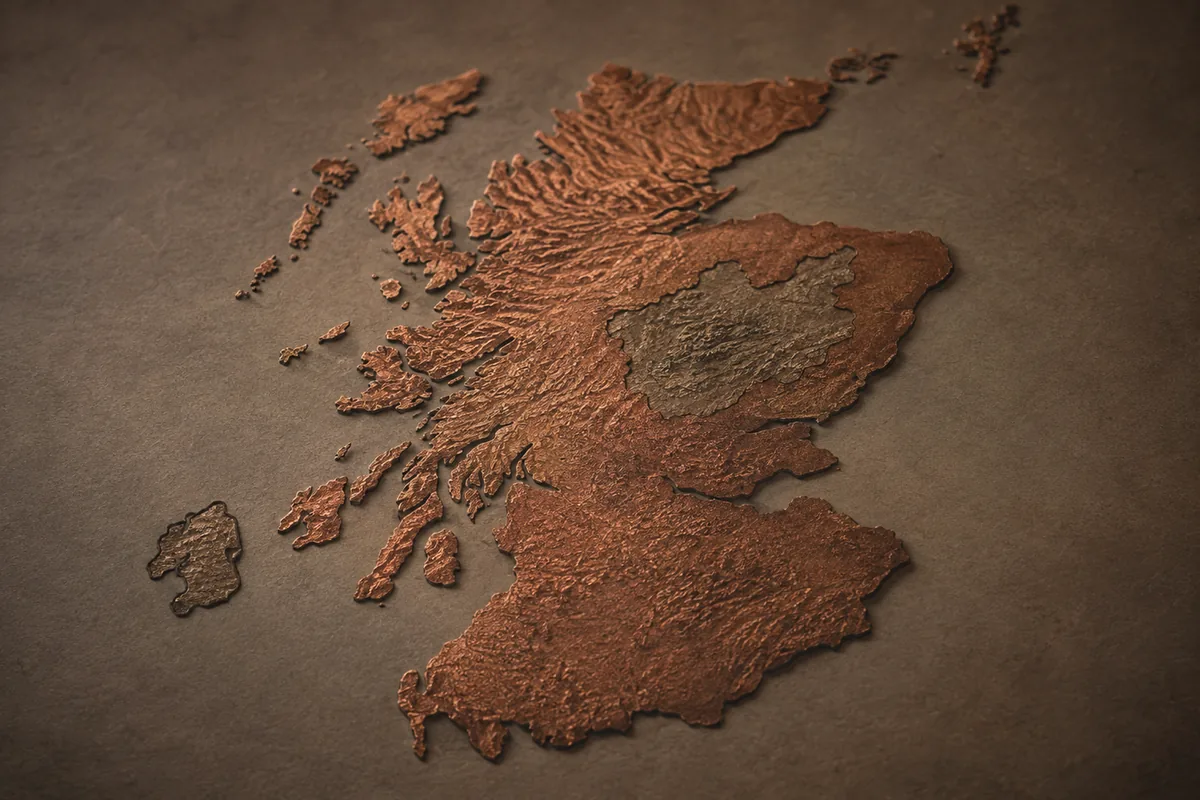
Island location can still matter through water access, transport history, warehouses, distillery choices, and brand identity.
It does not establish a common maritime flavour or a required level of peat smoke.
Use a map to locate a distillery, then use the label and producer information to identify category, production choices, casks, age, and strength. That sequence preserves what geography can prove without turning it into a tasting formula.
How should you read a Highland whisky label?
Begin with the full category and geographic wording, then record the distillery or bottler, ABV, age statement if present, batch or cask information, colouring and filtration disclosures where supplied, and any precise maturation claim.
- Identify the category: single malt, single grain, blended malt, blended grain, or blended Scotch determines the basic product structure.
- Read the place wording exactly: Highland, Speyside, a locality, and a distillery name do not make identical claims.
- Check age correctly: an age statement refers to the youngest whisky represented, while no age statement leaves the precise age undisclosed.
- Separate cask facts from suggestions: distinguish a named cask type or finish from decorative language.
- Read the ABV: strength changes sensory concentration and alcohol per measured serving.
Independent bottlings require the same care. The bottler may select, mature further where lawful, combine, dilute, or bottle spirit from another distillery, and the exact label identifies which claims the bottler makes.
Do not infer rarity, quality, or flavour from a map outline, crest, mountain, or colour palette. Verifiable text carries more information than packaging symbolism.
How should Highland whisky be tasted and served?
For comparison, use a clean tulip-shaped glass, a measured pour, and consistent conditions.
Start without ice if you want to observe aroma concentration, then add a recorded amount of water when proof or alcohol vapour makes detail difficult to assess.
Water can reveal some aromas and suppress others because dilution changes volatility and sensory balance. There is no universal number of drops that suits every bottling strength and pour volume.
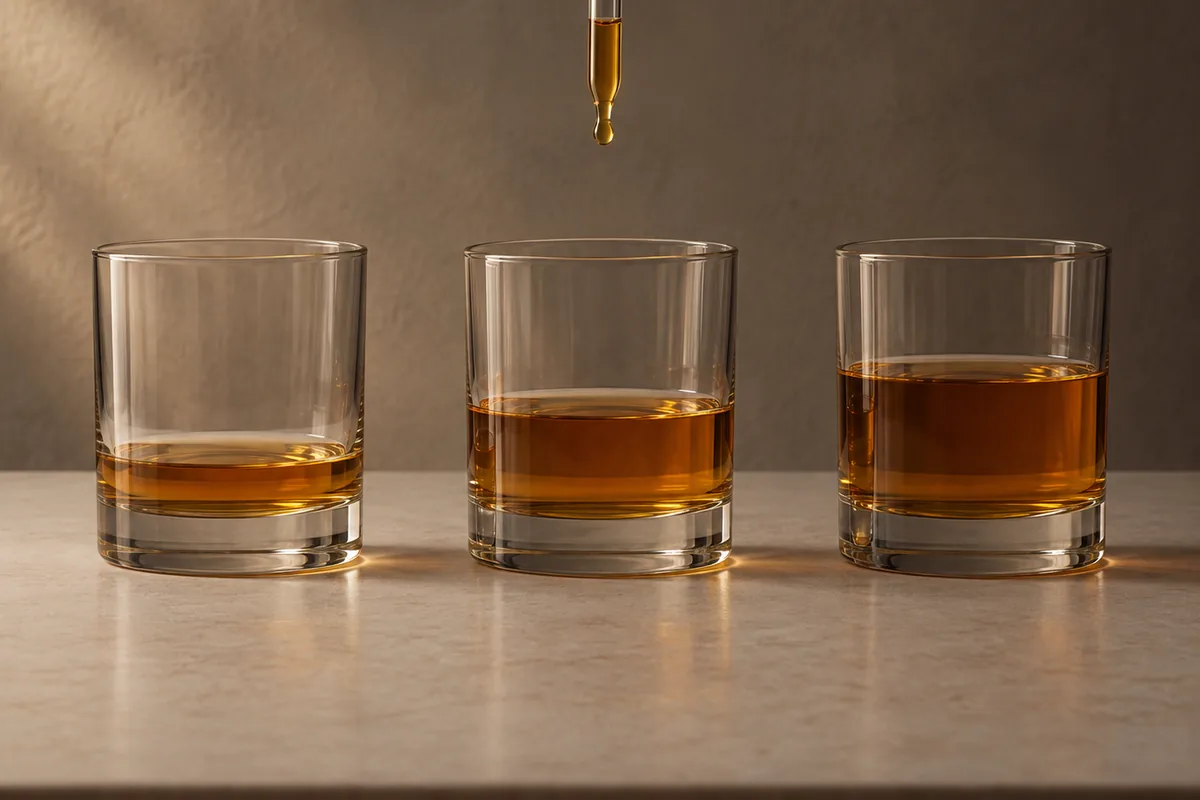
- Light and floral: begin neat at moderate room temperature and protect the glass from strong surrounding smells.
- Rich or cask-forward: allow time in the glass, then test small water additions against tannin and alcohol heat.
- Peated: compare smoke with fruit, malt, sweetness, and oak rather than treating smoke intensity as quality.
- High strength: measure both the pour and dilution because sensory softness does not remove alcohol.
Ice is a service choice, not an error. It chills and dilutes over time, which may make a strong whisky easier to drink while muting delicate aromas that a tasting comparison is trying to detect.
Which foods pair with Highland whisky?
Pair from the bottle's sensory profile, not the breadth of the Highland region.
A light orchard-fruit whisky and a dense wine-cask expression need different food intensity, because the regional word they share says nothing about intensity.
| Whisky cue | Food direction | Balance to watch |
|---|---|---|
| Apple, pear, floral | Fresh cheese, roast poultry, shellfish, or oat biscuits | Heavy smoke or sugar can cover delicate aroma |
| Honey, malt, vanilla | Roast root vegetables, nuts, mild hard cheese, or shortbread | A very sweet dish can flatten malt detail |
| Dried fruit and tannin | Aged cheese, roast meat, mushroom, or dark chocolate | Match richness without stacking bitterness |
| Peat or smoke | Smoked fish, charred vegetables, or savoury cheese | Strong chilli can magnify alcohol heat |
Keep portions modest and provide water. Food may slow absorption for some people, but it does not cancel the alcohol already consumed or create a reliable safe-driving interval.
How should an opened bottle be stored?
Keep Highland whisky upright, tightly closed, and away from direct sun and sustained heat. Glass does not continue cask maturation, though oxygen exposure and volatile loss can gradually change aroma after opening.
A low fill level creates more headspace and brings in fresh air with each opening.
Transferring a small remainder to a clean, clearly labelled, compatible bottle can reduce headspace without mixing identities.
- Stable cupboard: limits light and temperature swings.
- Sound closure: reduces evaporation and foreign odours.
- Upright bottle: avoids long contact between spirit and cork or liner.
- Documented transfer: preserves the whisky's identity and ABV.
A failed closure, unknown refill, foreign matter, active pressure, or distinctly abnormal smell is a stronger discard signal than an expected gradual loss of aroma. Do not top up one bottle with another whisky to improve its fill level.
How does strength change the responsible-use decision?
Highland says nothing about the amount of alcohol in the glass. Serving volume and ABV determine alcohol quantity, and cask-strength whisky can contain much more alcohol than a 40 percent whisky at the same pour size.
A 40 percent Highland whisky reaches roughly one United States standard drink at about 1.5 fluid ounces, or 44 millilitres.
A higher-strength pour reaches that amount at a smaller volume, even if water or ice later reduces its concentration.
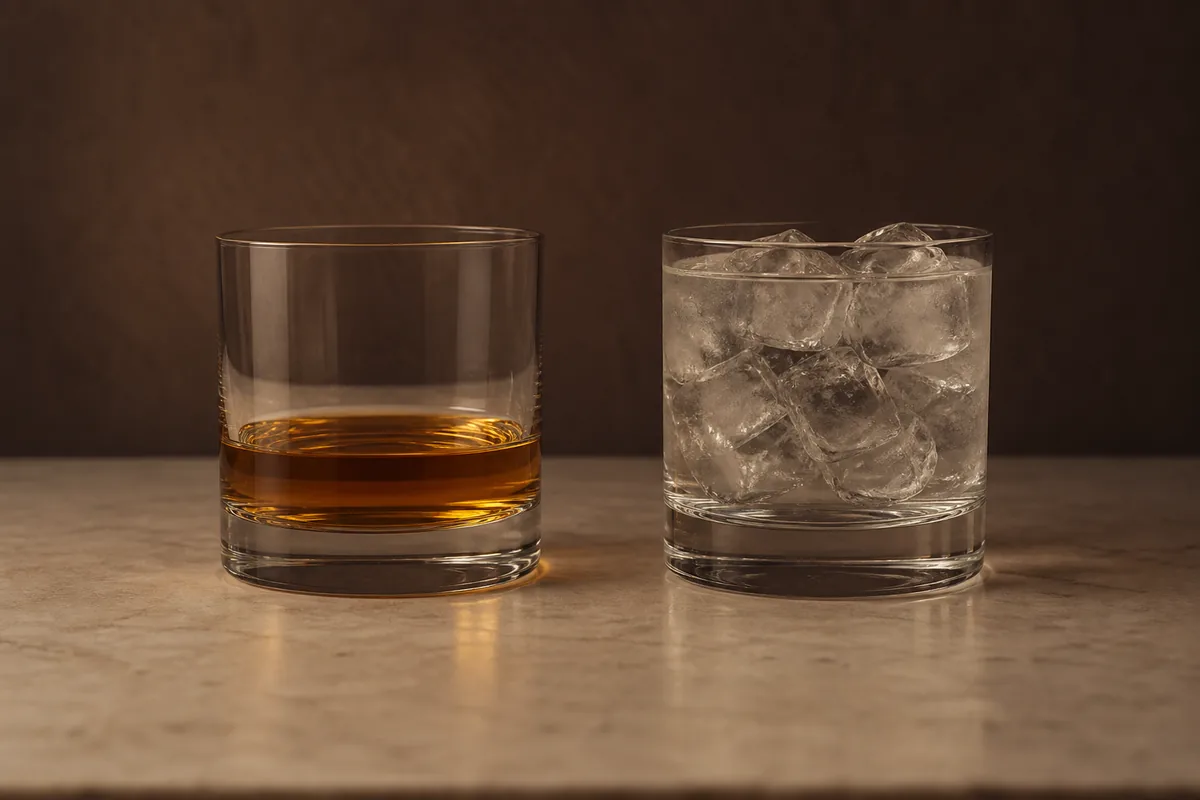
Measure the pour before dilution. Aroma, smoothness, food, water, coffee, or time in the glass cannot show that a person is unimpaired or safe to drive.
Pregnancy, interacting medicines, health conditions worsened by alcohol, legal-age restrictions, and safety-critical duties change the appropriate decision. An alcohol-free drink avoids relying on a regional name or tasting impression for personal risk.
The useful answer is therefore specific: Highland is a protected place term covering diverse Scotch whiskies. Category, distillery, production, cask, age, ABV, and the individual expression explain far more than a regional flavour stereotype.
Common questions
- Is all Highland whisky single malt?
- No. Highland identifies a protected region of distillation, while single malt, single grain and the blended descriptions are separate Scotch Whisky categories.
- Is Speyside part of the Highlands?
- Speyside lies in northern Scotland but is also a separately protected Scotch Whisky region defined through named wards. Geography and protected label classification answer different questions.
- Does Highland whisky have one typical flavour?
- No. Cask, peat, fermentation, stills, age and strength vary across a very large region. Highland establishes origin more reliably than a tasting profile.
Sources
-
Scotch Whisky Association, Distillery Map
Accessed 6 September 2026.
-
Scotch Whisky Association, Guidance for Bottlers and Producers 2025
Published 2025. Accessed 7 September 2026.
-
Scotch Whisky Association, Scotch Whisky Regions
Accessed 6 September 2026.
-
The Scotch Whisky Regulations 2009
Published 2009. Accessed 6 September 2026.
More in Spirits
-
 American single malt whisky
01
What is American single malt whisky, and what does it guarantee?
-
 Australian whisky
02
How is Australian whisky defined, and by which law?
-
 Black rum
03
What is black rum, and does the colour mean anything?
-
 Blended American whiskey
04
What is blended American whiskey, and how much of it is whiskey?
-
 Blended Irish whiskey
05
Blended Irish whiskey: which word counts the distilleries?
-
 Blended Scotch
06
Blended Scotch: what is in it, and why does the recipe change?