
Spirits
What is peated whisky, and what does PPM really mean?
Peated whisky is made with malt exposed to peat smoke. Volatile phenols can survive into the spirit, but PPM is a chemical concentration, not a guaranteed sensory score, and peat is not confined to Islay.
At a glance
- Legal category
- A production description rather than a standalone United States or Scotch whisky class. Any whisky designation and protected origin must satisfy their own rules.
- Minimum strength
- 40 percent ABV
What is peated whisky?
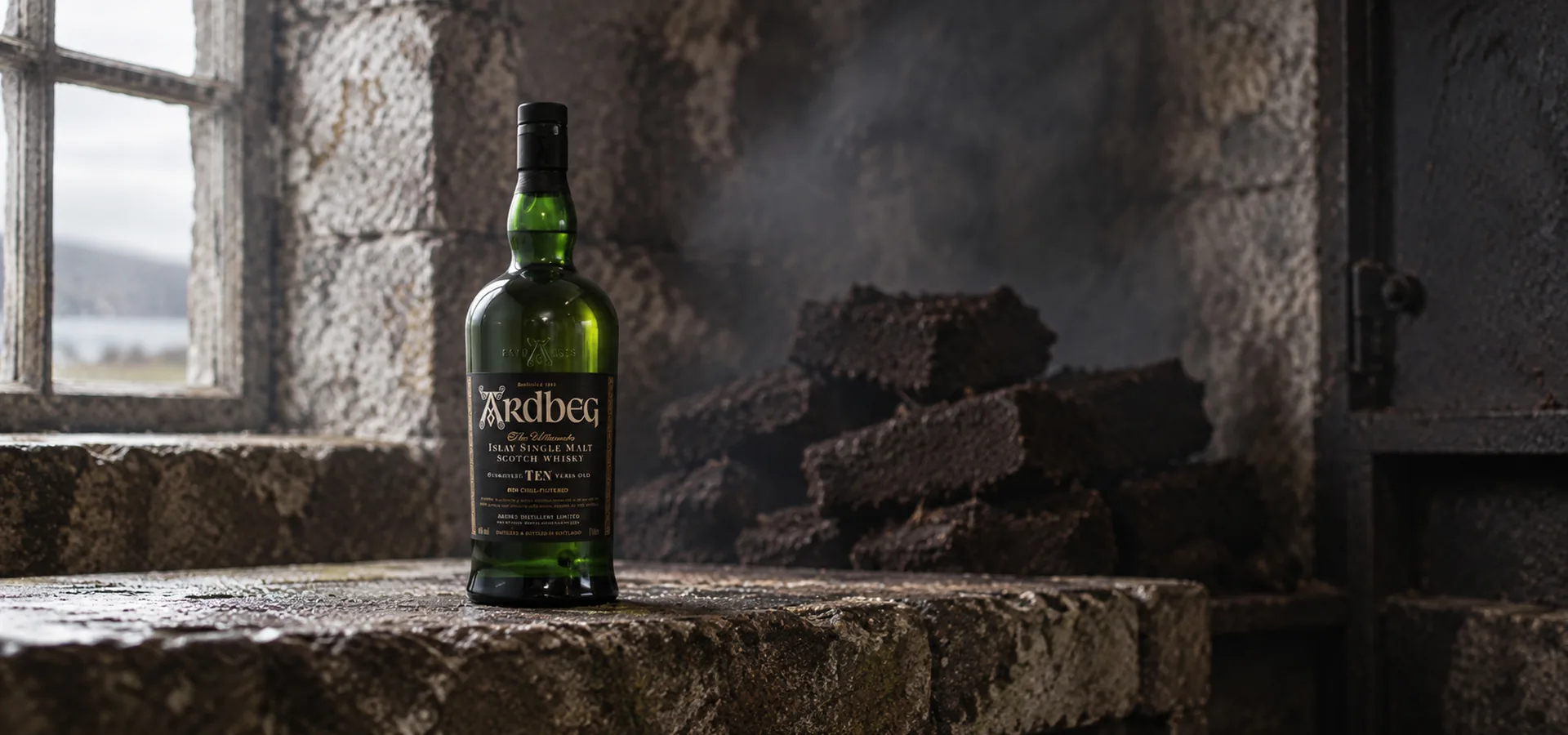
Peated whisky is whisky made with malt that has been exposed to smoke from burning peat.
The smoke deposits volatile compounds on the damp grain, and part of that chemical mixture survives into the distilled spirit.
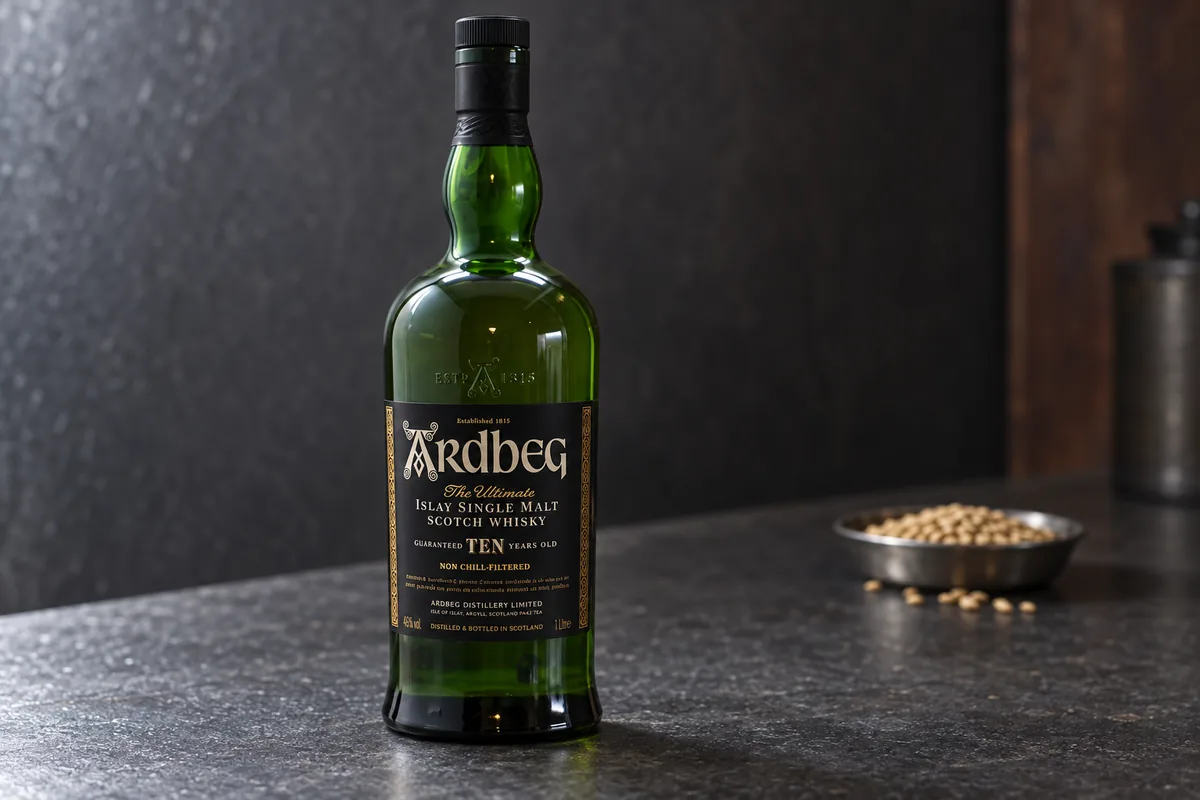
Peated is a production description, not a separate whisky class in United States or Scotch law. It also does not require an Islay origin, because peat can be used by distilleries in other Scottish regions and outside Scotland.
- Source
- Peat smoke contacting damp malt during drying
- Main marker family
- Volatile phenols, alongside other smoke compounds
- Legal status
- A process description, not a standalone class
- Geography
- Strongly associated with Islay, but not confined to it
The description does not set a minimum smoke level. A lightly smoky malt and an intensely medicinal one can both be peated, while a whisky from a famous peat-associated region may be made with unpeated malt.
Smoke reflects process, not a place stereotype.
Peat use belongs to malt preparation rather than to the later act of burning or smoking finished whisky.
The grain receives the smoke before mashing, so the resulting compounds travel through an ordinary whisky process rather than sitting as a surface flavour on mature spirit.
The term unpeated also needs care because background smoke compounds and shared equipment can complicate an absolute zero claim. In practical label language it normally means peat smoke was not deliberately used to dry that malt.
How peat smoke reaches the spirit
Peat forms from partially decomposed vegetation in wet, oxygen-poor ground.
When dried peat smoulders, its plant material breaks down into a complex smoke containing phenol, cresols, guaiacol, furfurals, hydrocarbons, and many other volatile compounds.
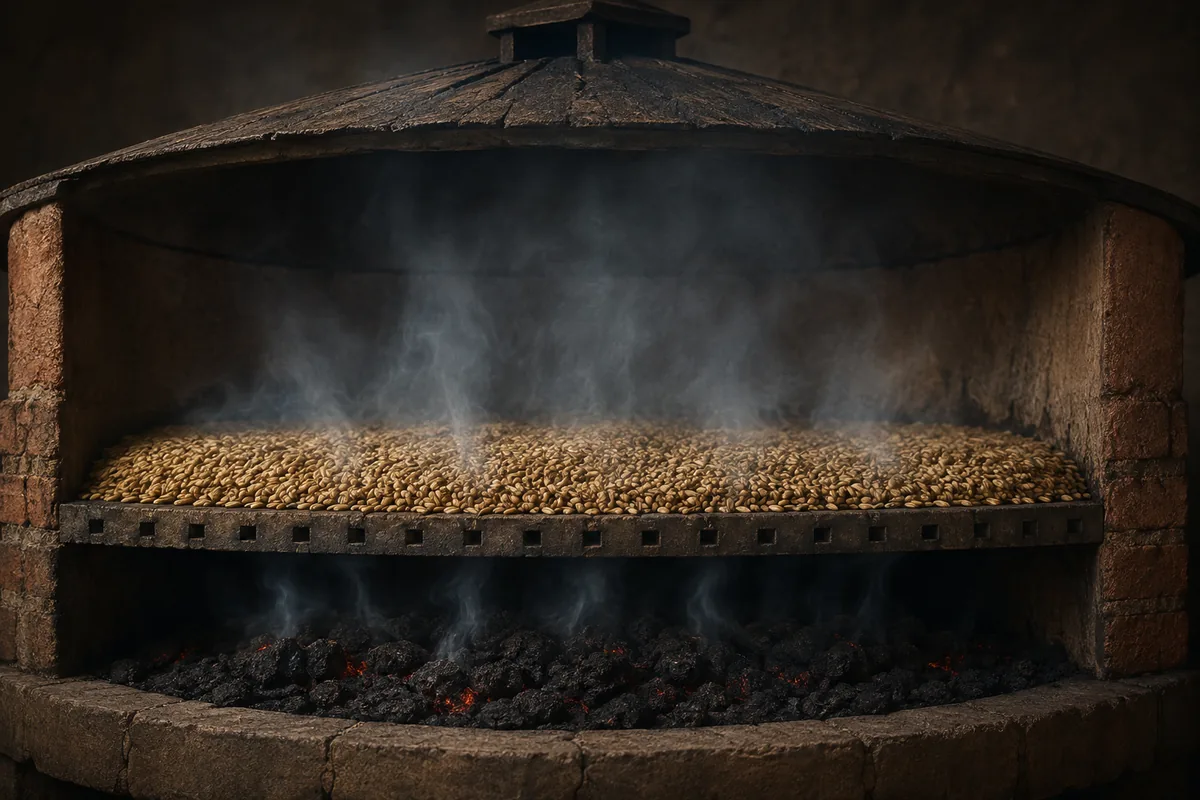
Damp malt presents a surface on which that smoke can condense and adsorb. Moisture, airflow, peat combustion, exposure time, and the point in kilning all affect how much and what kind of smoke material reaches the grain.
- Smoulder: peat combustion releases a changing mixture of volatile compounds.
- Deposit: smoke contacts damp malt and leaves phenolic and other material on the kernels.
- Process: mashing and fermentation retain, transform, or remove different parts of that mixture.
- Distil: volatile smoke compounds distribute across the run, and the retained cut selects a particular balance.
- Mature: evaporation, oxidation, oak extraction, and competing aromas alter how the smoke is perceived.
Not every compound travels with equal efficiency. Volatility, solubility, fermentation chemistry, still design, copper contact, and cut policy all change the mixture between smoked malt and new spirit.
This is why two distilleries using similarly specified malt can produce different smoke character.
The malt figure is only one input to a chain of separations and reactions.
Water and heat during mashing can extract smoke compounds differently, and fermentation changes the chemical environment before distillation. Some material remains with spent grain or stillage, while a volatile portion can move forward.
Distillation distributes volatile phenols across fractions rather than carrying every compound in the same proportion. A cut that retains heavier character can therefore alter the mature smoke profile even when the malt arrived with a familiar laboratory number.
What peat PPM actually measures
PPM means parts per million, a concentration unit.
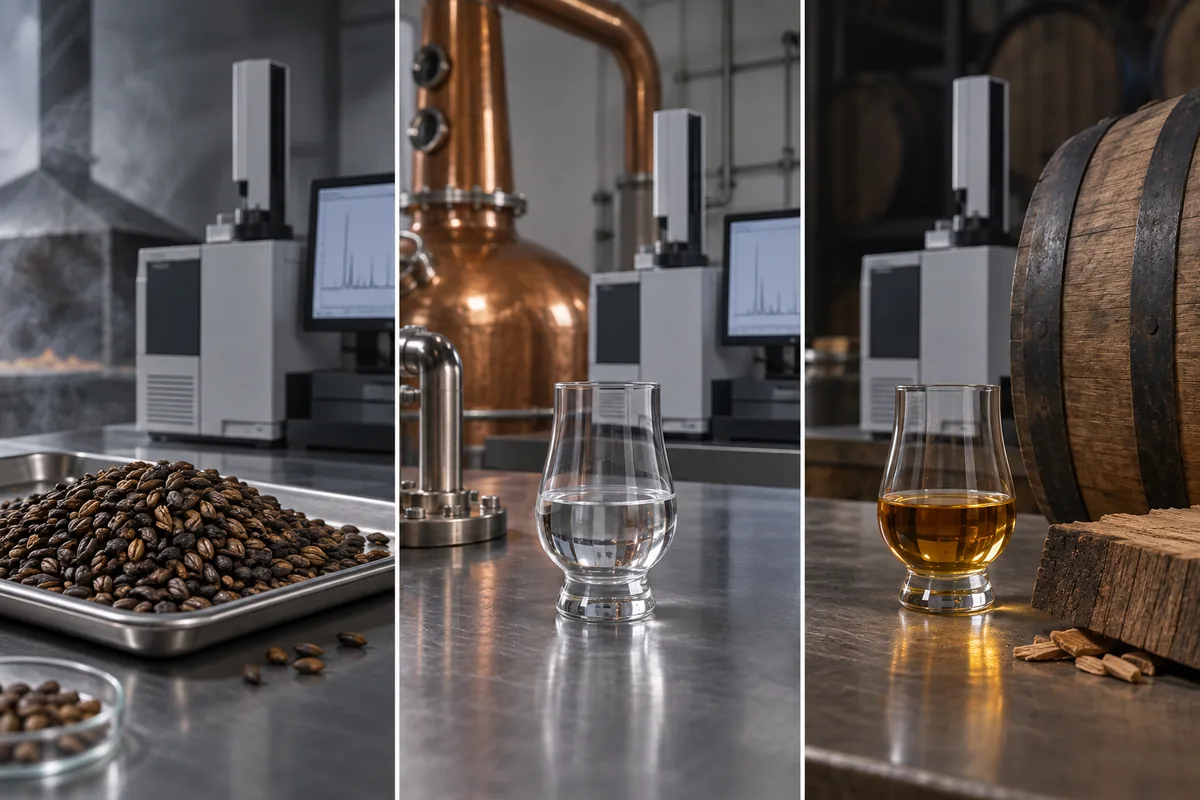
In whisky discussion it usually refers to measured phenolic material, but the quoted number may belong to malt before mashing, new spirit, or another sample point.
- Unit
- Parts per million
- Possible sample
- Malt, new spirit, or matured whisky
- What it reports
- A chemical concentration under a stated method
- What it cannot report alone
- How smoky a person will perceive the glass
A malt specification can be useful to a distillery because it helps control input from batch to batch. For a drinker comparing bottles, it becomes ambiguous when the label omits the sample, method, or stage.
Research on peated malt and whisky repeatedly finds that total phenol concentration does not map neatly onto perceived smoke intensity.
Individual compounds have different odour thresholds and sensory qualities, while ethanol, water, oak compounds, and other aromas alter the matrix in which they are perceived.
A higher PPM number is not a guaranteed smokier glass. Ask what was measured, at which stage, and by which method before treating two values as comparable.
Maturation complicates the comparison further. A filling specification can remain part of a brand description years after evaporation, oak extraction, and chemical change have altered the mature liquid.
Analytical methods also matter. A result based on a selected marker set, total phenol method, or chromatographic analysis may not count the same chemical space, so numbers from two sources need method context before comparison.
Human perception introduces adaptation. Repeated exposure to a smoky sample can make its most obvious note recede, revealing fruit or cereal underneath, while a fresh taster entering the room may notice smoke immediately.
The compounds behind different smoke aromas
Deki and Yoshimura identified phenol, ortho-cresol, and guaiacol among compounds formed by peat smoke, alongside a broader set of volatiles.
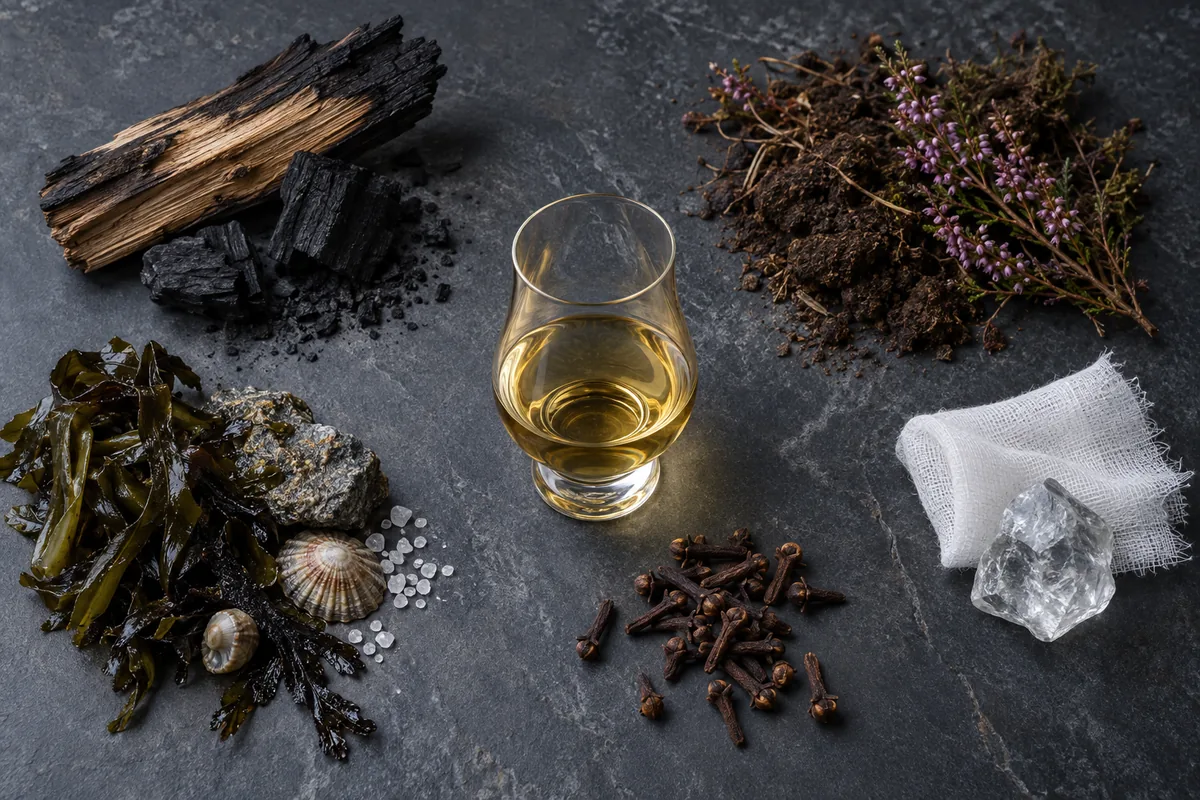
Later sensory research has identified multiple volatile phenols among key odorants in peated malt whisky.
| Compound family | Commonly associated direction | Important limit |
|---|---|---|
| Phenol | Phenolic, antiseptic, medicinal | Total phenol does not represent every smoke odorant |
| Cresols | Medicinal, tar-like, smoky | Isomers differ and aroma cannot identify one with certainty |
| Guaiacol and related methoxyphenols | Smoky, toasted, woody | Threshold and mixture change perception |
| Furfurals and other smoke volatiles | Toasted, sweet, burnt, warm | Many can also arise from heat and oak |
The descriptors overlap because aroma is a mixture rather than four isolated vials. A person may call the same integrated impression smoke, ash, hospital, tar, bonfire, earth, or toasted wood.
Aroma cannot prove a molecule. Chemical analysis can identify compounds, while sensory language records perception and is affected by concentration, context, and the person smelling.
The distinction matters when a note seems unpleasant. Sulphur, char, smoke, and medicinal phenols can overlap in ordinary language even though they arise through different mechanisms and respond differently to maturation.
Odour activity combines concentration with threshold, which is why a trace compound can matter more than a more abundant one.
Interactions among compounds can suppress, reinforce, or redirect the overall impression rather than adding as a simple total.
This is also why one person's medicinal can overlap another person's coastal, earthy, or burnt description. Vocabulary should preserve the observation without pretending that a word is an instrument reading.
Why peat source and process matter
Peat is not a uniform fuel.
Its botanical material changes by location, and composition can vary from fibrous upper layers to denser material cut deeper in the deposit.
Research has found that peat source and extraction depth affect composition. That finding supports variation, but it does not justify assigning a guaranteed flavour to one bog or reading peat origin from a finished glass.
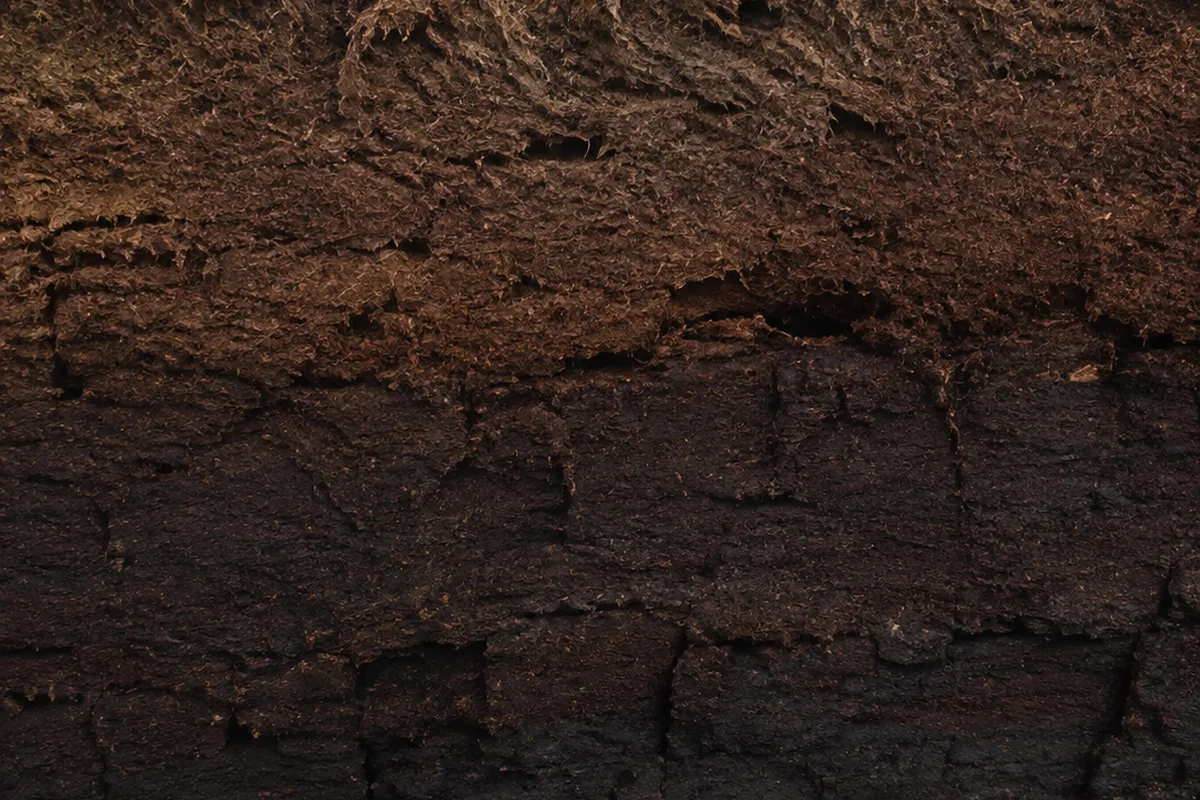
Combustion introduces another layer.
Temperature, oxygen, moisture, and whether peat smoulders or burns more openly change thermal breakdown and the resulting smoke.
Malt exposure then determines deposition. A smoke specification measured on grain combines the peat source with kiln conditions, malt moisture, timing, and laboratory method rather than reporting geography alone.
Peat origin is one production variable. It can matter without becoming a simple form of sensory terroir.
Drying sequence matters because peat smoke may be applied for only part of kilning, followed by cleaner hot air to finish reducing moisture.
The same nominal peat source can therefore meet malt at different moisture levels and for different durations.
Storage of peat and malt introduces further variation through moisture and batch handling. These variables are production evidence when documented, but none can be reliably recovered from a romantic image of a moor on a package.
Is peated whisky always from Islay?
No. Islay is a protected Scotch whisky locality and is famous for distilleries that use peated malt, but the regional name does not impose a peat requirement.
Some Islay spirit is unpeated or lightly peated, and peated whisky is produced as Highland whisky, Islands whisky, Indian whisky, Japanese whisky, Australian whisky, and in many other regions.
The technique travels more easily than the protected place name.
Region is not a smoke guarantee. Islay tells you where qualifying Scotch was distilled; a malt specification or producer statement is better evidence that peat smoke was used.
The reverse inference also fails. Smoke in a glass cannot establish protected Islay origin, because phenolic malt and other smoky production choices exist far beyond the island.
Regional climate, water supply, equipment, and cask practice can influence production, but none allows a reader to work backward from one aroma to a protected origin.
Read the stated region as origin and the peat claim as process.
Islay itself contains varied coastlines, soils, equipment, malt sourcing, fermentation systems, still shapes, casks, and production aims. Regional identity is real without requiring every distillery to deliver one medicinal template.
A non-Islay peated whisky does not imitate the protected origin merely by using smoke. It can share a technique while its legal identity, water, malt specification, equipment, climate, and maturation remain its own.
How the cask changes smoke perception
Smoke compounds enter the cask as part of new spirit, then maturation changes the whole mixture.
Some volatile material is lost through evaporation, some reacts, and some becomes less prominent because oak-derived aromas grow around it.
Vanilla, coconut, toast, spice, and tannin can frame smoke from fresh oak or former bourbon casks. Former sherry or other wine casks may add dried fruit, nutty, or wine-led notes that create a different contrast.
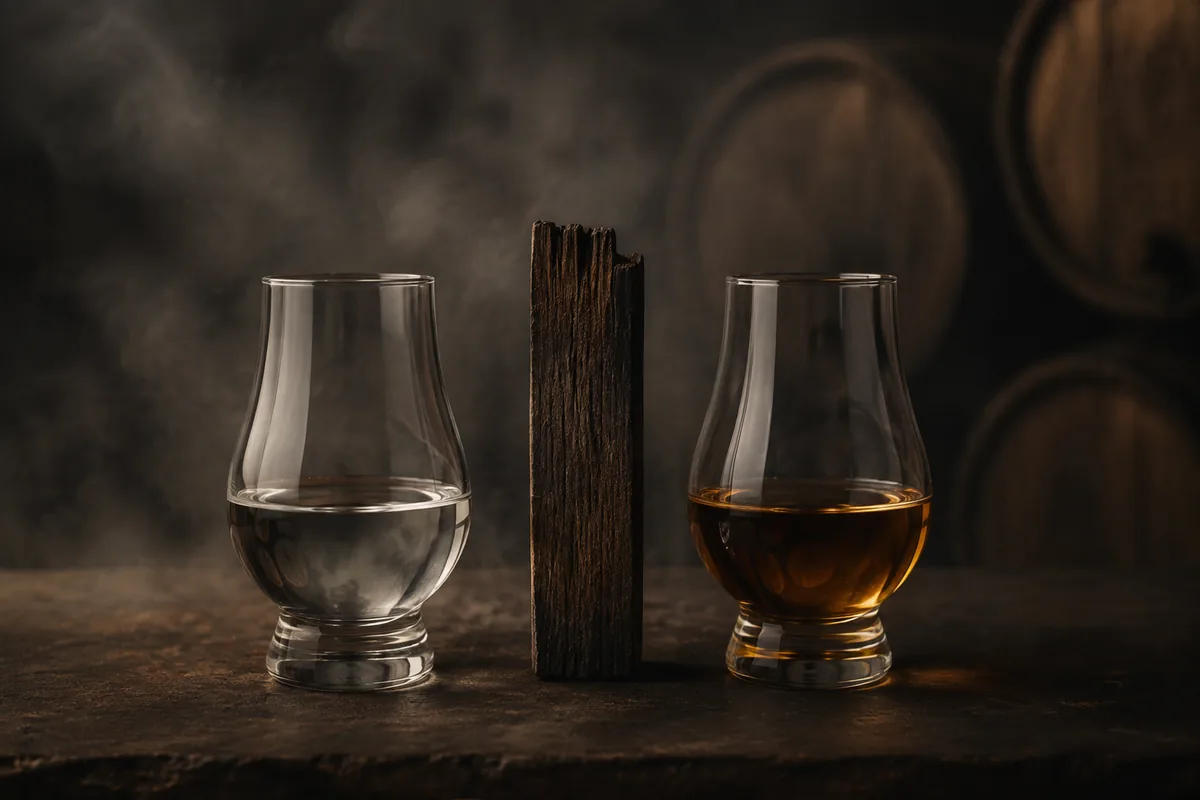
A mature whisky that seems gently smoky may have begun with substantial phenolic material, while a younger or differently composed spirit can present smoke more directly.
There is no reliable fixed percentage by which peat falls each year.
Strength changes perception too. Ethanol affects volatility and trigeminal heat, so the same whisky at cask strength and after dilution may reveal different parts of its smoke profile.
Colour remains unhelpful as a measure. Oak, previous cask contents, and permitted caramel can alter appearance without reporting how much peat smoke reached the malt.
Refill casks may impose less fresh oak, allowing smoke and distillery character to remain exposed, while an active wine cask can create a stronger fruit-and-smoke contrast.
Neither outcome proves a better match because integration depends on spirit and time.
A whisky's age statement reports elapsed maturation under its rule and says nothing direct about the original phenol specification. An older number and a lower smoke impression can coincide, but age alone does not quantify the cause.
How to taste and serve peated whisky
Begin with a modest pour in a clean glass and smell from above the rim in short passes.

Smoke can dominate attention, so deliberately look for cereal, fruit, fermentation, texture, and oak before deciding that the whisky has only one dimension.
- Hold conditions steady. Use similar glasses, pour sizes, and temperatures when comparing peated and unpeated whisky.
- Record before adding water. A baseline makes the change from dilution observable.
- Add water in small steps. It changes concentration and volatility but does not remove alcohol.
- Match food intensity. Smoked fish, roast meat, mature cheese, dark chocolate, or charred vegetables may stand beside smoke, while delicate food can disappear.
Pairing is about balance rather than an approved list. Salt, fat, sweetness, bitterness, char, and aroma intensity can either contrast with the whisky or stack on top of it.
For peated whisky storage, stand the bottle vertically with a sound closure and keep it out of sunlight and heating cycles. Growing headspace may gradually change aroma, but smoke does not create a special preservation rule.
Alcohol risk is the same kind of risk carried by other whisky at the same strength and pour size.
Peat aroma does not reduce impairment, and a smoky glass can still contain more than one standard drink when it is strong or generously poured.
Use PPM as a documented production clue and the glass as a sensory observation. Neither should be asked to do the other's job.
Common questions
- Is peated whisky always from Islay?
- No. Islay is strongly associated with peat, but its regional name does not require peated malt, and distilleries in many other places make peated whisky.
- Does higher PPM mean smokier whisky?
- Not reliably. The sample point, analytical method, compound mixture, odour thresholds, maturation, strength, and the drinker all affect perceived smoke.
- Does peat flavour fade in a cask?
- Maturation changes the concentration and balance of smoke-derived compounds, while oak adds competing aromas. There is no universal fixed fading rate.
Sources
-
Bathgate (2019), The influence of malt and wort processing on spirit character: the lost styles of Scotch malt whisky
Accessed 10 September 2026.
-
Deki and Yoshimura, Formation of Flavor Substances by Peat Smoke
Accessed 7 September 2026.
-
Harrison, Priest (2009), Composition of Peats Used in the Preparation of Malt for Scotch Whisky Production, Influence of Geographical Source and Extraction Depth
Accessed 10 September 2026.
-
Jeleń, Majcher, Szwengiel (2019), Key odorants in peated malt whisky and its differentiation from other whisky types using profiling of flavor and volatile compounds
Accessed 10 September 2026.
-
Scotch Whisky Technical File, June 2019, the gov.uk product specification for the Scotch Whisky geographical indication, quoting the Scotch Whisky Regulations 2009 regulation 3
Accessed 4 September 2026.
-
What is a standard drink?
Accessed 7 September 2026.
More in Spirits
-
 American single malt whisky
01
What is American single malt whisky, and what does it guarantee?
-
 Australian whisky
02
How is Australian whisky defined, and by which law?
-
 Black rum
03
What is black rum, and does the colour mean anything?
-
 Blended American whiskey
04
What is blended American whiskey, and how much of it is whiskey?
-
 Blended Irish whiskey
05
Blended Irish whiskey: which word counts the distilleries?
-
 Blended Scotch
06
Blended Scotch: what is in it, and why does the recipe change?