
Spirits
What Is Islay Whisky, and Does It Have to Be Peated?
Islay whisky is Scotch Whisky distilled in the protected Isle of Islay locality. The name guarantees origin, while peat smoke, still character, cask history and flavour vary by distillery and release.
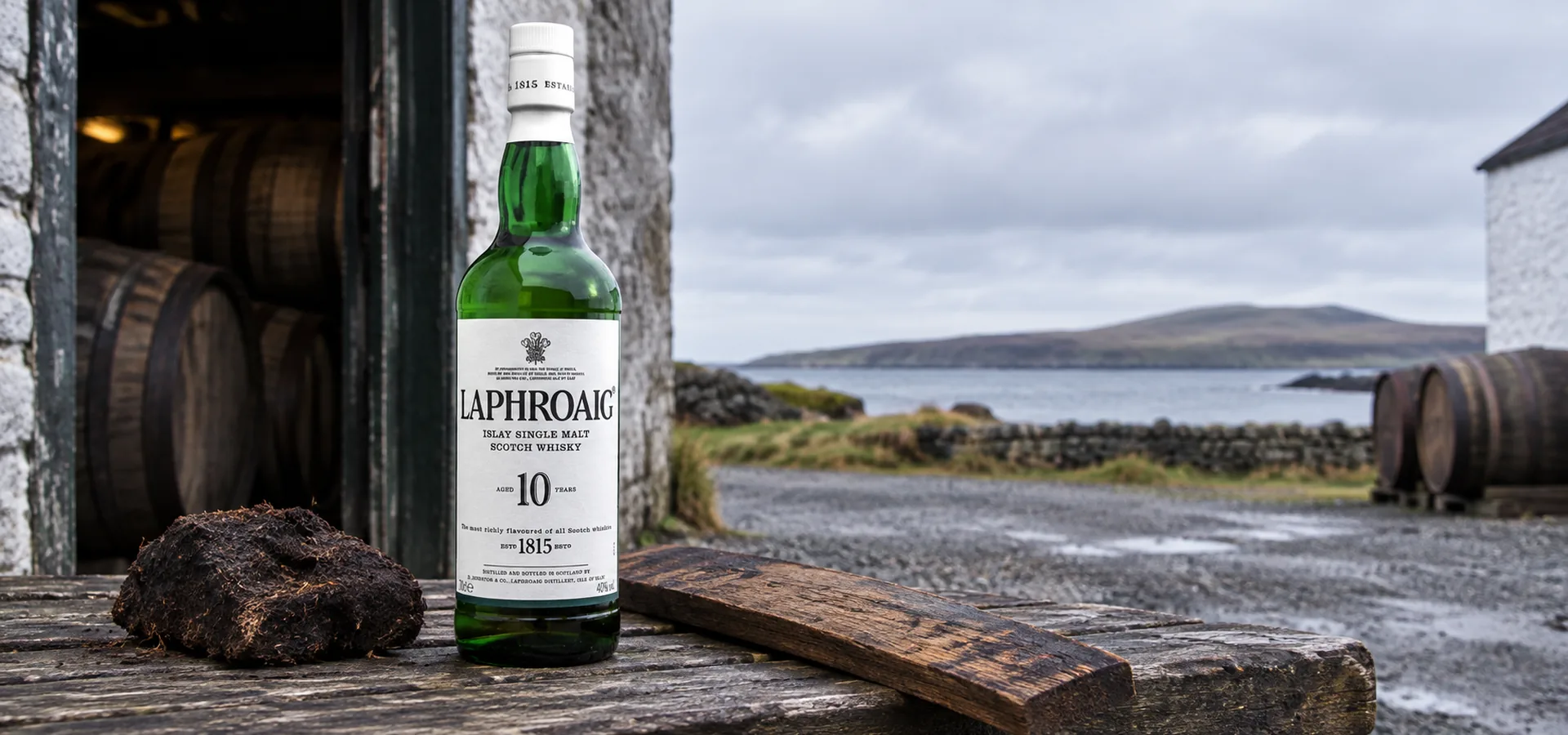
At a glance
- Legal category
- Islay, a protected locality of the Scotch Whisky geographical indication under regulation 10 of the Scotch Whisky Regulations 2009.
- Minimum strength
- 40 percent ABV
- Also called
- Islay Scotch whisky, Islay single malt, Islay malt whisky
- Protected place
- The Isle of Islay is a protected Scotch Whisky locality
- Peat rule
- Peat smoke is common but not legally required
- Scotch category
- The bottle still needs a legal Scotch description
- Minimum maturation
- 3 years in Scotland in oak casks up to 700 litres
- Best evidence
- Read category, producer, peat, cask, age and ABV together
What does Islay whisky mean?
Islay whisky identifies protected origin: it is Scotch Whisky distilled on the Isle of Islay under the geographic rules for that locality. The name does not create a separate composition category, so the bottle must still say whether the whisky is single malt, single grain, blended malt, blended grain or blended Scotch.
The legal value of Islay is precise. It tells you where distillation occurred, while the Scotch category explains how the whisky is constructed.
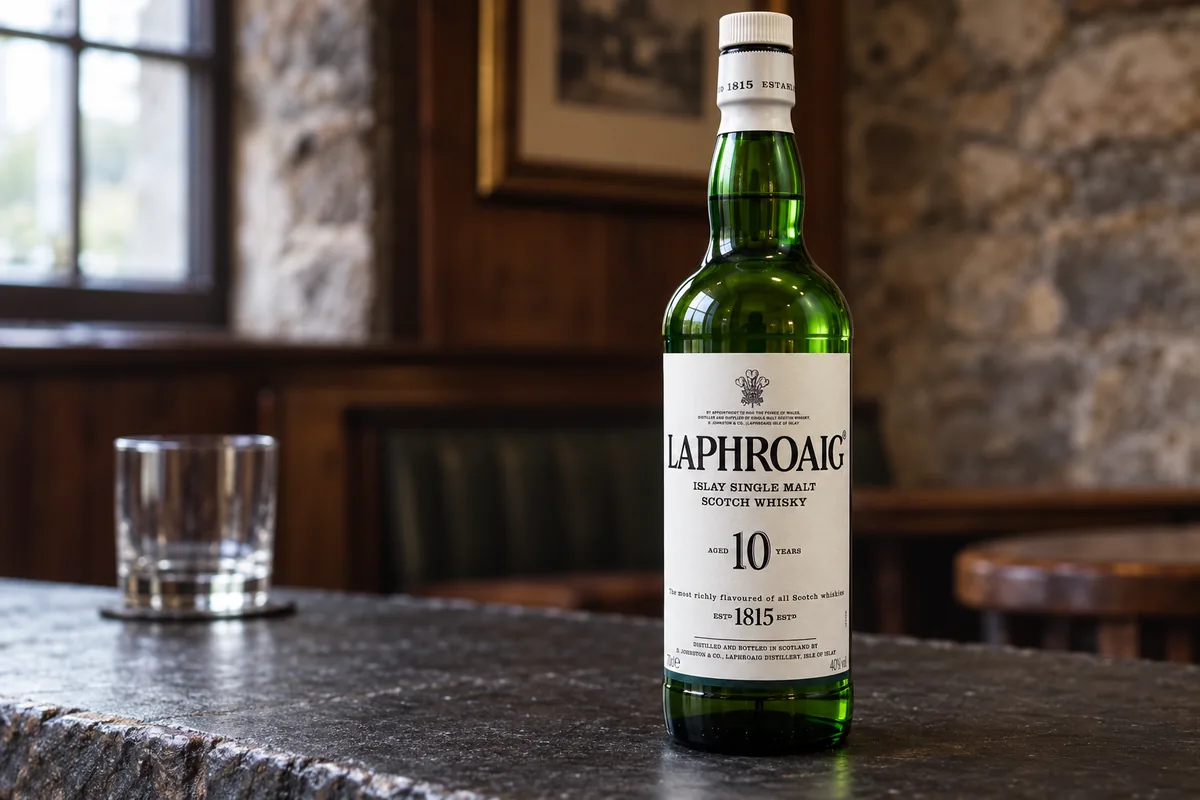
Origin is the guarantee. Peat level, still design, fermentation, cask history, age beyond the minimum and flavour remain bottle-level questions.
Islay's reputation is unusually strong because several distilleries make recognisably smoky whisky, often with medicinal, earthy or maritime associations.
A reputation built from real examples can still become misleading when it is treated as a rule for every release.
Some Islay spirit is lightly peated or unpeated, and one distillery can make more than one style. The island name therefore narrows geography far more reliably than it narrows taste.
That distinction makes the term more useful, not less. Start with the protected place, then add category, producer, peat statement, cask information, age and ABV until the individual bottle comes into focus.
Where does the protected Islay name apply?
The protected Islay boundary covers one island in Argyll, and it separates a statutory locality claim from the informal Islands shelf grouping. Regulation 10 of the Scotch Whisky Regulations names Islay as a protected locality comprising the Isle of Islay in Argyll.
It is listed separately from the protected regions Highland, Lowland and Speyside, and separately from the Campbeltown locality.
This wording matters because the common plural term Islands is not another protected region.
Islay may appear on a qualifying label because it names a defined place of distillation, while an Islands shelf heading works only as informal orientation.
- Defined landform
- The locality is the Isle of Islay, not every Scottish island and not the surrounding sea.
- Protected use
- The geographic wording must not falsely suggest that whisky was distilled on Islay.
- Separate identity
- Islay is distinct from the informal Islands grouping used by retailers and writers.
- Label consequence
- A qualifying bottle pairs the place with a legal Scotch description such as Single Malt Scotch Whisky.
A distillery's warehouses, water source and coastal setting can all matter to its story, but the protected claim begins with the distillation site. Barley does not have to be grown on Islay for the whisky to carry the locality name.
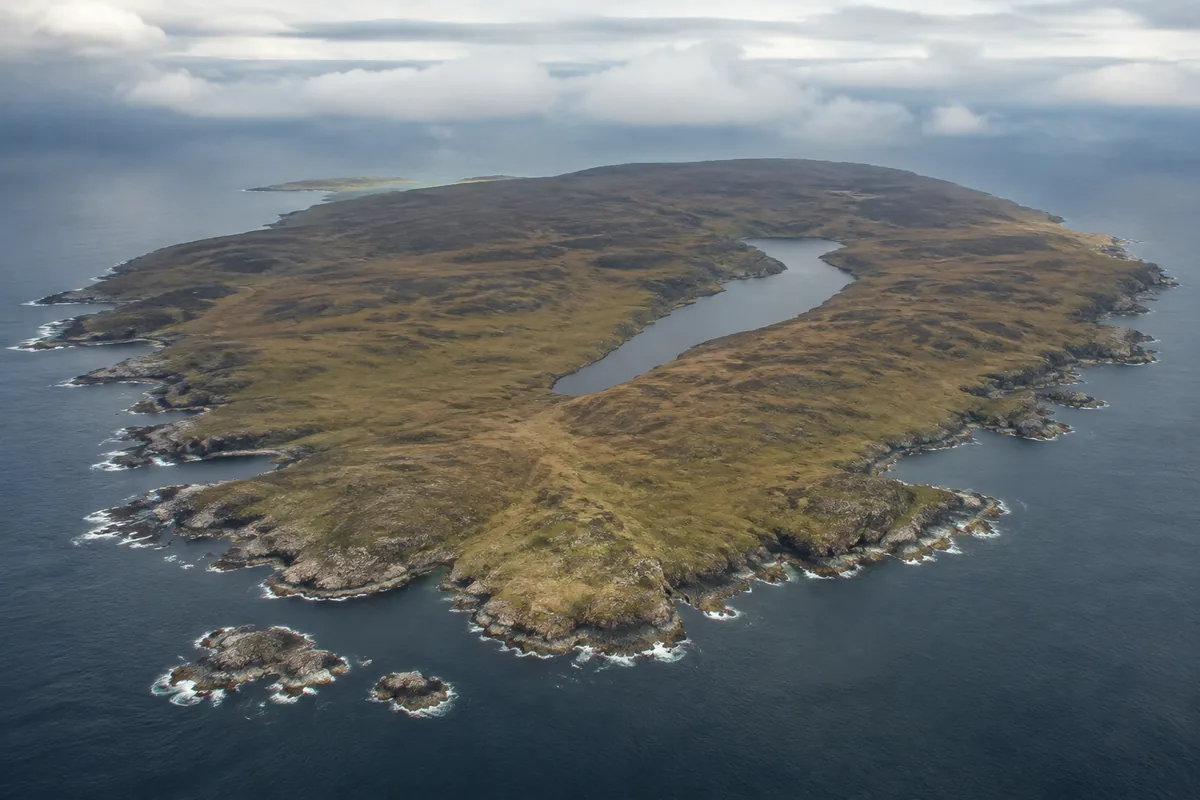
The boundary is geographic rather than sensory.
A still house near the shore and one farther inland remain Islay distilleries if both lie within the locality, even when their equipment and spirit character differ.
For a reader comparing labels, the safe interpretation is literal: Islay answers where; Single Malt or another category answers what. Neither line replaces the other.
What rules must every Islay Scotch meet?
National Scotch production and maturation rules apply before locality claims. Before the locality can matter, the liquid must qualify as Scotch Whisky.
Production begins in Scotland with water and malted barley, with whole grains of other cereals allowed where the category permits them.
Saccharification, fermentation and distillation occur at a Scottish distillery, and the distillate must come off below 94.8% ABV. That ceiling preserves character derived from the materials and production method rather than allowing a nearly neutral spirit to carry the name.
- Distillation ceiling
- Below 94.8% ABV
- Minimum maturation
- 3 years in Scotland
- Maximum oak cask
- 700 litres
- Minimum bottle strength
- 40% ABV
- Permitted additions
- Water and plain caramel colouring
Maturation must take place in Scotland in oak casks no larger than 700 litres for at least three years.
The age statement on a Scotch, when present, refers to the youngest whisky represented by that number.
Scotch may be bottled only at 40% ABV or above, and only water and plain caramel colouring may be added under the basic definition. Caramel can adjust appearance, which is why darkness cannot prove old age, heavy peat or an especially active cask.
Islay adds protected origin, not a second recipe. It does not alter the national maturation minimum or make single malt the only possible Scotch category associated with the island.
The common legal baseline gives every qualifying bottle a shared identity. The flavour range begins in the choices that the rules intentionally leave open.
Does Islay whisky have to be peated?
Peat is optional. No legal rule requires Islay whisky to taste smoky.
Peat character begins when a producer uses peat smoke while drying malted barley, and that choice can range from none to prolonged exposure.
Smoke deposits phenolic compounds on the malt before mashing and fermentation. Distillation then selects and reshapes those compounds, while years in cask can soften, integrate or redirect what a drinker eventually perceives.
| Evidence | What it supports | What it cannot prove |
|---|---|---|
| Peated malt | Peat smoke was used during malt drying | The final intensity in every bottle |
| Malt phenol figure | A specification measured at the malt stage | An identical concentration after distillation and ageing |
| Islay origin | Distillation on the protected island | Any minimum smoke level |
| Dark colour | Visible appearance affected by cask and possible caramel | Peat, age or quality |
A distillery may order malt to several peat specifications or schedule unpeated runs for particular releases.
Differences can also come from where cuts are made, how much copper contact occurs and which casks enter the final vatting.
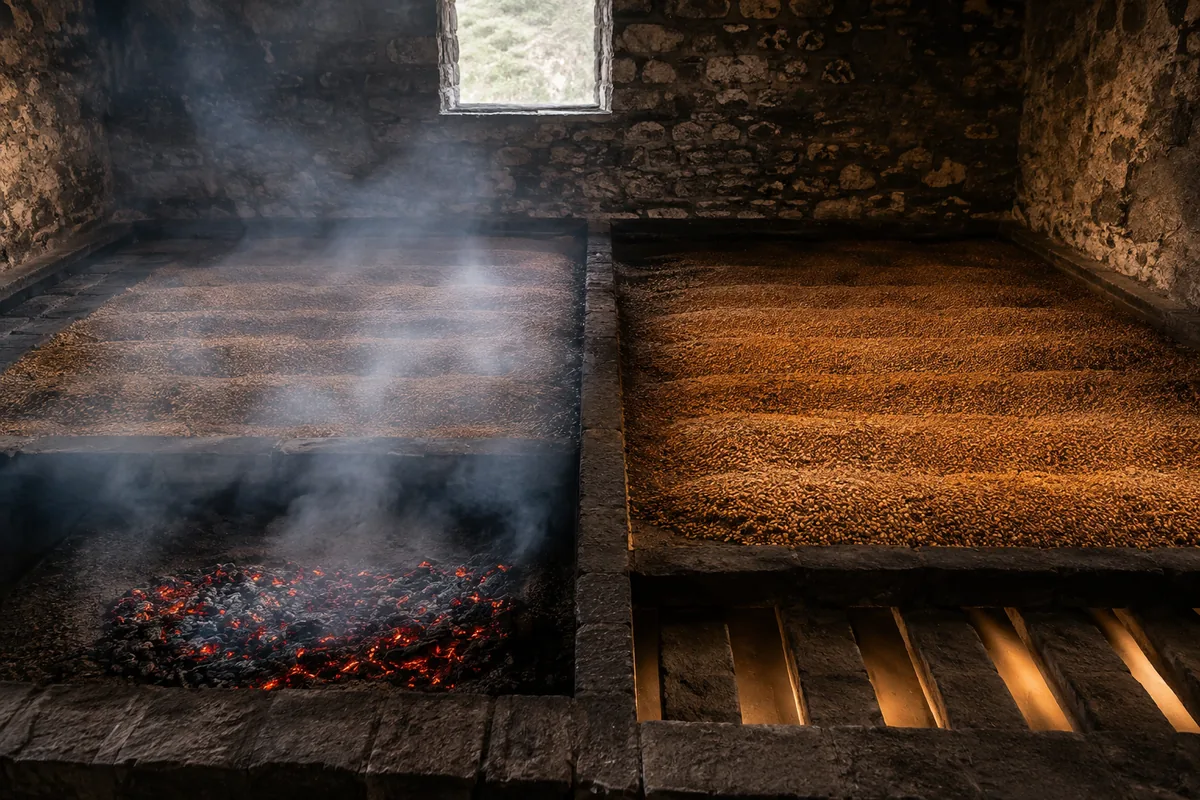
Descriptions such as medicinal, iodine-like, earthy, ashy or tarry are sensory associations rather than legal categories. People can disagree about them even when they taste the same measured sample.
If smoke is central to your decision, look for a precise producer statement and treat the first taste as a check rather than confirmation. Islay suggests the question; the bottle supplies the useful evidence.
How do fermentation and stills shape Islay spirit?
Mash composition begins a sequence that later distillation can only select. Malted barley is milled and mashed so water can dissolve fermentable sugars.
Wort clarity and extraction choices affect the material that reaches fermentation, including cereal solids and compounds that may later influence weight and aroma.
Yeast converts sugar to alcohol and creates fruit, floral, cereal, sulphur and acid-derived aroma precursors. Fermentation time, temperature, vessel conditions and the distillery's handling of bacterial activity can shift that starting mixture.
- Build the wort. Milling, water and mash separation determine the fermentable liquid.
- Ferment the wash. Yeast makes alcohol and a broad field of aroma-active compounds.
- Separate in copper. Pot still shape, heat, reflux and condenser design influence which compounds continue.
- Select the cut. The distiller separates early, middle and late fractions to define the usable new make.
Single malt Scotch is distilled in pot stills at one distillery, but pot stills are not interchangeable.
A taller neck and greater reflux can favour lighter vapours, while different shapes and operating choices can carry more weight into the spirit.
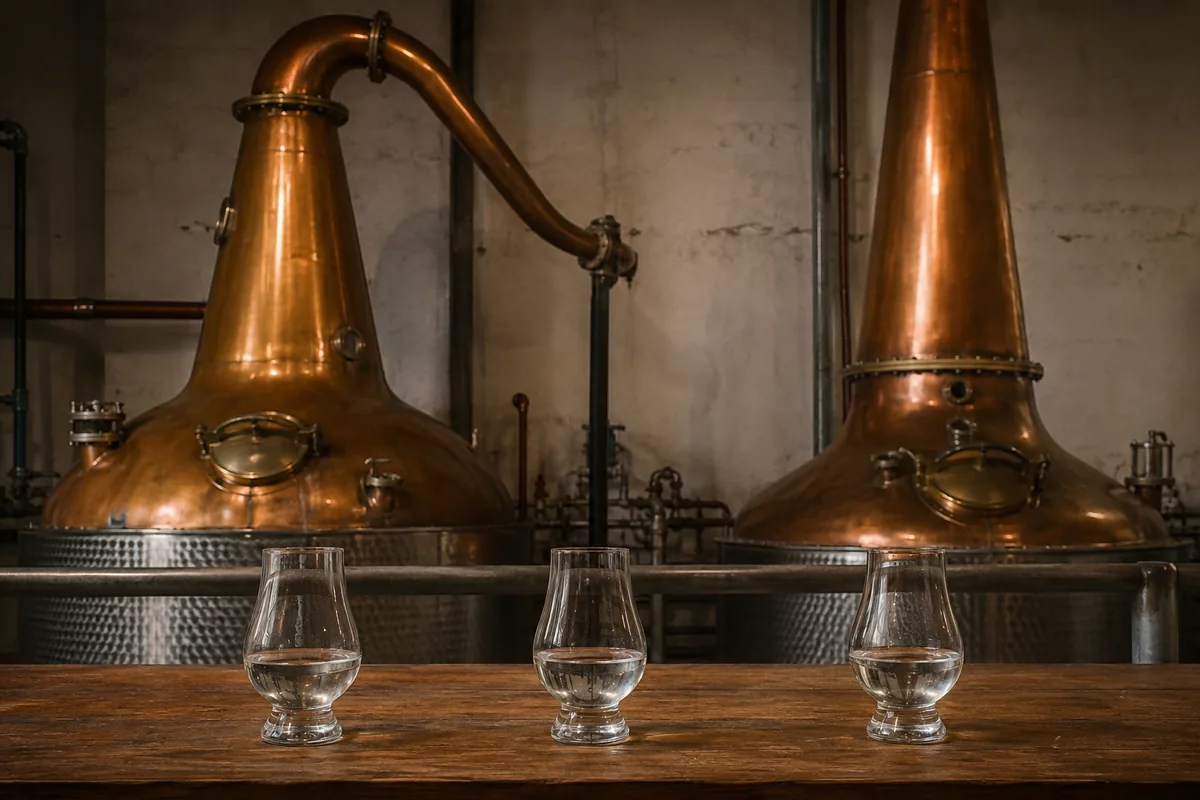
Condenser type changes copper contact and cooling, while fill level and distillation speed can change reflux. None of these variables acts alone, so a photograph of one still cannot predict the final whisky.
The resulting new make may lean clean and citrus-led, oily and cereal-rich, smoky and medicinal, or somewhere between. Casks then transform that spirit for years before it reaches the bottle.
Why do casks change the Islay profile so much?
Oak changes the maturing spirit slowly through extraction and oxidation, while its previous contents continue to influence aroma, colour, texture and taste. Maturation extracts colour, vanillin, spice, tannin and toasted compounds while oxygen and evaporation reshape the liquid.
The cask also carries a history from previous contents and earlier fills.
Ex-bourbon barrels often move whisky toward vanilla, coconut-like notes and gentle sweetness. Wine-seasoned casks can contribute dried fruit, nut, spice, acidity or tannin, depending on the wine, oak and seasoning history.
- First fill
- A cask's first Scotch fill after its previous use often delivers more active extraction.
- Refill
- Less aggressive wood can leave more fermentation, distillation and peat character visible.
- Finishing
- A later cask period overlays an existing maturation history rather than replacing it.
- Warehouse
- Temperature, airflow, humidity and cask position influence the pace of change.
- Time
- Longer is not automatically better because extraction and integration depend on the vessel.
- Vatting
- Several casks may be combined, so one named cask type may describe only part of the liquid.
A finish label needs exact reading.
The previous cask, duration, fill history and share of the vatting can matter more than the broad word sherry, wine or bourbon.
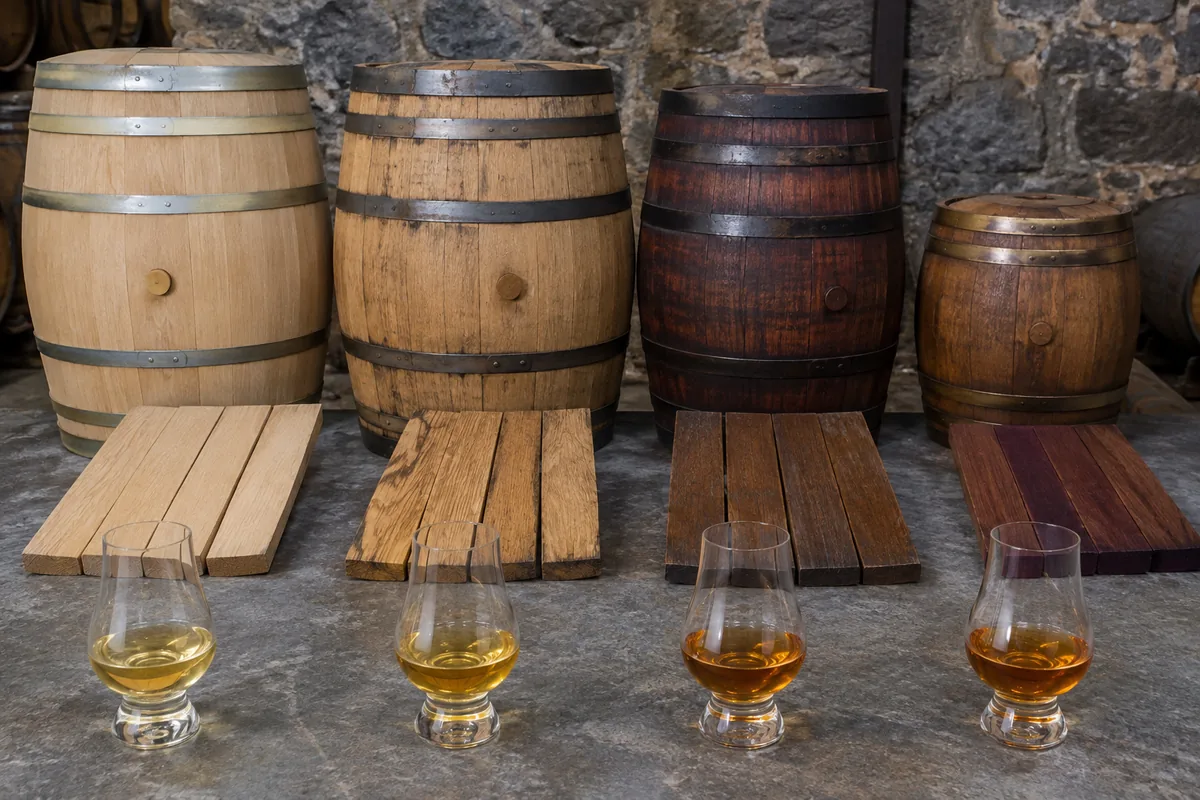
Colour is especially easy to overread. Active oak, wine seasoning, spirit-to-wood ratio, time and permitted plain caramel can all darken appearance without establishing an age or quality hierarchy.
Read the cask claim as a clue, not a recipe. Producer technical detail and a controlled tasting remain necessary when the maturation decision matters.
What flavours can Islay whisky show?
The sensory range found across Islay whisky releases is exceptionally broad. Islay whisky can be bright and citrus-led, cereal-rich, waxy, floral, fruity, smoky, medicinal, earthy or heavily cask-driven.
Several of those impressions can occur together, and their balance can change after rest or dilution.
The island's famous smoke vocabulary describes part of the range. It does not erase unpeated spirit, lighter distillery character or releases in which fruit and cask lead.
| Observed profile | Likely questions to ask | Do not assume |
|---|---|---|
| Light, cereal and citrus | Was the malt unpeated or lightly peated, and is the cask relatively quiet? | That the bottle is young or simple |
| Fruit and wax | How did fermentation, cut points and refill wood preserve spirit character? | That fruit came from one named cask |
| Smoke and medicine | What peat specification and distillation choices shaped the release? | That stronger smoke means higher quality |
| Dried fruit and tannin | Was wine-seasoned or active oak important in the vatting? | That dark colour proves old age |
Words such as briny or maritime should be used as tasting descriptions, not chemical explanations. Coastal air may affect warehouses, but perceiving salt does not prove that sea salt entered the spirit.
Alcohol concentration changes texture and aroma release. A cask-strength sample can initially present more heat or concentration, while measured water may reveal fruit, smoke or cereal notes that were harder to separate.
Describe what is in the glass before naming the region. Record aroma, taste, texture, development and finish, then compare your notes with the bottle's production information.
This sequence reduces expectation bias without pretending tasting is objective instrumentation. A useful note reports the conditions and the observation, not a universal verdict.
Which label clues matter more than the Islay name?
Read the regulated Scotch sales description before optional bottle claims because it states the product construction that the protected Islay name alone cannot establish. It carries the most information at first glance.
Single Malt Scotch Whisky identifies a different construction from blended malt or blended Scotch, even when every bottle in the group has an Islay connection.
- Read the full category. It establishes the Scotch construction before regional expectations enter.
- Confirm the named distillery or source. One island contains several production systems.
- Interpret age correctly. The number refers to the youngest whisky represented in the bottle.
- Parse cask language. Separate full maturation, finishing and vague flavour suggestions.
- Check colour and filtration claims. Their presence describes processing choices, not quality.
- Read the printed ABV. Strength changes both sensory concentration and alcohol per measured pour.
A peat statement may be more useful than a scenic coast on the package, but it still needs context. A malt specification, a producer descriptor and a tasting note answer different stages of the process.
No-age-statement whisky leaves exact age undisclosed; it does not say that the liquid only met the three-year minimum. Similarly, the absence of natural-colour or non-chill-filtered wording cannot prove that either intervention occurred.
Independent bottlings may provide cask numbers, dates, yields and strength, but specificity is not an automatic score. Check whether each fact changes the question you are trying to answer.
The strongest label reading moves from rules to choices. Category and protected origin come first, then age, cask, peat, processing disclosures and ABV.
How should you taste and serve Islay whisky?
Keep the first Islay tasting comparison controlled and repeatable. Use a clean tulip-shaped glass, a measured pour and a neutral room temperature.
Leave enough space above the liquid for aromas to collect, then follow a controlled tasting method and nose gently above the rim rather than inhaling deeply into concentrated alcohol vapour.
- Observe without decoding colour. Record hue and clarity, but do not convert darkness into age or peat.
- Nose in short passes. Look for cereal, fruit, smoke, wood and sulphur before reaching for regional words.
- Taste a small amount. Note sweetness, acidity, bitterness, texture and the order of the finish.
- Add water in a recorded amount. Compare the same sample before and after dilution.
- Choose the final serve. Neat, diluted, chilled or mixed can each suit a different goal.
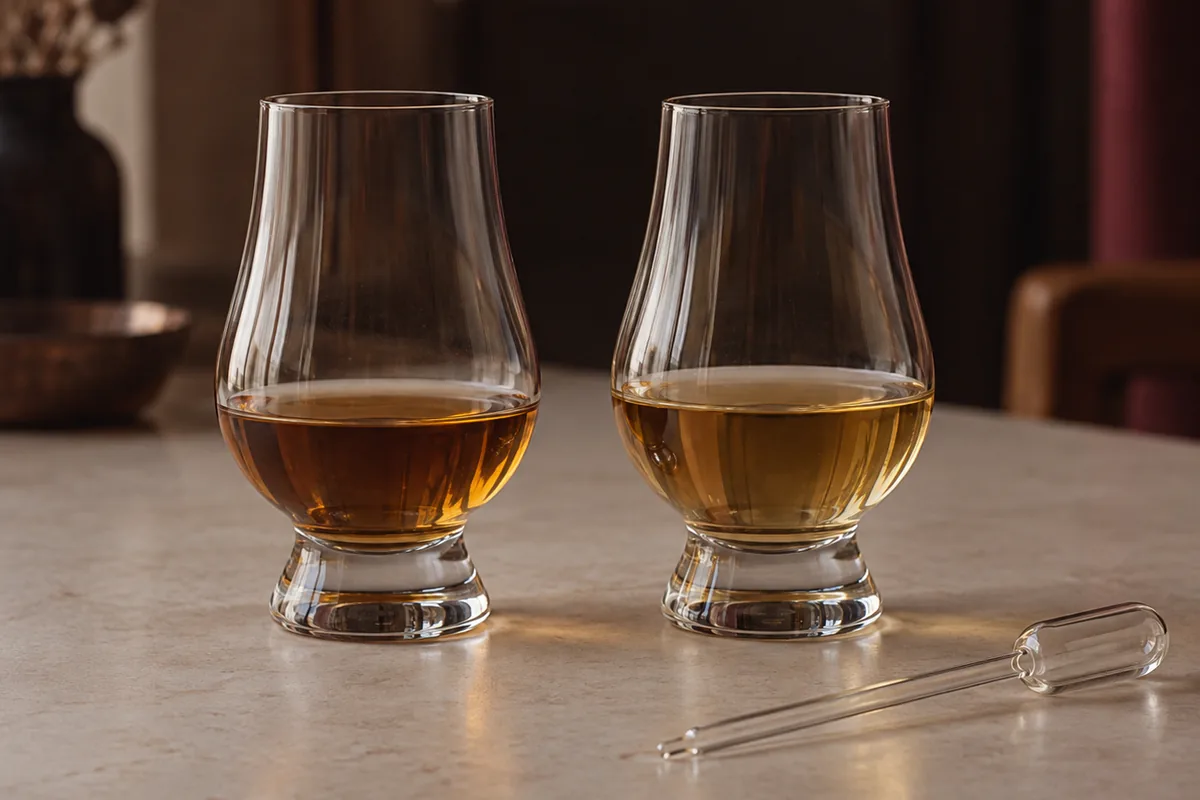
Water changes concentration and volatility; it does not simply open every whisky in the same way. Add a few measured drops, pause and observe before adding more.
Ice lowers temperature and releases dilution over time. That can soften alcohol heat while muting delicate aromas, so it creates a different service condition rather than a tasting error.
Strong smoke can linger in the glass and on the palate. When comparing several samples, begin with lighter or unpeated whisky and keep water available so the first smoky pour does not dominate every later one.
Sensory softness is not an alcohol measure. Peat, water, food, age and familiarity cannot show that a person is unimpaired or safe to drive.
The useful method is reproducible but not ceremonial. Measure what changes, keep the setting stable and let the bottle rather than Islay's reputation determine the result.
Which foods suit different Islay styles?
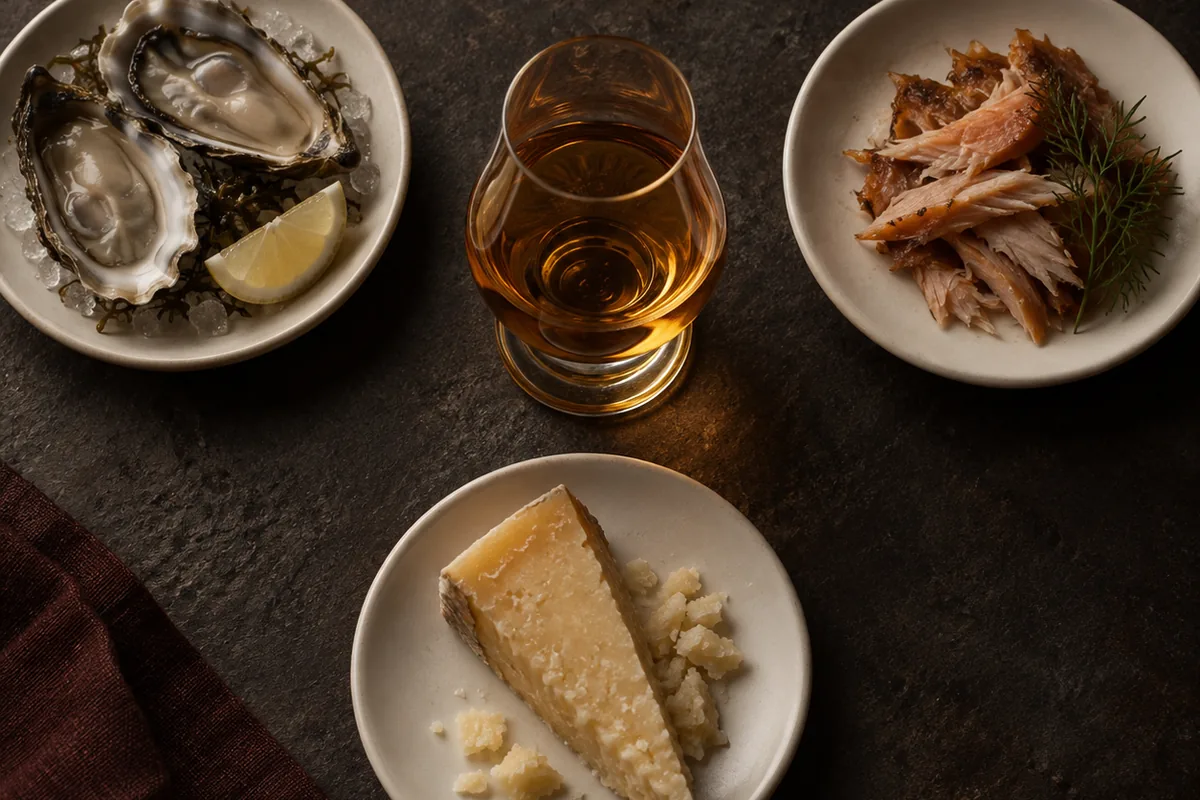
Pair from the tasted whisky rather than the island's coastline. Begin with the whisky you tasted, not the coastline on its label.
Intensity, smoke, sweetness, tannin and alcohol strength determine whether the food and whisky remain legible together.
| Whisky direction | Food direction | Balance to watch |
|---|---|---|
| Light and citrus-led | Shellfish, mild cheese, roast poultry or oat biscuits | Heavy smoke or sugar can bury delicate aroma |
| Dry smoke and pepper | Grilled mushrooms, smoked fish or charred vegetables | Shared smoke can become flat without acidity or freshness |
| Rich fruit and active oak | Aged cheese, braised meat, nuts or restrained dark chocolate | Stacked tannin and bitterness can turn harsh |
| Higher strength | Fatty or savoury food with measured water alongside | Chilli can magnify alcohol heat |
Seafood is a common suggestion because Islay is coastal, yet it is not automatic. A heavily tannic or intensely medicinal whisky may overwhelm a delicate oyster, while a lighter unpeated malt can be a cleaner match.
Sweet food can soften the perception of smoke and heat, but excessive sugar may flatten fruit and malt detail. Very spicy dishes can make alcohol feel hotter, especially where a whisky is bottled without dilution.
Match the tasted profile, then test one bite and one measured sip. If either side becomes harsher, duller or more bitter, change the intensity rather than forcing the regional pairing.
How do storage and strength change the decision?
Peat intensity does not change the storage considerations for an opened bottle. Protect the whisky from sunlight, stand the bottle upright so the spirit does not sit against the closure, and keep that closure sound; a smoky aroma is not evidence that a damaged or unidentifiable bottle is fit to drink.
Whisky does not continue cask maturation in glass, although oxygen exposure, volatile loss and closure failure can change aroma after opening.
Cloudiness after chilling or adding water can occur in non-chill-filtered whisky and does not by itself prove spoilage. Unexpected contamination, pressure, an unknown refill or a clearly abnormal smell is more important than harmless haze.
A heavily peated 40% whisky and an unpeated 40% whisky contain the same proportion of alcohol. Calculate the amount from volume and ABV using the relevant standard-drink definition, rather than from the strength of the smoky impression.
The same volume at 55% or 60% ABV contains more alcohol, even if water is added later. Dilution changes concentration and total liquid volume, but it does not remove the alcohol already poured.
Measure before dilution. A calculation cannot provide personal clearance for driving, machinery, swimming, caregiving or another safety-critical task.
Once storage, volume and strength are handled literally, the broader answer stays clear: Islay is a protected place capable of many whisky styles, not a legal synonym for heavy peat smoke.
Common questions
- Does Islay whisky have to be peated?
- No. Islay is a protected place of distillation. Peat smoke is introduced through malt drying when a producer chooses it, and unpeated Islay spirit also exists.
- Is Islay part of the Islands whisky region?
- Islay is a separately protected Scotch Whisky locality. Islands is an informal grouping rather than an additional protected region.
- What is the minimum age for Islay whisky?
- Like all Scotch Whisky, it must mature in Scotland in oak casks no larger than 700 litres for at least three years.
Sources
-
NIAAA, What Is a Standard Drink?
Accessed 13 September 2026.
-
Scotch Whisky Association, Scotch Whisky Regions
Accessed 6 September 2026.
-
Scotch Whisky Technical File, June 2019, the gov.uk product specification for the Scotch Whisky geographical indication, quoting the Scotch Whisky Regulations 2009 regulation 3
Accessed 4 September 2026.
-
The Scotch Whisky Regulations 2009
Published 2009. Accessed 6 September 2026.
-
UK Geographical Indication, Scotch Whisky
Accessed 7 September 2026.
More in Spirits
-
 American single malt whisky
01
What is American single malt whisky, and what does it guarantee?
-
 Australian whisky
02
How is Australian whisky defined, and by which law?
-
 Black rum
03
What is black rum, and does the colour mean anything?
-
 Blended American whiskey
04
What is blended American whiskey, and how much of it is whiskey?
-
 Blended Irish whiskey
05
Blended Irish whiskey: which word counts the distilleries?
-
 Blended Scotch
06
Blended Scotch: what is in it, and why does the recipe change?