
Spirits
What Is Unpeated Whisky, and What Does the Word Promise?
Unpeated whisky is whisky made from malted barley dried without peat smoke. The decision is taken at the maltings rather than the distillery, no rulebook defines the term, and the ppm figures attached to the subject measure grain rather than the liquid in the bottle.
At a glance
- Legal category
- Not defined in any whisky standard; a trade description of the malt used
- Minimum strength
- 40 percent ABV
- Also called
- Unpeated single malt, Non-peated whisky
- Decided at
- The maltings, when green malt is dried in a kiln
- Legal status
- No whisky rulebook defines peated or unpeated
- What ppm measures
- Phenols in the malted barley after kilning, not in the bottle
What does unpeated whisky actually mean?
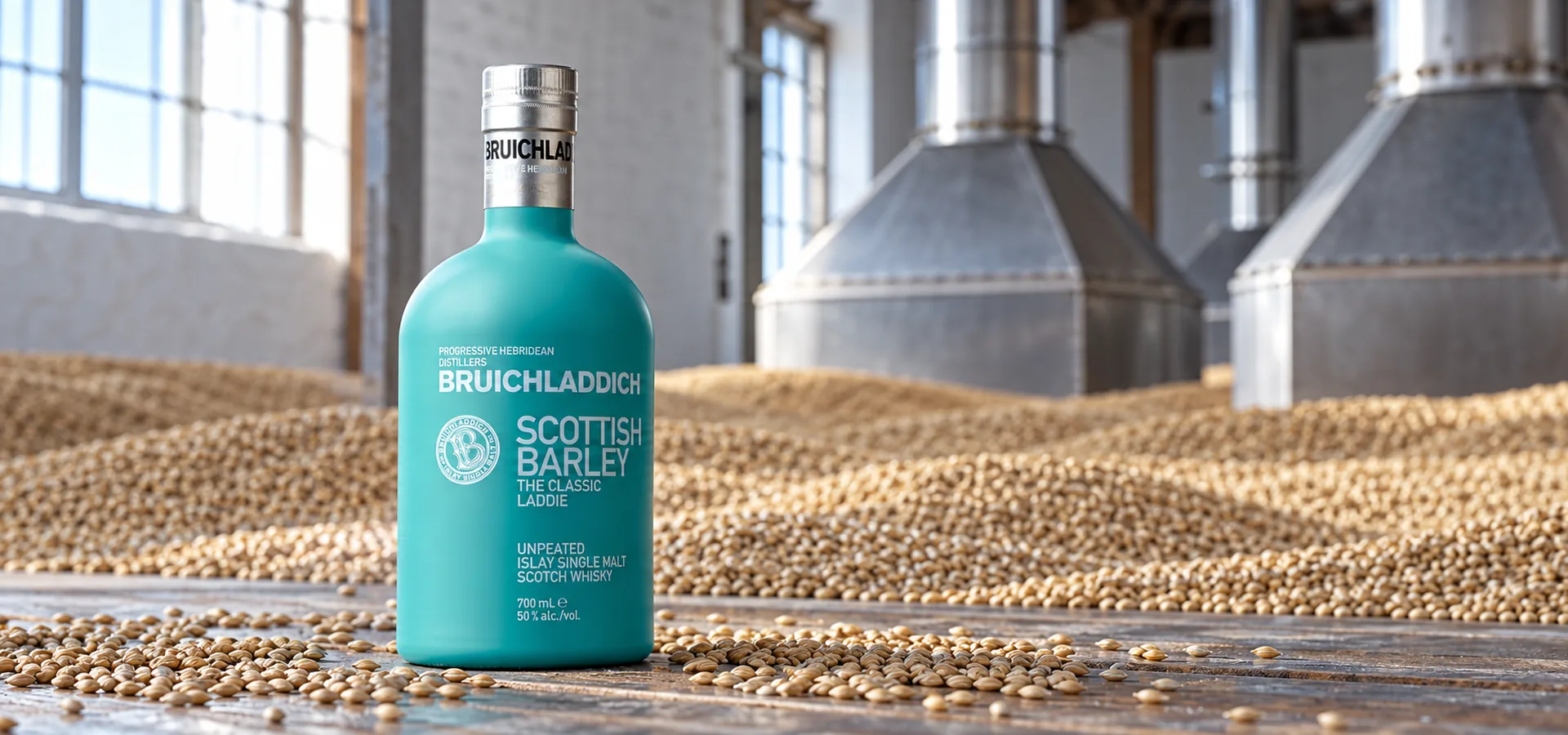
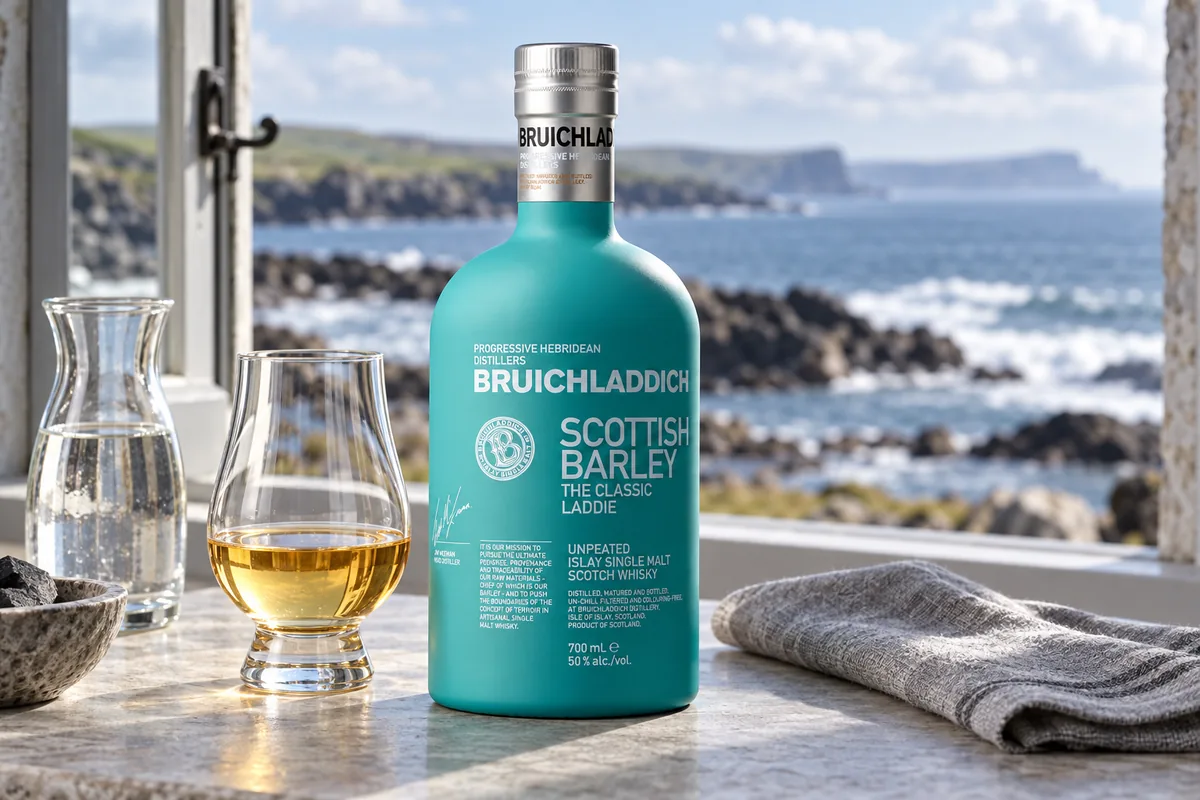
Unpeated whisky is whisky made from malted barley that was dried without peat smoke.
That is the whole of it. No peat in the kiln, so no smoke phenols in the grain, and none carried forward into the spirit.
- Decided at the maltings
- Malt is dried in a kiln before it ever reaches a distillery, and whether peat is burned under it is a malting decision rather than a distilling one.
- No smoke phenols
- The compounds responsible for peat character come from smoke settling on damp grain. Without the smoke, they are simply absent.
- Not a defined term
- No whisky rulebook defines peated or unpeated. Both are trade descriptions, used consistently but with no threshold behind them.
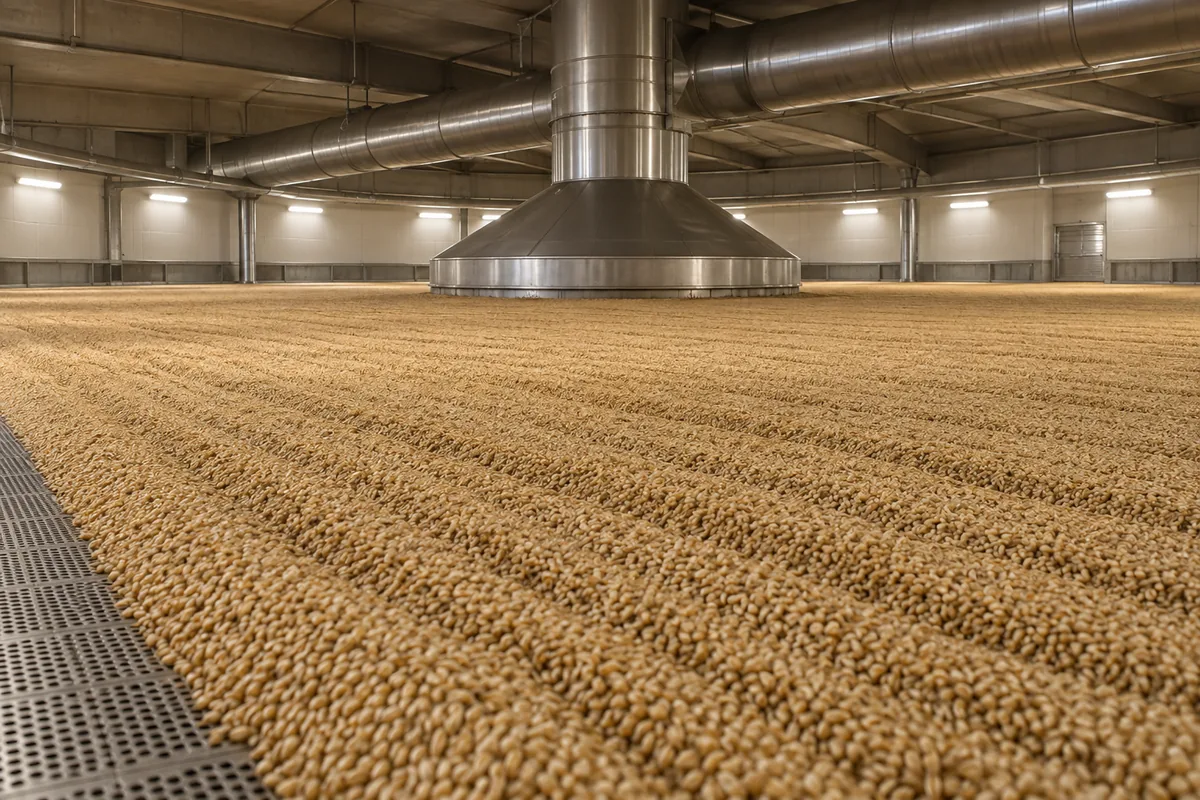
Malt is dried in a kiln before it ever reaches a distillery, which is why the choice belongs to the maltster rather than to the distiller.
Most distilleries buy malt to a written specification. Peated or unpeated is one line on that specification, alongside variety, moisture and nitrogen content.
That is worth sitting with, because it changes where the interesting decision lives.
A distillery choosing unpeated malt is not doing anything to the barley. It is ordering a different product from a maltster who did the work weeks earlier.
Some distilleries still malt their own barley on a floor and dry it in their own kiln, which gives them the decision directly. They are the exception rather than the rule.
What the word does not carry is a threshold, because no rulebook defines peated or unpeated and the trade uses both consistently without anything fixing where one ends and the other begins.
Do the rules say anything about peat in whisky?
| Where you look | What it fixes | What it says about peat |
|---|---|---|
| Scotch Whisky Regulations 2009 | Cereals, enzymes, yeast, distillation below 94.8 percent, oak casks not over 700 litres, three years in Scotland | Nothing at all |
| United States standards of identity | Grain proportions, distillation proof, entry proof, the wood and the bottling floor | Nothing at all |
| The producer | Whether peat is burned under the malt, and how long for | Everything |
Read the Scotch definition and peat is simply not there. Read the American standards and it is not there either.
The regulations fix the cereals, the enzymes, the yeast, the distillation strength, the cask and the three years in Scotland. Smoke is never mentioned, and neither is the fuel used to dry the malt.
The American standards are silent in the same way, fixing grain proportions, proof and wood and nothing about how the grain was dried.
So peat is a producer's choice that no regulator has an opinion about, which is exactly why unpeated whisky is a description rather than a definition.
None of that is unusual for a flavouring decision.
Standards of identity fix the things that decide whether a spirit belongs to a category at all: grain, strength, wood, time. They very rarely reach into how a producer chooses to make one example taste different from another, and peating is exactly that kind of choice.
How does peat get into whisky in the first place?
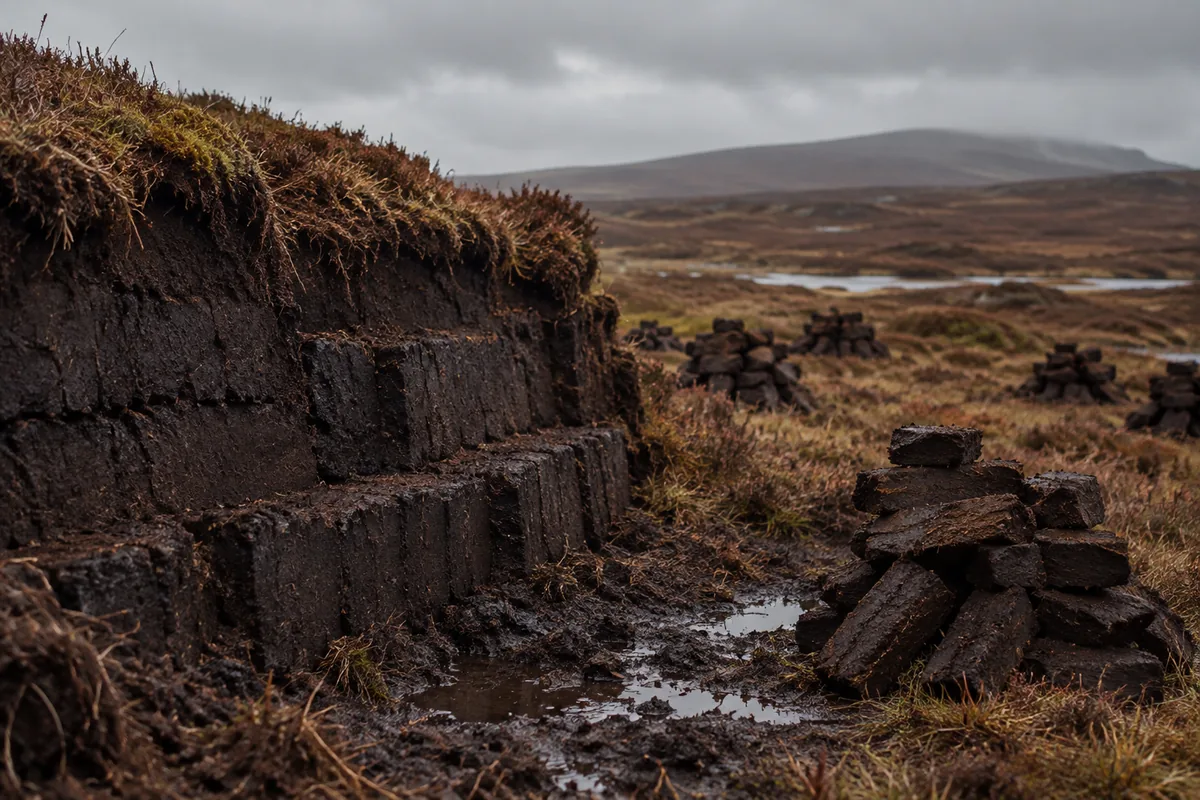
Peat is cut from a bank as wet turves and dried before it can be burned under anything.
Dried, it burns slowly and smokily rather than cleanly, which is the property the maltster is after.
Peat was originally used because it was the fuel available on treeless ground, not because anyone was pursuing a flavour. The taste came with the fuel.
Once industrial maltings could dry large volumes of barley with clean hot air, using peat became a deliberate choice rather than a necessity, and unpeated malt became the ordinary case rather than an alternative to it.
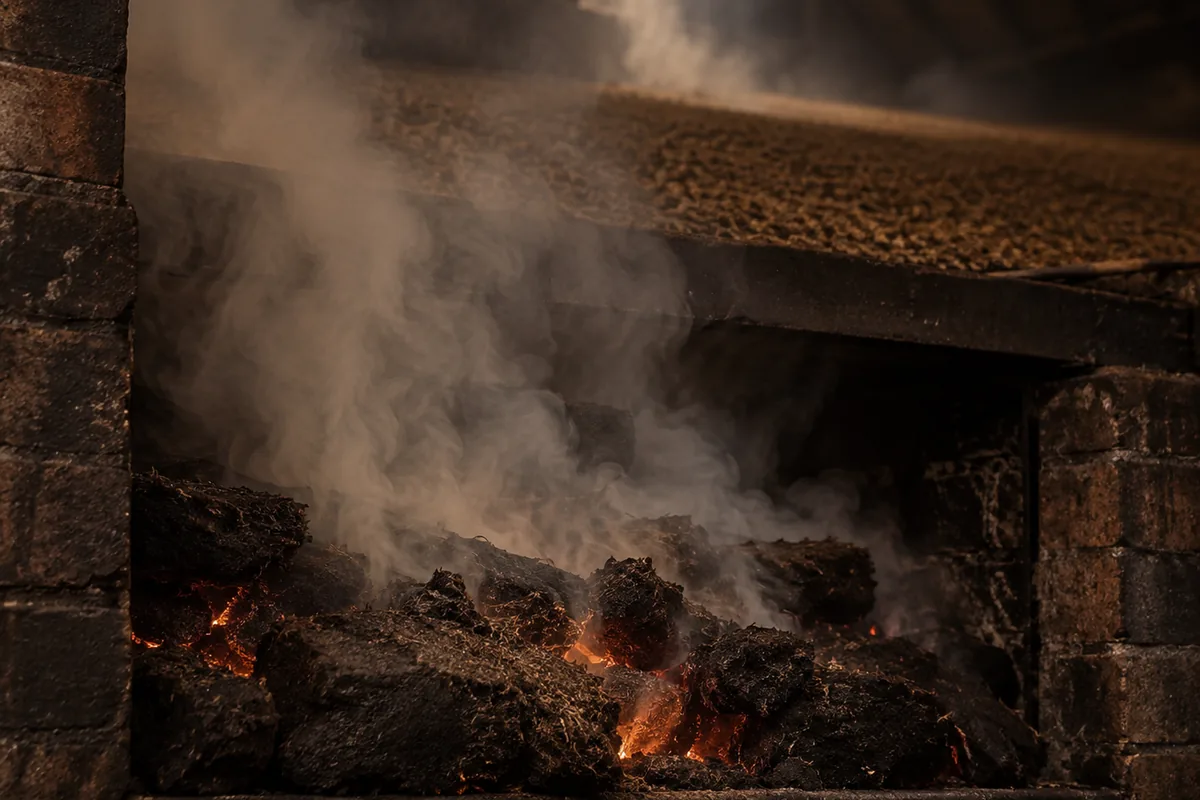
- Cut and dry the peat: wet turves are lifted from a bank and stacked in the open until they will burn.
- Burn it under the kiln: the smouldering peat sits in a furnace below a perforated floor, and its smoke is drawn upward.
- Let the smoke meet damp grain: phenols in the smoke settle on green malt that is still wet enough to hold them.
- Finish drying and ship it: once dry the malt goes to a distillery like any other malt, carrying whatever it picked up.
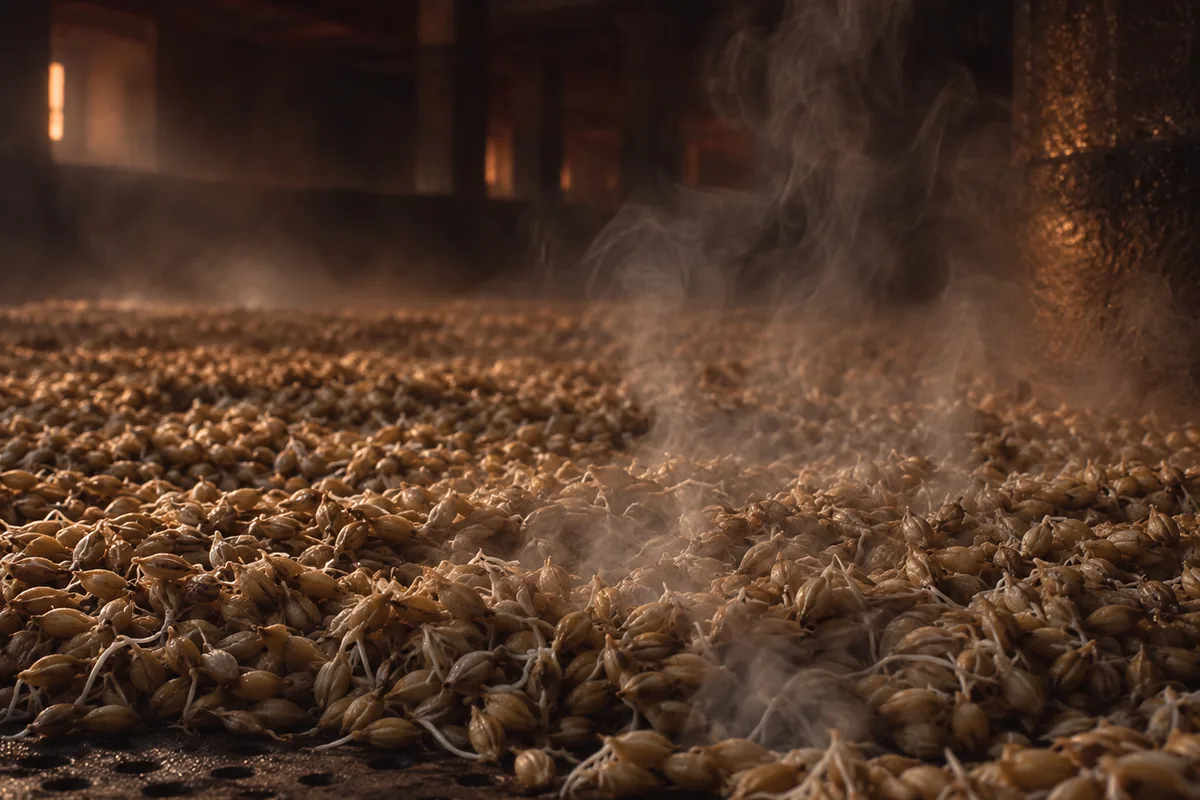
Up in the kiln, phenols in the smoke settle on green malt that is still damp enough to hold them, and the longer the grain sits there the more it carries.
An unpeated whisky simply never enters that part of the route. Everything else about how it is made is unchanged, which is why the omitted step is the only difference worth naming.
After that the two routes are identical.
Peated and unpeated malt are milled, mashed, fermented and distilled in the same way, and a distillery running both will often use the same equipment for each.
What does a ppm figure on a whisky actually measure?
A ppm figure is a measurement of the malt, not of the whisky. That one distinction settles most of what goes wrong around the number.
It reports the phenol content of the malted barley after kilning, taken before the grain goes anywhere near a mash tun. One producer states the position plainly: the figure is measured after kilning and before the rest of the whisky making process.
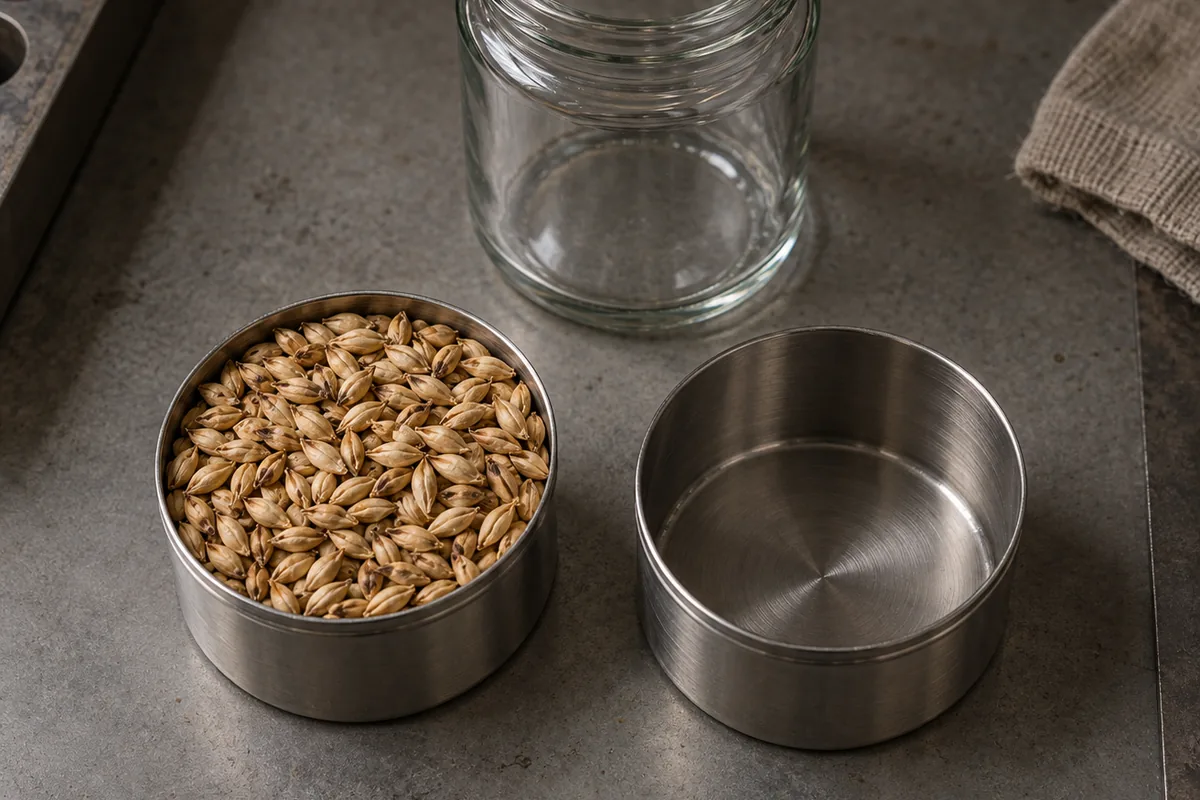
A ppm number describes grain. It is taken from malted barley at the maltings, before mashing, fermentation, distillation or maturation have happened. Whatever reaches the bottle is a fraction of it, and the malt figure does not say what that fraction was.
A reader who stops reading a ppm figure as a property of the bottle has lost nothing, because the figure was never about the bottle.
For an unpeated whisky the same logic runs in reverse, and it matters more than it looks.
Unpeated malt is not certified at zero. It is described as carrying background levels only, which is a claim about what was never added rather than a measurement of what is present.
It is fair to ask why producers quote the malt figure at all if it travels so badly.
The answer is that it is the only number anyone has. Phenol content is routinely measured on malt because the maltster has to hit a specification, and no equivalent figure is routinely published for the finished whisky.
A quoted ppm figure is therefore a real measurement of a real thing. It is simply a measurement of the wrong thing for the question most readers are asking.
How much of the malt phenol survives into the whisky?
Every stage after the maltings takes something away. None of them puts anything back.
Mashing a peated or unpeated whisky mash leaves some phenolic material behind in the spent grain rather than carrying all of it into the wash, and fermentation changes what the still finally receives.
Then comes the decision that matters most. The spirit cut decides how much phenolic material a whisky keeps, because phenols are not spread evenly through a distillation run.
- Mashing: some phenolic material stays behind with the spent grain instead of dissolving into the wash.
- Fermentation: the wash changes chemically over days, so what the still receives is not what the mash tun produced.
- The spirit cut: phenols are not spread evenly through a run, so where the distiller cuts decides how much is kept.
- Maturation: years in wood keep changing the balance, so the figure moves again long after distilling has stopped.
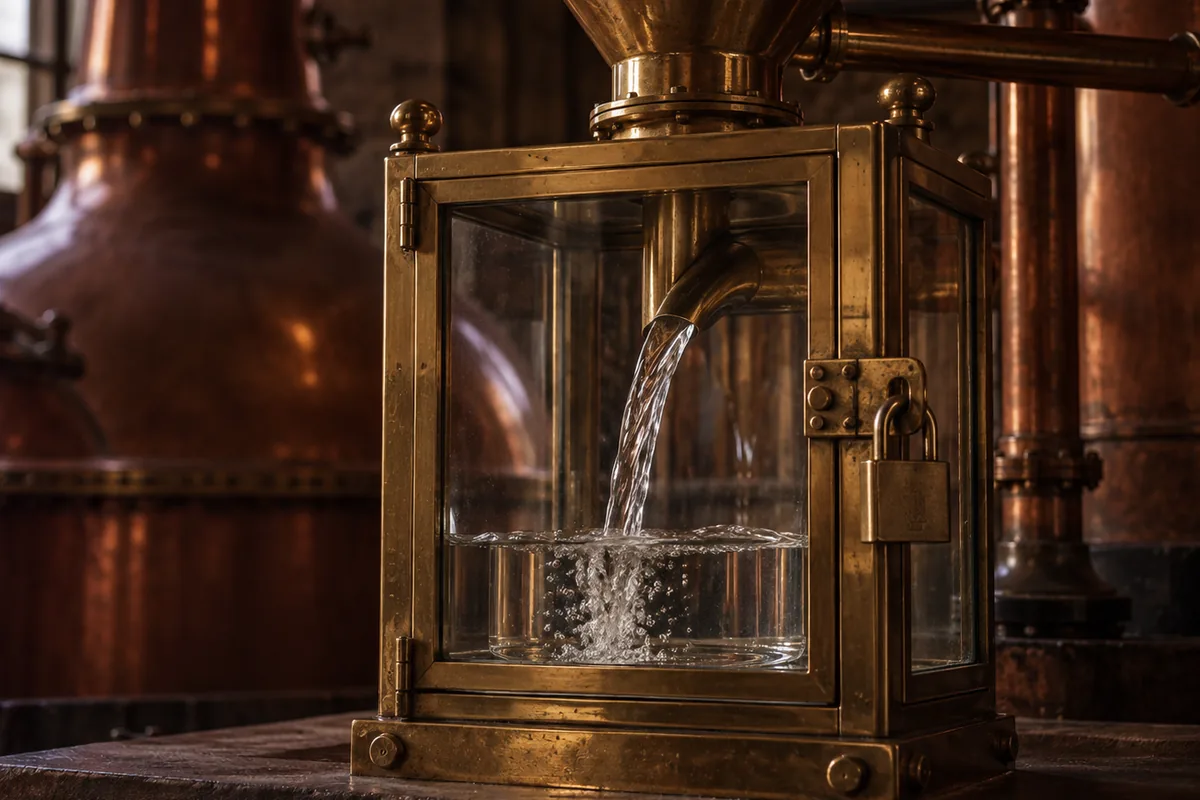
Put the four together and a malt figure becomes an upper bound rather than a description.
Two distilleries buying identical malt can bottle whiskies that are not remotely alike, because everything after the maltings was decided separately.
The same applies within one distillery across time. An older bottling from the same recipe has spent longer in wood, and maturation keeps moving the balance, so two age statements from one producer are not two points on a single scale of smokiness.
Is an unpeated whisky completely free of phenols?
Not necessarily, and the distinction is worth keeping.
Unpeated is a claim about an input that was never used. It is not a certificate that the finished spirit contains no phenolic compounds of any kind.
Oak contributes phenolic material of its own during maturation, which is one reason a heavily wooded unpeated whisky can show a dry, faintly smoky edge with no peat behind it at all.
Toasting and charring a cask change the wood chemically before any spirit goes near it, and what the spirit then extracts includes compounds in the same broad family as the ones peat smoke deposits on grain.
They are not the same compounds in the same proportions, and a heavily peated whisky does not taste like a heavily oaked one. The point is narrower: the word unpeated rules out one source and not the category.
So the honest reading is narrow and useful. No peat smoke touched the malt, which is a fact about process, and it is the fact the word was coined to carry.
Does the region tell you whether a whisky is peated?
A region is not a peat signal. Scotch regional indications fix where a whisky was distilled. Whether the malt met peat smoke is a separate decision taken at the maltings, and both answers occur in every region.
The assumption is easy to see and easy to disprove.
It formed because the most famous peated whiskies come from one island, and a reputation built on a handful of distilleries got applied to the ground they stand on.
Unpeated single malts are made in the region most associated with peat, and peated malts are made in regions most readers file under unpeated. Neither is unusual enough to be remarkable.
What a regional name does fix is where the spirit came off the still, which is a fact about geography and nothing else.
So the only reliable signal is the one the producer prints. A reader who stops using a region as a proxy for whether a whisky is peated has lost nothing, because the proxy was never carrying any information.
If peating matters to the decision, look for a statement about it rather than inferring one from a place.
Can an unpeated whisky pick up smoke by accident?
Yes, by two routes, and neither of them makes the label wrong.
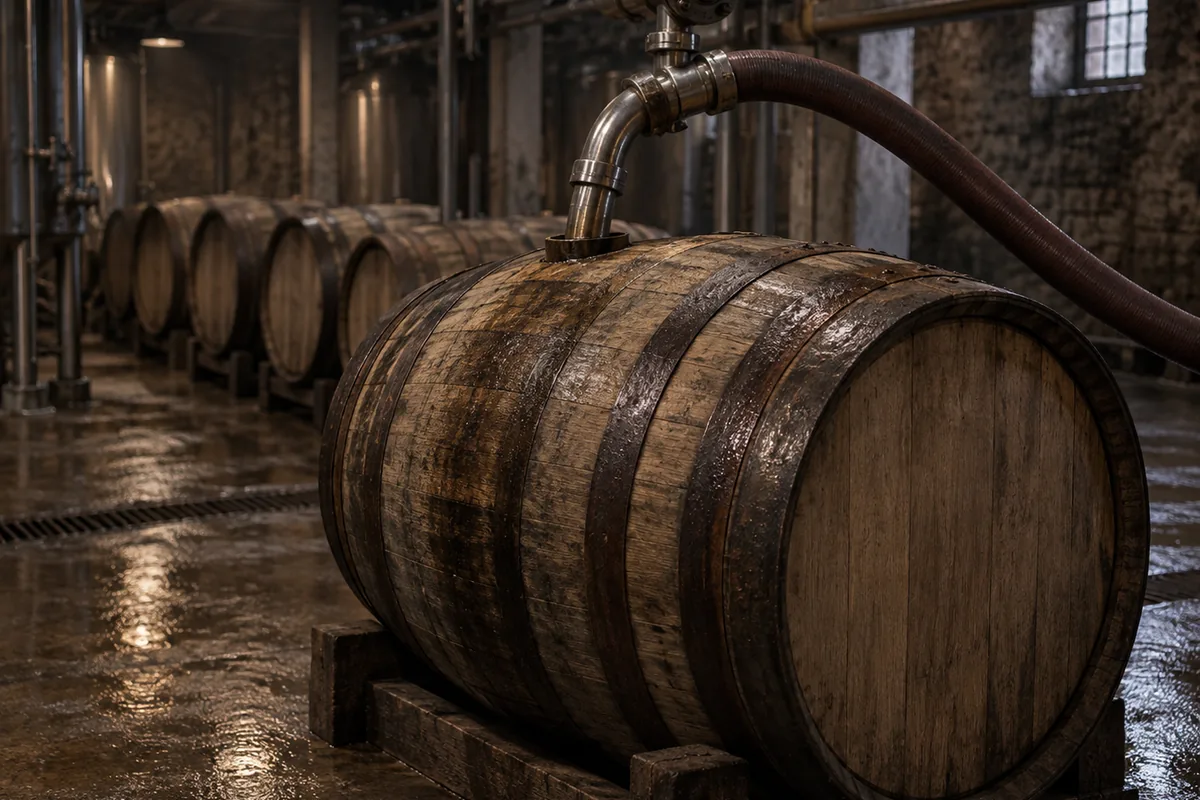
A distillery that runs peated and unpeated production through the same mill, mash tun and stills can carry a trace from one campaign into the next. A cask that previously held peated whisky can do the same, passing smoke character to an unpeated spirit filled into it afterwards.
Producers manage both, by cleaning between campaigns and by keeping cask inventories separate where it matters to them, and how thoroughly is a house decision rather than a rule.
A distillery that runs peated production for two weeks a year will treat the question differently from one that alternates every month.
What a reader should conclude is narrow. A faint smoke note in an unpeated whisky is usually a wood or an equipment story, and the claim on the label is still about the malt.
How should you taste an unpeated whisky against a peated one?
Order matters more here than in almost any other whisky comparison. Smoke does not wait politely for the next glass.
Smoke persists, so a peated dram tasted first will still be with you when the unpeated one arrives. Pour the unpeated glass first and come back to it at the end.
- Unpeated first: taste it before any smoke has been in the glass or on the palate.
- Match the strength: keep the two bottlings as close in alcohol as the labels allow.
- Match the cask type: where both labels disclose it, compare like wood with like wood.
- Return to the first glass: go back to the unpeated whisky after the peated one and see what has changed.
Matching the strength and the cask type is what leaves the peating as the variable an unpeated comparison is actually testing.
With those held, a difference between the glasses is a difference between two bottles.
It is not a finding about peated and unpeated whisky in general, and a second pair chosen differently could easily point the other way.
Water helps more here than usual, and it helps in a specific way. A small measured addition to each glass lowers the alcohol enough for the quieter whisky to show what it has, without doing much to a smoke profile that was never subtle to begin with.
What food suits an unpeated whisky?
Losing the smoke changes the problem rather than simplifying it, which is why the pairing decision moves from the category to the bottle in front of you.
A peated whisky can stand beside strong food because the smoke gives it somewhere to push from. An unpeated one has to rely on strength, wood and fruit instead, and it is easier to bury.
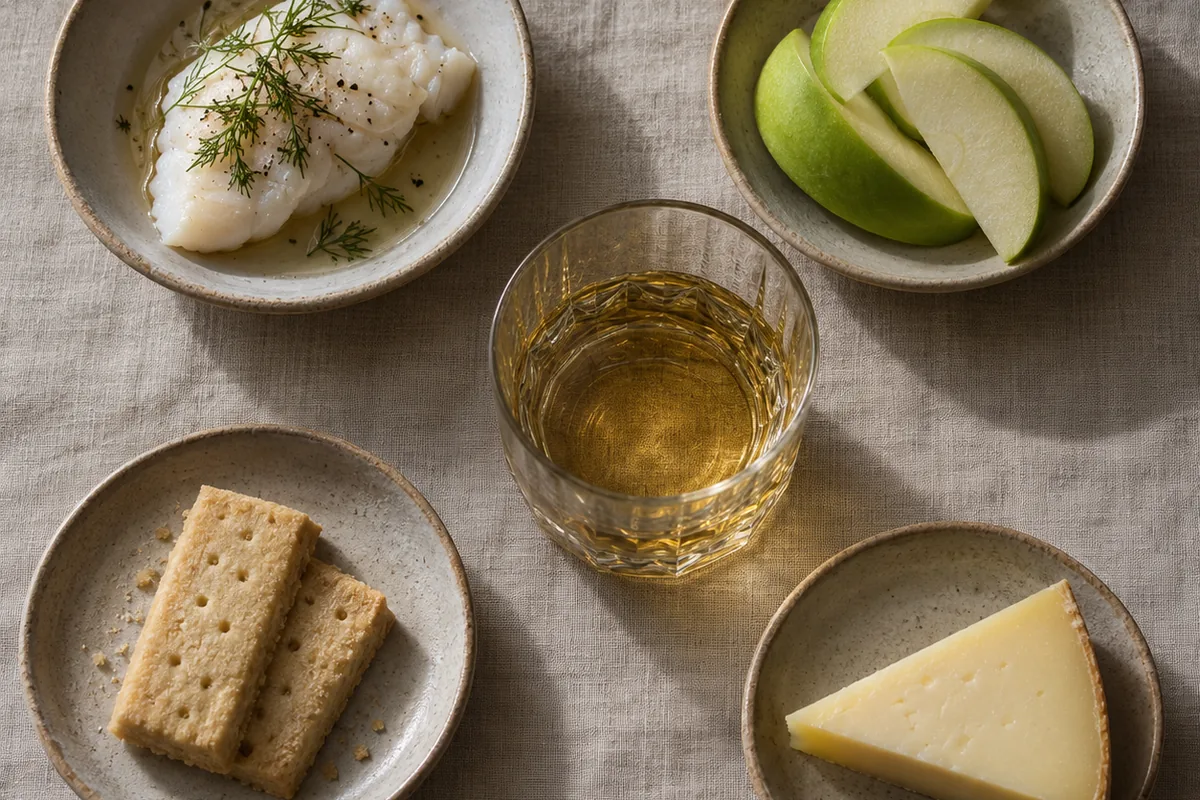
| What the bottle turned out to be | Food direction | Why it works |
|---|---|---|
| Light and fruit-led | Poached fish, green apple, plain biscuits | Nothing on the plate competes, so a delicate whisky keeps its own aroma |
| Sherry influenced and rich | Hard aged cheese, dried fruit, roasted nuts | A heavier cask influence can meet richer food without either side disappearing |
| High strength | Fattier food in smaller portions | Fat carries alcohol heat comfortably where lean or sweet food sharpens it |
Two interactions go wrong reliably. Sweetness in a dish sharpens a dry, tannic whisky, and chilli heat is intensified by alcohol rather than cooled by it.
There is a third worth naming for this subject in particular, and it is simply volume of flavour.
A dish that would sit happily beside a peated whisky can leave an unpeated one with nothing to say, which is not a fault in either of them.
How should an opened bottle of unpeated whisky be kept?
Whisky does not go on maturing in glass. What happens after opening is oxidation and the slow loss of the most volatile aroma.
- Cool and dark: heat and light are the two conditions you can remove outright, and nothing in the bottle improves with either.
- A closure that still seals: wipe the neck and replace a cork that has stopped gripping.
- Upright: a high strength spirit resting against a closure will attack the material over the years a bottle can sit.
- Decant a small remainder: moving the last third into a clean smaller bottle cuts the air above it.
Delicacy is what raises the stakes here.
A heavily peated whisky can lose a good deal of its lighter aroma and still taste like itself. An unpeated whisky whose appeal is orchard fruit and cereal has much less in reserve.
So the last third of the bottle is where the difference shows, and it is the part most people drink slowest.
How much alcohol is in an unpeated whisky pour?
Scotch whisky must be bottled at a minimum of 40 percent alcohol by volume, and plenty of unpeated bottlings sit well above that.
In the United States a standard drink contains about 14 grams of pure alcohol, which is roughly 1.5 fluid ounces, or 44 millilitres, of a spirit at 40 percent. Pour the same measure at 57 percent and you have taken about two fifths more.
Read the strength, not the smoke. A mild aroma, a pale colour, water, food, coffee and time spent tasting cannot establish that someone is unimpaired or safe to drive. Measure the pour and read the alcohol content.
Anyone who is pregnant, below the legal drinking age, taking an interacting medicine, managing a condition worsened by alcohol, or responsible for driving needs an alcohol-free choice instead.
Is unpeated a useful thing to look for on a label?
For one job it is genuinely useful, and for everything else it is not.
The job it does is negative and exact: no peat smoke was used in drying the malt. If you dislike smoke, that is the single most efficient word on the shelf.
What it does not tell you is anything about the cask, the age, the strength or the distillery, and at ordinary peating levels those move a whisky further than the peat decision does.
There is also a version of the word that is doing no work at all.
On a bottle from a producer who has never made anything else, unpeated is a description of the house rather than a choice about this release, and it separates that bottle from nothing on the same shelf.
Read past the absence. Where two bottles both say unpeated, everything that separates them is printed somewhere else: the distillery, an age statement if there is one, the strength, and any disclosure about the wood.
That is not a criticism of the word. It is what a negative description can do, and knowing its limits is what makes it worth using at all.
Common questions
- What does ppm mean on a whisky?
- It is the phenol content of the malted barley, measured after kilning and before the rest of production. Mashing, fermentation, distillation and maturation all reduce it, so the figure describes grain rather than the whisky in the bottle.
- Is unpeated whisky a legal term?
- No. The Scotch whisky definition and the United States standards of identity fix grain, strength and wood without mentioning peat at all, so peated and unpeated are trade descriptions with no threshold behind them.
- Are all Islay whiskies peated?
- No. Unpeated single malts are produced in the region most associated with peat, and peated malts are produced in regions readers assume are unpeated. A regional name fixes where the spirit was distilled and nothing about the malt.
Sources
-
Code of Federal Regulations, Title 27, sections 5.143 and 5.74
Accessed 5 September 2026.
-
NIAAA, What Is a Standard Drink?
Accessed 13 September 2026.
-
Scotch Whisky Association, Guidance for Bottlers and Producers 2025
Published 2025. Accessed 7 September 2026.
-
What is PPM in whisky?, Kilchoman Distillery
Accessed 10 September 2026.
More in Spirits
-
 American single malt whisky
01
What is American single malt whisky, and what does it guarantee?
-
 Australian whisky
02
How is Australian whisky defined, and by which law?
-
 Black rum
03
What is black rum, and does the colour mean anything?
-
 Blended American whiskey
04
What is blended American whiskey, and how much of it is whiskey?
-
 Blended Irish whiskey
05
Blended Irish whiskey: which word counts the distilleries?
-
 Blended Scotch
06
Blended Scotch: what is in it, and why does the recipe change?