
Spirits
What Is Japanese Whisky, and What Does the Label Guarantee?
Japanese whisky is made, matured and bottled in Japan under the Japan Spirits & Liqueurs Makers Association standard. That voluntary standard defines a domestic production chain, while type, cask and flavour still vary by bottle.
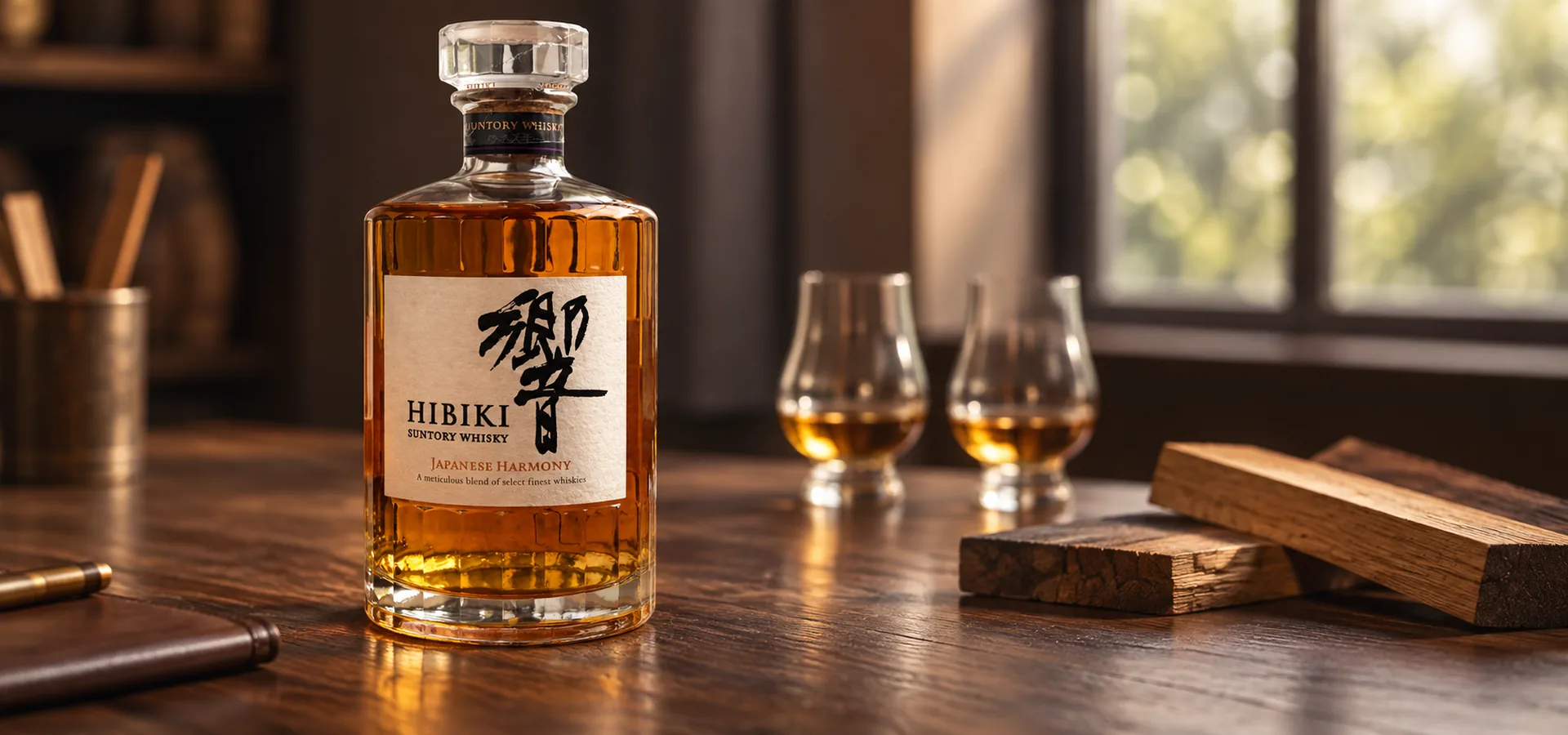
At a glance
- Legal category
- A voluntary Japan Spirits & Liqueurs Makers Association labeling standard, not a national statutory whisky definition.
- Minimum strength
- 40 percent ABV
- Also called
- Japanese whiskey, Nihon whisky
- Standard owner
- Japan Spirits & Liqueurs Makers Association
- Authority
- Voluntary association standard, not a national whisky law
- Made in Japan
- Saccharification, fermentation and distillation occur in Japan
- Maturation
- At least 3 years in Japan in wooden casks up to 700 litres
- Bottling
- Bottled in Japan at 40% ABV or above
- Materials
- Malted grain, other cereals when used, and water extracted in Japan
What does Japanese whisky mean under the current standard?
Japanese whisky is made, matured and bottled in Japan when it follows the Japan Spirits & Liqueurs Makers Association standard. The rule begins with malted grain and Japanese water, keeps saccharification, fermentation and distillation in Japan, then requires at least three years of maturation there.
The bottle also has to be filled in Japan at 40% ABV or above. Those conditions make the phrase much more specific than whisky merely associated with Japan.
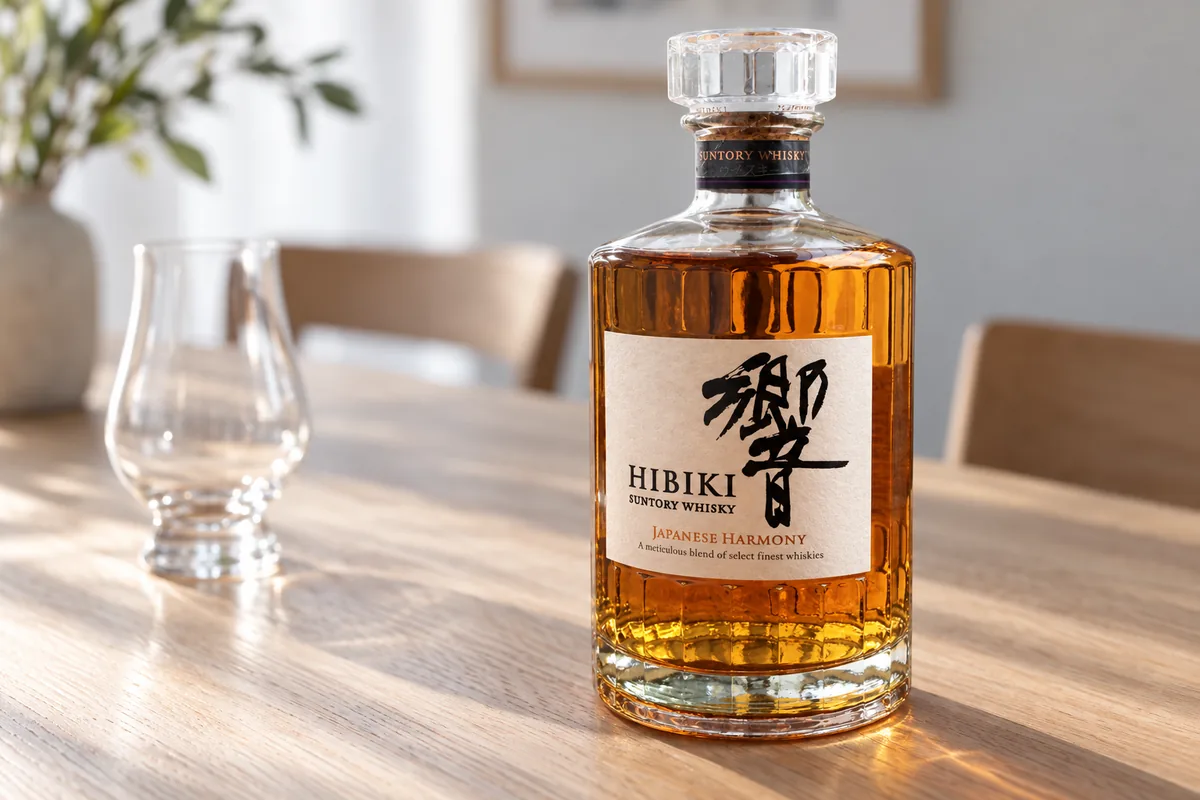
The direct answer: compliant Japanese whisky follows an in-country production chain defined by JSLMA. The standard is meaningful evidence for association members, but it is not a national whisky law that automatically covers every bottle sold with Japanese imagery.
That distinction changes how you read a bottle.
Exact Japanese whisky wording, the producer's participation and a clear production statement carry more evidence than calligraphy, mountains, a Japanese name or a rising-sun motif.
Once identity is established, the category remains broad. Malt, grain and blended constructions, different stills, several cask histories and varied bottling strengths can all fit within the standard.
Is the Japanese whisky standard a law?
The current definition is a voluntary trade-association labeling standard rather than a statutory national whisky definition. JSLMA established it in February 2021 and brought it into effect on 1 April 2021.
- February 2021. JSLMA established the Standards for Labeling Japanese Whisky.
- 1 April 2021. The standard took effect for association members.
- 31 March 2024. The transition period for existing products and labels ended.
- April 2024 onward. Full member implementation became the relevant baseline for current releases.
A transition period gave members time to adjust products and labels through 31 March 2024.
Older bottles and legacy packaging still need their release dates and producer statements read in context.
Association rules can carry real weight because members undertake to follow them. Compliant products may also carry the association's Japanese whisky mark as an additional signal.
The mark is not a government certification seal, and its absence does not prove that a bottle fails the definition.
A producer may be outside the association, packaging may predate the mark, or a compliant label may present evidence another way. Use the standard as a disclosed contract: check who made the claim, when the bottle was released and which production facts support it.
Which grains and water can Japanese whisky use?
Malted grain must be part of the raw materials, but the standard does not require every Japanese whisky to be made only from malted barley. Other cereal grains may join the mash, creating room for both malt and grain whisky components.
- Malted grain
- At least some malted grain is required in the raw-material definition.
- Other cereals
- Barley, corn, wheat, rye and other cereals may contribute where the producer's construction uses them.
- Japanese water
- Water extracted in Japan is required for the qualifying production chain.
- Mash bill
- The standard leaves exact grain proportions to the individual whisky rather than imposing one recipe.
Barley is central to many malt whiskies, while corn, wheat, rye or other cereals can contribute to grain production depending on the distillery and recipe.
The exact mash bill remains a producer-level fact.
Water enters more than once, from mashing through possible proof adjustment before bottling. Requiring water extracted in Japan connects the liquid to domestic production without making water source a complete flavour explanation.
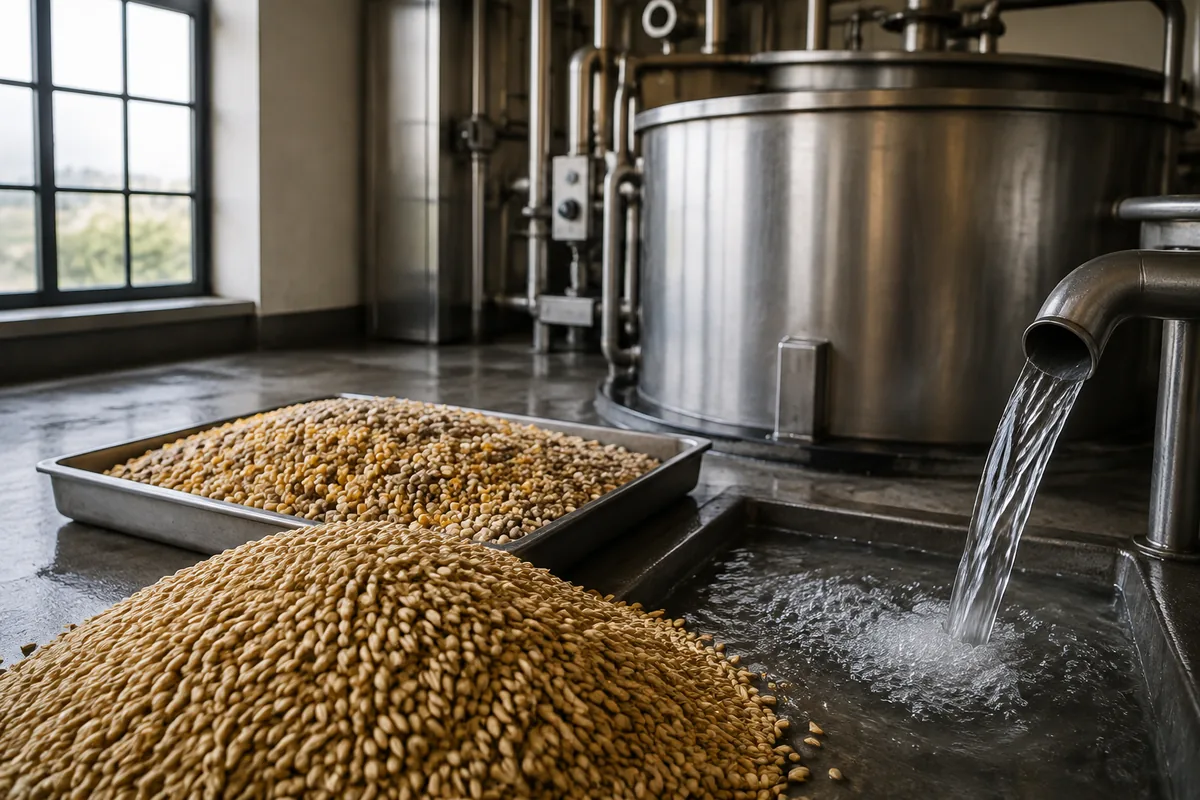
Mineral content and process treatment can affect mashing or fermentation, but claims about softness or purity need evidence from the actual source.
A landscape photograph cannot establish water chemistry. The practical conclusion is that Japanese whisky does not automatically mean Japanese single malt.
Which production steps must happen in Japan?
Saccharification, fermentation and distillation must occur at a distillery in Japan under the JSLMA definition. This boundary separates domestically made whisky from imported mature spirit that is only blended, finished or packaged there.
- Convert the grain. Saccharification in Japan makes fermentable sugars available from the cereal material.
- Ferment in Japan. Yeast converts those sugars into alcohol and aroma-active compounds at a Japanese distillery.
- Distil in Japan. Distillation must occur domestically and the spirit must come off below 95% ABV.
- Fill qualifying wood. The resulting spirit enters wooden casks for the required maturation in Japan.
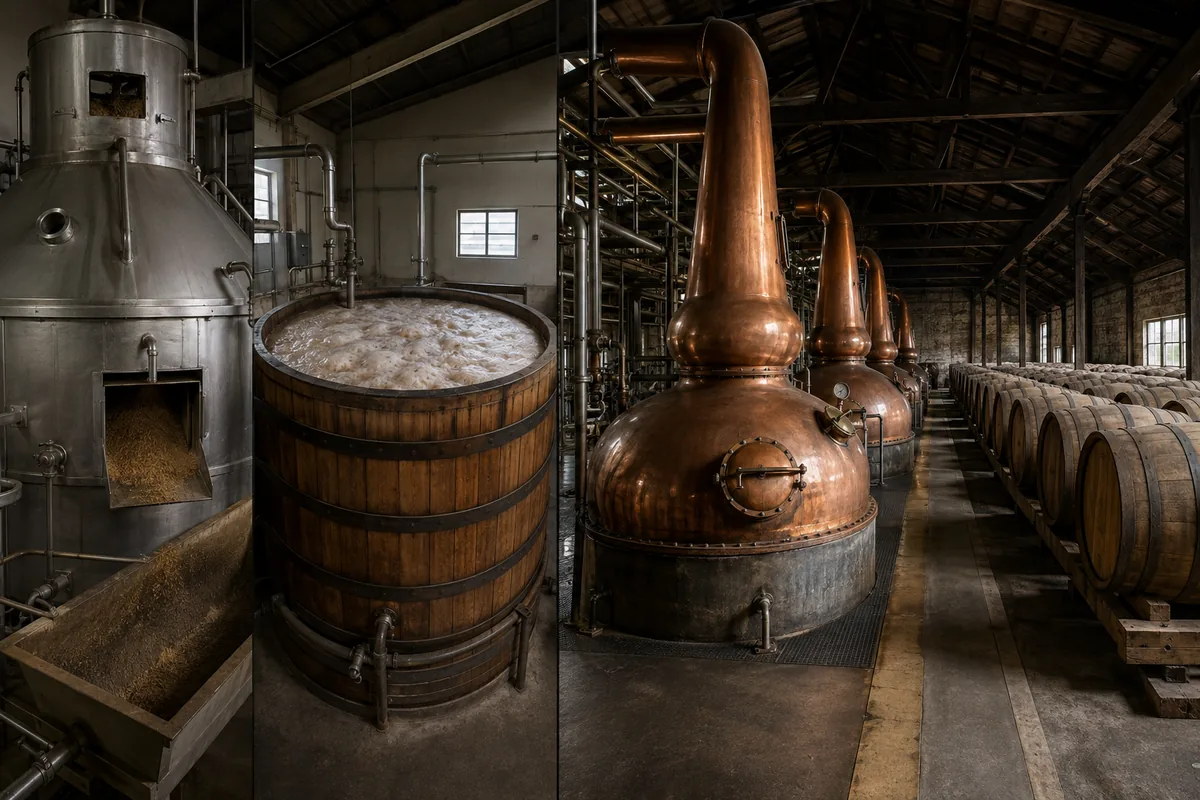
Pot distillation commonly supports malt whisky, while column systems can make lighter grain components efficiently.
The standard permits breadth rather than requiring one still design for every qualifying bottle.
Fermentation time, yeast, wort clarity, still geometry, reflux and cut points can all change the new make. Two distilleries following the same identity standard may deliberately create spirits of different weight and aroma.
Imported casks, foreign-grown grain or equipment made abroad do not by themselves break the domestic-production definition.
The decisive questions are where the required transformations occur and whether the materials and process meet the stated standard. Detailed operating instructions are a distiller's concern rather than a buyer's, while a bottle reader should treat distilled in Japan as stronger evidence than blended in Japan.
How must Japanese whisky be matured and bottled?
Three measurable conditions define the back half of the process. The spirit matures in Japan for at least three years in wooden casks no larger than 700 litres, then the whisky is bottled in Japan.
- Minimum maturation
- 3 years in Japan
- Maximum cask capacity
- 700 litres
- Bottling location
- Japan
- Minimum bottle strength
- 40% ABV
- Permitted colouring
- Plain caramel colouring
The wooden-vessel rule leaves many choices open.
Oak species, previous contents, first-fill or refill status, warehouse climate, cask position and finishing can all move the result.
At least three years is an identity threshold, not a quality target. A well-managed younger cask can be more balanced for a particular blend than an older cask carrying excessive tannin or wood.
Plain caramel colouring may be used, so visual darkness cannot prove age, cask activity or intensity.
An age statement must be interpreted from its actual wording rather than estimated from colour. Domestic bottling completes the traceable chain, but it cannot compensate for missing in-country production or maturation.
Which Japanese whisky types can appear?
The phrase Japanese whisky describes origin and production conditions, not one composition. A bottle may be built around malt whisky, grain whisky or a blend of qualifying components.
| Type | Useful reading | Question still open |
|---|---|---|
| Single malt | Malt whisky from one distillery | Peat, still regime, casks, age and strength |
| Malt whisky | A whisky construction centred on malted grain | Whether more than one distillery contributed |
| Grain whisky | Other cereals and often continuous distillation can create a lighter component | The actual mash bill and still system |
| Blended whisky | Qualifying components are combined for a chosen profile | The component recipe and proportions |
A large producer may operate several still types because Japan's historic industry structure encouraged companies to create many blending components in-house.
That context helps explain diversity, but it is not a rule that every producer must follow.
Single distillery also does not mean single flavour. Fermentation regimes, still runs, peat levels and cask programs can produce several spirit styles under one roof.
Blending is a production skill rather than evidence of inferior whisky.
It can join aromatic malt, lighter grain and cask-specific components to control texture, consistency and development. Read Japanese and the construction together: origin tells you where the required chain occurred, while the type explains more about assembly.
Which label signals deserve scrutiny?
Packaging can imply Japan faster than legal text can explain it, which is why the association standard addresses misleading presentation. Japanese place names, personal names, flags and familiar cultural symbols should not make non-qualifying whisky look domestic.
| Signal | What it can support | What it cannot prove alone |
|---|---|---|
| Japanese whisky wording | A direct standards claim by the producer | Association membership without verification |
| JSLMA mark | Member use on a product represented as compliant | Government certification of every bottle |
| Japanese place or person name | Brand or provenance context when factual | Domestic distillation and maturation |
| Flags and symbols | Visual origin cues | Any required production step |
| Producer disclosure | A checkable account of source and process | Accuracy without supporting evidence |
A bottle released during the transition period deserves date context.
Old stock does not change its production history when a new standard begins, and packaging can remain in circulation after rules change.
Producer transparency is strongest when it answers the complete chain: source of spirit, location of saccharification and fermentation, distillation location, maturation period and place, cask conditions, and bottling location.
Absence of a voluntary mark is a prompt for more questions, not a verdict.
Small producers, non-members and export packaging may present evidence differently. Read factual wording before cultural design because visual identity cannot establish the liquid's origin.
Why does Japanese whisky not have one flavour?
Materials and equipment create a wide field before wood touches the spirit. Malted barley, other cereals, yeast, fermentation conditions, pot stills, columns and cut points can produce light, fruity, cereal-rich, oily, smoky or heavier new make.
- Grain choice
- Changes cereal flavour, fermentable composition and the kind of still commonly used.
- Fermentation
- Creates alcohol plus fruit, floral, cereal, sulphur and acid-derived aroma precursors.
- Still system
- Changes reflux, copper contact, separation and final spirit weight.
- Cask history
- Adds and transforms wood, toast and previous-content character over time.
- Blending
- Combines components to set balance, texture and consistency.
- Bottling strength
- Changes concentration, aroma release and perceived texture in the glass.
Words such as precise, harmonious or delicate are common editorial descriptions, but the standard does not mandate them.
A rich, smoky or assertively cask-led whisky can qualify just as a light blend can.
Climate also resists simple conversion. Warmer conditions may accelerate some extraction and evaporation, yet cask activity, warehouse, fill level and seasonal variation prevent one Japanese year from equalling a fixed number of Scottish years.
Aroma should be traced cautiously.
Incense, sandalwood, coconut, orchard fruit, cereal or smoke can be useful observations, but none identifies nationality or one wood species on its own.
Taste under consistent conditions, record what changes with water and compare the notes with disclosed materials and casks.
National reputation cannot replace bottle evidence.
Does Japanese whisky have to use Japanese oak?
No.
The standard requires maturation in wooden casks within the size limit, but it does not require mizunara or any single oak species.
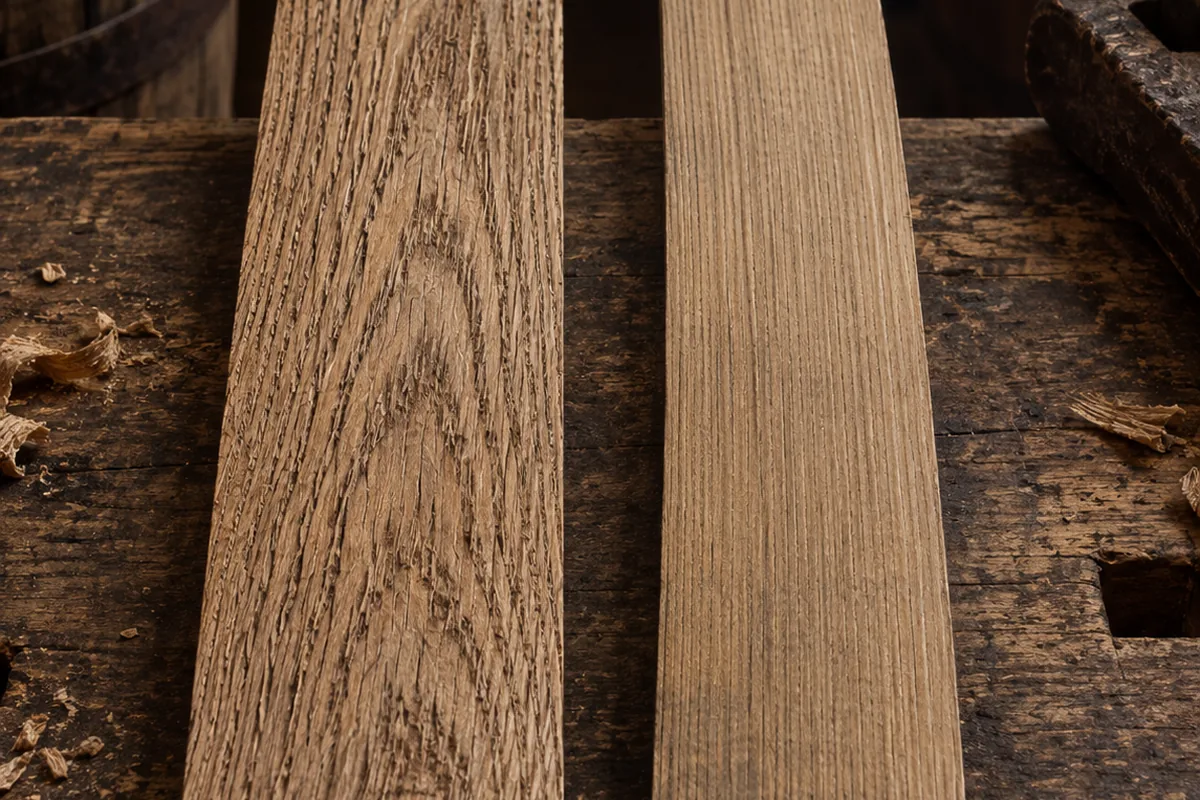
| Cask description | Possible contribution | Evidence still needed |
|---|---|---|
| Ex-bourbon | Vanilla, coconut-like notes, toast and sweetness | Fill history, duration and share of the vatting |
| Wine-seasoned | Dried fruit, nut, spice, acidity, tannin or colour | The wine, oak, seasoning and finish details |
| Refill wood | Quieter extraction that may preserve more spirit character | How many prior fills and what they held |
| Mizunara | Distinctive aromatic associations in some whiskies | Actual maturation time and proportion |
| Finish | A later layer over the existing maturation history | Finish duration and previous full maturation |
A cask previously used for bourbon can contribute to a Japanese whisky without changing where that whisky was made. Previous contents and Japanese origin describe different parts of its history.
Mizunara is one distinctive possibility rather than proof of authenticity.
Cask claims can be technically true but incomplete. A small proportion of one wood in a large vatting does not mean every component spent its full life there.
Colour remains unreliable because cask activity, wine seasoning, time, spirit-to-wood ratio and permitted caramel can all change it.
Darker does not automatically mean older, rarer or more Japanese. Ask what the cask did, especially its role, duration and share, rather than treating a wood name as a flavour guarantee.
How should you taste and serve Japanese whisky?
Keep the first observation controlled: a clean tulip-shaped glass, measured pour and neutral room temperature make comparisons easier. Nose gently, taste a small amount and record cereal, fruit, smoke, oak, texture and finish before changing the serve.
- Establish a neat baseline. Observe aroma, taste, texture and finish before changing temperature or concentration.
- Add measured water. Use a recorded amount so the before-and-after comparison means something.
- Test chilling deliberately. Ice may soften heat while muting more delicate aroma.
- Build a highball for a different goal. Cold glassware, large ice, strong carbonation and a measured ratio favour refreshment and lift.
A highball is not simply whisky with more liquid.
Large cold ice, chilled glassware, strong carbonation and a measured ratio help preserve bubbles and keep dilution predictable.
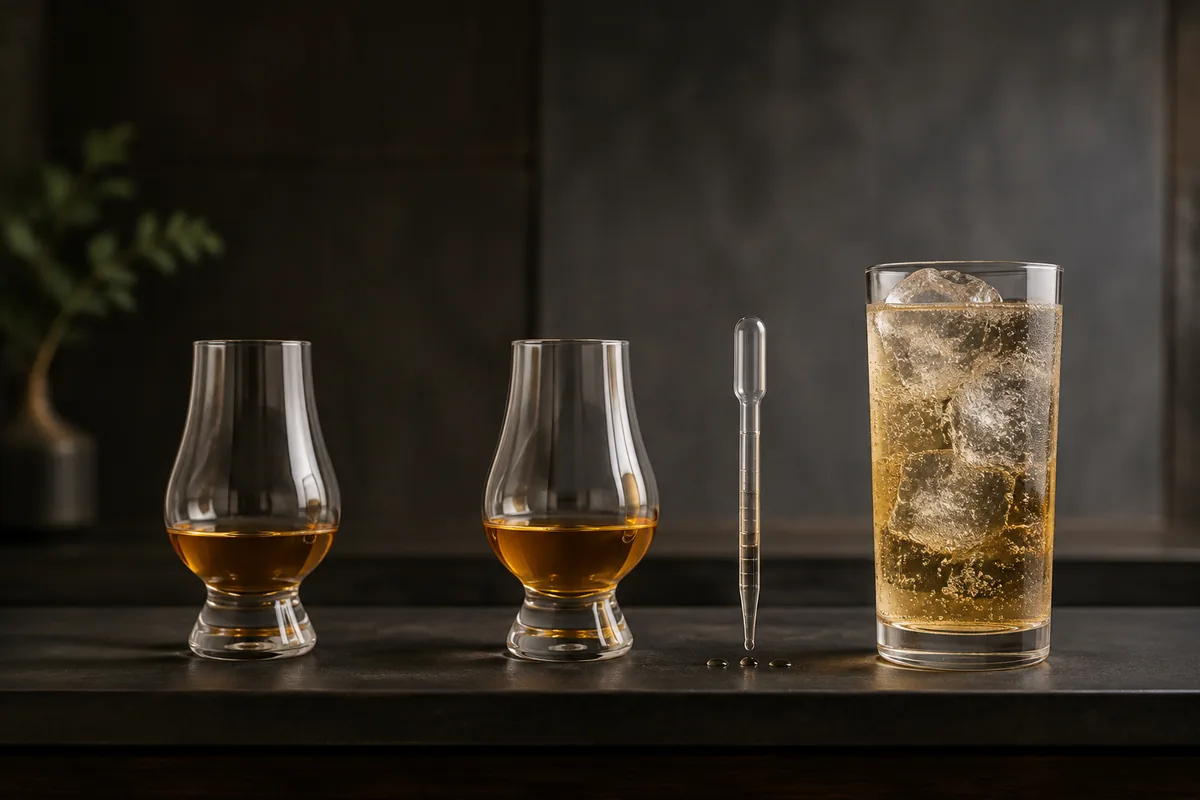
Use the same tasting procedure for each whisky before comparing a neat sample with a highball.
No serving ritual can determine impairment or make a drinking decision safe. Sensory smoothness, ice, food and familiarity do not reduce the amount of alcohol already poured.
Which foods pair with different Japanese whisky styles?
Pair from body and flavour rather than nationality.
A light grain-led blend, a rich wine-cask malt and a smoky high-strength whisky need different food intensity even when all qualify as Japanese whisky.
| Whisky direction | Food direction | Balance to watch |
|---|---|---|
| Light and floral | Mild seafood, fresh cheese, pear or lightly seasoned poultry | Heavy sweetness and smoke can bury delicate aroma |
| Fruit and vanilla | Roast pork, mushrooms, nuts or restrained fruit dessert | Too much sugar can flatten cereal and oak detail |
| Smoke and spice | Charred vegetables, grilled meat or aged cheese | Chilli may magnify alcohol heat |
| Highball | Crisp fried food, salty snacks or a light meal | Weak carbonation and melting ice can make the serve dull |
Japanese food is not required.
Shared nationality can inspire a menu, but intensity, fat, salt, acidity, sweetness and texture do the actual balancing.
A highball's dilution and carbonation may sit comfortably beside crisp fried food, while the same whisky served neat can feel heavier and hotter. Treat serving format as part of the pairing.
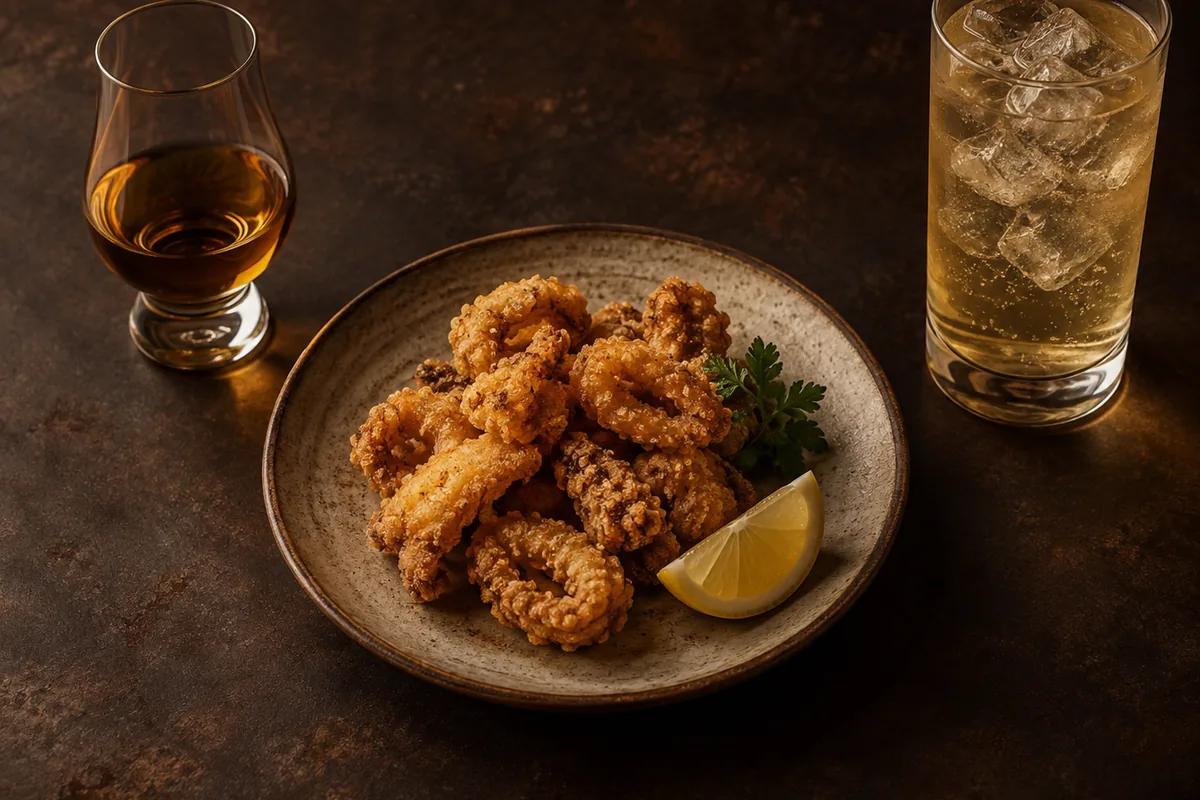
Take one bite and one measured sip, then check whether either becomes harsh, dull or bitter. Change the intensity when the match fails rather than forcing a cultural theme.
Food can alter absorption and perception, but it does not cancel the alcohol consumed.
How do storage and strength affect the bottle?
A Japanese origin claim does not imply a special bottle-storage method. Follow opened-bottle storage guidance and keep the original label available, particularly if decanting would separate the whisky from its identity and ABV.
Cloudiness after chilling or adding water may occur in non-chill-filtered whisky and does not alone prove spoilage.
Foreign matter, an unknown refill, active pressure, closure failure or a clearly abnormal odour deserves more concern.
Making a highball adds liquid to the glass without subtracting alcohol from the whisky measure. Compare serves using both the measured whisky volume and its printed ABV; the standard-drink guidance explains why a glass or a highball is not a fixed alcohol unit.
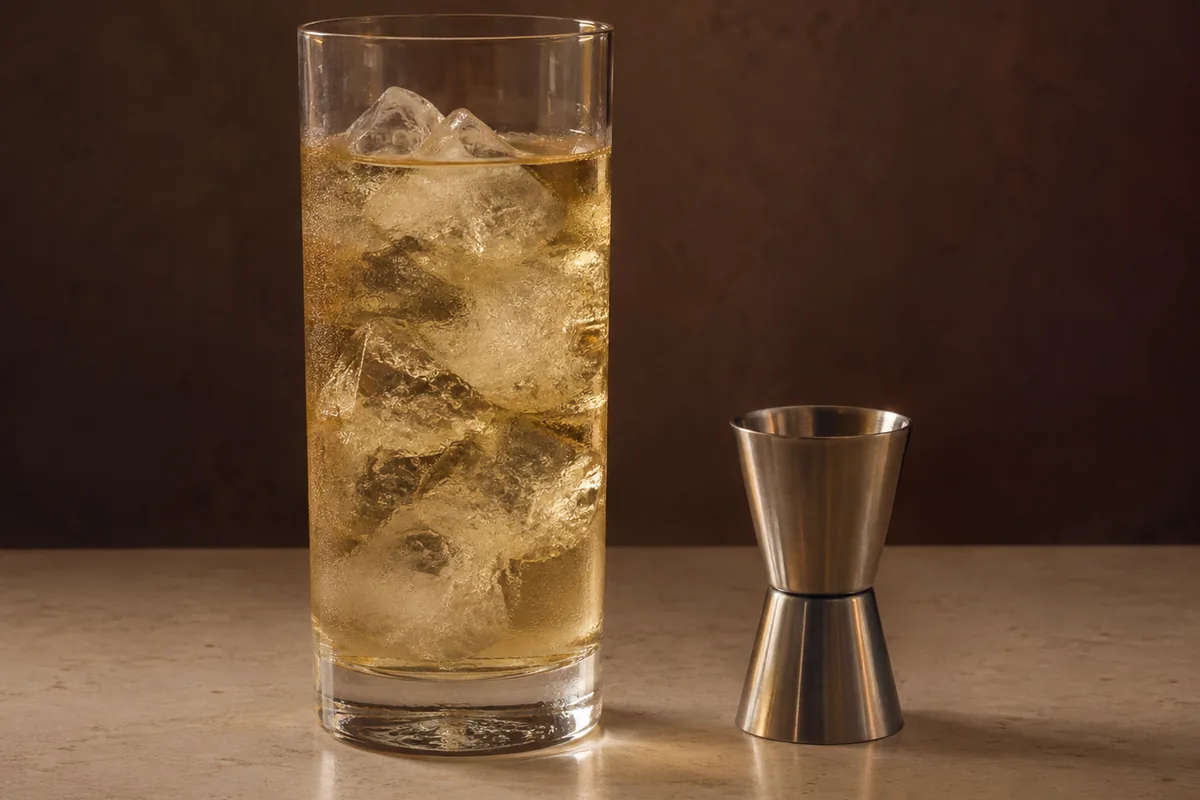
A 30 mL pour at 55% contains more alcohol than 30 mL at 40%, even when both later become highballs.
Water and ice reduce concentration but do not remove the alcohol already measured. The complete answer stays evidence-led: qualifying Japanese whisky follows a domestic production chain under the JSLMA standard, while type, cask, flavour and service still belong to the individual bottle.
Common questions
- Is Japanese whisky defined by law?
- The current detailed identity is a voluntary JSLMA trade-association labeling standard rather than a national statutory whisky definition. It applies to association members and reached full implementation in April 2024.
- Does Japanese whisky have to use Japanese oak?
- No. The JSLMA standard requires wooden casks no larger than 700 litres but does not require mizunara or any single oak species.
- How long must Japanese whisky mature?
- Under the JSLMA standard, it must mature in Japan for at least three years in wooden casks with a capacity no greater than 700 litres.
Sources
-
JSLMA Full Implementation Notice
Published 2024. Accessed 7 September 2026.
-
JSLMA Standards for Labeling Japanese Whisky
Published 2021. Accessed 7 September 2026.
-
Japan National Tax Agency, Liquor Administration Report
Published 2021. Accessed 7 September 2026.
-
NIAAA, What Is a Standard Drink?
Accessed 13 September 2026.
More in Spirits
-
 American single malt whisky
01
What is American single malt whisky, and what does it guarantee?
-
 Australian whisky
02
How is Australian whisky defined, and by which law?
-
 Black rum
03
What is black rum, and does the colour mean anything?
-
 Blended American whiskey
04
What is blended American whiskey, and how much of it is whiskey?
-
 Blended Irish whiskey
05
Blended Irish whiskey: which word counts the distilleries?
-
 Blended Scotch
06
Blended Scotch: what is in it, and why does the recipe change?