
Spirits
What is port cask whisky, and what does the cask add?
Port cask whisky has matured or finished in oak that previously held protected Port wine. The phrase establishes a cask history, but not the Port style, fill count, duration, sweetness, or flavour outcome.
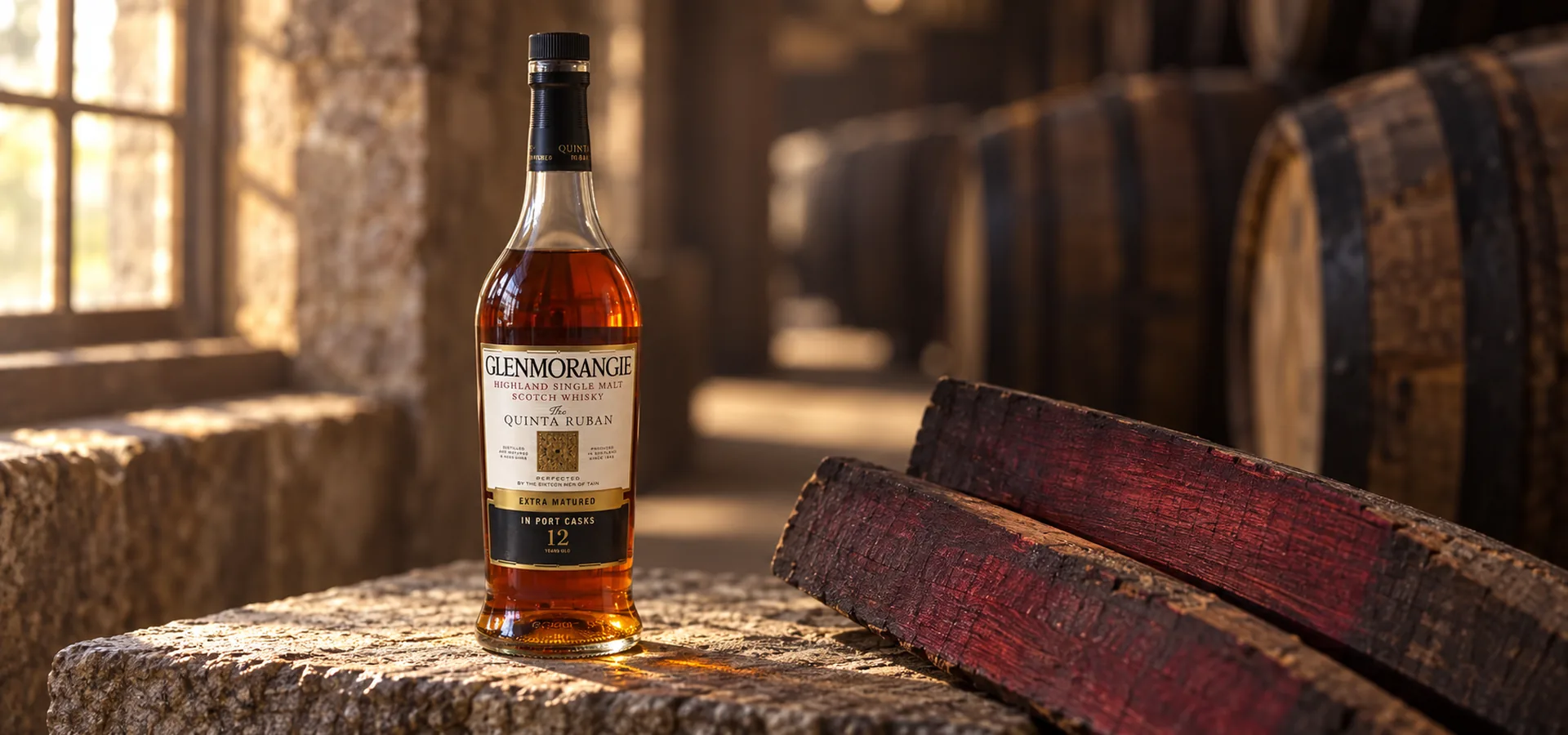
At a glance
- Legal category
- A maturation description rather than a standalone whisky class. The whisky and the former Port cask must each satisfy the rules governing their protected names.
- Minimum strength
- 40 percent ABV
What is port cask whisky?
Port cask whisky is whisky matured or finished in oak that previously held protected Port wine.
The phrase identifies a cask history, not a separate whisky class and not a guaranteed flavour.
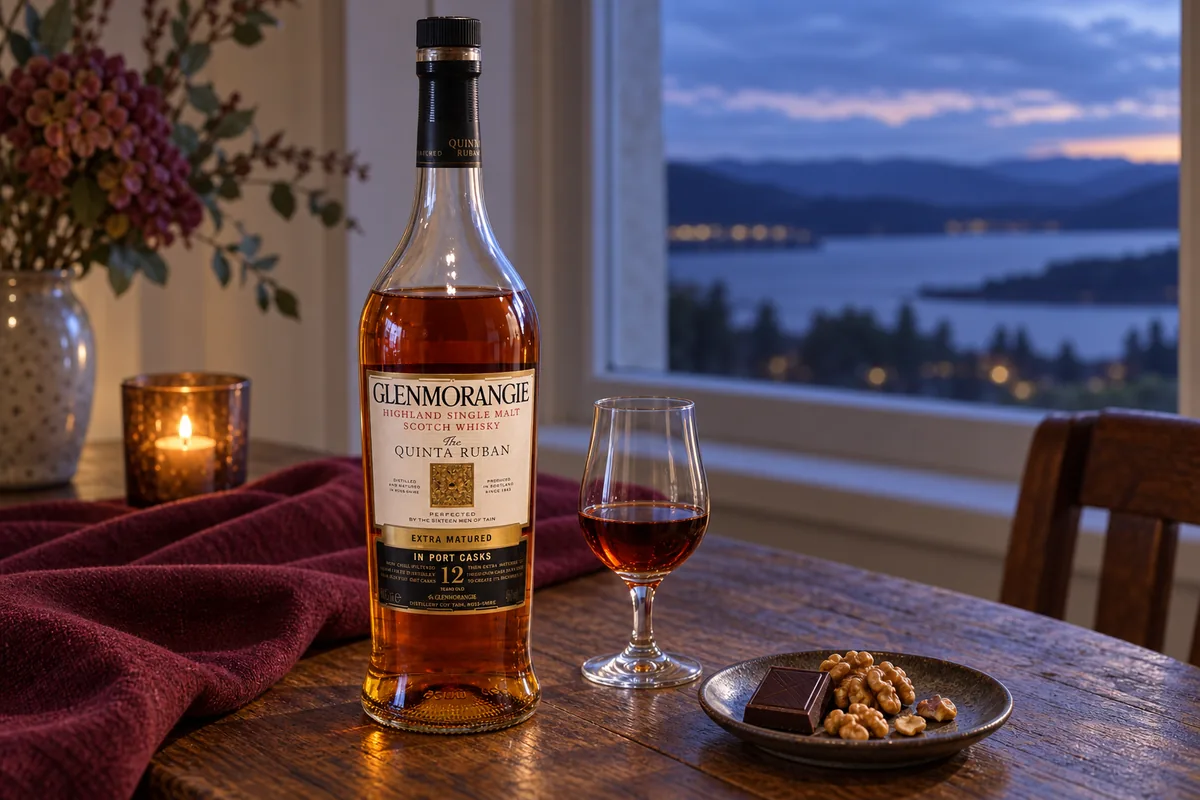
Port comes from Portugal's Douro Demarcated Region and is fortified during production. An empty former Port cask can then be used for whisky where the governing whisky rules permit that cask history.
- Previous occupant
- Protected Port wine from the Douro
- Whisky status
- A maturation description, not a standalone class
- Possible chronology
- Main maturation or a later finish
- Common unknowns
- Port style, duration, cask size, and refill count
The words establish that Port preceded the whisky in the wood. They do not establish how much wine remained, whether the cask was dismantled and reconditioned, how many times whisky used it, or how long this whisky stayed there.
Port cask starts a question, not an answer. The useful follow-up is which Port, which fill, and which part of maturation.
Port-seasoned is sometimes used where a cask was prepared with wine specifically for later whisky maturation, while ex-Port can imply previous use in ordinary Port production.
Wording and practice vary, so the producer's cask description matters more than an assumed universal distinction.
The protected wine name also sets a boundary. A cask that held another fortified wine may be entirely legitimate for whisky, but it should not be called Port merely because the earlier wine was sweet, strong, or red.
What Port contributed before the whisky arrived
Port is fortified wine made in the Douro, and fermentation is stopped by adding grape spirit.
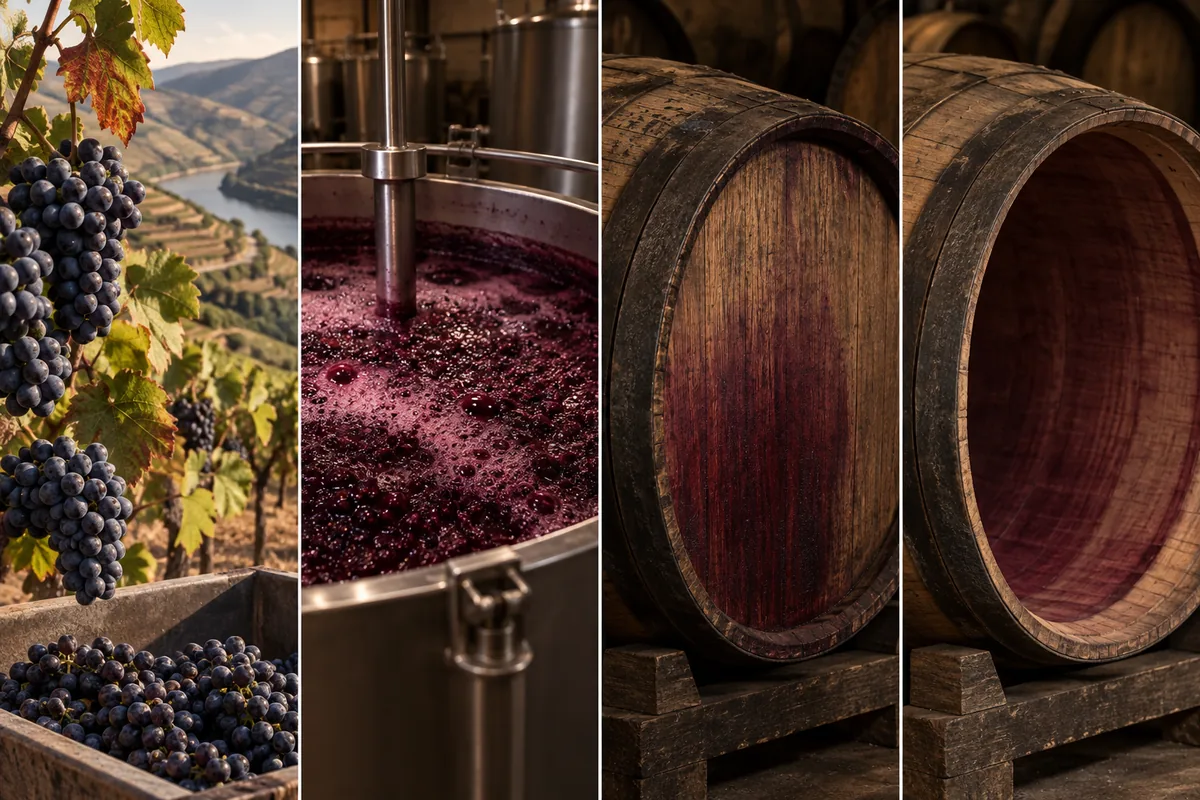
The finished wine is generally between 19% and 22% ABV, but its maturation can follow very different paths before a cask becomes available to whisky.
| Port family | Typical development | Why it matters to the empty cask |
|---|---|---|
| Ruby | Fruit is protected through comparatively limited oxidative wood ageing | The previous wine can be strongly fruit-led, but the specific category and vessel still matter |
| Tawny | Longer oxidative development in wood, with age-indicated and Colheita categories | Wood exposure and oxidative wine character may be more developed before whisky use |
| White | Made from white grapes in dry to sweet styles | Neither red colour nor a red-fruit assumption belongs automatically |
| Rosé | A modern pink Port style with limited extraction | The name Port alone still does not identify a conventional dark wine history |
Within those families, categories differ again. Late Bottled Vintage normally spends four to six years in wood, while Colheita is a single-vintage Tawny aged in cask for at least seven years before bottling.
A barrel associated with long wood-aged Tawny therefore has a different use history from a vessel involved in more protected Ruby handling. Yet a whisky label saying only port cask may reveal neither source category.
Port is not one liquid and a Port cask is not one specification. Protected origin tells you the wine was genuinely Port; it does not erase style, vessel, and cellar differences.
Ruby styles are commonly associated with vivid primary fruit, while Tawny styles develop more oxidative nut, peel, and wood-led character.
Those are directions within broad families, not compounds guaranteed to remain in a particular emptied cask.
Cask format can differ from the small oak barrel a reader pictures. Port production and ageing use vessels of varied size and condition, and whisky producers may source, rebuild, or resize wood before filling it.
Full maturation and finishing are not the same
Full maturation places new spirit into the former Port cask for the principal ageing period.
Finishing moves whisky that has already spent time in another cask into former Port oak for a later stage.
| Question | Port cask maturation | Port cask finish |
|---|---|---|
| Where the spirit starts | Former Port oak | Another qualifying cask |
| When Port oak enters | At the beginning of maturation | After the whisky has already matured elsewhere |
| What the phrase proves | The main cask history includes former Port oak | Later contact with former Port oak |
| What may remain unknown | Duration, fill count, Port style, and cask condition | Both durations, both casks, fill count, and Port style |
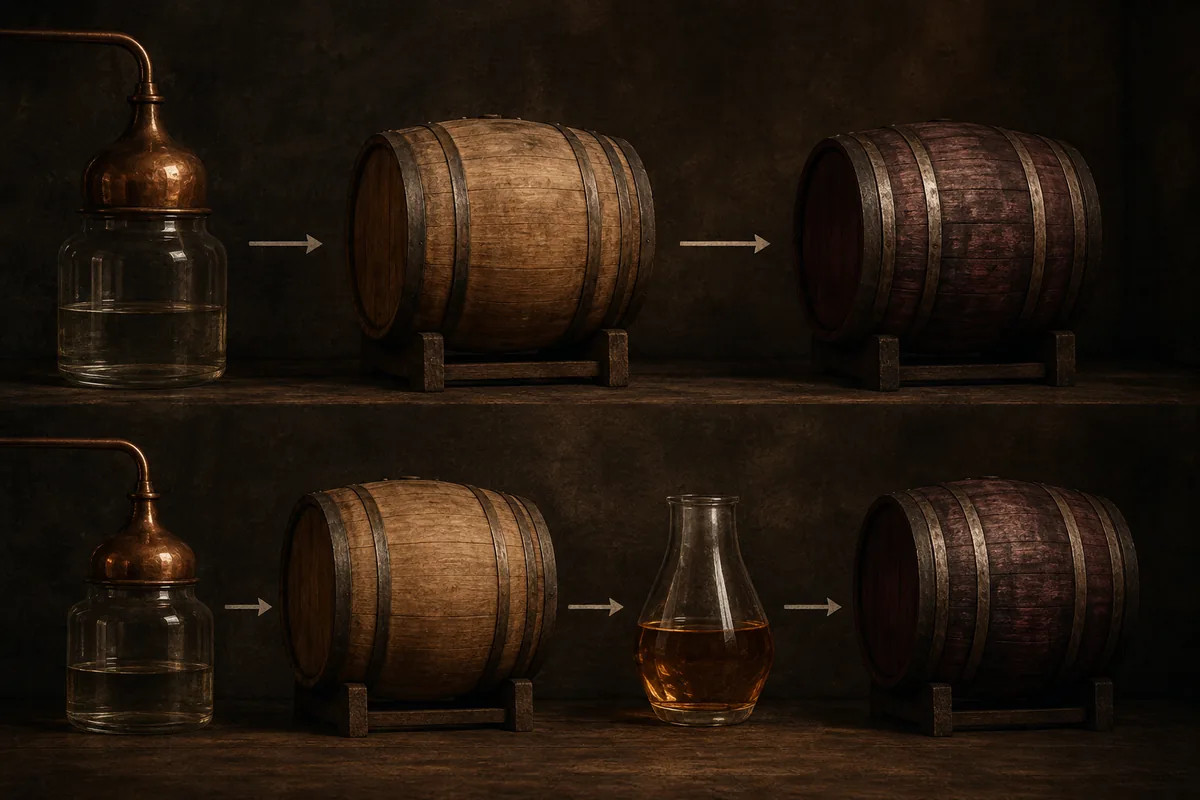
The Scotch Whisky Technical File permits oak casks previously used for wine, including fortified wine, subject to exclusions and traditional practice. It also says casks must be empty of their previous contents before being used for Scotch whisky.
Empty does not mean chemically blank.
Wine absorbed into surface wood, compounds already extracted or transformed, oak treatment, and the condition of the staves continue to shape the next fill.
Timeline words do not measure duration. Matured and finished identify chronology, while the label or technical sheet must supply the actual time.
No universal number of weeks or months separates finishing from maturation in ordinary label language. If duration matters to the decision, it must be stated or documented rather than inferred from the verb.
A finish can be short relative to the earlier maturation and still have a strong sensory effect when the cask is active. A longer finish can also become drying or wood-led, so duration should be read as history rather than as a score.
Age labelling follows the youngest whisky in the bottle under the applicable rule, not the duration of the final cask stage. A twelve-year-old whisky finished for months in former Port oak remains twelve years old because the whole maturation period, not one cask, supports the claim.
What the cask can contribute
A former Port cask brings two histories into contact with the whisky: the oak's own extraction and the wine's earlier interaction with that wood.
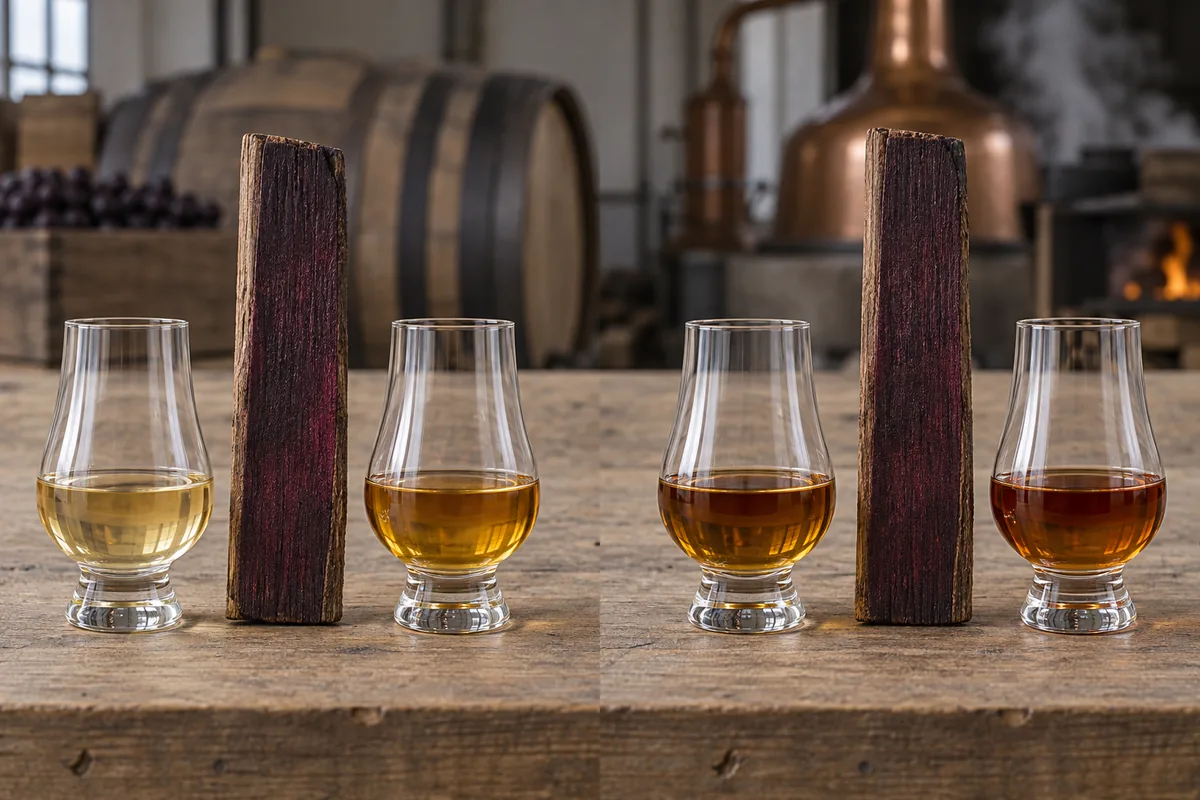
The base spirit and its earlier cask history form a third influence when this is a finish.
| Observation | Plausible contributors | Why it is not proof |
|---|---|---|
| Berry, plum, raisin, fig | Wine-derived compounds, oxidation, fermentation esters, or another previous cask | Fruit aroma can exist in spirit before Port oak |
| Walnut, leather, dried peel | Oxidative Port history, long wood contact, or mature whisky compounds | No single note identifies Tawny Port |
| Vanilla, toast, clove, tannin | Oak species, heat treatment, and extraction | These are not unique to Port-seasoned wood |
| Reddish amber colour | Wine residue, oak extraction, base whisky, blending, or permitted caramel | Several causes can produce a similar shade |
Freshness of the cask matters because readily extractable wine and wood compounds decline with use. Time matters as well, but longer contact can increase tannin or imbalance just as readily as it can deepen integration.
The whisky itself is active in the result.
A light new make may show wine influence quickly, while a robust or peated spirit can keep more of its original character beside the cask.
A cask offers possibilities, not guarantees. The label supports a production history; sensory conclusions still belong to the actual glass.
Residual liquid is not the only route of transfer. Wine can penetrate the wood near the surface, and compounds can later move back into whisky alongside fresh oak extraction and reaction products.
Spirit strength changes extraction and perception because water and ethanol dissolve different compounds with different efficiency. Entry strength, later evaporation, and bottling reduction therefore belong beside cask history when interpreting the result.
Why refill history matters
A cask used for whisky soon after holding Port usually begins with more wine retained near the wood surface and more readily available extraction than it will after repeated whisky fills.
Later reuse may be gentler, but the effect does not fall by a fixed percentage.
Casks may also be repaired, re-coopered, resized, scraped, re-toasted, or re-charred according to the producer's system and the applicable rules. Each action changes surface area or exposes a different layer of wood.
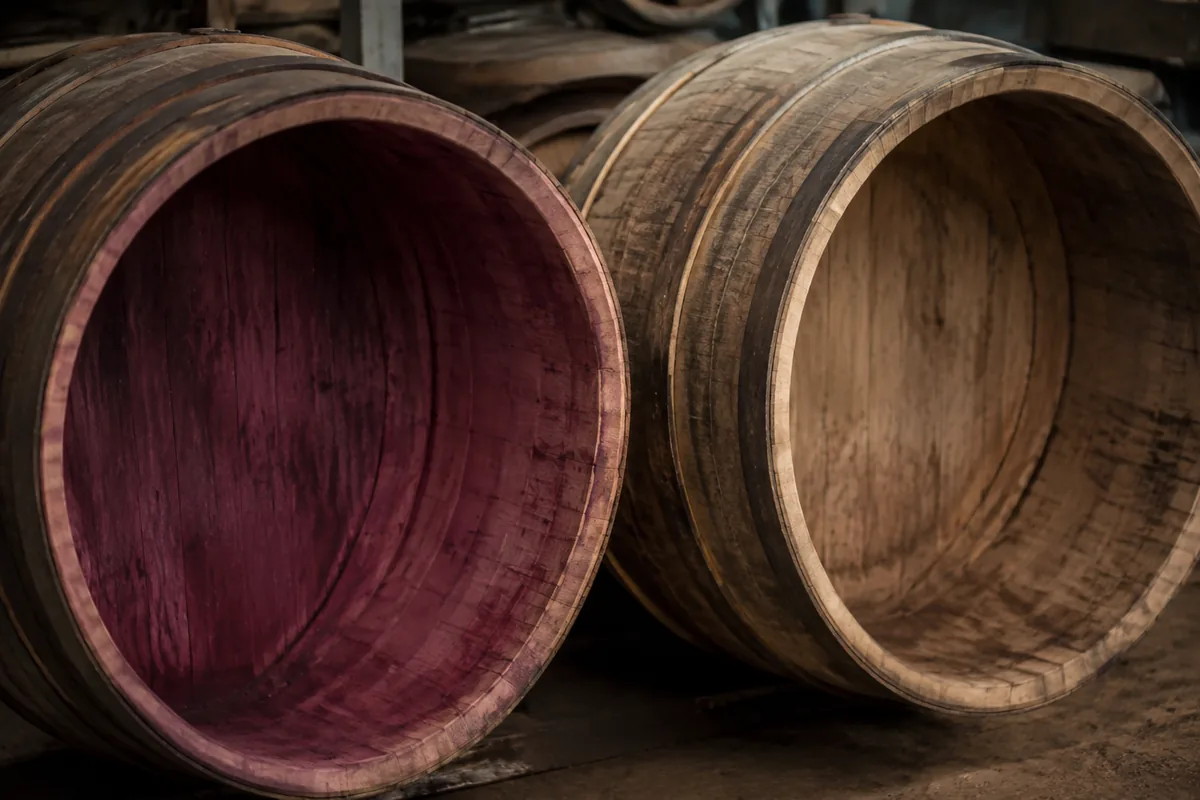
Volume changes the wood-to-liquid relationship. A smaller cask presents more surface area for each litre, although temperature, fill level, wood condition, and time prevent that ratio from becoming a simple speed claim.
A label that gives a cask number can identify a batch or vessel without explaining any of those variables.
Single-cask wording reports the number of casks supplying the bottle, not how informative that cask's history is.
Ask for documented Port style, maturation order, time, and fill history when those facts drive a purchase. When they are absent, the honest conclusion is that they remain unknown.
Cooperage history can be partly physical rather than chemical. A cask assembled from staves with different prior use or repaired with replacement wood does not behave as one uniform surface.
Leak testing and transport also influence condition before whisky filling. None of those details makes the cask invalid, but they show why the protected wine name cannot function as a full technical specification.
Colour is evidence of several things at once
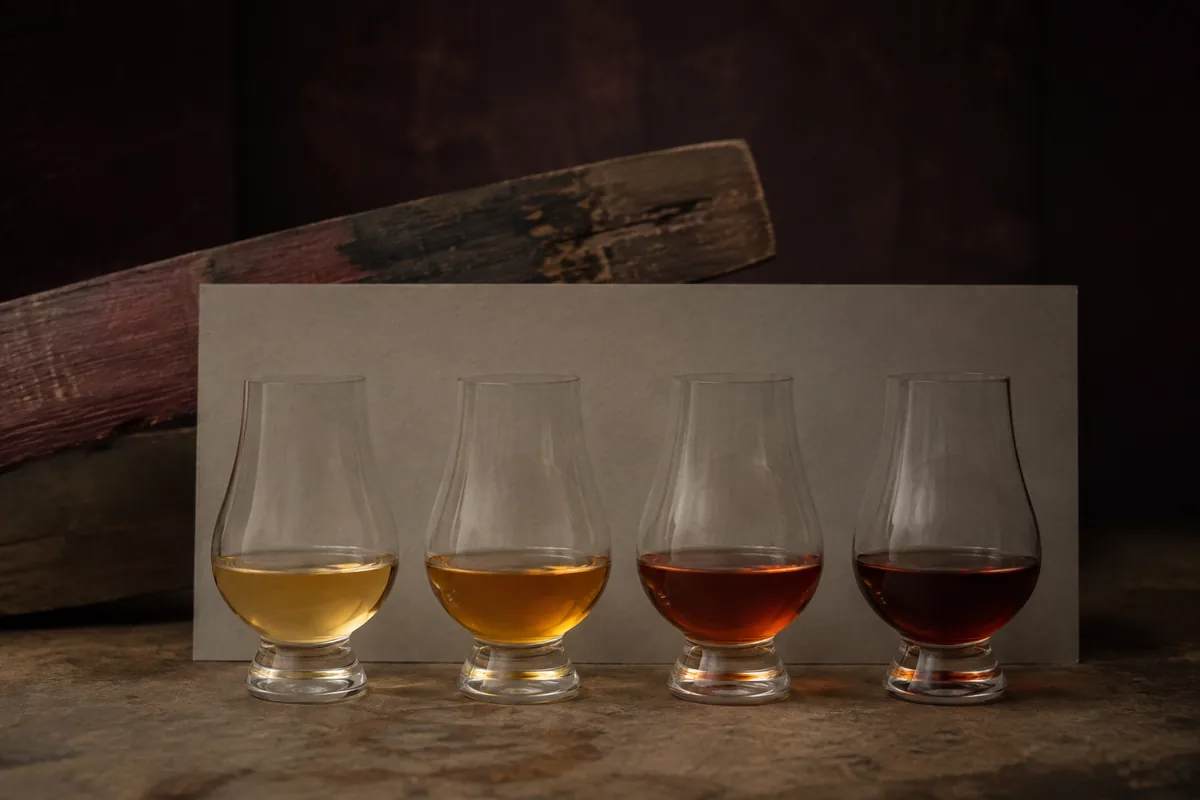
Former Port oak can deepen amber colour or contribute a red cast, especially when the cask retains wine-derived material near its surface.
The observation is plausible without being diagnostic.
Earlier maturation may already have coloured a finished whisky, while fresh oak, char, toast, time, and blending can reach similar shades. Scotch may also contain plain caramel colouring, which can adjust appearance without supplying Port flavour.
Dark or red colour does not prove Port cask influence. It cannot establish the Port style, duration, refill count, age, sweetness, or quality of the whisky.
Photography adds another uncertainty through white balance, glass thickness, background, and lighting. Even two images of the same liquid can look like different cask treatments.
The label and producer documentation are better evidence for cask history.
The glass can then show whether the claimed production choice is sensorially prominent, integrated, or difficult to isolate.
Sweetness is another unreliable inference because aroma and dissolved sugar are different. Fruit, vanilla, ethanol, and oak lactones can suggest sweetness even when analysis would show little sugar in the finished whisky.
Tannin and alcohol can instead make a deeply coloured whisky seem dry or astringent. The visual expectation set by red Port may therefore pull the tasting note toward an answer that composition does not support.
How to read a Port cask label
Read from the most regulated fact toward the least complete description.
Start with the whisky designation and origin, then age and alcohol content, before asking what the cask wording adds.
- Named Port style: Ruby, Tawny, White, LBV, or another protected category narrows the wine history.
- Matured or finished: the verb identifies chronology, although it may not give duration.
- Time in the cask: an explicit period answers more than words such as lengthy or extended.
- Age statement: this reports the youngest qualifying whisky, not the time spent in the final cask alone.
- Cask count and number: these identify batch structure, not cask freshness or quality.
- Alcohol content: this mandatory measurement changes the alcohol in a given pour.
Port must be genuine protected Port for the name to carry its geographic meaning. A vague phrase such as fortified-wine cask is broader and should not be silently upgraded to Port.
A producer may disclose excellent detail without putting every fact on the front label. Technical sheets can add duration, wine type, cooperage, and fill history, but each remains the producer's documented claim rather than something colour can verify.
The best label is not necessarily the most verbose one.
The practical test is whether it answers the particular cask question influencing your decision.
A vintage on the earlier Port would describe the wine, while the whisky's age statement describes the youngest whisky. When both numbers appear in supporting material, they refer to separate products and clocks rather than combining into one older age.
Cask strength wording answers yet another question: whether water was added before bottling. It does not say whether the former Port wood was fresh, how long finishing lasted, or how intense the cask influence became.
Tasting, serving, and pairing
To investigate cask influence, compare the Port cask whisky with a related release made from similar spirit at similar strength where one exists.
That comparison can reduce differences, although it cannot hold age, warehouse, and every cask variable perfectly constant.
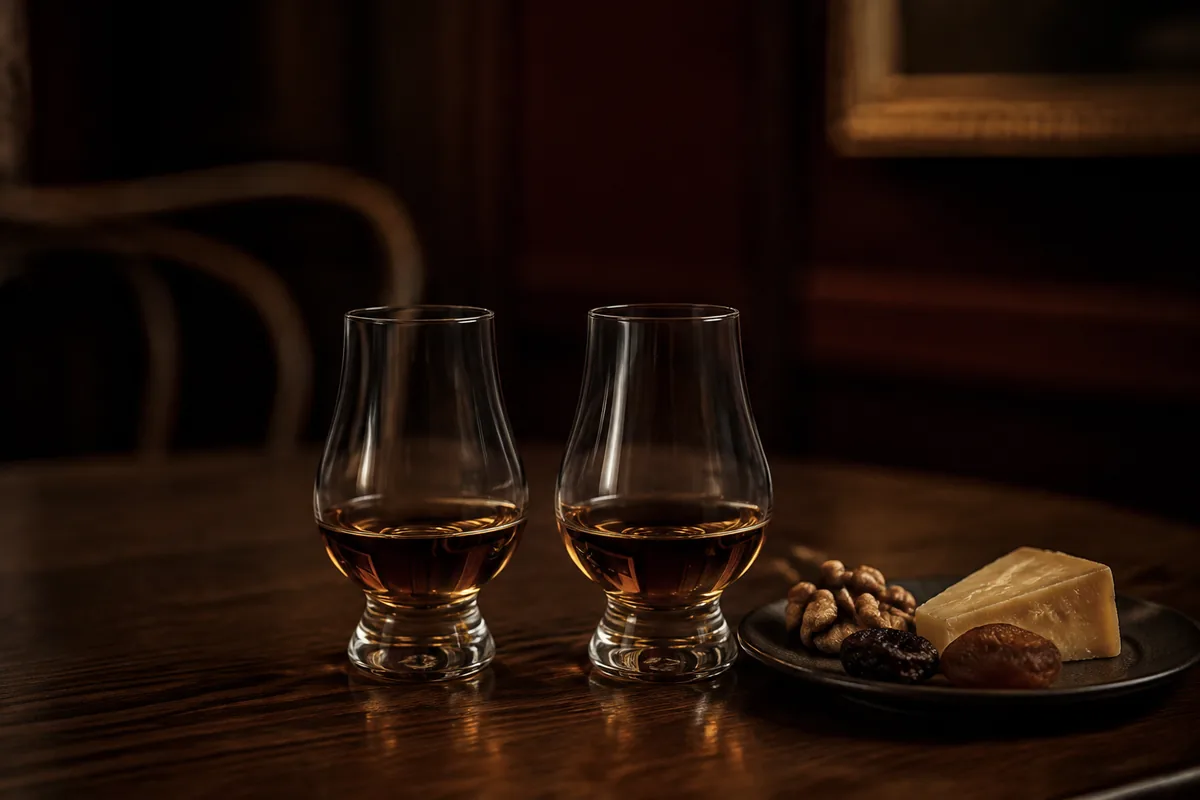
Smell and taste before adding water, then dilute in small steps if the strength masks aroma. Water changes concentration and volatility but does not remove the total alcohol already poured.
Rich cheese, toasted nuts, dried-fruit desserts, dark chocolate, and roast meats can meet the intensity often associated with Port-cask maturation.
Very sweet food may make a drier whisky seem thin, while delicate dishes can disappear beside tannin, smoke, or high alcohol.
- Match intensity: start with the whisky's actual aroma, sweetness, tannin, smoke, and strength rather than the cask name.
- Check sweetness: a very sweet dessert can flatten a comparatively dry whisky.
- Check smoke and tannin: delicate food can disappear beside either one.
These are balance principles rather than a mandatory list. A whisky with subtle wine influence needs a different partner from a heavily tannic or strongly peated one despite sharing the same cask phrase.
Port cask whisky storage still calls for a vertical bottle, steady room conditions, and protection from strong light. Its former wine history does not make the bottled whisky continue ageing or require side storage.
Count alcohol from the pour and stated ABV.
Cask finishing changes flavour and history, not impairment, and no tasting comparison can establish that someone is safe to drive.
Port cask is useful when it is read as documented chronology. It becomes misleading only when the reader asks those two words to prove colour, sweetness, age, and quality at once.
Common questions
- Is Port cask whisky sweet?
- It can show sweet or fruit-led impressions, but the cask phrase does not guarantee residual sugar or a sweet taste. Base spirit, Port style, cask condition, duration, and strength all affect perception.
- What is the difference between Port cask maturation and finishing?
- Main maturation starts the spirit in former Port oak, while finishing moves already matured whisky into that cask later. The wording may still omit both durations.
- Does red colour prove a Port cask?
- No. Former Port oak can affect colour, but base maturation, oak treatment, blending, permitted caramel, lighting, and photography can create similar shades.
Sources
-
Port Wine introduction, Instituto dos Vinhos do Douro e do Porto
Accessed 7 September 2026.
-
Regulation (EU) 2019/787 on spirit drinks
Accessed 7 September 2026.
-
Scotch Whisky Technical File, June 2019, the gov.uk product specification for the Scotch Whisky geographical indication, quoting the Scotch Whisky Regulations 2009 regulation 3
Accessed 4 September 2026.
-
Special categories of Port, Instituto dos Vinhos do Douro e do Porto
Accessed 7 September 2026.
-
What is a standard drink?
Accessed 7 September 2026.
More in Spirits
-
 American single malt whisky
01
What is American single malt whisky, and what does it guarantee?
-
 Australian whisky
02
How is Australian whisky defined, and by which law?
-
 Black rum
03
What is black rum, and does the colour mean anything?
-
 Blended American whiskey
04
What is blended American whiskey, and how much of it is whiskey?
-
 Blended Irish whiskey
05
Blended Irish whiskey: which word counts the distilleries?
-
 Blended Scotch
06
Blended Scotch: what is in it, and why does the recipe change?