
Liqueurs
What Is Chestnut Liqueur, and What Does Crème Mean?
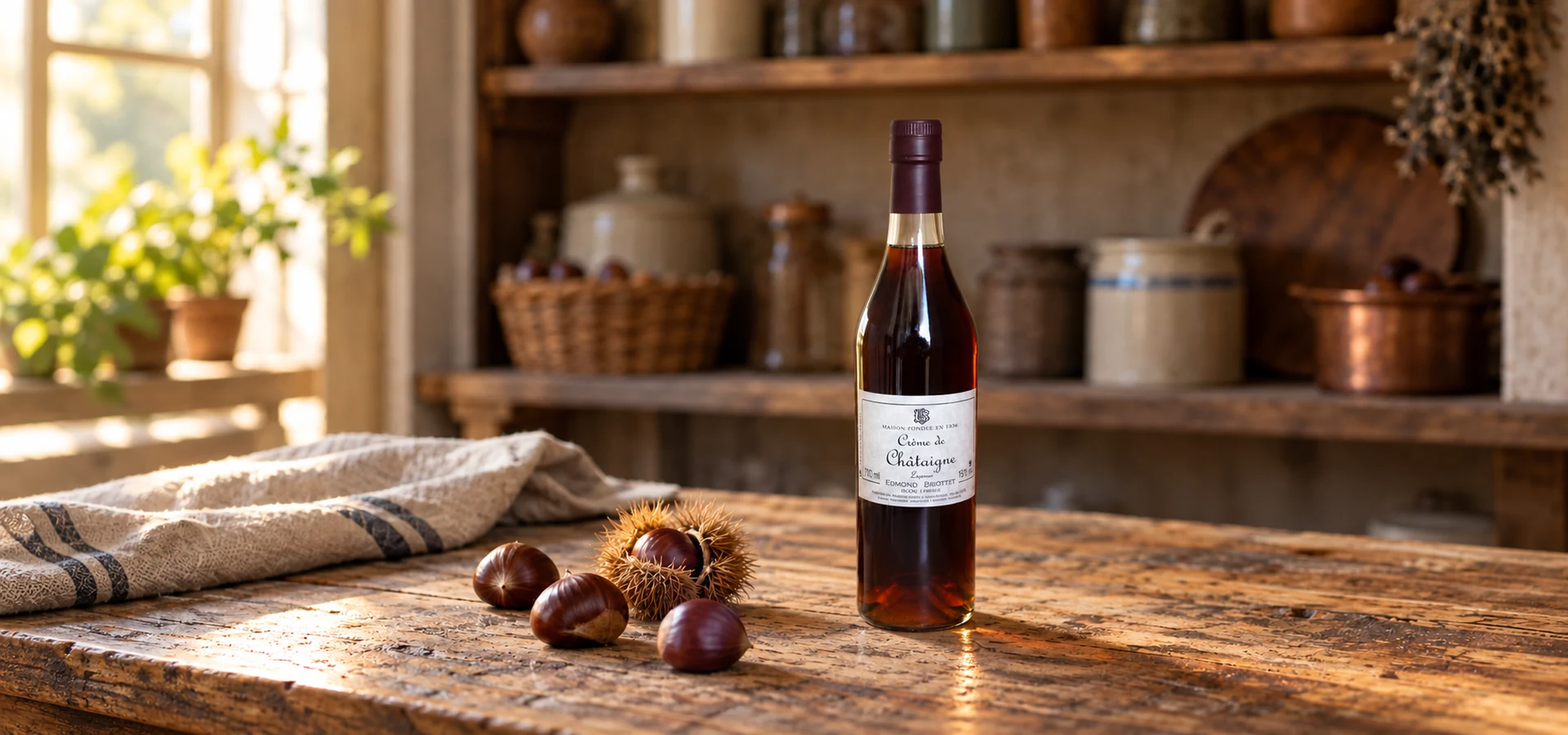
Chestnut liqueur is a sweetened spirit drink whose leading flavour is chestnut. Its most useful distinction is on the label: some bottles use infused or macerated chestnuts, others rely partly on natural flavouring, and the French word crème describes a sweeter liqueur category rather than dairy cream.
At a glance
- Legal category
- In the European Union, liqueur generally requires at least 15% ABV and 100 g/L of sweetening, while the legal name crème de plus a raw material requires at least 250 g/L and excludes milk products. In the United States, TTB defines liqueur or cordial through distilled spirits, flavouring materials, and at least 2.5% sugar by weight.
- Typical strength
- 16 to 25 percent ABV
- Range basis
- The 16% to 25% ABV span records current producer examples, not a universal legal or market range. Formula, chestnut source, sweetness, and storage directions remain bottle-specific.
What is chestnut liqueur?
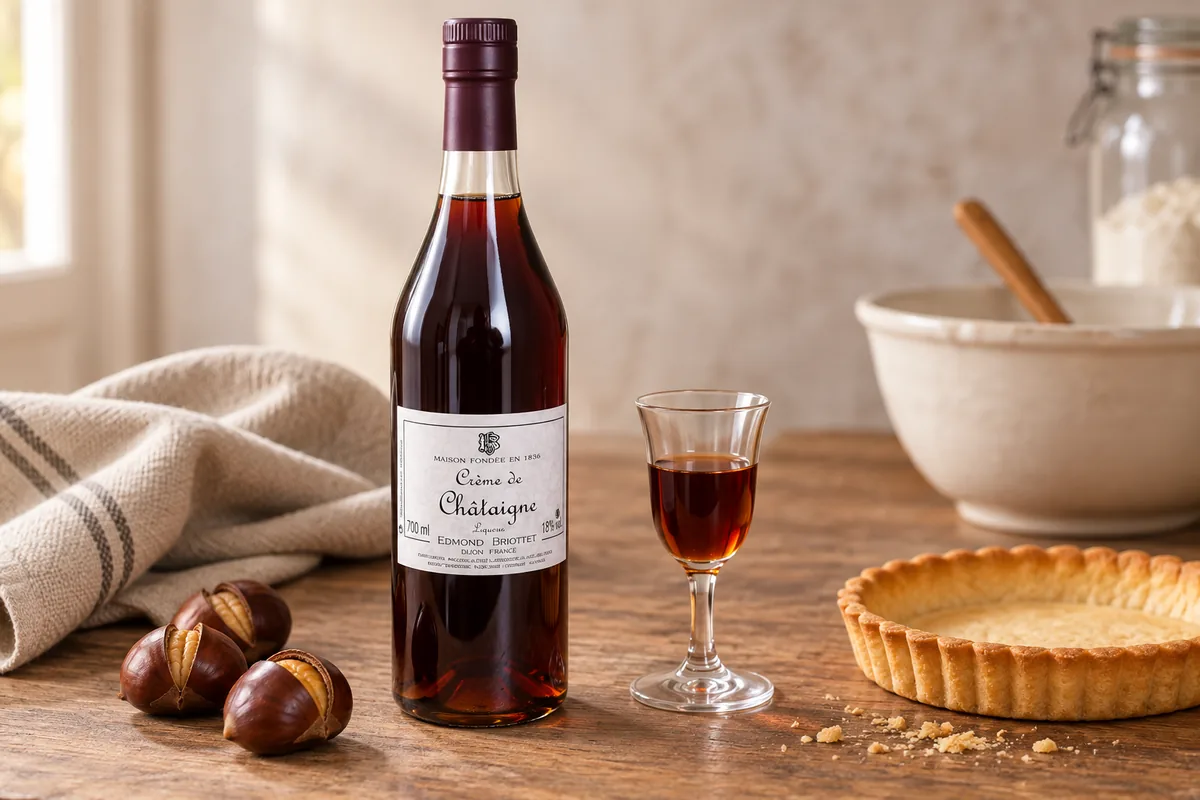
Chestnut liqueur is an alcoholic, sweetened drink built so chestnut is the leading flavour. It usually appears amber, copper, or brown, but colour alone cannot show whether the flavour came from whole chestnuts, an infusion, a distillate, natural flavouring, caramel, or a combination.
The category is especially associated with French products labelled liqueur de châtaigne or crème de châtaigne. Those names describe related drinks, but they do not establish one worldwide recipe, one chestnut-growing region, or one alcohol level.
- Leading flavour
- Chestnut
- Typical appearance
- Gold, amber, copper, or brown
- Current examples checked
- 16% to 25% ABV
- Most useful bottle clues
- Legal name, ingredients, ABV, chestnut claim, storage directions
United States and European rules define the larger liqueur family differently.
TTB describes a liqueur or cordial as distilled spirits mixed or redistilled with flavouring materials and containing at least 2.5% sugar by weight, while European Union category 33 generally requires at least 100 grams of sweetening per litre and at least 15% ABV.
Neither rule creates a special, globally uniform chestnut formula. The bottle therefore carries more decision-making value than the brown liquid: it can tell you the legal designation, actual ABV, ingredient route, origin claim, colourants, and any special handling instruction.
Chestnut liqueur is also distinct from a distilled chestnut spirit. A liqueur is deliberately sweetened and flavoured, whereas a dry spirit or eau-de-vie can be much less sweet and may sit at a higher strength under a different legal category.
The practical answer is narrow but dependable. Expect a sweet chestnut-led alcoholic drink, then verify everything more specific from the label and producer rather than extending one regional or branded formula across the category.
Does crème de châtaigne contain dairy?
The word crème on a French-style chestnut liqueur does not mean that cream was added.
In European Union category 34, crème de followed by a fruit or other raw material is a liqueur with at least 250 grams of sweetening per litre, at least 15% ABV, and a predominant flavour from the named material.
That same category specifically excludes milk and milk products as raw materials. The term therefore signals a legal sweetness class in that jurisdiction, not the creamy dairy emulsion found in drinks sold as cream liqueurs.
| Name | What it is | What changes in use |
|---|---|---|
| Chestnut liqueur | A sweetened alcoholic drink with chestnut as the leading flavour | Adds alcohol, sweetness, aroma, and liquid volume |
| Crème de châtaigne | In the EU legal category, a chestnut-led liqueur with at least 250 g/L of sweetening and no milk products | Usually brings pronounced sweetness, so balance it against dry or bitter ingredients |
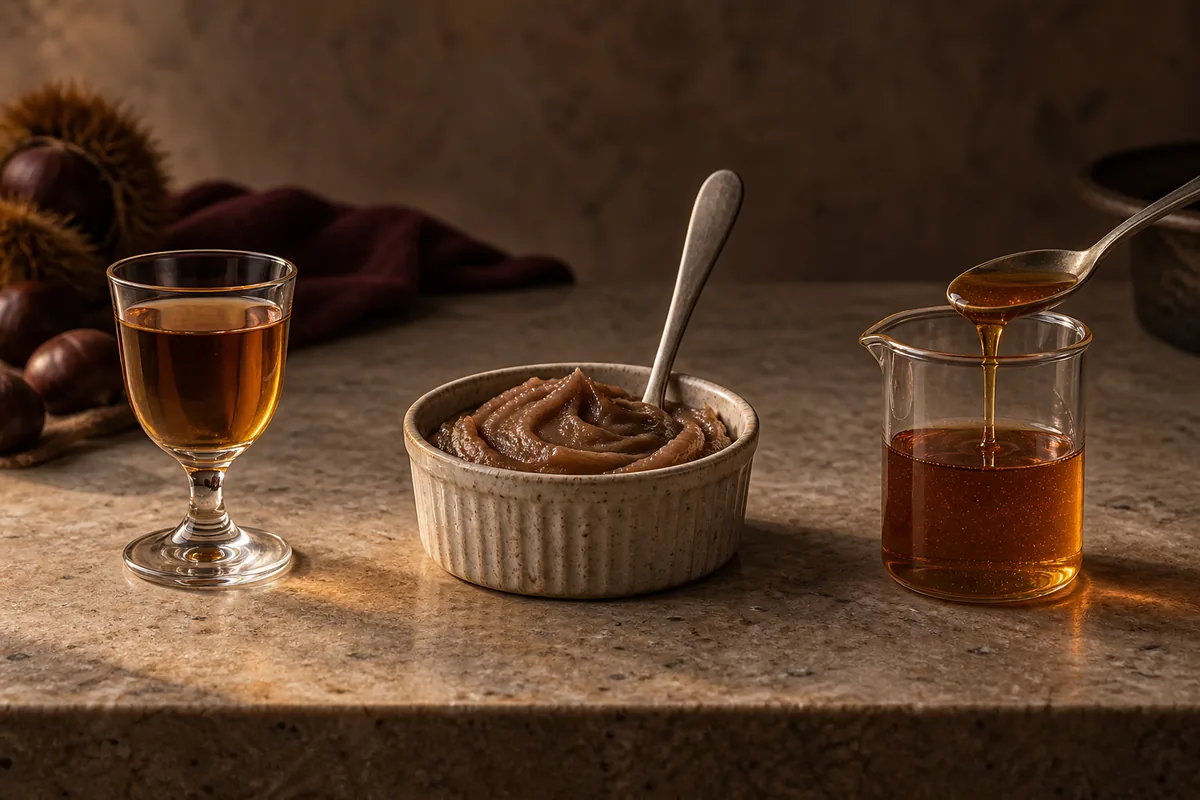
| Chestnut cream or crème de marrons | A spoonable food made from chestnuts and sugar, sometimes with vanilla | Adds solids and body but is not a pour-for-pour liqueur substitute |
| Chestnut syrup | A non-alcoholic sweetener and flavouring unless its label states otherwise | Adds sugar and flavour without replacing the liqueur's ethanol |
The food product called crème de marrons creates a second confusion. One current Clément Faugier version lists chestnuts, sugar, candied chestnuts, glucose syrup, and vanilla extract; it is a dense spread rather than a spirit drink.
A chestnut syrup creates the opposite substitution problem. It may pour easily, but removing the alcohol and changing the sugar concentration can alter dilution, texture, and balance even if the aroma seems similar.
Outside the European Union, the legal force of crème de can differ. Read the country-specific legal designation and ingredient statement instead of assuming that every use of the French words proves the EU sugar threshold.
Fast distinction: Crème de châtaigne is a liqueur name, while crème de marrons is normally a chestnut food spread. Similar words do not make them interchangeable.
How is chestnut liqueur made?
Commercial producers can reach a chestnut-led result through more than one extraction and blending route.
The important question is not whether a bottle follows a romantic single method, but which chestnut materials and flavouring preparations the producer actually discloses.
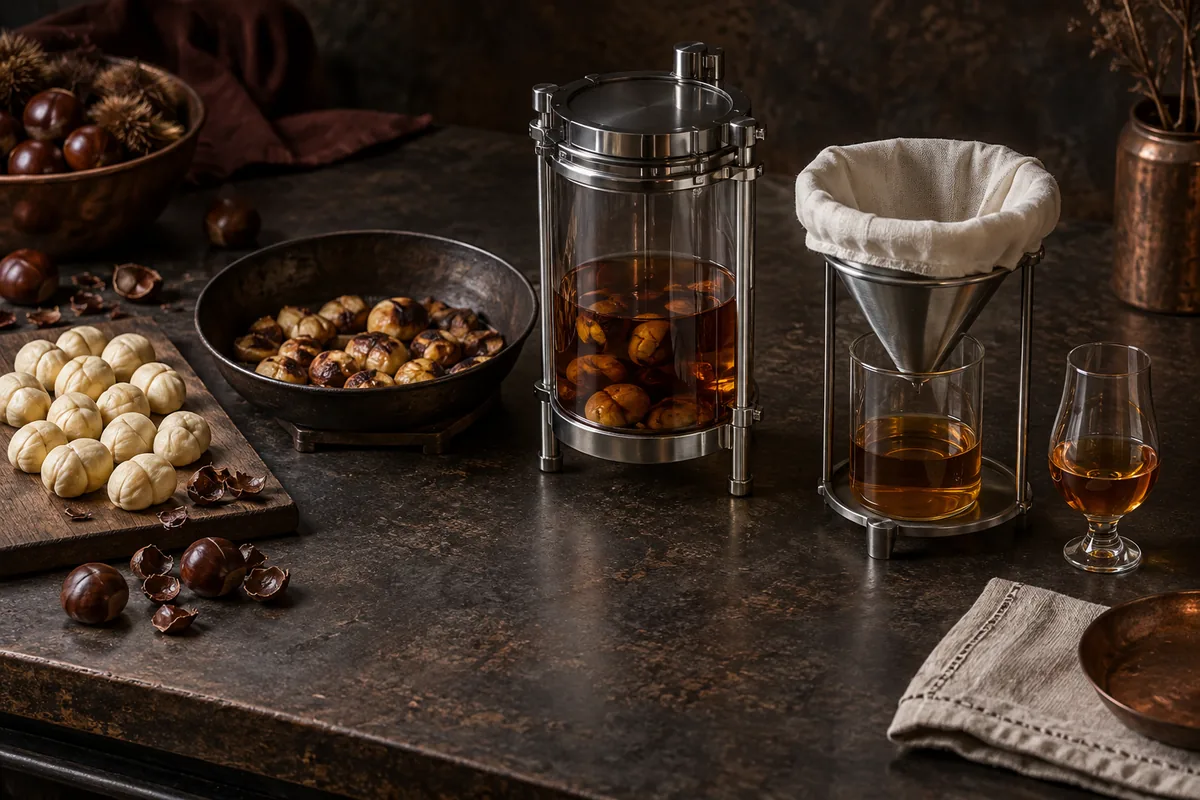
Bigallet describes its 18% liqueur as the result of infusing and distilling Ardèche chestnuts.
Gabriel Boudier gives another detailed example at 25% ABV. It describes processed chestnuts undergoing maceration, vanilla infused separately, then sugar, honey, and caramel added to complete the blend.
Ingredient disclosures show why physical chestnut content should never be guessed. Blachère lists water, alcohol, sugar, flavouring, natural chestnut flavour, and caramel colour E150b for its bottle.
- Whole-material route. Peeled, roasted, or otherwise prepared chestnuts are infused or macerated in alcohol.
- Distilled route. A chestnut infusion or maceration is distilled to capture volatile aroma before blending.
- Flavouring route. Natural chestnut flavour and other permitted flavourings build or reinforce the profile.
- Finishing route. Sugar, water, honey, vanilla, caramel, or other disclosed ingredients set sweetness, strength, colour, and aroma.
These routes can overlap inside one bottle. Maceration may supply a broad cooked-nut impression, distillation may lift volatile aroma, sugar can make the palate feel rounder, and caramel or vanilla can push the result toward marron glacé or dessert-like notes.
Châtaigne d'Ardèche AOP is a protected agricultural product covering specified fresh chestnuts, peeled dried chestnuts, and chestnut flour from its defined area.
A producer's use of that chestnut can support a raw-material origin claim, but it does not automatically turn every chestnut liqueur into a protected Ardèche spirit.
Commercial extraction and distillation require controlled equipment, fire protection, ventilation, sanitation, and legal authorization. A category description is not a safe or lawful instruction for uncontrolled home distillation.
What does chestnut liqueur taste like?
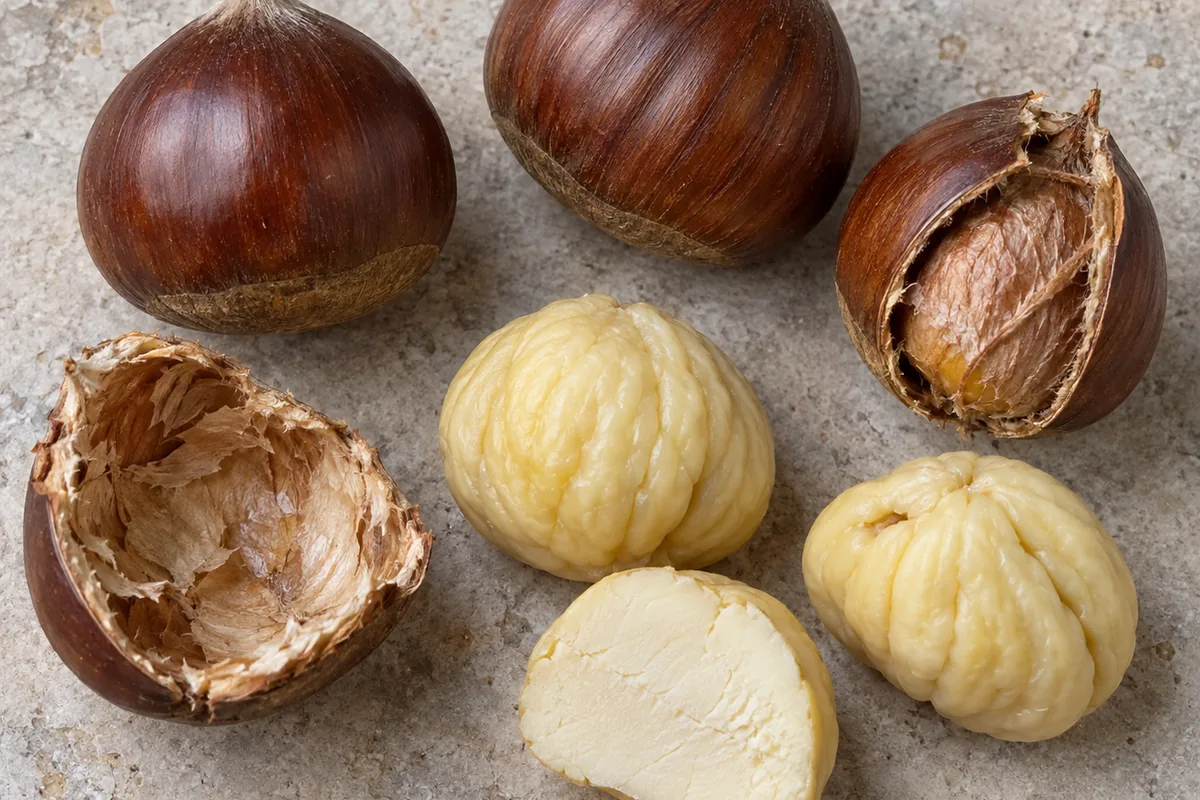
Chestnut liqueur usually sits between cooked nut, gentle roast, vanilla, caramel, and soft earthy or woody notes. Its chestnut character often feels less oily and more starchy or confectionery than hazelnut or walnut liqueur, especially when sugar and vanilla recall marron glacé.
The protected Châtaigne d'Ardèche description gives useful context for the raw material. INAO records sweet, brioche, milk-bread, pumpkin, sweet-potato, and honey notes in fresh chestnuts, with dried forms adding nut and cake aromas plus slight bitterness.
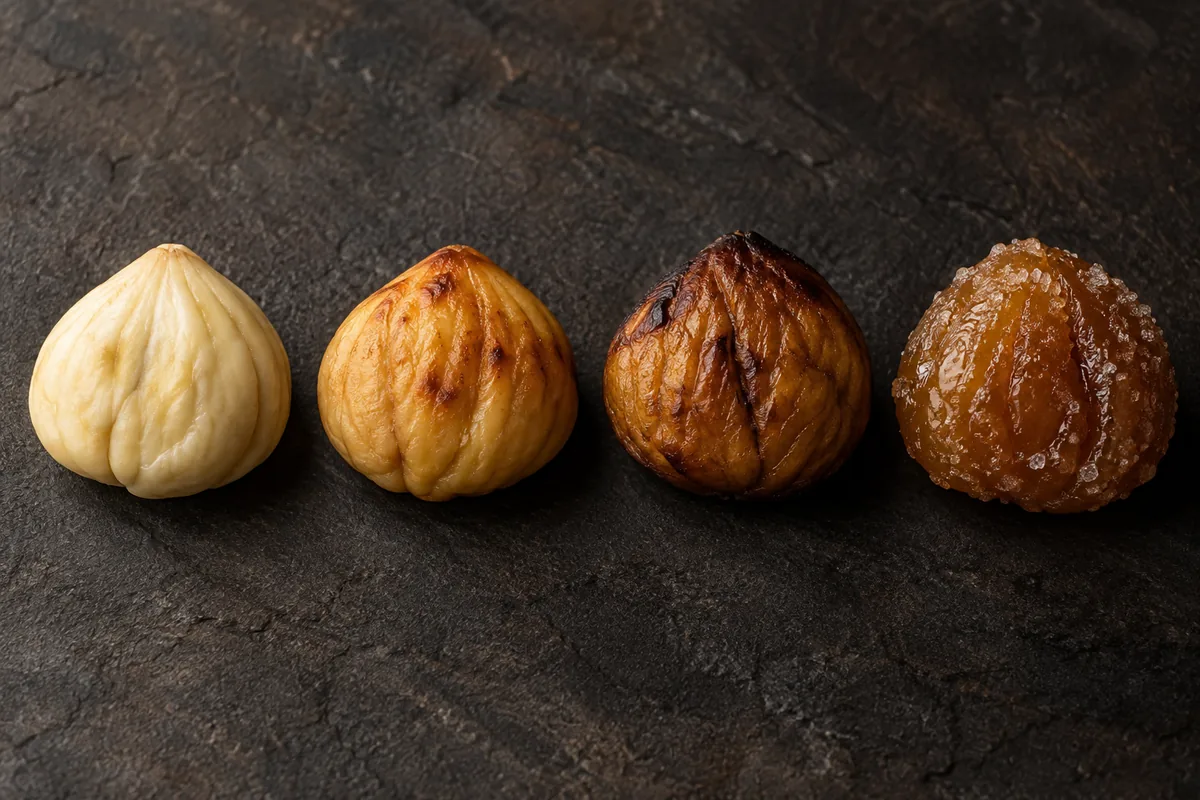
Producer descriptions show what processing and recipe choices add. Blachère describes caramel, vanilla, roasted chestnut, and candied chestnut, while Gabriel Boudier adds honey and a woody, sweet direction.
Those notes belong to the cited materials and bottles rather than to every chestnut liqueur.
A formula based mostly on natural flavouring can smell different from a long maceration, while honey, vanilla, caramel, added spice, or a stronger alcohol base can move attention away from the chestnut itself.
Chestnut is also easy to confuse with neighbouring nut profiles once sweetness rises. Almond liqueur often leans toward marzipan or stone-fruit kernel, hazelnut liqueur toward praline and a more obviously oily roast, and walnut liqueur can bring greener bitterness or tannic spice; real formulas overlap, so these are comparison directions rather than legal boundaries.
- Find the chestnut first. Smell a small measured sample before ice or mixers suppress the quieter cooked-nut aroma.
- Separate roast from caramel. Decide whether the toasted note resembles browned chestnut or mostly added caramel and sugar.
- Notice the middle. Chestnut character can appear as a floury, rounded, or velvety impression rather than an oily nut note.
- Check the finish. Look for lingering chestnut, vanilla, honey, spice, bitterness, or alcoholic heat that will carry into the intended use.
No bottle should receive a score or category-wide tasting verdict without retained product access and a disclosed method. For a bottle you have not opened, the producer's ingredients and sensory description are better evidence than its colour or an unsourced review snippet.
How strong and sweet is chestnut liqueur?
There is no single chestnut liqueur strength. Current producer pages checked range from 16% ABV for Distillerie des Aravis to 25% for Gabriel Boudier, with Bigallet and Cherry Rocher at 18% and Blachère at 20%.
- Aravis
- 16% ABV
- Bigallet
- 18% ABV
- Blachère
- 20% ABV
- Boudier
- 25% ABV
Those values are documented examples, not a complete market range. A bottle sold under European Union liqueur rules must meet the relevant category minimum, but products in other markets and differently named drinks need their own label reading.
Sweetness needs a separate check from ABV.
EU category 33 generally starts at 100 grams of sweetening per litre, while category 34 raises the minimum to 250 grams per litre for a legal crème de name followed by the fruit or raw material.
Two bottles can therefore share 18% ABV and still differ in sugar, viscosity, aroma concentration, and how quickly they dominate a dry drink. The word crème is meaningful under the EU rule, but it does not give the exact sugar content above the floor.
A measured 30 millilitres of a 16% bottle contains 4.8 millilitres of pure ethanol. The same amount at 25% contains 7.5 millilitres, before counting wine, beer, spirits, or other liqueurs served with it.
NIAAA defines a US standard drink as 14 grams, or about 0.6 US fluid ounces, of pure alcohol and illustrates that roughly 2 to 3 fluid ounces of liqueur around 24% ABV can contain that amount.
A customary pour is not automatically one standard drink, and sweetness does not make the alcohol less consequential.
Use the printed ABV. Colour, viscosity, sweetness, glass size, and serving temperature cannot establish alcohol content or whether anyone is fit to drive.
Which bottle details matter most?
A good chestnut liqueur choice begins with function. A bottle for a dry sparkling drink needs a different sugar and alcohol balance from one used sparingly in a dessert or alongside coffee.
The front label may supply the category and ABV, but the ingredient list and producer specification often reveal the larger difference. They can show whether the chestnut claim rests on macerated fruit, infusion, distillation, natural chestnut flavour, a protected raw material, or an unspecified flavouring blend.
- Read the legal designation. Chestnut liqueur, crème de châtaigne, cream liqueur, syrup, and chestnut aperitif do not promise the same composition.
- Check the ABV. The current producer examples span enough strength to change a measured drink materially.
- Find the chestnut statement. Look for maceration, infusion, distillation, named chestnuts, natural chestnut flavour, or a more general flavouring disclosure.
- Separate origin claims. Ardèche chestnuts, production in Ardèche, and a general French product statement describe different facts.
- Check colour and added flavours. Caramel, vanilla, honey, and spice can shape both appearance and the impression of roast.
- Follow allergen and storage text. Do not infer dairy-free or allergen suitability from the word crème; use the actual label for the bottle and market.
Colour is a weak shortcut. Deep brown can come partly from caramel, and pale gold does not prove a low chestnut concentration, so appearance should confirm what is in the glass rather than decide what is in the bottle.
Product pages change, and labels can vary across export markets. When an ingredient, allergen, or storage detail matters, prioritize the physical bottle sold where you live over a retailer description or an older photograph.
How should you serve and pair chestnut liqueur?
Start with a small measured sample in a clean liqueur or tasting glass.
Serving it lightly chilled can soften alcohol and sweetness, but tasting it before heavy chilling makes it easier to judge whether chestnut, vanilla, caramel, or spirit heat leads.
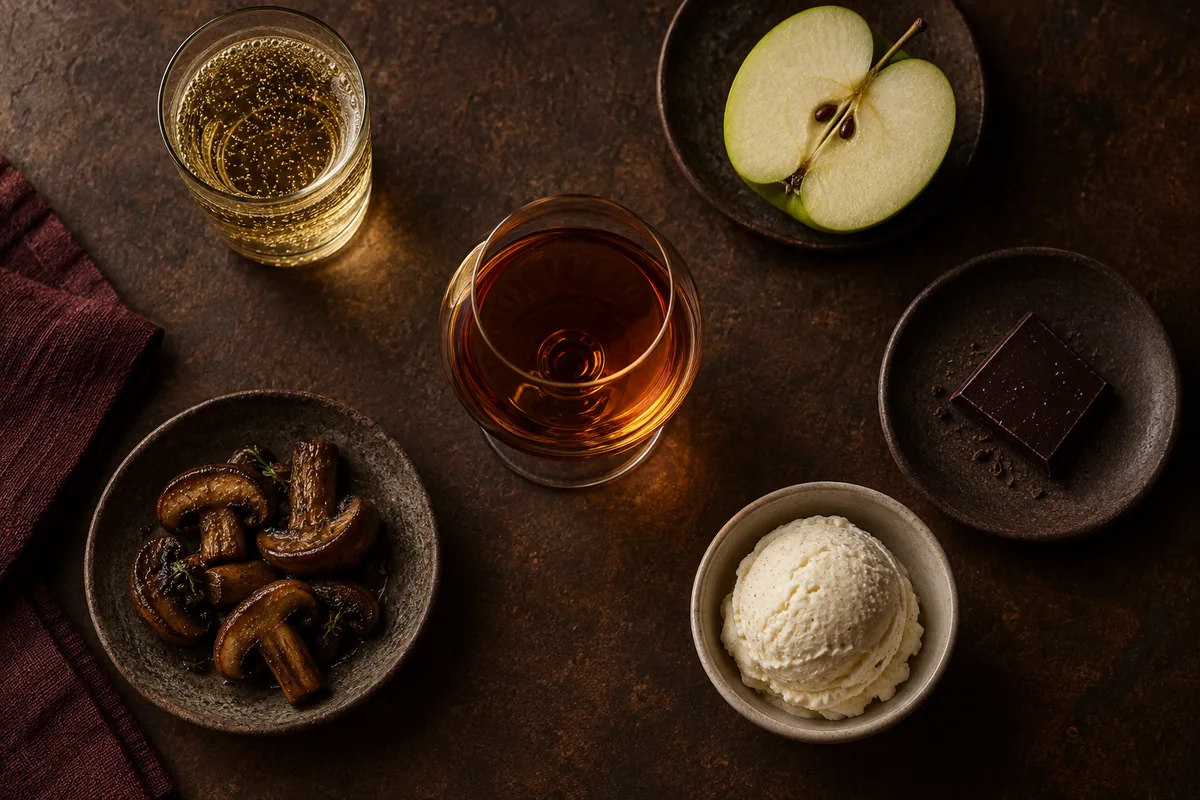
Producer suggestions repeatedly place chestnut liqueur with dry wine, sparkling wine, cider, or beer. The logic is useful beyond any one recipe: acidity, bubbles, and a dry finish can stretch the chestnut aroma while preventing the sugar from becoming the whole drink.
| Pairing job | Useful partners | Why it works | What to watch |
|---|---|---|---|
| Lift a sweet bottle | Dry white wine, sparkling wine, cider, or crisp beer | Acidity and carbonation lighten the dense chestnut impression | Count the alcohol in every ingredient and avoid an unmeasured top-up |
| Deepen toast and wood | Whisky, brandy, or aged rum | Oak spice and mature spirit notes can extend roast and vanilla | Both ingredients add alcohol, so chestnut liqueur should not be treated as syrup |
| Build dessert contrast | Dark chocolate, coffee, vanilla, pear, or tart apple | Bitterness or fruit acidity checks sugar while familiar aromas support chestnut | Sweet desserts can make a crème-style bottle feel flat unless bitterness or acid remains |
| Use it with savoury food | Roast mushrooms, duck, pork, aged cheese, or browned butter | Salt, browning, and earthy flavours meet chestnut's roast and woody side | Use a restrained measure so sugar does not turn a savoury sauce into a glaze by accident |
Bigallet names sparkling wine and dessert, while Cherry Rocher mentions white wine, beer, and gastronomy. These producer examples support several functions without making one of them mandatory.
In mixed drinks, chestnut liqueur commonly takes the sweetening role as well as the flavouring role. If you add it to a specification that already contains syrup or another liqueur, reduce competing sweetness before increasing the chestnut measure.
Dark chocolate and coffee work when their bitterness remains present, while vanilla amplifies the dessert side. Apple and pear offer a brighter route because their acidity and fresh-fruit aroma can keep the combination from becoming uniformly brown and sweet.
Savoury use needs more restraint.
Chestnut's connection with browned butter, roast mushrooms, pork, duck, and mature cheese can be convincing, but the alcohol should be handled away from open flame and the sugar can scorch or tighten a reduction quickly.
Measure every alcoholic ingredient and count the actual ABV on the bottle. A sweet, smooth drink can still contain several sources of alcohol, and neither flavour nor colour can show impairment or safe driving ability.
How should you store chestnut liqueur?
Store an unopened chestnut liqueur upright, tightly closed, cool, dry, and away from direct light unless the producer states otherwise. Heat and repeated air exposure can flatten aroma, while a poor closure allows evaporation and oxidation.
After opening, producer directions diverge. Bigallet tells readers to keep its bottle dry and cool, away from light, and close it well, while Lecomte-Blaise and Distillerie des Aravis recommend refrigeration after opening for their products.
- Keep the closure clean and tight. Sticky sugar around the neck can prevent a cap from sealing properly.
- Protect the bottle from heat and light. A cupboard is generally more stable than a sunny shelf or the space above an appliance.
- Follow product-specific refrigeration advice. Formula and processing differences make one universal rule unreliable.
- Inspect before service. Hold a bottle with leakage, a damaged closure, unexpected pressure, visible mould, or a sharply abnormal odour.
- Interpret sediment in context. Blachère notes that a light deposit may form in its bottle, so harmless settling and spoilage should not be judged from appearance alone.
There is no defensible universal number of months after opening for the whole category.
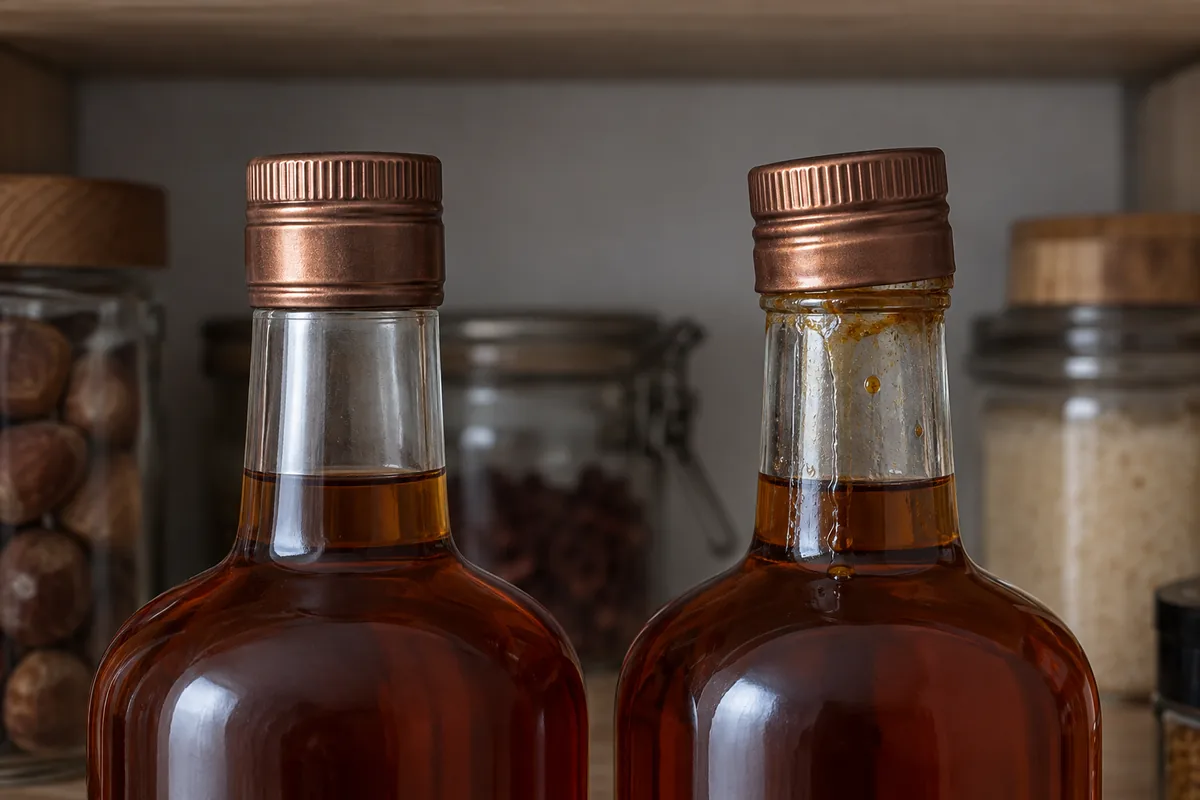
A clearer decision comes from the producer's instruction, when the bottle was opened, how it was stored, and whether aroma, appearance, or closure condition changed unexpectedly.
Cloudiness or sediment does not carry the same meaning in every formula. Natural material can settle, caramel can affect colour, and a chilled bottle may look different, so compare the change with the product description before deciding it is normal.
When in doubt, hold the bottle. Do not serve a chestnut liqueur with mould, leakage, unexpected gas or pressure, a failed closure, or an odour that suggests contamination.
The strongest buying rule also closes the storage question: choose a bottle whose ingredients, ABV, sweetness class, and handling directions fit the job you actually have. Chestnut flavour may be the category's centre, but the formula around it determines how the bottle tastes, mixes, and keeps.
Sources
-
Regulation (EU) 2019/787
Accessed 12 September 2026.
-
TTB Glossary, Cordials and liqueurs
Accessed 13 September 2026.
-
INAO, Châtaigne d'Ardèche
Accessed 13 September 2026.
-
NIAAA, What Is a Standard Drink?
Accessed 13 September 2026.
-
Bigallet Liqueur de Châtaigne
Accessed 13 September 2026.
-
Cherry Rocher Chestnut Liqueur
Accessed 13 September 2026.
More in Liqueurs
-
 Almond liqueur
01
What is almond liqueur, and does it always contain almonds?
-
 Amaretto
02
What is amaretto, and what gives it an almond-like flavour?
-
 Apple liqueur
03
What is apple liqueur, and how does it differ from apple brandy?
-
 Apricot liqueur
04
What is apricot liqueur, and when does apricot brandy mean something else?
-
 Banana liqueur
05
What is banana liqueur, and how do fresh and ripe styles differ?
-
 Blackberry liqueur
06
What is blackberry liqueur, and is it the same as crème de mûre?