
Liqueurs
Chocolate Liqueur: Read the Formula Before the Colour
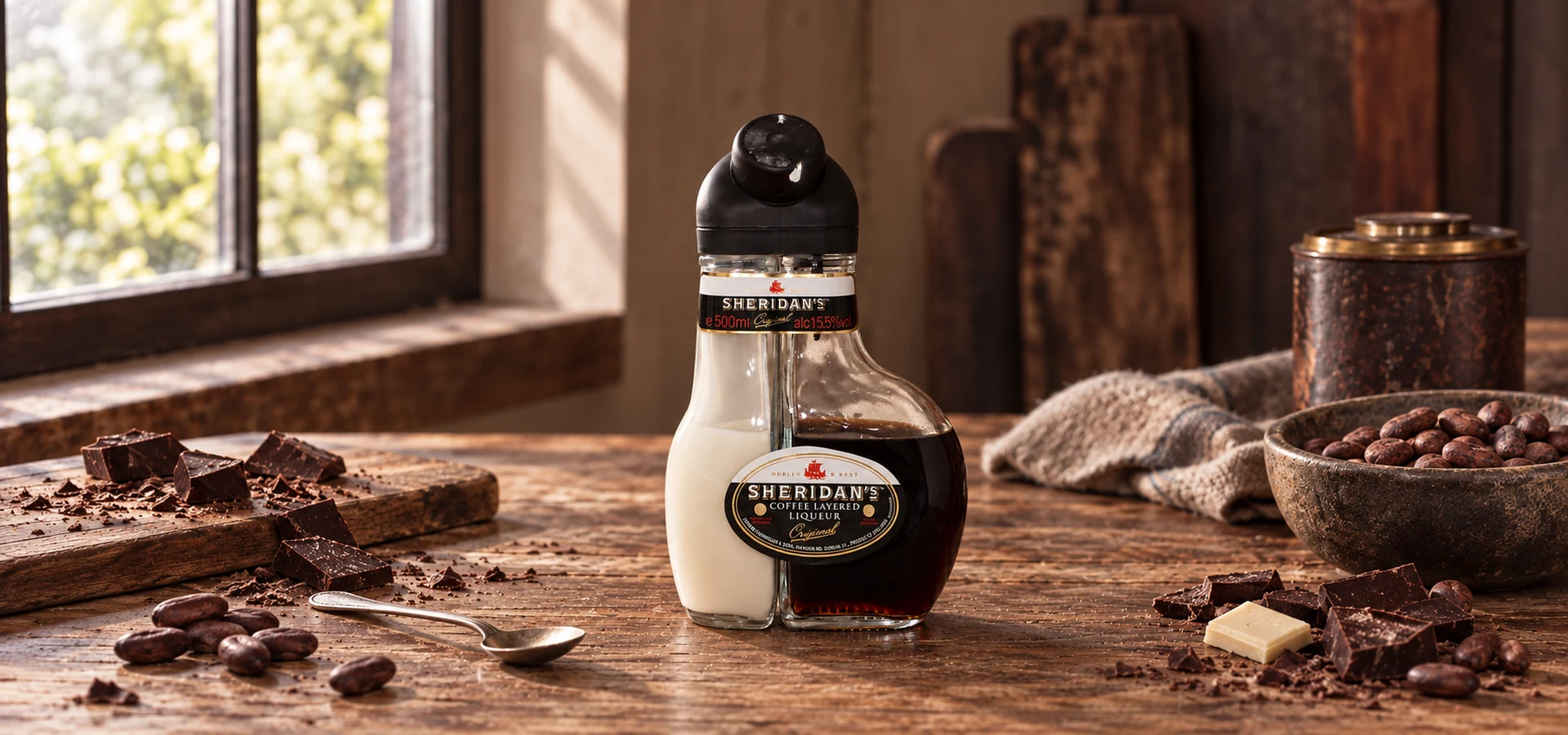
Chocolate liqueur is a sweetened alcoholic drink with a predominant chocolate or cacao character. Its most important divide is not clear versus brown: it is whether the formula is a non-dairy cacao liqueur, a dairy cream liqueur, or another chocolate style with its own strength, sweetness, and texture.
At a glance
- Legal category
- Chocolate liqueur sits within the broader liqueur or cordial class. In the European Union, liqueur and Crème de followed by a raw material have separate sweetening rules, while United States standards treat Crème de Cocoa as a cacao-flavoured liqueur designation.
- Typical strength
- 15 to 25 percent ABV
- Range basis
- The 15% to 25% ABV span records current producer examples discussed in this entry. It is not a universal market range.
What is chocolate liqueur?
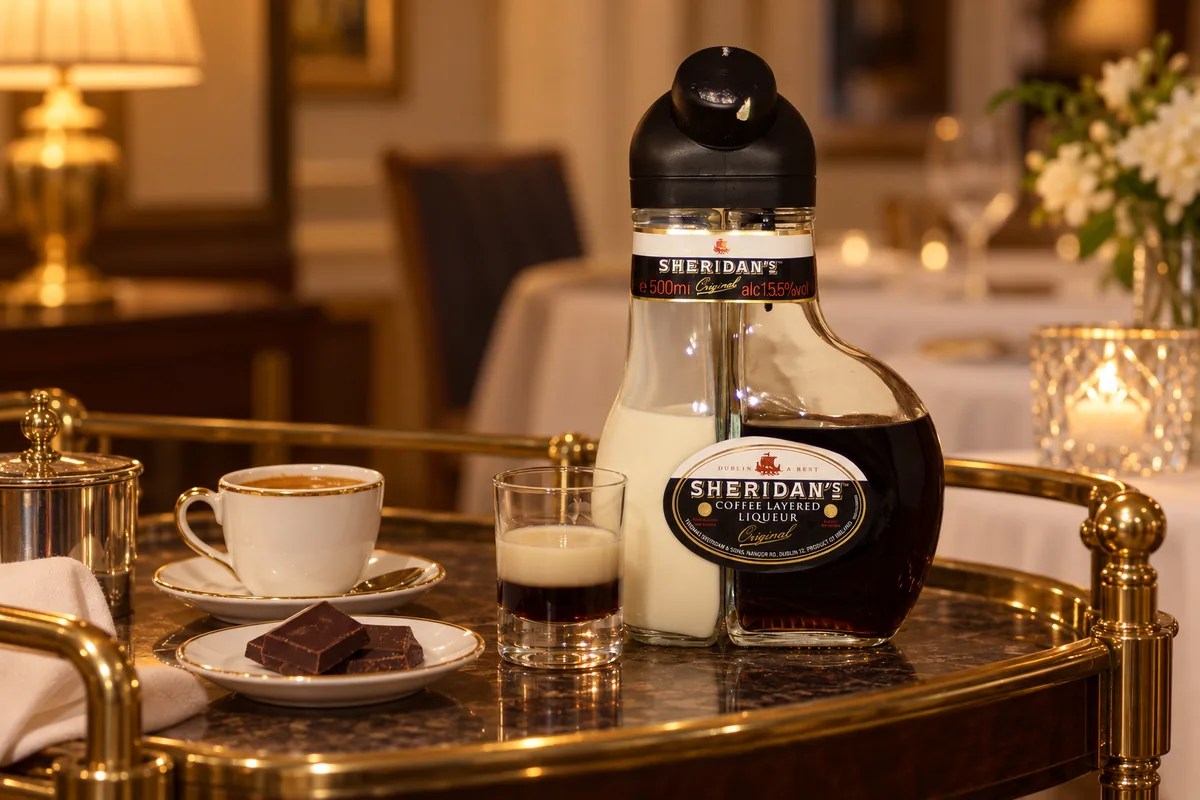
Chocolate liqueur is alcoholic. It combines a spirit base with sweetening and a predominant chocolate or cacao character, but the category does not impose one colour, texture, dairy content, or strength.
The stable idea is flavour carried in a sweetened alcoholic base. A bottle may be clear and cacao-led, dark brown with roasted notes, or opaque and creamy, so appearance is only the beginning of identification.
- Stable identity
- Sweetened alcoholic drink with predominant chocolate or cacao flavour
- Main formula divide
- Non-dairy cacao liqueur versus dairy cream liqueur
- Read on the label
- Legal name, ABV, milk declaration, colour, base, storage directions
United States standards define liqueurs or cordials as flavoured distilled spirits made by mixing or redistilling spirits with flavouring materials and containing at least 2.5% sugar by weight. TTB guidance lists Crème de Cocoa as a liqueur whose predominant flavour comes from cacao.
European Union category 33 sets a 15% minimum ABV for liqueur and generally requires at least 100 grams of sweetening per litre, with specific exceptions for named styles.
Those rules establish a legal floor in that jurisdiction rather than a recipe for every chocolate liqueur in the world.
The category name also cannot tell you whether the producer used cocoa extract, a cacao infusion, a distillate, finished chocolate, dairy cream, caramel, vanilla, or several of those materials. These choices explain why two bottles labelled with chocolate language can behave very differently in a glass or dessert.
For a first purchase, ask what the liquid must contribute: a clear cocoa aroma, dark colour, roasted depth, creamy body, or a combination. That functional question is more dependable than choosing the bottle with the darkest liquid or the richest-sounding front label.
Does crème de cacao contain cream?
Crème de cacao does not mean dairy cream. In the name, crème de identifies a sweet liqueur with cacao as the predominant flavour, while a chocolate cream liqueur uses milk or cream as an ingredient.
The European Union makes the boundary explicit. Category 34 requires at least 250 grams of sweetening per litre and 15% ABV for Crème de followed by a fruit or raw material, requires the named material to supply the predominant flavour, and excludes milk and milk products from that category.
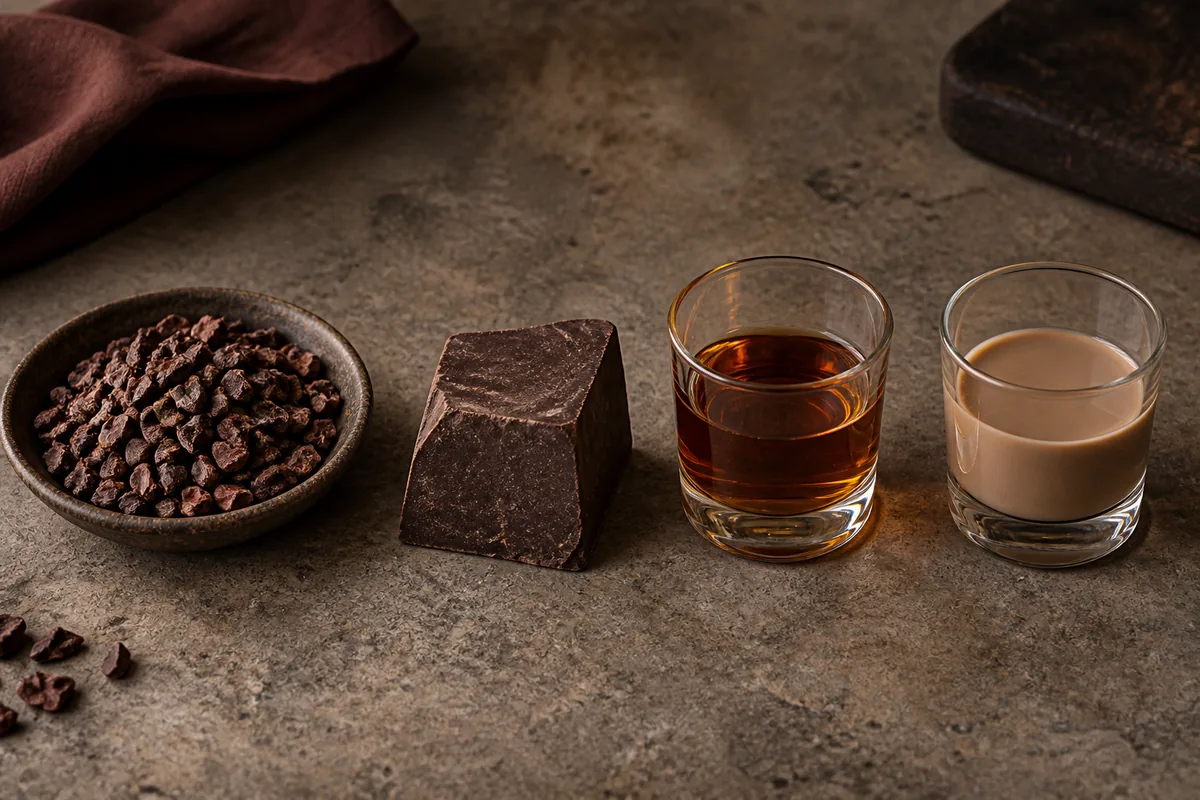
The same regulation allows a liqueur containing milk or milk products to use cream with the name of the predominant raw material.
The accent and word order therefore carry a real distinction in EU labelling: crème de cacao and chocolate cream liqueur are not two spellings for the same formula.
| Term | What it identifies | What it does not prove |
|---|---|---|
| Chocolate liqueur | A broad alcoholic, sweetened, chocolate-flavoured family | Dairy content, colour, exact cacao source, or one ABV |
| Crème de cacao | A cacao-predominant liqueur name; under EU category 34 it excludes milk products | A creamy dairy texture or a brown colour |
| Chocolate cream liqueur | A chocolate liqueur formula containing milk or cream | That every chocolate liqueur contains dairy |
| Chocolate liquor or cocoa mass | Finely ground cocoa nib material used to make chocolate | An alcoholic drink |
The fourth term causes a different mistake. Codex defines cocoa mass, also called cocoa or chocolate liquor, as the product obtained from cocoa nibs, and the USDA describes it as a solid or semiplastic food containing cocoa butter and cocoa solids.
Despite the word liquor, chocolate liquor is not an alcoholic beverage. It can be an ingredient in chocolate-making, whereas chocolate liqueur is the bottled alcoholic product covered here.
Dairy check: Do not infer milk from the word crème, and do not infer dairy-free status from a clear or dark colour. Read the ingredient and allergen statements for the exact bottle and market.
How do producers put cacao flavour into a liqueur?
Cacao aroma does not enter every liqueur by the same route. Commercial producers may extract flavour into alcohol, percolate spirit through cacao materials, macerate cacao in spirit, distil an aromatic fraction, blend a prepared cocoa extract, or combine several methods.
TTB's general liqueur standard recognizes mixing or redistilling with fruits, flowers, plants, juices, natural flavouring materials, or extracts made through infusion, percolation, or maceration. It creates room for different commercial methods without saying that one method defines all chocolate liqueur.
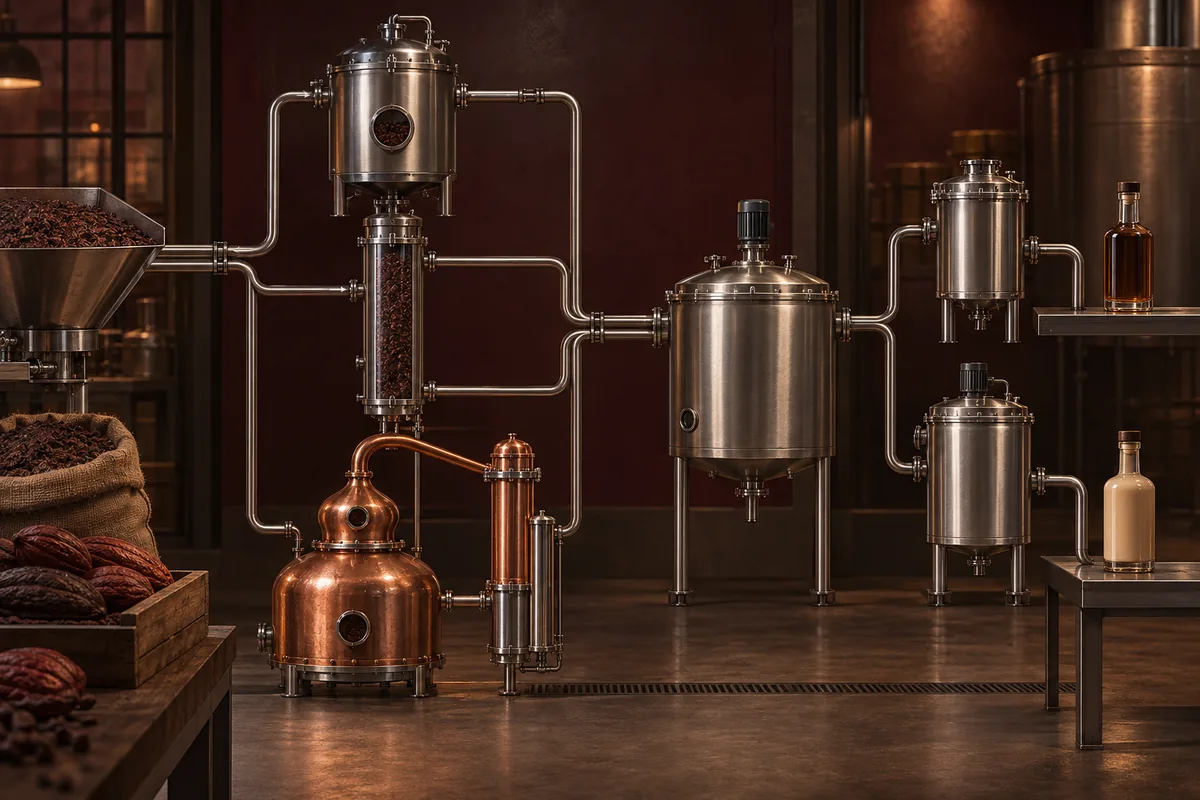
- Select the cacao expression. Nibs, cocoa, chocolate, an extract, or a distillate can emphasize roasted, bitter, fatty, or aromatic parts differently.
- Capture and refine aroma. Maceration, percolation, infusion, distillation, or prepared extracts move selected flavour compounds into the alcoholic base.
- Set sweetness and strength. Sugar, spirit, and water determine the finished ABV, viscosity, aroma release, and perceived bitterness.
- Build the chosen body. A non-dairy style may be filtered and blended directly, while a cream style incorporates a dairy phase and must keep that emulsion stable.
- Finish and package. The producer may adjust colour, filter, bottle, and specify storage conditions suited to the formula.
Tempus Fugit documents one unusually transparent route for its 24% crème de cacao.
The producer says raw cacao is distilled, then the distillate is macerated with additional cacao and crushed whole vanilla bean, with no colour added and a naturally brown result.
Bols provides another real route at the same labelled strength. Its brown cacao liqueur page describes percolation of cacao beans with natural botanicals and the addition of orange distillates, showing that citrus or spice can sit around the cocoa core without replacing it.
Giffard identifies cocoa extract as the flavouring basis for its 25% brown crème de cacao. These three disclosures support three bottle-specific methods, not a hierarchy in which distillation, percolation, or extract automatically guarantees better flavour.
Dairy formulas add another physical problem because fat, water, sugar, alcohol, and cocoa materials must remain evenly dispersed. Mozart says its cream ingredient is blended with cocoa butter so it does not settle, while its Dark Chocolate expression does not use that cream.
That emulsion step changes body and handling, but the exact stabilizers and processing conditions belong to each producer's formulation. Commercial distillation and alcohol handling also require licensed equipment, ventilation, fire control, and process expertise; this description is not a home-distillation procedure.
What do colour and texture reveal?
A clear crème de cacao can still carry a pronounced cacao aroma because aromatic compounds can be distilled or extracted without retaining dark cocoa solids.
A brown version may obtain colour from cacao materials, caramel, added colour, or several sources, so brown alone does not prove a higher cocoa content.
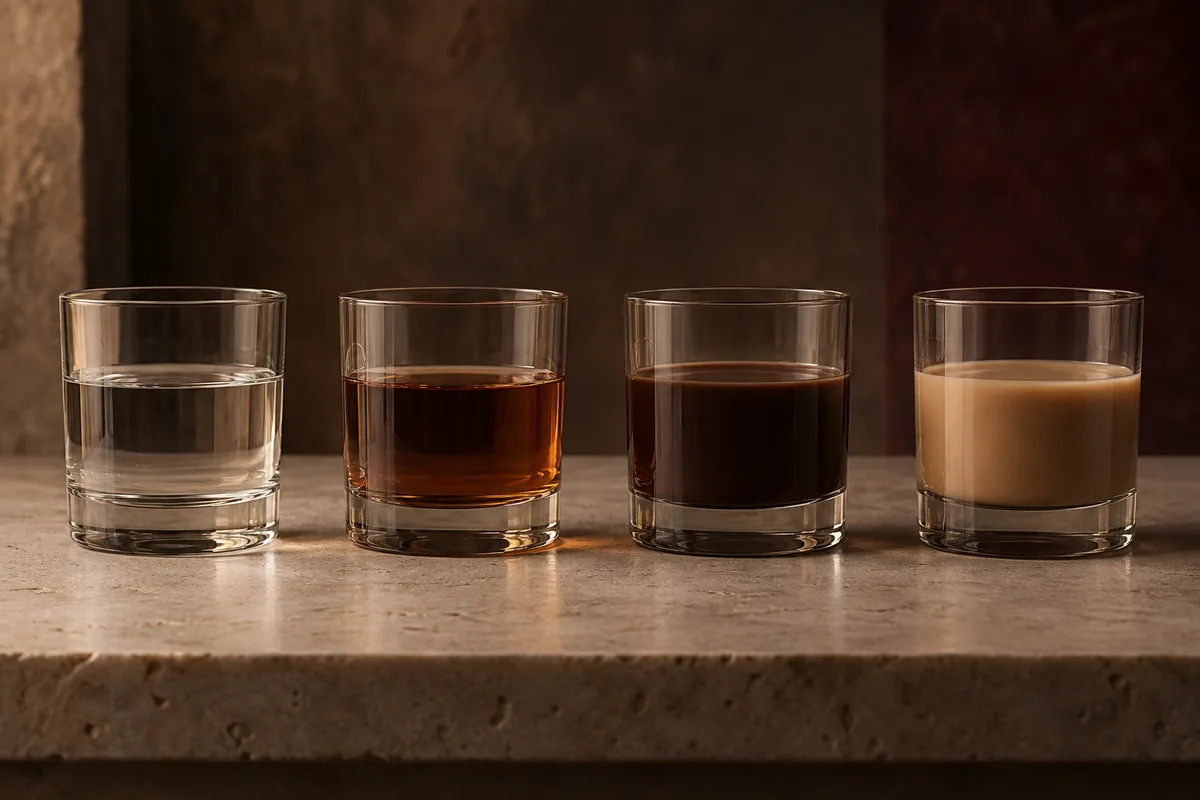
Opacity is a stronger clue that the liquid contains suspended or emulsified material, but it is not a complete allergen test. Bottega describes its dark, soft-textured Nero chocolate liqueur as containing no milk, while Mozart's Cream Chocolate explicitly contains cream.
Even lactose-free and dairy-free answer different questions. Giffard currently marks its brown crème de cacao as lactose-free and without listed allergens, but that producer statement applies to its bottle in the market shown, not to the category or to every dietary restriction.
- Clear. Useful when cacao aroma should appear without turning a pale mixture brown, but clarity does not mean dry, weak, or neutral.
- Transparent brown. Can signal a darker visual contribution and may accompany roasted cocoa, vanilla, caramel, spice, or citrus notes.
- Opaque dark. Suggests more suspended material or a dense formula, yet it can still be milk-free.
- Opaque cream. Usually signals a dairy or cream-style emulsion and requires an exact allergen and storage check.
Viscosity is also influenced by sugar, alcohol, dissolved solids, fat, and serving temperature. A slow-moving liquid may be very sweet, creamy, cocoa-rich, or simply cold, so texture should guide use without being treated as a shortcut to quality.
Read the back label when colour or body matters. Look for milk, cream, whey, cocoa butter, chocolate, cocoa extract, caramel colour, other colouring, flavour declarations, and any producer note about separation or shaking.
What can chocolate liqueur taste and smell like?
Cocoa is the centre, but the sensory range is wider than sweet milk chocolate.
Depending on the materials and method, a bottle can lean toward roasted nibs, cocoa powder, dark chocolate, cocoa butter, vanilla, caramel, coffee, orange peel, nuts, herbs, or a creamy dairy finish.
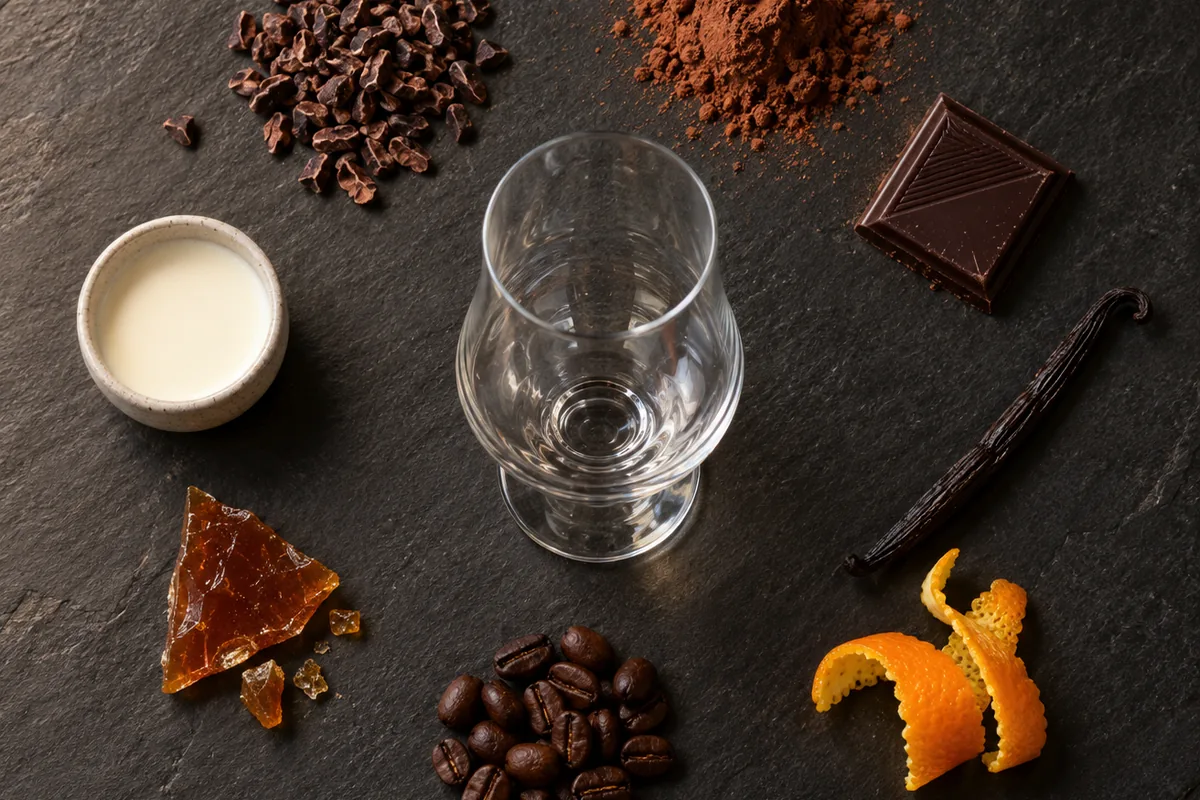
Tempus Fugit's published notes emphasize powdered cocoa, cocoa butter, dark chocolate, and vanilla for its crème de cacao. Giffard describes cocoa, vanilla, chocolate, and roasted cocoa, while Bols adds an orange-distillate detail around dark chocolate.
Bottega describes bitter cocoa, chocolate, vanilla, and a touch of grappa for its 15% non-dairy Nero expression. Mozart's current range separates cream, white, dark, coffee, and other chocolate directions, which demonstrates that even one producer does not treat chocolate liqueur as a single sensory formula.
These are first-party descriptions of named bottles, not independent tasting results. They are useful because they expose formulation differences, but they do not justify a score, a ranking, or a claim that another bottle will taste the same.
- Locate the cocoa register. Decide whether the label points toward nib, cocoa powder, dark chocolate, milk chocolate, or white chocolate.
- Check supporting flavours. Vanilla softens edges, coffee deepens roast, orange brightens aroma, and caramel can increase a confectionery impression.
- Separate sweetness from cocoa intensity. A sweeter bottle can feel fuller without delivering more roasted or bitter cacao character.
- Notice the finish. Alcohol warmth, dairy fat, sugar, and cocoa bitterness determine whether the flavour stays clear or becomes heavy.
If evaluating an opened bottle, use a small measured amount in a clean glass before adding ice or other ingredients.
Compare it with the producer's description and the bottle's earlier condition rather than inventing a universal defect standard for a varied category.
How strong and sweet is chocolate liqueur?
Chocolate liqueur has no single ABV, and its strength cannot be estimated from colour or thickness. Current first-party examples discussed here run from 15% to 25% ABV, but that observed span is not a market limit.
- Bottega Nero
- 15% ABV
- Mozart Cream and Dark
- 17% ABV
- Tempus Fugit Crème de Cacao
- 24% ABV
- Bols Cacao Brown
- 24% ABV
- Giffard Crème de Cacao Brown
- 25% ABV
The EU distinction between category 33 liqueur and category 34 Crème de matters for sweetness. The general liqueur floor is usually 100 grams of sweetening per litre, while Crème de followed by a raw material requires at least 250 grams per litre, both expressed as invert sugar.
A legal minimum still does not reveal the bottle's actual sugar content, and US rules use a different baseline of at least 2.5% sugar by finished weight for the general liqueur class. Compare products inside the jurisdiction and language printed on the bottle instead of treating these thresholds as interchangeable nutrition figures.
At the same 30 millilitre pour, a 15% bottle contains 4.5 millilitres of pure ethanol and a 25% bottle contains 7.5 millilitres. That difference matters before any spirit, wine, or other liqueur in the finished serving is counted.
NIAAA defines one US standard drink as about 14 grams, or 0.6 US fluid ounces, of pure alcohol and notes that roughly 2 to 3 fluid ounces of liqueur around 24% ABV can contain that amount.
A serving of chocolate liqueur is not automatically one standard drink, and a calculation cannot tell you whether you are unimpaired or safe to drive.
Measure both alcohol and sweetness. Replacing a 15% cream liqueur with a 25% crème de cacao changes strength, body, dairy content, and sugar balance even when both labels feature chocolate.
Which chocolate liqueur fits the job?
The right style depends on what must change in the drink or dish. A clear crème de cacao adds cacao and sweetness with little colour, a brown style adds visual depth, and a cream liqueur adds opacity and a softer, richer body.
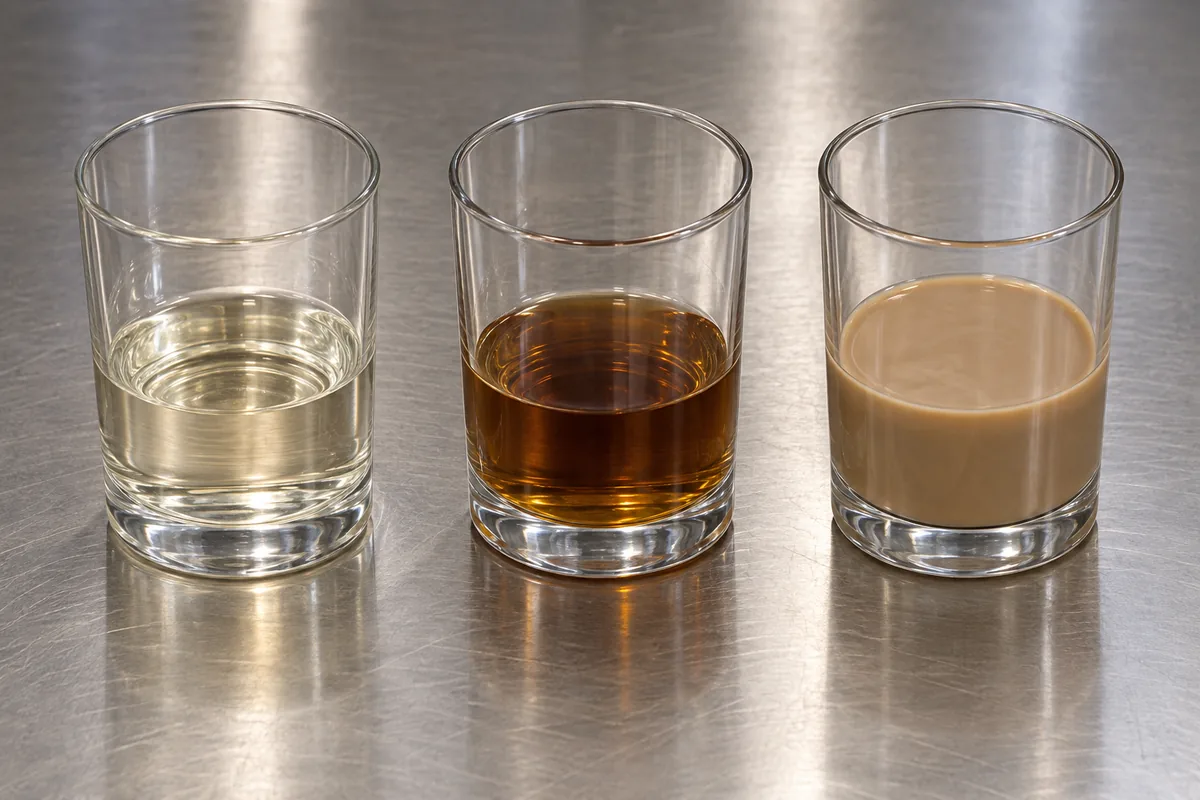
| Needed result | Useful starting style | Likely adjustment |
|---|---|---|
| Cocoa aroma without dark colour | Clear crème de cacao | Recheck sweetness and actual ABV |
| Dark cocoa colour and roast | Brown or dark non-dairy chocolate liqueur | Balance added bitterness, caramel, or vanilla |
| Creamy body and opacity | Chocolate cream liqueur | Protect the emulsion from excess acid or heat |
| Food flavour with less dilution | A more concentrated style used sparingly | Account for alcohol before adding to an unheated dish |
Cream liqueurs need extra care around strong acid and heat because dairy emulsions can curdle or separate. Work from a tested measured specification, combine gradually at a compatible temperature, and follow the producer's directions rather than assuming every cream formula reacts identically.
Clear and brown non-dairy styles are often easier when the drink must remain transparent or when dairy is unwanted, but they can be sweeter or stronger than the cream liqueur being replaced. Match cacao aroma, sugar, ABV, colour, body, and dairy status as separate variables.
Useful partners either echo cacao's roast and vanilla or add acidity, bitterness, salt, or freshness to keep the liqueur's sugar in balance.
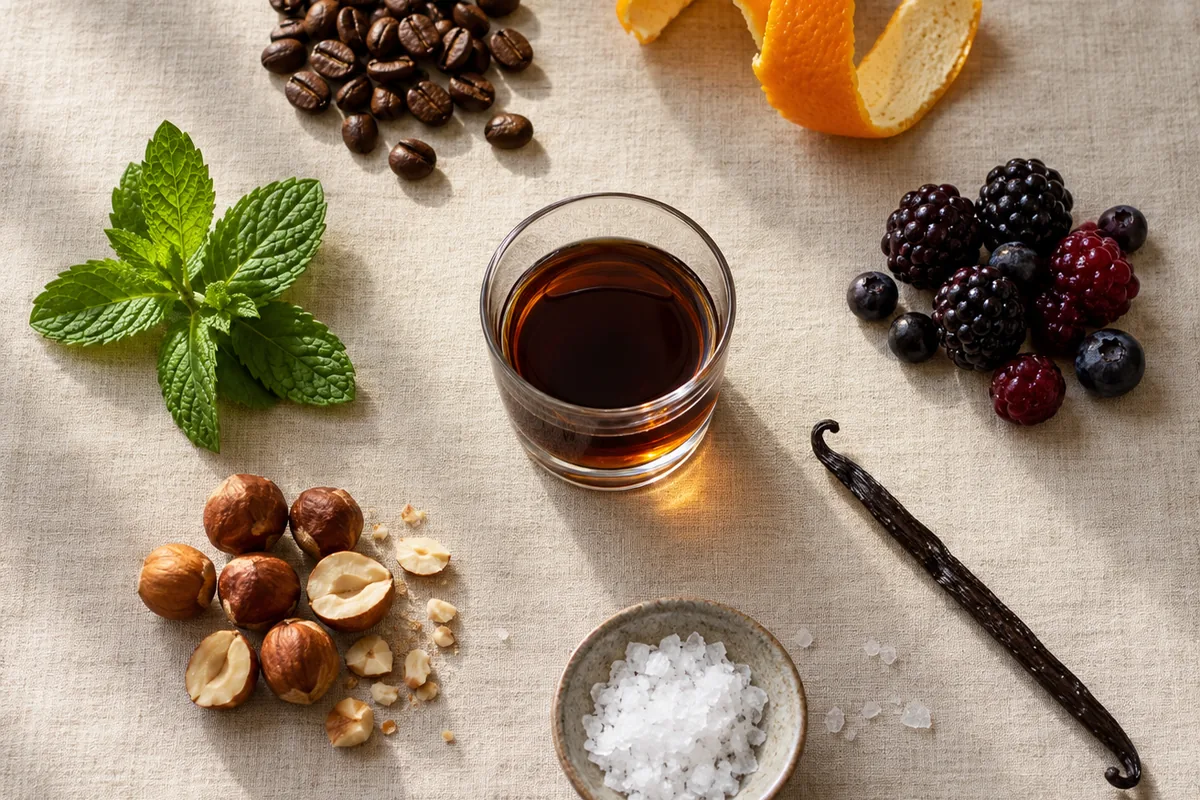
- Coffee and roasted nuts. Shared roast compounds can lengthen cacao flavour, but sweet coffee syrups or candied nuts may overload the finish.
- Orange and dark berries. Citrus oils brighten cocoa, while tart cherry, raspberry, or blackberry adds acidity against sugar and fat.
- Mint, vanilla, and warm spice. These familiar bridges can clarify a dessert direction when used with restraint.
- Salt and gentle bitterness. Sea salt, unsweetened cocoa, or a bitter coffee element can make a sugary formula feel more defined.
- Ice cream and baked desserts. A measured pour can supply aroma and moisture, but dairy, alcohol, and added sugar all affect texture and serving suitability.
Alcohol may remain in an unheated dessert, and cooking does not guarantee that all ethanol disappears. Keep alcohol-containing food away from children and anyone avoiding alcohol, disclose dairy and other relevant allergens, and do not present a chocolate appearance as proof that a serving is alcohol-free.
How should you store it, and when should you discard it?
Storage starts with the formula. A shelf-stable non-dairy cacao liqueur and a dairy chocolate cream liqueur do not automatically share the same opened-bottle life, refrigeration advice, or signs of failure.
For its brown crème de cacao, Giffard advises closing the bottle tightly and keeping it dry, cool, and away from light.
- Keep the closure clean and tight. Store the bottle upright to reduce leakage, evaporation, and prolonged contact with the closure.
- Control heat and light. A cool, dark cupboard suits many non-dairy liqueurs unless the producer directs refrigeration or another condition.
- Record when a cream bottle was opened. Keep its date code and printed after-opening instruction legible.
- Pause for physical changes. Unexpected curdling, clumps, gas, a swollen or leaking closure, mould, or an off odour is a reason not to serve the bottle.
- Interpret settling with the label. A producer may expect shaking or natural sediment, but unexplained separation in a product that was previously uniform needs investigation.
Bottega states a 30-month period for its Nero bottle but does not define whether that clock starts at production, purchase, or opening. Treat it as product-specific shelf-life information, not as a verified after-opening lifespan or a rule for other chocolate liqueurs.
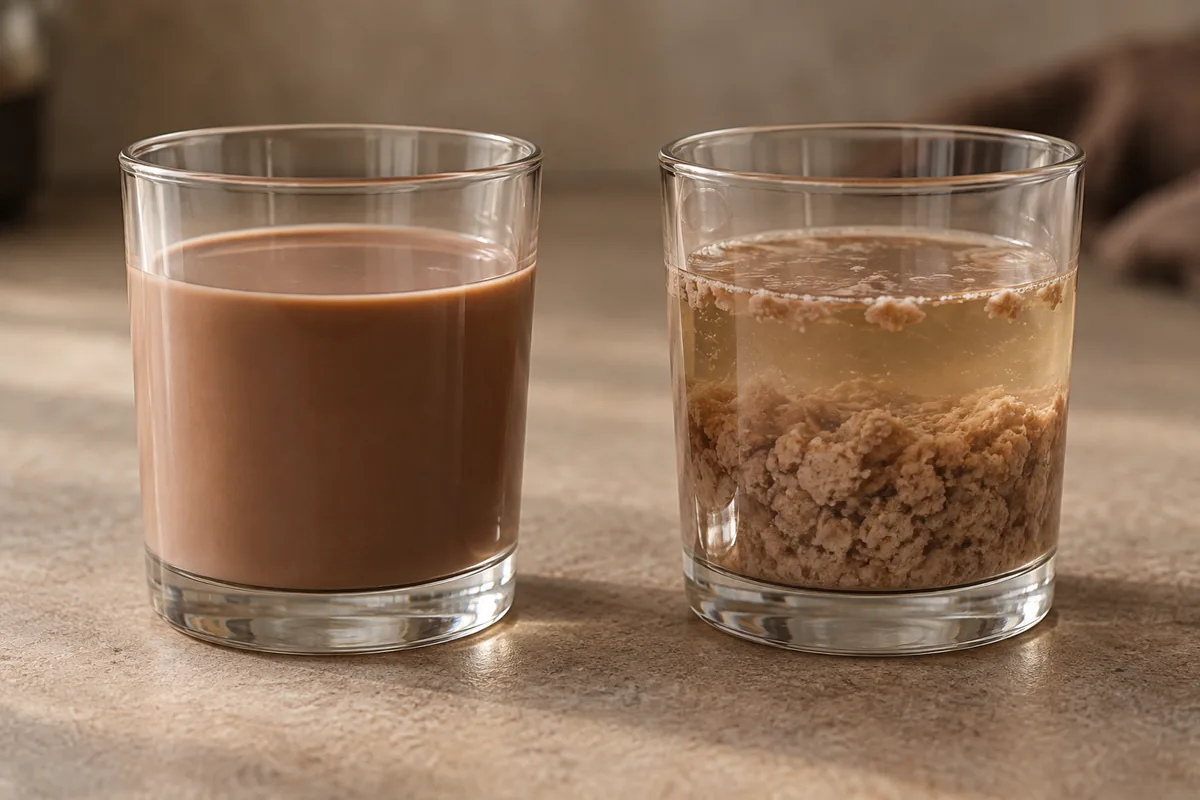
Cream formulas deserve closer attention to the bottle's date mark and after-opening instructions. Alcohol and sugar can improve stability, but they do not make dairy immortal or allow a generic website rule to replace a producer's storage direction.
Discard rule: Do not taste a chocolate cream liqueur to prove that a visibly abnormal bottle is safe. When storage history is unknown or the producer cannot clarify a major change, discard it.
Quality decline can also appear as flatter cocoa aroma, faded colour, harsher alcohol, or a dull oxidized finish without an immediate safety sign. Use the bottle's original condition, printed directions, and credible producer guidance together rather than relying on a single calendar rule.
What should you check before choosing a bottle?
Choose from the finished job backward. The front label may communicate chocolate quickly, but the smaller declarations decide whether the bottle has the right alcohol, dairy status, colour, body, and storage demands.
- Name the function. Decide whether you need transparent cacao aroma, brown colour, roasted depth, creamy body, or a dessert ingredient.
- Read the legal and product name. Separate crème de cacao from chocolate cream liqueur and from nonalcoholic chocolate liquor or cocoa mass.
- Verify the printed ABV. Do not substitute the 15% to 25% examples in this entry for the number on your bottle.
- Check milk and allergen declarations. Colour, opacity, the word crème, and a lactose-free claim cannot answer every dietary question.
- Inspect colour information. If colour affects the final use, determine whether it is clear, cacao-derived, caramel-coloured, otherwise coloured, or opaque.
- Read the flavour clues. Look for cacao nib, cocoa, dark chocolate, milk chocolate, vanilla, coffee, orange, caramel, or spice language that fits the intended balance.
- Compare body with the use. Sugar and cream can thicken a liquid that will behave differently from a leaner cacao distillate or extract-led style.
- Confirm storage directions. Note refrigeration, shaking, date marks, and after-opening instructions before the label is stained or discarded.
A final cross-check prevents most category mistakes: Treat cacao flavour, dairy status, ABV, sweetness, colour, and body as separate choices.
A bottle is a good fit when those six facts suit the planned use, not when its colour merely looks most like melted chocolate.
If an exact chocolate liqueur is unavailable, replace its functions one by one instead of assuming any brown, sweet bottle is equivalent. A substitute may need separate corrections for cocoa aroma, sugar, alcohol, opacity, fat, and volume.
Sources
-
27 CFR 5.150, Liqueur or cordial
Published 9 February 2022. Accessed 13 September 2026.
-
Regulation (EU) 2019/787
Accessed 12 September 2026.
-
TTB Beverage Alcohol Manual, Chapter 4
Published 1 April 2007. Accessed 13 September 2026.
-
NIAAA, What Is a Standard Drink?
Accessed 13 September 2026.
-
Codex Standard for Cocoa Mass and Cocoa Cake, CXS 141-1983
Published 1 January 1983. Accessed 13 September 2026.
-
USDA NAL Thesaurus, Chocolate liquor
Accessed 13 September 2026.
More in Liqueurs
-
 Almond liqueur
01
What is almond liqueur, and does it always contain almonds?
-
 Amaretto
02
What is amaretto, and what gives it an almond-like flavour?
-
 Apple liqueur
03
What is apple liqueur, and how does it differ from apple brandy?
-
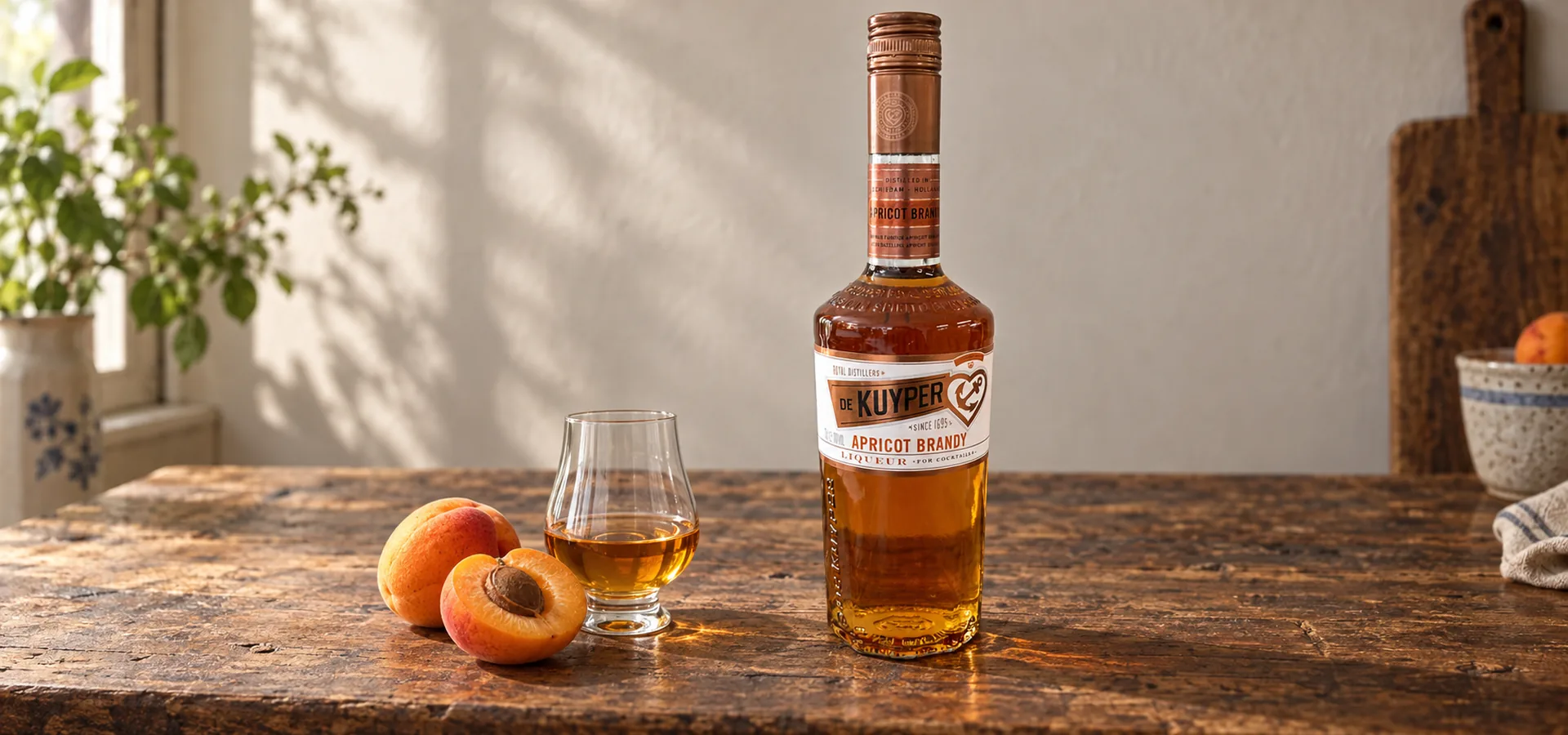 Apricot liqueur
04
What is apricot liqueur, and when does apricot brandy mean something else?
-
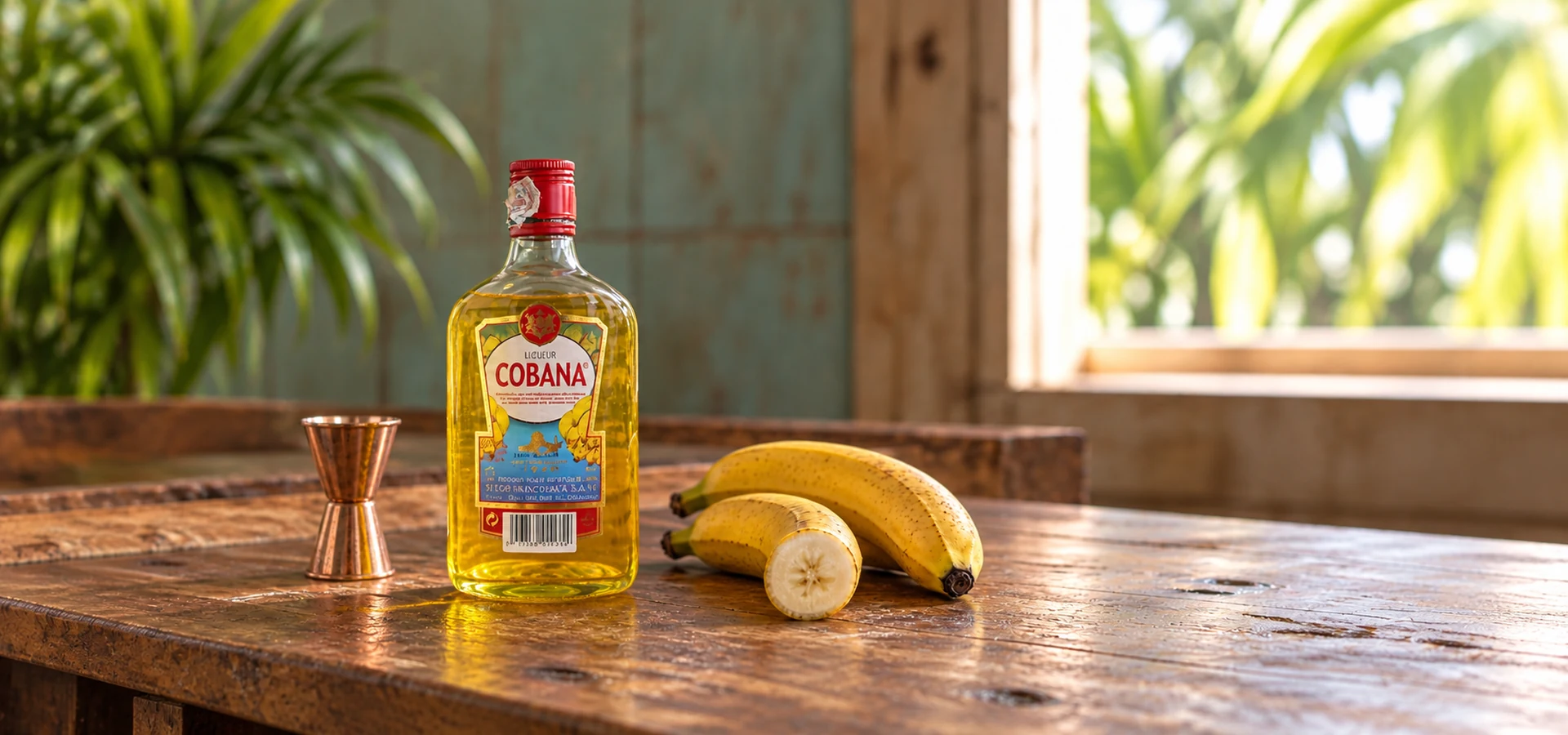 Banana liqueur
05
What is banana liqueur, and how do fresh and ripe styles differ?
-
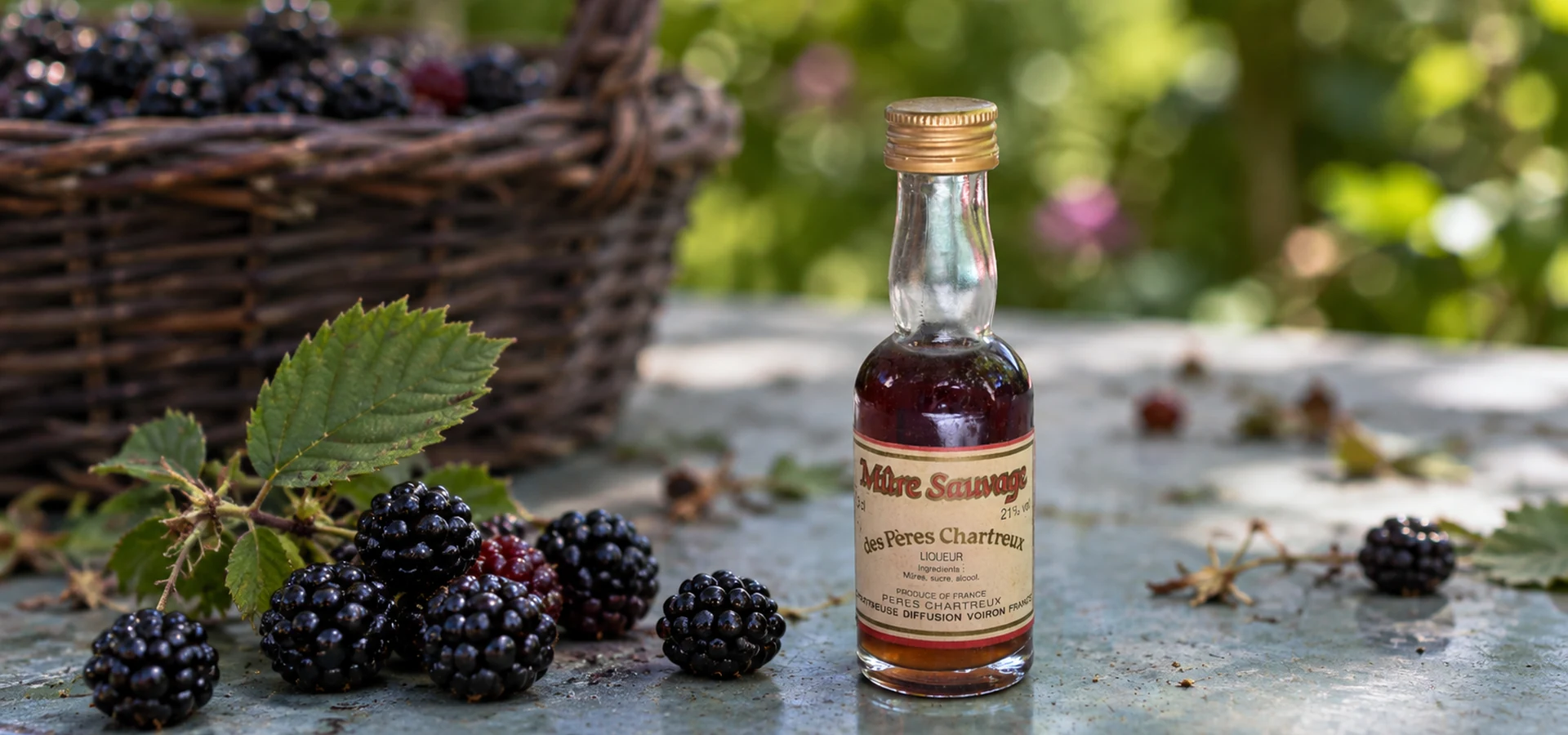 Blackberry liqueur
06
What is blackberry liqueur, and is it the same as crème de mûre?