
Liqueurs
What Is Elderflower Liqueur? Flavor, Uses, and Storage
Elderflower liqueur is a sweetened alcoholic drink flavoured with elder blossoms or an elderflower preparation. Its appeal comes from a delicate floral-fruit aroma, but sweetness, ABV, extraction, colour, and oxidation differ enough that the actual bottle matters.
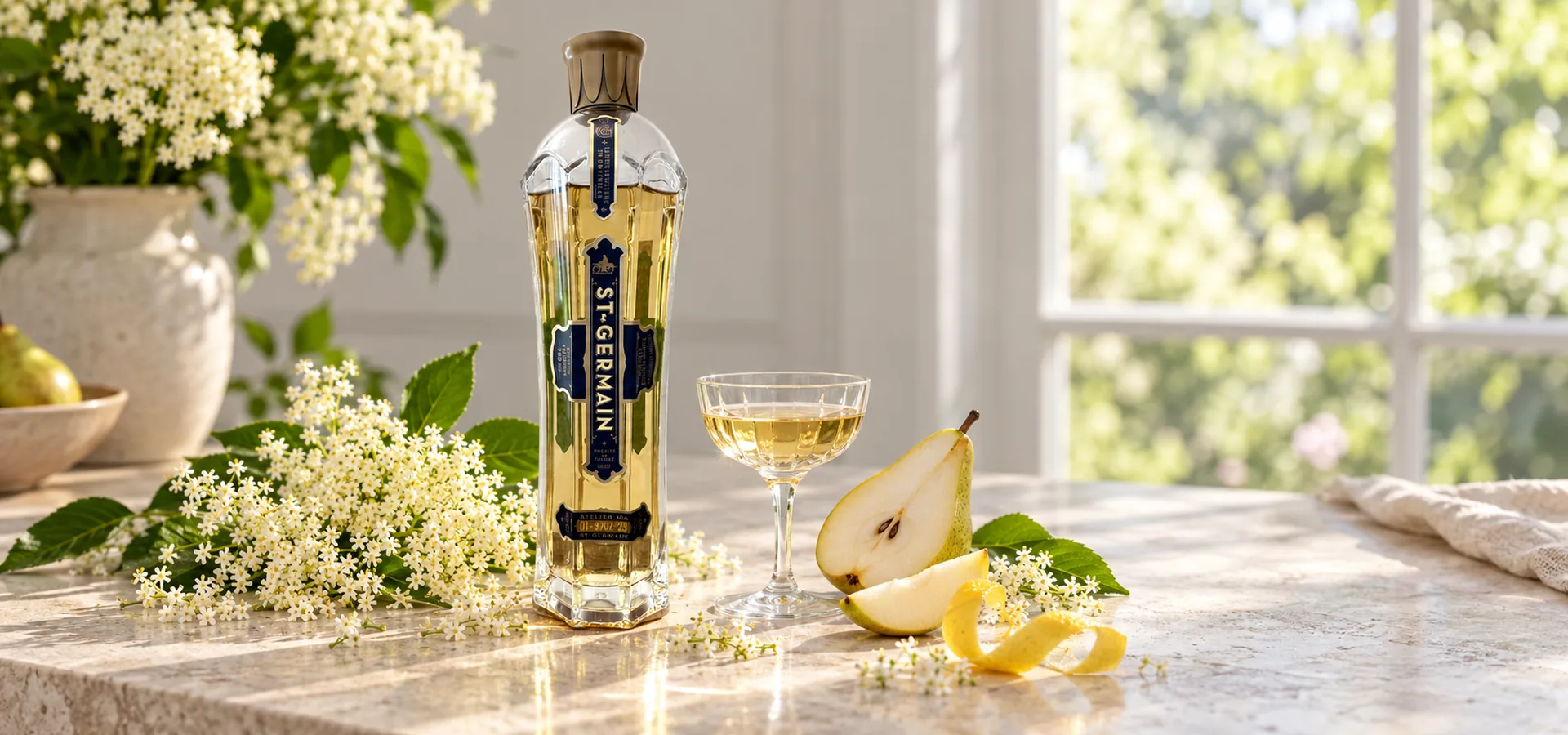
At a glance
- Legal category
- Elderflower liqueur sits within the broader liqueur category. United States 27 CFR 5.150 requires at least 2.5% sugar by weight; European Union category 33 generally requires 100 g/L of sweetening and at least 15% ABV.
- Typical strength
- 15 to 25 percent ABV
- Identity boundary
- Elderflower liqueur uses the blossom as its flavour direction. It is different from elderberry products, nonalcoholic cordial, and medicinal claims about the plant.
What is elderflower liqueur?
Elderflower liqueur is a sweetened alcoholic drink whose defining aroma comes from elder blossoms. Producers may infuse fresh flowers, macerate them, use an extract or flavour preparation, or combine several routes before blending with spirit, water, and sugar.
The name does not establish one flower quantity, base spirit, sweetness, colour, or strength. It also does not mean elderberry, because the blossom and ripe fruit provide different materials and flavour profiles.
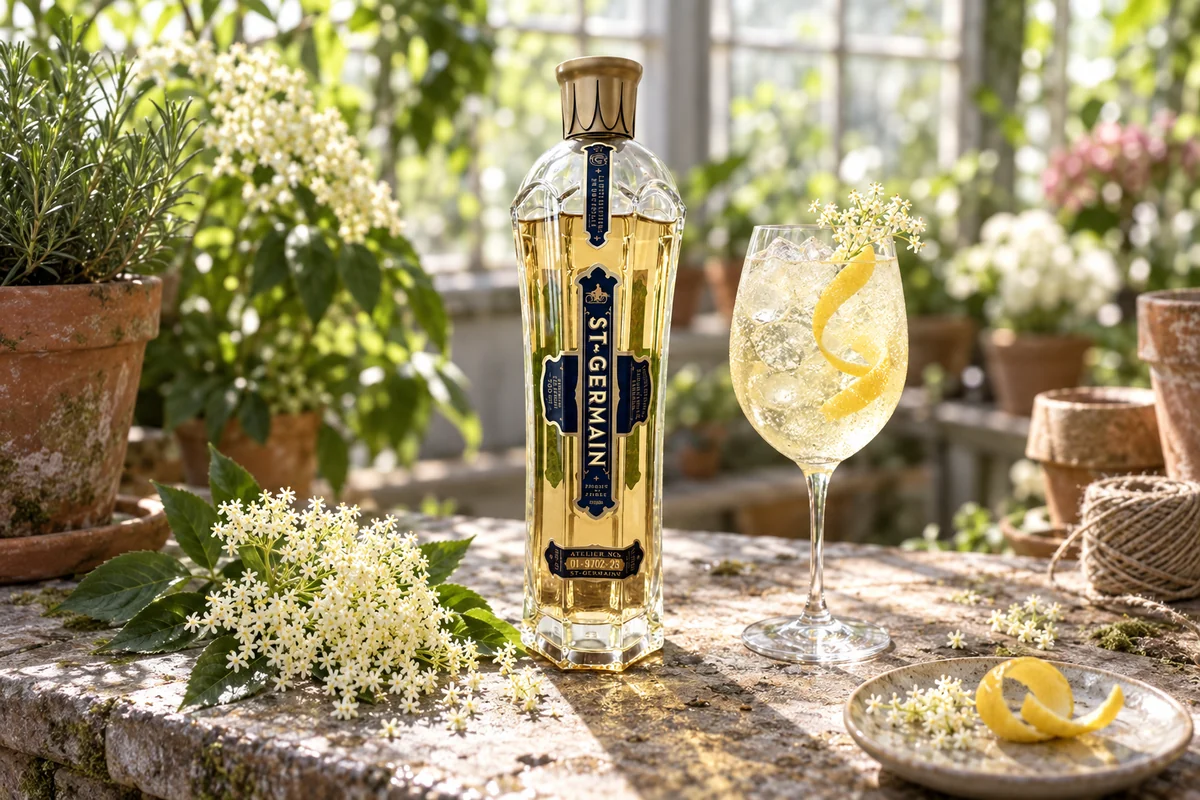
- Plant part
- Elder blossoms, commonly associated with Sambucus nigra
- Typical role
- Floral, pear-like, citrus, lychee, honeyed, or green aromatic lift
- Main checks
- ABV, sweetness, flower claim, colour, storage, and intended use
United States and European Union rules define elderflower products through their broader liqueur categories rather than a single elderflower recipe.
The legal standards establish sweetness and alcohol baselines in their own jurisdictions but do not promise fresh hand-picked flowers.
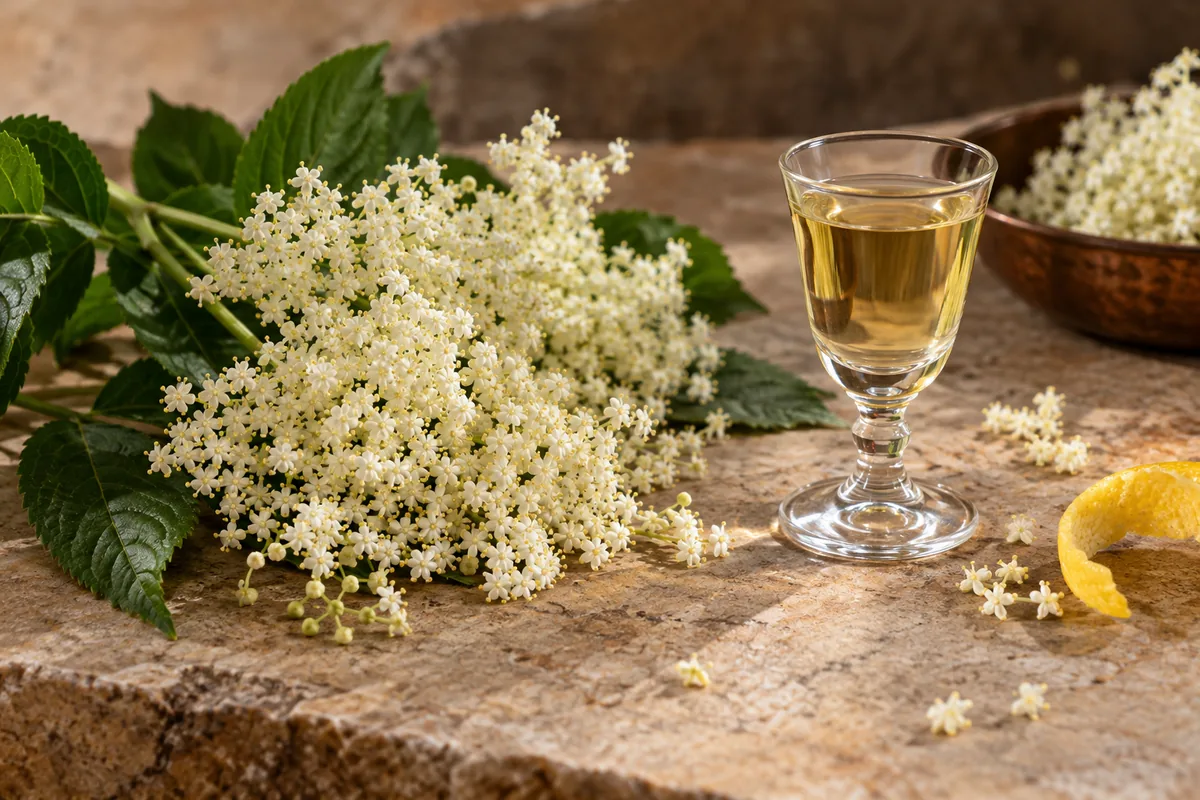
St-Germain describes its named product as a natural infusion of fresh Sambucus nigra flowers at 20% ABV. That is useful product evidence, not a universal specification for every elderflower liqueur.
How is elderflower different from elderberry?
Elderflower comes from the plant's blossoms, while elderberry comes from its fruit. A flower-led liqueur tends toward floral, green, citrus, pear, or lychee associations; a berry product is usually darker and fruitier.
The two names should not be used interchangeably in shopping, mixing, or allergen checks. Colour offers a clue, but added colour and other fruit can blur it.
| Product | Leading material | Common practical effect |
|---|---|---|
| Elderflower liqueur | Blossom or flower preparation | Floral aroma plus sugar and alcohol |
| Elderberry liqueur | Ripe fruit or berry preparation | Darker fruit, tannin, acidity, sugar, and alcohol |
| Elderflower cordial | Flower syrup or concentrate | Sweetness and aroma without the liqueur's alcohol |
| Elderflower flavouring | Concentrated flavour preparation | Aroma without proving flower quantity or process |
Research on Sambucus nigra flowers identifies a complex volatile mixture that includes terpenoid compounds, alcohols, aldehydes, ketones, and esters.
That complexity helps explain why the aroma can suggest several fruits and flowers at once.
Botanical identity does not create a health claim. An alcoholic elderflower product should not be presented as a cold remedy, antioxidant treatment, sleep aid, or medicine.
Choose elderflower liqueur for its flavour and alcoholic function. Health questions belong with qualified medical guidance, not the romantic history of the plant.
Why does elderflower smell like flowers and fruit?
Elderflower aroma is assembled from many volatile molecules rather than one signature compound. Terpenes and their oxygenated derivatives can read as floral, citrus, rose-like, green, or tropical depending on concentration and the rest of the formula.
Sugar lengthens and rounds those impressions, while acid sharpens them. Alcohol carries aroma into the headspace but can also feel hot when the liqueur is served too warm or used too heavily.
- Floral: blossom, honeysuckle, rose, or pollen-like associations
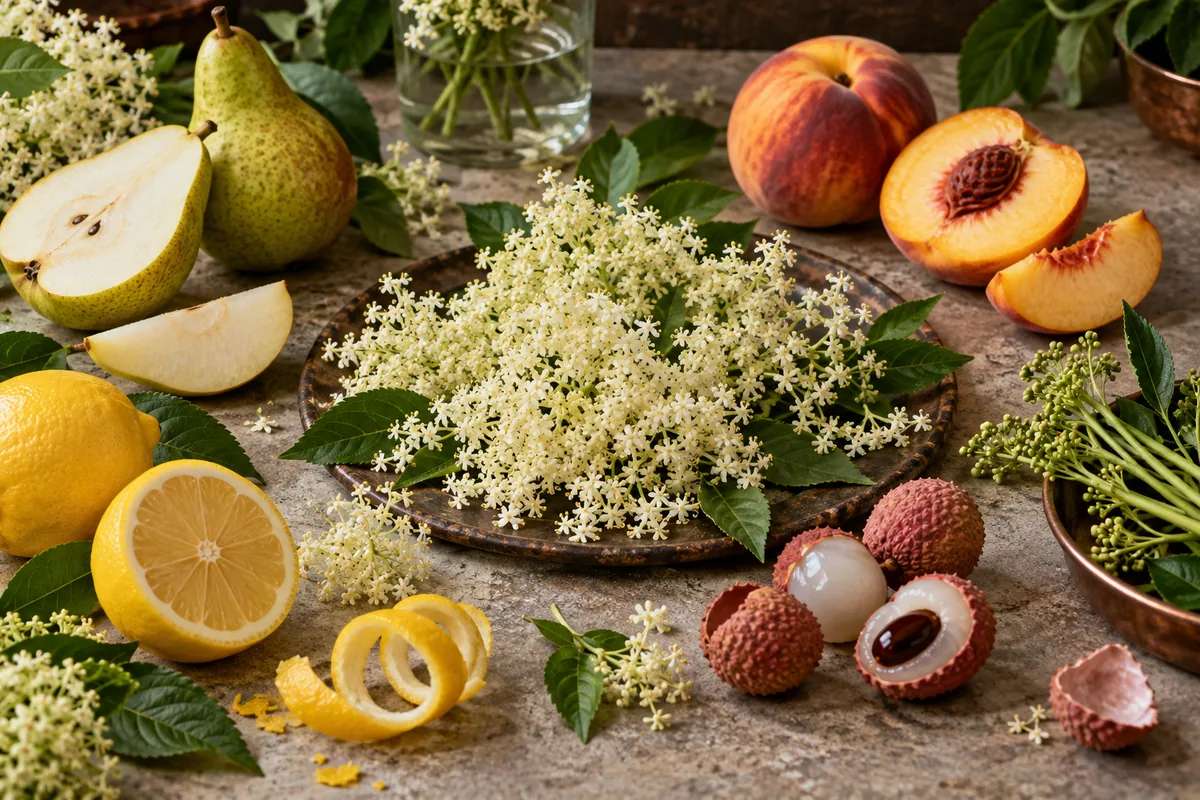
- Orchard fruit: pear, white peach, or grape-like impressions
- Citrus: lemon peel or fresh citrus lift
- Tropical: lychee-like aroma in some formulas
- Green: stem, herb, or fresh plant notes when extraction captures more vegetal material
St-Germain describes peach, pear, citrus, and honeysuckle in its product.
Academic elderflower research identifies volatile families that support why these cross-sensory associations are plausible, but neither source proves that every bottle tastes the same.
Oxidation gradually changes the most delicate compounds. A bottle that becomes darker and less floral may be ageing rather than unsafe, but the producer's guidance should control the decision.
How is elderflower liqueur made?
Fresh blossoms are fragile and seasonal, so harvest timing and the interval before extraction matter. Bruising, heat, prolonged exposure to air, or excessive green stem material can move the flavour away from a clean floral profile.
Commercial producers can macerate flowers in alcohol, prepare a water-based infusion, use concentrates, or blend natural flavour preparations. Each route preserves a different balance of aroma, colour, dissolved solids, and plant character.
- Select the flower material. Species, harvest stage, freshness, and stem inclusion affect the starting aroma.
- Capture the aroma. Infusion or maceration transfers volatile and soluble compounds into a controlled liquid.
- Separate the solids. Pressing and filtration limit plant debris and excessive vegetal extraction.
- Blend the liqueur. Spirit, water, sugar, acid, and permitted flavour preparations establish the final balance.
- Rest and package. Integration, oxygen control, and light-protective packaging preserve the intended profile.
St-Germain states that its maceration process captures flavour from fresh flowers and that its golden colour comes from pollen without artificial colouring.
Another producer may use a different flower form or colour route.
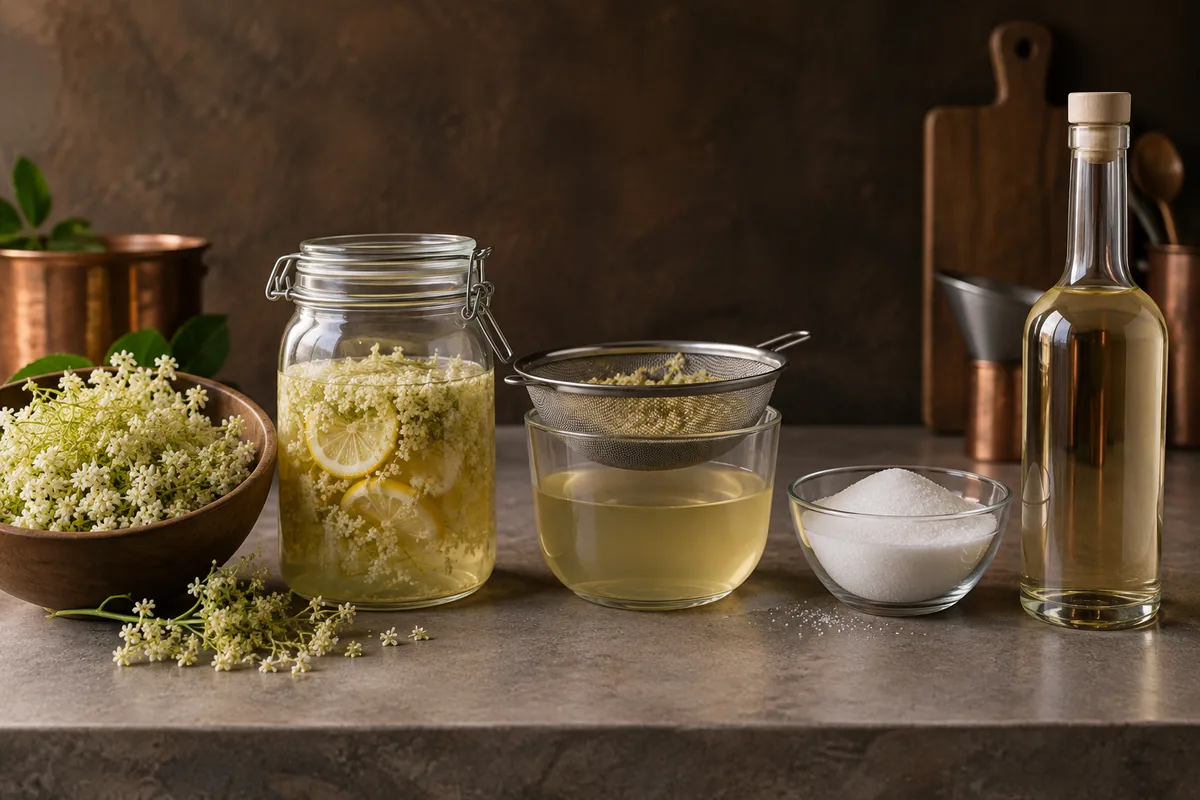
This process description stays at commercial principle level. It does not justify uncontrolled distillation or a shelf-stable homemade product.
How strong and sweet is elderflower liqueur?
Many current examples sit near 20% ABV, while the wider liqueur category permits other strengths. The European Union's general 15% floor provides a legal reference in that jurisdiction, not a promise that every market or named product follows one narrow band.
Sweetness is central because it protects delicate floral aroma from tasting thin, but too much can obscure acidity and make a mixed drink perfumed and heavy.
- 15 ml at 20% ABV
- 3 ml pure alcohol
- 30 ml at 20% ABV
- 6 ml pure alcohol
- 45 ml at 20% ABV
- 9 ml pure alcohol
These examples show how a generous pour changes both sweetness and alcohol.
The full serving may also contain gin, wine, sparkling wine, vodka, or another spirit.
For United States serving calculations, NIAAA counts about 14 grams of pure alcohol as one standard drink. Count the complete drink, and never use an ABV calculation to decide that someone is unimpaired or safe to drive.
Floral flavour can hide the sense of strength. Measure the liqueur and every other alcoholic ingredient even when the drink tastes light.
How should elderflower liqueur be balanced?
Elderflower liqueur supplies aroma and sugar together, so it often replaces part of a sweetener rather than acting as a neutral flavour drop. Acid, bitterness, dry wine, carbonation, or a clean spirit can keep the finish defined.
Start with the measured recipe because floral intensity can dominate quickly. A small change may be more noticeable than the same change in a dark roasted liqueur.
| Partner | What it contributes | Balance risk |
|---|---|---|
| Dry sparkling wine | Acidity, bubbles, and a lean finish | Too much liqueur masks dryness |
| Gin | Juniper, citrus, and botanical structure | Competing florals become perfumed |
| Tequila | Agave weight and peppery notes | Sweetness can flatten fresh lime |
| Lemon or lime | Acid and citrus definition | Excess acid makes the flower seem thin |
| Soda water | Dilution and aroma lift | Warm or flat soda leaves a sweet finish |
Fresh cucumber, pear, white peach, strawberry, mild goat cheese, herbs, and lightly salted foods can support the floral-fruit direction.
Heavy smoke, intense chilli, and very bitter ingredients may bury it.
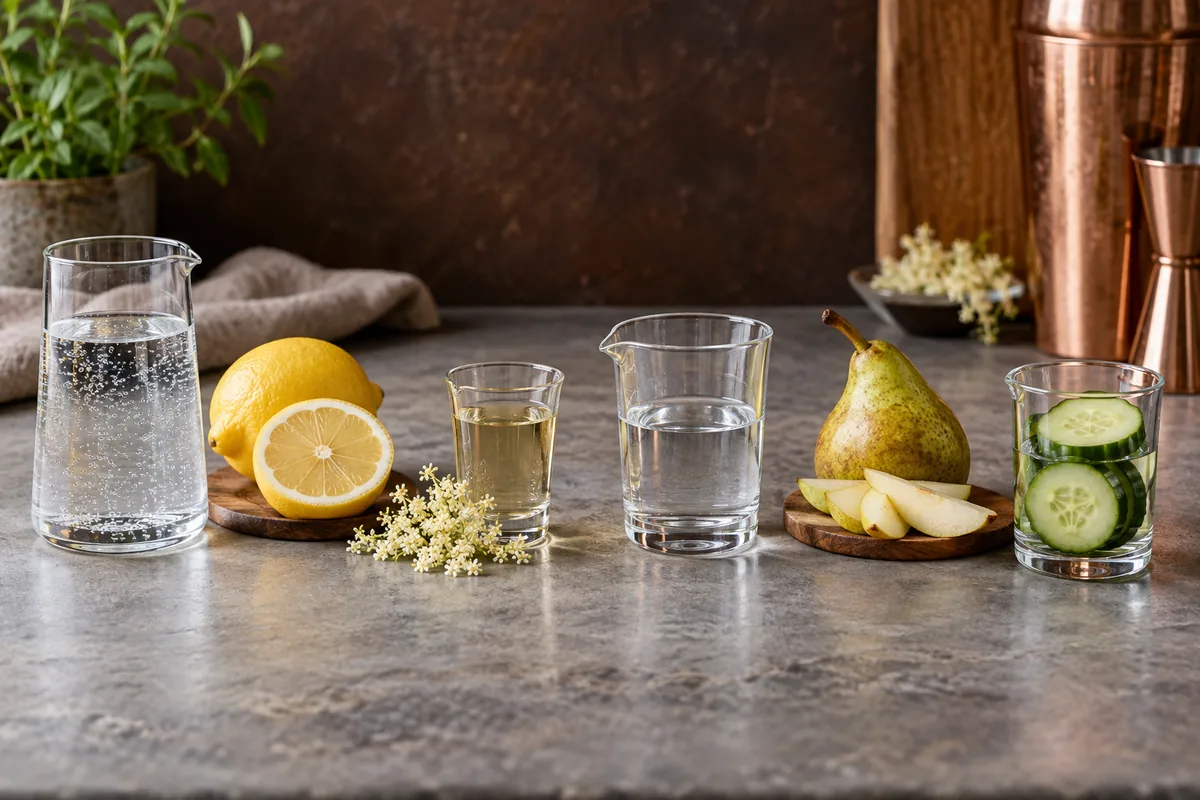
Elderflower cordial can replace flower aroma and some sugar in an alcohol-free direction, but it cannot replace the liqueur's alcohol or volume without further adjustment.
What should you check on an elderflower bottle?
Start with the actual designation and ABV, then look for the flower source, extraction statement, colour disclosure, sweetness clues, allergens, and storage directions. A pastoral label is not evidence of fresh flowers or hand harvest.
Decide whether you want a bright mixer, a richer sipping style, or a lower-alcohol cordial substitute. That decision determines which facts matter most.
- Confirm that the product is alcoholic liqueur rather than cordial or syrup.
- Check the ABV on the market-specific bottle.
- Look for a clear elderflower or Sambucus nigra statement.
- Note added fruit, herbs, colour, or flavouring that may shift the profile.
- Check allergens and dietary claims on the physical package.
- Match sweetness and storage guidance to how slowly you will use it.
Current producer descriptions can clarify method and flavour, but they remain product claims.
Without comparative tasting evidence, they do not support ranking one bottle over another.
Choose by function. The best bottle for a dry sparkling drink may differ from the one intended for dessert, fruit, or neat service.
Why does elderflower liqueur change after opening?
Opening replaces the bottle's headspace with fresh air, and light adds energy that can change colour and aroma compounds. As the level falls, repeated openings expose proportionally more liquid to oxygen.
St-Germain recommends using its product within six months after opening and keeping it cool, dry, and away from bright light. That deadline belongs to the named formula, not the whole category.
- Store upright: reduce long contact between alcohol and the closure.
- Close tightly: slow aroma loss and evaporation.
- Keep it dark: protect pale colour and delicate floral compounds.
- Date the opening: make a product-specific recommendation usable.
- Inspect before service: hold bottles with leakage, pressure, mould, or an abnormal odour.
A gradual shift from pale gold toward deeper amber can accompany oxidation and may primarily affect flavour.
Colour alone cannot diagnose safety, so combine it with aroma, closure condition, storage history, and producer guidance.
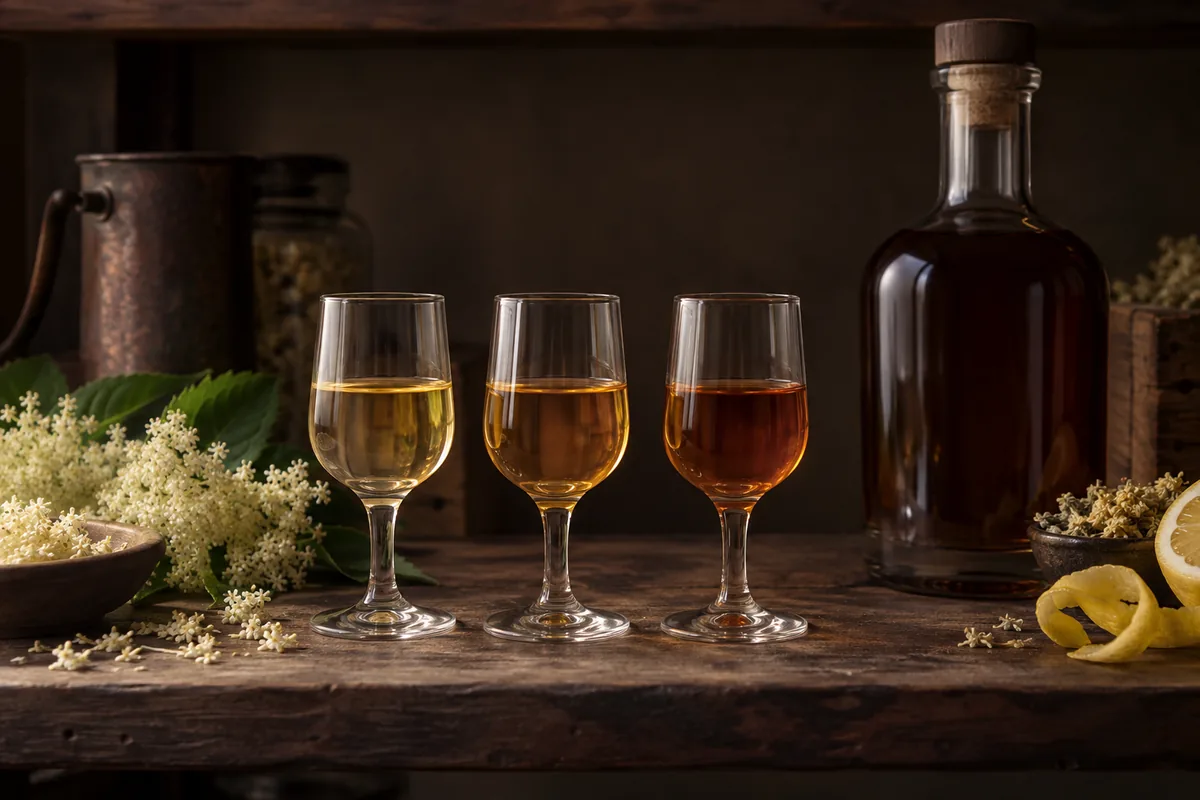
Keep an opened bottle in the refrigerator only when its label recommends refrigeration or when that choice fits the producer's stated range. Cold protects aroma, but it does not reset an old or damaged product.
Sources
-
27 CFR 5.150, Liqueur or cordial
Published 9 February 2022. Accessed 13 September 2026.
-
Characterisation of Black Elder Flowers and Their Volatiles
Published 22 September 2021. Accessed 13 September 2026.
-
NIAAA, What Is a Standard Drink?
Accessed 13 September 2026.
-
Phytochemical Profiling of Sambucus nigra Flower and Leaf Extracts
Published 18 January 2023. Accessed 13 September 2026.
-
Regulation (EU) 2019/787
Published 17 May 2019. Accessed 12 September 2026.
-
St-Germain Frequently Asked Questions
Accessed 13 September 2026.
More in Liqueurs
-
 Almond liqueur
01
What is almond liqueur, and does it always contain almonds?
-
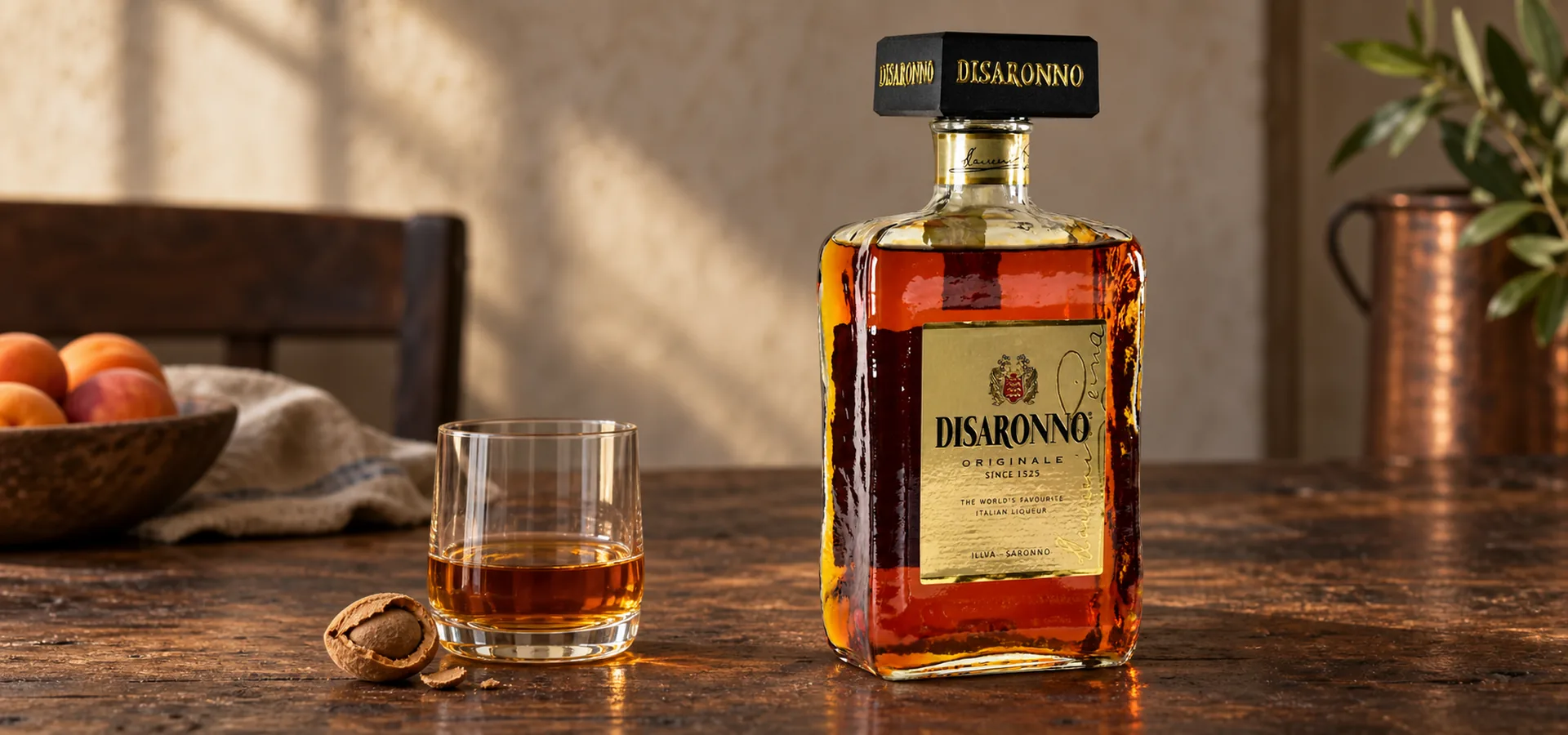 Amaretto
02
What is amaretto, and what gives it an almond-like flavour?
-
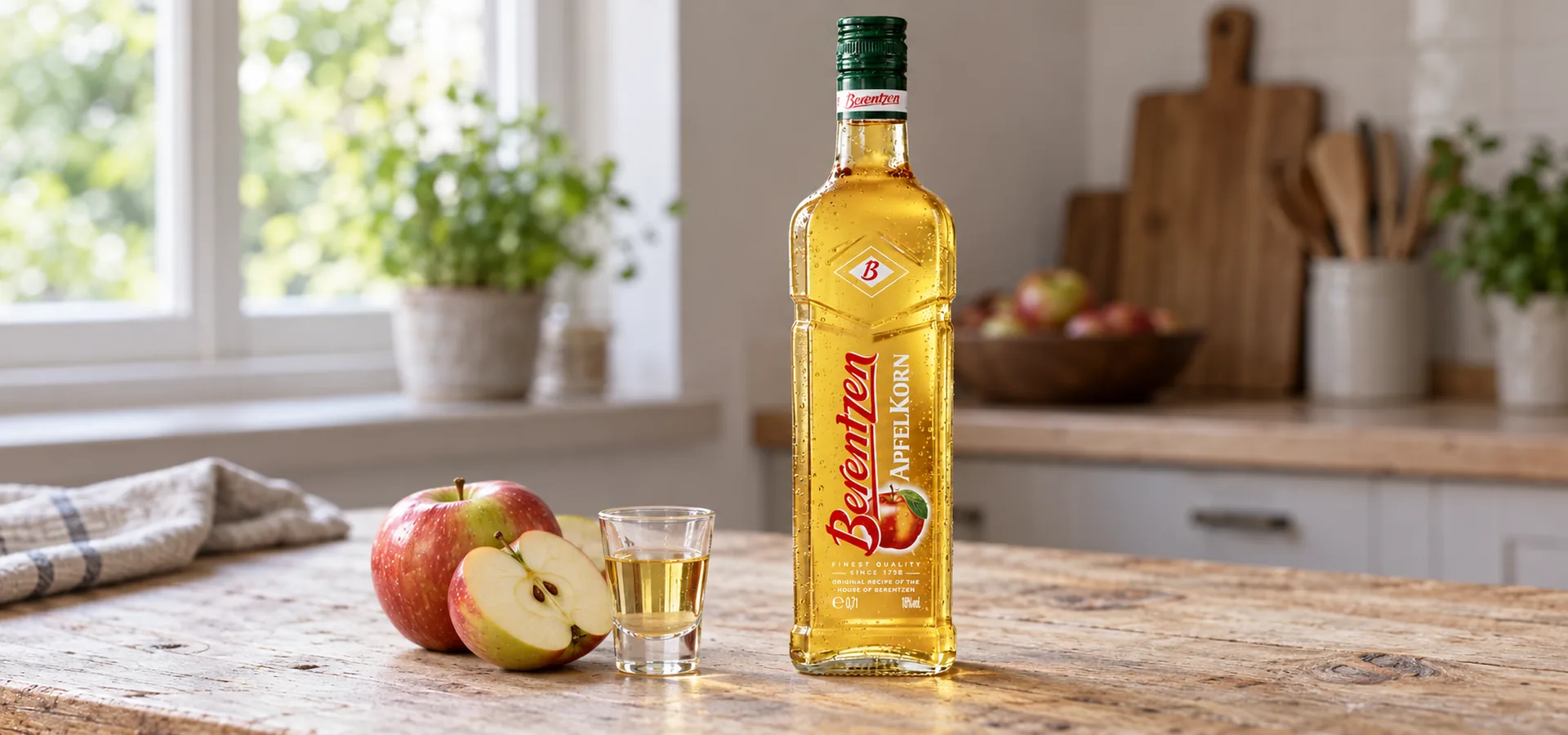 Apple liqueur
03
What is apple liqueur, and how does it differ from apple brandy?
-
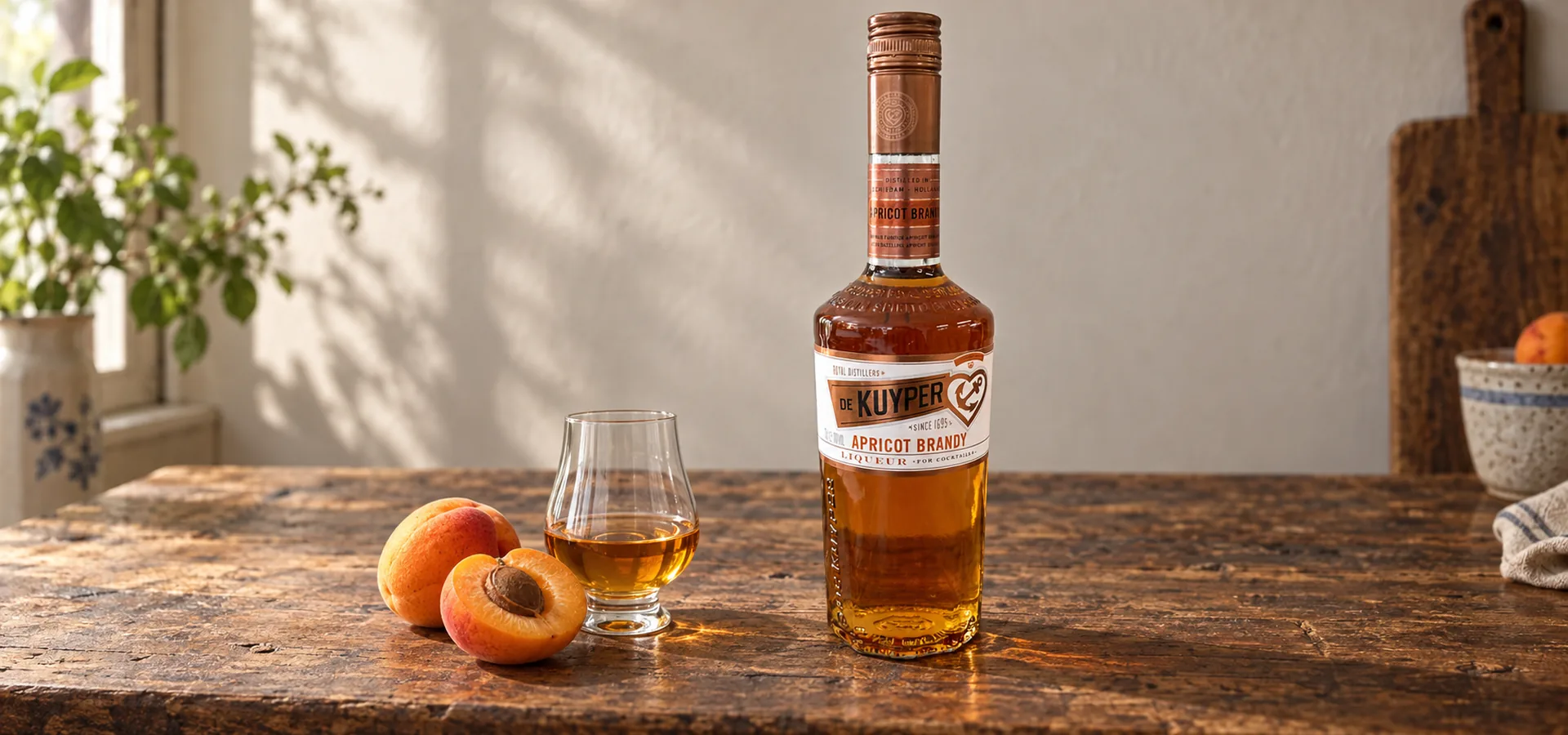 Apricot liqueur
04
What is apricot liqueur, and when does apricot brandy mean something else?
-
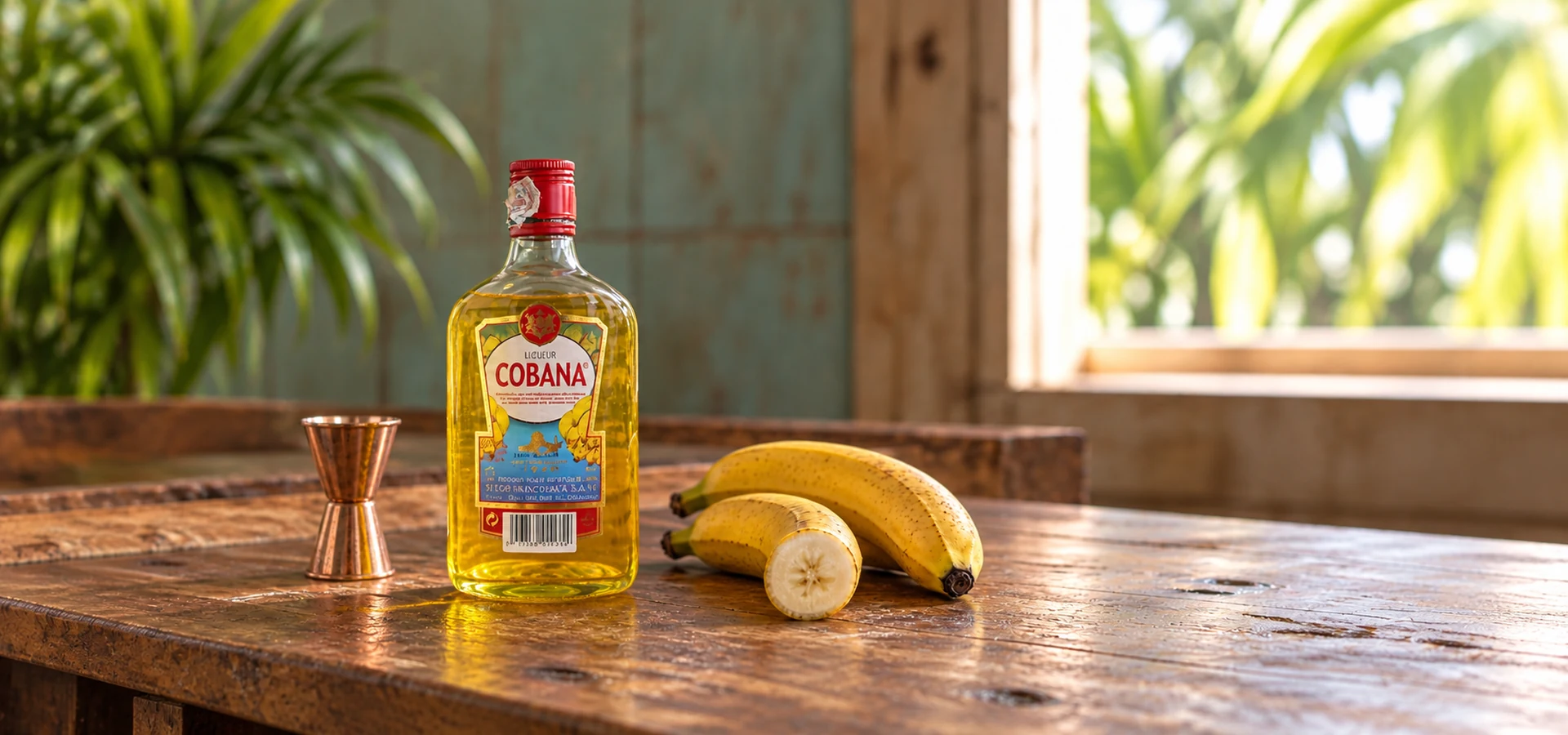 Banana liqueur
05
What is banana liqueur, and how do fresh and ripe styles differ?
-
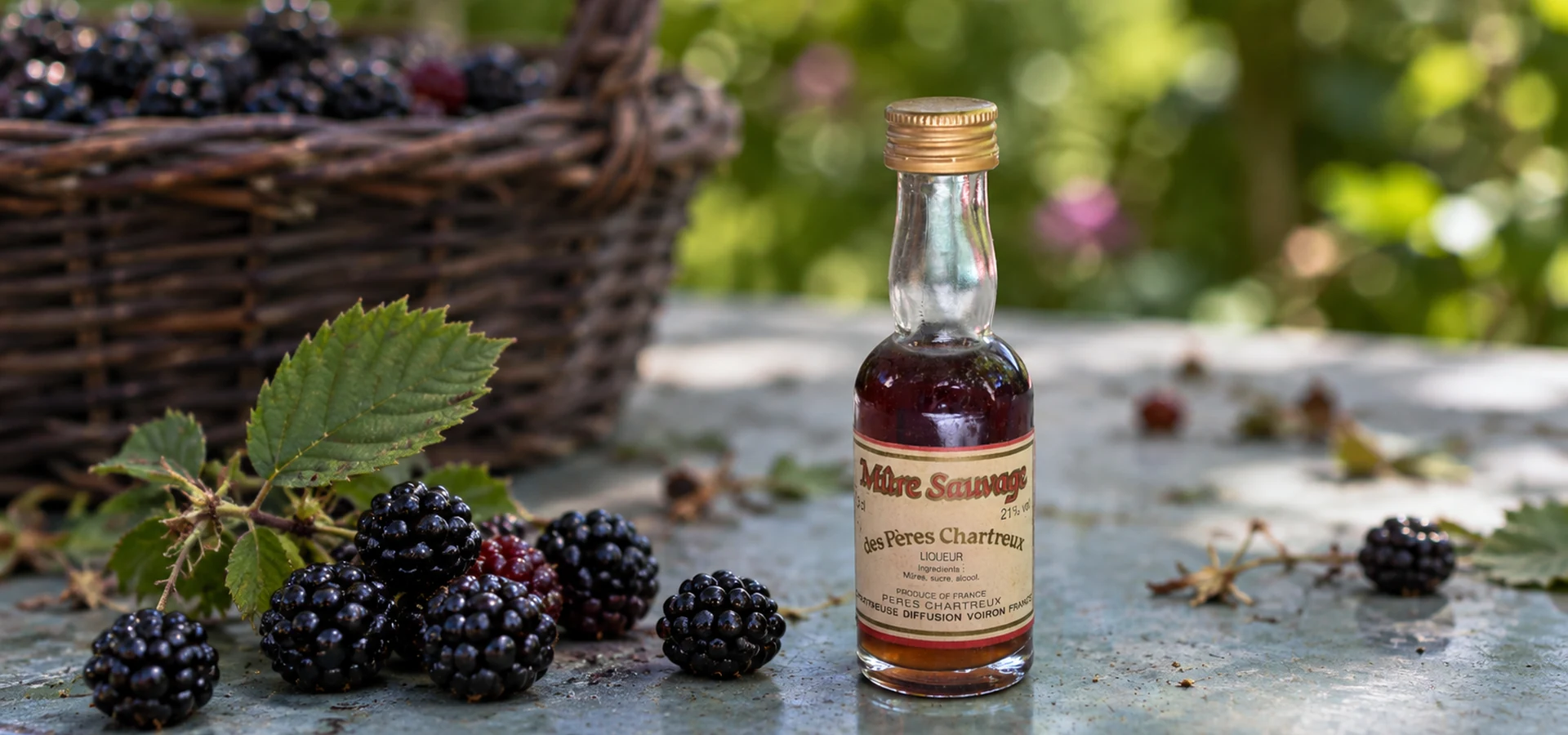 Blackberry liqueur
06
What is blackberry liqueur, and is it the same as crème de mûre?