
Liqueurs
What Is Cream Liqueur? Emulsion, Alcohol, and Storage Explained
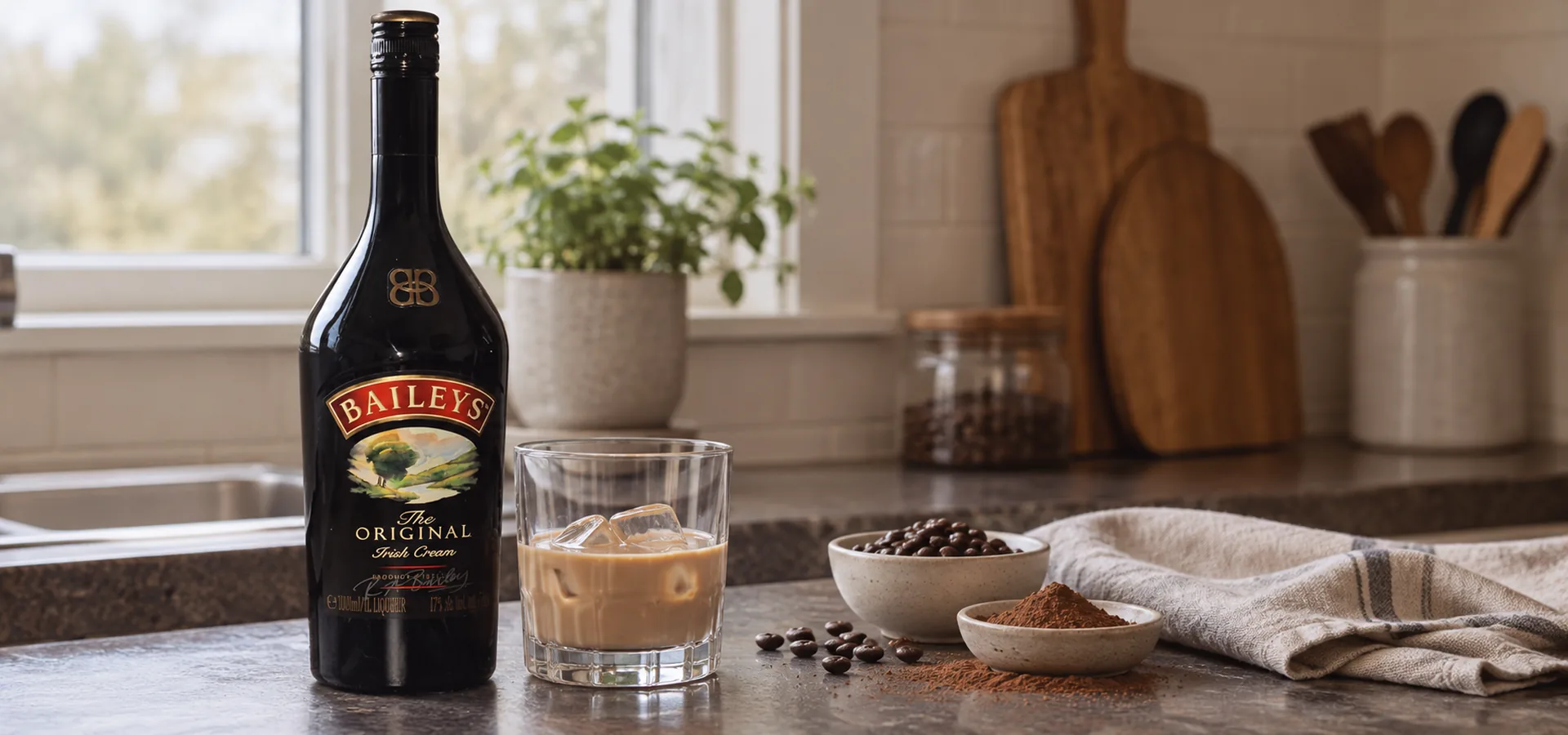
Cream liqueur is a sweetened alcoholic emulsion that combines a spirit phase with dairy cream or another creamy fat-and-water system. Its texture depends on a stable formula, so allergens, acid, heat, age, and storage matter more than the word creamy on the front label.
At a glance
- Legal category
- Cream liqueur generally sits within the broader liqueur category. In the United States, 27 CFR 5.150 requires cordial or liqueur products to contain at least 2.5% sugar by weight; European Union category 33 generally requires 100 g/L of sweetening and 15% ABV, subject to named exceptions.
- Typical strength
- 13 to 20 percent ABV
- Formula boundary
- Cream liqueur is an emulsion, not proof that every bottle contains dairy cream. Read the ingredient, allergen, ABV, date, and storage information for the actual product.
What makes a drink a cream liqueur?
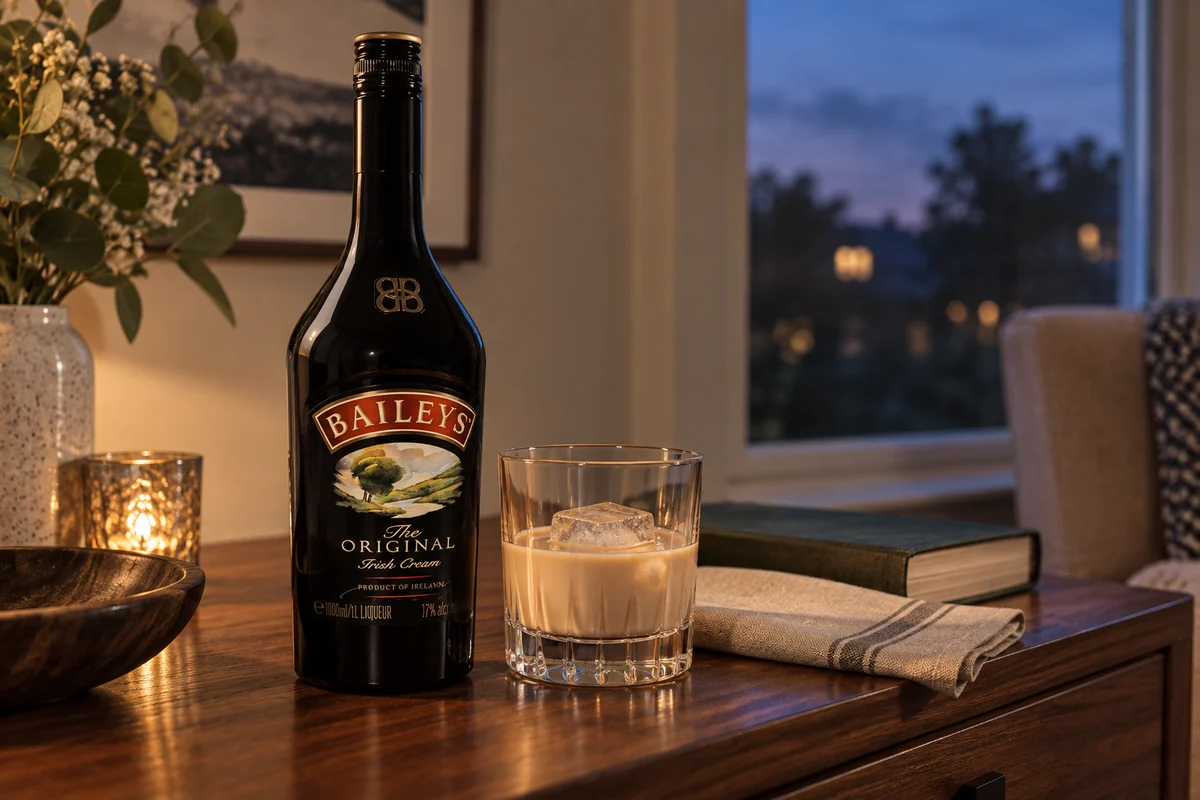
Cream liqueur is a sweetened alcoholic emulsion with a creamy, opaque body. Traditional examples use dairy cream, while some modern products use almond, coconut, oat, or other plant-derived ingredients to create a related texture.
The broad name describes how the liquid presents and behaves, but it does not settle the ingredient list. A cream-coloured bottle may contain milk proteins, another allergen, or no dairy at all.
- Physical form
- Opaque fat-in-water emulsion containing alcohol and sugar
- Common base
- Neutral spirit, whiskey, rum, or another spirit blend
- Main decisions
- Dairy or plant base, allergens, ABV, flavour, date mark, and storage directions
The United States cordial and liqueur rule defines the larger sweetened spirits category rather than one universal cream formula.
European Union liqueur rules also establish category-level sugar and alcohol requirements, while the actual milk or plant composition remains product-specific.
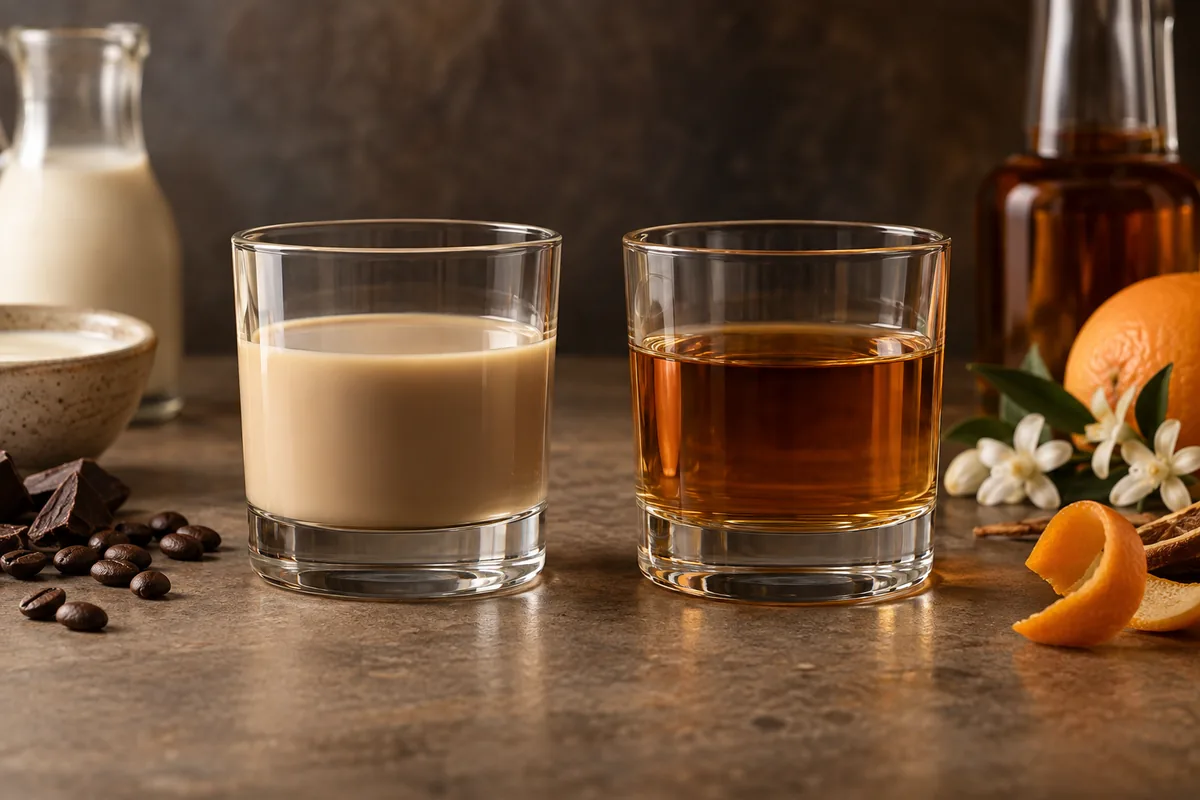
Crème and cream are different clues. In names such as crème de cacao, crème refers to a legally sweet liqueur style in some jurisdictions; it does not automatically mean dairy. Cream liqueur describes a creamy emulsion.
This distinction prevents a common allergen mistake. A clear crème de fruit may contain no milk, while an opaque cream liqueur can carry dairy even when cream is not the largest word on the label.
Why does cream liqueur stay mixed?
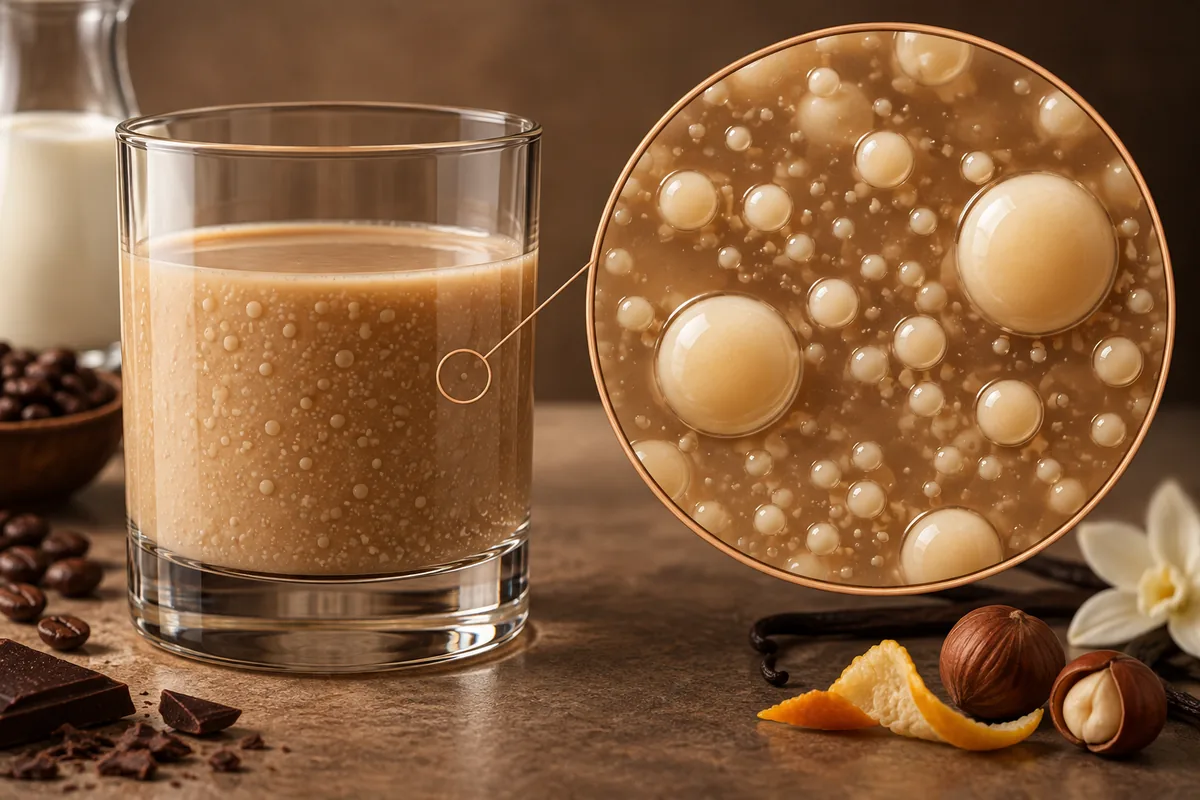
Fat and water naturally separate, and alcohol adds another challenge because it changes protein interactions and the liquid environment. Manufacturers control droplet size, protein, emulsifier, acidity, sugar, alcohol concentration, heat treatment, and mixing energy to keep the product uniform.
Milk proteins can surround small fat droplets and help keep them dispersed through the water-rich phase. Homogenization reduces droplet size, which slows creaming and makes the texture feel smoother.
- Prepare the cream phase. Fat, water, proteins, sugar, and flavour ingredients are measured for the formula.
- Introduce alcohol under control. Adding it too quickly or under the wrong conditions can destabilize proteins.
- Homogenize the blend. Smaller, more uniform droplets resist separation and improve texture.
- Stabilize and package. Acidity, emulsifiers, heat treatment, sanitation, and the final container support the intended shelf life.
Food-science research on milk emulsions shows that protein concentration and processing conditions influence stability and viscosity.
That principle explains the structure, but it cannot reveal a commercial recipe whose exact formulation is proprietary.
Alcohol does not sterilize every creamy formula or make temperature irrelevant. The finished product's validated process and package directions control its handling.
Which ingredients and allergens matter?
Dairy cream supplies fat, water, milk proteins, lactose, and a rich mouthfeel, while sugar adds sweetness and body. Cocoa, coffee, vanilla, caramel, fruit, nuts, salt, emulsifiers, and acidity regulators may also appear.
Plant-based versions can replace dairy with almond, coconut, oat, or another base, but that change does not make the product allergen-free. It simply changes which ingredients must be checked.
- Read the ingredient and allergen statement on the physical bottle.
- Look specifically for milk, lactose, almonds, hazelnuts, soy, gluten-containing cereals, or other relevant ingredients.
- Check the producer's current market page when the bottle uses a broad phrase such as cream-style.
- Ask for written allergen information when a bar or restaurant serves the product from an unseen bottle.
- Do not infer allergen safety from distillation, colour, or a familiar brand family.
The European Commission lists milk and hazelnuts among allergens that must be declared when used in covered foods, including relevant alcoholic beverages.
Rules and presentation differ by market, so a statement from one country should not be applied to another package automatically.
A product-family name is not an allergen clearance. Variants can use different dairy, nut, soy, flavour, and processing ingredients even when their bottles look related.
Baileys states that its Original Irish Cream contains cream and milk proteins and is not vegan. The same FAQ lists a plant-based Almande variant at a different ABV, which illustrates why the exact variant matters.
Why can acid or heat make cream liqueur split?
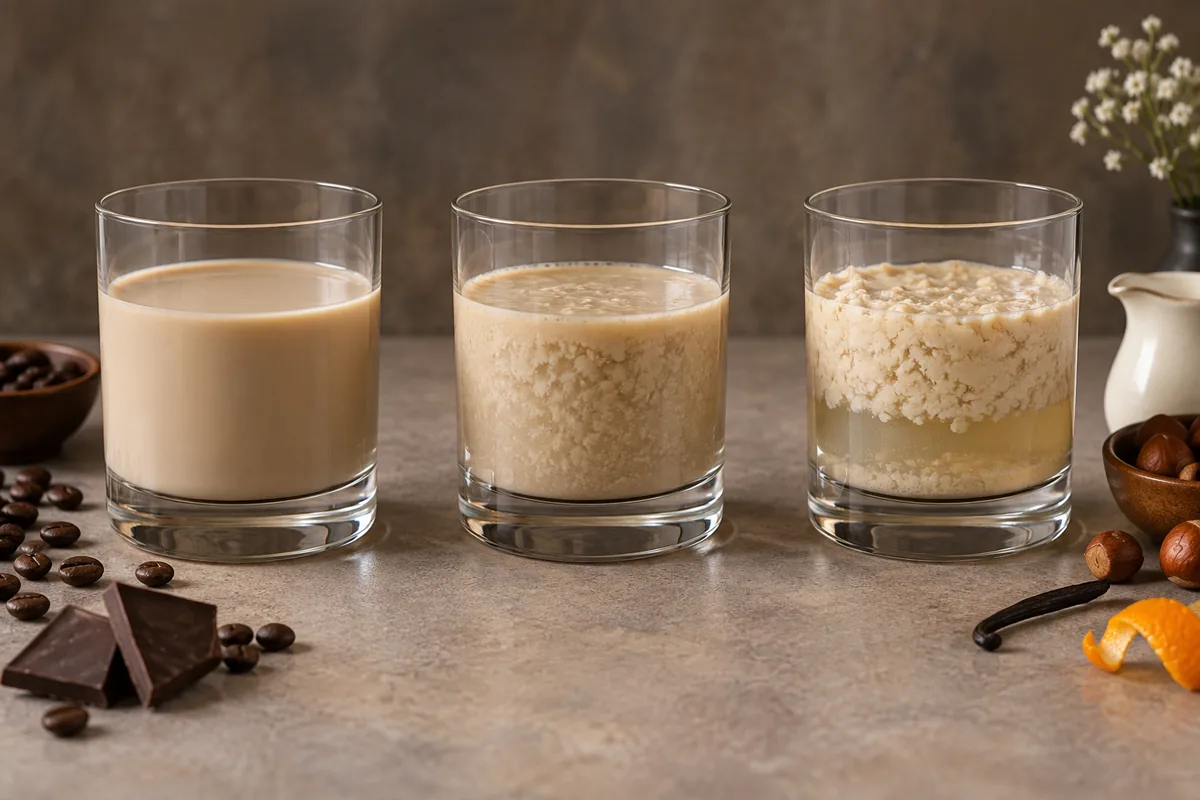
Acid changes the electrical charge and interactions of milk proteins. When conditions move toward a protein's least stable range, the protective layer around fat droplets can weaken and visible curds or clumps can form.
Heat increases molecular movement and can accelerate destabilization, while a sudden temperature or alcohol change can stress an already delicate emulsion. A stable bottled product may therefore split when poured directly into strong citrus, hot coffee, or another acidic liquid.
| Condition | What may happen | Practical control |
|---|---|---|
| Strong citrus | Protein coagulation or graininess | Use a tested recipe and combine in its stated order |
| Very hot coffee | Thinning, oiling, or protein damage | Let the coffee cool slightly and add gradually |
| Carbonated acid | Foaming plus local acid concentration | Use cold ingredients and add gently |
| Old or damaged emulsion | Separation becomes harder to reverse | Inspect the bottle before mixing |
Some products are formulated to tolerate coffee or selected cocktails, but that does not establish universal acid resistance.
Test a small amount when the producer gives no guidance, especially before preparing several servings.
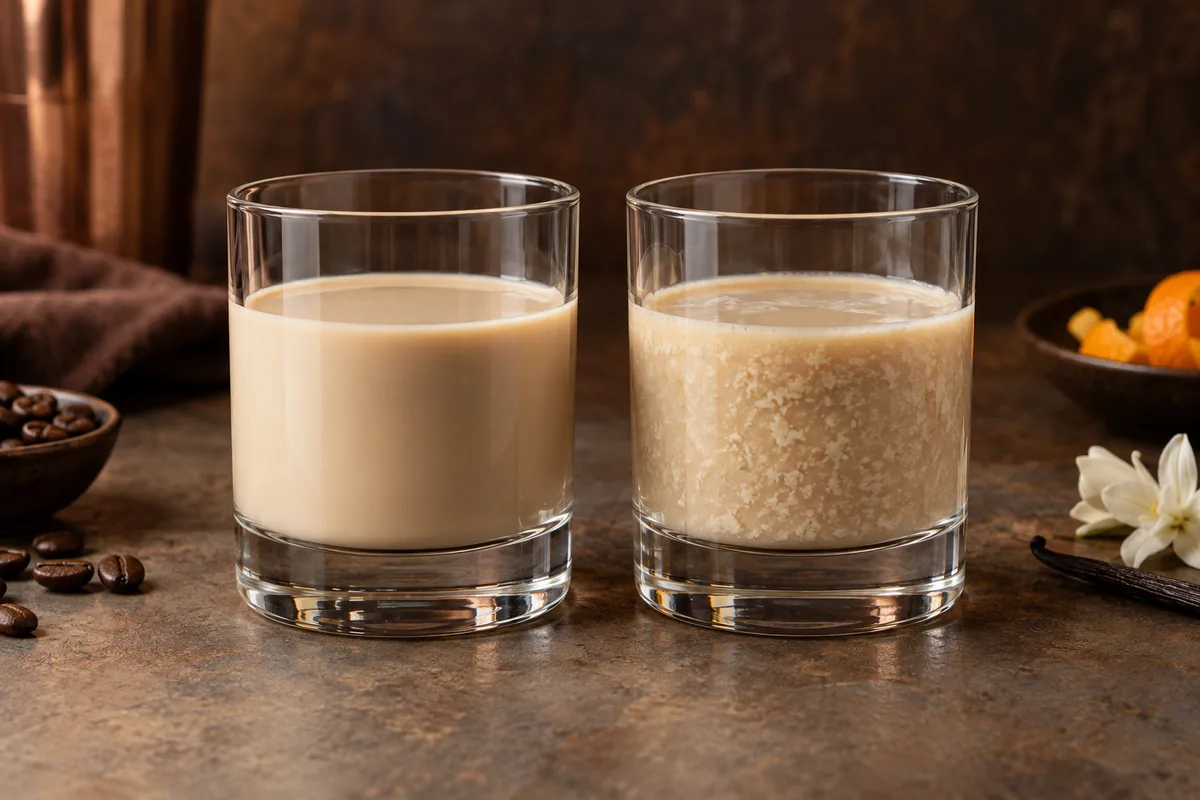
Curdling in a glass proves that the mixture became unstable; it does not by itself prove the original bottle was spoiled. Inspect the unmixed bottle separately.
How strong and sweet is cream liqueur?
Current commercial examples commonly sit in the teens by volume, with some lighter plant-based or flavoured variants around 13% and many dairy examples around 15% to 17%. The wider category can extend higher, so the printed ABV remains the deciding number.
Cream and sugar soften alcohol's sensory heat, which makes strength easy to underestimate. Texture is not a measure of ethanol.
- 30 ml at 13% ABV
- 3.9 ml pure alcohol
- 30 ml at 17% ABV
- 5.1 ml pure alcohol
- 60 ml at 17% ABV
- 10.2 ml pure alcohol
Doubling the pour doubles the alcohol even when it is served over ice or added to dessert.
Meltwater changes concentration in the glass but does not remove the alcohol already poured.
NIAAA defines a United States standard drink as about 14 grams of pure alcohol. The complete serve may also include whiskey, vodka, coffee liqueur, or wine, so measure every alcoholic ingredient.
Sweetness can conceal alcohol flavour. It does not reduce impairment, create a safe driving time, or cancel another spirit in the same drink.
How should cream liqueur be served and paired?
Cool service keeps the emulsion thick and restrains sweetness, while a warmer pour releases more aroma and can feel softer or heavier. Use a clean small glass, measure the serving, and avoid leaving dairy-based drinks at room temperature for extended periods.
In mixed drinks, cream liqueur can provide sweetness, alcohol, fat, and flavour at once. Reducing only syrup may not compensate for the extra body or dairy.
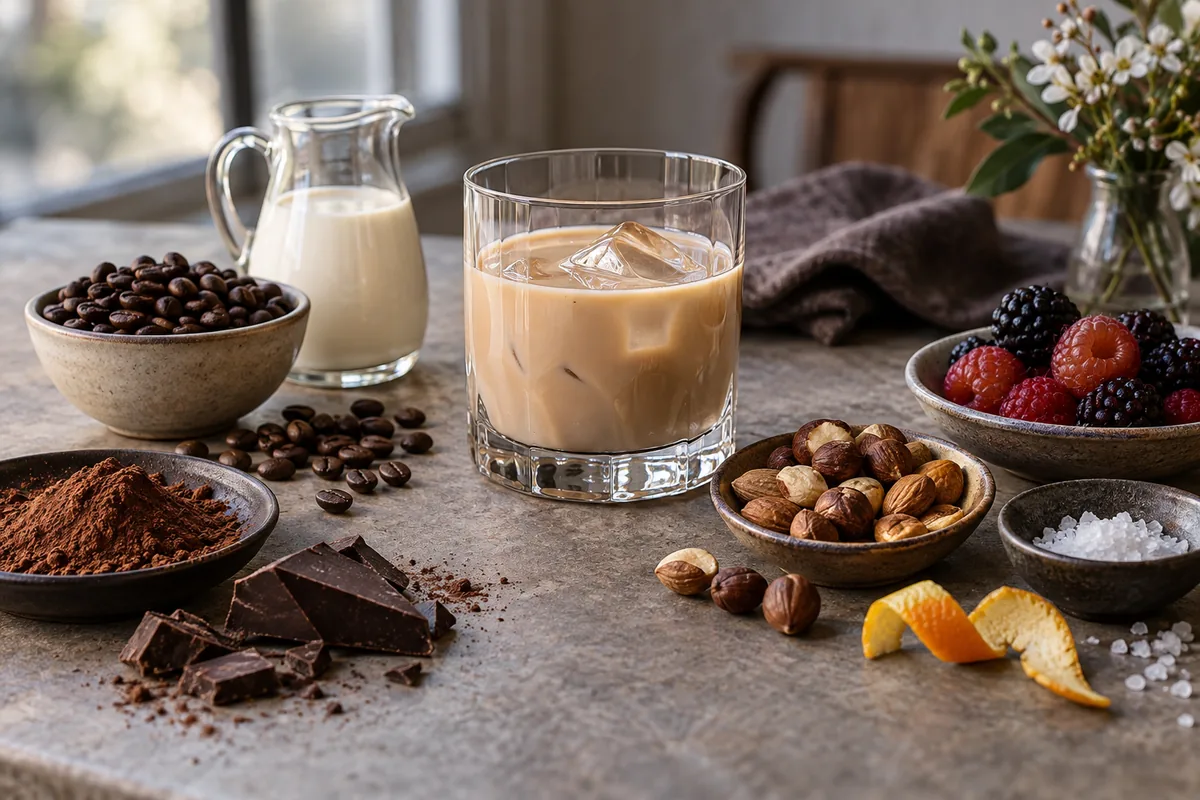
- Coffee: roast and bitterness counter sweetness, but excessive heat can stress the emulsion.
- Cocoa and chocolate: reinforce roasted and dairy notes; a small salt contrast can prevent a flat finish.
- Berry fruit: aromatic contrast can work, but strong acid needs a compatible formula.
- Toasted nuts: support caramel and roast while adding an allergen consideration.
- Vanilla desserts: echo aroma, so portion size and sweetness need restraint.
Pouring over ice is simple because water arrives gradually as the ice melts.
Shaking adds dilution and aeration, which can lighten the texture, but the drink still needs a recipe designed for an emulsion.
Sanitize tools that touch cream liqueur and wash them promptly. Residue left in pour spouts, jiggers, or bottle necks can spoil separately from the liquid inside the sealed bottle.
How long does cream liqueur last?
No category-wide shelf life applies. Formula, packaging, date marking, opening, temperature, light, and producer testing determine how long a specific cream liqueur retains its intended quality.
Baileys states that its Original lasts two years from bottling, opened or unopened, when stored from 0°C to 25°C and away from direct sunlight. That is a product-specific statement and should not be copied to another cream liqueur.
- Read the best-before or use-by information and opening instructions.
- Keep the bottle tightly closed and away from sunlight or heat.
- Refrigerate when the label requires it; do not assume every formula has the same rule.
- Hold a bottle with persistent curds, an oil layer that will not reincorporate, gas, mould, leakage, or an abnormal odour.
- Clean the neck before closing so dried cream does not compromise the seal.
Cold storage can thicken fat or make a product look temporarily uneven.
Letting the sealed bottle return to its recommended serving range and gently inverting it may restore a normal formula, but aggressive shaking cannot repair a spoiled or broken emulsion.
When the bottle's directions are missing or unreadable, contact the producer with the lot code rather than inventing a deadline. Discarding a doubtful dairy product is safer than using a generic internet lifespan.
Which cream liqueur suits the job?
Choose first by formula, then by flavour. The important split is dairy versus plant-based, followed by allergens, ABV, sweetness, dominant flavour, acid compatibility, and storage requirements.
A bottle intended for pouring over ice does not automatically work in hot coffee or a citrus drink. Match its physical behaviour to the way you plan to use it.
| Reader need | Evidence to seek | Reason |
|---|---|---|
| Dairy-free formula | Explicit current ingredient and allergen statement | Cream-style wording alone is insufficient |
| Hot coffee use | Producer serve or a tested recipe | Heat can destabilize some emulsions |
| Citrus mixing | Known acid-compatible formula | Milk proteins may curdle |
| Slow use after opening | Clear date and storage direction | Shelf life is formula-specific |
| Lower alcohol contribution | Printed ABV and measured pour | Texture does not indicate strength |
Check the physical package because online pages and export formulas can differ.
Keep the receipt or a photograph of the date and lot code when storage questions are likely.
The best fit is the bottle whose ingredient, allergen, strength, flavour, and handling information matches the intended serve. An opaque colour or familiar name cannot replace those checks.
Sources
-
27 CFR 5.150, Liqueur or cordial
Published 9 February 2022. Accessed 13 September 2026.
-
Baileys Frequently Asked Questions
Accessed 13 September 2026.
-
European Commission, Allergies and Food Labelling
Published 23 February 2026. Accessed 13 September 2026.
-
Milk Emulsions: Structure and Stability
Published 25 October 2019. Accessed 13 September 2026.
-
NIAAA, What Is a Standard Drink?
Accessed 13 September 2026.
-
Regulation (EU) 2019/787
Published 17 May 2019. Accessed 12 September 2026.
More in Liqueurs
-
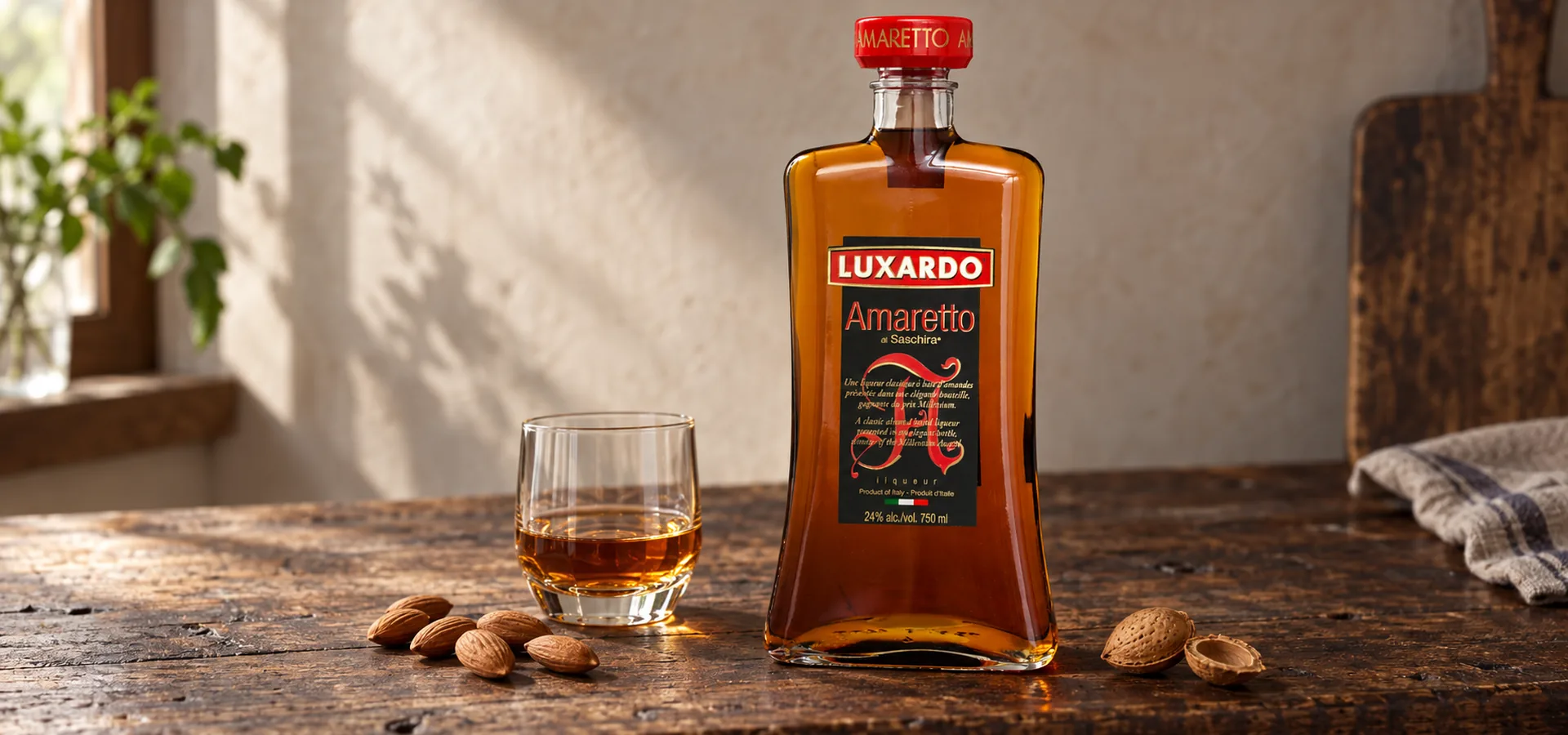 Almond liqueur
01
What is almond liqueur, and does it always contain almonds?
-
 Amaretto
02
What is amaretto, and what gives it an almond-like flavour?
-
 Apple liqueur
03
What is apple liqueur, and how does it differ from apple brandy?
-
 Apricot liqueur
04
What is apricot liqueur, and when does apricot brandy mean something else?
-
 Banana liqueur
05
What is banana liqueur, and how do fresh and ripe styles differ?
-
 Blackberry liqueur
06
What is blackberry liqueur, and is it the same as crème de mûre?