
Liqueurs
Curacao Liqueur: Orange Flavour, Colour, and Origin
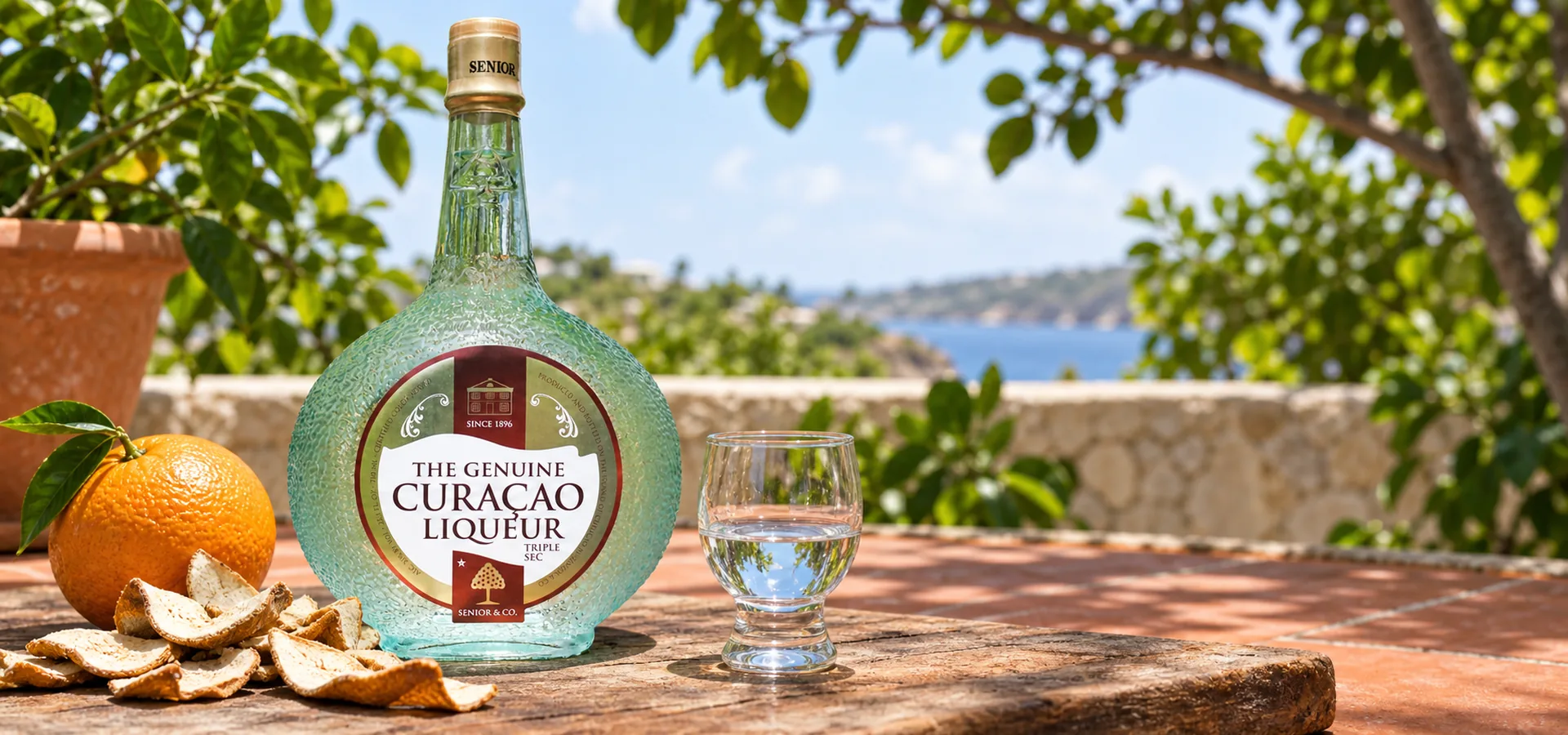
Curacao, commonly written Curaçao, is an orange liqueur family built around citrus peel, alcohol, water, and sugar. The name does not guarantee blue colour, production on Curaçao, Laraha peel, one base spirit, or one sweetness level, so the label must do more work than the colour.
At a glance
- Legal category
- Curaçao generally falls within the broader liqueur category. United States 27 CFR 5.150 requires cordial or liqueur products to contain at least 2.5% sugar by weight; European Union category 33 generally requires at least 100 g/L of sweetening and 15% ABV.
- Typical strength
- 15 to 40 percent ABV
- Colour rule
- Blue Curaçao is orange liqueur with colour added. Colour alone does not establish origin, Laraha peel, sweetness, quality, or alcohol strength.
What is Curaçao liqueur?
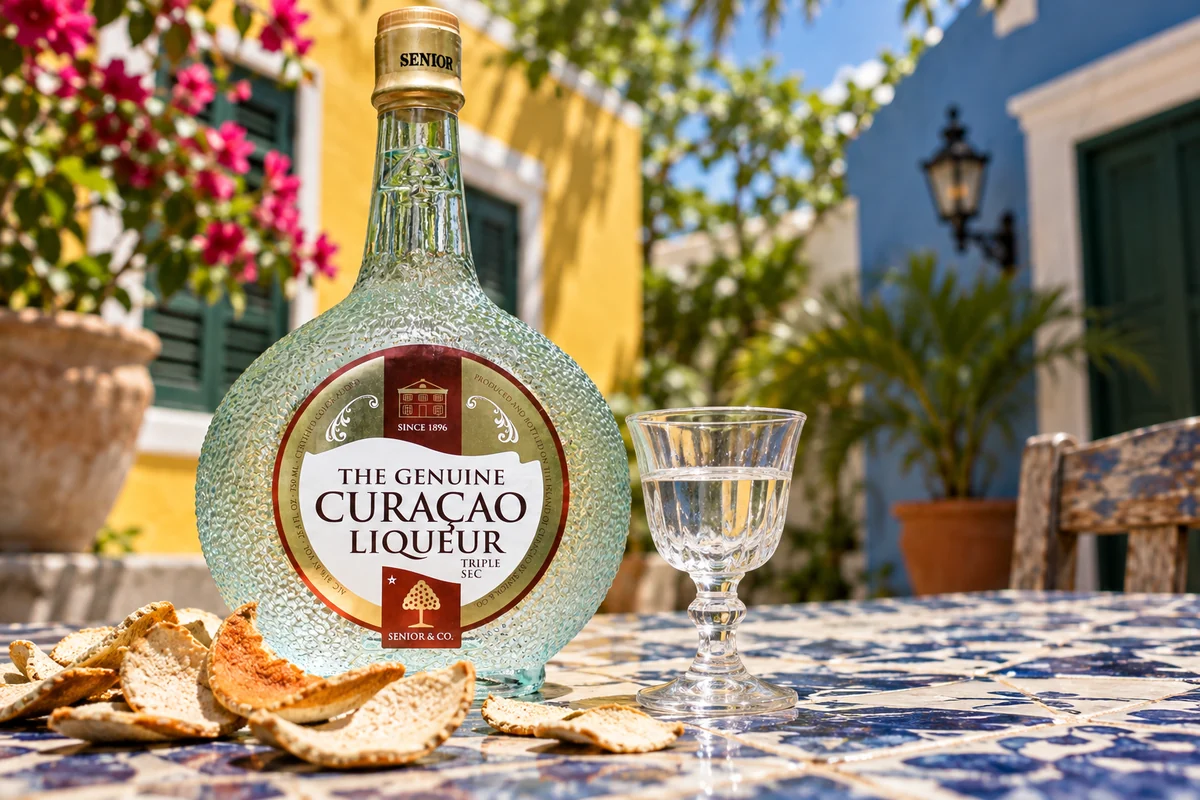
Curacao liqueur is commonly styled Curaçao on labels. Curaçao is a sweetened orange liqueur flavoured mainly through citrus peel or orange preparations.
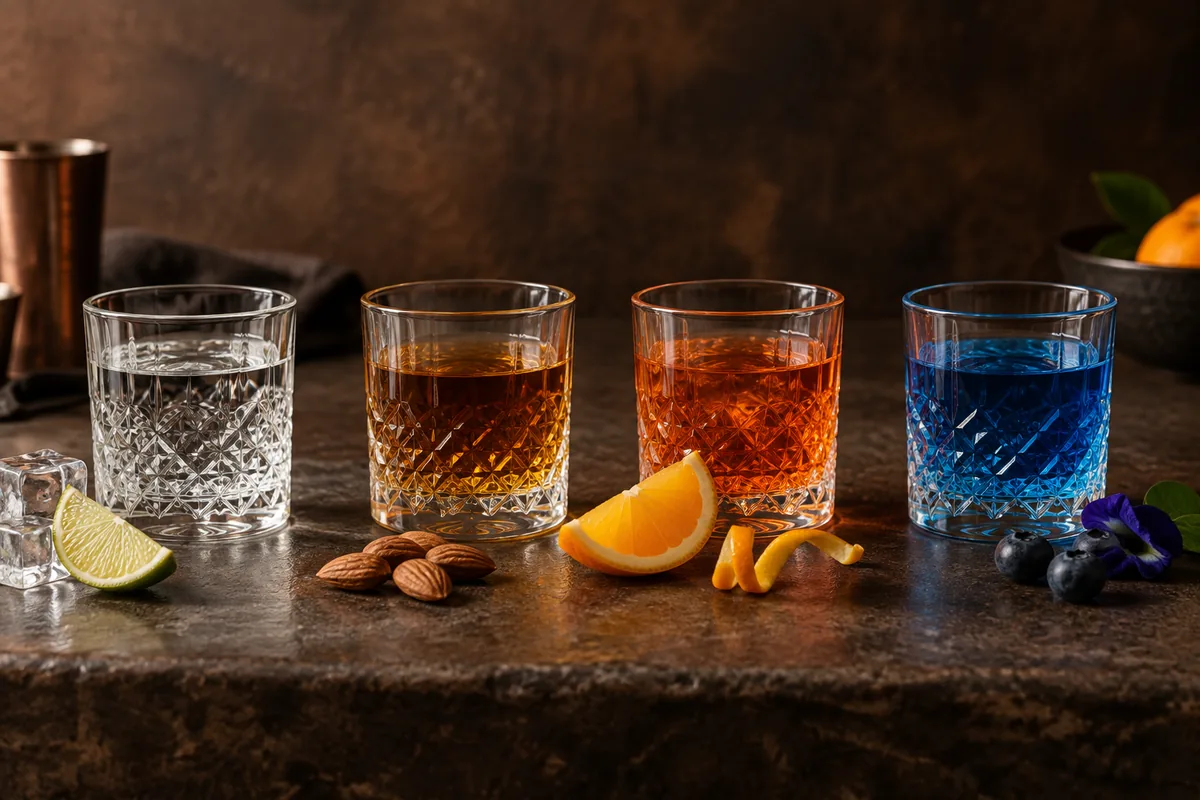
It can be clear, amber, orange, blue, green, or red, and it may be made on the island of Curaçao or elsewhere. The broad market name does not establish one recipe because peel species, sweet versus bitter orange, base alcohol, spice, distillation, sugar, colour, and ABV can all change.
- Core flavour
- Orange peel with sweetness and alcohol
- Possible colours
- Clear, orange, blue, green, red, or another permitted colour
- What the name does not prove
- Curaçao origin, Laraha use, triple distillation, one sweetness level, or one ABV
United States and European Union rules place these products inside broader liqueur standards.
Those laws set category requirements in their jurisdictions, but they do not turn the word Curaçao into a universal recipe.
The most reliable description is therefore narrow: expect an orange-led sweet liqueur. Everything that changes mixing or identity should be confirmed from the bottle and current producer information.
Does Curaçao have to come from Curaçao?
The island tradition is closely associated with Laraha, a bitter orange grown on Curaçao whose dried peel is used by Senior & Co. The producer describes Laraha peel, cane-derived alcohol, spices, distillation, sugar, water, filtration, and colouring in its own process.
That verified method belongs to the named producer. It should not be expanded into a claim that every bottle carrying Curaçao was made on the island or contains Laraha.
Origin language needs evidence. A Caribbean image, blue liquid, or the word Curaçao does not by itself establish island production or Laraha peel.
Senior's own sell sheet states that Curaçao liqueur does not necessarily have to be made in Curaçao.
That distinction matters because many established orange liqueurs made in Europe and elsewhere also use Curaçao wording.
Look for a producer address, country of origin, a specific Laraha statement, and a transparent method description. Treat heritage stories as context only when the underlying production claim is documented.
How is orange peel turned into Curaçao?
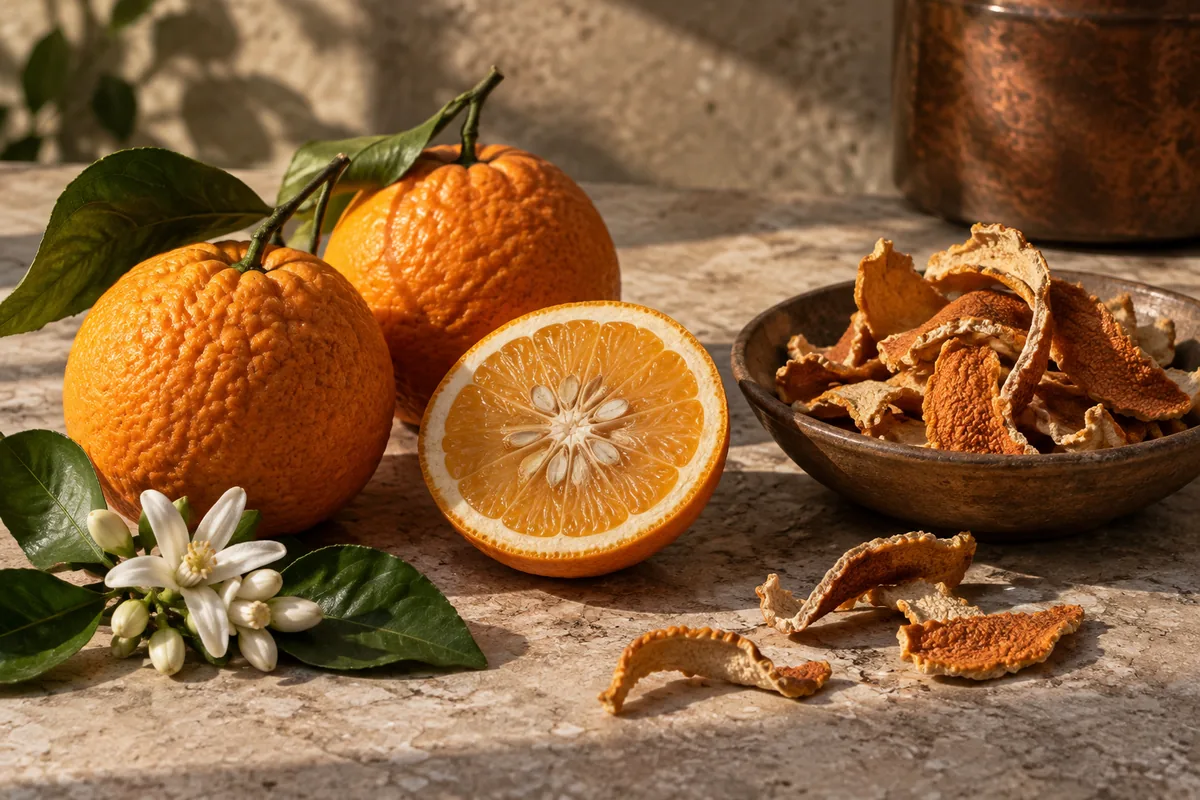
Orange peel contains aromatic oils that can be extracted into alcohol, carried through distillation, or combined through both methods. Sweet orange, bitter orange, grapefruit, spices, and supporting flavour preparations can shift the final aroma.
A peel infusion brings colour, bitterness, dissolved compounds, and aroma into alcohol. Distillation can concentrate volatile orange notes while leaving much of the colour and heavier material behind.
- Prepare the peel. Fresh or dried citrus material supplies aromatic oils and bitter compounds.
- Extract the flavour. Maceration or infusion transfers soluble material into alcohol.
- Distil when required. The producer captures a cleaner aromatic fraction.
- Blend and sweeten. Water, sugar, spirit, and other declared flavours establish strength and balance.
- Filter and colour. The clear base may remain clear or receive an approved colour before packaging.
Senior describes a process that produces a clear liqueur before certified colour is added.
Giffard describes its Curaçao Triple Sec through distillates of sweet and bitter oranges, showing that another legitimate formula can use a different citrus and production frame.
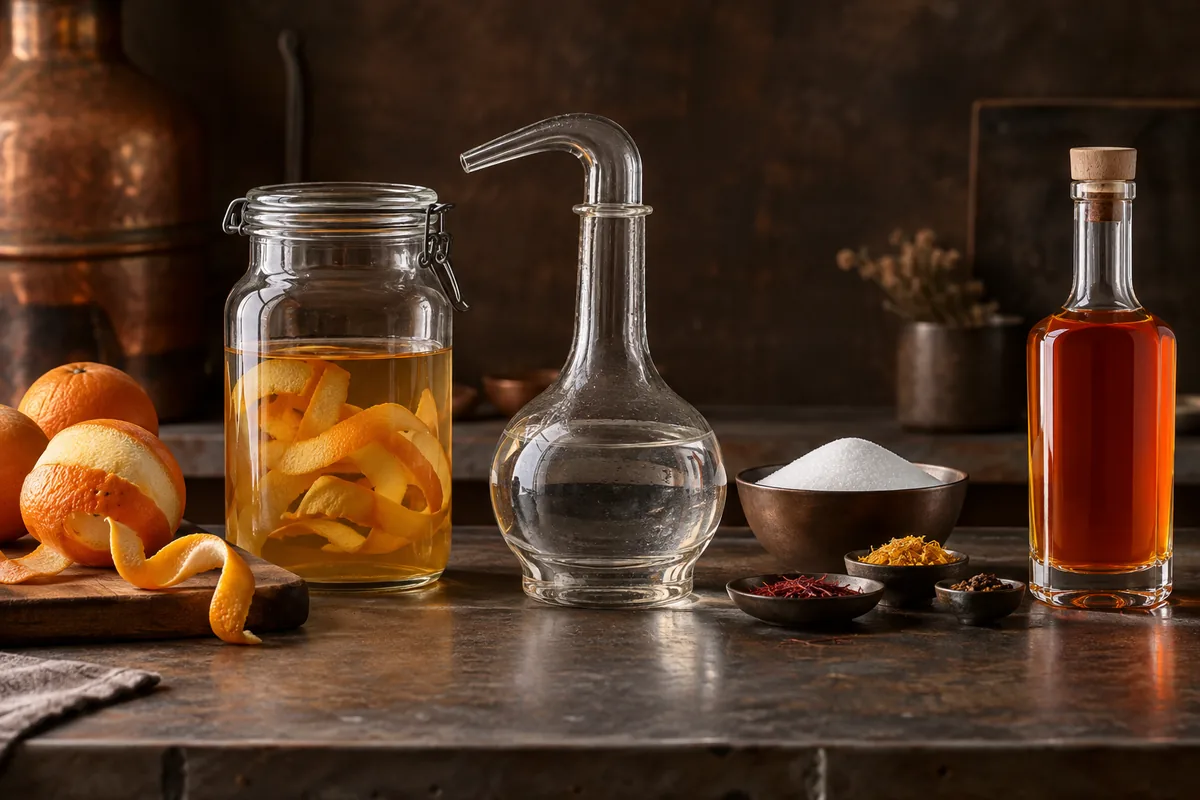
This overview explains commercial sequence rather than home distillation. Distilling alcohol requires licensed equipment, fire control, ventilation, and lawful professional operation.
Is blue Curaçao a different flavour?
Blue Curaçao is orange liqueur whose blue appearance comes from colouring. The colour can make a cocktail look dramatically different without creating a separate citrus species or automatically changing the base flavour.
Senior states that its clear liqueur becomes the base for coloured versions and that the small amount of colouring used does not change its orange taste. That statement is specific to its formula, but it proves why colour and flavour must be evaluated separately.
| Visible style | What colour tells you | What remains unknown |
|---|---|---|
| Clear | No strong added visible colour | Peel, sweetness, origin, and ABV |
| Amber or orange | Natural material, caramel, or added colour may contribute | Exact colouring route and flavour intensity |
| Blue | A blue colour ingredient is present | Quality, Laraha use, origin, sweetness, and strength |
| Green or red | Colour has been selected for appearance | Whether flavour differs from another colour in the range |
Blue is useful when appearance is part of the drink's design.
It is a poor choice when the colour would turn brown or grey against dark juices, cola, red fruit, coffee, or heavy bitters.
Choose flavour first and colour second. A clear bottle can provide the same orange function without changing the drink's intended appearance.
How does Curaçao differ from triple sec?
Across current products, Curaçao, triple sec, and orange liqueur overlap in real products, and no single sweetness or strength rule cleanly separates every bottle. Some labels even use Curaçao Triple Sec together.
Triple sec often signals a clear orange liqueur with a bright peel profile, while Curaçao may suggest a rounder, coloured, or brandy-influenced style. Those are useful market tendencies, not dependable legal definitions across countries.
| Term | Useful expectation | Do not assume |
|---|---|---|
| Orange liqueur | Broad family name | One spirit base or sweetness level |
| Curaçao | Orange-peel liqueur tradition with clear and coloured forms | Island origin or Laraha in every bottle |
| Triple sec | Often clear and citrus-forward | Exactly three distillations or a fixed dry style |
| Blue Curaçao | Coloured orange liqueur | A separate blue-fruit flavour |
Branded orange liqueurs may use cognac, neutral spirit, or another base and may sit anywhere from lean to rich.
Check the actual designation and producer method instead of forcing every product into one verbal hierarchy.
For substitution, preserve orange intensity, sugar, alcohol, colour, and base-spirit weight as separate functions. A volume-for-volume swap can keep citrus but can change the drink's sweetness or strength.
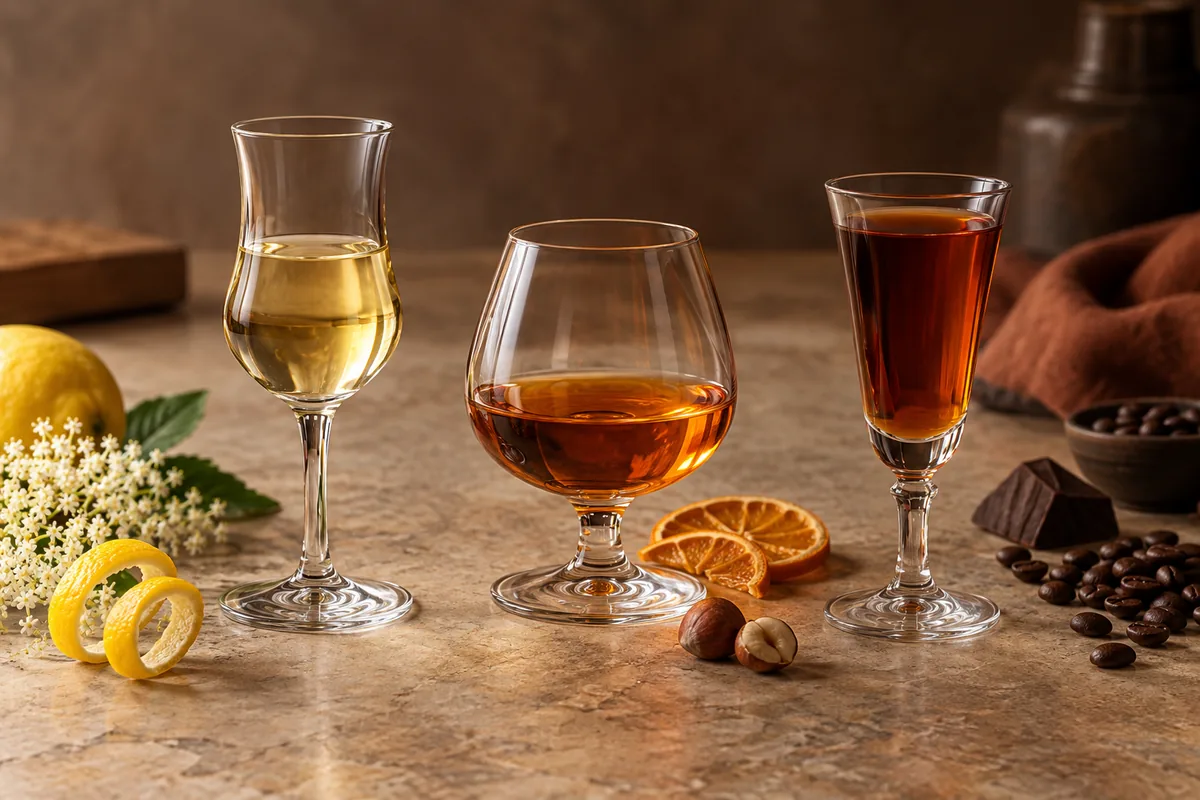
How strong and sweet is Curaçao?
Current Curaçao and triple sec examples range from the mid-teens to about 40% ABV. Senior lists 31% for its genuine Curaçao, while Giffard lists a 40% Curaçao Triple Sec and a separate 25% triple sec product.
Those examples show market breadth; they do not define a universal 15% to 40% rule. Sugar concentration also varies independently of ABV.
- 15 ml at 20% ABV
- 3 ml pure alcohol
- 15 ml at 31% ABV
- 4.65 ml pure alcohol
- 15 ml at 40% ABV
- 6 ml pure alcohol
The same 15 ml measure can therefore double its alcohol contribution between 20% and 40% ABV.
A richer base spirit can also make a higher-strength bottle feel heavier even when sugar is similar.
NIAAA defines one United States standard drink as about 14 grams of pure alcohol. Count the Curaçao together with rum, tequila, brandy, gin, or any other alcohol in the complete serving.
Colour and sweetness do not measure alcohol. Use the printed ABV and a real measure; no calculation establishes that someone is fit to drive.
What does Curaçao do in a cocktail?
In a cocktail, Curaçao contributes orange aroma, sweetness, alcohol, and sometimes colour. Its peel bitterness can connect tart citrus to a spirit base, while sugar rounds the edges of lime or lemon.
The IBA Margarita specifies triple sec, and the IBA Mai Tai specifies orange Curaçao. These measured recipes demonstrate two established uses without making the names interchangeable in every drink.
- Match orange intensity to the base spirit rather than covering it.
- Reduce separate syrup when the chosen liqueur is sweeter than the original.
- Account for ABV when replacing a 20% bottle with a 40% bottle.
- Use clear Curaçao when blue or orange would damage the intended colour.
- Add carbonated ingredients last and keep them cold.
- Check for declared colour ingredients when appearance matters.
Orange pairs naturally with chocolate, coffee, vanilla, almond, tropical fruit, stone fruit, and warm spice.
Very bitter or heavily charred ingredients can bury delicate peel aroma, while too much sweet juice can make the liqueur taste flat.
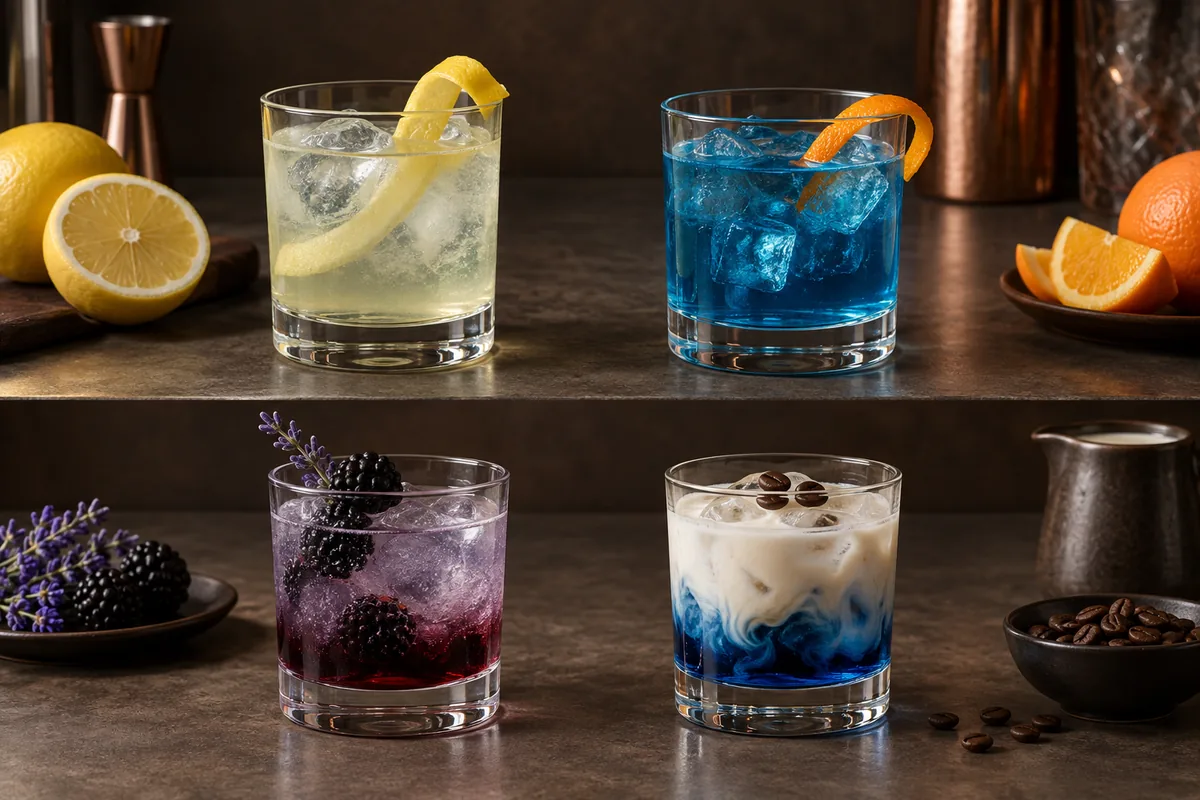
Use a complete tested recipe when preparing a cocktail. A profile can explain ingredient function, but it cannot establish safe ratios for every spirit, acid, sugar, and dilution combination.
How should you choose and store Curaçao?
Choose by orange source, base spirit, ABV, sweetness, colour, and intended drink. Origin and Laraha matter only when you specifically want the island tradition and the producer documents them.
Keep the bottle upright, tightly closed, cool, and away from light. Colour can fade or shift with prolonged light exposure, and repeated air exchange gradually weakens citrus aroma.
- For a bright sour: seek clear citrus intensity and enough strength to remain present after dilution.
- For a rum drink: decide whether a richer base and deeper orange profile support the rum.
- For visual colour: test the liqueur against the finished drink, not against water.
- For island identity: verify Curaçao production and Laraha disclosure.
- For slow use: prefer clear storage instructions and protect the bottle from light and heat.
Wipe sugar from the closure and replace a failing cork or cap.
Hold a bottle from service if it develops pressure, mould, leakage, or an unexplained odour rather than treating colour change alone as proof of spoilage.
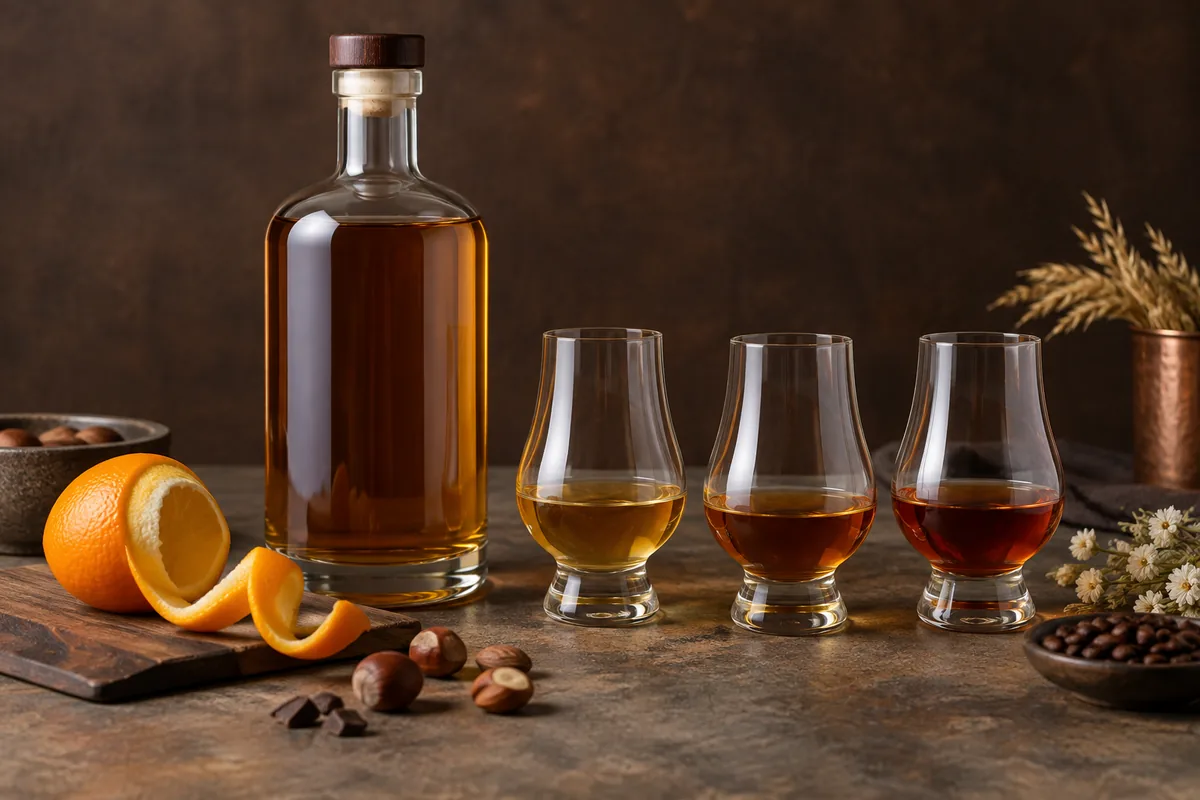
The physical bottle sold in your market outranks an old retail listing. Formula, strength, colour disclosure, and origin statements can differ between markets or change over time.
Sources
-
27 CFR 5.150, Liqueur or cordial
Published 9 February 2022. Accessed 13 September 2026.
-
Giffard Curaçao Triple Sec
Accessed 13 September 2026.
-
IBA Mai Tai
Accessed 13 September 2026.
-
NIAAA, What Is a Standard Drink?
Accessed 13 September 2026.
-
Regulation (EU) 2019/787
Published 17 May 2019. Accessed 12 September 2026.
-
Senior Curaçao Liqueur, The Distillation Process
Accessed 13 September 2026.
More in Liqueurs
-
 Almond liqueur
01
What is almond liqueur, and does it always contain almonds?
-
 Amaretto
02
What is amaretto, and what gives it an almond-like flavour?
-
 Apple liqueur
03
What is apple liqueur, and how does it differ from apple brandy?
-
 Apricot liqueur
04
What is apricot liqueur, and when does apricot brandy mean something else?
-
 Banana liqueur
05
What is banana liqueur, and how do fresh and ripe styles differ?
-
 Blackberry liqueur
06
What is blackberry liqueur, and is it the same as crème de mûre?