
Liqueurs
What Is Hazelnut Liqueur? Flavor, Allergens, and Uses
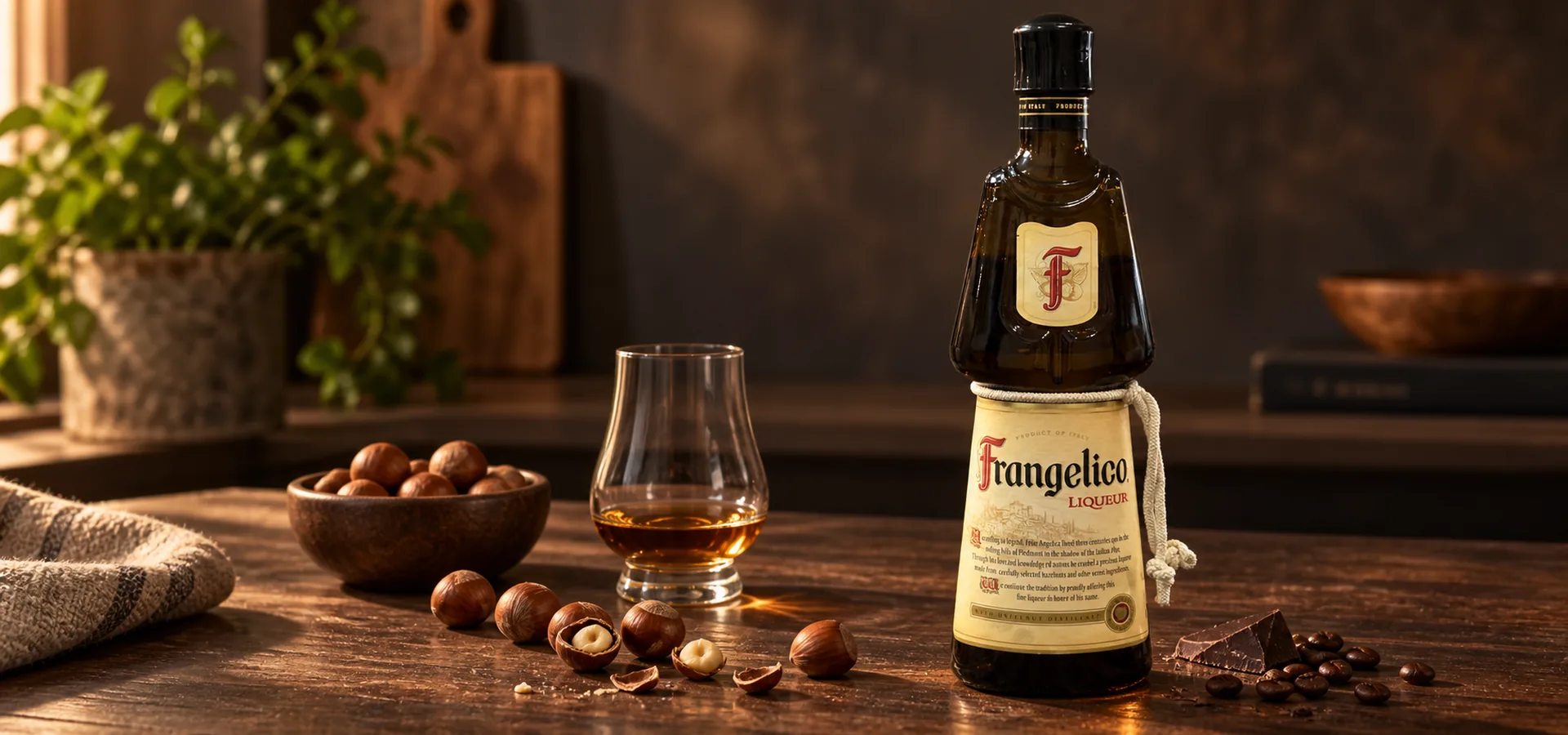
Hazelnut liqueur is a sweetened alcoholic drink built around hazelnut flavour, often supported by cocoa, vanilla, coffee, caramel, or spice. Roast, extraction, base spirit, sugar, ABV, and allergen disclosure determine how a bottle actually behaves.
At a glance
- Legal category
- Hazelnut liqueur sits within the broader liqueur category. United States 27 CFR 5.150 requires at least 2.5% sugar by weight; European Union category 33 generally requires 100 g/L of sweetening and at least 15% ABV.
- Typical strength
- 15 to 30 percent ABV
- Allergen decision
- The name hazelnut liqueur is enough reason to check the physical allergen statement. Distillation, clear appearance, or a familiar brand cannot provide individual allergy clearance.
What is hazelnut liqueur?
Hazelnut liqueur is sweetened alcohol with hazelnut as its defining flavour. Producers can use roasted nuts, an alcohol infusion, distillate, extract, natural flavouring, or several of those materials together.
The category name cannot establish a dairy ingredient, brown colour, one spirit base, or one hazelnut percentage. Supporting cocoa, vanilla, coffee, caramel, herbs, and spices can move the result far beyond plain nut flavour.
- Core identity
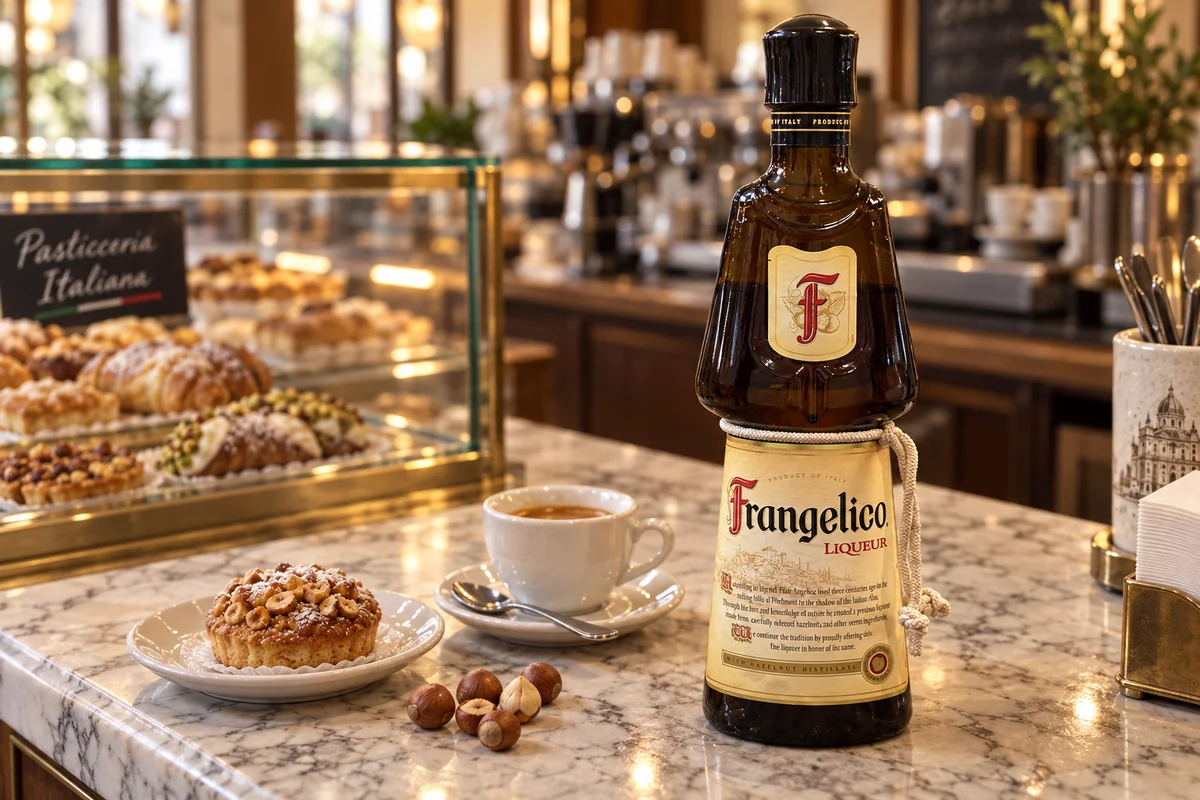
- Sweetened alcoholic hazelnut flavour
- Common supporting notes
- Cocoa, vanilla, coffee, caramel, spice, and toasted grain
- Critical checks
- Allergens, actual nut statement, ABV, sugar, dairy, base spirit, and storage
United States and European Union rules define the broader liqueur category in different ways.
Their sugar and strength requirements do not guarantee that two hazelnut liqueurs use the same extraction or contain the same residual proteins.
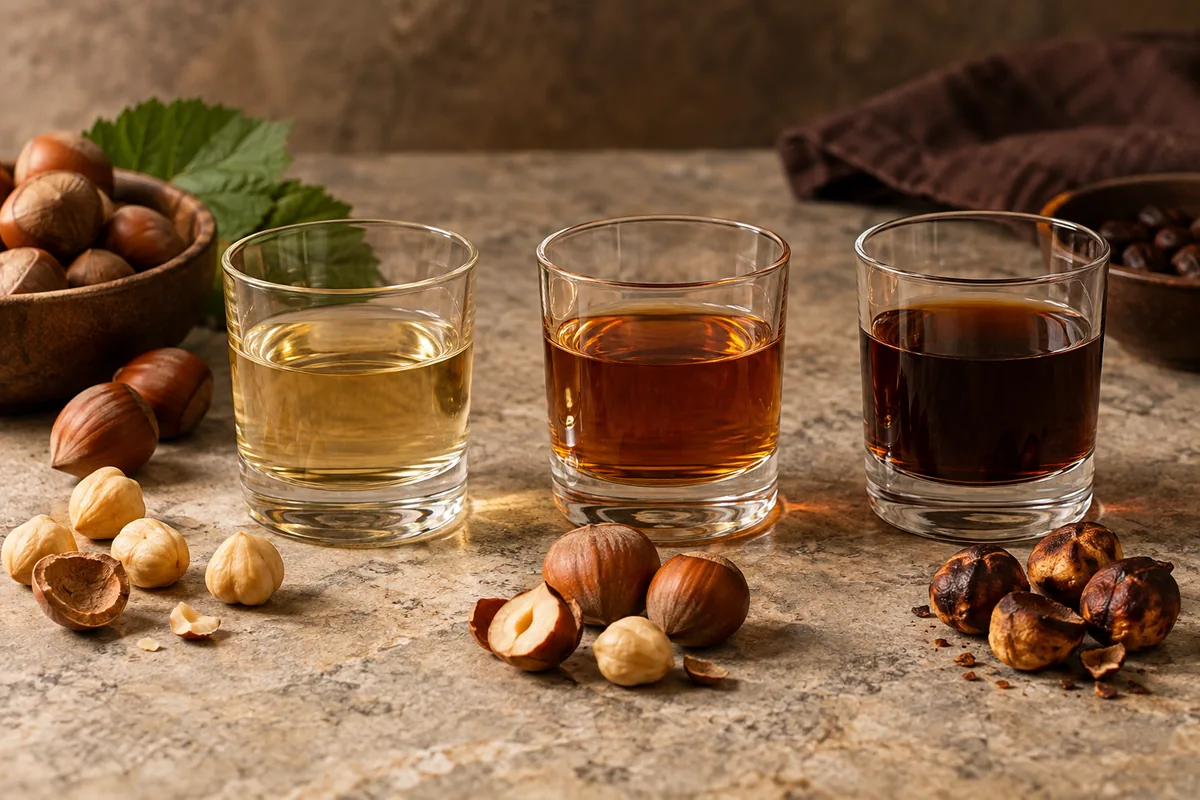
Giffard describes one product as a maceration of roasted hazelnut at 25% ABV. Frangelico describes toasted and crushed Italian hazelnuts infused in alcohol and water, followed by distillation and blending with cocoa, vanilla, coffee, sugar, water, and alcohol.
How does roasting change hazelnut flavour?
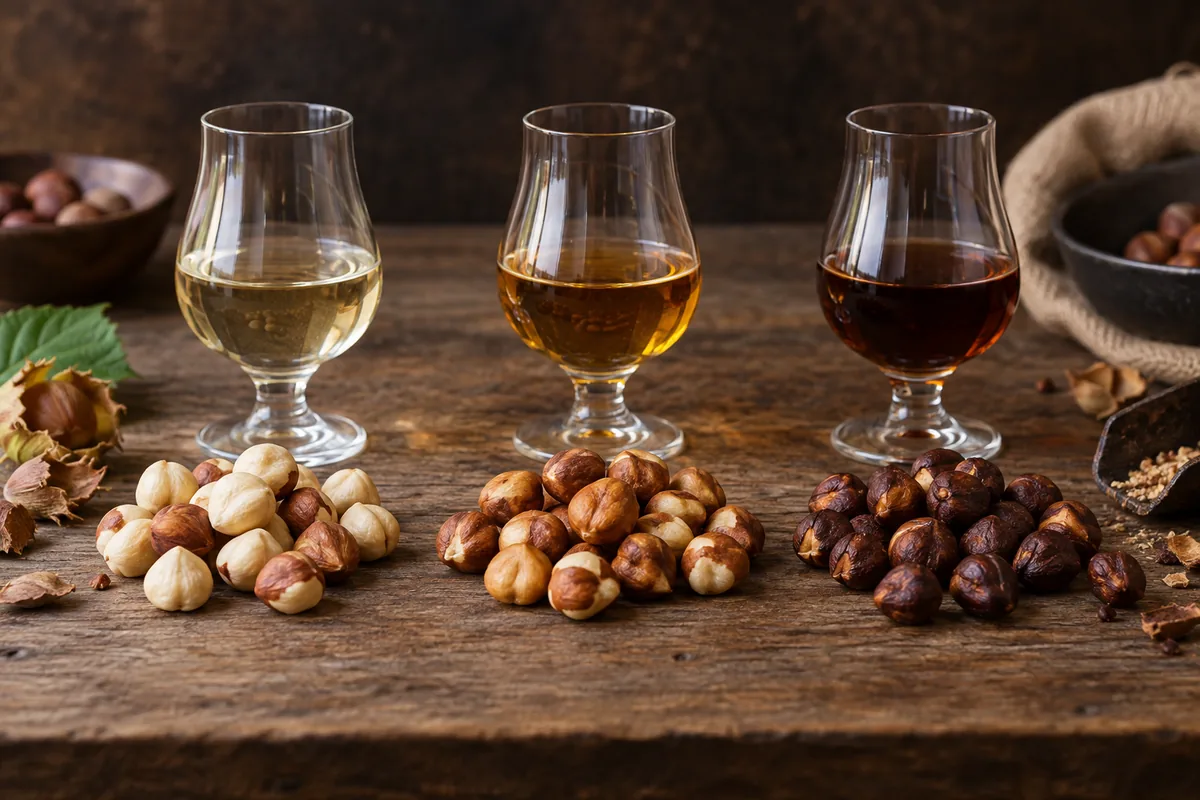
Raw hazelnut aroma can be mild, fruity, green, and nutty. Roasting activates Maillard reactions and sugar degradation, creating stronger caramel, popcorn-like, malty, coffee-like, buttery, and roasted notes.
Temperature and time matter because the same reactions can move past toasted complexity into scorched bitterness. The starting cultivar and storage condition also influence which aroma precursors remain available.
| Nut state | Likely aroma direction | Effect in liqueur |
|---|---|---|
| Raw or lightly treated | Mild nut, fruit, green, and floral notes | Delicate profile that sugar can easily cover |
| Moderate roast | Nutty, caramel, popcorn, and malty notes | Clearer roasted identity and broader pairing range |
| Dark roast | Coffee, cocoa, char, and bitter edges | More intensity but less fresh-nut character |
| Oxidized nuts | Stale oil, cardboard, or paint-like notes | Unwanted aroma that sweetening cannot truly remove |
A peer-reviewed hazelnut aroma review identifies 3-methyl-4-heptanone as one important nutty-fruity odorant and describes new potent compounds created by roasting.
It also shows that only a subset of detectable volatiles drives recognizable aroma.
Producer notes such as toasted, cocoa, or coffee are therefore plausible formula signals. They remain claims about named products, not independent tasting results for the category.
How is hazelnut flavour captured?
Alcohol infusion and maceration extract aromatic oils and soluble flavour from crushed nuts. Distillation can then separate a fragrant volatile fraction from much of the colour, oil, and heavier material.
Extracts and flavour preparations allow consistency and can reinforce an infusion. Sugar, water, base alcohol, caramel colour, cocoa, vanilla, or coffee complete the commercial blend.
- Sort and roast the nuts. Quality and roast establish the aroma precursors.
- Crush and infuse. Surface area and contact conditions control extraction.
- Distil or filter. The producer chooses a clear aromatic fraction, a fuller infusion, or both.
- Build the concentrate. Hazelnut may be joined by cocoa, coffee, vanilla, herbs, or spices.
- Sweeten, proof, and rest. Water, sugar, alcohol, colour, and integration establish the bottled style.
Frangelico states that its hazelnut infusion is distilled, blended with flavour extracts and distillates, then combined with alcohol, sugar, and water before resting for six to eight weeks.
That sequence explains one documented style.
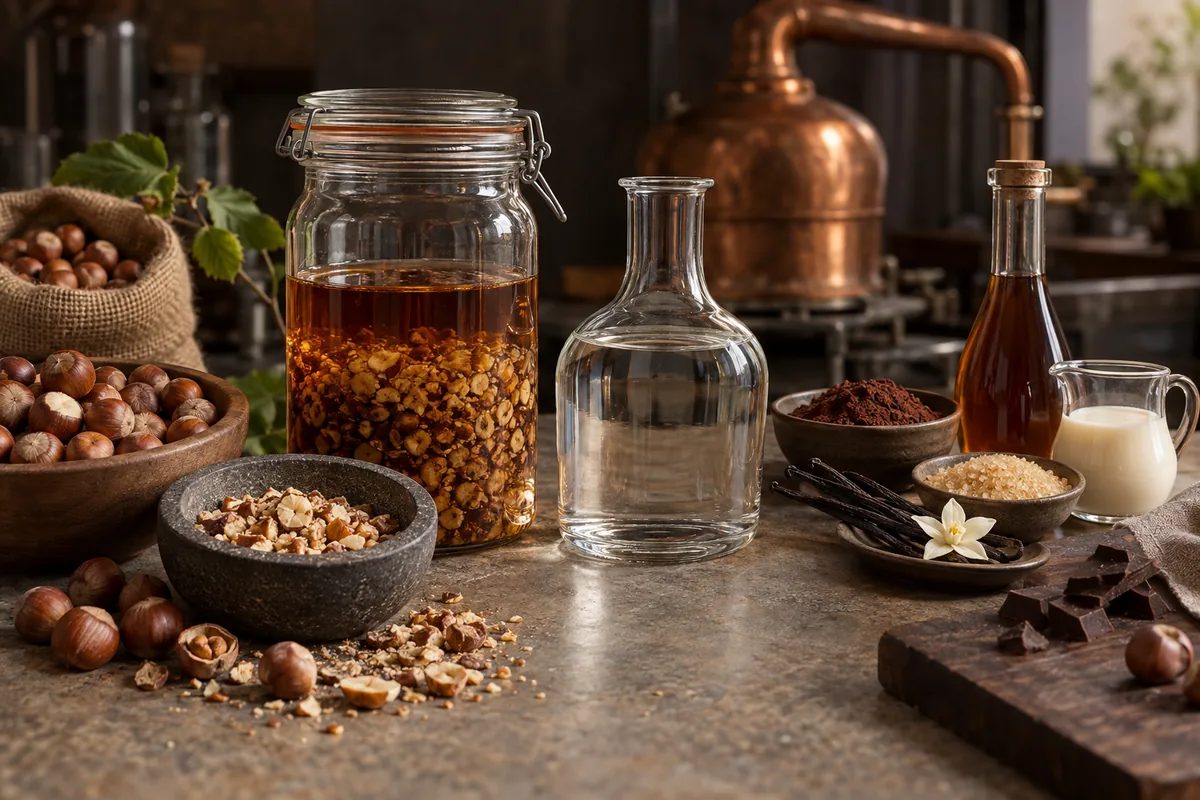
This is commercial process context, not a home distillation guide. Alcohol vapour and heated distillation equipment require lawful professional controls.
Does hazelnut liqueur contain hazelnut allergen?
Treat the name as a reason to check, not as enough information for medical clearance. A formula may use nuts, distillate, extract, flavouring, shared equipment, or several inputs, and processing can change what remains in the finished liquid.
Clear appearance does not prove that allergenic protein is absent. Distillation may separate volatile aroma from nonvolatile material, but a commercial liqueur can add extracts or other ingredients after distillation.
- Read the physical ingredient and allergen statement for the exact market.
- Look for hazelnut, other tree nuts, milk, soy, and gluten-containing ingredients relevant to you.
- Ask the producer about the exact variant and lot when the package is unclear.
- At a bar, request the bottle and written allergen information before ordering.
- Avoid relying on internet lists, colour, distillation assumptions, or staff memory for allergy safety.
The FDA identifies tree nuts as major food allergens and requires the specific type of tree nut to be declared in covered packaged foods.
European Union consumer information also names hazelnuts among the nuts requiring allergen declaration when present under its rules.
Severe allergy decisions need product-specific confirmation. When reliable information is unavailable, choose another product rather than testing a reaction through a small sip.
A category profile cannot determine whether one person can safely consume a bottle. Follow medical advice and the current package information that applies where the product is sold.
What does hazelnut liqueur taste like?
Hazelnut liqueur usually combines roasted nut, caramel, and sweet pastry associations. Cocoa, vanilla, coffee, fruit, spice, and the base spirit can pull it toward chocolate spread, praline, espresso, cake, or a drier toasted-nut direction.
Sugar makes roast feel rounder and suppresses some bitterness, while alcohol releases aroma and can sharpen the finish. Chilling reduces both aroma and perceived sweetness.
- Nut-forward: fresh kernel, roasted hazelnut, and woody skin
- Confectionery: praline, caramel, vanilla, cocoa, and pastry
- Roast-heavy: coffee, dark cocoa, toast, and light char
- Spiced: cinnamon, clove, herbs, or warm baking spice
- Spirit-led: brandy fruit, rum cane notes, or a clean neutral-alcohol frame
Giffard describes fresh hazelnut and almond touches with a smooth sweet body and vegetal or woody finish.
Frangelico describes hazelnut with vanilla and dark chocolate support.
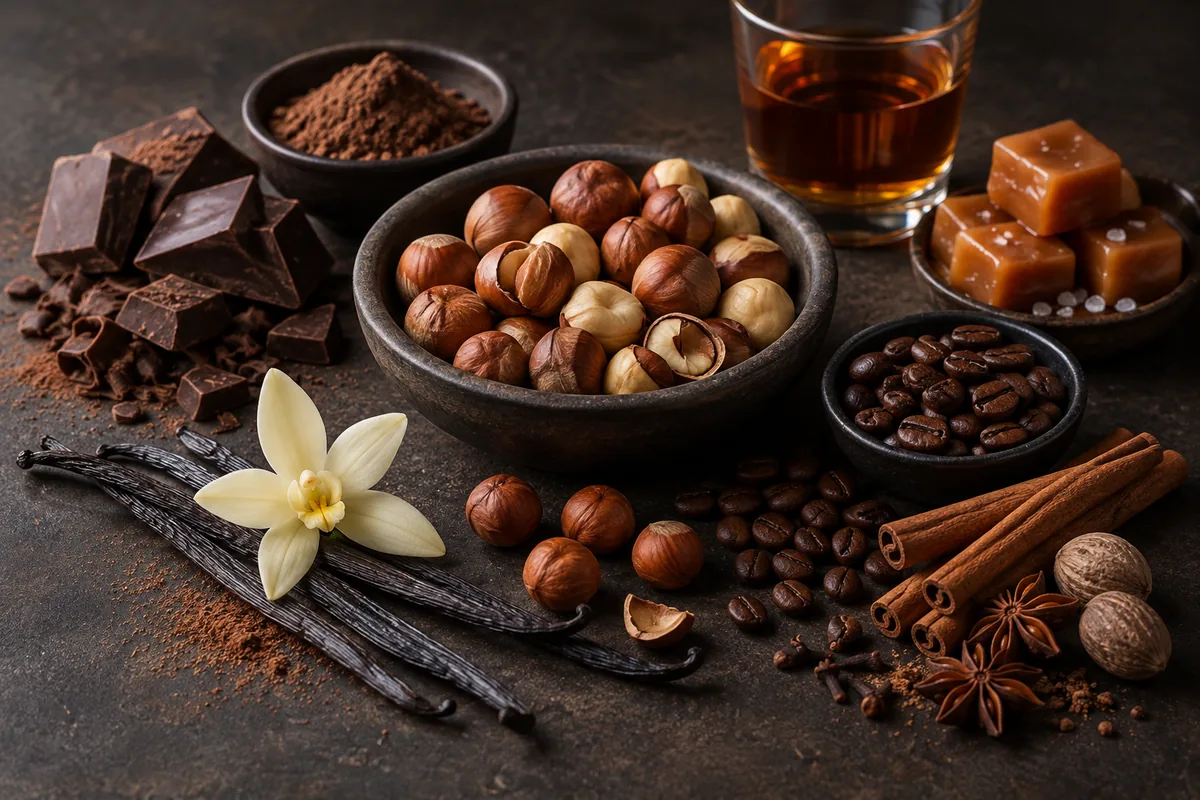
Those producer descriptions help identify formula direction without proving comparative quality. A ranking would require controlled access and a disclosed tasting method.
How strong and sweet is hazelnut liqueur?
Current examples often sit around 20% to 25% ABV, while the broader category can reach lower or higher strengths. Giffard lists 25% for its roasted-hazelnut maceration, and Frangelico is commonly presented at 20% in current market specifications.
The 15% to 30% range is a useful shopping frame rather than a universal rule. Sugar concentration, flavour intensity, and viscosity can vary independently.
- 15 ml at 20% ABV
- 3 ml pure alcohol
- 30 ml at 20% ABV
- 6 ml pure alcohol
- 30 ml at 25% ABV
- 7.5 ml pure alcohol
A sweet nut liqueur can taste gentle while adding meaningful alcohol to coffee, dessert, or a spirit-forward cocktail.
Count every alcoholic ingredient in the complete serving.
Under the NIAAA definition, roughly 14 grams of pure alcohol make one United States standard drink. The definition supports measurement, not an estimate of impairment or permission to drive.
Use ABV for alcohol and the palate for balance. Colour, thickness, and sweetness cannot replace either measurement.
How should hazelnut liqueur be mixed and paired?
Hazelnut liqueur contributes nut aroma, sugar, alcohol, and sometimes cocoa or coffee flavours. It works best when another element supplies bitterness, acidity, salt, or dry spirit structure.
Start with a measured recipe and reduce separate sweetener before changing the base spirit. Adding hazelnut liqueur to an already sweet drink can bury both the nut and the main ingredient.
| Partner | Why it works | Watch for |
|---|---|---|
| Coffee or espresso | Shared roast and caramel compounds | Combined bitterness, caffeine, and sugar |
| Chocolate | Reinforces praline and cocoa notes | A heavy dessert-like finish |
| Whiskey or aged rum | Oak, vanilla, spice, and caramel support | Extra alcohol and overlapping sweetness |
| Pear or apple | Fresh fruit lifts roasted nut | Sweet fruit preparations can flatten contrast |
| Salted dairy or plant cream | Softens bitterness and broadens texture | Allergens and excessive richness |
Hazelnut liqueur can replace part of another nut liqueur or syrup, but the substitution is not neutral.
It changes aroma, sugar, alcohol, colour, and possibly allergens.
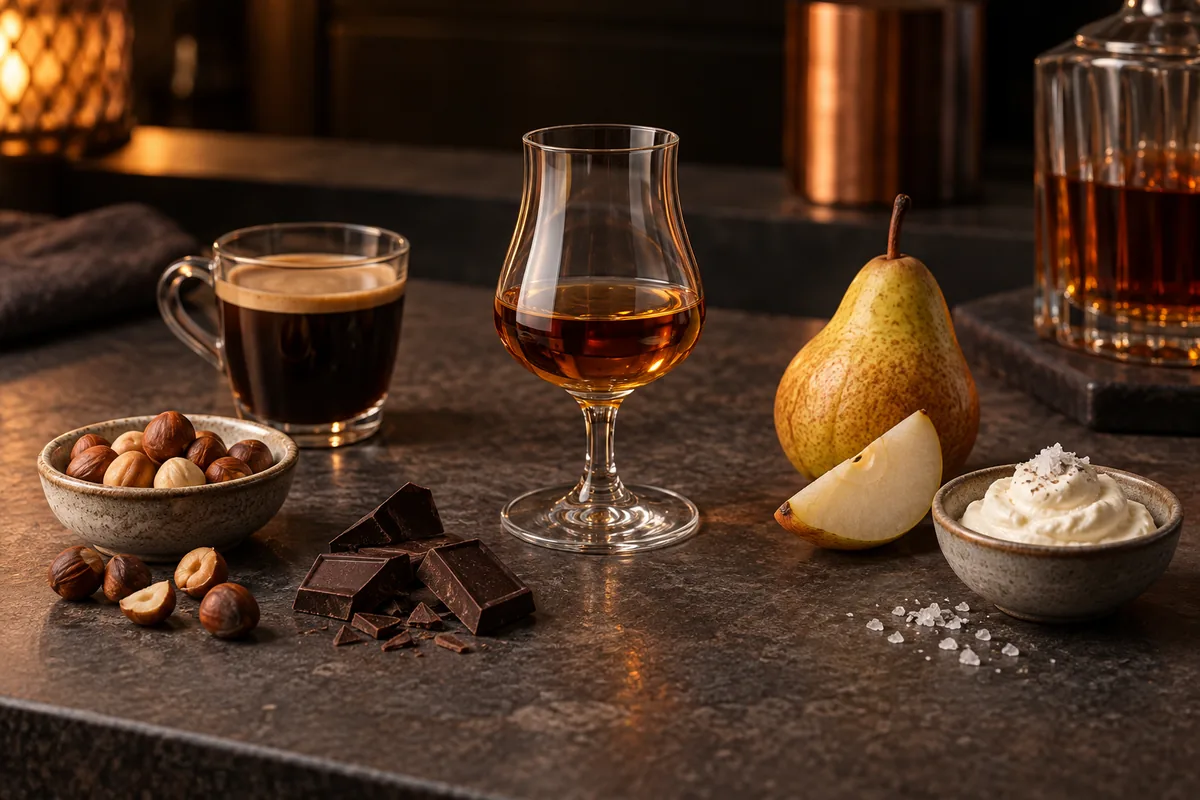
Do not add a hazelnut garnish unless everyone receiving the drink has been told about it. Visible nuts create direct allergen and cross-contact concerns beyond the liqueur itself.
How should you choose and store hazelnut liqueur?
Choose by actual hazelnut process, supporting flavours, allergens, base alcohol, ABV, sweetness, and intended use. A bottle designed around cocoa and vanilla may not provide the clean roasted-nut note needed beside fruit or a delicate spirit.
Store it upright, tightly closed, cool, and away from direct light. Sugar around the neck can compromise the closure, while heat and repeated oxygen exposure flatten volatile nut aroma.
- Verify the hazelnut and allergen statements on the physical bottle.
- Check whether cocoa, coffee, vanilla, dairy, or caramel shapes the formula.
- Match ABV and sweetness to the measured use.
- Wipe the neck and replace a closure that no longer seals.
- Hold a bottle with pressure, mould, leakage, persistent unexplained clouding, or rancid odour.
Natural extracts can create slight haze or sediment, but that condition needs producer confirmation.
A stale paint-like, cardboard, or rancid-oil smell is different from normal roasted nut aroma.
Use the printed date and producer guidance when available instead of assigning a universal open-bottle lifespan. The best choice is the bottle whose documented formula fits both the drink and the people being served.
Sources
-
27 CFR 5.150, Liqueur or cordial
Published 9 February 2022. Accessed 13 September 2026.
-
Corylus avellana Aroma Blueprint
Published 10 March 2022. Accessed 13 September 2026.
-
Frangelico, How It Is Made
Accessed 13 September 2026.
-
Giffard Hazelnut Liqueur
Accessed 13 September 2026.
-
NIAAA, What Is a Standard Drink?
Accessed 13 September 2026.
-
Regulation (EU) 2019/787
Published 17 May 2019. Accessed 12 September 2026.
More in Liqueurs
-
 Almond liqueur
01
What is almond liqueur, and does it always contain almonds?
-
 Amaretto
02
What is amaretto, and what gives it an almond-like flavour?
-
 Apple liqueur
03
What is apple liqueur, and how does it differ from apple brandy?
-
 Apricot liqueur
04
What is apricot liqueur, and when does apricot brandy mean something else?
-
 Banana liqueur
05
What is banana liqueur, and how do fresh and ripe styles differ?
-
 Blackberry liqueur
06
What is blackberry liqueur, and is it the same as crème de mûre?