
Spirits
What Is Dark Rum, and Does Darker Mean Older?
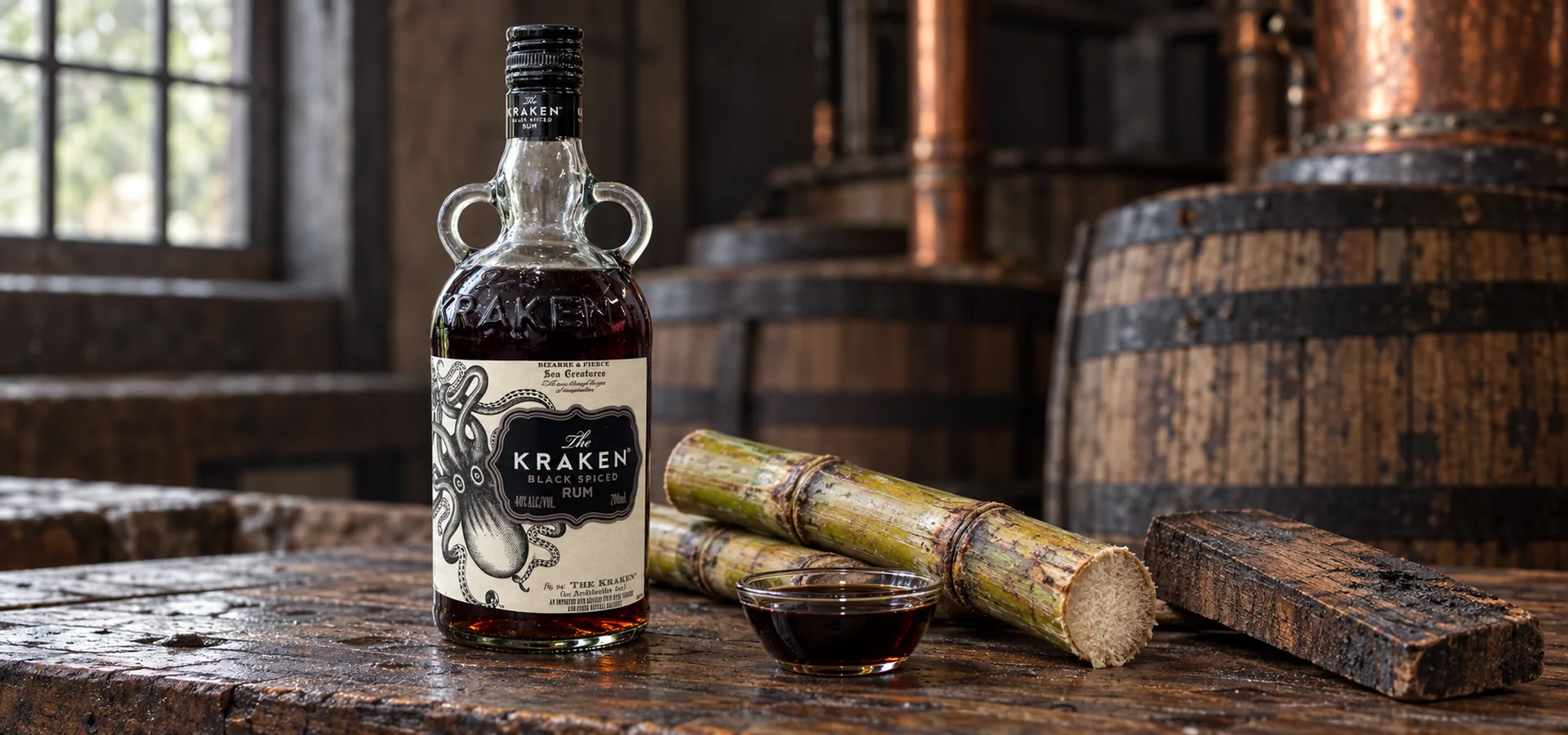
Dark rum is a broad trade description for rum with a deep amber or brown appearance and often fuller molasses, oak, or spice cues. The colour can come from maturation, caramel adjustment, or both, so it does not prove age.
At a glance
- Legal category
- Rum, 27 CFR 5.147; dark is not a separate federal class
- Minimum strength
- 40 percent ABV
- Also called
- Dark rum style
- Raw-material range
- Cane juice, cane syrup, molasses, or another sugar cane by-product
- Colour meaning
- A broad trade cue; it does not establish age, sweetness, or production method
- Best evidence
- Read age, origin, cask disclosure, raw material, and ABV separately
What does dark rum actually mean?
Dark rum describes appearance and broad style, not a separate United States legal class, and usually prepares you for a deep amber or brown spirit with enough flavour intensity to remain noticeable in a mixed drink.
The underlying liquid must still qualify as rum. Under the federal standard, rum comes from fermented sugar cane juice, sugar cane syrup, molasses, or another sugar cane by-product, is distilled below 95 percent alcohol by volume, and is generally bottled at no less than 40 percent ABV.
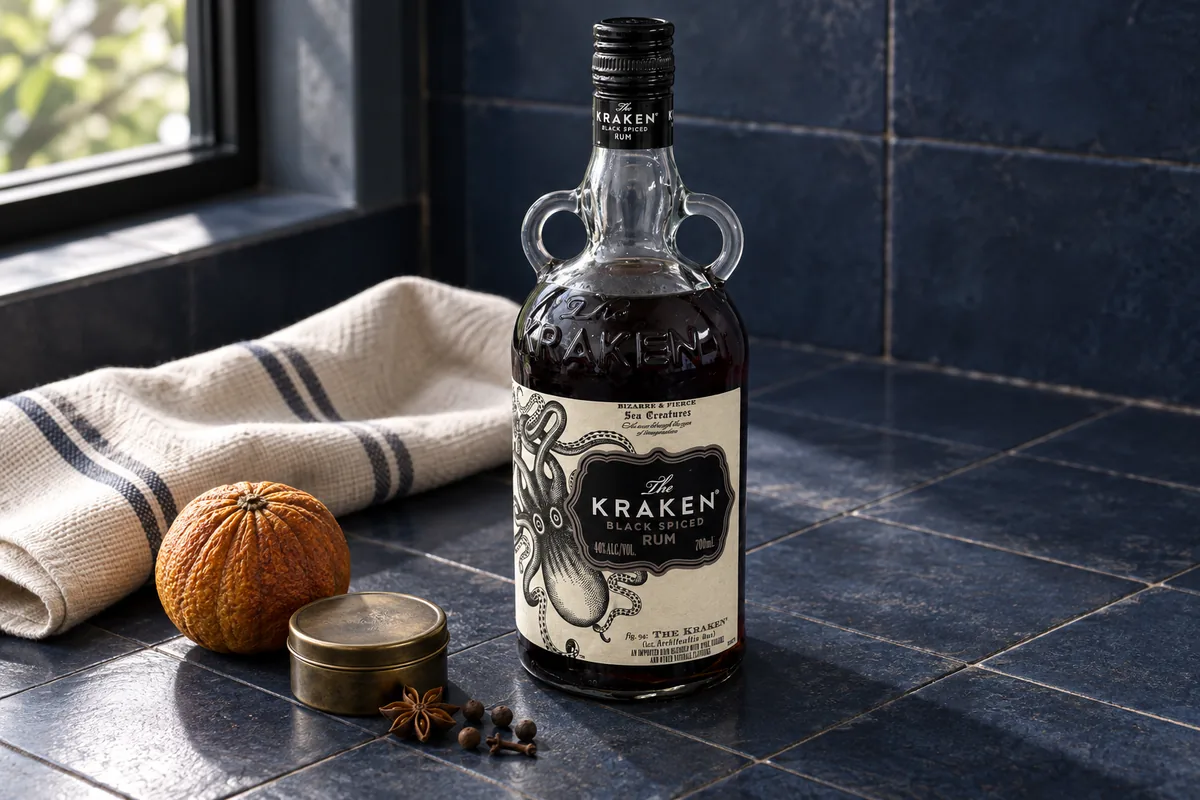
The word dark adds no fixed recipe: it sets no minimum age, required still, cask type, sugar level, molasses percentage, or flavour threshold, so two bottles can share the description while differing at nearly every production stage.
| Colour term | Useful first impression | What it cannot establish |
|---|---|---|
| Gold or amber rum | Golden to medium amber colour, often with some oak influence | A set age, cask, sweetness, or production method |
| Dark rum | Deep amber to brown colour, often with fuller roasted, fruit, spice, or oak cues | Long maturation, heavy body, or added sugar |
| Black rum | The deepest colour presentation in common trade use | A federal subtype or a universal flavour profile |
The borders between those descriptions remain soft because producers and markets use them differently. Gold rum generally sits on the paler side of the spectrum, while dark rum covers a wider band of deeper amber and brown appearances.
Black rum usually signals the darkest end but can overlap dark rum, so producer disclosures carry more evidence than the shelf group in which a retailer places the bottle.
- Legal identity
- Rum under 27 CFR 5.147; dark is not a separate federal class.
- Raw-material range
- Sugar cane juice, syrup, molasses, and other cane by-products can all sit under the rum identity.
- Minimum US bottling strength
- Generally 40 percent ABV, although another jurisdiction may define and label rum differently.
- Best reading of dark
- A broad expectation about colour and intensity that needs support from the age, origin, cask, and strength information.
Origin can narrow the meaning through national rules and geographical indications, which means a United States category statement explains the federal baseline rather than every rum tradition or export market.
Retail categories can still help you narrow a large shelf, provided you do not treat every bottle under one colour heading as interchangeable.
Check whether the label names a specific origin or protected style because that statement may carry enforceable rules that the broad word dark does not. A cask finish, blend description, or age statement can then explain why one bottle sits far from another in the same colour family.
The practical answer is to treat dark as a starting clue. Age wording, ABV, origin, and disclosed production facts tell you what the colour term leaves open and help you compare two bottles without assuming they were made alike.
Why colour cannot tell you the age
A darker rum may have spent meaningful time in wood, but shade is not an ageing clock because oak extraction, caramel colour, blending, filtration, cask history, warehouse conditions, and bottling decisions can all change what you see.
During maturation, water and ethanol move into the oak and dissolve coloured and aromatic compounds. Toasting and charring alter the wood surface, while previous use can reduce or redirect what a cask gives to the spirit.
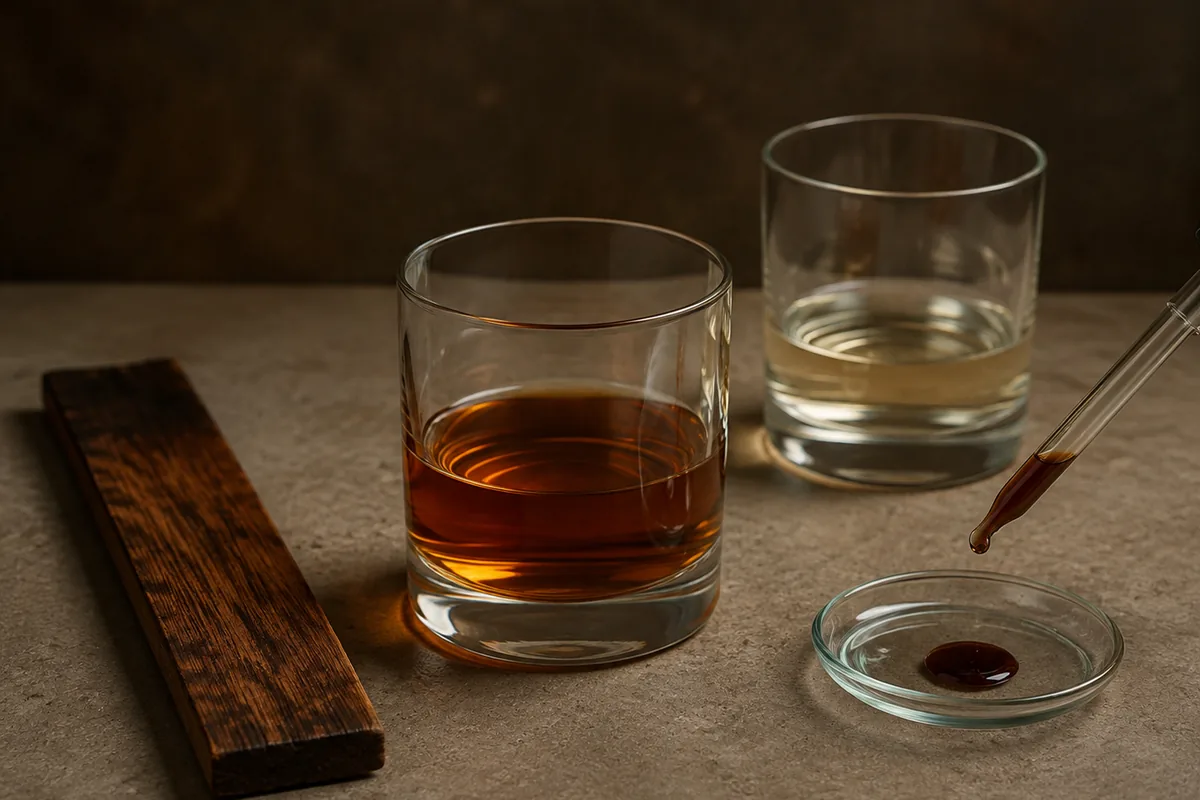
Time alone does not standardise extraction because cask size, wood treatment, fill history, temperature, humidity, airflow, and entry strength affect the rate and balance of colour and flavour development.
A younger rum in an active cask can become darker than an older rum in a less active one. The comparison still does not reveal quality, because rapid extraction can bring colour before the spirit reaches the aroma or texture a producer wants.
Caramel creates a second route to a darker or more consistent appearance. United States rules allow caramel colour in rum without the statement normally required for many coloured spirits when its use stays within the applicable conditions, so silence on the label does not prove natural cask colour.
Colour is not an age statement. If time in wood changes your decision, look for a stated age and read it under the rules of the bottle's market rather than assigning years to a shade.
Blending can combine rums of different ages, strengths, still types, and colour intensities, leaving a uniform batch colour that may reflect component selection, caramel adjustment, or both.
Filtration provides the counterexample that completes the picture. Some matured rum is filtered to remove much of its acquired colour, so a pale glass may have seen wood while a dark glass may owe part of its appearance to adjustment.
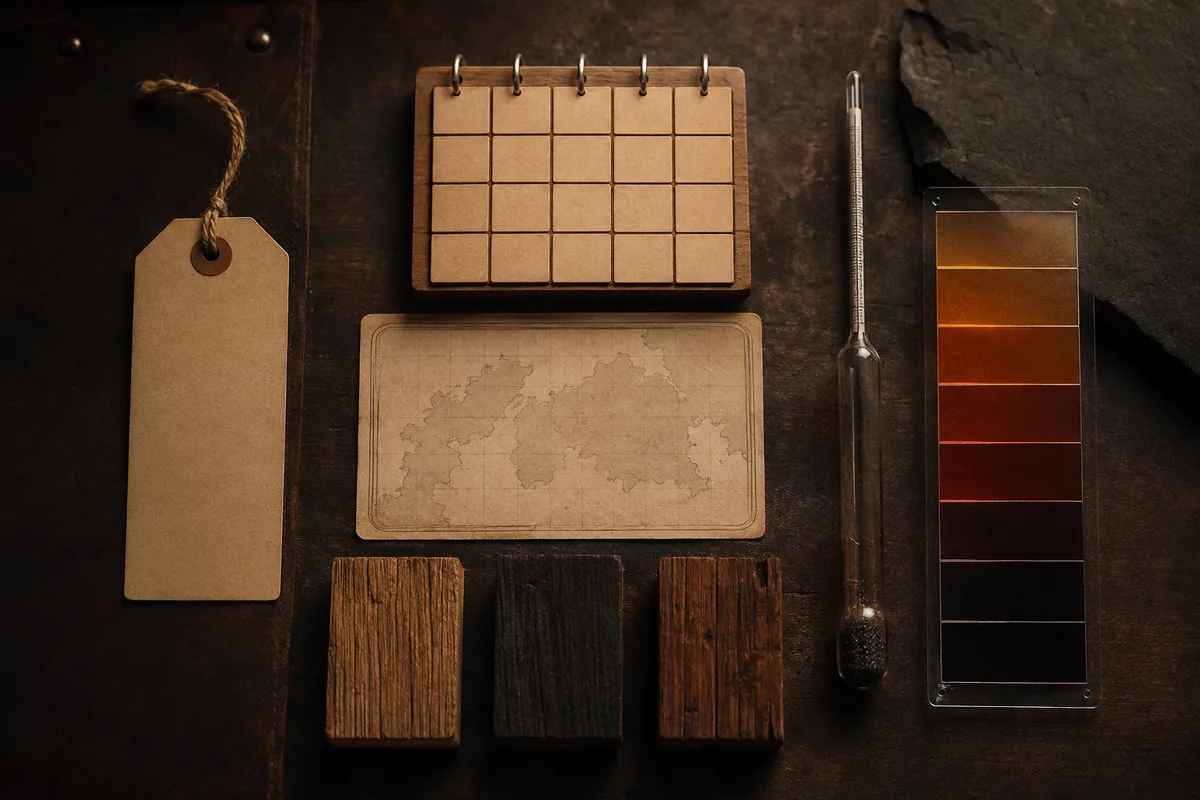
None of this makes caramel adjustment inherently poor or cask colour inherently superior; it means appearance cannot quantify maturation, identify a cask, or tell you whether the liquid will taste balanced.
Lighting and glass shape can also distort a visual comparison. Neutral light and equal clear glasses make colour easier to compare, but better viewing conditions still reveal only appearance rather than the cause behind it.
An unaged statement and an age statement answer different questions, while the absence of either says less than many shoppers assume. A bottle can carry no age number and still contain matured rum, so missing age wording should remain an unknown rather than a verdict.
When an age statement is present, check what it legally refers to. Rules differ by jurisdiction, and a number can describe the youngest spirit in a blend rather than an average, so the label needs to be read within its stated category and origin.
What flavours are common, and what changes them?
Oak contact can contribute vanilla, toast and spice, and none of it arrives from the cane alone. Many dark rums suggest molasses, burnt sugar, dried fruit, vanilla, toast, cocoa, coffee, or warming spice, but those recurring associations are not a promise that every bottle will show all of them.
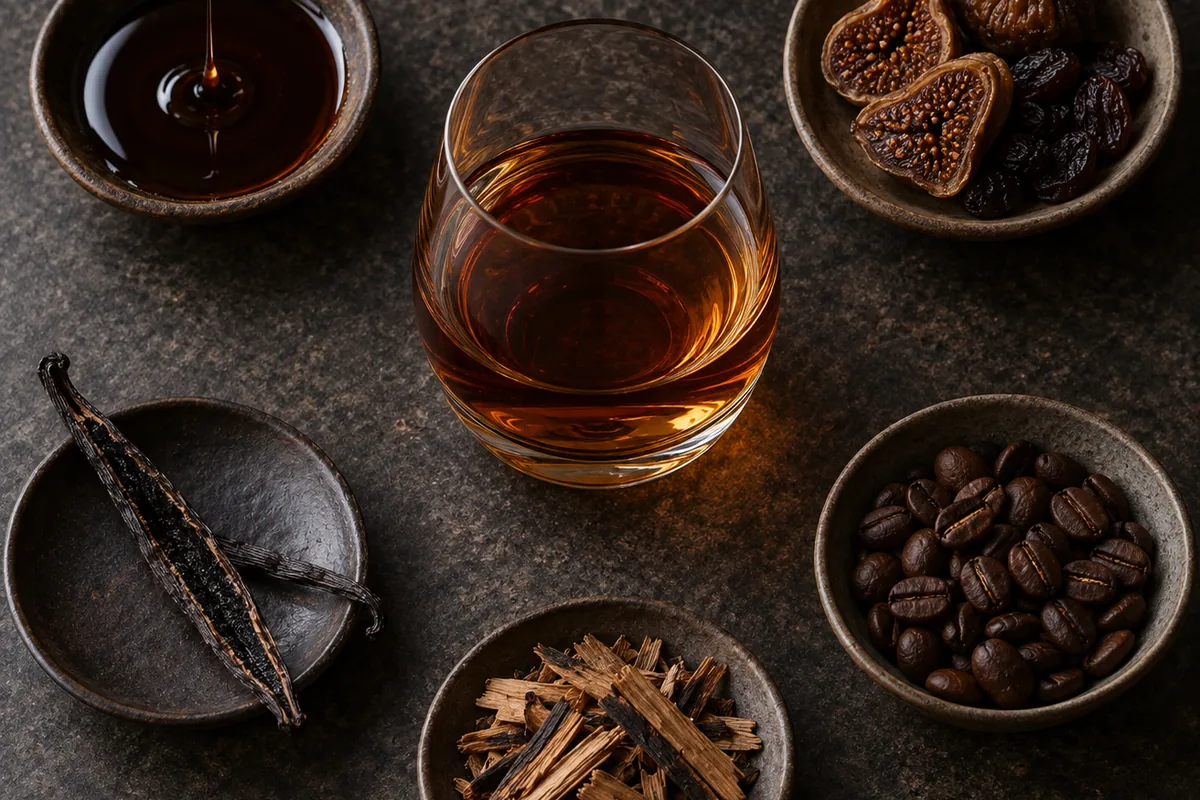
Colour and sweetness are separate facts: caramel-like aroma can come from oak-derived compounds or other production choices, while actual sweetness depends on the finished composition and cannot be measured from a photograph or a colour name.
The cane material creates one layer of variation because molasses brings a different mixture of sugars, minerals, acids, and non-sugar compounds into fermentation than fresh juice or syrup without dictating the finished aroma by itself.
- Cane base
- Molasses, syrup, and fresh juice begin with different flavour precursors and nutrient profiles.
- Fermentation
- Yeast, bacteria where used, acidity, temperature, and time change the congeners available for distillation.
- Distillation
- Still design, reflux, proof, and cut decisions determine how much fermentation character remains.
- Maturation and blending
- Oak, previous cask use, climate, age, component selection, and final strength reshape aroma and texture.
Fermentation can create fruity esters as well as heavier, grassy, solvent-like, sulphury, or acidic notes that later stages may retain or reduce. Longer fermentation is not automatically better; it changes the chemical starting point and also increases the need for sound process control.
Distillation decides which volatile compounds travel into the spirit and at what concentration, while pot stills and differently configured columns show why still type alone is not a flavour verdict.
Maturation adds vanilla-like, woody, spicy, toasted, and tannic compounds while oxidation and evaporation continue changing the liquid. Too much wood extraction can dry or dominate a spirit just as too little development can leave a blend disjointed.
- Fruit-forward: look for fermentation or blend descriptions that mention esters, tropical fruit, dried fruit, or aromatic pot-still components.
- Oak-forward: give more weight to stated cask type, maturation place, age, and whether the cask was new or previously used.
- Roasted or molasses-led: check the cane base and producer description, then separate aroma language from any claim about added sugar.
- Lighter than its colour: remember that caramel adjustment can deepen shade without adding the weight you expected.
Bottling strength changes delivery because higher ABV can carry concentrated aroma and alcohol heat, while dilution changes volatility, texture, sweetness perception, and the point at which oak or bitterness becomes obvious.
If you want to test those impressions, compare small equal pours at the same temperature and add water in measured steps; that method gives the liquid a fair comparison without pretending that one dark-rum tasting note applies to the category.
Off aromas need the same restraint as positive descriptors. Solvent-like, sulphury, musty, or sharply woody notes may reflect a deliberate high-congener style, a temporary tasting condition, or a fault, and the colour family cannot decide among those possibilities.
How should you test the aroma?
Temperature can temporarily mute aroma, while air and measured water can reveal different compounds over time. Compare those changes before calling a quiet first impression a light spirit or an intense first impression a permanent flaw.
Producer descriptions are most useful when they name materials or processes that could explain the stated character. Vague words such as smooth or premium offer less evidence than a disclosed cane base, still configuration, cask history, age, or blend composition.
What is dark rum made from?
Every dark rum begins with sugar cane, but sugar cane reaches a fermenter in several forms.
The United States standard allows cane juice, cane syrup, molasses, and other sugar cane by-products, so the colour word does not identify the raw material.
Molasses is common, not compulsory. It is the concentrated residue left after sugar crystallisation and carries sugars, minerals, acids, and other compounds that shape fermentation, yet a dark rum may instead begin with fresh juice or syrup.
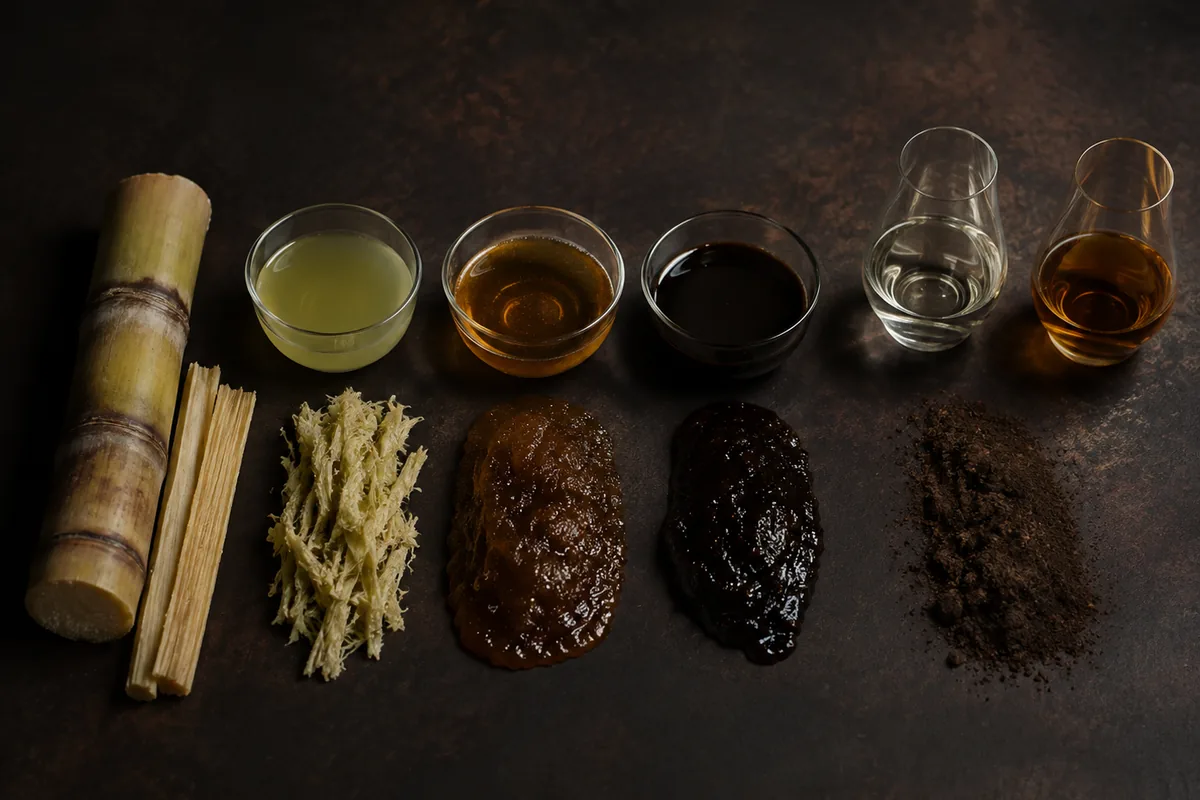
Fresh cane juice usually has to be fermented close to harvest because its sugar solution changes quickly after crushing. Syrup is more stable because part of the water has already been removed, while molasses can be transported and stored more readily.
Those handling differences influence where and how rum is made, but they do not rank the results.
A careful fermentation from molasses can preserve vivid fruit and floral compounds, while a poorly controlled juice fermentation can lose the freshness the raw material promised.
The useful label clue is a specific material statement such as cane juice, molasses, or cane syrup. If the bottle says only rum, the raw-material question remains open, and dark brown colour supplies no missing evidence.
How do fermentation and distillation shape dark rum?
Fermentation establishes the aromatic material that distillation can select. Yeast strain, temperature, acidity, nutrients, time, and bacterial activity where deliberately managed can change the balance of esters, higher alcohols, acids, sulphur compounds, and other congeners.
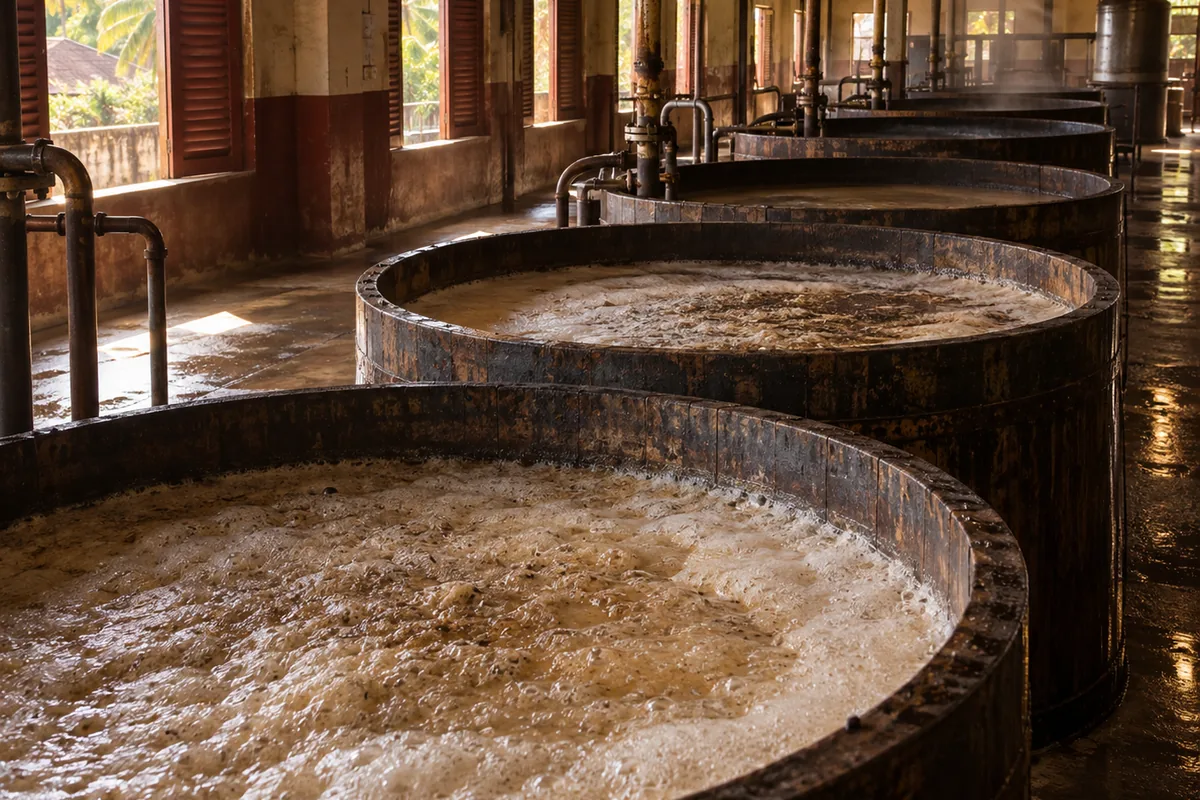
A longer fermentation does not guarantee a heavier rum.
It creates more time for chemical and microbial change, which can increase complexity under control or produce unstable and unwanted notes when sanitation and temperature fail.
| Production choice | What it changes | What the label may omit |
|---|---|---|
| Fermentation | The pool of aroma compounds available to the still | Yeast, time, temperature, and bacterial contribution |
| Pot distillation | Batch separation and the character retained through cut decisions | Still charge, cut points, and redistillation |
| Column distillation | Continuous separation with a wide possible range of rectification | Column design, plate use, and collection strength |
| Blending | The balance among components of different weights, ages, and origins | Component proportions and individual histories |
Pot and column are equipment families rather than flavour labels. A pot still can produce a comparatively clean spirit through repeated distillation and selective cuts, while a column can be configured to retain more character than the phrase light column rum suggests.
Distillation proof matters because stronger rectification generally removes more non-ethanol material, although equipment design and operating choices decide the actual result. The federal ceiling of less than 95 percent ABV prevents rum from becoming neutral spirit under the same identity.
Blending then joins components that may differ in still, fermentation, age, cask, and strength.
Dark rum can be a constructed blend, so searching for one production formula behind the colour category will usually produce a false sense of precision.
Which label facts are more useful than colour?
A label cannot reveal every production variable, but it can separate verified facts from shelf language. Start with the legal category and printed ABV, then look for origin, age wording, cask information, raw material, and any statement that identifies a protected style.
- Category: confirms that the liquid is labelled as rum under the market's rules rather than merely using a rum-like flavour description.
- Alcohol by volume: states strength directly and lets you compare equal pours accurately.
- Age statement: provides a regulated time claim when present, although the way a blend's age is stated depends on jurisdiction.
- Origin: may connect the rum to national standards or a geographical indication with narrower material and process rules.
- Cask disclosure: can explain some oak character, but a named cask does not disclose how active it was or how long every component spent there.
- Raw-material statement: distinguishes molasses, juice, or syrup when the producer chooses or is required to disclose it.
Marketing words such as premium, reserve, smooth, old style, and handcrafted do less work unless a rule or a concrete disclosure sits behind them. A dark glass bottle can also alter apparent shade, so inspect the liquid in neutral light before treating appearance as consistent evidence.
An origin statement deserves careful reading because rum rules vary substantially among producing countries.
The federal United States definition is a useful baseline for a bottle sold there, yet it cannot explain every permitted addition, ageing convention, or protected term elsewhere.
Read independent facts independently. Age addresses time, ABV addresses strength, origin addresses place and applicable rules, and the colour description remains a broad appearance cue.
When does dark rum make sense in the glass?
A small dark rum neat pour near room temperature exposes aroma, and a tall mixed drink asks the same spirit to survive citrus and ice instead. Dark rum makes sense when its roasted, fruit-rich, oak-led, or molasses-like character needs to remain clear after chilling or dilution, although the bottle and drink in front of you decide because the colour family covers restrained and forceful spirits.
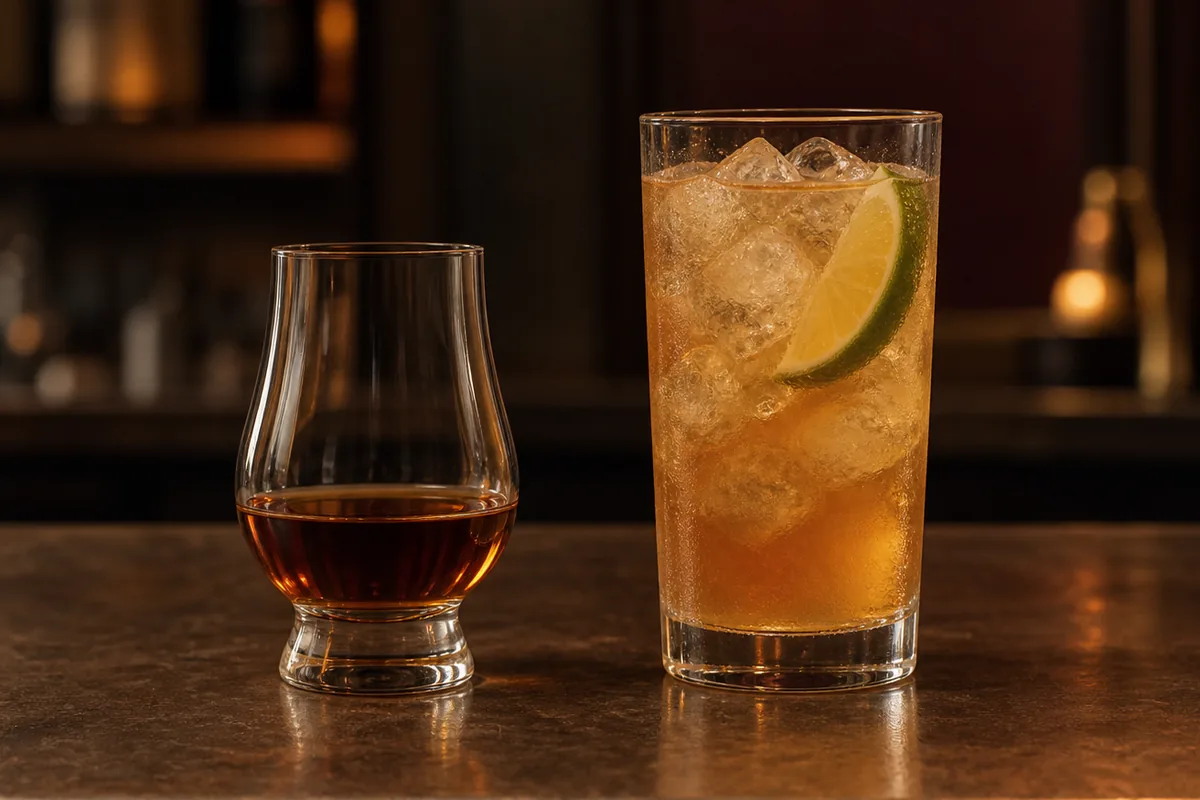
In a mixed drink, citrus, sugar, carbonation, ice, and other spirits all compete with or amplify the rum. Use the measured recipe as the baseline, then change the rum only when you can explain which balance will move.
- Against citrus: a fuller rum can keep oak, spice, or ripe-fruit notes present, but extra tannin or bitterness may make the finish harsher.
- With carbonation: bubbles and a cold serving temperature can lift aroma while lengthening the drink, so a delicate dark rum may read more quietly than expected.
- As a split base: combining measured portions of two rums can add depth, but each component still contributes alcohol and must remain part of the total recipe.
- Neat or with water: start with a small pour and use measured drops if dilution helps you separate aroma from alcohol heat.
A direct swap for a paler rum can change colour, apparent sweetness, oak presence, body, and garnish perception, so matching ABV first prevents strength from becoming an invisible second change without guaranteeing equal flavour.
Food pairing works best through intensity and contrast rather than colour matching. Roasted meat, caramelised fruit, coffee, dark chocolate, smoke, and warm spices can meet fuller rum cues, while delicate seafood or lightly dressed vegetables may be covered by a heavily oaked bottle.
A useful pairing repeats one element or supplies a deliberate contrast. Sweet food can make a dry or tannic rum seem sharper, so compare sweetness as well as aroma intensity.
For storage, keep the bottle upright with the closure tight and away from sun and sustained heat, since distilled spirits do not mature in glass and increasing headspace can gradually speed aroma loss.
A cloudy appearance, sediment, or a changed aroma does not always mean danger, but contamination, a damaged closure, or an unknown refill breaks the basis for normal storage advice; do not use an unverified bottle simply because distilled spirits are generally stable.
What changes the serving decision?
Check the printed ABV before measuring a serve because equal volumes of two dark rums may contain different amounts of alcohol. Colour never indicates alcohol strength, and food, water, coffee, a cold shower, or elapsed time cannot provide a safe-to-drive conclusion.
A high-strength dark rum needs special attention in a recipe because a small volume change can alter both flavour and total alcohol. Match the intended alcohol contribution before adjusting sugar, acid, or dilution, and never use perceived smoothness as a proxy for lower strength.
If a bottle is mainly for sipping, the most useful comparison is against another rum at the same serving temperature and a similar ABV. If it is mainly for mixing, test it in the intended measured drink because neat intensity does not predict how the rum will behave after dilution.
The sound buying decision follows the same sequence as the article: identify the legal category, treat dark as a broad style clue, verify age and strength separately, then judge the disclosed materials and production details against the way you plan to serve it.
What foods work with dark rum?
Sweet food can make a dry or tannic dark rum seem sharper. Pairing starts with the individual rum's intensity, sweetness, oak, and dominant aroma rather than its colour.
A dry, tannic dark rum and a soft, sweetened dark rum can pull the same dish in opposite directions despite looking similar in the glass.
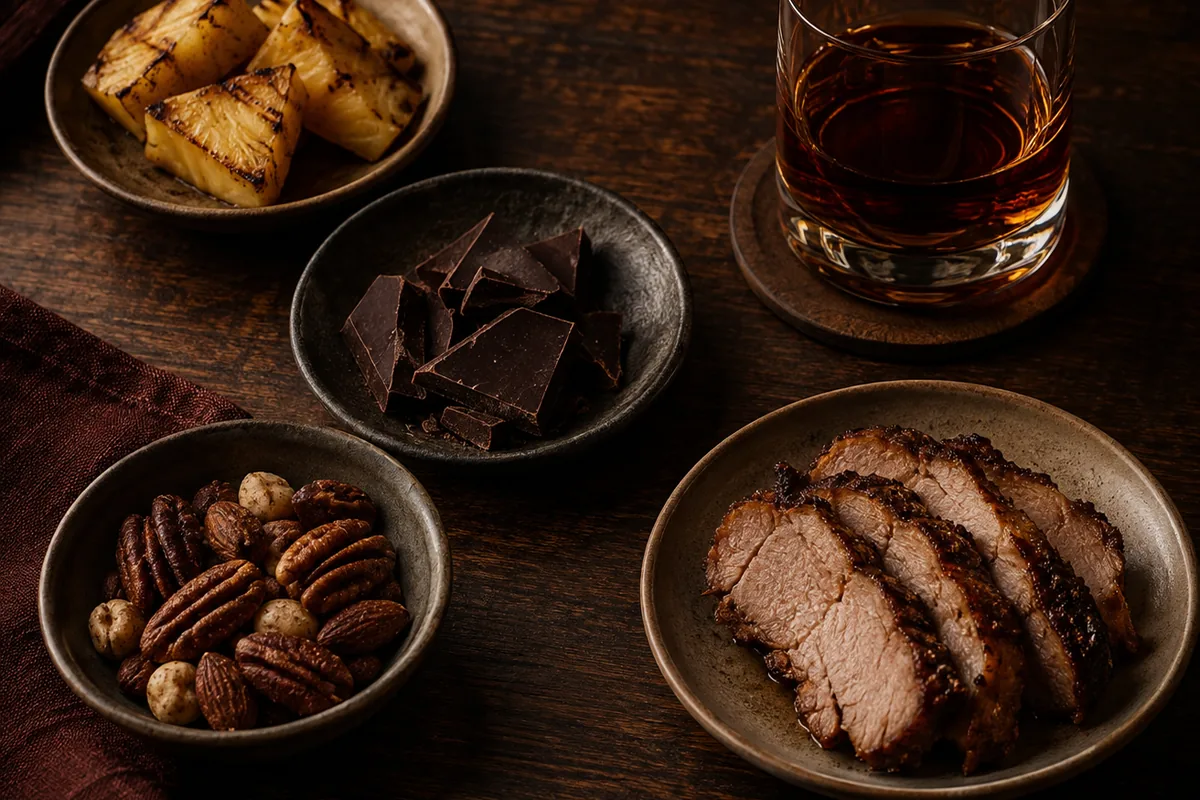
| Rum character | Useful food direction | Watch for |
|---|---|---|
| Roasted and oak-led | Grilled meat, mushrooms, toasted nuts, or browned root vegetables | Heavy char can make bitter food taste harsher |
| Dried-fruit and spice-led | Fruit cake, baked stone fruit, hard cheese, or warm spice | Very sweet desserts can flatten a drier rum |
| Molasses-like and full-bodied | Dark chocolate, coffee desserts, barbecue glaze, or caramelised fruit | Several sweet elements together can become tiring |
| Fruity and high-ester | Tropical fruit, rich pork, blue cheese, or aromatic spice | Delicate dishes may disappear under the aroma |
Salt and fat can soften the perception of bitterness and alcohol heat, while acidity refreshes a rich pairing. Chilli is less predictable because ethanol can intensify the burn from capsaicin, especially at higher bottling strength.
If the rum is part of a sauce or dessert, measure it and account for the alcohol that remains. Heating reduces alcohol over time but does not make every preparation alcohol-free, and serving it to someone avoiding alcohol requires a genuinely alcohol-free recipe.
A small side-by-side test gives a better answer than a colour rule.
Taste the food first, then the rum, and notice whether the second bite becomes clearer, sweeter, more bitter, or simply overwhelmed.
How should you store an opened bottle?
Store dark rum upright, tightly closed, and away from sustained heat and direct sunlight. Distilled spirits do not continue barrel maturation in glass, so a warm windowsill adds degradation risk without adding useful age.
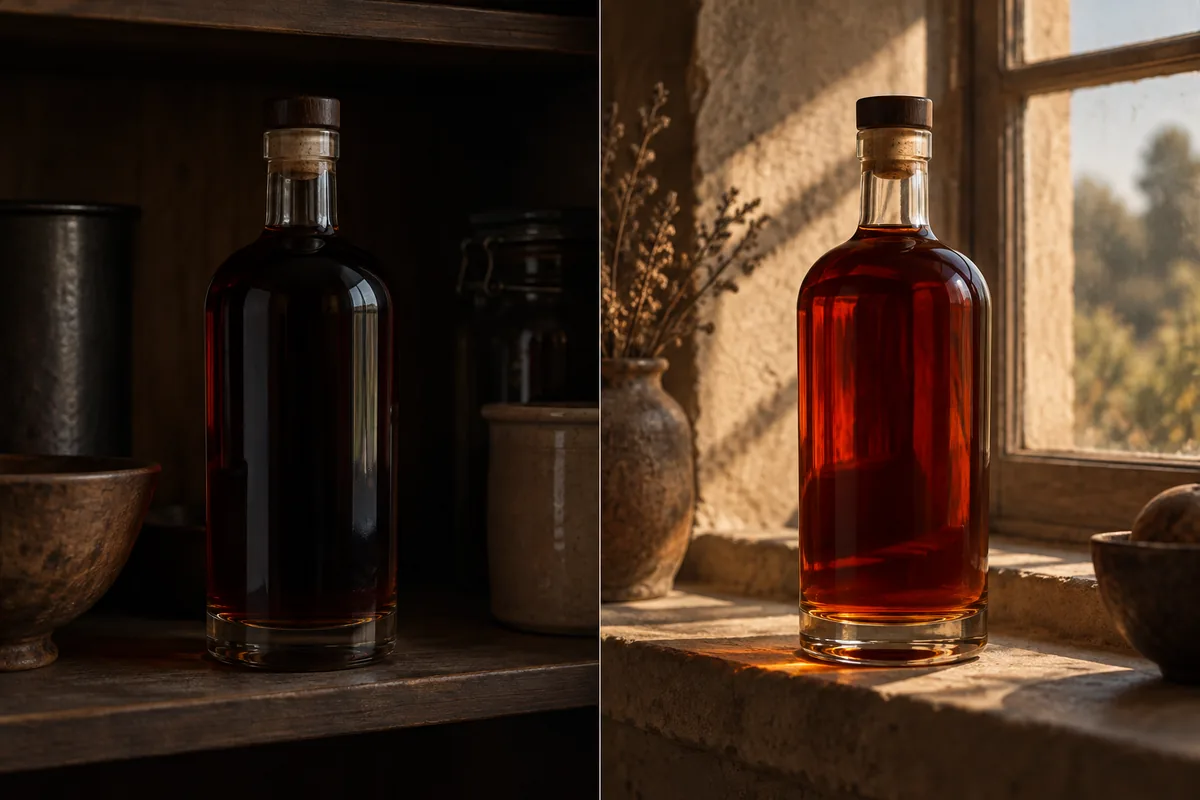
Oxygen exposure grows as headspace grows. A nearly full bottle changes slowly when the closure seals well, while a small remainder in a large bottle has much more air available relative to the liquid.
- Keep it upright: prolonged high-strength spirit contact can damage some closures, while an upright bottle still lets the seal do its job.
- Use a stable temperature: repeated heating and cooling move air through imperfect closures and can accelerate aroma loss.
- Limit bright light: sunlight and ultraviolet exposure can alter colour and aroma over long storage.
- Clean the neck: sugary residue from pouring can interfere with the closure and attract contamination around the outside.
- Downsize a small remainder: a clean, compatible smaller bottle reduces headspace when long storage is expected.
Cloudiness can come from temperature, filtration choices, or compounds falling out of solution, so appearance alone does not prove spoilage.
A broken seal, foreign material, an unknown refill, active gas release, or a distinctly abnormal odour gives a stronger reason to discard the liquid.
Freezing is unnecessary for ordinary storage and may change clarity or damage a bottle if the liquid expands. Room-temperature storage in a dark cupboard is the practical default for a securely closed bottle.
How does strength change the responsible serving decision?
Dark colour, sweetness, and a soft texture do not indicate how much alcohol a serving contains. The printed ABV and the measured volume are the two facts needed to estimate alcohol, and both can vary among bottles and recipes.
In the United States a standard drink contains about 14 grams, or 0.6 fluid ounces, of pure alcohol. About 44 millilitres or 1.5 fluid ounces of 40 percent spirit contains roughly one standard drink.
The same volume at 57 percent contains about 1.4 standard drinks, so replacing one rum with another at equal volume can raise the alcohol substantially.
Measure strength and volume together. A long drink can contain more than one standard drink, and a neat pour can be larger than the reference measure. Glass size, dark colour, ice, food, water, coffee, and perceived smoothness cannot establish impairment or a safe time to drive.
Water and ice can lower concentration in the glass but do not remove alcohol from the serving. A split base also counts every alcoholic component, which matters when two measured rums are combined in one recipe.
Anyone who is pregnant, taking an interacting medicine, managing a condition worsened by alcohol, under the legal drinking age, or responsible for a safety-critical task has a different decision from a flavour comparison. When the consequence matters, choose a non-alcoholic option rather than trying to infer safety from a serving ritual.
The final bottle choice should therefore follow verifiable information: legal identity, material and production disclosure, age if relevant, ABV, and intended use.
Colour can begin that comparison, but it cannot finish it.
Common questions
- Is dark rum always aged longer than white rum?
- No. Oak can deepen colour, caramel can adjust it, and filtration can make an aged rum pale. Only an age statement or specific producer disclosure establishes time in wood.
- Is dark rum the same as black rum?
- The terms overlap, but black rum usually signals the deepest colour presentation while dark rum covers a broader deep-amber-to-brown range. Neither is a separate United States federal class.
- Is dark rum always sweet?
- No. Dark colour and caramel-like aroma do not establish residual sugar. Sweetness varies with the base spirit and any permitted adjustment in the individual bottling.
Sources
-
27 CFR 5.147, Rum, Electronic Code of Federal Regulations
Accessed 4 September 2026.
-
27 CFR 5.72, Coloring materials, Electronic Code of Federal Regulations
Accessed 4 September 2026.
-
Mangwanda, Johnson, Mani, Jackson, Chandra, McKeown, White, Naiker (2021), Processes, Challenges and Optimisation of Rum Production from Molasses, A Contemporary Review
Published 8 February 2021. Accessed 10 September 2026.
-
TTB, Distilled Spirits Labeling: Color Ingredient Disclosures
Accessed 7 September 2026.
-
Tarko, Krankowski, Duda-Chodak (2023), The Impact of Compounds Extracted from Wood on the Quality of Alcoholic Beverages
Published 2023. Accessed 10 September 2026.
More in Spirits
-
 American single malt whisky
01
What is American single malt whisky, and what does it guarantee?
-
 Australian whisky
02
How is Australian whisky defined, and by which law?
-
 Black rum
03
What is black rum, and does the colour mean anything?
-
 Blended American whiskey
04
What is blended American whiskey, and how much of it is whiskey?
-
 Blended Irish whiskey
05
Blended Irish whiskey: which word counts the distilleries?
-
 Blended Scotch
06
Blended Scotch: what is in it, and why does the recipe change?