
Spirits
What Is Gold Rum, and What Does Amber Colour Mean?
Gold rum, also called amber rum, is a trade description for rum with a golden to amber appearance. It often shows some oak influence, but the name sets no universal age and the colour may also be adjusted with caramel.
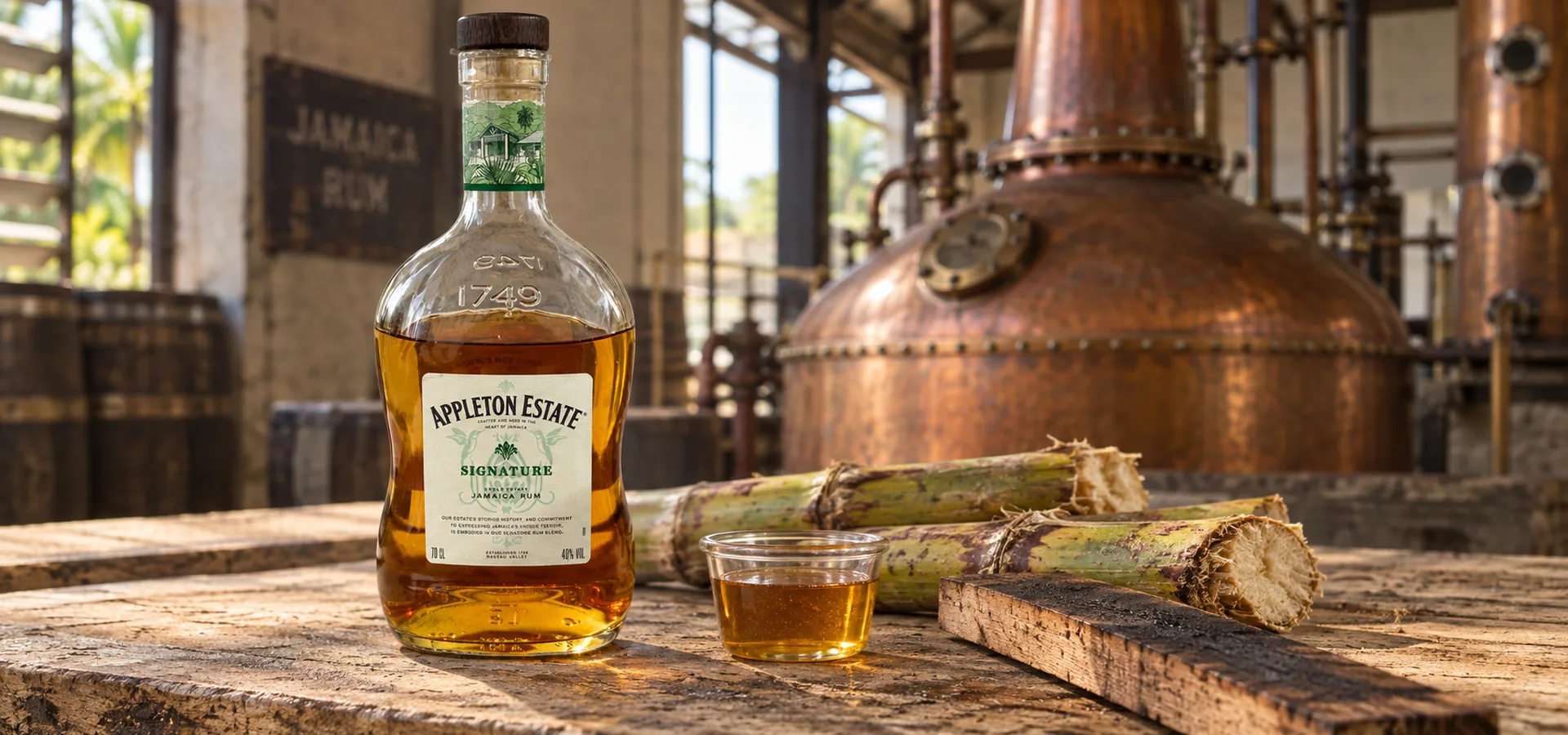
At a glance
- Legal category
- Rum, 27 CFR 5.147; gold or amber is not a separate federal class
- Minimum strength
- 40 percent ABV
- Also called
- Amber rum
- Raw-material range
- Cane juice, cane syrup, molasses, or another sugar cane by-product
- Age requirement
- No universal ageing minimum belongs to the gold or amber trade term
- Colour sources
- Wood extraction, blending, filtration, caramel adjustment, or a combination
Which facts does the word gold establish?
Gold rum identifies an amber presentation, not a legal age band.
United States law defines rum, but it does not divide that class into white, gold, and dark subtypes.
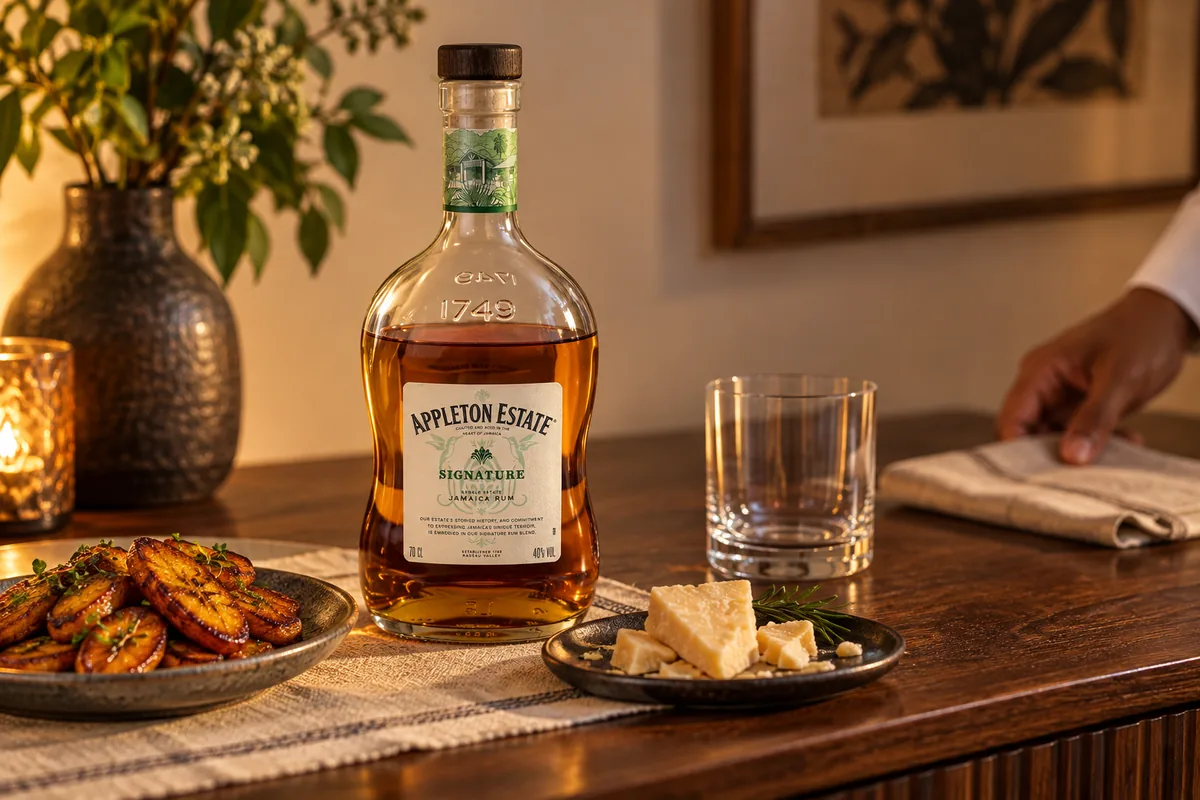
The base standard still matters. Rum must come from fermented sugar cane juice, syrup, molasses, or another sugar cane by-product, be distilled below 95 percent alcohol by volume, and ordinarily reach the bottle at no less than 40 percent.
- Below 95%
- The maximum distillation strength for rum under the United States standard.
- At least 40%
- The ordinary minimum bottling strength for rum.
- No age minimum
- The word gold adds no federal requirement for time in wood.
Gold and amber are commonly used as synonyms between clear and deeper brown styles, giving a useful visual starting point but no grain bill, still design, barrel type, or maturation time.
A source review may describe relatively brief time in charred oak as an industry convention, but a stated number of years on the bottle remains evidence while the gold colour remains description.
Gold is most useful as a relative shelf term because it separates an amber presentation from clearer and much darker neighbours without claiming a precise boundary. That usefulness ends when the word is asked to prove age, quality, sweetness, or origin.
Another jurisdiction may define rum, permitted additions, geographical names, and labelling differently, so read the category against the bottle's market instead of carrying one United States rule across every country.
The colour family and the legal category answer different questions. Rum tells you which spirit standard applies; gold tells you how the finished appearance is being presented.
The term also says nothing about whether one distillery made every component; a gold rum may be a single distillate, a blend of different still outputs, a blend of ages, or a combination assembled to hold a consistent house profile.
ABV needs its own reading because amber shade does not indicate alcohol concentration. A 40 percent bottling and a higher-strength bottling can look identical while requiring different dilution and contributing different amounts of alcohol at the same pour volume.
Which label clues deserve more weight?
The bottle shape and liquid colour seen through tinted glass can exaggerate differences before you pour; compare the liquid in clear glass if appearance matters, then return to the printed facts for everything beyond appearance.
Terms such as aged, reserve, or special do not all carry the same legal meaning, and decorative barrel imagery may carry none. A precise age, origin, category, or production statement deserves more weight than a general quality adjective.
When the label supplies little detail, leave the unknowns open. An amber shade is evidence only of colour, not permission to fill gaps with a preferred story about long tropical ageing or artisanal production.
What is gold rum made from?
The same broad cane-material range that stands behind rum generally stands behind the amber ones.
Cane juice, cane syrup, molasses, and other sugar cane by-products can all supply the fermentable material, so an amber colour does not prove a molasses base.
Starting material and finished shade answer different questions. Molasses is naturally dark before fermentation, yet distillation produces a clear spirit; the brown colour of molasses does not simply pass through a still into the finished rum.
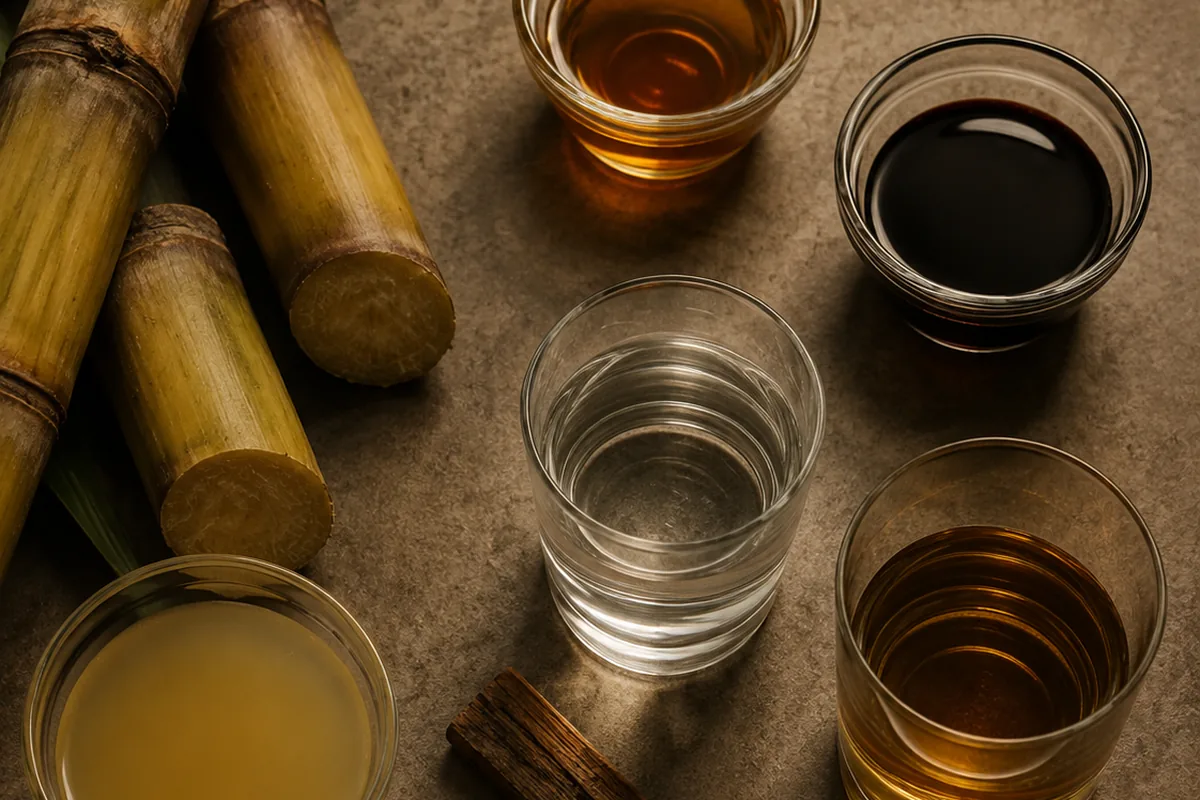
Fresh juice must be handled quickly after crushing, while concentrated syrup and molasses are more stable inputs. These practical differences influence fermentation logistics and flavour precursors, but none establishes whether the result will be sold as white, gold, or dark.
Fermentation then changes sugars into ethanol and a large set of aroma compounds.
Yeast, temperature, acidity, nutrients, time, and microbial activity where controlled can move fruit, floral, grassy, sulphury, solvent-like, and heavier notes before distillation begins.
If a producer names the cane material, that disclosure helps explain the style. If it does not, treat the base as unknown rather than filling the gap with colour.
How does gold rum become amber?
Oak contact is one route to an amber spirit.
Alcohol and water extract coloured compounds and aromas from the cask, while toast, char, wood species, previous fills, temperature, and humidity change the pace and balance.
It is not the only route. Caramel colour can adjust rum's appearance, and blending can combine components with different ages or colour intensity into one consistent bottling.
- Oak contact
- Wood can supply amber colour together with vanilla, toast, spice, tannin, and texture.
- Caramel adjustment
- A small colour correction can make batches look consistent without revealing how long each component matured.
- Blending
- Lighter and more oak-influenced components can meet at the same finished shade.
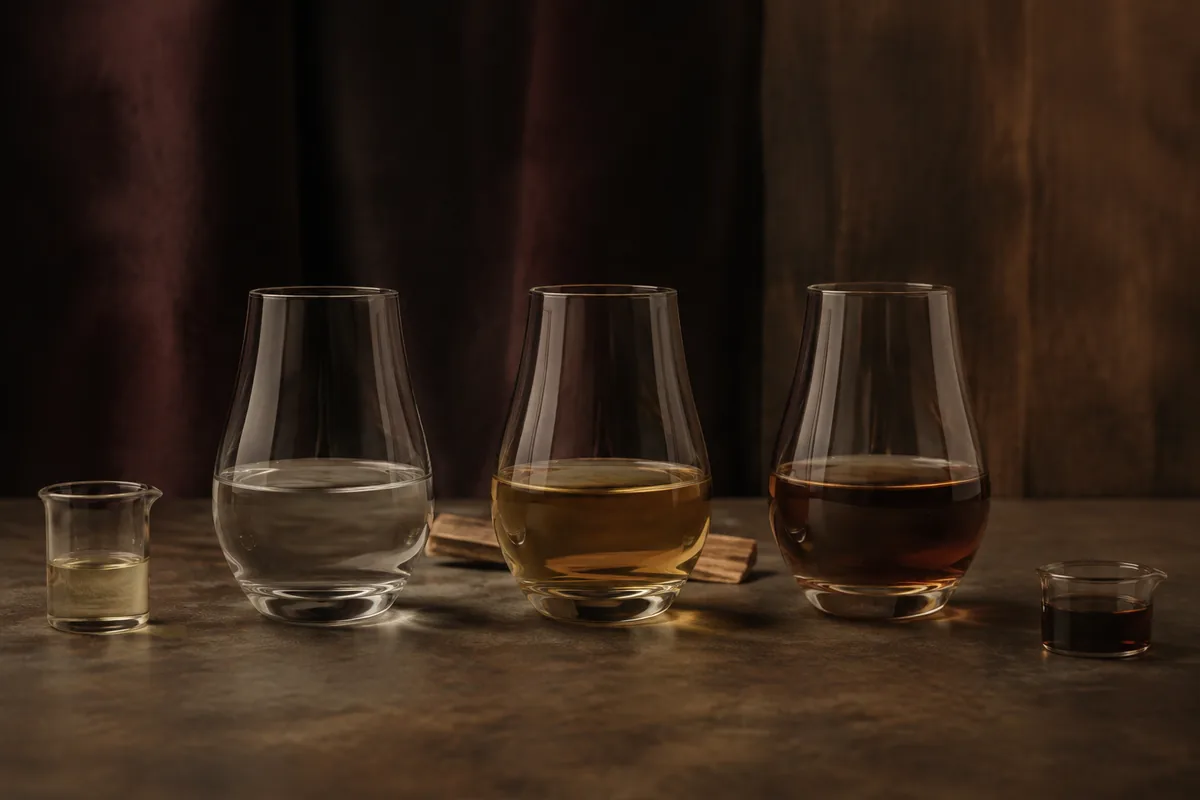
United States rum labels do not have to carry the usual statement of composition for caramel colouring, so silence on that point cannot prove that the amber came entirely from a cask.
The same logic works in reverse: a white rum can mature in wood and then be filtered toward clarity. Appearance helps describe the finished spirit, but it cannot reconstruct the sequence that produced it.
Oak does more than supply pigment. Extraction can add vanilla-like compounds, lactones, tannins, toast, and spice, while oxidation and reactions among spirit and wood compounds continue to change aroma and texture.
Why does cask history matter?
More extraction is not automatically better: an active cask or warm warehouse can deepen colour quickly, but a balanced result still depends on the base distillate, the character of the wood, evaporation, time, and the point at which the component is removed.
Previous cask use matters because a first fill and a repeatedly used cask do not offer the same reservoir of extractable material. Size and surface area also alter contact, which is why equal ages can produce different shades and different degrees of oak influence.
| Route to amber | What may change with colour | What remains unknown |
|---|---|---|
| Oak maturation | Wood aroma, tannin, oxidation, texture, and colour may develop together | Age and cask activity without a disclosure |
| Caramel adjustment | The finished shade or batch consistency | How much cask-derived character the spirit carries |
| Blending | Colour and aroma can be balanced across components | The proportions, ages, and still types unless stated |
| Filtration | Colour or haze-forming material may be reduced | Whether the rum matured before filtration |
Caramel colour should not be confused with flavour or measurable sweetness because a golden, vanilla-like aroma can taste comparatively dry while a paler bottling can present more sweetness.
Batch consistency is a legitimate production aim because cane material, casks, and warehouse conditions vary. The appearance of consistency, however, cannot tell you which adjustment was used or whether aroma and texture were adjusted with equal success.
Water used for proofing can also change haze, texture, and aroma release without creating the original amber colour. The final presentation therefore reflects decisions made after maturation as well as events inside the cask.
A clear glass under neutral light gives a more honest colour comparison than a tinted bottle or warm bar lighting.
Even then, visual precision stops at the shade; it cannot reveal the chemistry or sequence behind it.
Does gold rum have to be aged?
No universal age threshold turns rum gold. Some amber rums gain colour and aroma during wood maturation, some use caramel to adjust or standardise shade, and some combine matured and younger components before bottling.
The United States rum identity does not create a separate gold class with a required period in oak. Other jurisdictions and protected rum categories can impose their own rules, so a broad shelf term cannot replace the origin-specific standard.
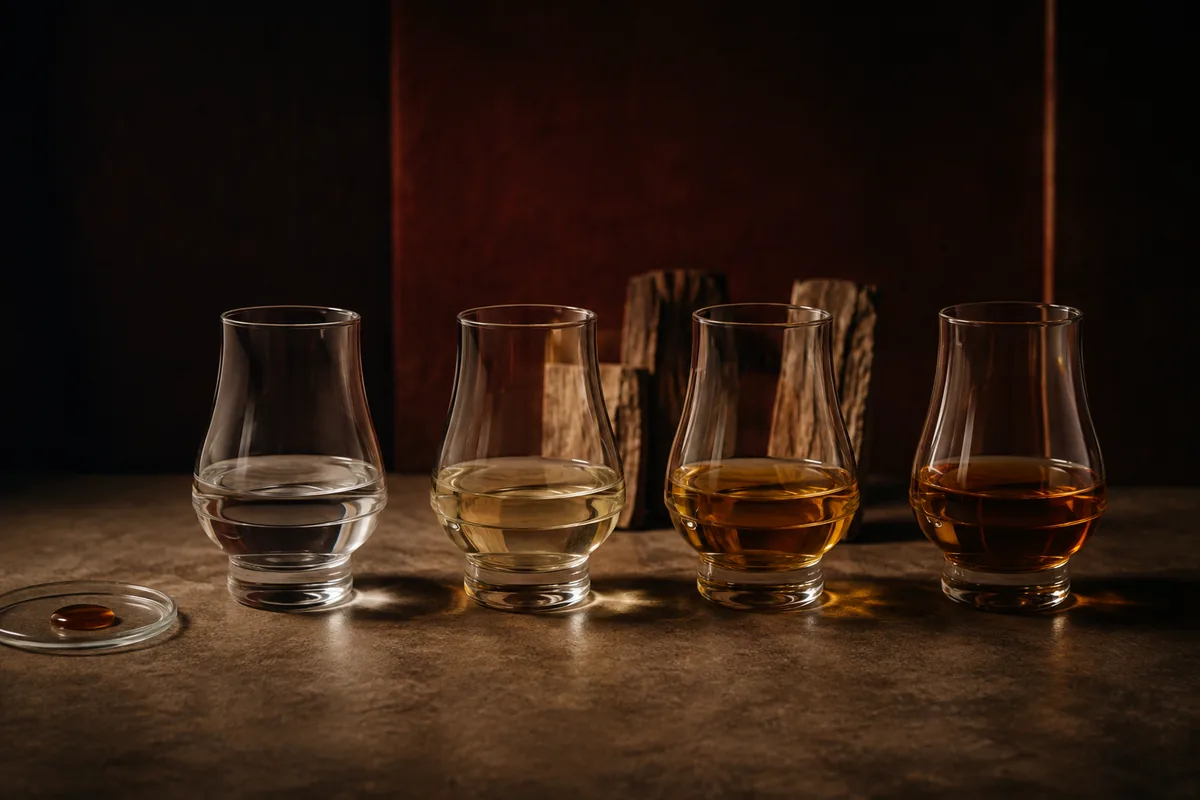
Wood extraction depends on cask species, size, toast or char, previous fill, warehouse temperature, humidity, entry strength, and time.
A smaller or more active cask can transfer colour quickly, while a repeatedly used cask may change the spirit more slowly.
Age is a statement, not a shade. When age changes your decision, look for an age claim and check how the bottle's jurisdiction applies it to blended components.
An absent age statement also has a limited meaning. It says the producer is not making that visible claim, but it does not prove that the liquid is unaged.
Which production choices change gold rum style?
One amber bottle can be light and clean, the next aromatic and fruity, and a third dry and oak-led, soft and rounded, or built to remain present in a mixed drink.
That spread begins before maturation and continues through proofing and blending.
| Stage | Decision | Possible consequence |
|---|---|---|
| Fermentation | Yeast, time, temperature, acidity, and microbial control | Different pools of fruity, floral, grassy, heavy, or sharp aroma compounds |
| Distillation | Still configuration, reflux, proof, and cut selection | More or less fermentation character carried into new spirit |
| Maturation | Wood, previous fill, climate, entry strength, and duration | Vanilla-like, toasted, spicy, tannic, and oxidative development |
| Blending | Component origins, ages, weights, and final proof | A repeatable house profile assembled from unlike rums |
A pot still and a column still each describe an equipment family, not a guaranteed flavour. Operating choices within either family can change rectification and congener retention enough to defeat a simple heavy-versus-light rule.
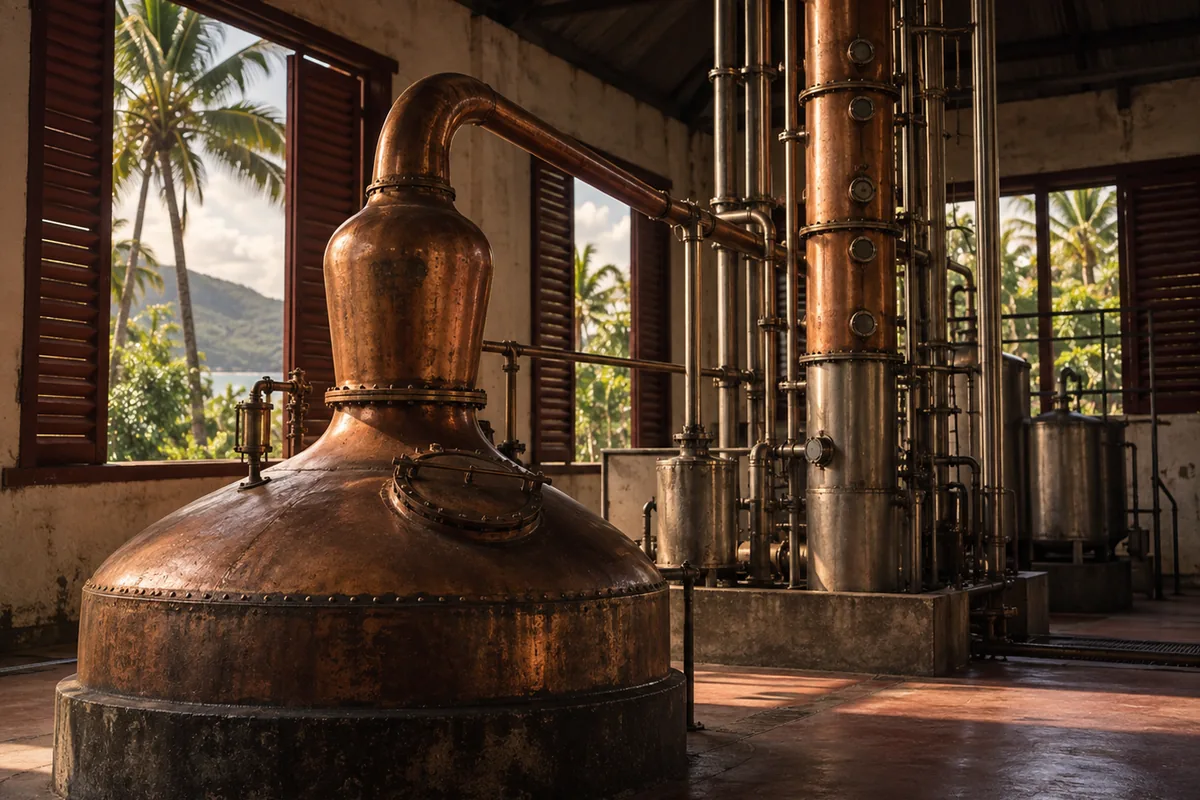
Final ABV affects aroma release, texture, and alcohol heat.
Diluting two samples to the same strength is often necessary before attributing a sensory difference to raw material, still type, or cask.
Caramel adjustment can make batches look consistent, but it does not make their underlying aroma identical. The most informative producer descriptions connect a flavour claim to a concrete material or process rather than asking the word gold to explain it.
What changes from white to gold to dark?
Think of white, gold, and dark as broad presentation families rather than rungs on a quality ladder. They often differ in how much oak, roasted cane, and heavier aroma remains apparent, yet individual bottles can cross those expectations.
| Broad style | Common cues | Practical effect in a drink |
|---|---|---|
| White rum | Clear appearance; often a cleaner or lighter profile, though it may have been aged and filtered | Usually changes a drink's colour least and lets delicate ingredients stay visible |
| Gold rum | Amber colour; often moderate oak, vanilla, fruit, or spice | Adds colour and barrel cues without necessarily dominating the mixture |
| Dark rum | Deep amber to brown; often fuller molasses, roast, oak, or spice cues | Can remain more prominent through citrus, sugar, and dilution |
The table describes tendencies rather than promises, since a filtered aged white rum may carry substantial barrel character while a deeply coloured rum can owe part of its appearance to caramel.
Some producers print a fourth word for the deepest presentations of all, and it runs into the same limit: the shade describes what is in the glass without reporting how it got there.
Gold rum is often useful when a recipe needs more body and oak influence than a very light rum but less colour or roasted weight than many dark bottlings. A complete cocktail recipe remains the authority for measured ingredients, dilution, ice, and yield.
If a substitution changes the drink, the useful question is functional: did the original supply aroma, sweetness perception, colour, body, or all four? Answer that first, then decide what the replacement has to supply, because a swap that matches colour and misses body will read as a different drink.
Where can a colour-family swap fail?
Gold rum often occupies a practical middle range, but there is no sensory midpoint that every bottle must hit: one may be light and vanilla-led, another fruit-rich and aromatic, and another dry, tannic, or noticeably woody.
The cane base, fermentation, and distillation establish the spirit that reaches the cask. Molasses, cane syrup, and fresh juice begin differently, while yeast, fermentation conditions, still design, reflux, and cut points determine which congeners remain available.
- Aroma
- Fruit, vanilla, light toast, cane, baking spice, and caramel-like cues are common possibilities rather than mandatory notes.
- Texture
- Distillation strength, maturation, blending, filtration, sweetening where permitted, and bottling proof can all change body.
- Finish
- Oak tannin, alcohol concentration, bitterness, sweetness perception, and dilution decide whether the finish feels dry, soft, or assertive.
Colour-family swaps fail most often when the original drink depended on a specific aromatic style rather than appearance. Replacing a light but highly aromatic rum with a quiet gold rum may reduce character even though the replacement looks richer.
The opposite failure also occurs when an oak-forward gold rum adds tannin or vanilla to a drink designed around a cleaner spirit; compare aroma, sweetness, proof, and texture before assuming the middle colour makes the safest compromise.
For food, moderate fruit and vanilla may echo caramelised surfaces or toasted nuts, while a dry oak finish can cut through richer textures. Very sweet dishes can make a comparatively dry rum seem sharper, so sweetness belongs in the comparison beside aroma intensity.
Taste the bottle before assigning its job whenever the recipe or food pairing is sensitive to oak or sweetness. Category language narrows possibilities, while the liquid confirms which of those possibilities is present.
How should gold rum be served or mixed?
The category earns its place when a drink needs more oak, vanilla-like aroma, or body than a very light rum supplies, without the deepest roasted character associated with many dark styles. The category remains broad, so the specific bottle must decide the method.
For a neat comparison, use small equal pours at the same temperature and compare similar ABVs.
A tulip-shaped tasting glass concentrates aroma, while a wide tumbler gives more room for ice and gradual dilution.
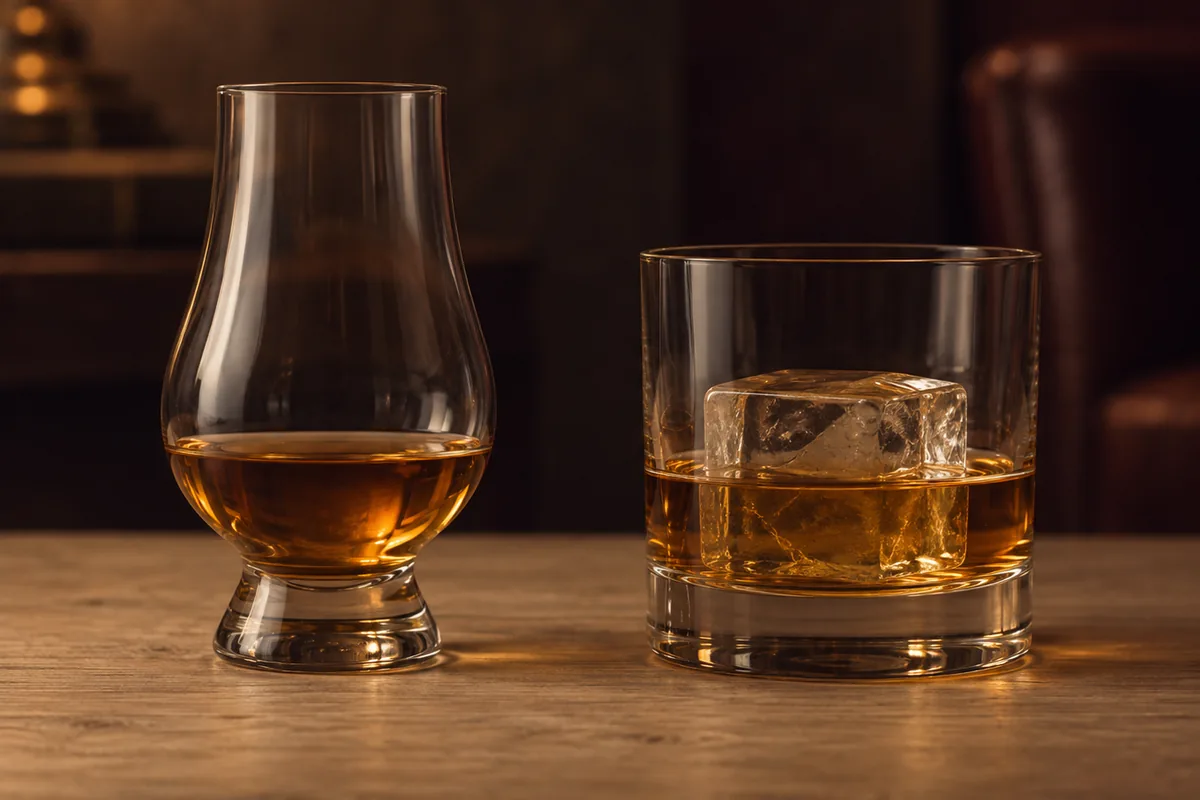
- Neat: start with a modest measured pour and allow a few minutes for volatile aroma to change.
- With water: add a measured amount rather than an uncontrolled splash, then compare before and after.
- Over ice: expect lower temperature to mute some aroma while meltwater reduces concentration over time.
- In a long drink: check whether carbonation and chilling leave enough rum character to remain identifiable.
- In a sour: balance the actual sweetness, oak, and proof against acid and added sugar rather than following colour alone.
A recipe written for 40 percent rum can become materially stronger when the same volume of a higher-proof bottle is substituted. Match alcohol contribution first, then adjust sweetness, acidity, and dilution if the flavour still needs correction.
The service comparison above holds the useful variables together: a measured pour, water, ice, glass shape, and a cold lengthened serve. None of them is a rule about the one correct way to drink it.
What foods pair with gold rum?
Browning, moderate richness, ripe fruit, warm spice, and a little smoke are the food characteristics an amber rum most often sits comfortably beside.
The useful match is intensity and flavour direction, not a golden colour on both sides of the plate.
| Rum cue | Food direction | Possible mismatch |
|---|---|---|
| Vanilla and gentle oak | Roast poultry, browned butter, toasted nuts, or baked squash | Very delicate raw seafood may lose detail |
| Fresh or dried fruit | Pineapple, banana, stone fruit, fruit cake, or firm cheese | Very sweet fruit can make a dry rum seem hot |
| Warm spice | Cinnamon, allspice, ginger, or lightly smoked food | Strong chilli can intensify alcohol burn |
| Caramel and toast | Crème caramel, roasted nuts, coffee, or milk chocolate | Heavy sugar can hide a restrained rum |
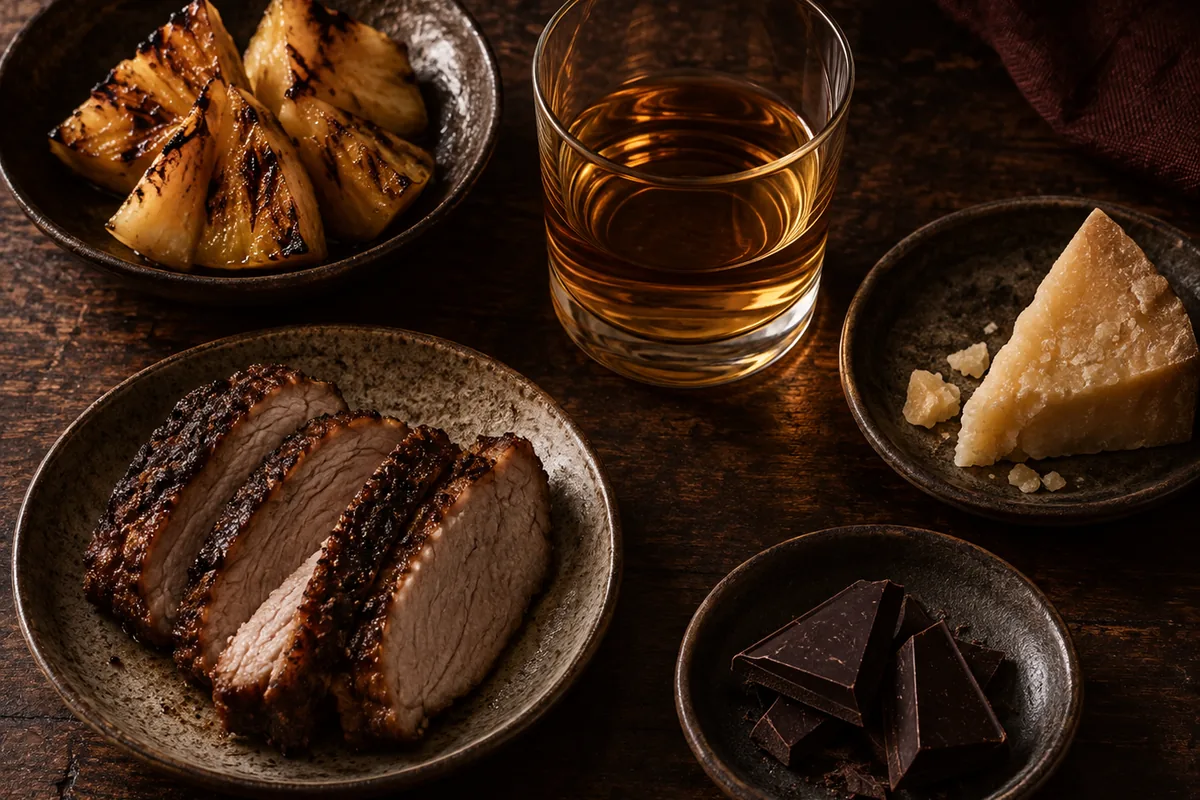
Salt and fat can soften bitterness and alcohol heat, while acidity can keep a rich combination from becoming tiring. A rum with pronounced tannin may need food with more fat or sweetness than a soft amber blend.
Cooking with rum requires the same measured approach as mixing. Alcohol decreases during heating at a rate shaped by time, surface area, temperature, and method, so a cooked dish should not be presented as alcohol-free without a recipe that actually supports that claim.
Taste the individual rum before choosing the dish.
Producer language may suggest a direction, but your bottle's sweetness, proof, and oak intensity determine whether the pairing remains balanced.
How should an opened gold rum bottle be stored?
Keep the bottle upright, tightly closed, and out of direct light and sustained heat. Gold rum does not continue maturing as it did in a cask because glass supplies no wood extraction and very little controlled oxygen exchange.
Headspace matters after opening. As the liquid level falls, more air remains in the bottle, and repeated opening replaces that air with a fresh supply that can gradually flatten aroma.
- Stable cupboard: limits heat cycles and sunlight without requiring refrigeration.
- Clean closure: prevents sticky residue from interfering with the seal.
- Upright position: avoids prolonged contact between high-strength spirit and vulnerable closure material.
- Smaller clean bottle: can reduce headspace when only a little rum remains and long storage is expected.
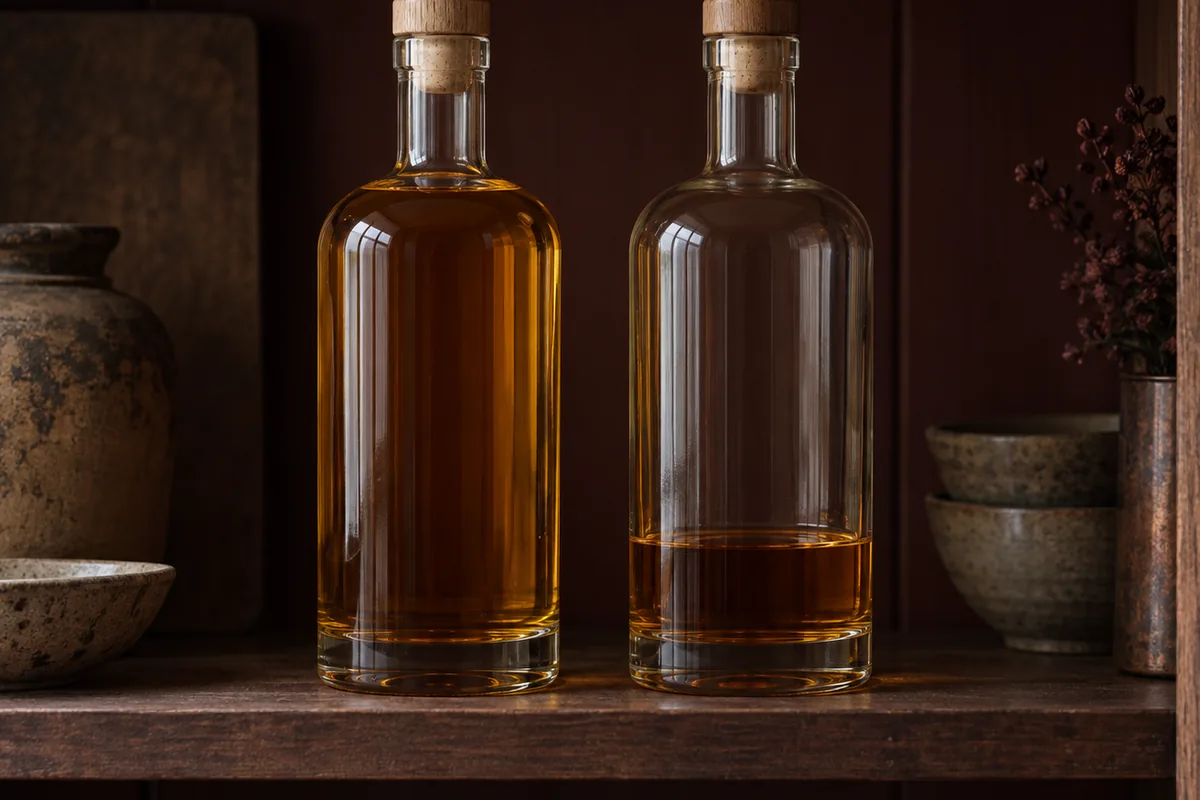
A colour change may be difficult to judge because lighting, bottle glass, and the original caramel or oak colour all affect appearance. A damaged closure, foreign matter, an unknown refill, active pressure, or a distinctly abnormal smell gives stronger discard evidence.
Do not top up an old bottle with a different rum merely to reduce headspace.
That creates an undocumented blend and removes the reference needed to evaluate later changes.
How much alcohol is in a gold rum pour?
Gold colour and a smooth texture provide no measure of alcohol. A serving's alcohol comes from its volume and ABV, which means a small high-proof pour can contain more alcohol than a larger-looking diluted drink.
Using the United States reference measure, 1.5 fluid ounces or about 44 millilitres of a 40 percent gold rum is roughly one standard drink. A mixed drink may contain one, two, or more such amounts depending on every alcoholic ingredient and its measure.
Count the recipe, not the glass. Ice, water, juice, food, coffee, and a sweet flavour can change concentration or perception, but they do not remove the alcohol already measured into the serving or establish a safe time to drive.
Someone who is pregnant, takes an interacting medicine, has a condition worsened by alcohol, is below the legal drinking age, or must drive or perform another safety-critical task needs a different choice. An alcohol-free drink avoids the uncertainty that sensory impressions cannot resolve.
The practical bottle decision is therefore evidence-led: identify the rum category, separate amber colour from age, check raw material and production disclosures, read the ABV, and choose service or food from the bottle's actual profile.
How do you choose a gold rum bottle?
The most informative details sit beside or behind the gold word. Alcohol by volume controls how much alcohol enters a measured serving, an age statement establishes time, and an origin statement can connect the rum to a jurisdiction with its own rules.
- Check alcohol by volume Two equally amber rums can differ materially in strength, concentration, and required dilution.
- Look for age and origin wording These can establish facts that the gold description never supplies.
- Read the producer's factual description Named cane material, cask history, filtration, and disclosed additions narrow the style more than colour alone.
For neat service, begin with a small pour near room temperature and use measured water only to test presentation, since dilution neither removes the alcohol nor supports a safe-to-drive conclusion. The procedure written up for tasting whisky transfers without change: equal pours, one glass shape, and water added in measured amounts rather than splashed.
Store an opened bottle upright, tightly closed, and away from heat and direct light.
Rum does not improve through bottle ageing after purchase, and a large headspace over a long period can gradually flatten aroma.
Food choices should match the actual profile rather than the gold label alone. Moderate oak and fruit can meet grilled food, nuts, or caramelised fruit, while the finer decisions belong to the individual bottle rather than to the category.
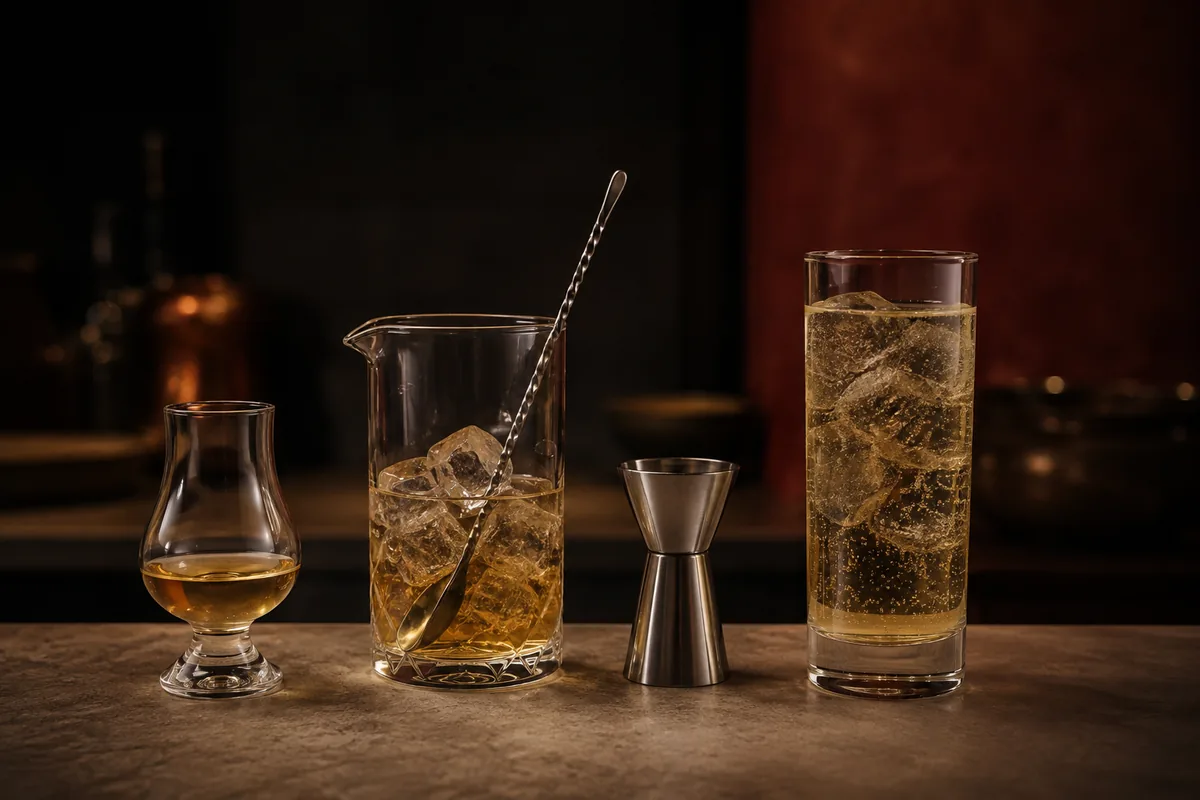
For a first assessment, use a clean glass and note the rum before adding ice or another ingredient; a measured amount of water can then show whether concentrated alcohol was hiding fruit or whether dilution makes oak and bitterness more prominent.
Cold service reduces volatility and can make a spirit seem quieter, while warming in the glass may release more aroma. That change is a serving effect, not proof that the rum improved or that one temperature is universally correct.
In a measured mixed drink, match the original ABV before changing sugar or acid. A stronger replacement may need a smaller volume to hold total alcohol constant, but that adjustment also reduces the rum's flavour contribution and can require a different balance.
Never use colour, smoothness, food, water, coffee, or time as evidence that someone is unimpaired. Check the measured alcohol in the serving and arrange transport without relying on a feeling of sobriety.
Discard advice changes when the closure fails, the bottle is contaminated, or its history is unknown; normal oxidation can flatten aroma, but an unexplained refill, foreign material, or damaged seal removes the assurance that the liquid is still the product described on the label.
When you compare two gold rums, use equal volumes, equal glassware, and similar temperatures before adding measured water. This controls the easiest variables without turning a simple category comparison into a claim that one serving method is correct.
A good final choice connects the bottle evidence to one intended use: an amber rum with compatible proof and moderate oak for a balanced mixed drink, or a more distinctive cask and fermentation profile when the rum needs to lead. The word gold begins that decision; it does not finish it.
Common questions
- Are gold rum and amber rum the same thing?
- They are commonly used as synonyms for an amber-coloured rum style. Neither term creates a separate United States federal class or guarantees a particular age.
- Is gold rum always aged?
- Gold rum often has some oak influence, but the colour can also reflect caramel adjustment or blending. Look for a specific age statement or producer disclosure if maturation matters.
- Can gold rum replace white rum?
- Sometimes, but it may add colour, oak, vanilla, spice, and body. Check what the measured recipe expects before making the swap.
Sources
-
27 CFR 5.147, Rum, Electronic Code of Federal Regulations
Accessed 4 September 2026.
-
27 CFR 5.72, Coloring materials, Electronic Code of Federal Regulations
Accessed 4 September 2026.
-
Mangwanda, Johnson, Mani, Jackson, Chandra, McKeown, White, Naiker (2021), Processes, Challenges and Optimisation of Rum Production from Molasses, A Contemporary Review
Published 8 February 2021. Accessed 10 September 2026.
-
TTB, Distilled Spirits Labeling: Color Ingredient Disclosures
Accessed 7 September 2026.
-
Tarko, Krankowski, Duda-Chodak (2023), The Impact of Compounds Extracted from Wood on the Quality of Alcoholic Beverages
Published 2023. Accessed 10 September 2026.
More in Spirits
-
 American single malt whisky
01
What is American single malt whisky, and what does it guarantee?
-
 Australian whisky
02
How is Australian whisky defined, and by which law?
-
 Black rum
03
What is black rum, and does the colour mean anything?
-
 Blended American whiskey
04
What is blended American whiskey, and how much of it is whiskey?
-
 Blended Irish whiskey
05
Blended Irish whiskey: which word counts the distilleries?
-
 Blended Scotch
06
Blended Scotch: what is in it, and why does the recipe change?