
Spirits
What is rum, and what actually defines each style?
Rum is a global family of spirits distilled from fermented sugar-cane materials. Cane juice, syrup, molasses, fermentation, still design, cask history, law, and additions all matter more than colour alone.
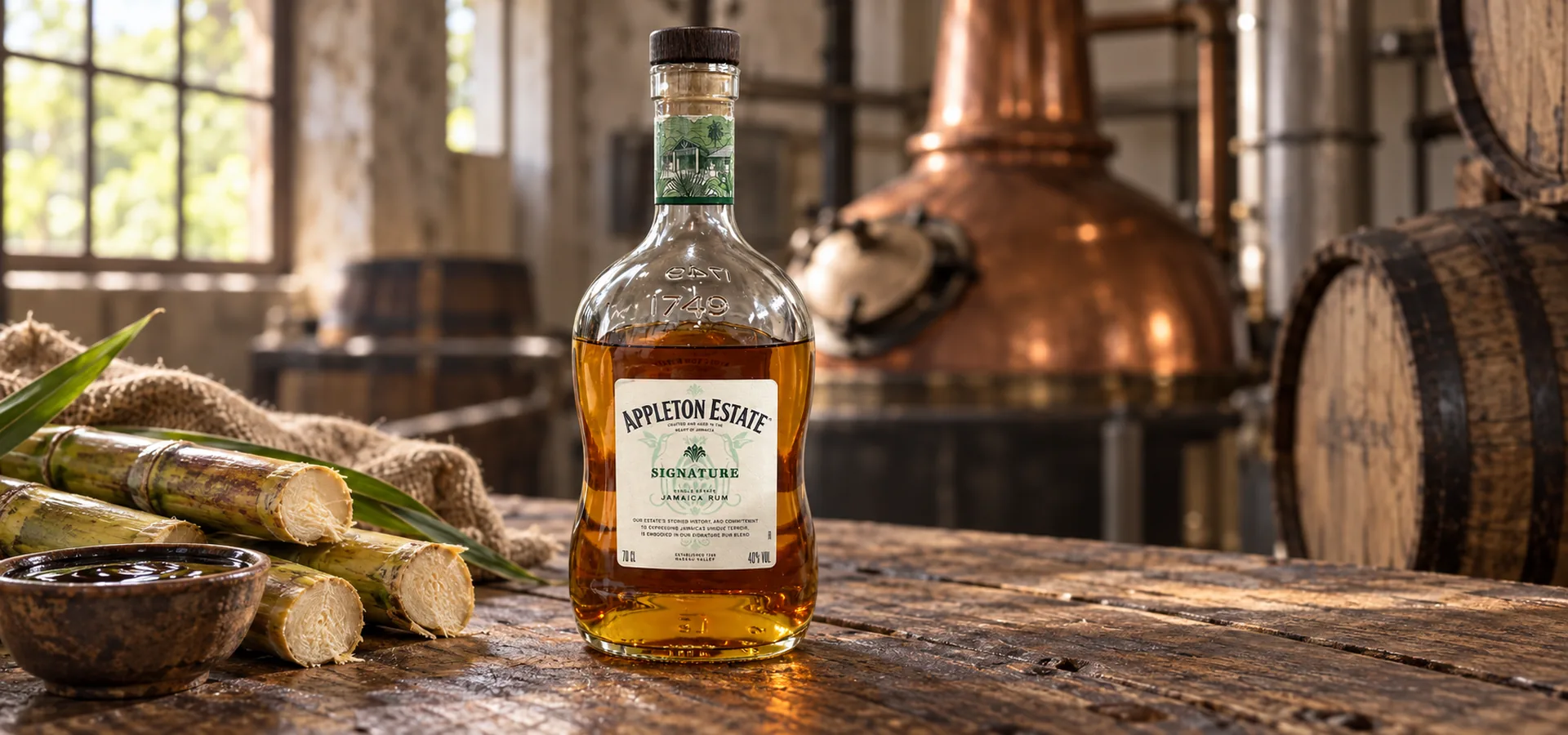
At a glance
- Legal category
- Jurisdiction-dependent. The United States and European Union share a cane identity but differ in bottling strength, additions, disclosure, and named subcategories.
- Minimum strength
- 37.5 percent ABV
What is rum?
Rum is a spirit distilled from fermented sugar-cane materials.
Fresh cane juice, cane syrup, molasses, and other cane by-products can all sit inside that broad family, while the legal limits depend on where the bottle is sold.
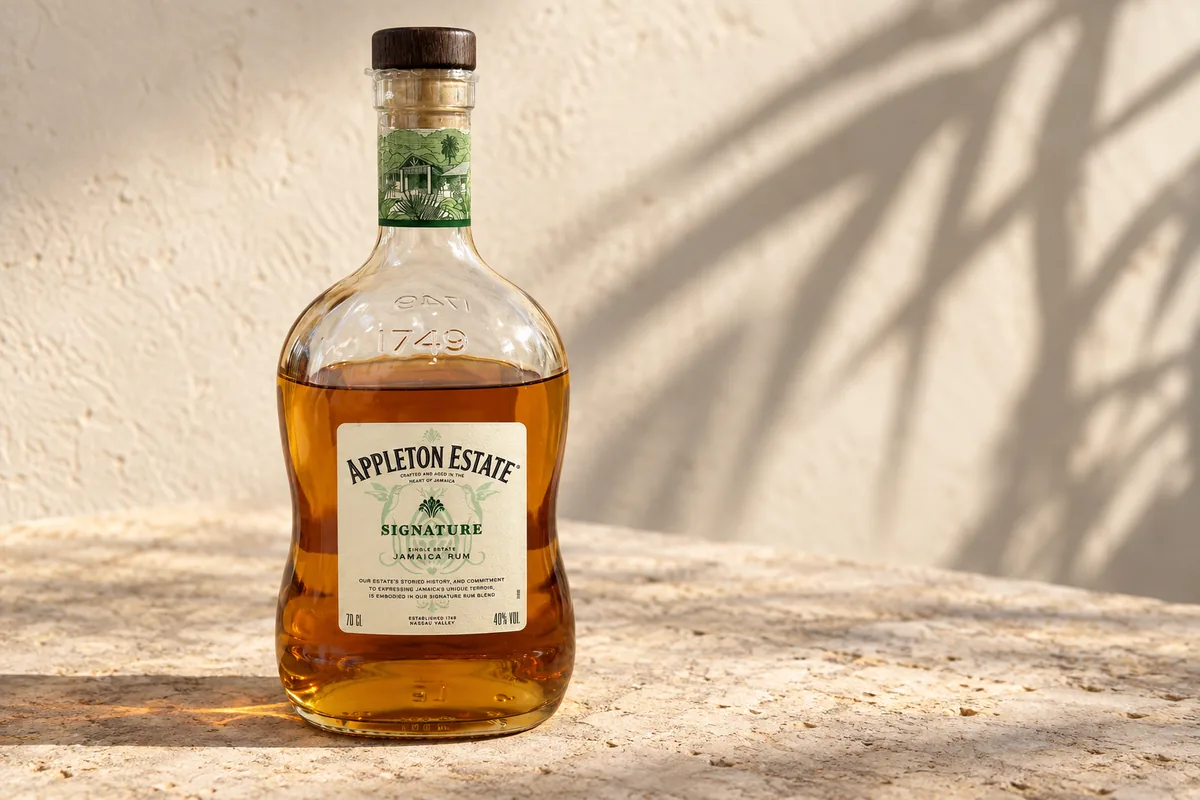
The United States standard requires rum character, distillation below 95% ABV, and bottling at no less than 40% ABV. European Union rules set a 37.5% bottling minimum, prohibit flavouring, restrict sweetening, and draw additional lines around agricultural rum and traditional descriptions.
| Question | United States | European Union |
|---|---|---|
| Cane source | Fermented juice, syrup, molasses, or other sugar-cane by-products | Molasses or syrup from cane sugar manufacture, or sugar-cane juice itself |
| Maximum distillation strength | Below 95% ABV | Below 96% ABV |
| Minimum bottling strength | 40% ABV | 37.5% ABV |
| Flavouring | Handled through US formulation and label rules | Not permitted for rum |
| Caramel and sweetening | Caramel treatment differs in disclosure | Caramel may adjust colour; sweetening may round taste up to the regulatory limit |
Both definitions demand character associated with rum rather than neutral alcohol alone. Neither creates white, gold, dark, or black as a universal quality ladder.
Rum shares cane, not one worldwide specification.
Origin and legal designation should be read before colour or a loose style name.
The legal ceiling on distillation strength protects room for character, but a ceiling does not prescribe one still or flavour. Two distillates collected well below that ceiling can carry very different congeners because the ferment, equipment, reflux, and cuts differ.
Bottling minimums also describe legal strength rather than typical practice or quality. A rum at 37.5% in one market and one at 40% in another can share a production origin while their labels follow separate sales rules.
Cane juice, syrup, and molasses
Cane juice is the liquid pressed from freshly crushed stalks.
It is highly perishable, so juice-based rum production is tied closely to harvest, crushing, transport, and rapid fermentation.
Cane syrup concentrates juice by removing water, which gives a distillery a more stable fermentable material while retaining a direct cane origin. The extent of heating can also change colour and cooked-sugar compounds before fermentation.
Molasses is the viscous by-product remaining after sugar crystallisation removes much of the sucrose from cane juice. Its sugar, minerals, acids, nitrogen availability, processing history, and microbial condition affect how a fermentation must be managed.
- Fresh cane juice
- Perishable, seasonal, and closely tied to the crushing location
- Cane syrup
- Concentrated juice with less water and greater storage flexibility
- Molasses
- Sugar-manufacturing by-product used widely for rum fermentation
- Finished distillate
- Normally clear, regardless of how dark the feedstock appeared
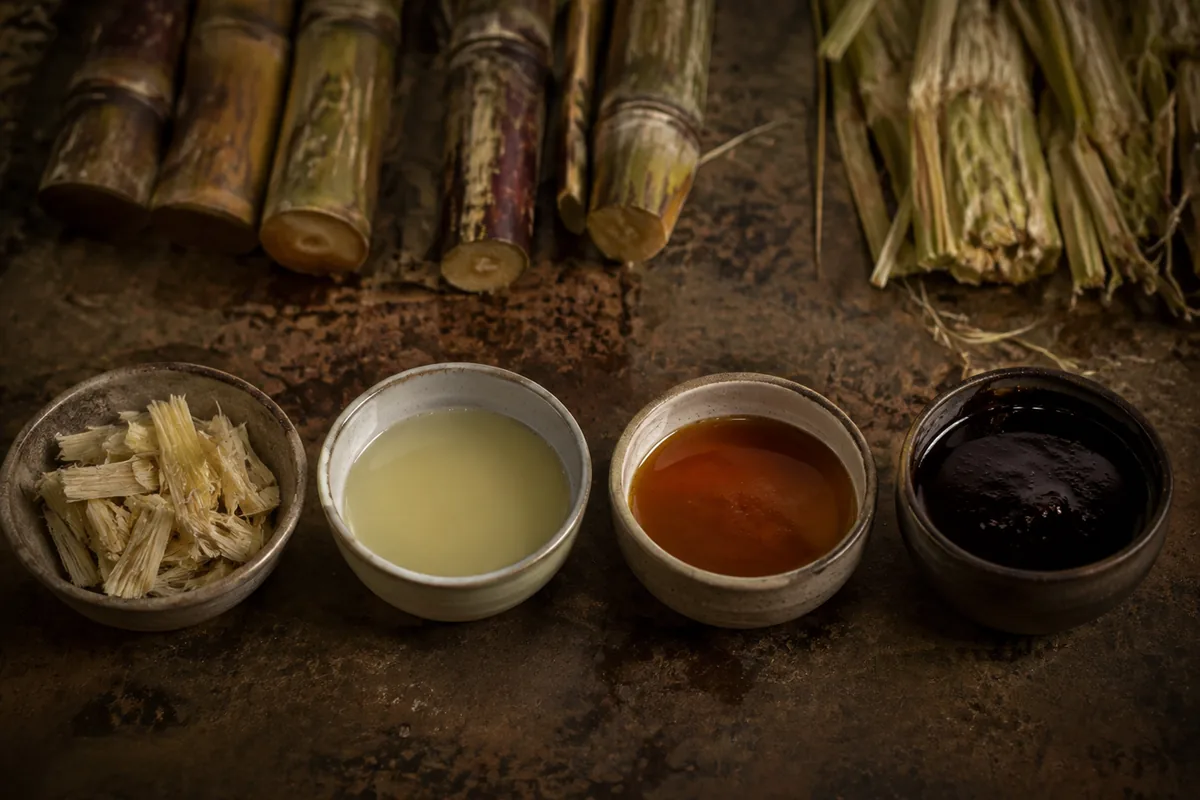
Dark molasses does not make a dark distillate. Nonvolatile pigment remains in the stillage while volatile ethanol and congeners travel through distillation, leaving fresh rum spirit water-clear.
The feedstock still matters because it changes nutrients, fermentation conditions, and aroma precursors.
It is one cause among many, not a reliable shortcut from bottle colour to flavour.
Juice-based production must respond quickly to cane deterioration because cutting and crushing expose sugar to microbes and enzymes. That urgency helps explain why fresh-cane traditions are closely tied to agricultural seasons and nearby mills.
Molasses offers greater storage and transport flexibility, but it is not standardized by the word alone. Sugar extraction sequence, ash, nitrogen, acidity, dilution, and supplier handling can change one batch from another.
Fermentation creates the first rum character
Yeast converts cane sugars into ethanol and carbon dioxide, but those are not its only products.
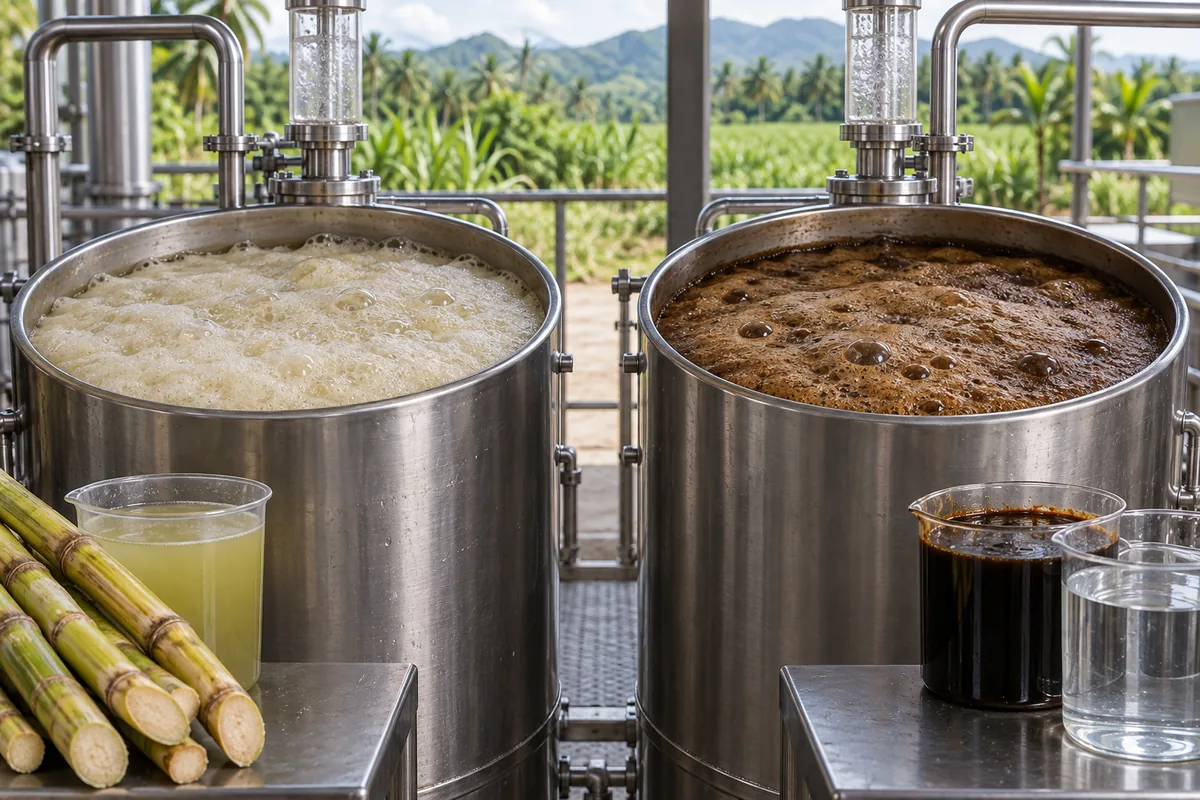
Esters, higher alcohols, acids, carbonyl compounds, and other metabolites create much of the aroma potential that distillation will later select.
Temperature, duration, pitching rate, oxygen, pH, nutrient balance, and yeast strain all change the fermentation. Rum traditions may also include selected bacterial activity that produces acids capable of forming aromatic esters.
| Variable | Production effect | Sensory consequence to investigate |
|---|---|---|
| Feedstock nutrients | Change yeast growth and fermentation completion | Cereal-free cane, cooked-sugar, sulphury, or stressed-fermentation directions |
| Yeast and duration | Change alcohol yield and metabolite balance | Fruit, floral, solvent-like, or heavier fermented aromas |
| Acidity and bacteria | Change acid production and later ester formation | Bright fruit, overripe fruit, dairy, earthy, or complex high-ester directions |
| Temperature control | Changes yeast speed, stress, and microbial competition | A cleaner or more volatile fermentation profile, without guaranteeing quality |
Bacteria are therefore not automatically a defect in rum. Unwanted contamination can spoil a fermentation, while a controlled culture or established fermentation ecology can be part of a deliberate flavour system.
The still can only select from what the ferment created.
A highly rectifying column may remove much of that load, while a different setup can retain more of it, but neither begins with a blank liquid.
Operating fermentation safely requires sanitation, suitable vessels, gas management, and process control. For practical operating steps, use dedicated production guidance that covers those hazards directly.
Long fermentation often receives credit for ester-rich rum, yet elapsed time is only part of the system. Temperature, acidity, microbial succession, vessel sanitation, and available nutrients decide what happens during those hours or days.
Some traditions use acidic stillage from an earlier distillation in later fermentations, and some maintain separate high-acid material for flavour development. These practices require controlled production knowledge and should not be reduced to instructions for leaving a ferment dirty.
Pot stills and column stills
Pot stills process a batch, then stop for emptying and another charge.
Shape, charge size, heat input, reflux, retorts, cut policy, and copper contact can produce light or heavy distillate within that broad equipment family.
Column stills can operate continuously, passing vapour and liquid across repeated separation stages. Plate count, draw point, reflux, pressure, and configuration determine how strongly the column rectifies rather than the word column alone.
| Attribute | Pot still | Column still |
|---|---|---|
| Operation | Batch | Continuous or continuously fed |
| Separation | Set by shape, reflux, repeated runs, retorts, and cuts | Set by plates, reflux, draw points, and column design |
| Character range | Often associated with heavier spirit, but not guaranteed | Can make light high-strength spirit or characterful lower-strength streams |
| Use in a blend | May supply weight, texture, and intense congeners | May supply a lighter base or another defined component |
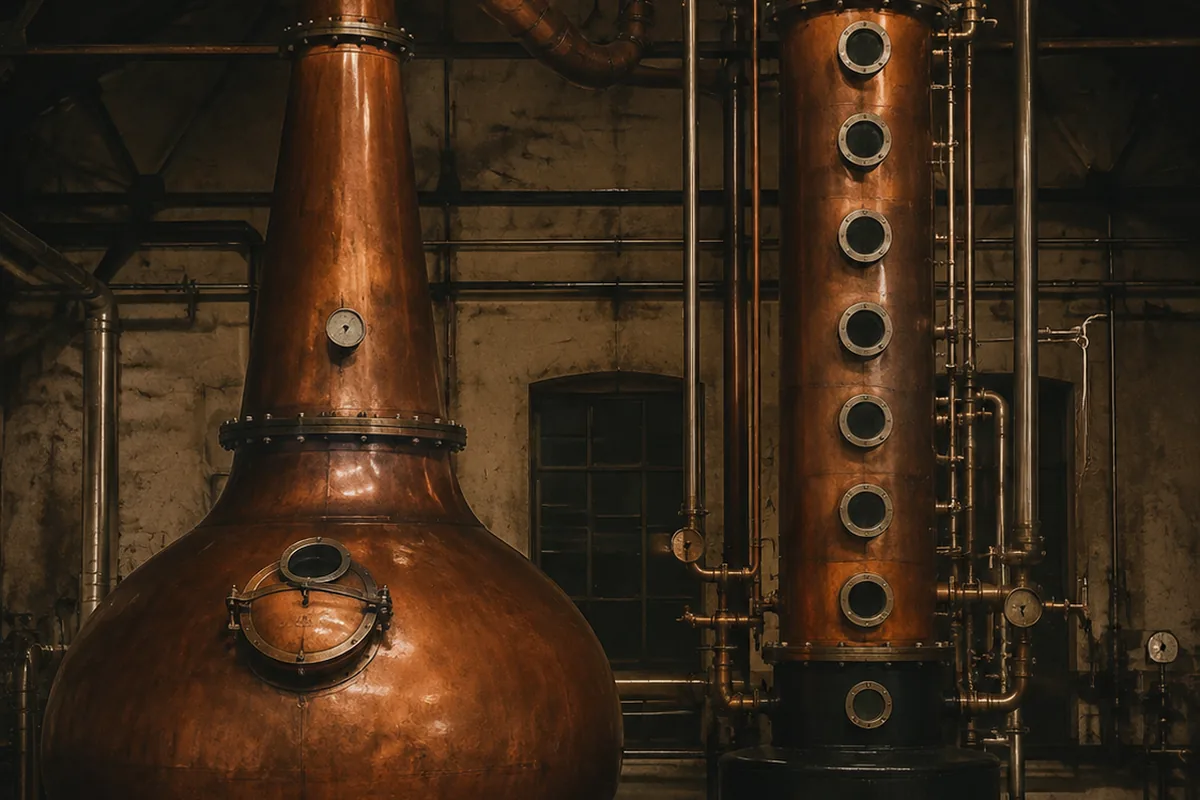
Many rums combine distillates from more than one still type or strength.
The blend can use a lighter component for structure and a more congeners-rich component for aroma without making either one the complete identity.
A label saying pot still is more informative than a colour word, but it still omits fermentation, retorts, cuts, maturation, and blend proportions. Read it as one production fact.
Retorts attached to a pot still can provide additional separation stages while preserving batch operation. A simple pot-versus-column label therefore hides meaningful variation inside the pot family itself.
Columns can also draw multiple streams at different points or operate at lower rectification than a neutral-spirit plant.
The tall shape signals repeated separation opportunities, not that every output is light or flavourless.
White, gold, dark, and black are colour descriptions
Fresh rum distillate is clear, then barrel contact can add amber through wood extraction and reaction. Filtering can remove much of that colour after ageing, and caramel can adjust a bottle toward a chosen shade.
This means a pale rum may have spent time in oak and a dark one may owe part of its appearance to adjustment after the cask. Colour alone cannot establish age, still type, feedstock, sweetness, body, or quality.
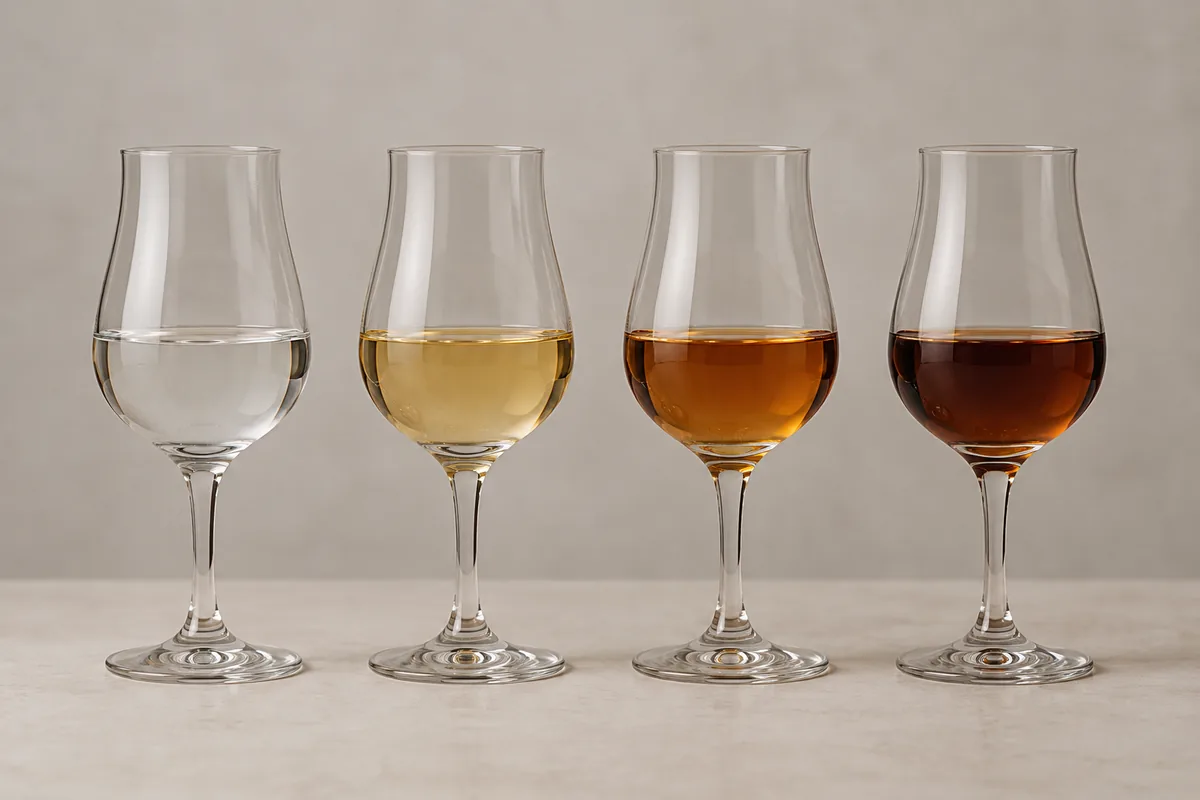
Colour is not a universal rum grade. United States standards do not define white, gold, dark, or black rum as separate types, and similar shades can have different causes.
Gold often suggests some visible barrel influence, while dark and black suggest a deeper target colour.
Those are useful shelf descriptions when kept in that limited role.
A producer may build a consistent colour because consistency helps a familiar bottling look the same across batches. That choice does not prove deceit, and absence of a colouring statement may be legally ordinary in the market concerned.
The correct response is to seek an age claim, cask information, origin rule, or documented production statement. The glass shows appearance; it does not reconstruct the sequence that created it.
Filtration may target haze, particles, or colour, and those goals are not identical.
Carbon treatment can make an aged rum visually pale while leaving a deliberately chosen sensory structure.
Caramel colour can standardize batches because casks do not produce identical shades. The adjustment can affect appearance strongly while telling a reader little about dissolved sugar or the weight of fermentation congeners.
Maturation changes faster in some climates
Oak adds colour, tannin, lignin-derived vanilla-like compounds, toasted and spicy notes, and a reactive surface. Previous bourbon, wine, fortified wine, or repeated rum fills add another layer of cask history.
Temperature changes pressure and movement between spirit and wood, while humidity affects whether water or ethanol is lost more quickly.
Warm warehouses often show rapid extraction and high annual evaporation, but those observations do not create a universal tropical-age conversion.
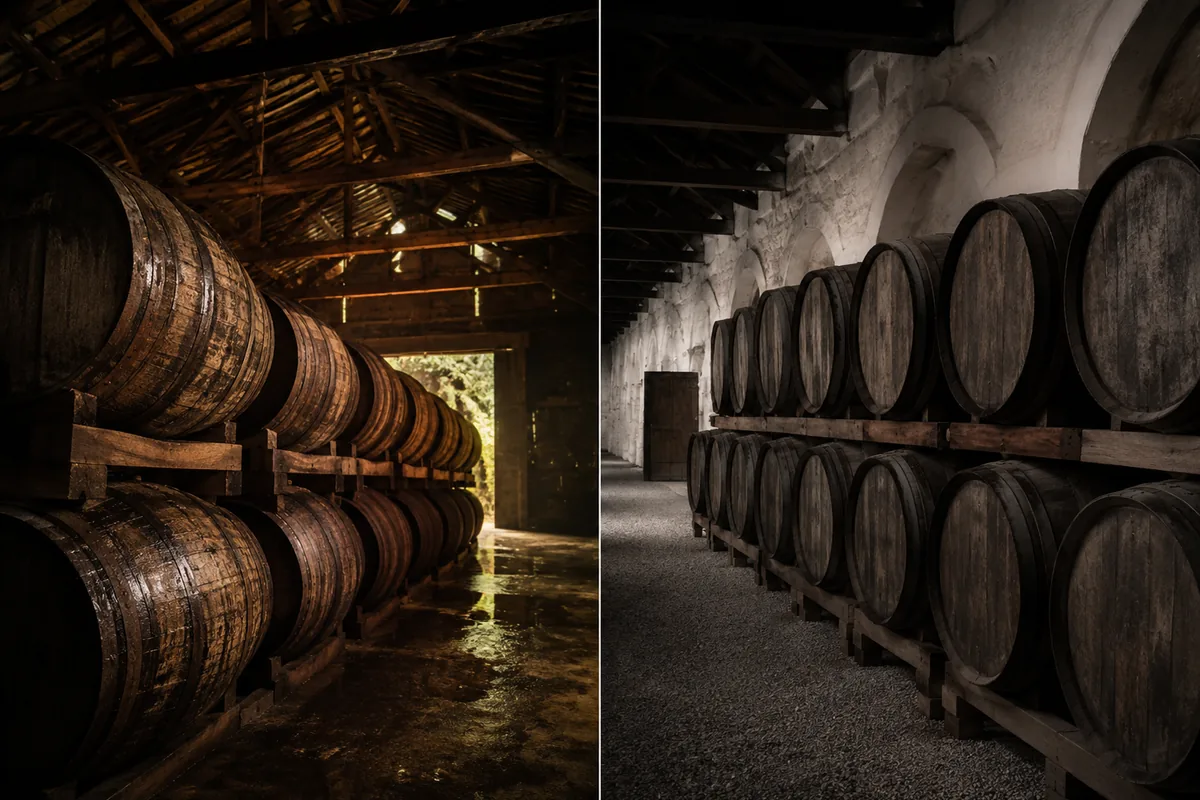
Extraction, oxidation, evaporation, and integration do not necessarily accelerate at the same rate. A spirit can gain oak quickly without developing the same balance it would reach under another condition.
No defensible formula says one year in the Caribbean equals three, four, or any fixed number in Scotland.
Such ratios compress warehouse design, cask size, previous fill, entry strength, climate, and desired style into a slogan.
Age is elapsed time, not a climate-adjusted score. Climate explains part of what happened during those years and does not rewrite the calendar.
Cask entry strength affects the balance of water-soluble and alcohol-soluble extraction, while barrel size changes surface area per litre. Airflow, warehouse position, and cask condition then create variation even among barrels filled from one batch.
Blending can combine ages, still types, cask histories, or maturation climates to reach a stable profile. An age statement follows the applicable youngest-component rule rather than averaging the years across that blend.
Rum style names belong to places and traditions
Some rum-adjacent names carry more legal information than colour.
Cachaça is a distinctive product of Brazil and appears as a named type in the United States rum standard, while its Brazilian identity remains governed by Brazilian law.
Rhum agricole is associated with fresh cane juice and French-language production traditions. Where a protected geographic designation such as Martinique applies, official rules can constrain origin, materials, fermentation, distillation, and maturation more closely than the generic word rum.
- Cachaça
- A distinctive Brazilian cane spirit recognized within the US rum standard
- Rhum agricole
- A cane-juice tradition whose strongest meaning comes with jurisdiction and origin
- Geographic indication
- A protected place-linked term with its own official specification
- Colour style
- A visual description that may carry no comparable production rule
These examples do not form a complete world taxonomy. Jamaica, Barbados, Cuba, Puerto Rico, Guyana, Haiti, Réunion, Mauritius, the Philippines, Australia, the United States, and many other producers have separate histories and legal settings.
Country names can still be too broad to predict style.
One jurisdiction may contain pot and column distillation, molasses and cane juice, aged and unaged spirit, and producers working to different specifications.
Use a protected term for what it actually guarantees and resist turning it into a flavour stereotype. Place constrains production only to the extent that its governing rules say so.
Language traditions can also cross borders through migration, trade, and brand history. French, English, Spanish, Portuguese, and local terms may describe real practices without operating as mutually exclusive legal styles everywhere.
A reliable taxonomy therefore starts with the jurisdiction and protected term, then reads the documented feedstock and process. Colonial-language groupings can provide historical context, but they are too broad to predict every contemporary distillery.
Can rum contain sugar, caramel, or flavouring?
The answer changes by market and by the legal designation on the bottle.
Permission, limits, disclosure, and proof of actual use are four separate questions.
| Question | European Union rum | United States rum labels |
|---|---|---|
| Sweetening | Allowed only to round the final taste, up to 20 grams per litre expressed as invert sugar | Classification and formula treatment depend on the product and addition |
| Flavouring | Not permitted in a product labelled rum | A flavoured product may need a different or qualified designation |
| Caramel | Permitted for colour adjustment | Caramel use in rum requires no statement of any type under 27 CFR 5.72 |
| What taste proves | Nothing about whether an addition was used | Nothing about whether an addition was used |
The EU sweetening figure is a legal ceiling, not a recipe and not a statement that every rum contains sugar. A dry sensory impression also does not prove that none was used, because alcohol, bitterness, acidity, aroma, and serving temperature affect perceived sweetness.
United States colouring rules explicitly exempt caramel in rum from a statement.
A silent label is therefore not evidence for or against its use.
Do not diagnose additions by taste or shade. Use governing law, an official product specification, or analytical evidence, and state when the bottle does not disclose the answer.
Dosage, sweetening, flavouring, and colouring are different operations and should not be collapsed into the word additives. A jurisdiction may permit one, restrict another, and require a third product to use a different designation.
Laboratory measurements can answer composition questions when method and sample are documented, but a crowdsourced number detached from batch and market may not describe the bottle in front of the reader. Current official disclosure remains the stronger starting point.
How to read a rum label
Start with legal designation and country, then look for a protected origin or style.
Those fields identify the rules before voluntary production claims begin.
- Designation and origin: establish which standard and protected terms apply.
- Feedstock wording: cane juice, syrup, or molasses can clarify the starting material when stated.
- Still claim: pot, column, retort, or blend information describes equipment without settling the whole style.
- Age statement: use the applicable rule and do not substitute colour for elapsed time.
- Cask wording: note previous fill, finish, and duration when disclosed.
- Additions or composition: apply the market's disclosure rules rather than assuming silence is universal.
- Alcohol content: this mandatory figure determines alcohol in a given pour.
A long romantic story can sit beside very little checkable production information. Conversely, a concise designation, origin, age, and strength line may answer the important questions without decorative detail.
Repeated words such as premium, reserve, smooth, or craft should be treated as descriptions unless the jurisdiction defines them.
They cannot replace a protected category or a numerical claim.
The label still cannot predict preference. It can narrow the likely structure and verify claims that carry rules, while tasting determines whether the resulting balance works for you.
An origin claim can be broad, while a geographic indication or named regulated type can be narrow. Look for the authority behind the term and avoid assuming a flag or island illustration creates the same obligation.
Batch codes and bottling dates can matter where formulations, strengths, or labels change across markets. They do not create quality by themselves, but they help connect a physical bottle to the specification being consulted.
How rum flavour varies
Rum can show fresh cane, grass, herbs, fruit, flowers, molasses-like cooked notes, spice, earth, olive, solvent-like esters, vanilla, toast, tannin, or smoke.
The range is broad because feedstock, microbes, still, blending, cask, additions, strength, and service all vary.
Fresh cane juice can support grassy or vegetal directions, but it does not guarantee them. Molasses can support rich fermentation and cooked-sugar associations, yet its dark pigment does not pass directly into the spirit.
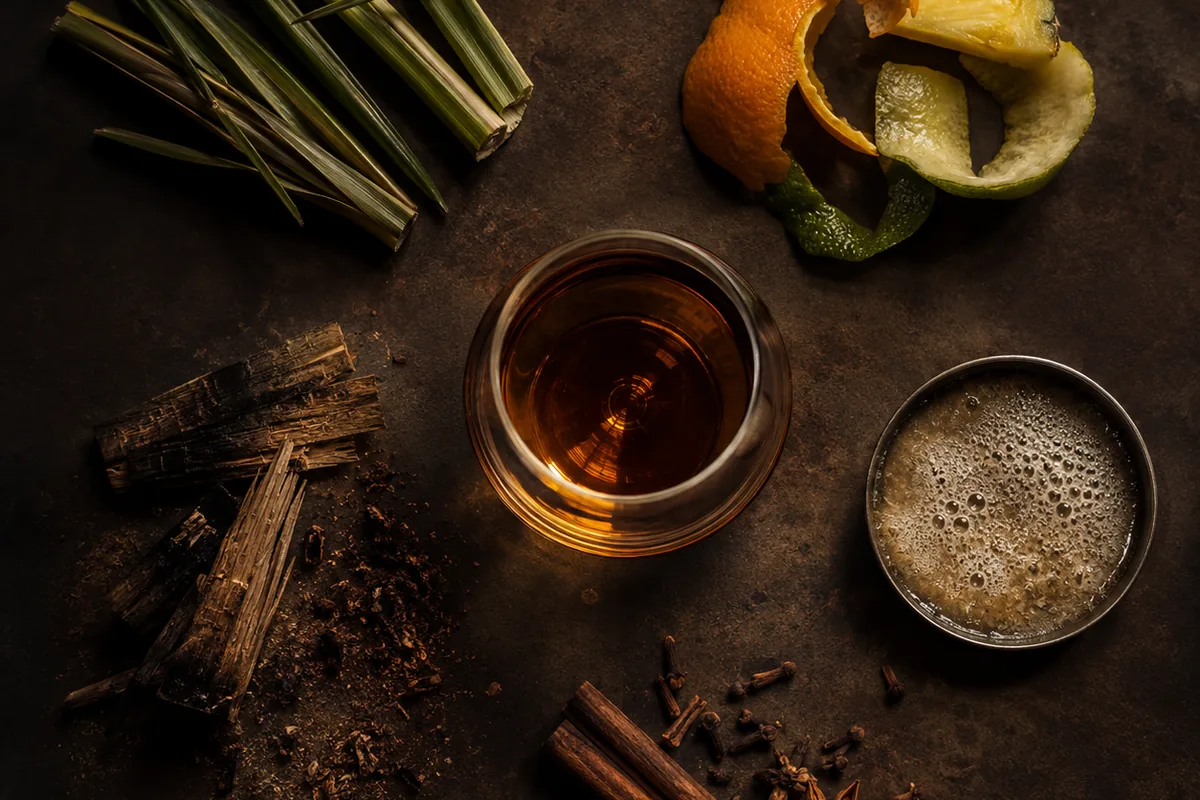
Fruit and floral notes often trace to fermentation and ester chemistry, while heavier earthy or oily character can depend on microbial ecology, distillation, and blending. Oak then adds its own compounds and changes what was already present.
Sweet aroma is not the same as dissolved sugar. Vanilla, ripe fruit, caramel-like oak notes, ethanol, and serving temperature can all make a rum seem sweet before composition is known.
- Fruit and flowers: ask what fermentation and ester chemistry may have contributed.
- Vanilla and toast: ask what the oak history and maturation can support.
- Sweet impression: separate aroma from measured dissolved sugar or documented sweetening.
Evaluate aroma in short passes and let high-strength spirit rest in the glass.
A small water addition can expose different volatiles, but the change should be observed rather than treated as a guaranteed improvement.
Tasting notes should lead to specific questions. They do not prove feedstock, still, cask, or additives from aroma alone.
Texture adds information that aroma alone misses. Glycerol, dissolved sugar where present, alcohol strength, oils, tannin, filtration, and serving temperature can influence whether a rum feels light, viscous, drying, hot, or rounded.
Finish should be recorded separately from initial aroma because oak bitterness, ester persistence, warming alcohol, and spice can develop after swallowing. A structured note is more useful than forcing all of those observations into one claim that the rum is smooth.
Serving, cocktails, food, and storage
Serve rum according to strength, body, sweetness, aroma intensity, and the decision at hand.
A small neat sample helps evaluate the spirit, while ice and mixers can build a different balance for drinking.
- Evaluate the spirit: use a modest neat sample or small water additions when aroma and texture are the question.
- Choose a mixing role: match body, sweetness, strength, and aroma to the acid, sugar, bitterness, carbonation, and dilution in the drink.
- Match food intensity: compare salt, fat, sweetness, char, spice, and aroma instead of relying on rum colour.
- Store distilled rum upright: keep the closure sound and avoid strong light or repeated heat changes.
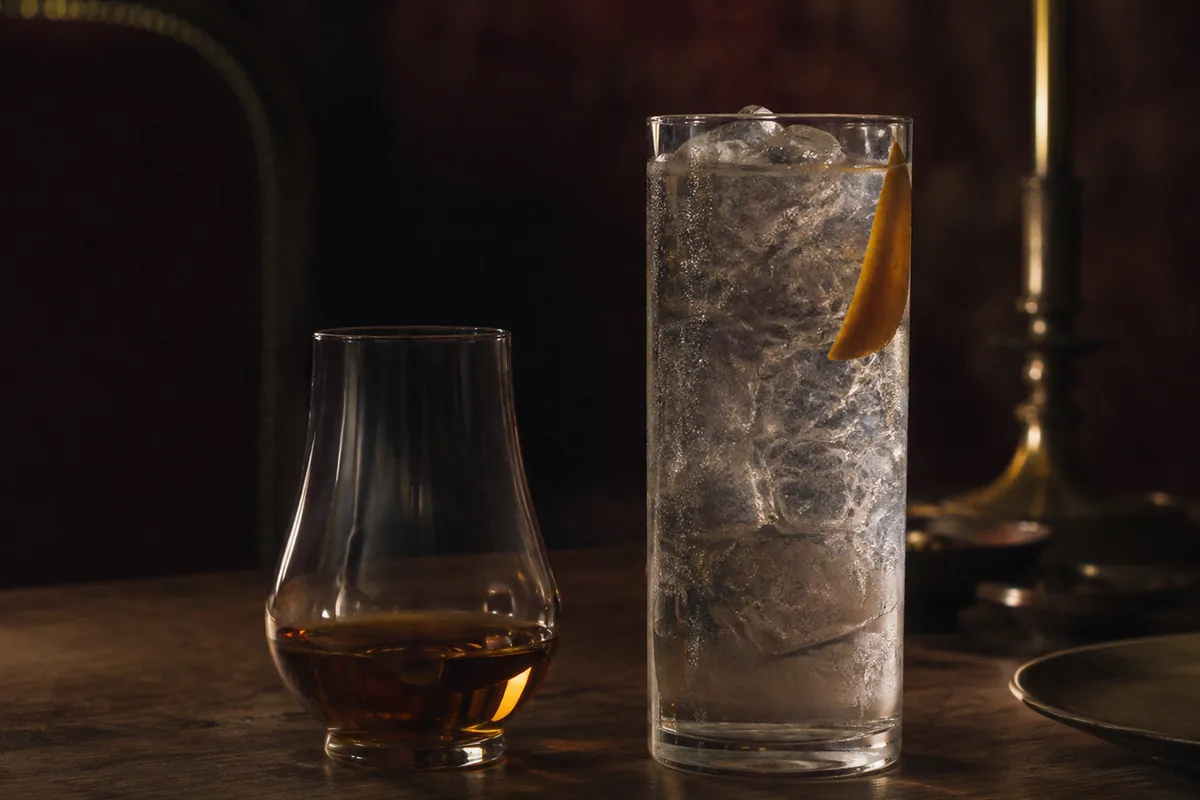
In cocktails, acid, sugar, dilution, bitterness, and carbonation change how rum presents. Colour is a weak selection tool because two similarly dark rums can differ in sweetness, congener weight, strength, and cask character.
Use a lighter-bodied rum when a drink needs clean structure, a more aromatic component when it must remain visible beside citrus or spice, and a mature cask-led rum when oak should be part of the result.
Complete measured recipes belong with the cocktail itself.
For food, match intensity before matching a named style. Grilled meat, ripe fruit, chocolate, nuts, spice, salty cheese, and caramelized vegetables can work for different reasons, while very sweet food can flatten a drier rum.
Store distilled rum upright, tightly closed, and away from strong light or repeated heat changes. An opened bottle does not continue cask maturation, though growing headspace can gradually alter aroma.
Dilution changes concentration, not the alcohol already poured. Count a serve from spirit volume and ABV, especially when a tall glass hides the original measure.
For a 40% rum, a 45 ml pour contains about 14 grams of pure alcohol under the United States standard-drink definition. Stronger rum, overproof rum, or a larger pour exceeds that amount even when mixer and ice make the drink look less concentrated.
No rum style, food pairing, coffee, cold shower, or calculation can establish that someone is unimpaired or safe to drive.
If the decision is safety-critical, the correct plan is not to rely on a drink estimate.
Rum becomes easier to understand when colour stops carrying the whole decision. Cane source, fermentation, still, place, cask, additions, strength, and service can then be read as separate facts with separate limits.
Common questions
- Is rum made from molasses?
- Much rum is made from molasses, but fresh cane juice, cane syrup, and other sugar-cane materials can also qualify under the applicable standard.
- Does dark rum mean older rum?
- No. Barrel extraction, filtration, blending, and caramel adjustment can all affect colour, so shade alone does not establish age.
- Can rum contain added sugar?
- The answer depends on the jurisdiction and designation. European Union rum may be sweetened only to round taste and up to 20 grams per litre expressed as invert sugar, while other markets apply different rules.
- Is pot-still rum better than column-still rum?
- Neither still type is an automatic quality grade. Equipment design, fermentation, cuts, blending, cask history, and the intended style determine the result.
Sources
-
27 CFR 5.147, Rum, Electronic Code of Federal Regulations
Accessed 4 September 2026.
-
27 CFR 5.72, Colouring materials
Accessed 7 September 2026.
-
Mangwanda, Johnson, Mani, Jackson, Chandra, McKeown, White, Naiker (2021), Processes, Challenges and Optimisation of Rum Production from Molasses, A Contemporary Review
Accessed 10 September 2026.
-
Regulation (EU) 2019/787 on spirit drinks
Accessed 7 September 2026.
-
What is a standard drink?
Accessed 7 September 2026.
More in Spirits
-
 American single malt whisky
01
What is American single malt whisky, and what does it guarantee?
-
 Australian whisky
02
How is Australian whisky defined, and by which law?
-
 Black rum
03
What is black rum, and does the colour mean anything?
-
 Blended American whiskey
04
What is blended American whiskey, and how much of it is whiskey?
-
 Blended Irish whiskey
05
Blended Irish whiskey: which word counts the distilleries?
-
 Blended Scotch
06
Blended Scotch: what is in it, and why does the recipe change?