
Liqueurs
What Is Coffee Liqueur? Coffee, Sugar, Alcohol, and Caffeine
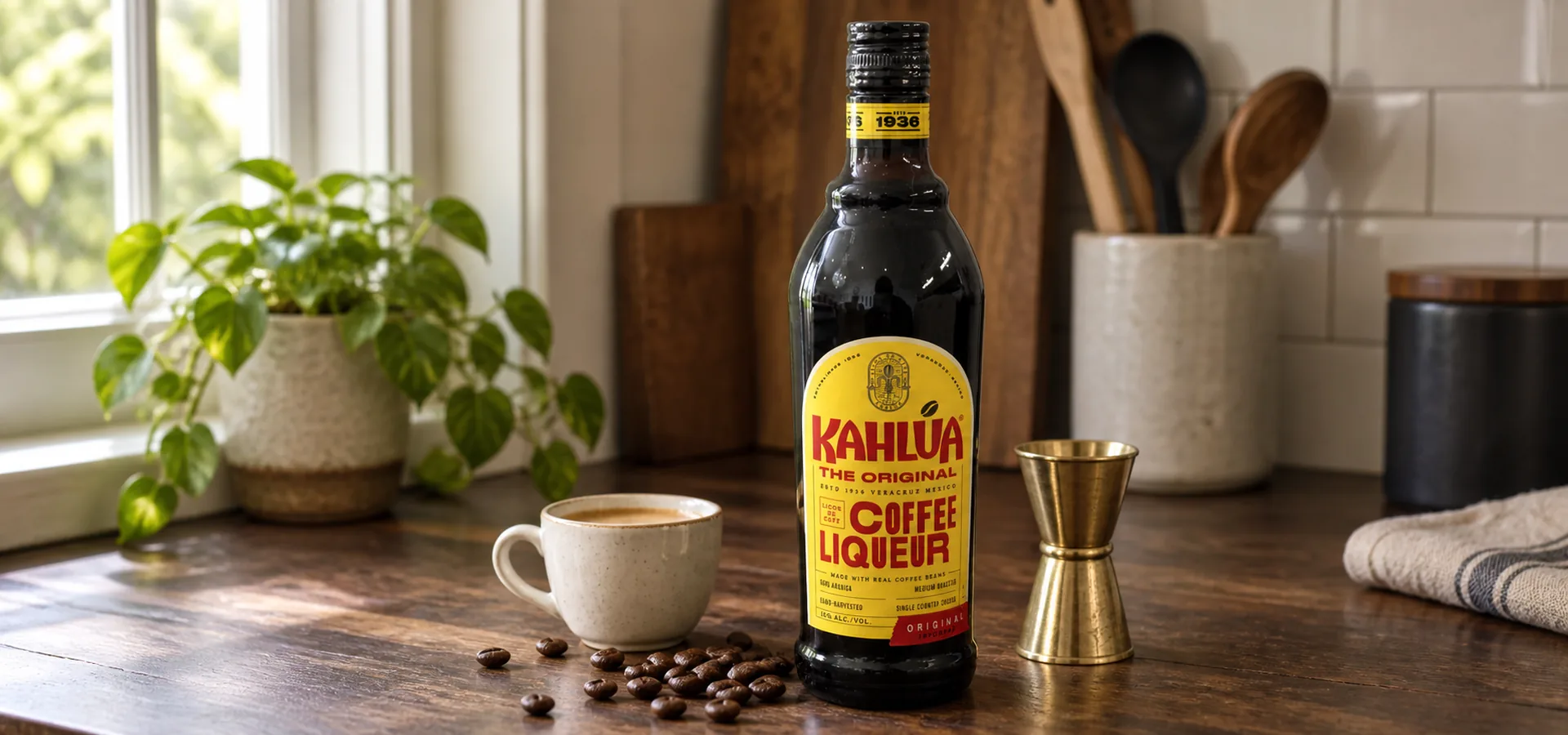
Coffee liqueur is a sweetened alcoholic drink built around coffee flavour. The useful differences lie in the coffee extraction, base spirit, sugar, alcohol strength, and caffeine, because the category name does not set one formula for every bottle.
At a glance
- Legal category
- In the United States, coffee liqueur falls within the cordial and liqueur standard in 27 CFR 5.150, which requires at least 2.5% sugar by weight. European Union category 33 generally requires at least 100 g/L of sweetening and 15% ABV.
- Typical strength
- 15 to 25 percent ABV
- Range basis
- The 15% to 25% ABV span is a practical range covering common current examples, not a universal category limit. Caffeine and sugar remain bottle-specific.
What is coffee liqueur, and what does the name guarantee?
Coffee liqueur combines a coffee-led flavour with alcohol and sweetening. The coffee may arrive through brewed coffee, cold extraction, infusion, concentrate, distillate, natural flavouring, or several of those routes together.
The name does not guarantee a rum base, dark colour, dairy, a particular roast, or a fixed caffeine dose. Two bottles can occupy the same category while one behaves like a rich sweet modifier and another tastes drier, sharper, and more coffee-forward.
- Category centre
- Sweetened alcohol with coffee as the defining flavour
- Variables that matter
- Extraction, roast, base spirit, sugar, ABV, caffeine, and added flavours
- Useful bottle evidence
- Designation, ingredients where disclosed, ABV, producer method, and storage directions
United States law places coffee-flavoured products inside the broader cordial and liqueur standard.
That standard allows flavour to come from materials or extracts obtained by processes such as infusion and maceration, and it requires at least 2.5% sugar by weight.
European Union category 33 uses a different threshold, generally requiring at least 100 grams of sweetening products per litre and at least 15% ABV. Those rules define liqueur in their jurisdictions, but neither one establishes how much coffee or caffeine a specific bottle contains.
How does coffee become liqueur flavour?
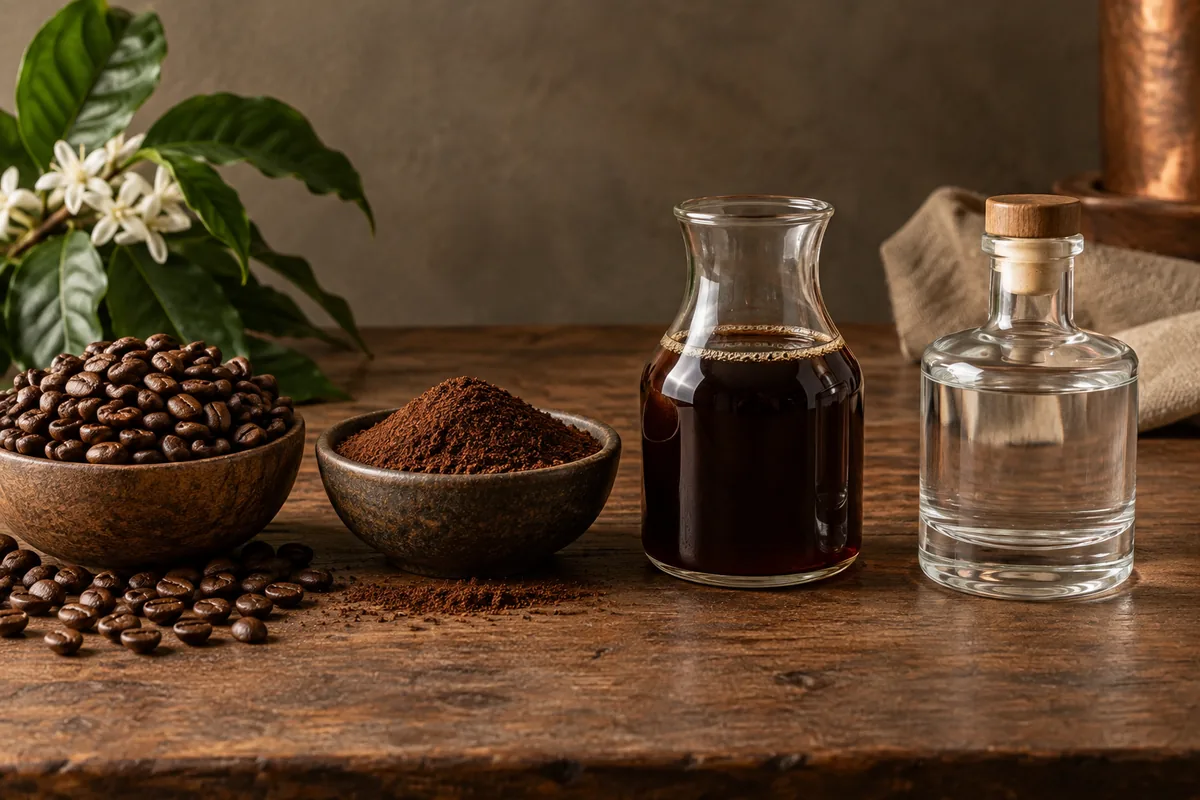
Producers first need to move coffee aroma and flavour into a liquid that can be blended consistently with alcohol, water, and sugar. Brewing, cold extraction, alcohol infusion, concentrates, and distillation each capture a different portion of coffee's soluble and volatile material.
Water readily extracts acids, caffeine, sugars, and many bitter compounds, while alcohol changes which aromatic molecules remain available in the blend. A distillate can carry aroma without the same colour or dissolved solids as brewed coffee.
- Select and roast the coffee. Origin and roast determine the available fruit, cocoa, caramel, toasted, and bitter compounds.
- Extract or distil flavour. Time, temperature, water, and alcohol determine what enters the liquid.
- Build the base. The coffee preparation is blended with spirit, water, sugar, and any declared supporting flavours.
- Rest, filter, and proof. Integration and filtration control texture, sediment, clarity, and final ABV.
Roasting creates many of the aromas people identify as coffee, including pyrazines, furans, caramel-like compounds, and sulphur-containing notes.
Darker roasting can deepen toast and bitterness, but excessive heat also destroys acids and creates burnt or carbonised character.
A producer description can identify one method, but it should not be expanded into a category rule. Mr Black, for example, describes a cold-brew coffee liqueur made with Arabica coffee and vodka.
Does coffee liqueur contain caffeine?
Some coffee liqueurs contain caffeine, but the amount is product-specific. Coffee supplies caffeine unless the producer uses decaffeinated material or an extraction route that leaves very little behind.
The alcohol percentage cannot answer this question. A darker bottle is not automatically more caffeinated, and a clear coffee distillate is not automatically caffeine-free.
Do not estimate caffeine from colour or flavour intensity. Check the producer's current statement, and remember that espresso, cold brew, cola, or energy drinks added to the serving contribute their own caffeine.
A laboratory study of experimental coffee liqueurs detected caffeine in every tested batch and found that alcohol strength and steeping time changed the measured concentration.
Those results describe the study's formulas, not a standard caffeine dose for commercial coffee liqueur.
An Espresso Martini can contain much more caffeine from the espresso than from the liqueur. The IBA specification includes one strong espresso alongside coffee liqueur, so anyone limiting caffeine needs to count both ingredients rather than treating the drink as a simple spirits serve.
What does coffee liqueur taste like?
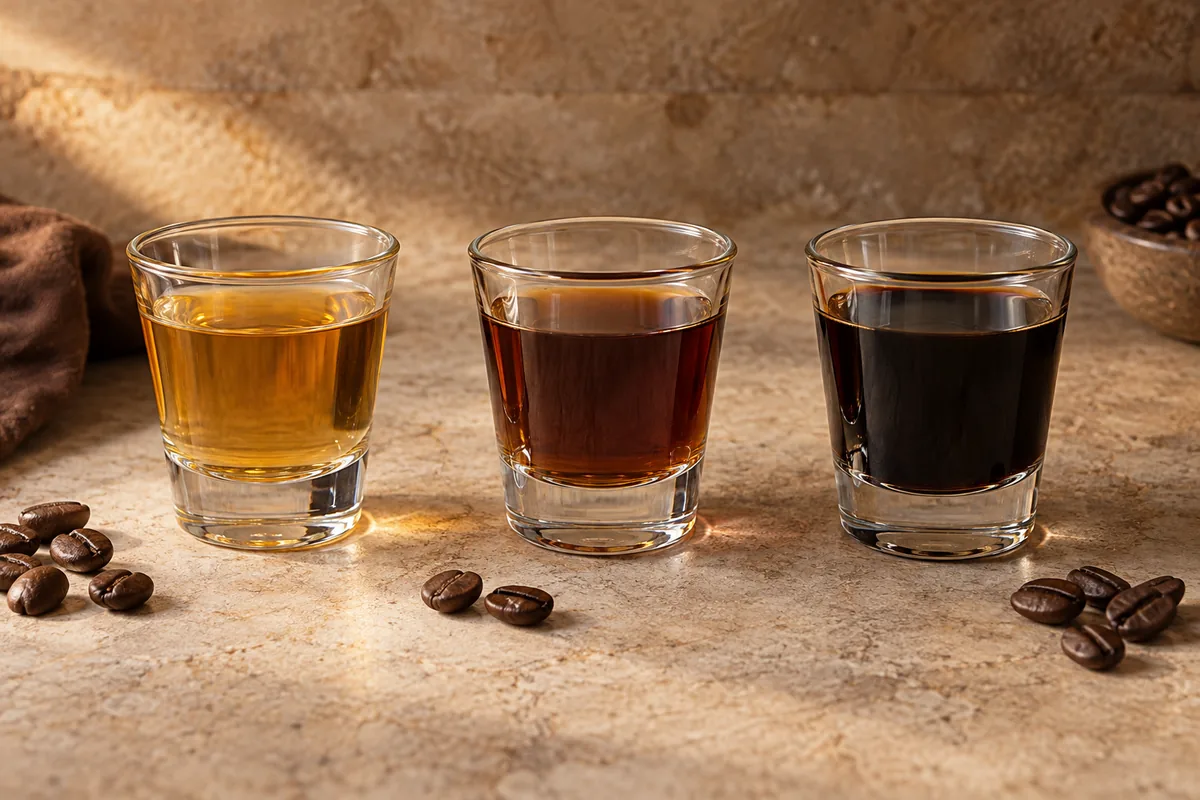
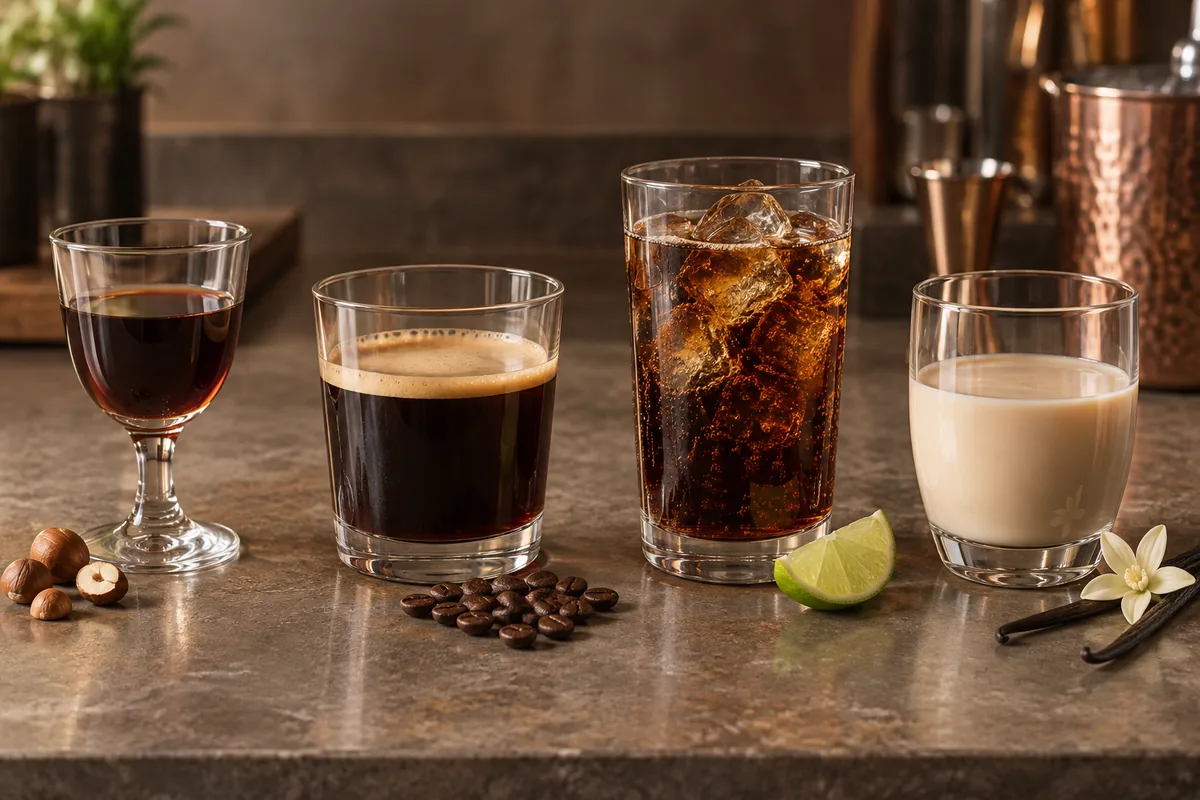
Coffee liqueur can move from sweet cocoa and caramel toward bitter roast, dried fruit, citrus, toasted nuts, vanilla, molasses, or clean cold-brew character. Sugar softens acidity and bitterness, while the base spirit can add cane, grain, spice, or a nearly neutral background.
These directions matter because they reflect ingredients and processing, not a quality ladder. A rich rum-based bottle may suit a creamy dessert drink, while a leaner vodka-based expression may keep fresh espresso more distinct.
- Light or medium roast: more room for fruit, floral aroma, and bright acidity
- Dark roast: stronger toast, cocoa, caramel, smoke, and bitter edges
- Rum base: possible cane, molasses, vanilla, or baking-spice support
- Neutral spirit base: fewer competing base-spirit flavours
- Higher sugar: rounder entry, thicker body, and less obvious bitterness
Temperature shifts the balance.
Chilling suppresses aroma and sweetness, while a warmer sample releases more coffee aroma and may expose bitterness or an alcoholic edge.
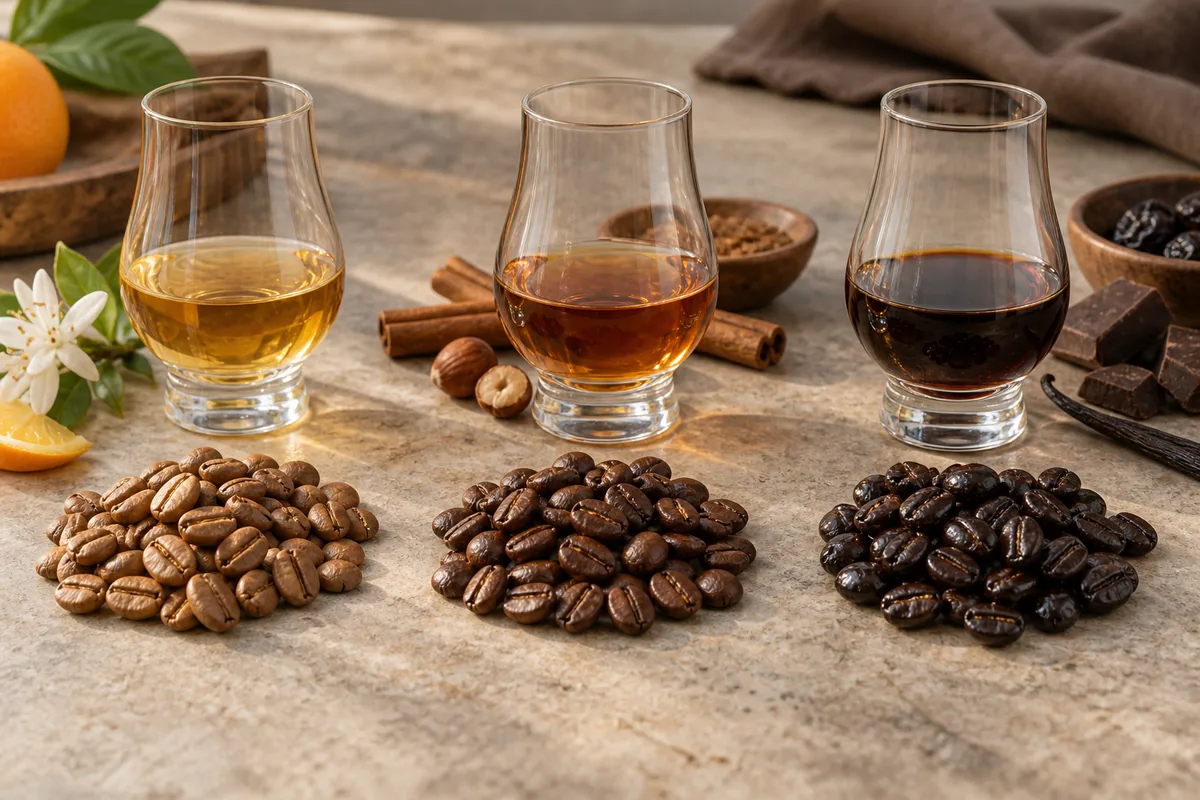
Producer tasting descriptions are useful for locating a bottle on this spectrum, but they are not independent reviews. Use them as formula clues and verify the result in your own measured serve.
How strong and sweet is coffee liqueur?
Coffee liqueur does not have one fixed strength, and the legal category can cover bottles with meaningfully different ABV. The bottle sold in your market is the authority for the measure you actually pour.
Sweetness can vary just as much as strength, and the two variables do different work. Sugar changes texture and balance; ABV changes the amount of ethanol in a measured pour.
- 30 ml at 16% ABV
- 4.8 ml pure alcohol
- 30 ml at 20% ABV
- 6 ml pure alcohol
- 30 ml at 25% ABV
- 7.5 ml pure alcohol
The calculations show why an identical barspoon or ounce is not an identical alcohol contribution.
They do not estimate impairment, metabolism, or when anyone can drive.
NIAAA defines one United States standard drink as about 14 grams, or 0.6 fluid ounces, of pure alcohol. A mixed drink may contain coffee liqueur plus vodka, rum, whiskey, or another alcoholic ingredient, so the complete recipe matters more than the liqueur measure alone.
Separate sweetness from strength. A thick, dessert-like liqueur can have less alcohol than a drier bottle, and a less sweet product can still add a substantial alcohol measure.
How does coffee liqueur change a mixed drink?
Coffee liqueur usually contributes four things at once: coffee aroma, sweetness, alcohol, and colour. The correct adjustment depends on which of those functions the drink already receives from espresso, syrup, dark spirits, cream, or bitters.
Start with a measured amount and taste the complete balance. Adding more coffee liqueur may intensify sweetness faster than coffee aroma, especially in a product with a high sugar load.
| Drink condition | Likely effect | Useful adjustment |
|---|---|---|
| Fresh espresso present | More roast, acidity, dilution, and caffeine | Reduce separate syrup before reducing coffee |
| Cream or milk present | Softens bitterness and increases body | Keep the coffee element high enough to remain distinct |
| Dark rum or whiskey present | Adds oak, spice, vanilla, or molasses | Choose a liqueur whose roast does not disappear |
| Carbonation present | Lifts aroma and thins texture | Use cold ingredients and add bubbles last |
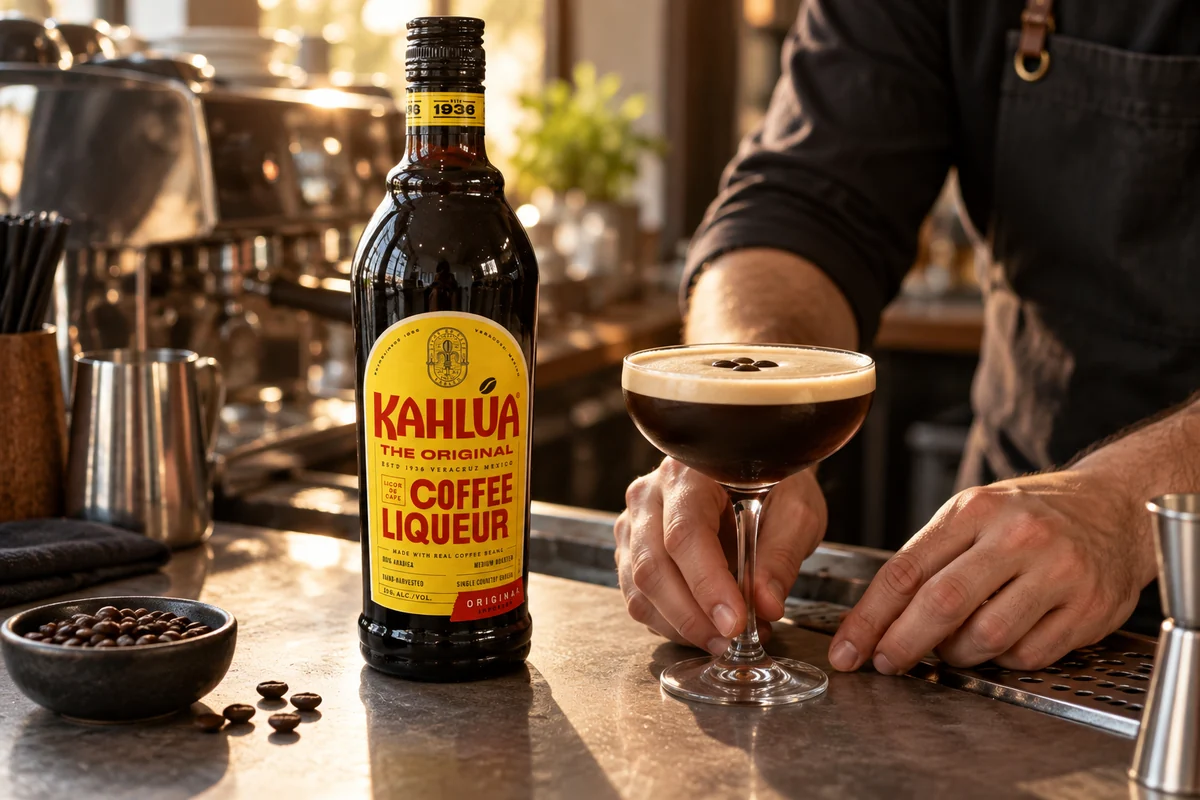
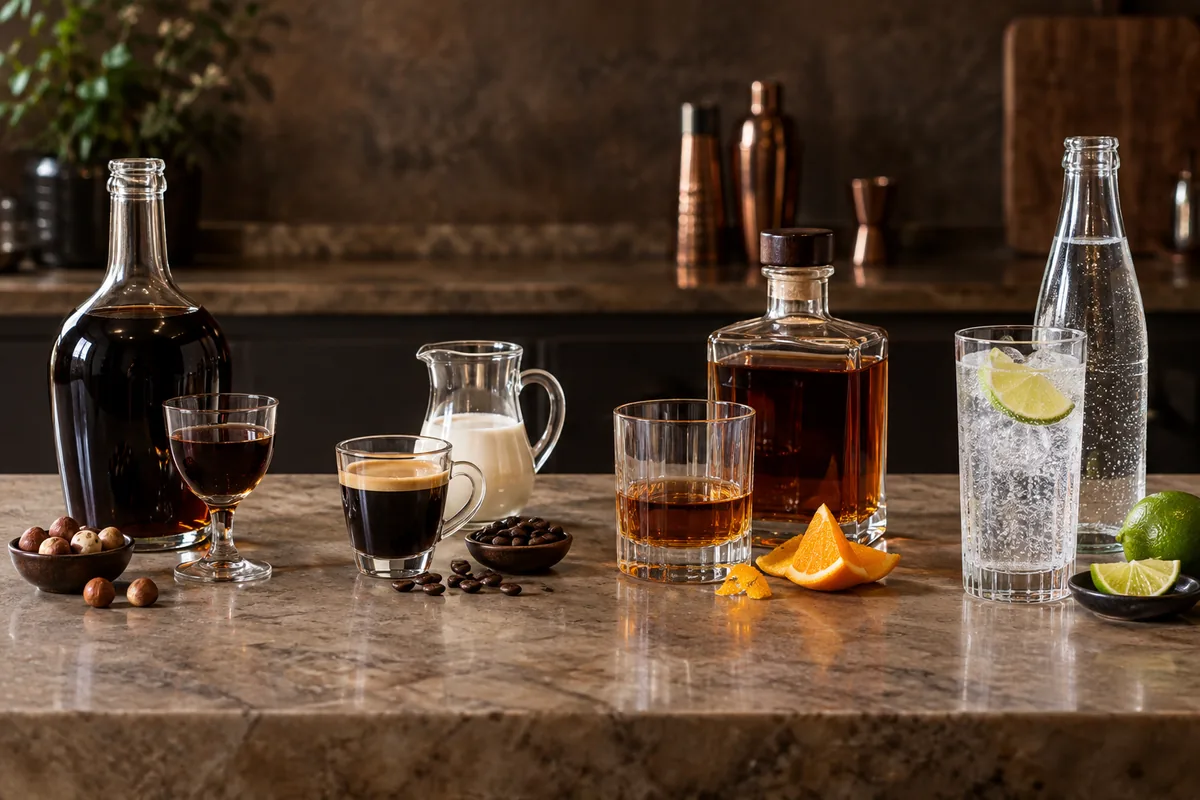
The IBA Espresso Martini uses coffee liqueur alongside vodka, sugar syrup, and strong espresso, while the Black Russian uses coffee liqueur with vodka and no brewed coffee.
Those two structures show why coffee liqueur cannot be treated as a fixed replacement for espresso or syrup.
Acidity can sharpen a sweet coffee profile, but too much citrus may produce a sour-roast clash. Salt can reduce perceived bitterness in food pairings, while chocolate, vanilla, toasted nuts, and caramel reinforce flavours already common in roasted coffee.
What should you check before choosing coffee liqueur?
The front label establishes the product name and ABV, but the producer's ingredient and method information often explains the bigger sensory difference. Look for the coffee source, extraction route, base alcohol, added flavours, caffeine statement, sugar clues, and storage guidance.
A phrase such as cold brew describes a preparation route, not a guaranteed sweetness or caffeine level. Likewise, Arabica identifies a coffee species group without specifying origin, roast, extraction strength, or final flavour.
- Confirm the ABV on the bottle sold in your market.
- Identify the base spirit when the producer discloses rum, vodka, brandy, or neutral alcohol.
- Look for the coffee route such as brewed coffee, cold extraction, infusion, concentrate, or distillate.
- Check caffeine information if caffeine affects your decision.
- Check dairy and allergens rather than assuming every dark coffee liqueur is dairy-free.
- Match sweetness and roast to the drink or food instead of choosing by colour alone.
Online specifications may vary by country or change before older retail pages disappear.
The physical bottle and the current producer page for that market are the best evidence for the product you actually have.
Brand rankings would require controlled product access and a disclosed comparison method. In their absence, formula and label fit are more defensible than a generic best-bottle claim.
How should coffee liqueur be stored?
Keep coffee liqueur upright, tightly closed, cool, and away from direct light. Heat and repeated air exchange accelerate aroma loss, while sugar around the neck can prevent a closure from sealing cleanly.
Clear, non-cream coffee liqueur usually does not share the short handling window of a dairy emulsion, but that does not make every bottle permanent. Follow any printed refrigeration or after-opening direction because formulas differ.
- Wipe sticky threads or the bottle neck before resealing.
- Record the opening month if the bottle is used slowly.
- Expect some natural sediment only when the producer says it is normal.
- Hold the bottle from service if pressure, mould, a leaking closure, or an unexplained odour appears.
- Do not use colour darkening alone as a spoilage diagnosis.
Mr Black notes that natural sediment can occur in its coffee product.
That statement cannot be transferred to every bottle, so unfamiliar clumps, gas, leakage, or a damaged seal still deserve caution.
Measure coffee liqueur as alcohol even when it tastes like dessert or coffee. Caffeine does not cancel alcohol's effects, and no serving calculation can establish that someone is unimpaired or safe to drive.
Sources
-
27 CFR 5.150, Liqueur or cordial
Published 9 February 2022. Accessed 13 September 2026.
-
IBA Espresso Martini
Accessed 13 September 2026.
-
Mr Black Frequently Asked Questions
Accessed 13 September 2026.
-
NIAAA, What Is a Standard Drink?
Accessed 13 September 2026.
-
Optimization of Coffee Liqueur Manufacturing Process Using Caffeine Content
Published 30 October 2019. Accessed 13 September 2026.
-
Regulation (EU) 2019/787
Published 17 May 2019. Accessed 12 September 2026.
More in Liqueurs
-
 Almond liqueur
01
What is almond liqueur, and does it always contain almonds?
-
 Amaretto
02
What is amaretto, and what gives it an almond-like flavour?
-
 Apple liqueur
03
What is apple liqueur, and how does it differ from apple brandy?
-
 Apricot liqueur
04
What is apricot liqueur, and when does apricot brandy mean something else?
-
 Banana liqueur
05
What is banana liqueur, and how do fresh and ripe styles differ?
-
 Blackberry liqueur
06
What is blackberry liqueur, and is it the same as crème de mûre?