
Spirits
What Is White Dog Whiskey, and What Does the Name Tell You?
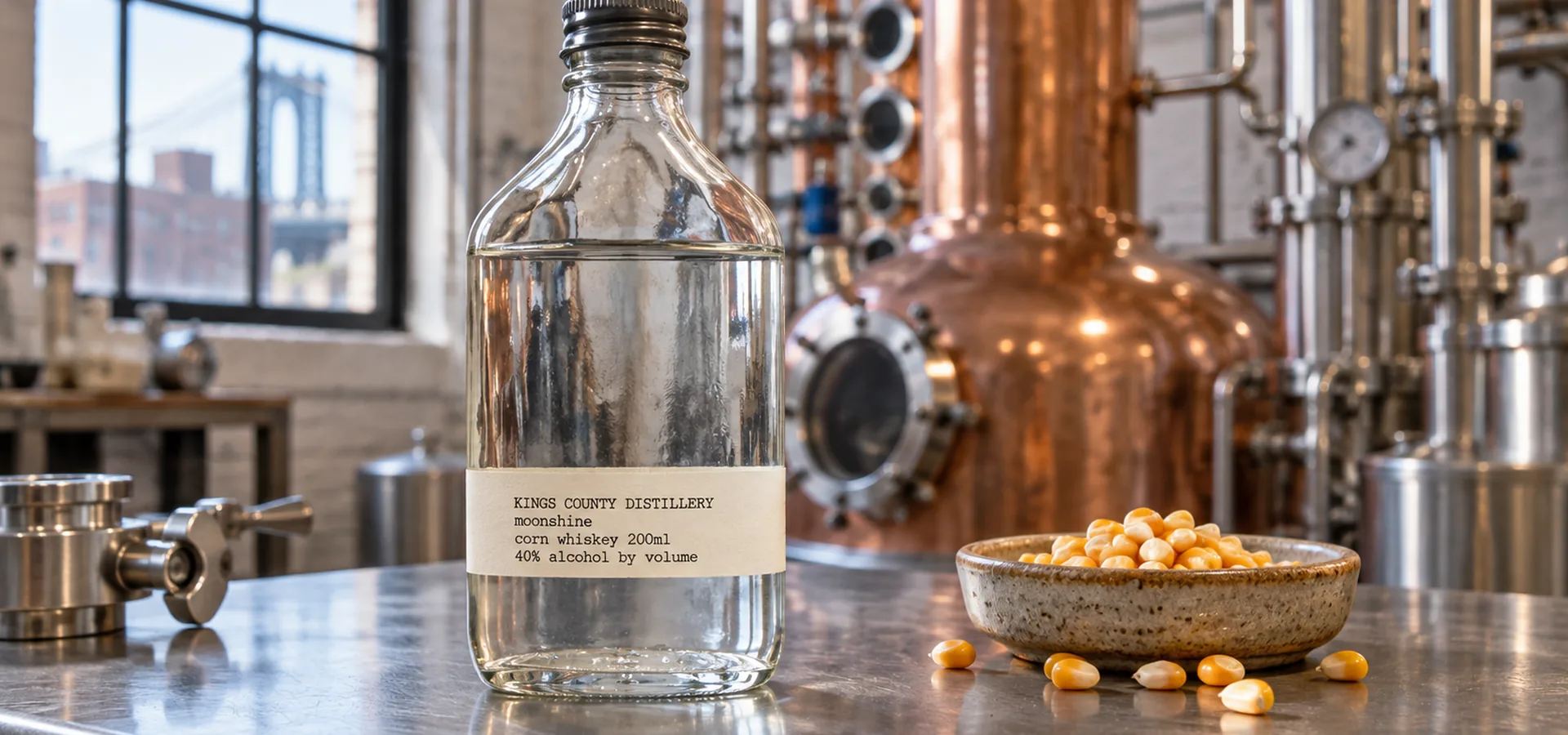
White dog whiskey is a trade nickname for clear grain distillate associated with whiskey making before meaningful barrel maturation. The name does not identify one federal spirits class, so the class or type statement, grain description, storage language, and alcohol by volume on the label matter more than the nickname.
At a glance
- Legal category
- White dog is not a separate U.S. federal spirits class. A product must comply with the whisky or other class and type stated on its label, including applicable grain, distillation, storage, age, and bottling-strength rules.
- Also called
- White dog, White whiskey, Unaged whiskey
What is white dog whiskey, exactly?
White dog is a trade nickname for clear grain distillate associated with whiskey production before meaningful barrel maturation. American distillers and drinkers also use white whiskey, pre-maturation new make spirit, and unaged whiskey, although those expressions do not always describe the same legal or production state.
The nickname has no separate definition in the federal standards of identity for distilled spirits in the United States.
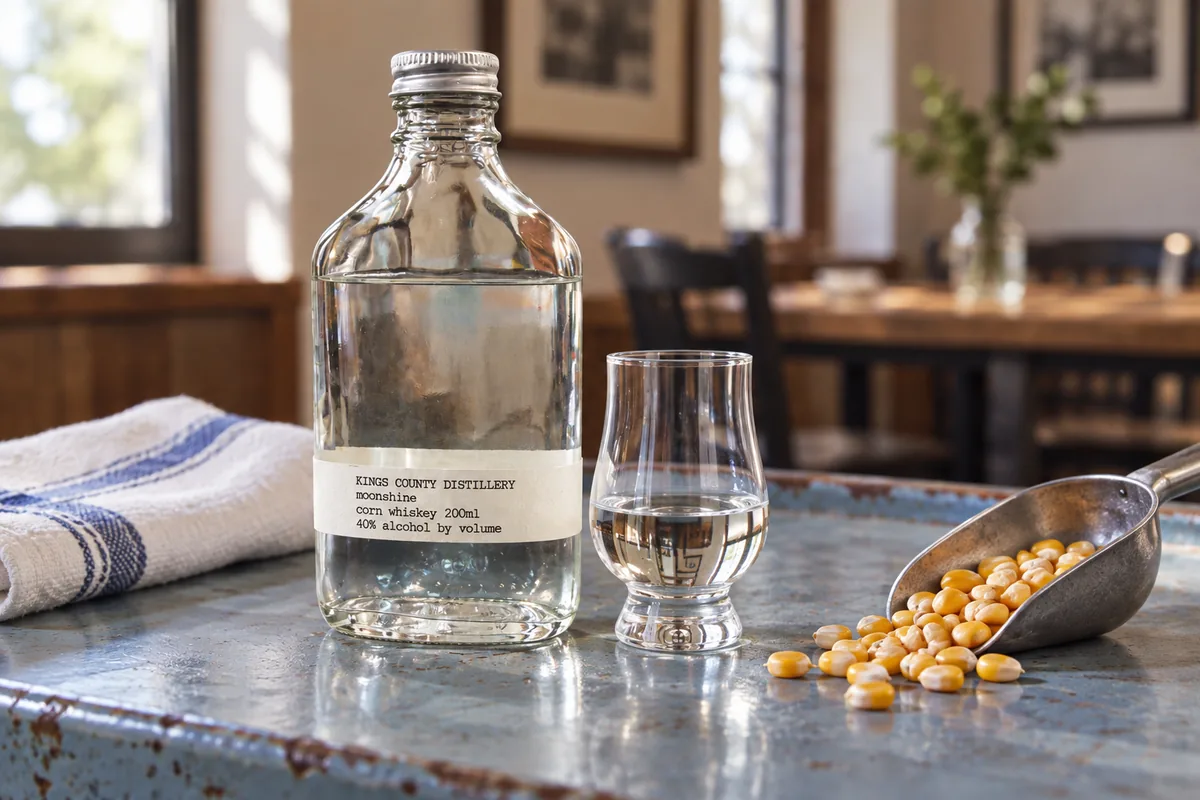
A bottle called white dog must still carry a regulated class or type statement, and that declaration determines which grain, distillation, storage, and bottling rules apply.
- Practical meaning
- Clear grain distillate associated with whiskey making before meaningful barrel maturation
- U.S. legal status
- No separate federal class called white dog
- Read on the bottle
- Class or type designation, grain statement, storage or age language, and ABV
Under 27 CFR 5.143, whisky starts with a fermented mash of grain, must retain the taste, aroma, and characteristics generally attributed to whisky, and must be bottled at no less than 40% alcohol by volume. Most whisky covered by that general standard must be stored in oak, but the rule does not set a minimum storage time for generic whisky.
The American corn-whisky type is the important exception. It must come from a mash containing at least 80% corn and be distilled below 80% ABV, yet it need not be stored in oak unless an age is claimed; if it is stored, the permitted wood treatment differs from bourbon.
| Term | What it can tell you | What it cannot prove |
|---|---|---|
| White dog | An informal American name for clear, minimally matured grain spirit linked to whiskey production | The legal class, mash bill, exact storage history, or proof |
| New make | A production-stage term for selected distillate before maturation | That the liquid may legally be sold as whisky in every jurisdiction |
| Corn whisky | A defined U.S. type with at least 80% corn and its own distillation and storage rules | That every clear corn distillate meets the standard |
| Moonshine | In federal enforcement usage, illicit spirits made outside the tax and regulatory system | A flavor, color, grain, or proof |
| Vodka | A separate spirits class generally produced for neutral character | That any clear high-proof grain spirit is vodka |
Outside the United States, protected whisky rules and label terms differ; this legal explanation uses federal rules from the United States.
This is why clear does not automatically mean unaged, and unaged does not automatically mean white dog. Brief oak contact may leave little visible color, while a legally unaged corn whisky may reach the bottle without wood at all.
Moonshine creates a different confusion. The Alcohol and Tobacco Tax and Trade Bureau uses that word in enforcement material for illicit, non-taxpaid spirits, so legality and regulatory oversight define the problem rather than transparency or rustic branding.
What changes when oak is mostly absent?
Fresh distillate is already chemically and aromatically complex.
Fermentation creates esters, acids, higher alcohols, sulfur compounds, and other congeners, then distillation concentrates and separates them according to their volatility and the producer's equipment and cut decisions.
Oak adds another set of changes. The spirit extracts color, tannin, wood sugars, and aromatic compounds, while oxygen exposure, evaporation, and reactions among acids and alcohols continue to reshape the liquid over time.
| Feature | White dog tendency | What oak maturation may add or change |
|---|---|---|
| Appearance | Water-clear unless coloring or brief wood contact changes it | Amber color from extracted and transformed wood compounds |
| Aroma | Grain, yeast, fermentation, and cut selection lead | Vanilla, toast, coconut, spice, caramelized wood, and oxidative notes may develop |
| Texture | Proof, higher alcohols, oils, and cut choices are exposed | Tannin, extraction, evaporation, and chemical reactions can alter weight and dryness |
| Interpretation | Clear color does not prove zero oak contact | Dark color does not by itself prove age or quality |
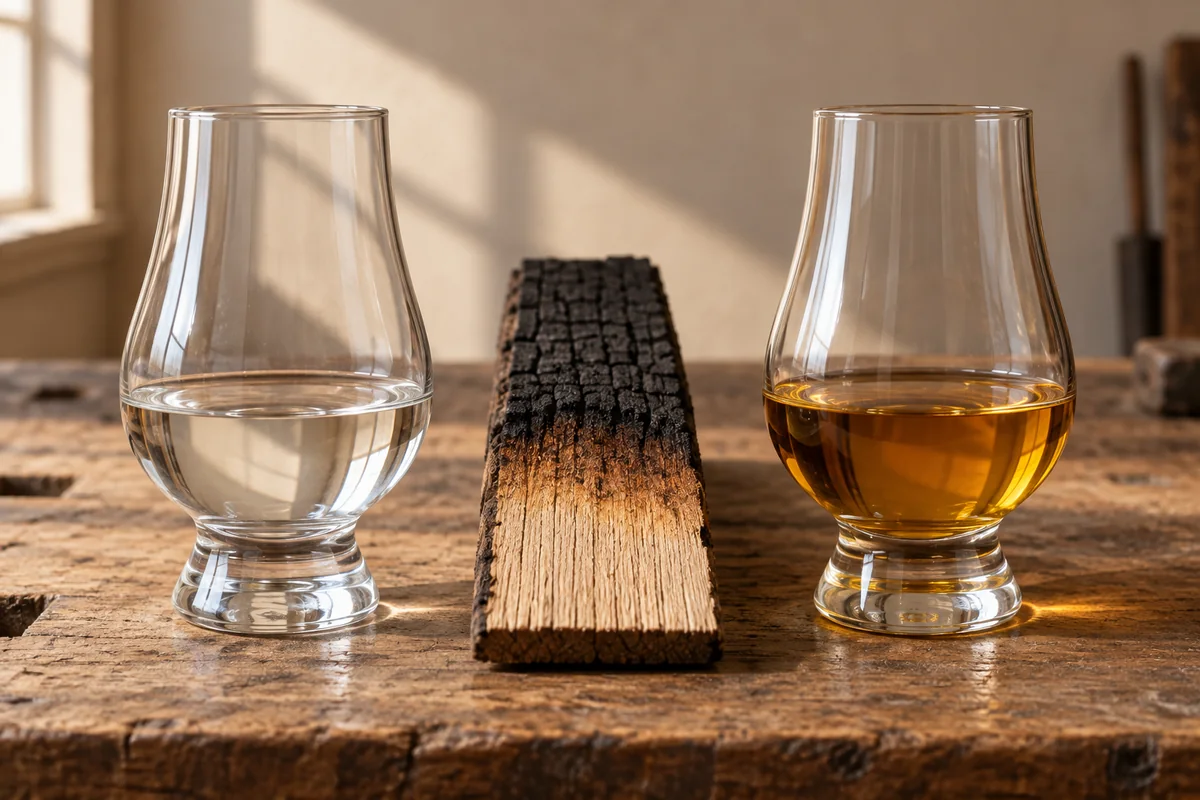
People often describe white dog as raw or harsh because the cask has not had years to integrate or redirect those compounds.
That shorthand can be useful, but it can also hide the actual result: one sample may be fruity and clean, another cereal-heavy and oily, and another dominated by solvent, sulfur, or late-run notes.
Smoothness is a poor stand-alone quality test. Alcohol concentration, serving temperature, dilution, aroma balance, and a taster's expectations all change the impression of heat, while some light-bodied distillates feel softer without showing much complexity.
Age statements measure time stored in oak after distillation under federal rules in the United States. A whisky aged less than four years generally needs an age statement unless a specific exception applies, but a lack of an age statement does not let you infer a long maturation period from the liquid's color.
White dog is therefore useful as a view of the base spirit.
It lets grain and fermentation character speak loudly, yet it cannot predict exactly how a particular cask, warehouse position, climate, or number of years would transform that spirit.
Why can two white dog spirits taste so different?
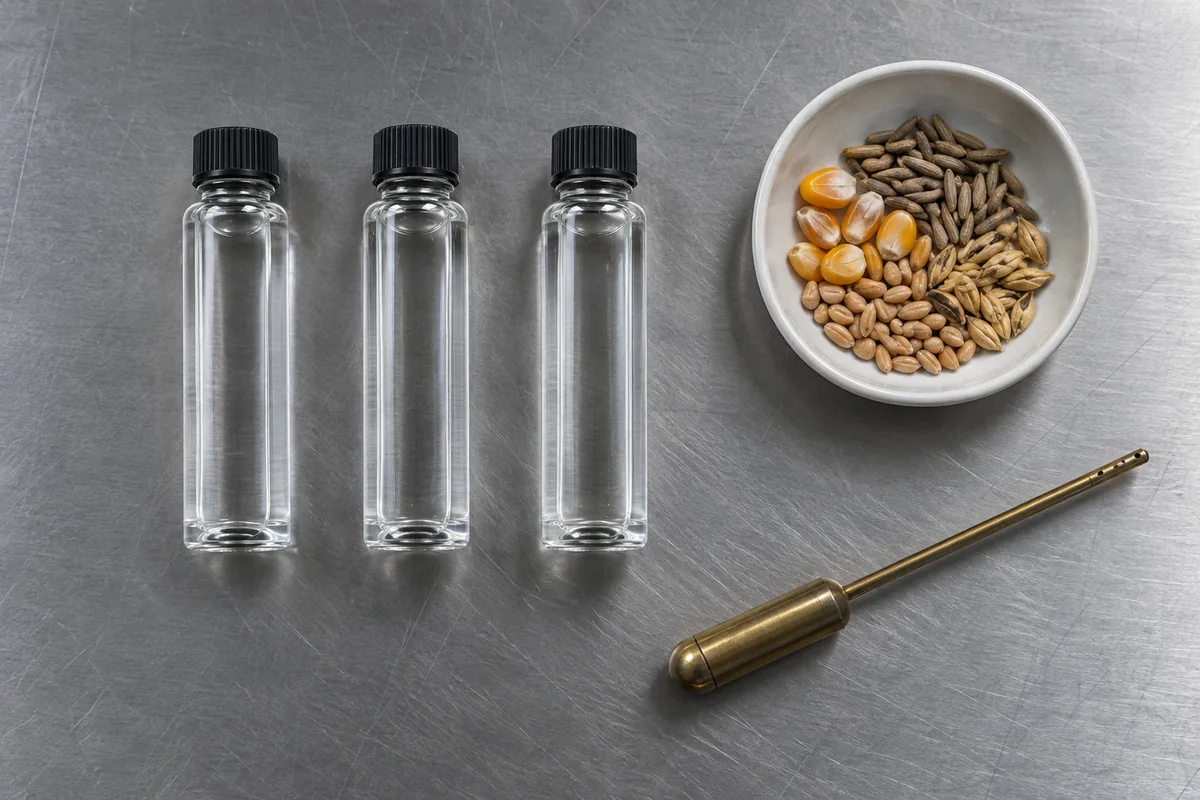
The grain bill sets the available starch, protein, oil, and flavor precursors, but grain alone does not dictate the finished aroma. Variety, malting, milling, cooking, fermentation, still design, distillation proof, copper contact, and cut selection all change what reaches the bottle.
Corn often contributes a sweet cereal impression, rye can suggest grass, pepper, or herbal spice, wheat can read as soft dough or plain cereal, and malted barley may bring biscuit, nut, or toasted grain. These are tendencies to test against the glass, not promises attached to an ingredient list.
| Variable | Main sensory consequence | What to compare |
|---|---|---|
| Grain bill | Changes starch source, cereal aroma, oil, and spice direction | Corn-led, rye-led, wheat-led, and malt-led samples at similar strength |
| Fermentation | Changes esters, higher alcohols, acids, and sulfur compounds | Fresh fruit and floral notes against savory, earthy, or solvent-like notes |
| Distillation proof | Changes how concentrated or neutral the grain character becomes | Characterful lower-proof distillate against lighter high-proof spirit |
| Still and cuts | Changes which volatile compounds reach the final spirit | Light, clean profiles against oily, heavy, or feinty profiles |
| Bottling strength | Changes concentration and perceived heat, not the underlying mash | Samples adjusted to equal proof before judging production character |
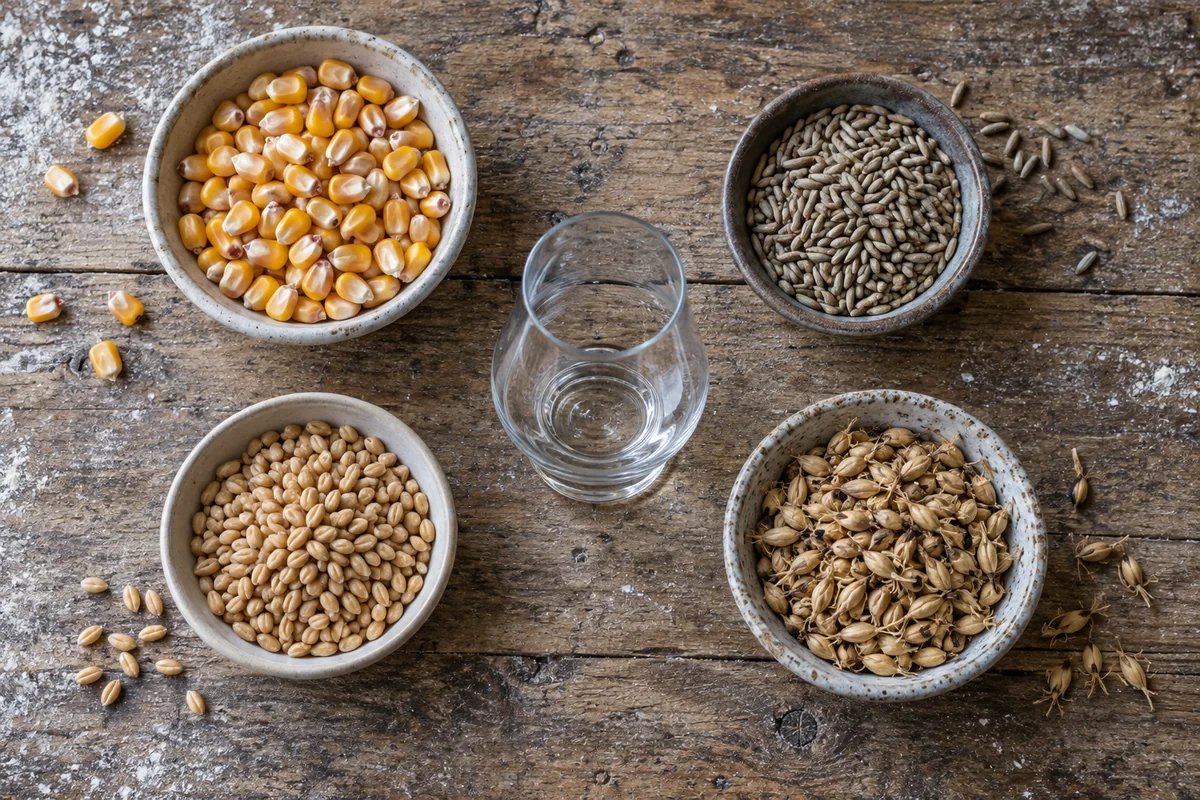
Research on whisky new make has found diverse grainy, fruity, floral, grassy, oily, and sulfur-related descriptors before oak maturation. Esters and higher alcohols are especially important to this early aroma landscape, although a sensory descriptor cannot identify one chemical or process choice by itself.
The federal whisky standard sets a ceiling rather than one fixed distillation proof, leaving room for substantial variation before still design and cuts are considered.
The distiller's retained cut matters because a run changes over time. Earlier fractions tend to contain more highly volatile compounds, while later fractions bring heavier and oilier material; the useful boundaries depend on the equipment, charge, recycling practice, and intended style.
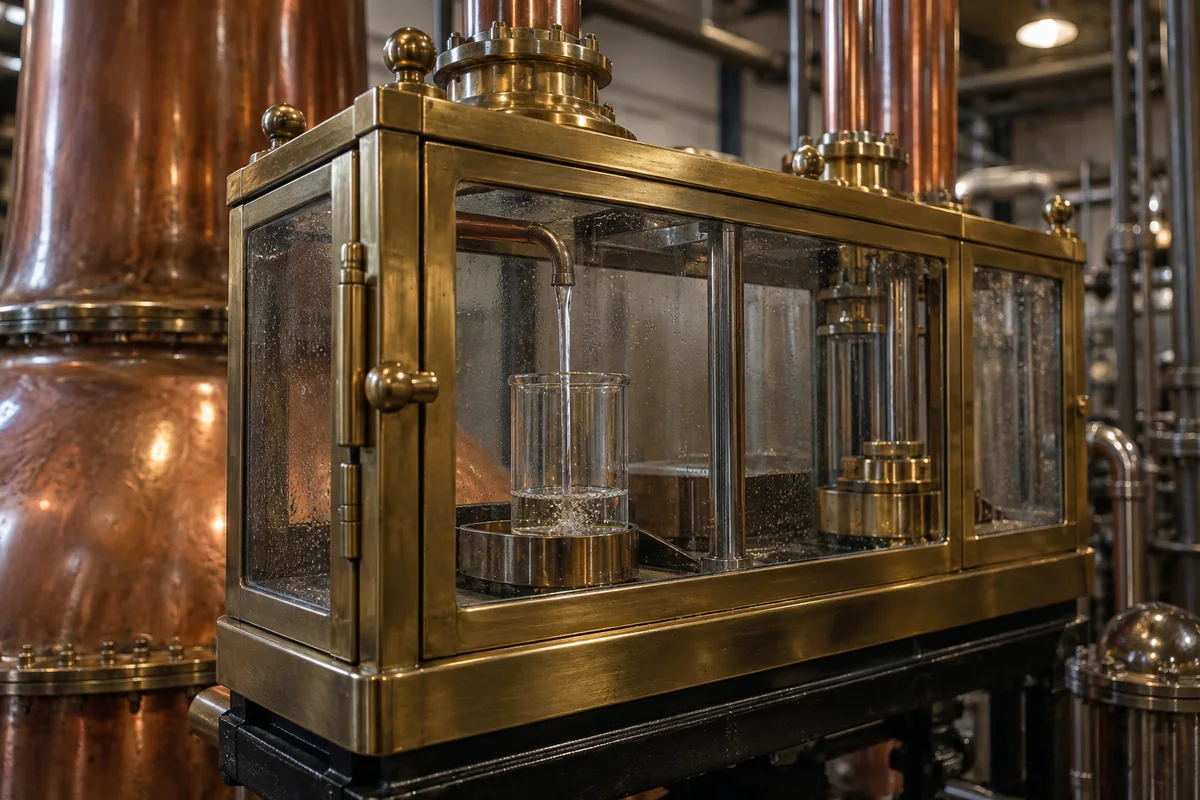
A wider cut is not automatically careless, and a narrower cut is not automatically refined. Producers may deliberately retain heavier compounds because they suit a house style or a future maturation plan.
The bottle cannot show you those boundaries.
Treat exact claims about fermentation length, still operation, or cuts as producer-specific facts that need production records or a reliable producer statement.
How strong is white dog whiskey?
There is no single typical ABV for white dog because white dog is not one regulated class. Federal rule 27 CFR 5.143 sets a 40% ABV minimum for a product designated as whisky, while individual commercial white dog bottlings can sit much higher.
- U.S. whisky bottling floor
- 40% ABV
- One documented white dog bottling
- 62.5% ABV
- U.S. standard drink
- 14 g pure alcohol
For concrete examples, one Canadian producer lists white dog at both 40% and 62.5% ABV, while Buffalo Trace lists its White Dog Mash #1 at 125 proof, or 62.5% ABV. Those bottles demonstrate the possible spread; they do not establish a market-wide range.
In the United States, 1.5 fluid ounces, or about 44 milliliters, of 40% spirits contains roughly one standard drink, defined by the National Institute on Alcohol Abuse and Alcoholism as 14 grams of pure alcohol. The same 44-milliliter volume at 62.5% ABV contains about 1.6 standard drinks.
That difference is easy to miss because both pours occupy the same space in a glass.
Read the ABV before pouring, measure the volume, and never use clarity, aroma, or perceived smoothness to estimate alcohol content.
The label also deserves a legitimacy check. Look for the regulated class or type, ABV, producer or bottler identity, country or place of origin when required, the government health warning, and any age or storage statement that applies.
A rustic label, handwritten batch number, or word such as craft does not substitute for those facts.
TTB warns that illicitly produced spirits can expose drinkers to unsafe materials and toxic metals as well as tax and legal problems.
White dog can be a high-strength spirit. Measuring a pour and adding water changes concentration, but neither step can tell you that you are unimpaired or safe to drive, operate machinery, swim, or supervise someone else.
How should you taste or mix white dog?
A useful tasting separates production character from the numbing effect of high alcohol. Start with the stated ABV, a small measured sample, a clean tulip-shaped glass, room-temperature water, and enough time for the strongest vapors to settle.
- Read the ABV first. Strength determines the sample size and how cautiously you should approach dilution.
- Use a small measured pour. About 10 milliliters is enough for nosing, dilution, and one or two small tastes without filling the glass.
- Smell before sipping. Keep your nose above the rim, use short gentle sniffs, and look first for grain, fruit, grass, flowers, oil, sulfur, or solvent-like notes.
- Add water gradually. A few drops at a time can reduce ethanol's masking effect; record how much you add if you compare bottles.
- Compare at equal proof. Adjust different samples to a similar strength before assigning every difference to grain or distillation.
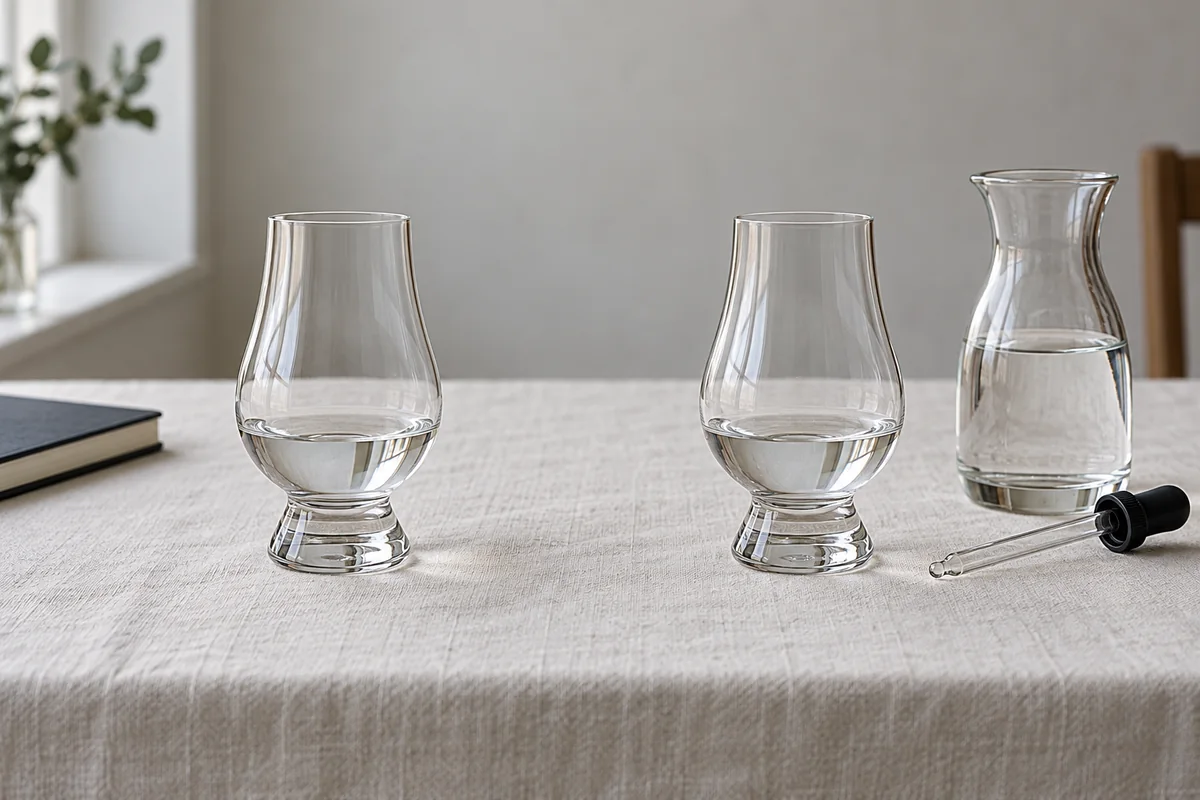
A white dog tasting starts with the label's ABV because strength determines the measured sample and dilution care. A small measured white dog pour limits exposure while leaving enough liquid to observe aroma before and after water.
Resting a white dog glass briefly lets the most concentrated alcohol vapor disperse, but time does not lower the alcohol in any meaningful way.
Adding water gradually lowers white dog concentration and can uncover aromas, yet all the alcohol remains in the combined sample.
White dog can replace aged whiskey when a mixed drink benefits from cereal, fermentation, or bright fruit character and does not depend on oak sweetness. Citrus, ginger, soda, tea, and dry fortified wine can provide acidity, spice, length, or aroma without pretending to reproduce a barrel-aged result.
Comparing white dog samples at equal proof helps separate bottling strength from grain, fermentation, and cut differences. It also makes it easier to notice whether a sharp impression persists after the alcohol concentration has been controlled.
Anyone who avoids alcohol should skip tasting rather than use this method as a reason to drink.
Do not flame white dog, inhale deeply over high-proof spirit, or treat it as an invitation to copy commercial distillation. Alcohol vapor is flammable, and unlicensed or uncontrolled distillation can be illegal and can introduce fire, pressure, material, and contamination hazards.
What food works with a grain-forward white dog?
Pair food to the dominant aroma and texture in the actual bottle. The absence of oak often makes cereal, herb, fruit, oil, and fermentation notes more obvious, so a simple ingredient can clarify a character that a rich sauce would cover.
| What you notice in the spirit | Try with | Why it can work |
|---|---|---|
| Sweet corn and fresh cereal | Cornbread, grilled corn, or a plain corn cake | Repeats the grain while browned edges add the toast that the spirit lacks |
| Grassy, herbal, or peppery | Cucumber, fresh cheese, or lightly salted fish | Cool and mild foods leave space for green or rye-like notes |
| Pear, apple, or floral ester | Tart apple, pear, or young goat cheese | Acidity sharpens fruit character and fresh cheese softens the alcohol impression |
| Oily, nutty, or malty | Smoked trout, toasted nuts, or oat biscuits | Fat and toast meet the weight of the spirit without adding heavy sweetness |
Very hot chile can amplify alcohol burn, while dense caramel, smoke, or oak-aged flavors may overwhelm a delicate white dog.
If the spirit is already solvent-like or sulfur-heavy, food will not correct the production character; serve something else rather than forcing a pairing.
Food can change perception and slow the pace of a tasting, but it does not neutralize alcohol or guarantee a lower blood alcohol concentration. Keep portions measured and offer alcohol-free drinks alongside the food.
How should you store an opened bottle?
Store white dog upright in its original, clearly labeled bottle with the closure tight, away from sunlight, heat, flame, and large temperature swings. High-strength alcohol can damage unsuitable plastics or closures, so do not transfer it to an unmarked water bottle or decorative container.
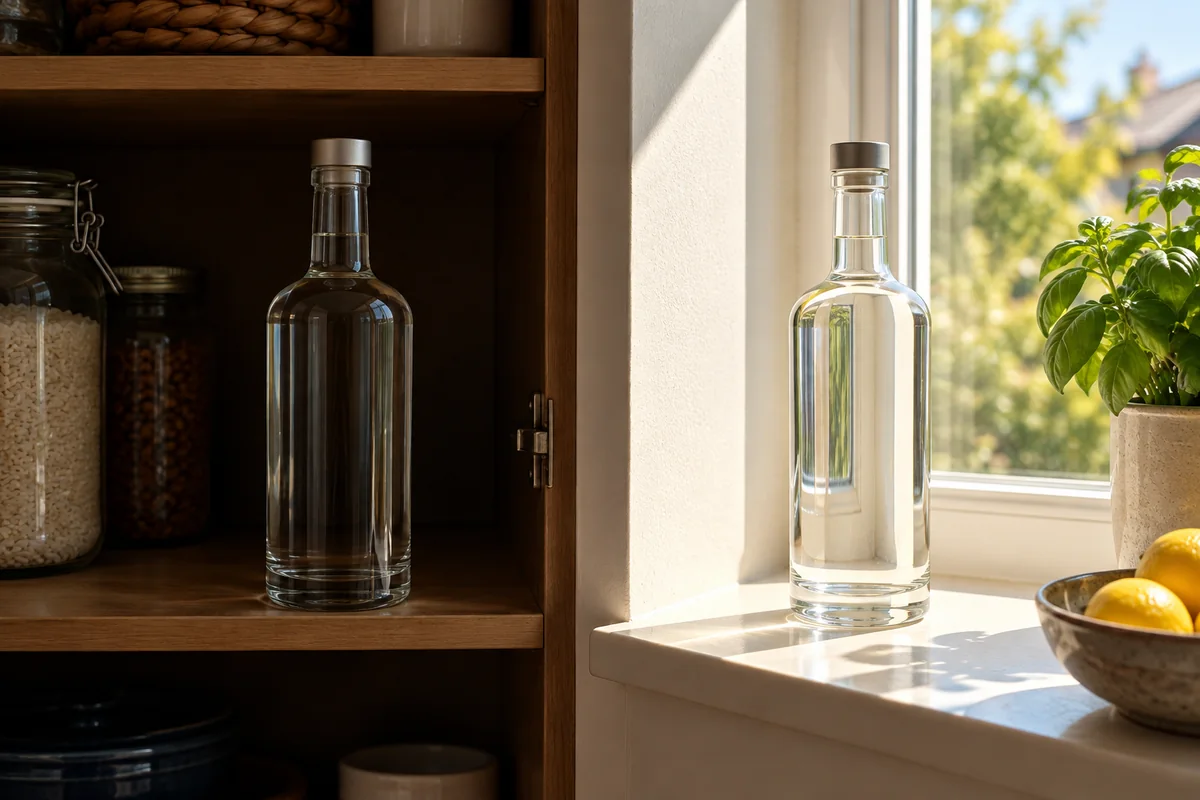
Your storage goal is to preserve the white dog already in the bottle, not turn it into aged whiskey. Unlike whisky in a cask, white dog does not keep maturing in a glass bottle.
Limited oxygen in the headspace may slowly flatten aromas after opening, and repeated opening can accelerate that change, but the bottle will not acquire oak compounds or develop like a barrel.
A partly empty bottle may lose delicate fruit and grain notes sooner because more headspace contains more oxygen. For long storage, use the original secure closure and avoid repeatedly moving the liquid into smaller containers unless the replacement is explicitly compatible with high-proof spirits and is labeled immediately.
Discard the spirit if the seal failed and contamination, foreign particles, an unexplained color change, or an unfamiliar chemical odor appears. A normal cereal, grassy, sulfurous, or solvent-like aroma may belong to the distillate, so compare any change with the producer's description and the bottle's earlier condition rather than using one aroma word as a universal fault.
Keep every bottle where children cannot access it. Clear spirits are especially easy to mistake for water when moved out of their original packaging.
When does white dog make sense?
White dog makes the most sense when you want to study the base spirit, compare grains at controlled strength, or mix around cereal and fermentation character.
It can show what a distiller sends toward the barrel, although a retail bottling may be diluted or selected differently from the spirit that actually enters casks.
| Your goal | Better fit | Reason |
|---|---|---|
| Study grain and fermentation character or mix without oak sweetness | Buy white dog for the spirit in the bottle now | Its clear-spirit character is the point of the purchase |
| Find vanilla, toast, tannin, amber color, and mature integration | Choose aged whiskey | Those traits depend on meaningful barrel maturation |
Choose aged whiskey when you want vanilla, toast, caramelized wood, tannin, oxidative development, or the legal identity of new-charred-oak bourbon and other barrel-defined types. A white dog bottle is not a cheaper shortcut to those traits.
Before buying, check the regulated class or type, substantiated grain information, ABV, and any storage or age claim. The white dog nickname alone does not guarantee high proof, craft, authenticity, quality, or the character of any future aged release.
Clear answers make the bottle useful for comparison.
Vague romance about secret recipes or outlaw heritage provides little evidence about the liquid and deserves extra caution when mandatory label information is incomplete.
The best white dog purchase has a specific purpose: learning how a grain and production style taste before oak, or using that profile in a drink where barrel character would get in the way. If your real goal is smooth sipping whiskey with mature oak aroma, buy a bottle that has already completed that job.
Common questions
- Is white dog bourbon?
- No. Bourbon must meet its grain and distillation rules and be stored in new charred oak containers. White dog is an informal name for clear grain distillate before meaningful maturation.
- Is every white dog completely unaged?
- No. Clear color cannot prove zero wood contact, and white dog has no single legal definition. Read the class or type and any storage or age statement on the bottle.
- Does white dog improve after opening?
- It does not mature in a glass bottle. Oxygen may gradually flatten delicate aromas, so keep it upright, tightly closed, cool, and out of direct light.
Sources
-
27 CFR 5.143, Standards of identity for whisky, Alcohol and Tobacco Tax and Trade Bureau
Accessed 4 September 2026.
-
27 CFR 5.74, Statements of Age, Storage, and Percentage
Accessed 11 September 2026.
-
TTB Beverage Product Diversion
Published 23 September 2025. Accessed 11 September 2026.
-
TTB Distilled Spirits Labeling
Published 31 July 2025. Accessed 11 September 2026.
-
What is a standard drink?
Accessed 7 September 2026.
-
The Impact of Terroir on the Flavour of Single Malt Whisk(e)y New Make Spirit
Published 14 April 2021. Accessed 11 September 2026.
More in Spirits
-
 American single malt whisky
01
What is American single malt whisky, and what does it guarantee?
-
 Australian whisky
02
How is Australian whisky defined, and by which law?
-
 Black rum
03
What is black rum, and does the colour mean anything?
-
 Blended American whiskey
04
What is blended American whiskey, and how much of it is whiskey?
-
 Blended Irish whiskey
05
Blended Irish whiskey: which word counts the distilleries?
-
 Blended Scotch
06
Blended Scotch: what is in it, and why does the recipe change?