
Spirits
What Is Taiwanese Whisky, and What Does the Rule Require?
Taiwanese whisky is defined by statute as a grain spirit saccharified, fermented, distilled and matured in wooden casks for at least two years, at no less than 40 percent alcohol by volume. The subtropical climate is what makes that short minimum unusual.
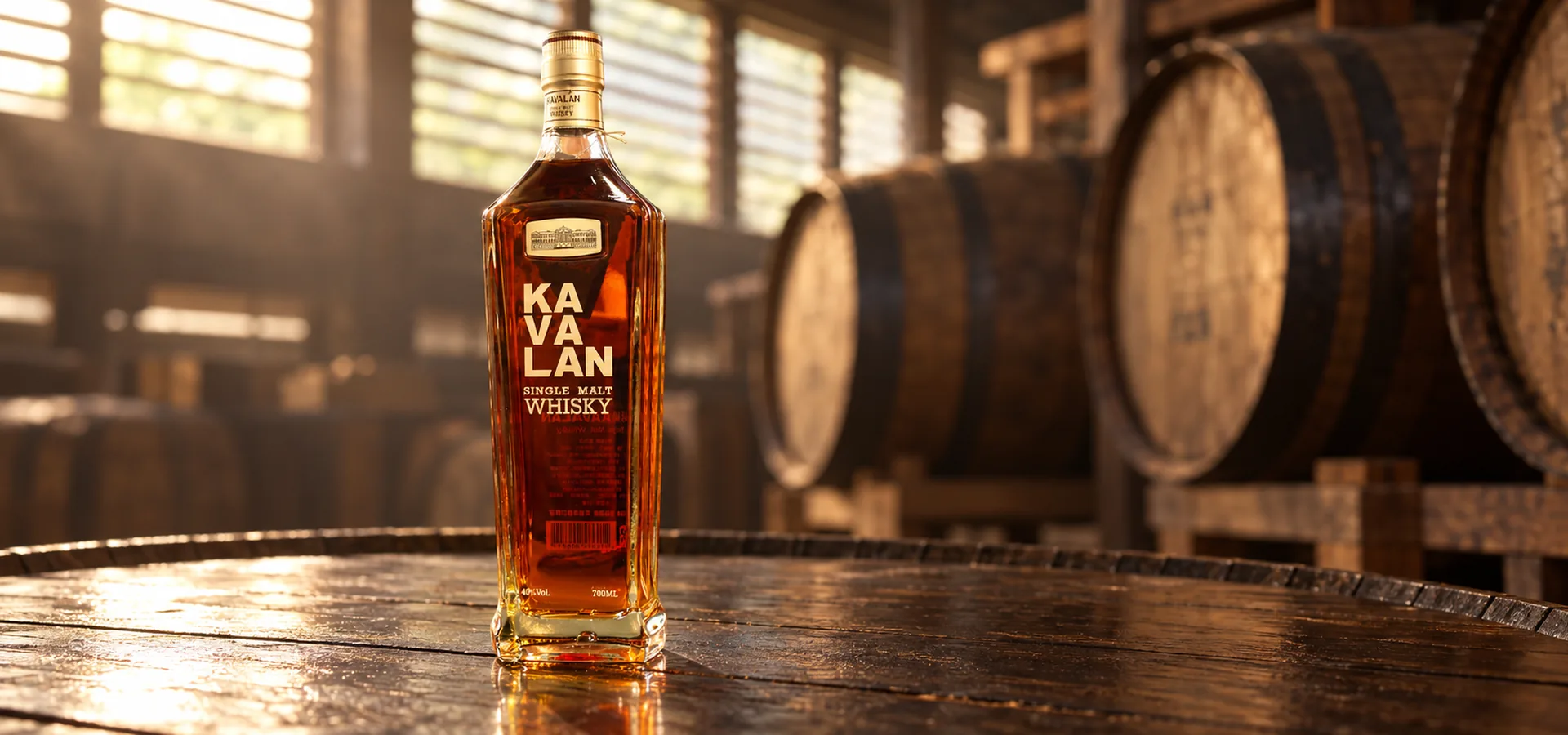
At a glance
- Legal category
- Whisky under Article 3 of the Enforcement Rules of the Tobacco and Alcohol Administration Act
- Minimum strength
- 40 percent ABV
- Also called
- Taiwan whisky, Taiwanese single malt
- Legal definition
- Grain, saccharified, fermented, distilled, two years in wooden casks, 40 percent minimum
- What it leaves open
- Which grain, which wood, what size cask, and where the work happens
- Angel's share
- Reported at 8 to 15 percent a year against roughly 2 to 3 percent in Scotland
What is Taiwanese whisky, and is it legally defined?
It is defined, and the definition is short enough to quote in a sentence.
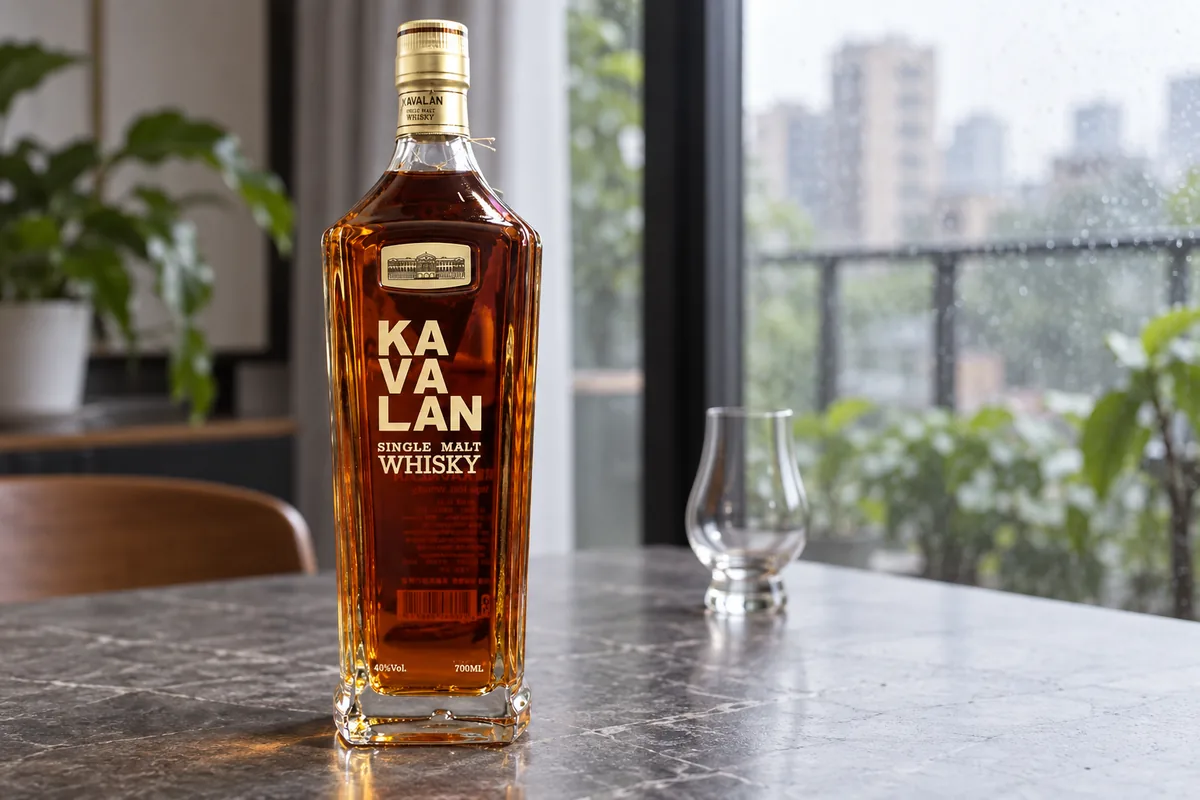
That matters more than it sounds. A great many whisky producing countries have no domestic definition at all and rely on export market rules instead.
The definition lives in enforcement rules made under an act rather than in the act itself, which is the ordinary place for technical detail of this kind.
Article 3 of the Enforcement Rules of the Tobacco and Alcohol Administration Act sets out whisky as a distilled spirit made from grain by saccharification, fermentation, distillation and maturation in wooden casks for at least two years, with an alcohol content of not less than 40 percent.
- Grain, saccharified, fermented, distilled
- The four process steps the definition requires, in that order. Grain is named without being narrowed to malted barley.
- At least two years in wooden casks
- The maturation period, a full year shorter than the Scotch minimum, in a container described only as wood.
- At least 40 percent alcohol by volume
- The bottling floor, and the one figure on the label a buyer can check the definition against directly.
The same article puts brandy at six months in wooden casks and 36 percent, which is worth noticing.
Saccharification is the step doing the quiet work in that list. Grain starch is not fermentable until it has been converted to sugar, and naming that conversion as a required step is what keeps the definition on whisky rather than letting it drift toward spirits made from something already sweet.
Wooden casks is doing quiet work too, in the other direction.
It rules out maturing the spirit in stainless steel or glass, which would be no maturation at all, and it stops there. Species, size, previous fill and char are all outside the rule.
Two different periods and two different floors, sitting side by side in one provision, tell you the whisky numbers were chosen rather than inherited from somebody else's rulebook.
The rule requires distillation without specifying the still, which is another place where a reader's assumptions run ahead of the words.
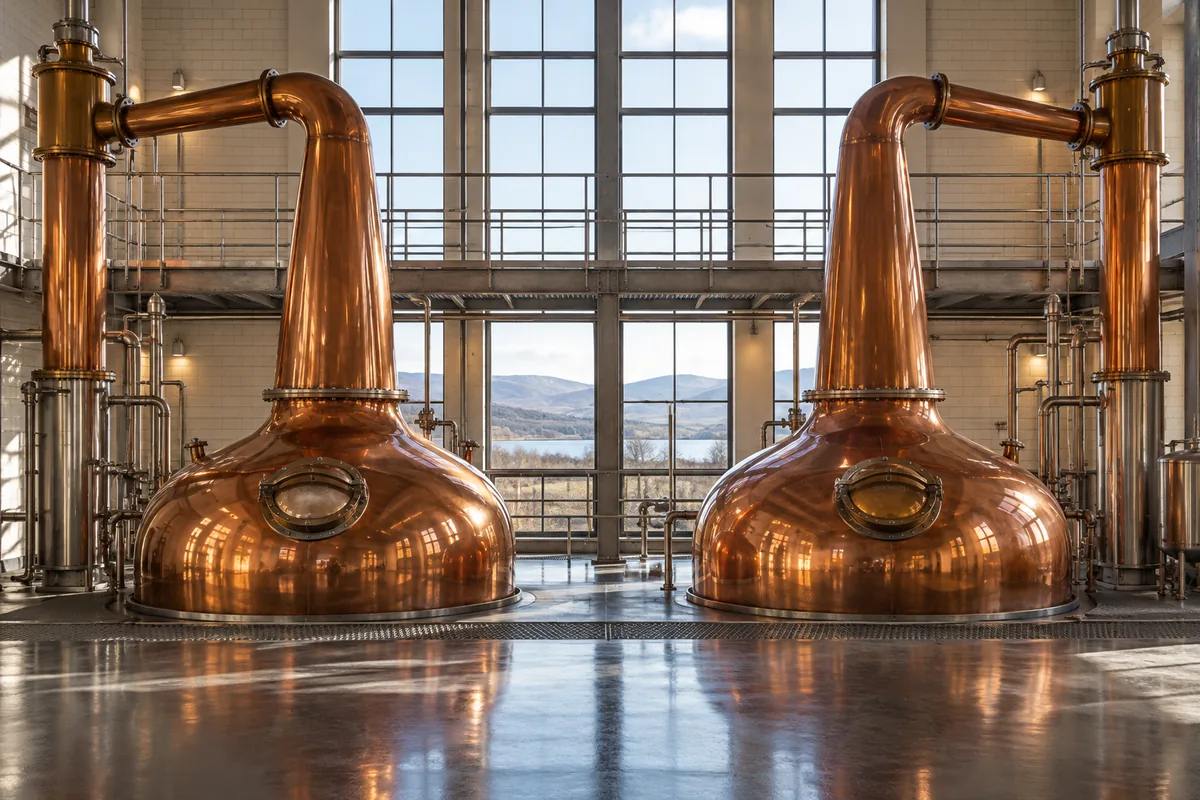
So Taiwanese whisky is a legal category rather than a marketing one, and it is shorter and broader than the Scotch definition most readers measure it against.
Three requirements, then: grain put through those four steps, two years in wood, and 40 percent in the bottle. A reader who can state those can check any bottle against them.
What does that definition leave open?
Three things, and each of them matters on a shelf.
| What the rule says | What it does not say | Who decides instead |
|---|---|---|
| Grain, and wooden casks | Which grain, and which wood. Neither malted barley nor oak is required by the words | The producer, and only a voluntary disclosure will tell you |
| Maturation for two years | Where the maturation, or the distillation, has to happen | Nothing in the definition ties either step to Taiwan, so the words describe a product rather than an origin |
| Whisky | What single malt means, since no domestic definition of the phrase appears in the rule | The producer, using whichever convention it chooses to follow |
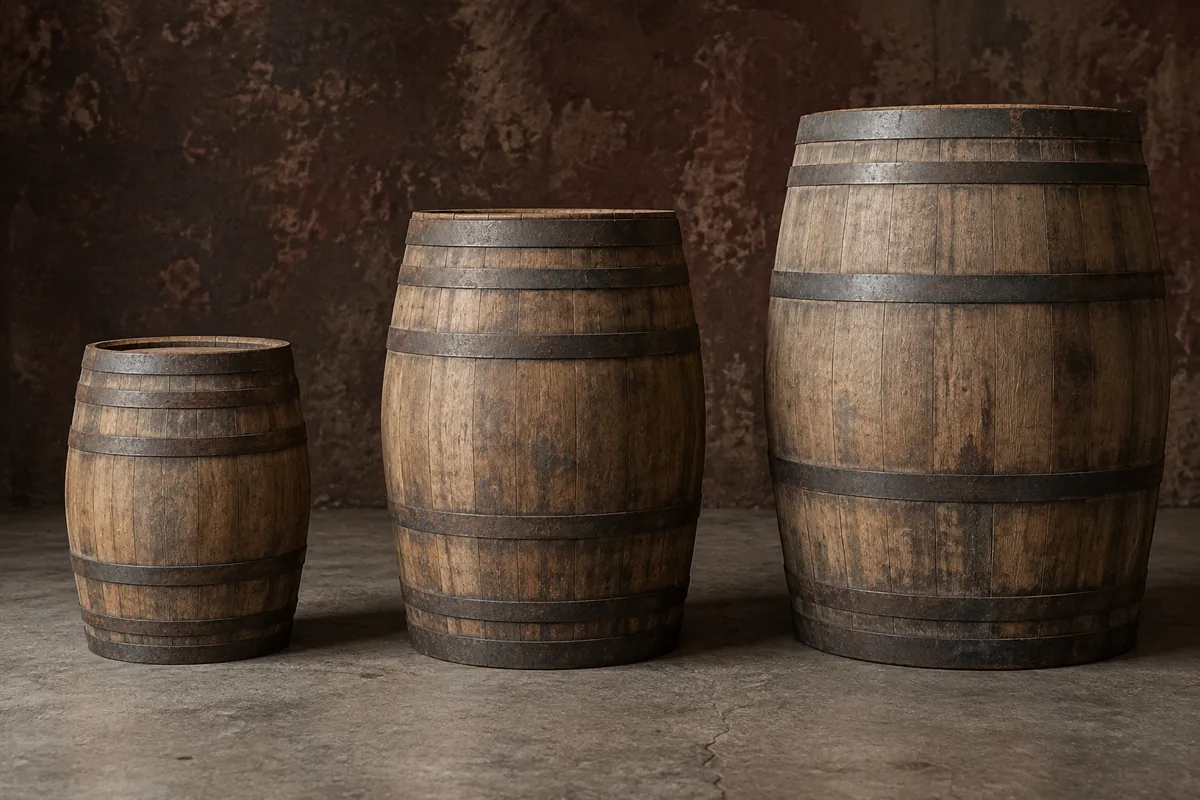
Species, size, previous fill and char are all outside the rule, and cask size in particular changes the ratio of wood to spirit more than most readers expect.
That middle row is the one worth sitting with. So how does a buyer actually establish origin?
Through the distillery name and the bottler, which are voluntary statements rather than compelled ones. A bottle naming the distillery it came from has answered a question the category word does not.
The single malt question works the same way.
Where a Taiwanese bottle says single malt, it is following a convention rather than a domestic rule, and the meaning it intends is usually the Scotch one. Usually is not the same as always, and only the producer can confirm which convention applies.
A rule that defines a product rather than a place is doing something different from a geographical indication. It says what the liquid must be, and leaves where it came from to other law and to the label.
None of that is a criticism. It is simply a different kind of rule from the one readers are used to, and reading it as an origin guarantee will mislead you.
How does the Taiwanese rule compare with Scotch and American ones?
Three regimes, three different things fixed.
| Rule | Minimum period | Container | Place |
|---|---|---|---|
| Scotch whisky | Three years | Oak casks not exceeding 700 litres | Maturation must happen in Scotland |
| United States bourbon | None at all | Charred new oak containers | Must be produced in the United States |
| Taiwanese whisky | Two years | Wooden casks, species and size unspecified | Not specified in the definition |
Scotland fixes all three axes. The American rule fixes the wood tightly and the time not at all. Taiwan fixes a period and a material, and leaves the rest open.
What that comparison is good for is calibration rather than ranking.
It is also worth remembering that a bottle crossing a border meets a second set of rules. A Taiwanese whisky sold in the United States or the European Union has to satisfy the importing market's labelling requirements as well as its own, which is why the same liquid can carry different wording in different places.
A reader who knows the Scotch rule will otherwise assume the same guarantees travel with the word whisky, and two of the three do not.
Why does two years in Taiwan not mean two years in Scotland?
Because almost everything that happens inside a cask speeds up when it gets warmer.
Temperature also cycles, and cycling matters as much as the average. Warm air expands the spirit into the wood and cooler air draws it back, so a warehouse that swings between day and night temperatures moves liquid through the staves far more than a cellar sitting at one steady temperature all year.
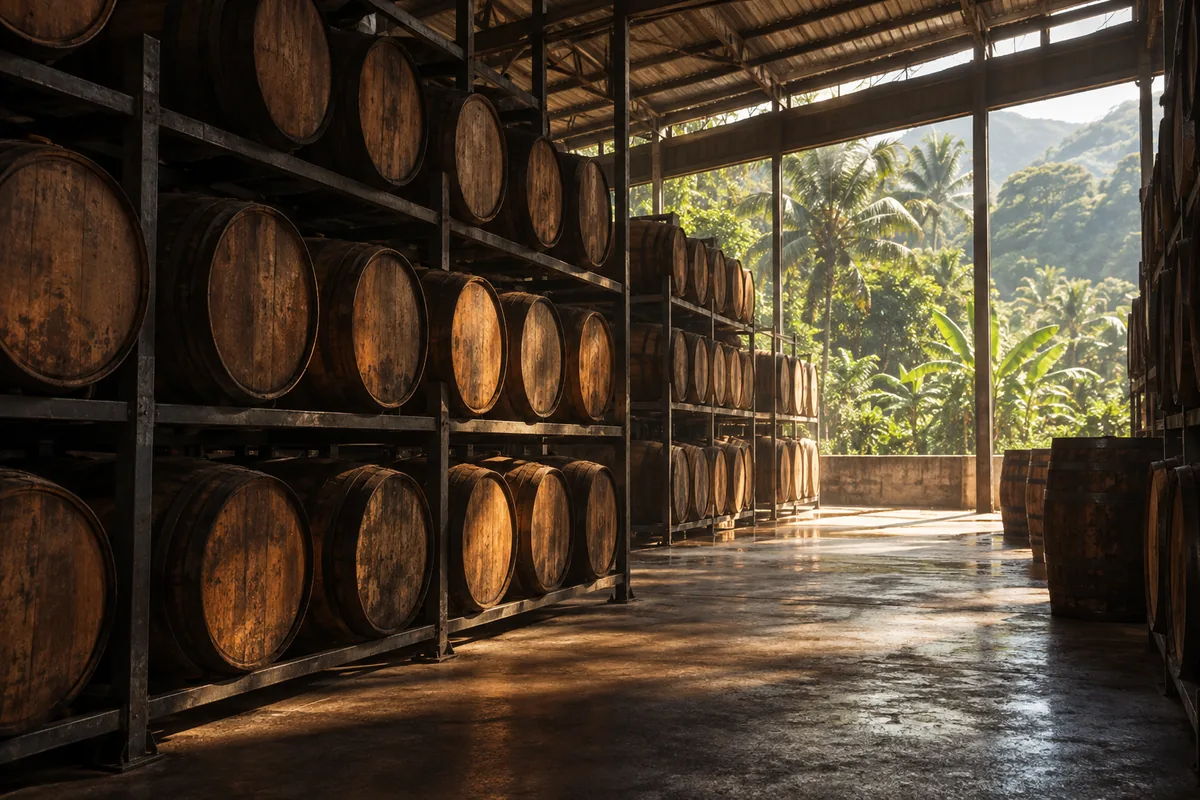
- Extraction from the wood: heat drives colour and oak flavour into the spirit faster, which is why a young whisky from a warm warehouse can look and taste far more mature than its age suggests.
- Oxidation: also temperature dependent, though it works on a different set of compounds and on a different timescale.
- Evaporation: the one that takes liquid out rather than putting character in, and the one with a commercial cost attached.
Trade reporting in 2026 put maturation in Taiwan at two to three times the rate seen in Scotland or Ireland. Treat that as a working figure from the trade rather than a measured constant, because the rate depends heavily on the warehouse.
What follows is that the two year minimum is a much heavier requirement here than the same two years would be in a cool climate.
Humidity adds a second variable that surprises people.
In a dry warehouse water leaves faster than alcohol and the strength in the cask rises. In a humid one the balance shifts the other way, and a cask can lose strength as it loses volume.
Which is why the same annual loss figure can mean two quite different things depending on where the warehouse stands.
A Scottish cask reaching three years has had three cool years. A Taiwanese cask reaching two has had two hot ones, and the wood has been working the whole time.
How much whisky does Taiwan lose to the angel’s share?
A great deal, and the figure is the key to a lot of what follows.
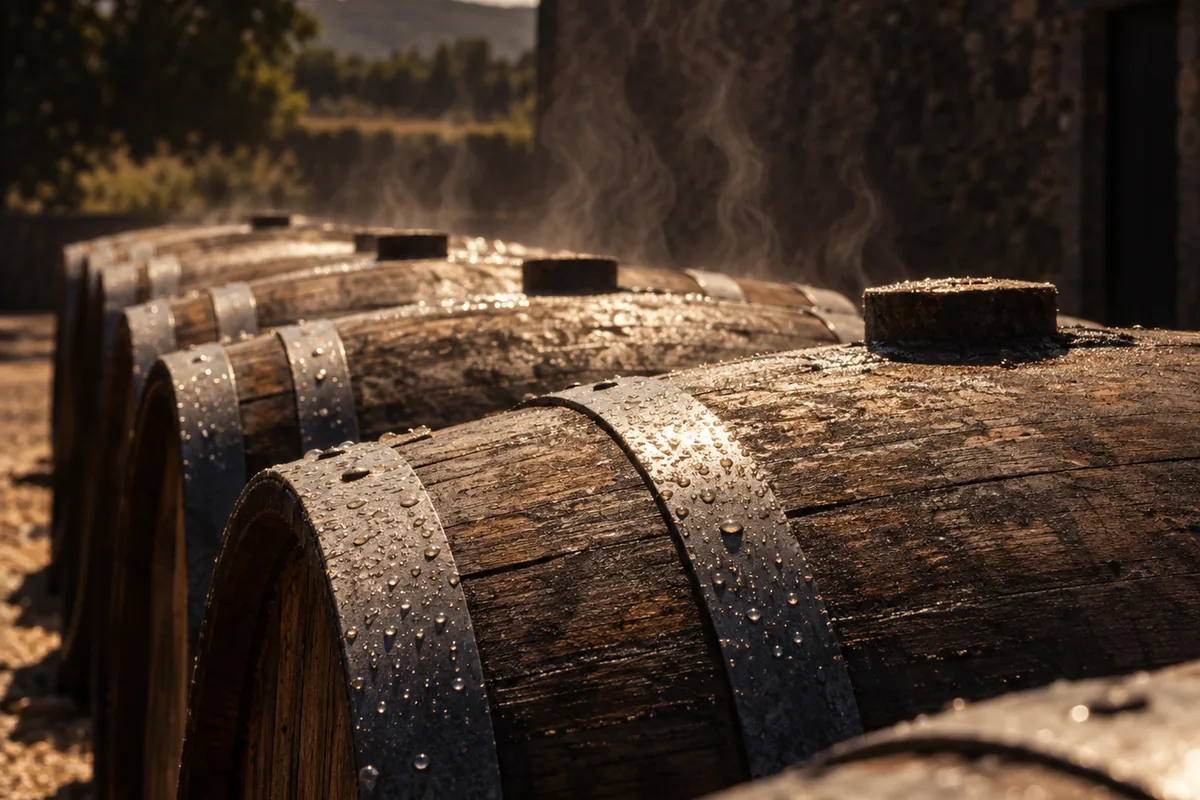
- 8 to 15 percent a year
- The annual angel’s share reported for Taiwan in 2026 trade coverage, varying with the warehouse.
- 2 to 3 percent a year
- The same reporting’s figure for Scotland, which is what makes the Taiwanese number legible.
- What a decade would cost
- Losing a tenth each year compounds, so a cask left for ten years in that climate gives back a small fraction of what went in.
Evaporation through the staves is invisible until you compound it, which is why the annual figure reads as small and the ten year consequence does not.
Compounding is the part people skip. Work it through and the arithmetic is blunt.
A cask losing a tenth of its contents every year retains a little over a third after ten years and roughly an eighth after twenty, before anything is bottled at all.
Ten percent a year is not a tenth gone after a decade. It is most of the cask, and the whisky that remains has to carry the cost of everything that left.
Which explains a pattern that puzzles buyers new to the category. Low age statements here are an economic fact, not a shortcut, and a twenty year old bottling would be an extraordinary thing rather than an ordinary one.
Does faster maturation make a young whisky equivalent to an older one?
No, and the conversion is worth resisting even when it flatters the bottle in your hand.
Extraction accelerates with heat. The slower reactions that make an older whisky what it is depend on time rather than temperature, and they do not accelerate to the same degree.
There is no exchange rate. A four year old whisky from a hot warehouse is not a twelve year old whisky from a cool one, even where the colour and the oak intensity are close. It is a different thing that happens to share some of the same markers.
The practical version of that is simple enough.
Fast extraction has its own failure mode, and it is worth naming.
Wood can arrive so quickly that it covers the distillate underneath it, leaving a whisky that tastes of cask rather than of the spirit the cask was filled with. That is a risk in any warm climate and a reason cask selection matters more there, not less.
Some of what a long maturation gives is time dependent in a way heat cannot substitute for.
Slow reactions between spirit and wood compounds, and between the compounds themselves, run on their own schedule. A warm warehouse gets you the extraction quickly and does not fast forward everything else.
Compare what is in the glass, not what the arithmetic says the age should be worth. Two whiskies can be equally good without either being a version of the other.
What does a Taiwanese whisky label actually tell you?
Less than the bottle suggests, and more than the category name does.
- The product type: compelled by the labelling rules, and the statement that ties the bottle to the statutory definition.
- The alcohol content: also compelled, expressed in degrees or as a percentage by volume, with a tolerance of 0.5 degree allowed against the stated figure.
- The distillery and cask wording: voluntary, and usually the most informative thing on the package.
Notice what is missing from that list.
The 0.5 degree tolerance is worth understanding rather than glossing.
It means the printed strength is a declared figure with a permitted margin, not a laboratory reading of the bottle in your hand. For a serving calculation that margin is immaterial; for comparing two bottles half a degree apart it is not.
The definition supplies no rule about what an age statement on a Taiwanese whisky must report, which means an age number here is a producer's claim rather than a regulated one.
A useful cask disclosure names two things.
What the cask held before, and whether the whisky spent its whole life there or was moved into it for a finishing period. A bottle that says only the wine or the wood type has answered half the question.
That is a reason to read the cask disclosure first. A bottle that names its wood and its strength has told you more about what is inside it than any number of years could.
How should you taste a Taiwanese whisky against a Scotch?
Carefully, because almost every variable is different at once. A Taiwanese whisky and a Scotch of the same colour may be separated by a decade of stated age, and colour will not tell you which is which.
- Strength: match the two as closely as the labels allow, because alcohol changes aroma delivery more than climate does.
- Cask type: where both bottles disclose it, match it, since wood usually explains more of a difference than origin.
- The serving: equal measures, one glass shape, and both nosed undiluted, in the same order and the same conditions each time.
With those held still, whatever you find is a difference between two bottles.
Expect the wood to dominate, and plan the order accordingly. Give both glasses time before deciding anything.
A heavily extracted young whisky will make a lightly wooded older one seem thin if it goes first, so taste the quieter glass before the louder one and then go back to it.
It is not a finding about Taiwan or about Scotland, and a second pair chosen differently could easily point the other way.
What food suits a Taiwanese whisky?
The origin cannot answer this, because the category covers whiskies of very different weights. Food meets the strength and the wood before it meets anything the label claims about where the spirit was made.
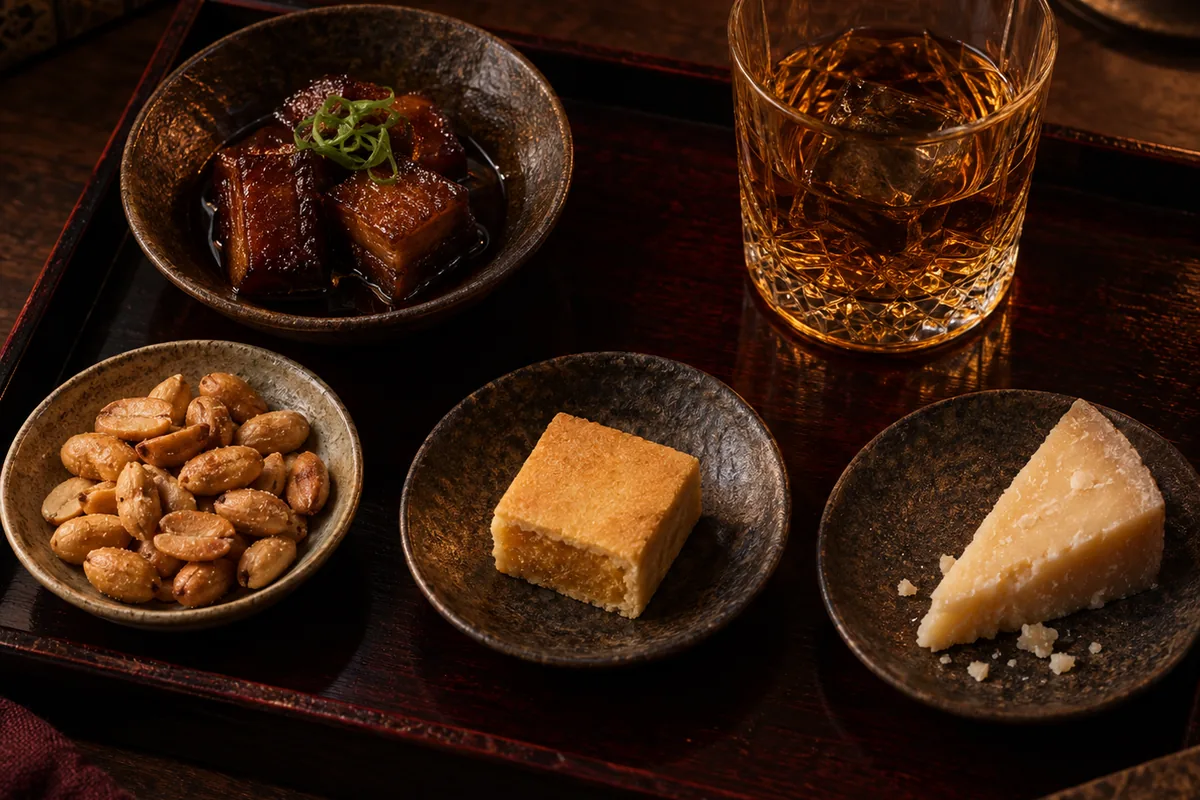
| What the bottle turned out to be | Food direction | Why it works |
|---|---|---|
| Heavy cask influence | Braised or glazed meat, hard aged cheese | A strong wood signature can meet richer food without either side disappearing |
| Lighter character | Salted nuts, plain crackers, mild cheese | A lighter bottling is the easiest of all to bury, so the food has to stay quiet |
| High strength | Fattier food in smaller portions | Fat carries alcohol heat comfortably where lean or sweet food sharpens it |
Two interactions go wrong reliably. Sweetness in a dish sharpens a dry, tannic whisky, and chilli heat is intensified by alcohol rather than cooled by it.
A very sweet pastry beside a heavily oaked bottling is the version of that mistake this category invites most often.
How should an opened bottle be kept in a warm climate?
Whisky does not go on maturing in glass. What happens after opening is oxidation and the loss of the most volatile aroma.
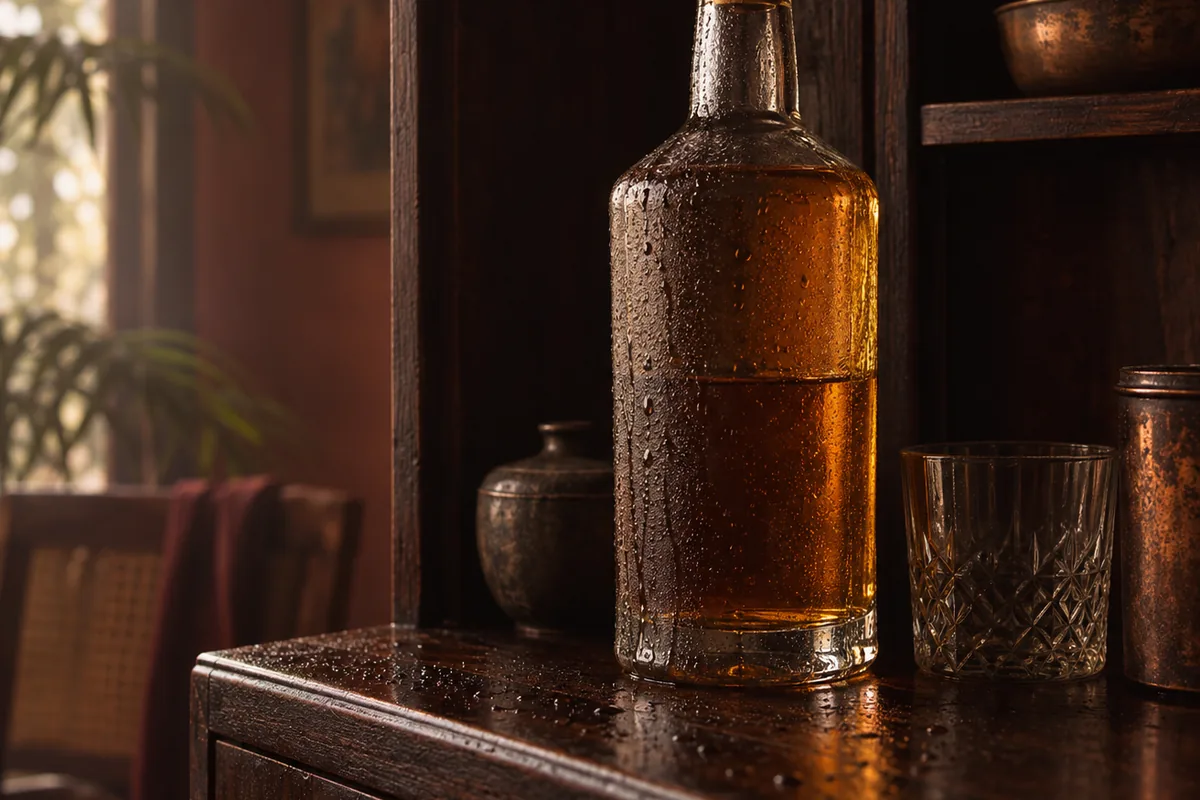
- Cool and dark: the first decision anywhere, and the one that matters most in a warm climate, because warmth accelerates the change.
- A closure that still seals: wipe the neck and replace a cork that has stopped gripping, because a failed seal makes every other precaution irrelevant.
- Upright: a high strength spirit resting against a closure will attack the material over the years a bottle can sit.
- Decant a small remainder: moving the last third into a clean smaller bottle cuts the air above it, which is the only variable here you can actually reduce.
None of this is dramatic, and none of it is fast.
The warm climate case is worth being concrete about, though.
A cupboard in an unairconditioned flat can sit well above the temperature a European cellar ever reaches, for months at a time. That is the condition the advice above is written against, and it is the one worth designing around rather than tolerating.
It simply means a bottle kept warm for two years is not the bottle you opened, and in a climate where a cupboard runs warm most of the year that is worth planning around.
How much alcohol is in a Taiwanese whisky pour?
Taiwanese whisky must reach the bottle at no less than 40 percent alcohol by volume, and cask strength bottlings run far above that.
In the United States a standard drink contains about 14 grams of pure alcohol, which is roughly 1.5 fluid ounces, or 44 millilitres, of a spirit at 40 percent. Pour the same measure of a bottling at 57 percent and you have taken about two fifths more alcohol, from a glass that looks no different.
Read the strength, not the origin. A country of origin, a colour, a smooth texture, water, food, coffee and time spent tasting cannot establish that someone is unimpaired or safe to drive. Measure the pour and read the alcohol content.
Anyone who is pregnant, below the legal drinking age, taking an interacting medicine, managing a condition worsened by alcohol, or responsible for driving needs an alcohol-free choice instead.
What is a Taiwanese whisky label worth to a buyer?
One inference about the liquid, and it is a narrow one: the whisky met a two year minimum in wood and reached the bottle at no less than 40 percent.
Everything else you want to know is somewhere other than the country name. The strength, any cask disclosure and the distillery are what narrow the bottle down.
Read the age in its climate. A low number on a Taiwanese bottle is not the same signal as a low number on a Scottish one, because the years behind it were hotter and more of the cask was lost to get there. Judge the whisky, not the figure.
That cuts both ways, which is the honest version of it.
What the category does offer is a clean test of a claim readers meet constantly, which is that age is the thing worth paying for.
Here the number is small, the losses behind it are large, and the whisky in the glass has to be judged on its own terms. That is a useful discipline to bring back to every other shelf.
Heat is not a substitute for time, and a young whisky from a hot warehouse is neither automatically better nor automatically worse than an older one from a cool one. It is a different proposition, priced and aged on different terms.
Common questions
- Is Taiwanese whisky legally defined?
- Yes. Article 3 of the Enforcement Rules of the Tobacco and Alcohol Administration Act defines whisky as a distilled spirit made from grain by saccharification, fermentation, distillation and maturation in wooden casks for at least two years, at not less than 40 percent alcohol by volume.
- Why does Taiwanese whisky mature faster?
- Extraction, oxidation and evaporation all accelerate as temperature rises, and a subtropical warehouse runs far warmer for far more of the year than a Scottish one. Trade reporting in 2026 put the rate at two to three times that of Scotland or Ireland.
- Is a four year old Taiwanese whisky the same as a twelve year old Scotch?
- No. Extraction accelerates with heat, but the slower reactions that make an older whisky what it is depend on time rather than temperature. There is no exchange rate between the two, even where colour and oak intensity are close.
Sources
-
Code of Federal Regulations, Title 27, sections 5.143 and 5.74
Accessed 5 September 2026.
-
Enforcement Rules of the Tobacco and Alcohol Administration Act, Article 3, Laws and Regulations Database of the Republic of China (Taiwan)
Accessed 10 September 2026.
-
NIAAA, What Is a Standard Drink?
Accessed 13 September 2026.
-
Taiwanese Whisky Beyond Kavalan: Distilleries to Know, The Whiskey Wash
Accessed 10 September 2026.
-
The Scotch Whisky Regulations 2009 (SI 2009/2890), regulation 3
Accessed 4 September 2026.
More in Spirits
-
 American single malt whisky
01
What is American single malt whisky, and what does it guarantee?
-
 Australian whisky
02
How is Australian whisky defined, and by which law?
-
 Black rum
03
What is black rum, and does the colour mean anything?
-
 Blended American whiskey
04
What is blended American whiskey, and how much of it is whiskey?
-
 Blended Irish whiskey
05
Blended Irish whiskey: which word counts the distilleries?
-
 Blended Scotch
06
Blended Scotch: what is in it, and why does the recipe change?