
Spirits
What Is Small Batch Whisky, and How Many Barrels Is a Batch?
Small batch whisky is a bottling drawn from a chosen group of casks that were emptied together, mingled and filled as one lot. No whisky regulator anywhere defines how many casks that is, so the phrase describes an act of selection rather than a quantity.
At a glance
- Legal category
- No class or type; the bottle's own whisky class applies under 27 CFR 5.143, and the claim is caught by 27 CFR 5.122
- Minimum strength
- 40 percent ABV
- Also called
- Small batch whiskey, Small batch bourbon
- Legal status
- No class or type in the United States standards of identity
- Batch size
- Undefined; published figures run from single figures to about 250 barrels
- What it fixes
- That more than one cask was combined and that a person chose which
What does small batch mean on a whisky label?
Small batch whisky is a bottling drawn from a chosen group of casks that were emptied together, mingled, and filled into bottles as one lot.
That is the whole of what the phrase describes. It names an act of selection and a moment of mingling, and it stops there.
- A mingling of chosen casks
- Several casks are emptied into one vessel, combined, and bottled as a single lot with its own batch identity.
- No class or type
- The United States standards of identity for whisky create no small batch class or type, so the words sit outside the part of the rules that fixes what a whisky is.
- Small against the producer’s own output
- With no number in any rule, the word small can only be measured against how much that distillery normally bottles at once.
What the words do not carry is a number. No whisky regulator anywhere defines a small batch, which means the same two words can sit on a bottling made from six casks and on one made from two hundred and fifty.
It is the ordinary position for a trade term that grew up in marketing rather than in a statute, and it is why the rest of this entry is mostly about what to read instead.
It is worth understanding why batches exist at all, because the phrase makes more sense once you do.
A warehouse is not a tank.
Whisky matures in thousands of separate vessels that cannot be homogenised into one continuous supply, so at some point somebody has to decide which of them go into today’s bottling run. Every whisky that is not a single cask bottling is therefore a batch of something.
The only question the phrase raises is how big that group was relative to the alternatives, and that is precisely the question no rule answers.
Does any regulator define it, and what stops the words being used on anything?
Look for small batch in the United States standards of identity and it is simply absent. The whisky standard at 27 CFR 5.143 fixes grain, distillation strength, wood and bottling strength for each class and type of whisky, and it never mentions how many casks a bottling may be drawn from.
The Scotch position is the same by a different route. The Scotch Whisky Regulations 2009 protect five categories and a closed set of geographical indications, and a phrase that is not on that list is not protected by it.
So nothing defines the claim.
Something does constrain it, though, and it is worth knowing what.
A label statement does not have to be false to be unlawful: 27 CFR 5.122 prohibits any statement that is misleading as to age, origin, identity or any other material factor, whether or not it is literally true.
| Where you look | What it fixes | What it leaves open |
|---|---|---|
| United States standards of identity | Grain, distillation strength, the wood, the 40 percent bottling floor and each class and type of whisky | How many casks a bottling is drawn from, and therefore the small batch words entirely |
| United States misleading-statement rule | That every claim, implicit or explicit, has a reasonable basis in fact and can be substantiated to TTB on request | What counts as small, since the rule tests the basis for a claim rather than supplying one |
| Scotch Whisky Regulations 2009 | Five Scotch categories and a closed set of protected localities and regions | Batch language of any kind, which the protected list does not reach |
The provision that does the work is 27 CFR 5.122(b)(2). It requires every claim on a label, implicit as well as explicit, to have a reasonable basis in fact, and to be capable of substantiation on request by the appropriate TTB officer.
A producer does not have to print a barrel count for you, but they do have to be able to explain, to a regulator, what they meant by the word.
That is a real constraint and a weak one at the same time. It stops a claim being invented out of nothing, and it does nothing at all to make two producers mean the same thing.
The rule reaches implicit representations as well as printed words, and it treats an omission as capable of misleading where the missing information is what would stop the statement misleading.
In other words, the question a regulator can ask is not only whether the batch was small, but whether everything around the claim leaves an honest impression. That is a broader test than a number would have been, and a much harder one for a shopper to apply on the spot.
The claim is auditable by a regulator and not by you, so the reader’s job is not to test the phrase but to find the statements on the same label that were never optional in the first place.
How many barrels go into a small batch?
There is no answer that covers the shelf, and any single number you have read is somebody’s house practice rather than a threshold.
The most useful thing to do with this question is to anchor it at both ends. Use figures producers have actually published, rather than the round numbers that circulate between retailers.
- About 250 barrels
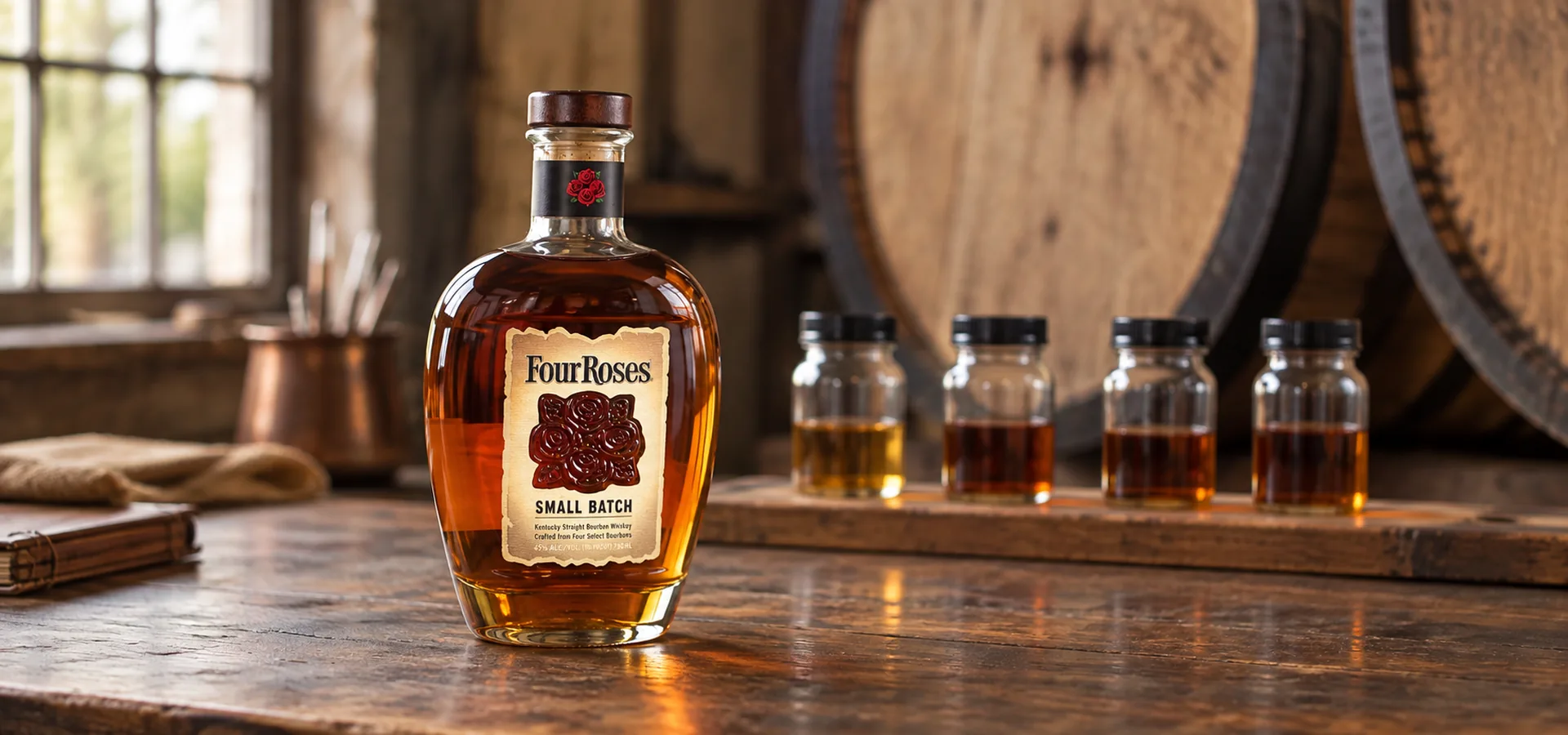
- Four Roses publishes an average Small Batch size of approximately 250 barrels, which is the largest figure in this entry that comes from a producer’s own statement.
- Single figures
- Published batch sizes elsewhere in the trade run down into single figures, so the same two words cover a range of two orders of magnitude.
- No figure at all
- Most labels carrying the phrase disclose no size, which is the case a shopper is usually actually holding.
Behind any of those numbers is the same operation repeated: a cask drawn, nosed, and either taken or left in the rack.
A batch number is a different thing again, and the two get collapsed constantly by shoppers and reviewers alike.
A batch number identifies a lot without sizing one. Batch 14 tells you which mingling you are drinking and lets you compare it against batch 13, which is genuinely useful, but it says nothing whatever about how many casks went into either.
Where a producer does publish a figure, treat it as the most informative thing on the package.
It is the point at which the claim becomes checkable.
It also helps to hold the number against the size of the operation behind it. Two hundred and fifty barrels is a small fraction of a large distillery’s annual output and would be most of a year’s production at a young independent one.
A batch that is small for one producer would be the entire warehouse for another, and both of them can say so honestly.
A ten cask batch from one distillery and a two hundred cask batch from another are not two points on one scale, because the scales belong to different producers.
What does mingling several casks actually do?
Fill fifty casks on one morning from one run of spirit and they will not be the same whisky in eight years.
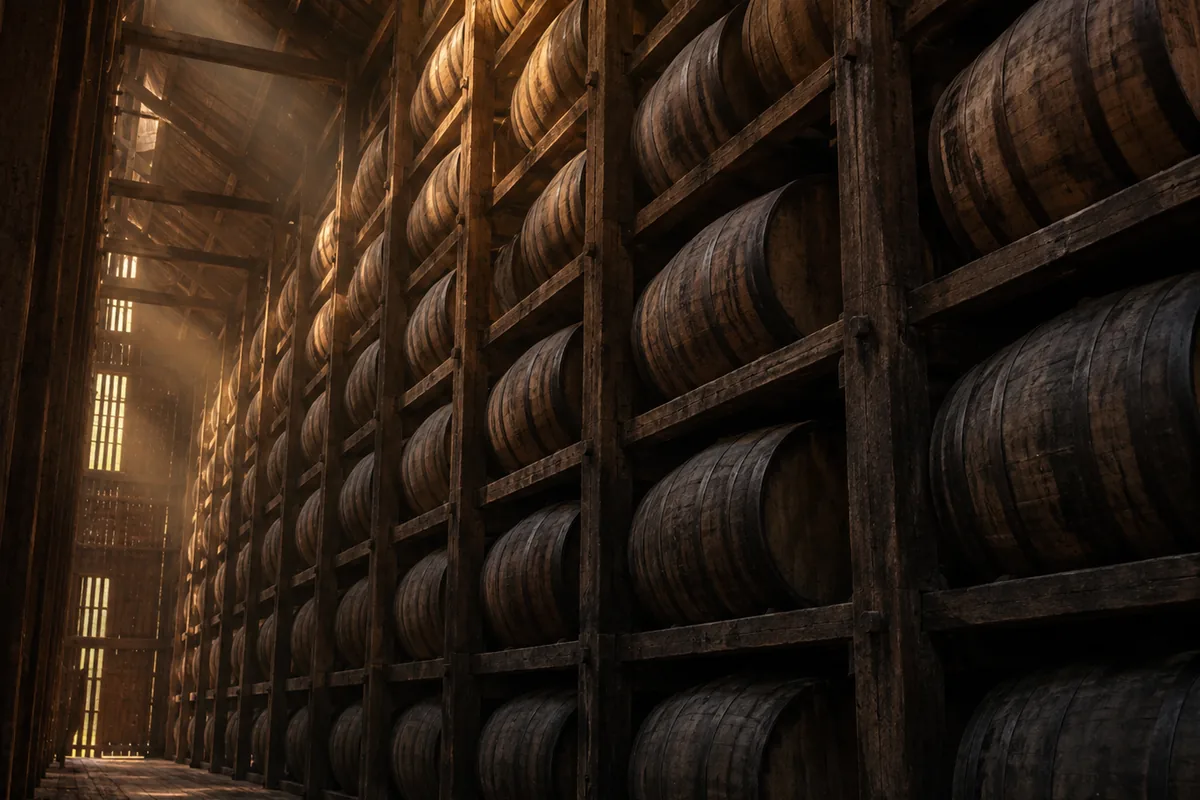
- Position in the warehouse: upper courses run warmer and drier than the floor, which changes both the rate of extraction and how much water and alcohol leave the cask.
- The wood itself: staves come from different trees with different grain density, so two casks of the same size and char are not the same material.
- What the cask held before: a first fill has far more extractable material left in the wood than a cask on its third outing.
- Time in wood: even inside one batch, casks may be pulled at different ages and combined, with the age statement, if any, governed by the youngest of them.
Mingling is what a blender does about all of that. Combining casks averages their differences, and the more casks that go in, the closer the result sits to the distillery’s central character.
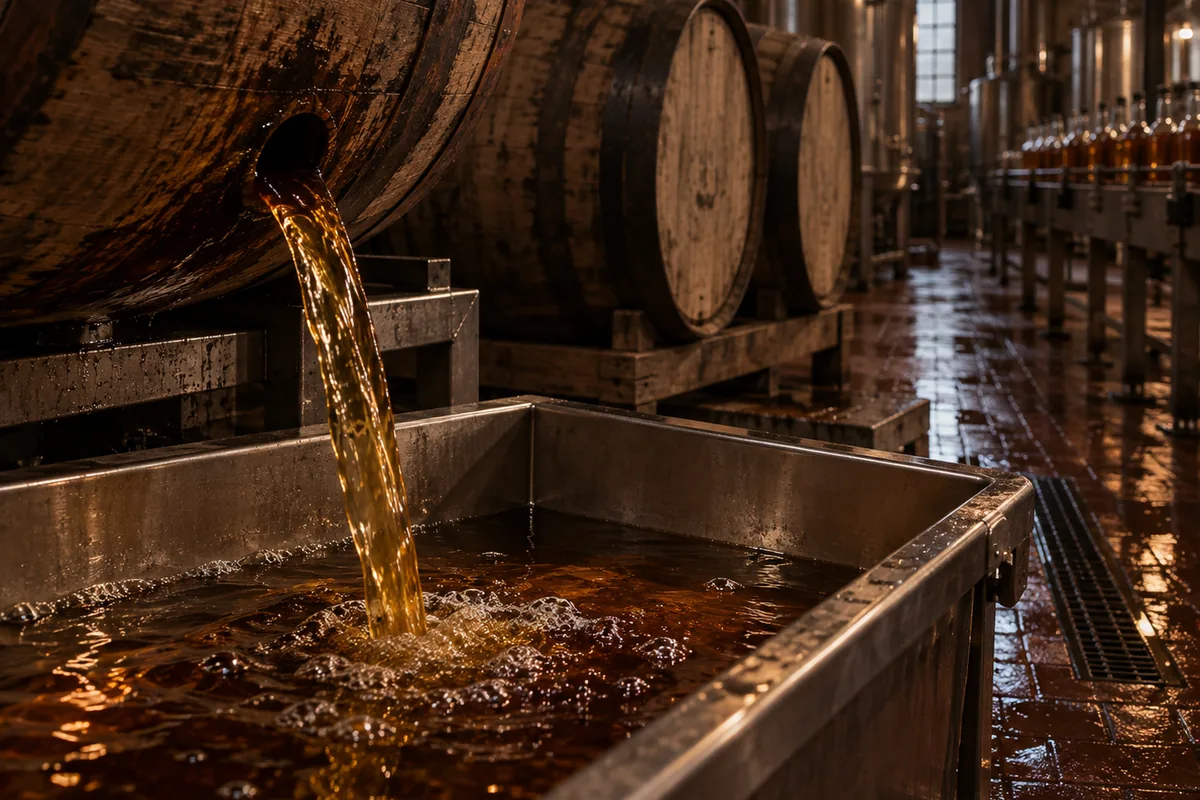
Run the logic the other way and you have the honest case for a small batch.
A batch built from few casks carries more of whatever those particular casks did.
More of whatever those casks did means more in either direction. A small batch can land somewhere unusually good, and it can equally land somewhere flatter or more tannic than the house style, because fewer casks means less averaging rather than better casks.
So batch size is a control on consistency, not on quality. It tells you how much variation to expect between releases, and nothing about where any one release will land.
This is also why the largest brands work the other way round. A whisky that has to taste the same in every market for a decade needs the averaging that a very large mingling provides, and a producer pursuing that goal is not being lazy about it.
Consistency at that scale is difficult, skilled work.
It simply produces a different thing from a deliberately narrow selection, which is the trade the phrase is pointing at.
A useful way to hold it: a large mingling asks what this distillery tastes like, and a small one asks what these casks tasted like. Neither question is the superior one.
Does the phrase tell you anything about grain or strength?
No. Not the grain, not the still, not the wood, not the age, and not the strength.
Those facts are all governed by the whisky class the bottle has to carry anyway, which is why the class designation is the more informative half of the front label even when it is printed smaller.
One number does always apply. A whisky sold in the United States must reach the bottle at no less than 40 percent alcohol by volume, and that floor holds whatever the batch language says.
Above the floor there is no pattern to lean on. Small batch bottlings are commonly presented above 40 percent, some are bottled at cask strength with no water added at all, and plenty sit exactly at the minimum.
Read the figure rather than the adjective.
It is printed on every bottle, it is compelled to be accurate, and it changes more about your evening than the batch words do.
The same goes for the wood, which is where most of the flavour argument actually lives. Whether the whisky met new charred oak or a refill cask is settled by the class it is sold as and by any cask disclosure the producer chooses to add, never by the size of the mingling.
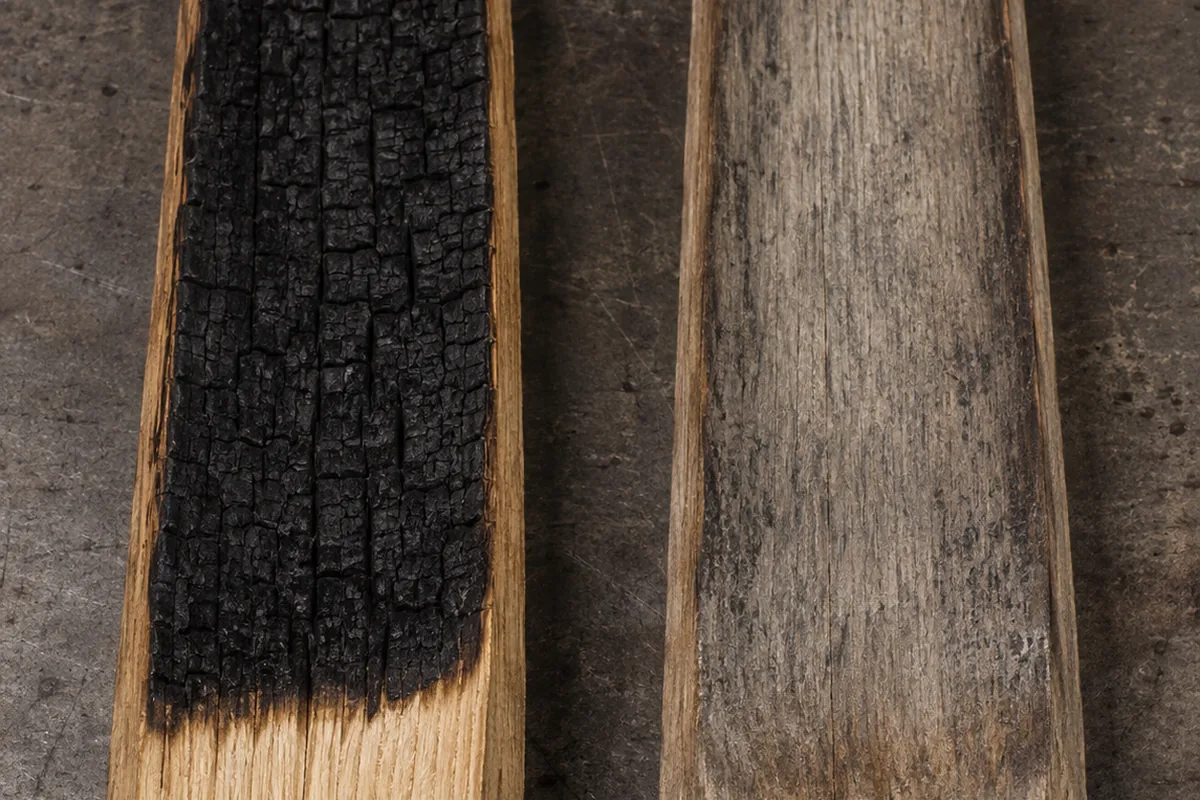
A small batch bourbon met new charred oak because every bourbon does. A small batch Scotch did not, because Scotch is not required to.
The phrase is often read as a signal of careful wood policy, and it is a signal about how many casks were combined instead.
Small batch, single barrel or bottled in bond: which claim can you check?
These three sit on the same shelf and answer the same question, which is how much of the bottle came from where. They differ in whether the answer is a number or a judgement.
Bottled in bond is the strict end, and it is worth reading in full because the conditions are specific. Under 27 CFR 5.88 the spirits must be of one kind, distilled in a single distilling season by one distiller at one distillery, stored at least four years in wood, reduced with pure water alone, and bottled at exactly 50 percent alcohol by volume.
Every one of those is a fact a regulator can test.
That is what makes it a different sort of claim from the one on the front of a small batch bottle.
| Claim | What it fixes | What it still leaves open |
|---|---|---|
| Bottled in bond | One kind of spirit, one distilling season, one distiller, one distillery, four years in wood, 50 percent alcohol by volume | How many casks were used, and everything about the wood beyond the four year minimum |
| Single barrel | The unit exactly: one cask, so the bottle cannot be an average of anything | Which cask, where it sat, and how much variation there is between the producer’s single barrel releases |
| Small batch | That more than one cask was combined and that a person chose which | How many, on what basis, and whether the next batch will resemble this one |
Reading down that middle column is the fastest way to rank the three. Bottled in bond fixes six things, single barrel fixes one thing exactly, and small batch fixes that a selection happened.
None of this makes small batch a worse bottling.
It makes it a claim you weigh rather than one you verify, and those are different acts.
The three are not alternatives to one another either, which trips people up. Single barrel and small batch are mutually exclusive by definition, because one cask cannot be a group.
Bottled in bond sits on a different axis entirely and can appear alongside batch language, since nothing in 27 CFR 5.88 limits how many casks from that season may be combined. A bottle can honestly be both bonded and small batch, and then you have one claim with six enforceable conditions and one without any.
Which other words on the label have a fixed meaning?
Some of what is printed on a whisky bottle is compelled and some is chosen, and nothing on the label marks which is which.
The batch language is chosen. The following are not, or else report a fixed quantity when they do appear.
- The class and type: bourbon, rye, single malt Scotch and the rest decide which body of rules the bottle answers to, and therefore which of its other words mean anything.
- The alcohol content: compelled, exact, and the figure every serving decision runs on.
- Any age statement: where one appears it reports the age of the youngest whisky present, which is the one time-fact a batch description never supplies.
- A batch and bottle number together: a batch number identifies the lot, and a bottle number tells you how large the run was, which is the closest a label usually comes to sizing the claim.
That is a short reading order, and it works precisely when the front of the bottle has stopped being informative.
If the class is a corn-majority American whisky matured in charred new oak, you already know a great deal about what is in the glass before the batch words are read at all.
How do you taste two batches against each other?
This is the cleanest comparison available in whisky, and hardly anybody sets it up properly.
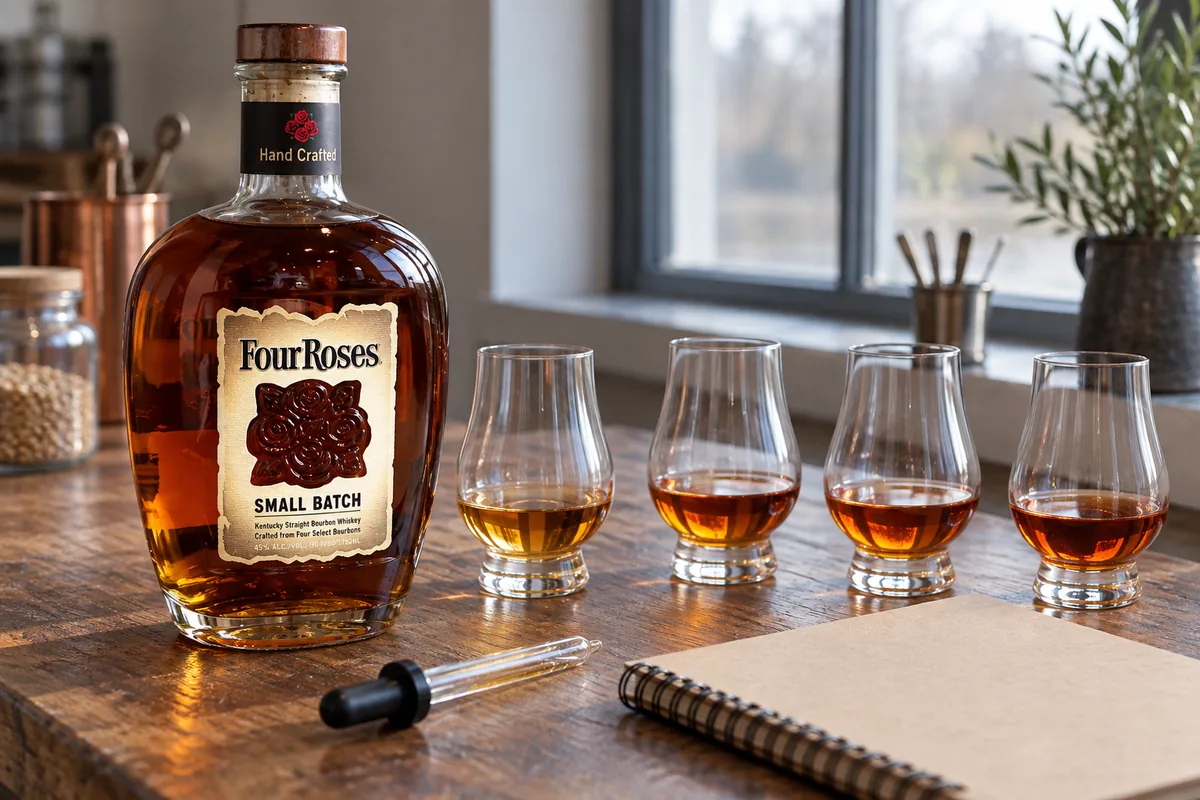
Two batches of one expression hold the recipe, the distillery and the wood policy constant. Whatever differs between the glasses came from the casks and the choosing, which is exactly the thing the batch claim is about.
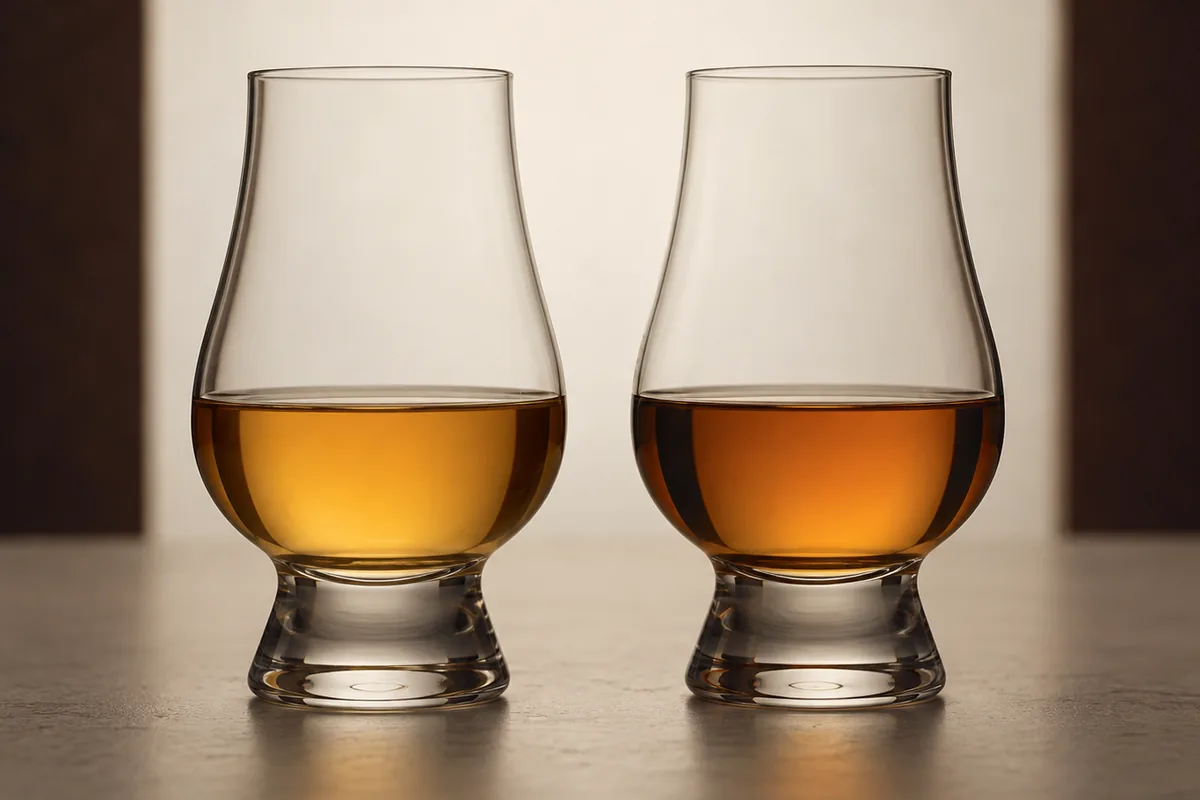
- Pour equal measures: an unequal pour changes the surface area and the headspace in the glass before you have smelled anything.
- Use one glass shape: a narrow bowl concentrates aroma and a wide one disperses it, and that difference is easily mistaken for a batch difference.
- Nose both undiluted: it is the only state in which the two samples are certainly being handled identically.
- Add a recorded amount of water: the same number of drops into each glass, written down, so the second sample gets what the first one got.
- Come back after twenty minutes: drying oak and spice arrive on a different timescale from fruit, so a single pass reads only part of each batch.
Colour is the signal most people reach for first and it deserves the least weight. Caramel colouring is permitted in many whisky categories and adjusts appearance without changing aroma, so a deeper glass is not evidence of a deeper whisky.
A difference between two lots is evidence about those two lots and nothing wider.
It is not evidence about the expression, and it is certainly not evidence about small batch bottlings in general. Anyone who has followed a numbered series through five or six releases will have met a batch they liked much less than the one before it.
Expect the difference to be smaller than the packaging implies, because two batches of one expression usually differ in emphasis rather than in kind, because they came from the same distillate and the same wood policy.
More oak in one, more orchard fruit in the other, a shade more heat at the finish: that is the ordinary size of it. A batch that tastes like a different whisky altogether is unusual enough to be worth checking the strength before concluding anything.
Write the notes down while both glasses are in front of you. Memory of a whisky drunk last month is not a control sample, and comparing against it is the commonest way people convince themselves a batch has changed.
What suits a whisky whose batch you cannot buy again?
The usual approach to whisky and food starts from the category, and here the category is the part that has already been ruled out as uninformative.
Start from the glass instead. Food meets the strength and the wood before it meets anything the label claims, and a bottling above 50 percent will behave differently beside a dish from the same expression at 40 percent.
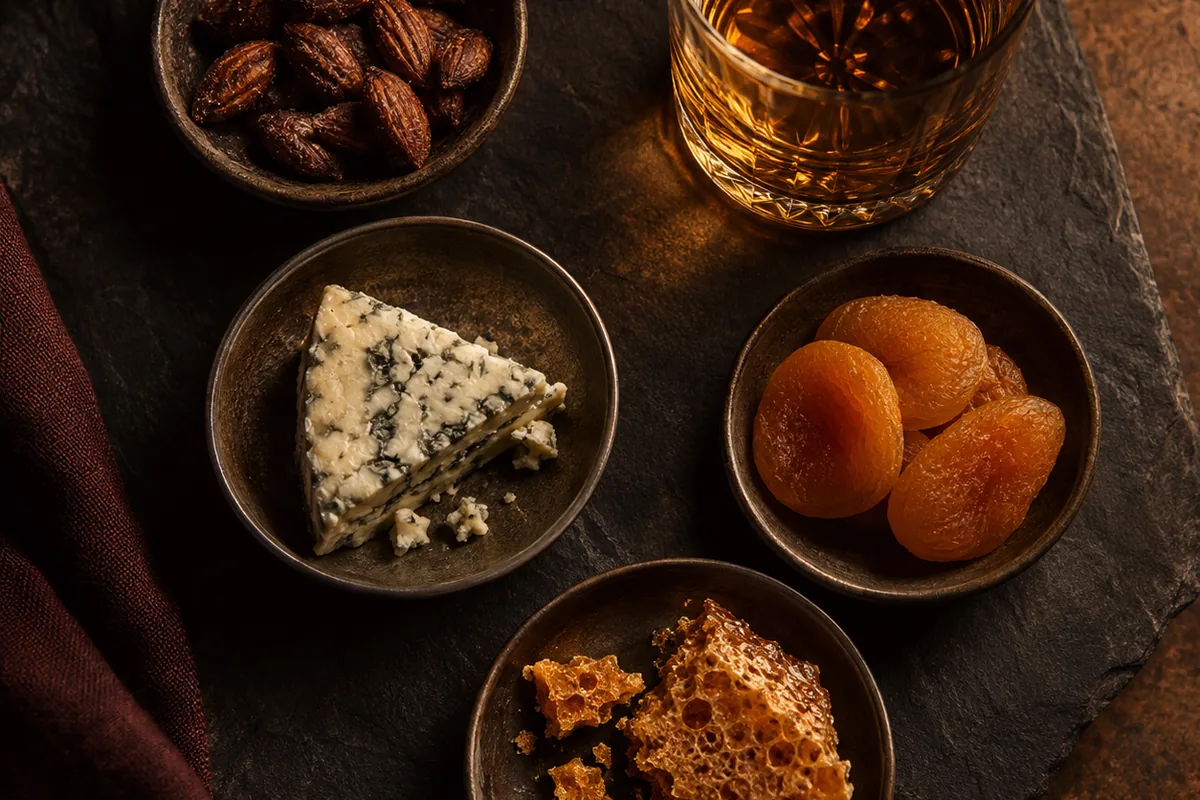
| What the batch turned out to be | Food direction | Why it works |
|---|---|---|
| Dry and oak-led | Salted nuts, hard aged cheese, cured meat | Salt and fat soften tannin and alcohol heat, where a sweet dish would sharpen both |
| Fruit-led | Blue cheese, dark honeycomb, dried stone fruit | The contrast holds, because matching fruit against fruit usually flattens the whisky rather than echoing it |
| High strength | Richer, fattier food in modest portions | Food has to have enough weight not to disappear, and fat is what carries alcohol heat comfortably |
Two interactions go wrong reliably. Sweetness in a dish sharpens a dry, tannic whisky, and chilli heat is intensified by alcohol rather than cooled by it.
A pairing worked out on batch 9 is a note about batch 9, and when batch 10 arrives you are tasting a different set of casks against the same plate.
What does an unrepeatable batch mean once the bottle is open?
Nothing about the chemistry changes because the lot was small. Whisky does not go on maturing in glass, so what happens after opening is oxidation and the slow loss of the most volatile aroma.
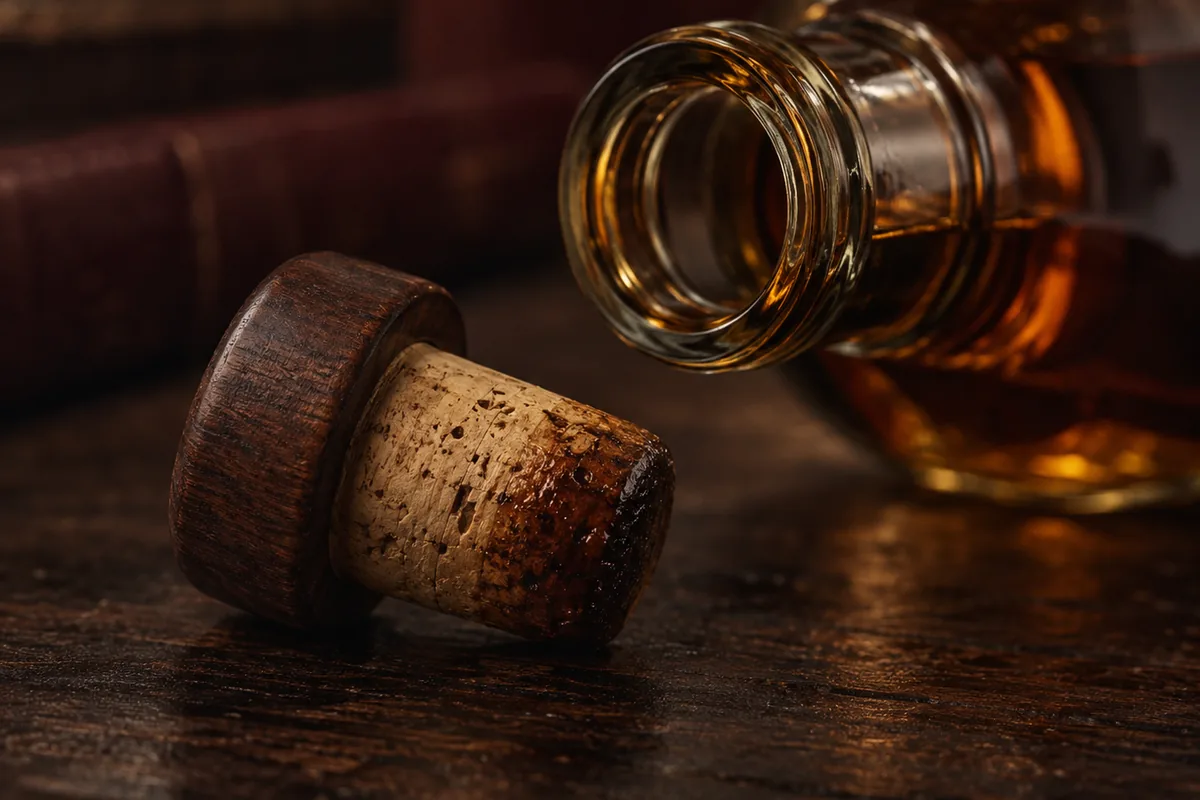
- A cool dark cupboard: heat and light are the two conditions you can remove outright, and nothing in the bottle improves with either.
- A closure that still seals: wipe the neck, and replace a cork that has stopped gripping, because a failed seal makes every other precaution irrelevant.
- Upright, always: a high strength spirit left resting against a closure will attack the material over the years a bottle can sit.
- A smaller bottle for a small remainder: decanting the last third into a clean smaller bottle cuts the air above it, which is the only variable here you can actually reduce.
What the small lot does change is the cost of getting it wrong.
A bottle from a finished batch cannot be replaced with the same liquid, so letting a favourite lot sit half empty on a warm shelf for three years is a decision with no undo. That is an argument for decanting the remainder, not an argument for drinking it faster.
Never top up an opened bottle from another batch to reduce the headspace. It destroys the one thing that made the lot worth keeping, which is knowing exactly what is in it.
How much alcohol is in the pour, whatever the batch says?
The alcohol in a serving comes from two numbers, the volume you poured and the strength printed on the bottle.
A batch description changes neither of them.
In the United States a standard drink contains about 14 grams of pure alcohol, which is roughly 1.5 fluid ounces, or 44 millilitres, of a spirit at 40 percent.
Now run the same measure at cask strength. A bottling at 57 percent puts about two fifths more alcohol into the identical pour, and it does not look any different in the glass.
Read the strength, not the batch. Batch language, colour, smoothness, water, food, coffee and time spent tasting cannot establish that someone is unimpaired or safe to drive. Measure the pour and read the alcohol content.
Anyone who is pregnant, below the legal drinking age, taking an interacting medicine, managing a condition worsened by alcohol, or responsible for driving needs an alcohol-free choice instead. The words on the front of the bottle carry no information about any of that.
Is a small batch bottling worth paying more for?
It depends on what you think the premium is buying, so it is worth being exact about that.
What it buys is selection work.
Somebody walked a warehouse, drew samples, decided which casks belonged together and which did not, and that is real labour by a skilled person.
What it does not buy is a guarantee, and the reason is the one this entry started with. With no definition behind the words, the care that went into the choosing cannot be read off the label.
So argue with the price using the parts of the bottle that hold still: the class and type, the strength, any age statement, and any bonded designation.
Those are the claims that would have to be defended if they were wrong.
Ask for the number. Where a producer publishes a batch size, a cask count or a bottle count, the claim stops being an adjective and becomes a figure. A producer who publishes one has told you something; a producer who does not has told you what they are willing to be held to.
There is a version of the premium that is easy to defend. A producer who bottles a narrow selection at cask strength, prints the batch and bottle numbers, and states the age is charging for work you can see the evidence of.
And there is a version that is not. The same two words on a bottle with no age statement, no cask disclosure, no batch figure and a strength at the legal floor are doing no work at all beyond decoration.
Both bottles are entitled to the phrase, which is the whole difficulty.
None of that settles whether a particular bottle is good. It settles what you are actually being asked to pay for, which is the part the phrase itself was never going to tell you.
Common questions
- How many barrels are in a small batch whisky?
- There is no set number. Four Roses publishes an average Small Batch size of about 250 barrels, published sizes elsewhere run into single figures, and most labels disclose no figure at all.
- Is small batch whisky a legal term?
- No. The United States standards of identity create no small batch class or type, and the Scotch Whisky Regulations 2009 do not protect the phrase. A claim must still have a reasonable basis in fact and be substantiable to TTB on request.
- Is small batch better than single barrel?
- Neither is a grade. A single barrel bottling comes from one cask, so it cannot be an average of anything, while a small batch is mingled from several casks and sits closer to the distillery's central character the more casks it contains.
Sources
-
27 CFR 5.122, Misleading statements or representations, Legal Information Institute
Accessed 6 September 2026.
-
27 CFR 5.88, Bottled in bond, Legal Information Institute
Accessed 6 September 2026.
-
Code of Federal Regulations, Title 27, sections 5.143 and 5.74
Accessed 5 September 2026.
-
NIAAA, What Is a Standard Drink?
Accessed 13 September 2026.
-
The Scotch Whisky Regulations 2009 (SI 2009/2890), regulation 3
Accessed 4 September 2026.
-
The Story of Small Batch, Four Roses
Accessed 10 September 2026.
More in Spirits
-
 American single malt whisky
01
What is American single malt whisky, and what does it guarantee?
-
 Australian whisky
02
How is Australian whisky defined, and by which law?
-
 Black rum
03
What is black rum, and does the colour mean anything?
-
 Blended American whiskey
04
What is blended American whiskey, and how much of it is whiskey?
-
 Blended Irish whiskey
05
Blended Irish whiskey: which word counts the distilleries?
-
 Blended Scotch
06
Blended Scotch: what is in it, and why does the recipe change?